
The Transition IEP what to expect how to

- Slides: 17
The Transition IEP: what to expect & how to prepare Joni Schmalzried, Ed. D 1 Prepared for: About Special Kids (ASK) June 20, 2017 Project Coordinator Indiana Secondary Transition Resource Center on Community Living and Careers jeschmal@Indiana. edu
2 Presented by Indiana Secondary Transition Resource Center a project of the Center on Community Living and Careers Indiana Institute on Disability and Community Indiana University
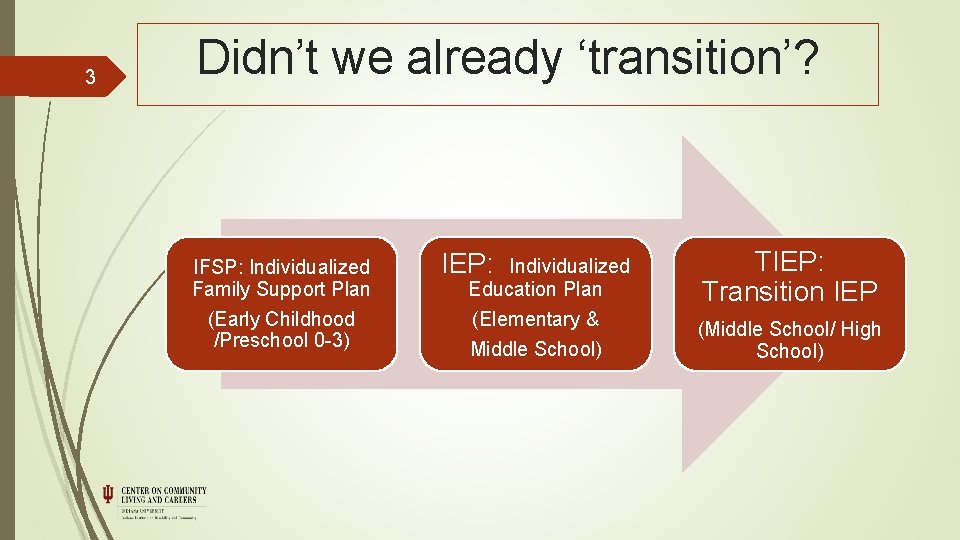
3 Didn’t we already ‘transition’? IFSP: Individualized Family Support Plan (Early Childhood /Preschool 0 -3) IEP: Individualized Education Plan (Elementary & Middle School) TIEP: Transition IEP (Middle School/ High School)
4 What is the purpose/importance of Secondary Transition Planning? To support students and families in preparing for desired long term outcomes (Independent Living, Employment, Education/Training) To assist students in making the connection between what is happening now (high school) and where the student would like to get to (postsecondary goals) To create a coordinated set of activities and services that will help students and families make informed decisions about the future
5 What is this ‘Transition’ stuff? A Transition Individualized Education Program must be developed when: The student enters into 9 th grade OR Becomes 14 years of age (whichever comes first, or earlier if needed)
6 Who should be at the TIEP Conference? Many of the same people who have attended your IEP meetings will be in attendance (teacher of record, public agency representative, general education teacher(s), parent/guardian, instructional strategist, related service providers) In addition: According to laws and regulations your child must be invited to their IEP meeting so it is very important that they attend As your child progresses, any adult service providers who might provide support for your child upon exiting high school should be invited to attend
7 What will we talk about? Though much of the flow of the conference will remain the same, there are some very important additional areas that will be addressed at the TIEP meeting Students are an integral part of transition planning – it is something that schools do WITH them (not to them or for them)
8 The Transition IEP Present levels of performance (including the information from age appropriate transition assessments about the students strengths, preferences, and interests) Measurable postsecondary goals (based upon the findings of the transition assessments) that address: Independent Living (if needed), Employment, and Education/Training
9 The Transition IEP Whether or not a student is pursuing a diploma or a certificate of completion Transition Services and Activities Annual services/activities that will help the student as they explore their postsecondary goals
10 The Transition IEP Measurable Annual Goals that align to / support a students postsecondary goals Age of majority (at least one year prior to the student turning 18)
11 How can a parent/guardian prepare for the TIEP meeting? You know your child and have so much to contribute: Likes, dislikes, what they do in their free time Strengths, needs Questions you have about where your child is academically v. where they need to be Any information about what the student may have talked about regarding future goals Ideas to support working together on behalf of your child
12 Commonly asked questions from parents/guardians Why do we need to think about this now? My child is only 13/14 years old? What if my child has too many significant support needs – how will they be employed in the future? Why would we discuss that? Why does the school need to know about other supports we might receive as a family? What happens at age of majority if my child and I disagree about their independence?
13 What will happen after that first Transition IEP conference? The school will continue to explore with your child their strengths, interests, and preferences in regards to their long term goals Transition Services and Activities will take place to help your child make an informed decision (regarding independent living, employment, and education training) The school will continue to review age appropriate transition assessments (that provide everyone with new and updated information) When the case conference committee gets back together, the group will review what has happened the past year and continue or revise the Transition IEP as needed
14 What are some things we know about Transition Planning? It is about the meaningful conversations between the school, student, and family It is empowering for student’s to be a part of planning for their future Coordinated planning leads to better student outcomes
15 Other questions? Reach out to your child’s Teacher of Record or Transition Specialist Become familiar with the variety of programming available at your high school to support your students postsecondary goal path Please feel free to email me at jeschmal@Indiana. edu
16 Resources https: //instrc. indiana. edu/family-involvement/index. html Family resources on the Indiana Secondary Transition Resource website, including having the diploma/certificate discussion and success stories across the state http: //insource. org/ INSOURCE is Indiana’s parent support network. This website has a variety of information around the area of Transition http: //www. pacer. org/ This parent information and training center provides a variety of information around the support of transition services and planning
17 Thank you for giving me the opportunity to share with you today!