
The Trans Atlantic Slave Trade No day ever
- Slides: 44
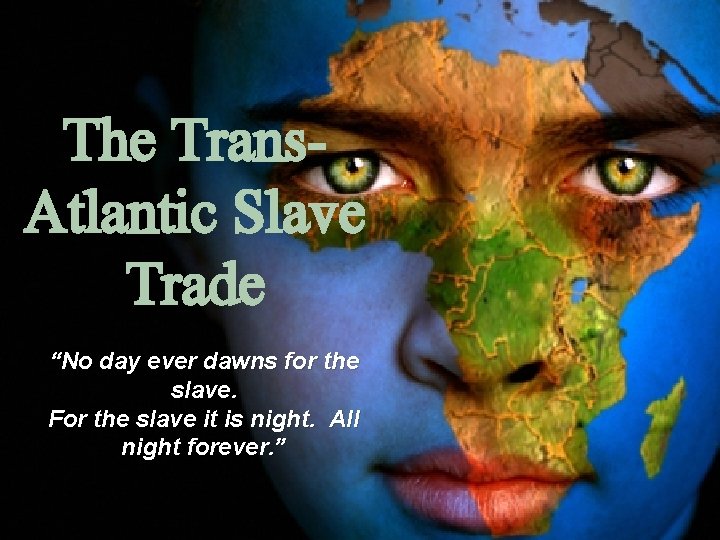
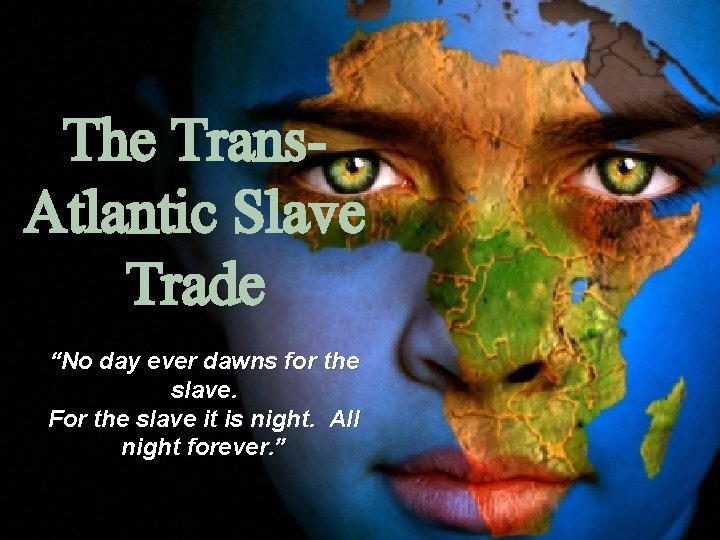
The Trans. Atlantic Slave Trade “No day ever dawns for the slave. For the slave it is night. All night forever. ”
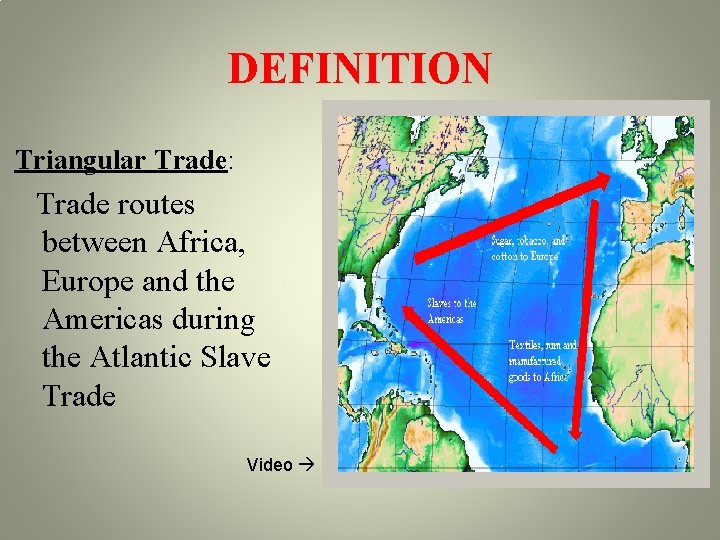
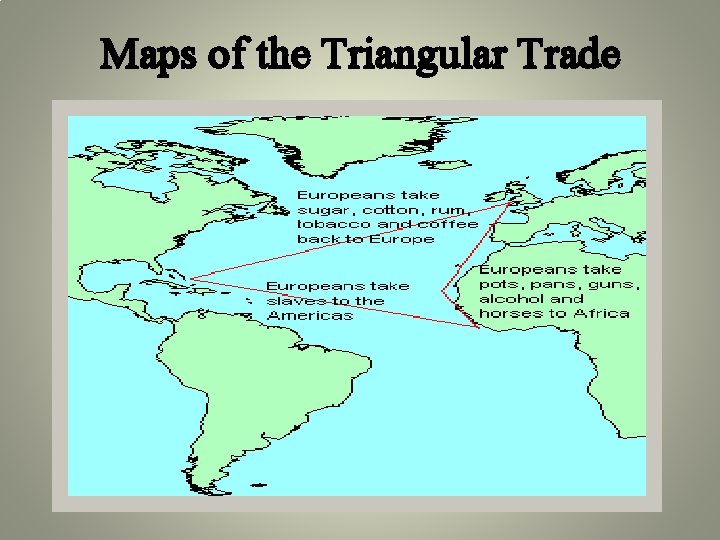
DEFINITION Triangular Trade: Trade routes between Africa, Europe and the Americas during the Atlantic Slave Trade Video
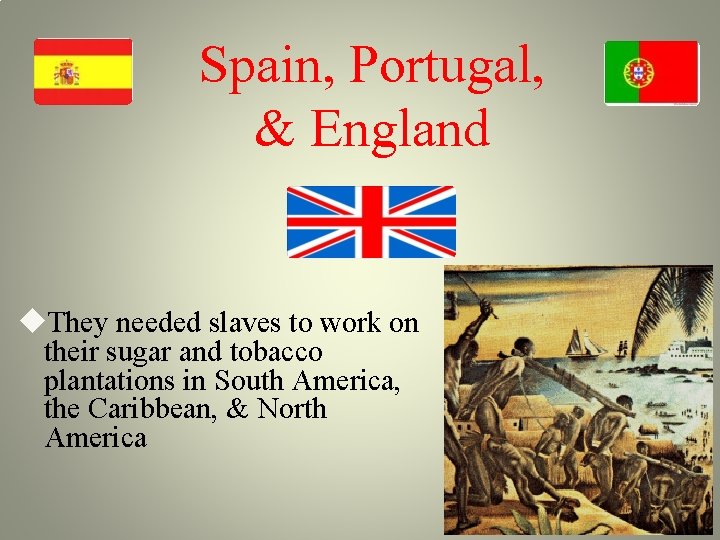
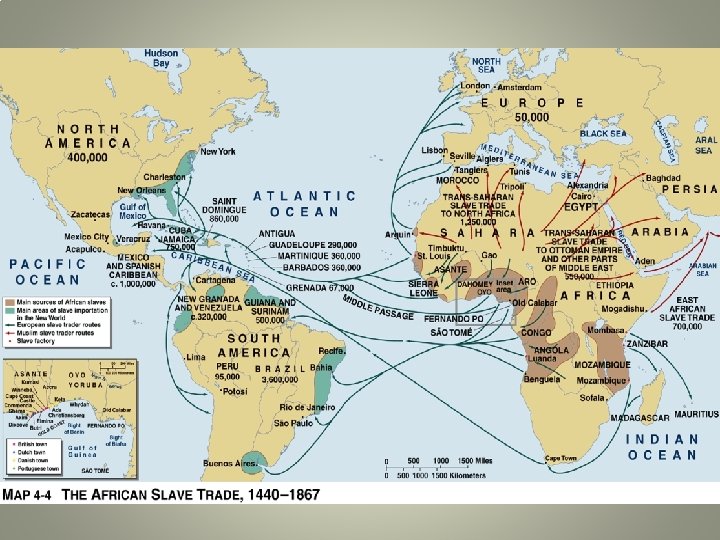
Spain, Portugal, & England They needed slaves to work on their sugar and tobacco plantations in South America, the Caribbean, & North America
ENGLAND • At beginning in 1619 in Jamestown, only a few slaves came to English colonies. • But when tobacco, cotton & rice plantations grew in the colonies, slave trade increased and the number increased dramatically. • Britain was given control over much of slave trade had a monopoly
Maps of the Triangular Trade
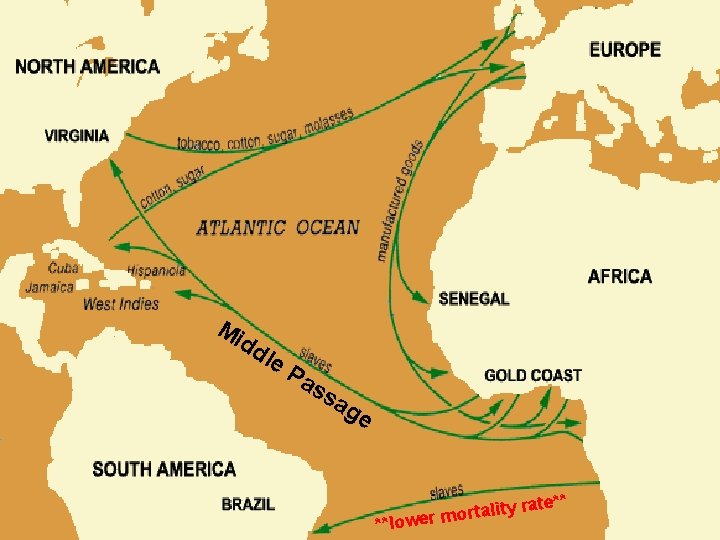
Mi dd le Pa ss ag e ate** r y t i l a t r o **lower m
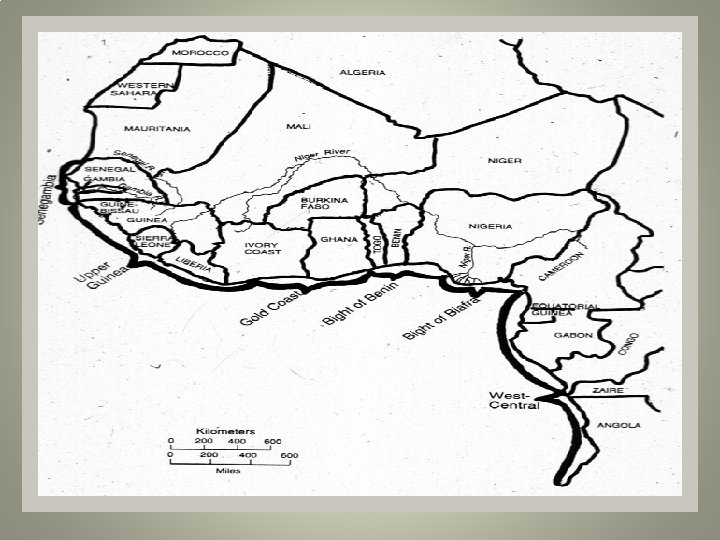
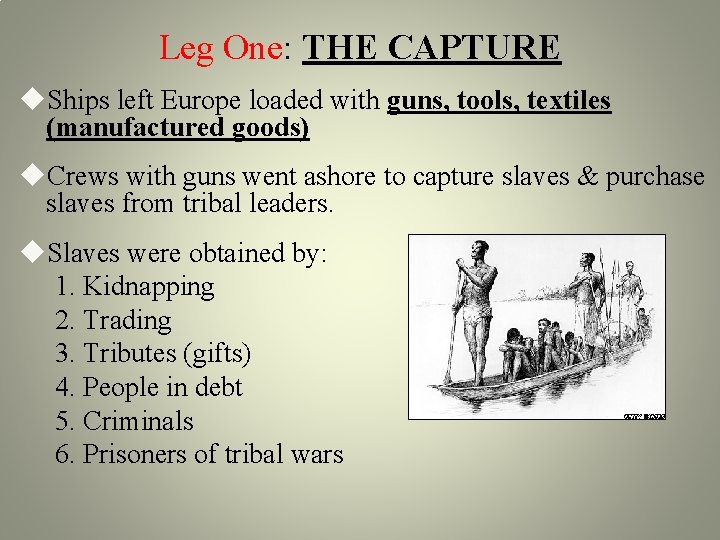
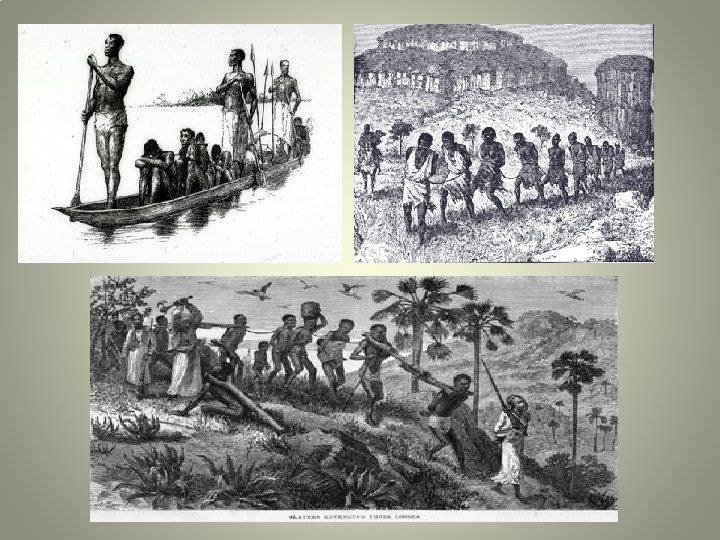
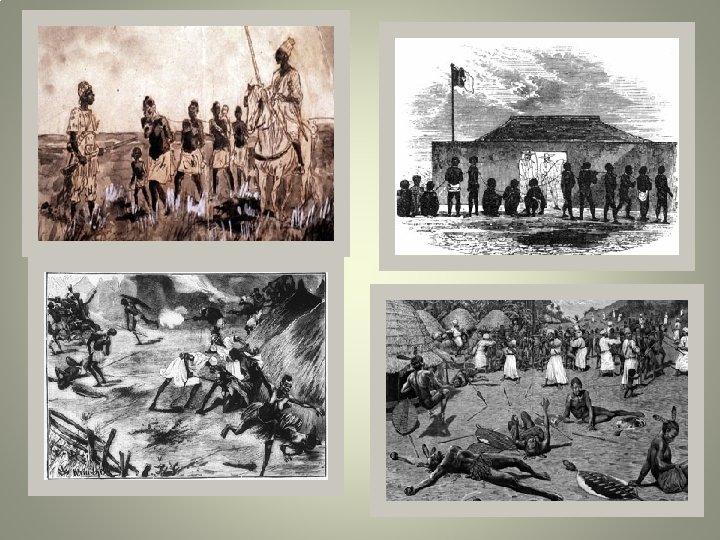
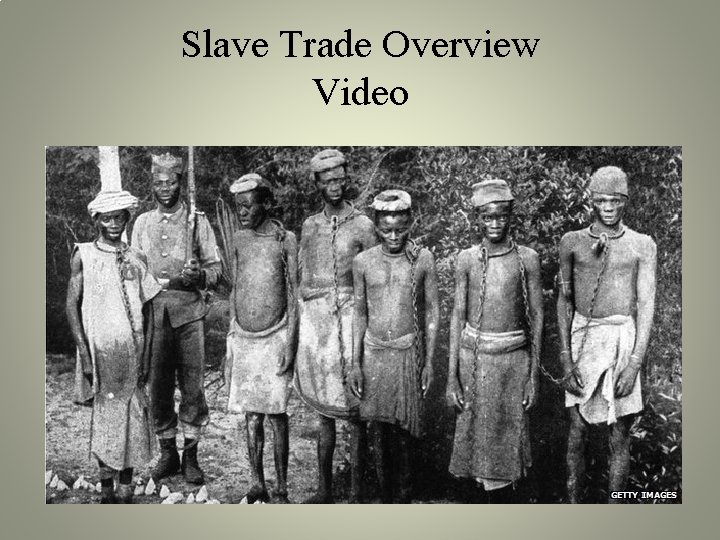
Leg One: THE CAPTURE Ships left Europe loaded with guns, tools, textiles (manufactured goods) Crews with guns went ashore to capture slaves & purchase slaves from tribal leaders. Slaves were obtained by: 1. Kidnapping 2. Trading 3. Tributes (gifts) 4. People in debt 5. Criminals 6. Prisoners of tribal wars
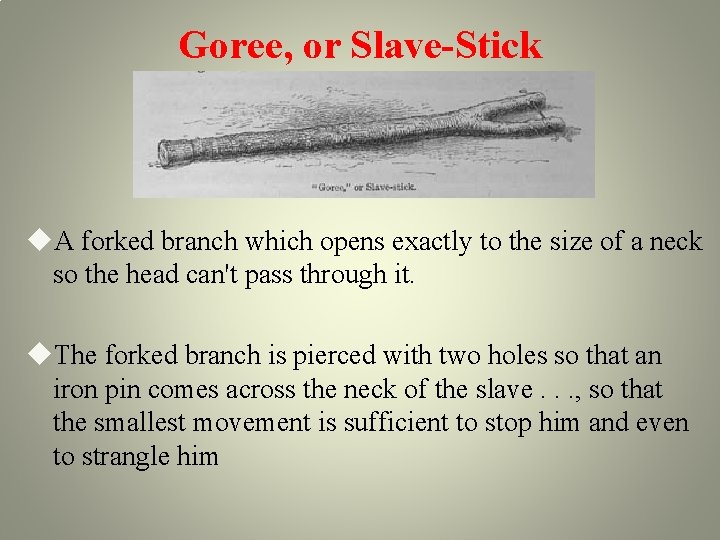
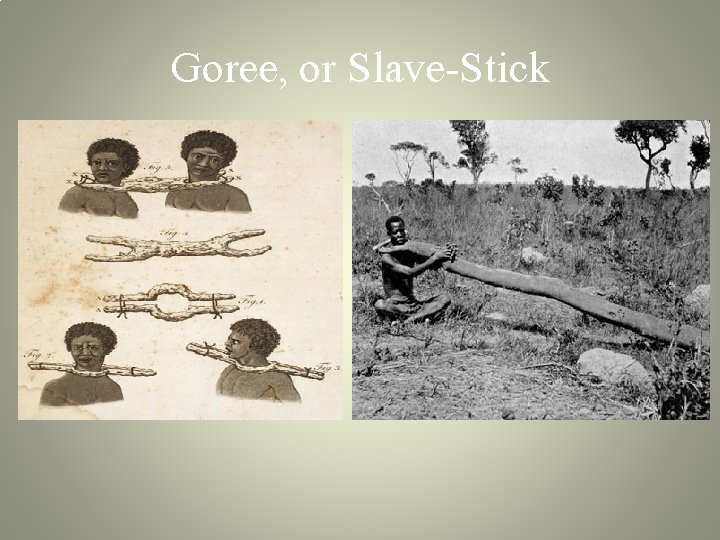
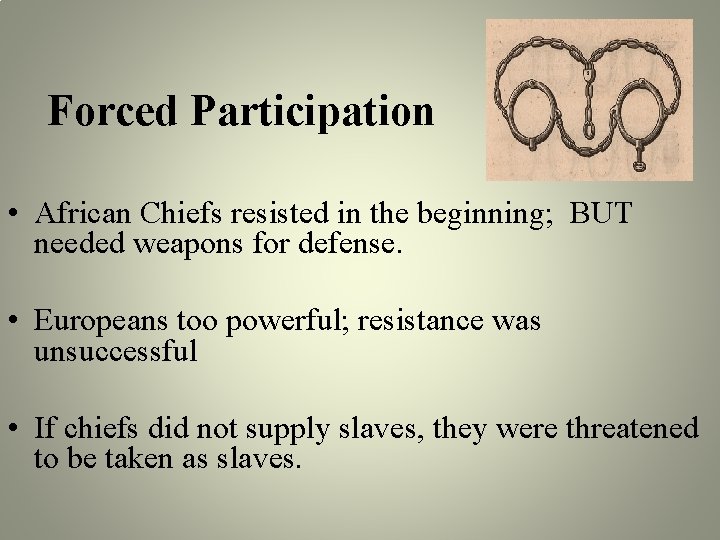
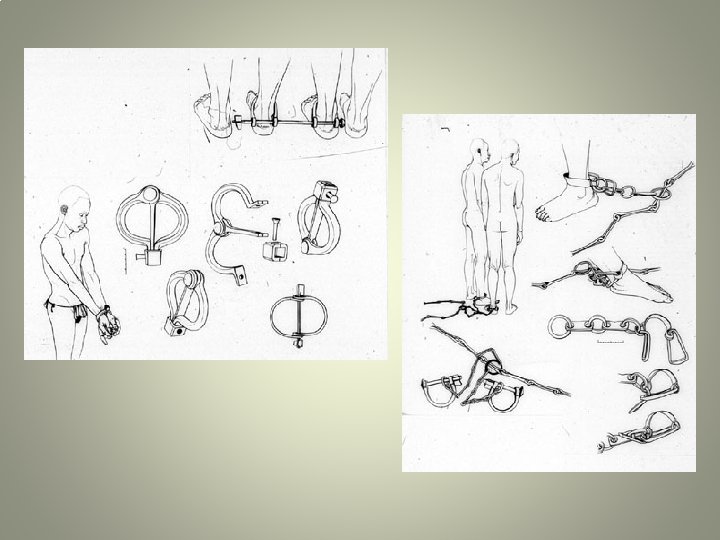
Goree, or Slave-Stick A forked branch which opens exactly to the size of a neck so the head can't pass through it. The forked branch is pierced with two holes so that an iron pin comes across the neck of the slave. . . , so that the smallest movement is sufficient to stop him and even to strangle him
Goree, or Slave-Stick
Forced Participation • African Chiefs resisted in the beginning; BUT needed weapons for defense. • Europeans too powerful; resistance was unsuccessful • If chiefs did not supply slaves, they were threatened to be taken as slaves.
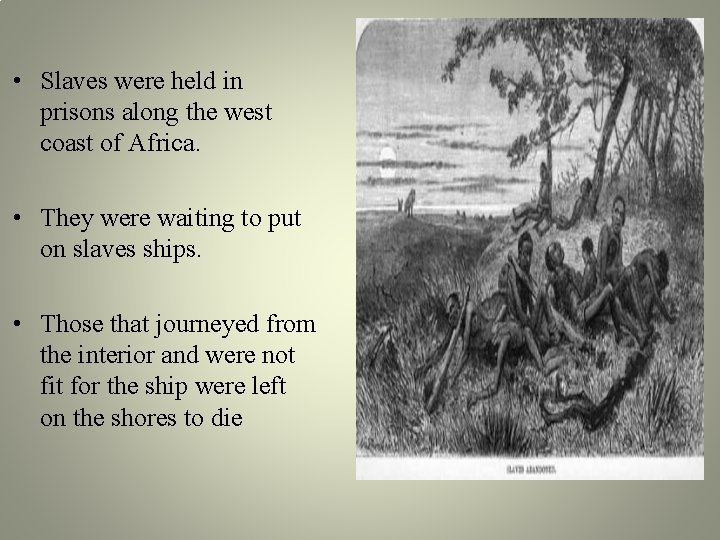
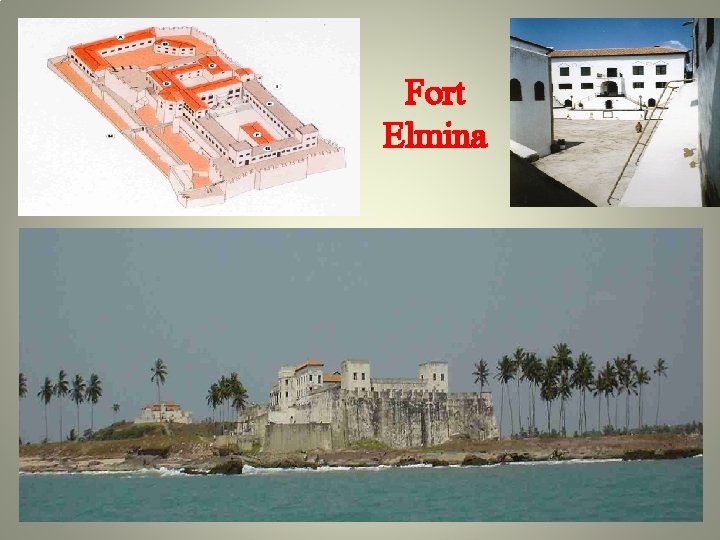
• Slaves were held in prisons along the west coast of Africa. • They were waiting to put on slaves ships. • Those that journeyed from the interior and were not fit for the ship were left on the shores to die
Fort Elmina
The Trans. Atlantic Slave Trade “No day ever dawns for the slave. For the slave it is night. All night forever. ”
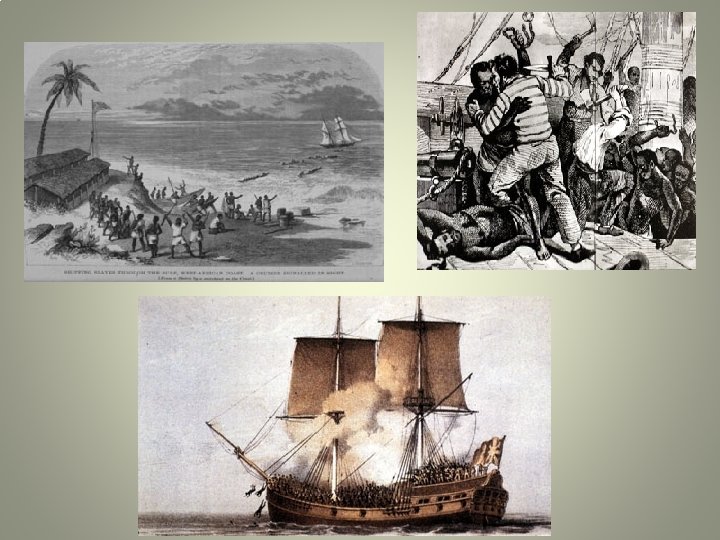
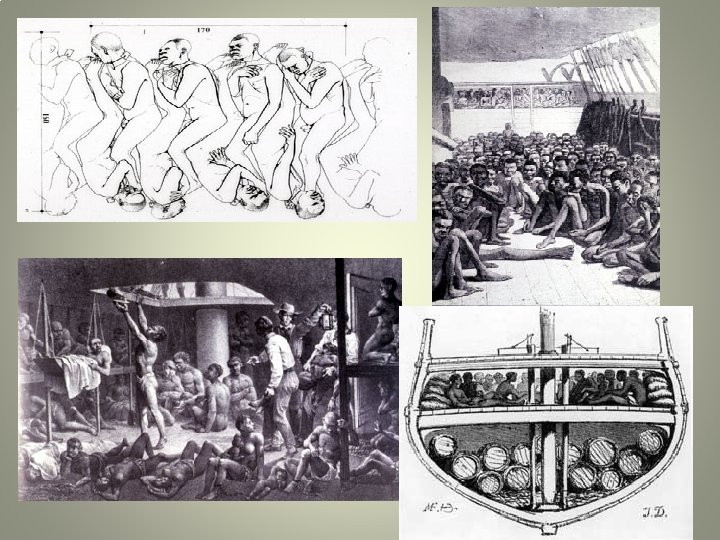
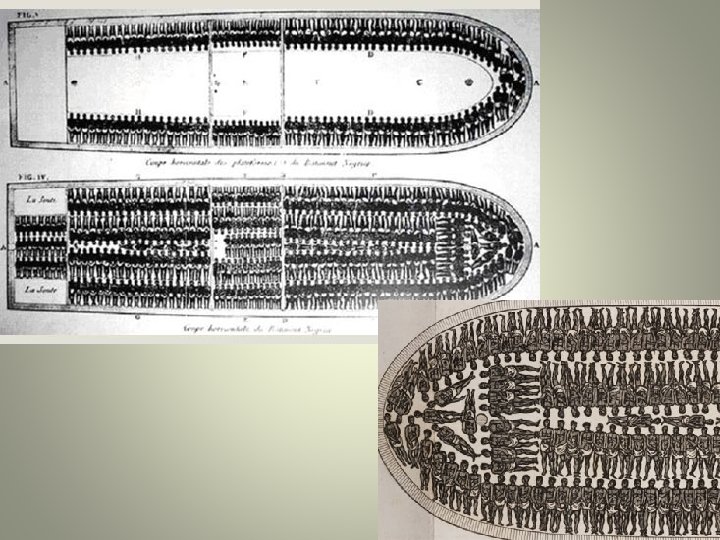
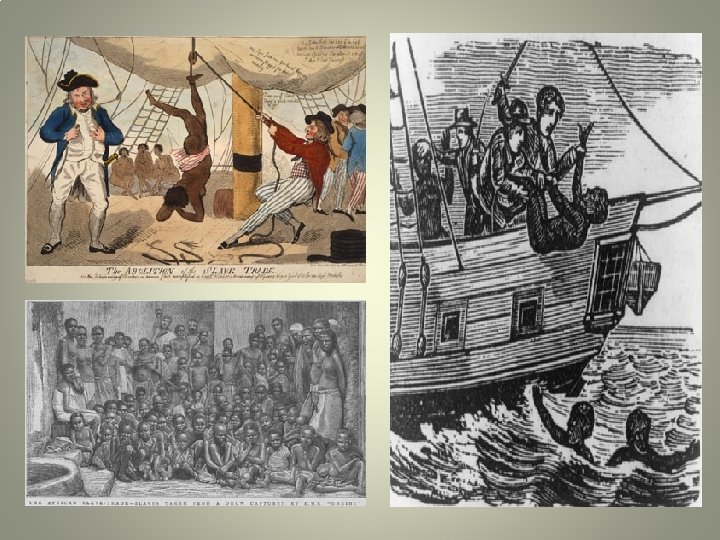
Leg Two: THE MIDDLE PASSAGE - Voyage from Africa to Americas - Ships sailed across Atlantic Ocean from Africa to Americas, carrying slaves & gold - Journey took 5 -12 weeks - DISGUSTING CONDITIONS - Some Africans tried to jump ship, refused to eat & rebelled. - Loss of slave’s life = loss of $ for slavers.
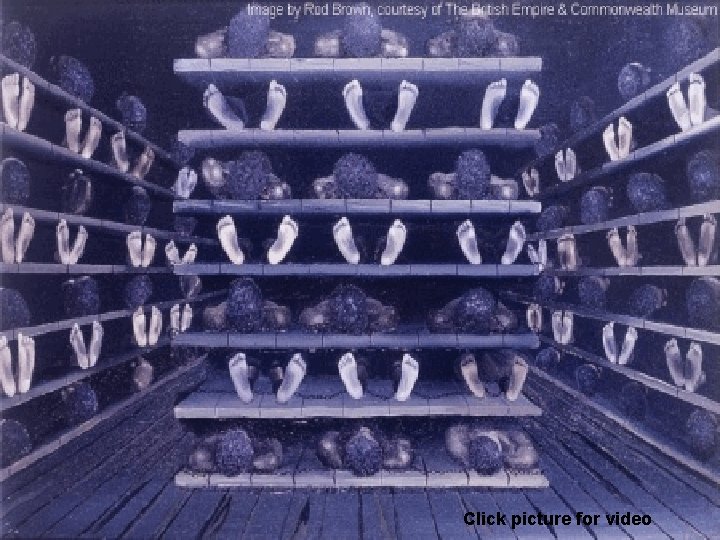
Packing Conditions • “Loose packing”: captains took fewer slaves in hope to reduce sickness & death. Slave would lay on their backs or stomachs. • “Tight packing”: captains carried as many slaves as their ship could hold… many died on voyage. Slaves would lay on their sides.
Click picture for video
Leg Three: THE AUCTION BLOCK • Africans sold at auctions in Americas • Money from sale would buy cargo of raw materials: cotton, sugar, spices, rum, chocolate or tobacco. • In Europe, converted raw materials into finished products.
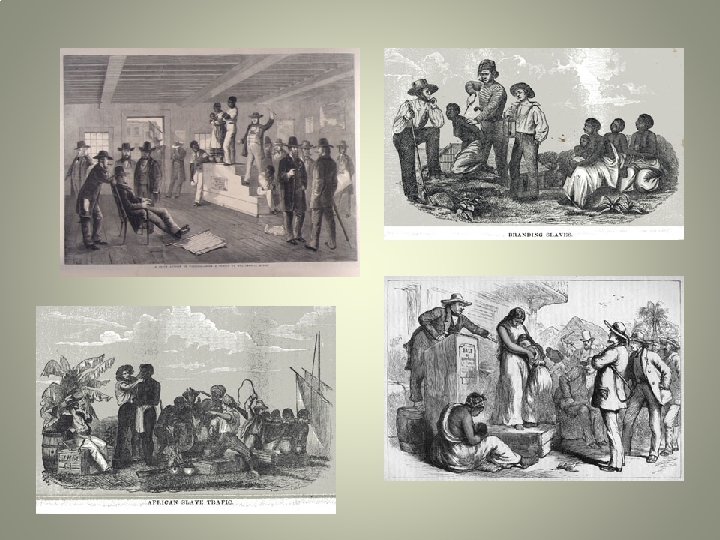
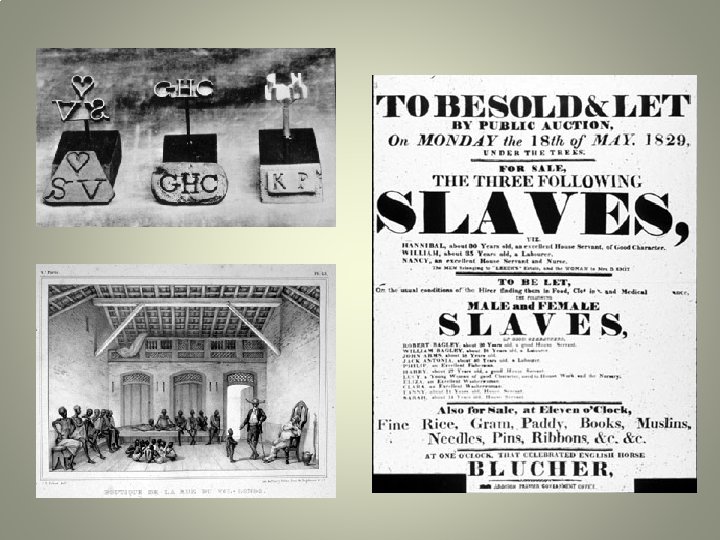
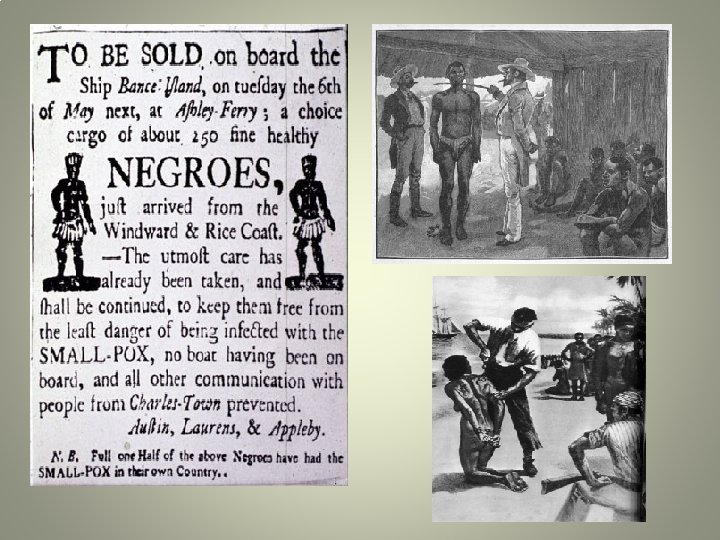
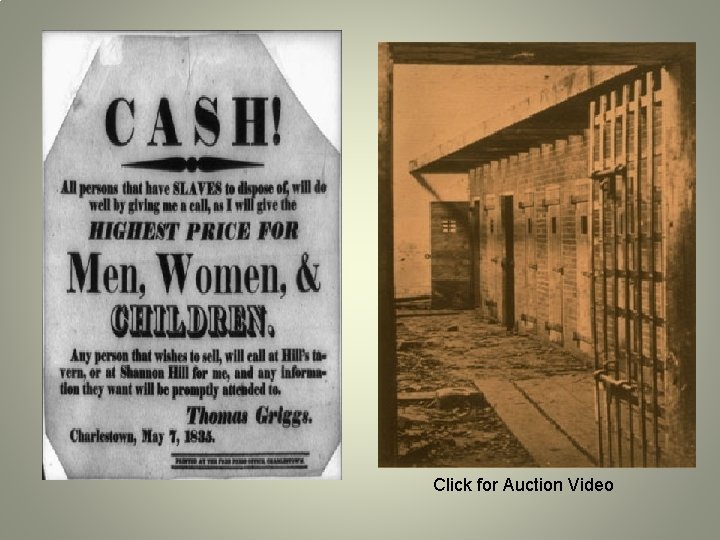
Auctions (don’t write down) There were many ways slaves were auctioned off: Public Auctions: ---They put tar on the slaves to hide any sores and cuts ---Slaves were inspected ---An auction to took place and the higher bidder would get to purchase the slave. ---Bids were taken as long as an inch of a candle burned. ---Slaves were branded ---Families were separated ---They were given a European name.
Auctions (don’t write down) A Scramble: ---They would take place on the docks or on the deck of the ship ---There would be a fixed price per head ---Slave owners would go in and grab who they wanted to purchase.
AUCTIONS • American born slaves who had skills were most expensive • African born slaves were less $, as they had to be “broken in” • Age, sex, & skills determined cost • Slaves with many scars considered too rebellious
Click for Auction Video
Slave Trade Overview Video
The Atlantic Slave Trade in Two Minutes • http: //www. slate. com/articles/life/the_history_of_american_slavery/2015/06/animated_interactive_of_the_history_of_the_atlantic_slave_trade. html
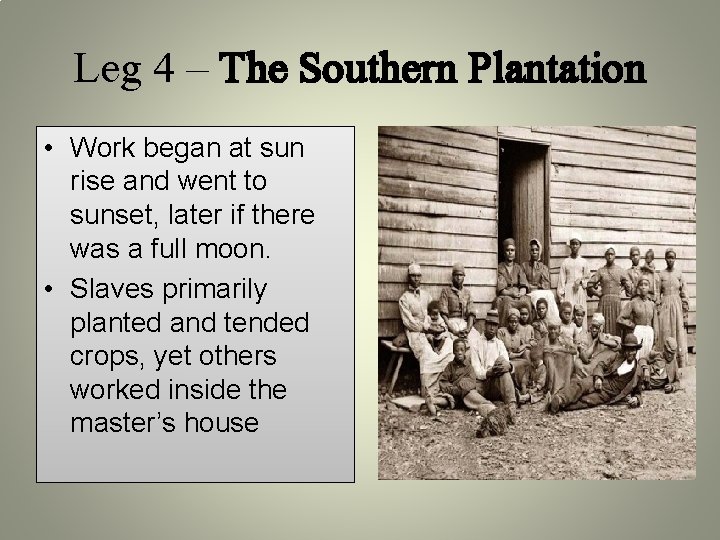
Leg 4 – The Southern Plantation • Work began at sun rise and went to sunset, later if there was a full moon. • Slaves primarily planted and tended crops, yet others worked inside the master’s house
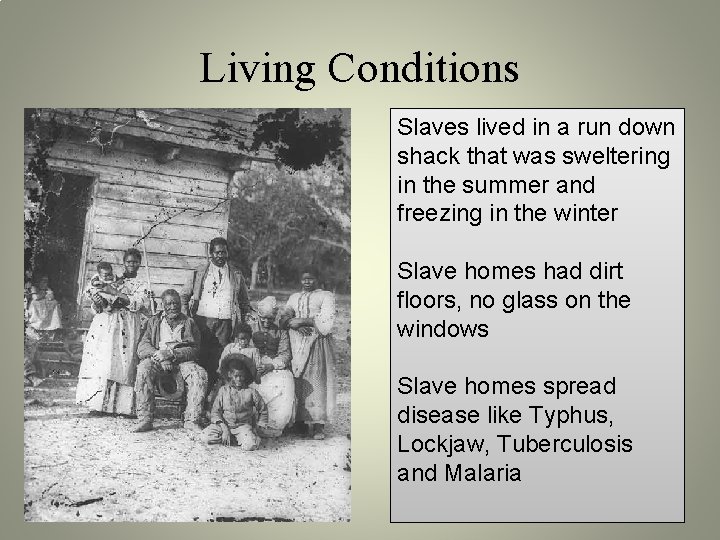
Living Conditions Slaves lived in a run down shack that was sweltering in the summer and freezing in the winter Slave homes had dirt floors, no glass on the windows Slave homes spread disease like Typhus, Lockjaw, Tuberculosis and Malaria
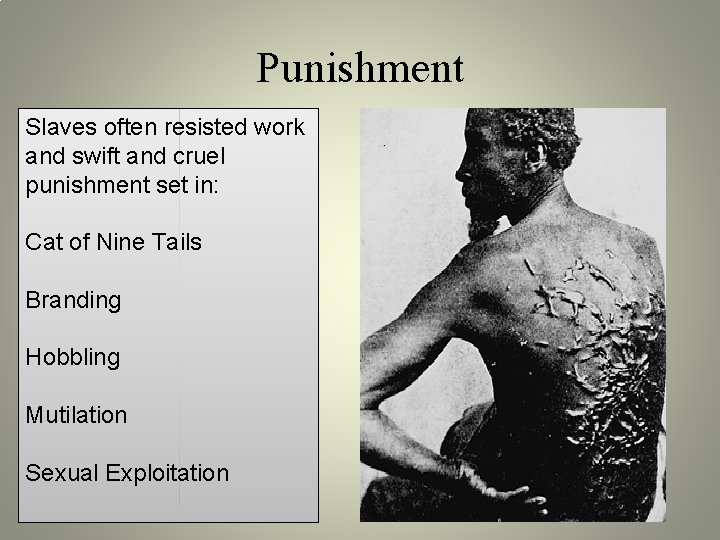
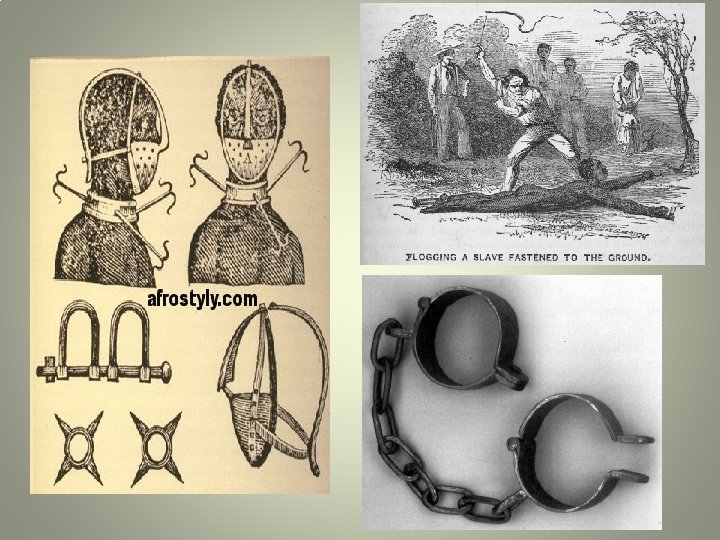
Punishment Slaves often resisted work and swift and cruel punishment set in: Cat of Nine Tails Branding Hobbling Mutilation Sexual Exploitation
“A favorite one was to tie a rope round a man's body, and suspend him from the ground. A fire was kindled over him, from which was suspended a piece of fat pork. As this cooked, the scalding drops of fat continually fell on the bare flesh. " Harriet Jacobs they used to "drive nails into a hogshead so as to leave the point of the nail just protruding in the inside of the cask. Into this he used to put his slaves for punishment, and roll them down a very long and steep hill. ” Moses Roper States with large numbers of slaves introduced their own slave codes. The main idea behind these codes was to keep the slaves under the tight control of their owners. The death-penalty was introduced for a whole range of offences. Slaves could be executed for murder, rape, burglary, arson and assault upon a white person. Plantation owners believed that this severe discipline would make the slaves too scared to rebel.
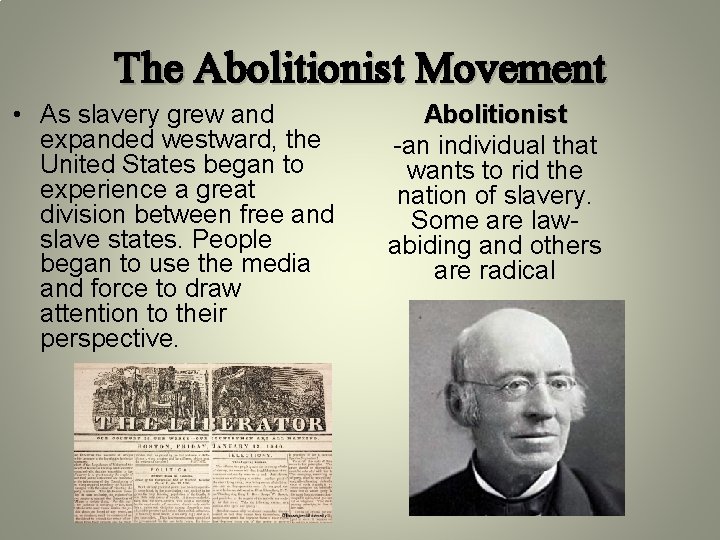
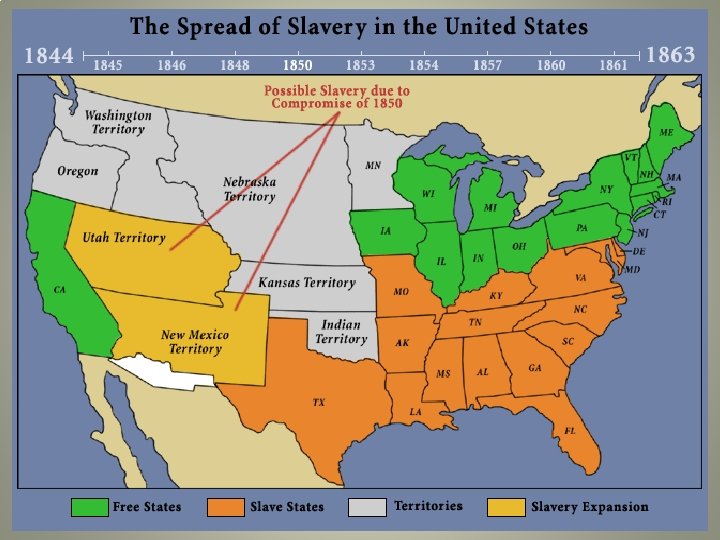
The Abolitionist Movement • As slavery grew and expanded westward, the United States began to experience a great division between free and slave states. People began to use the media and force to draw attention to their perspective. Abolitionist -an individual that wants to rid the nation of slavery. Some are lawabiding and others are radical
SLAVERY ABOLISHED IN BRITISH EMPIRE • 1807 = slave trade abolished in British Empire no slaves carried from Africa in British ships. • 1834 = Emancipation Act: slaves under 6 yrs. old freed; field hands over 6 worked for 6 more years; house slaves worked 10 more years • Britain gave 20 million pounds in compensation to former slave owners (slaves received nothing) • 1838 all slaves given complete freedom • Slavery in USA not abolished until 1865