
The Tragedy Of San Juanico PEMEX Mexico City
- Slides: 21
The Tragedy Of San Juanico, PEMEX, Mexico City, 19 Nov 84 • A BLEVE Case Study • Presented to ES-317 y at UWO in 1999 • Dick Hawrelak
Definition of a BLEVE • • • B = Boiling L = Liquid E = Expanding V = Vapor E = Explosion
BLEVE Causes • Flame impinging on the vapor space of a pressure vessel. • Mechanical failure in the vapor phase. • Corrosion in the vapor phase. • Vapor phase is hit by flying fragment.
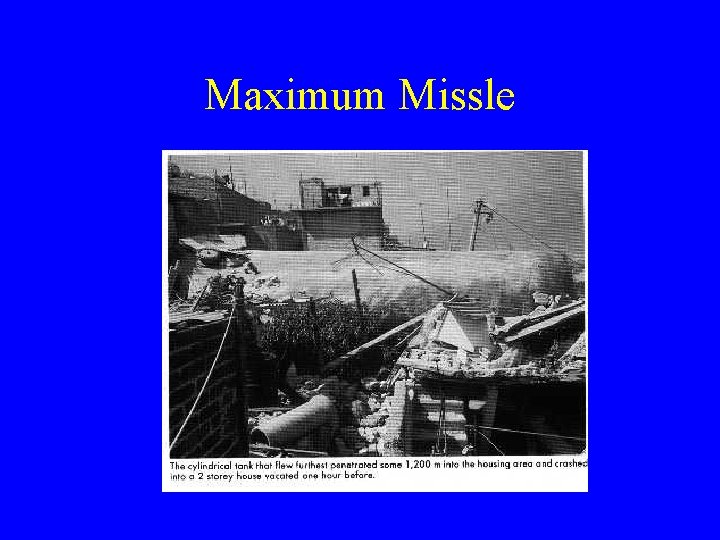
The BLEVE Event • There is an initial damaging shock wave. • The liquid flashes to a fraction of vapor. • If an ignition source is nearby a fireball is created. • A high energy release can tear the vessel into pieces creating flying fragments. • Fragments can rocket as far as 1, 200 meters.
BLEVE Analysis • BLEVE consequence calculations are provided in numerous spreadsheet programs in the Hazard Analysis folder available to all students. • One particularly useful program is called Flammable Hazard V 1. 2.
Pemex (Petroleos Mexicanos) • Pemex is a liquid petroleum gas ( LPG) distribution plant. • Pemex is located a few km. north of Mexico City (Pop = 16 MM). • Plant was 25 years old and built to 1950 API standards of the U. S. • LPG gas is used for heating and cooking in almost every household.
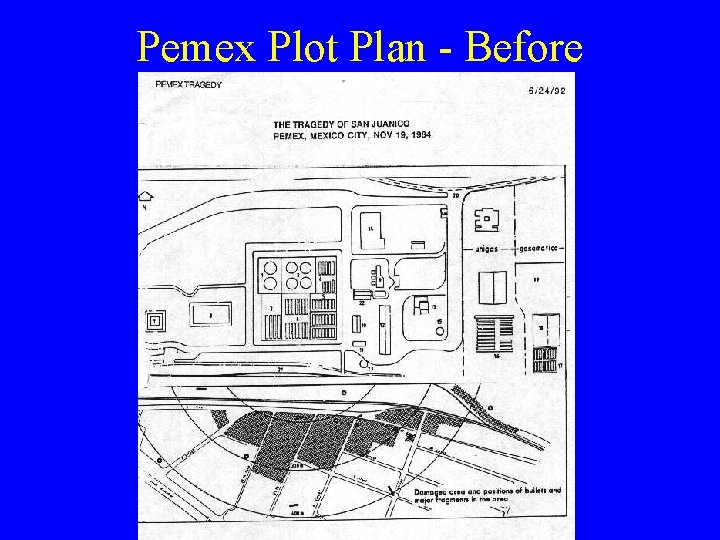
Pemex Plot Plan - Before
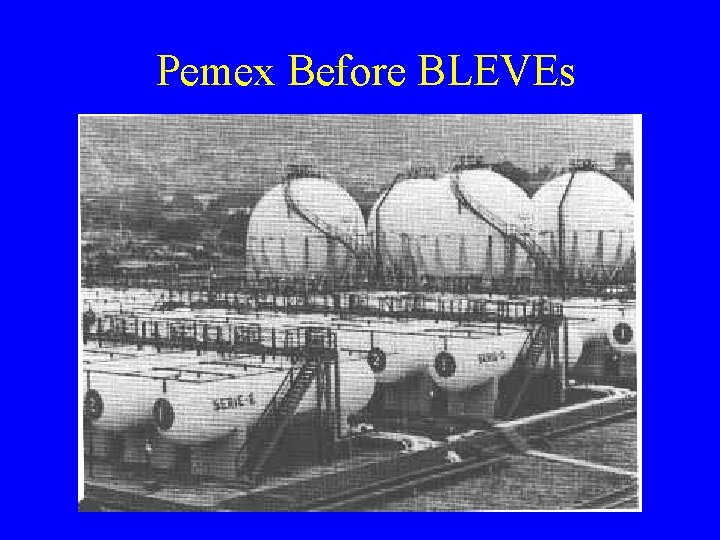
Pemex Before BLEVEs
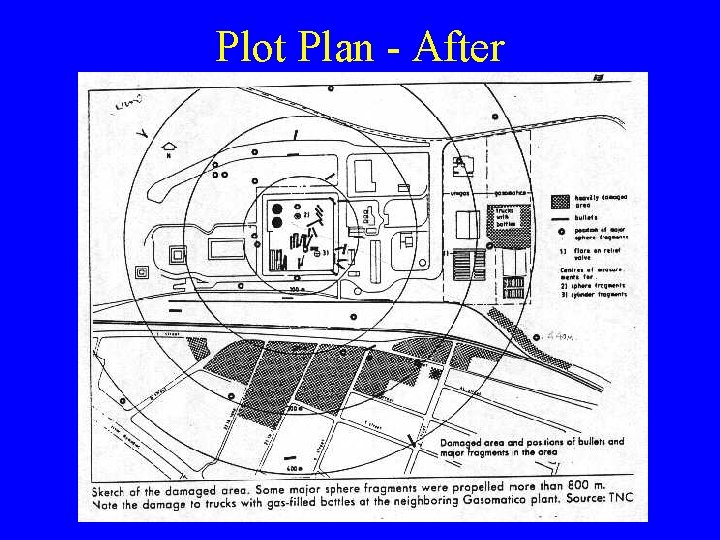
Plot Plan - After
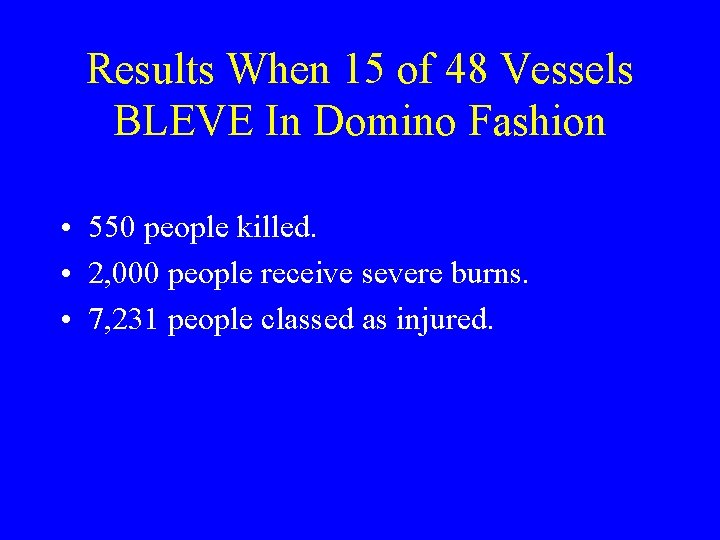
Results When 15 of 48 Vessels BLEVE In Domino Fashion • 550 people killed. • 2, 000 people receive severe burns. • 7, 231 people classed as injured.
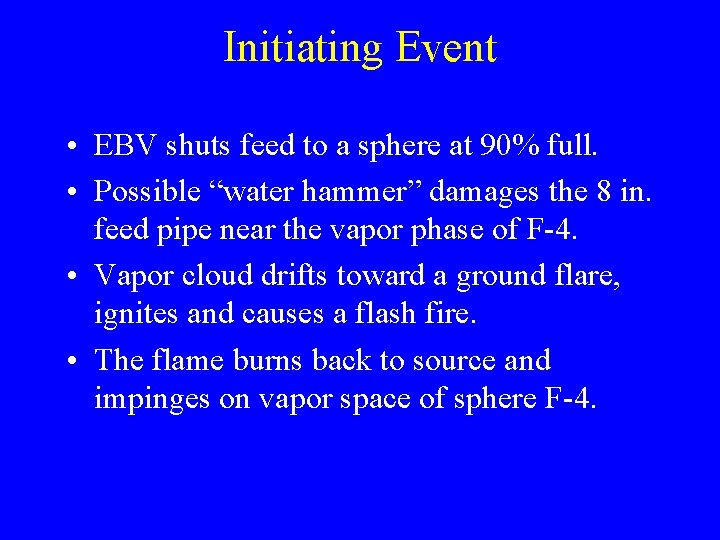
Initiating Event • EBV shuts feed to a sphere at 90% full. • Possible “water hammer” damages the 8 in. feed pipe near the vapor phase of F-4. • Vapor cloud drifts toward a ground flare, ignites and causes a flash fire. • The flame burns back to source and impinges on vapor space of sphere F-4.
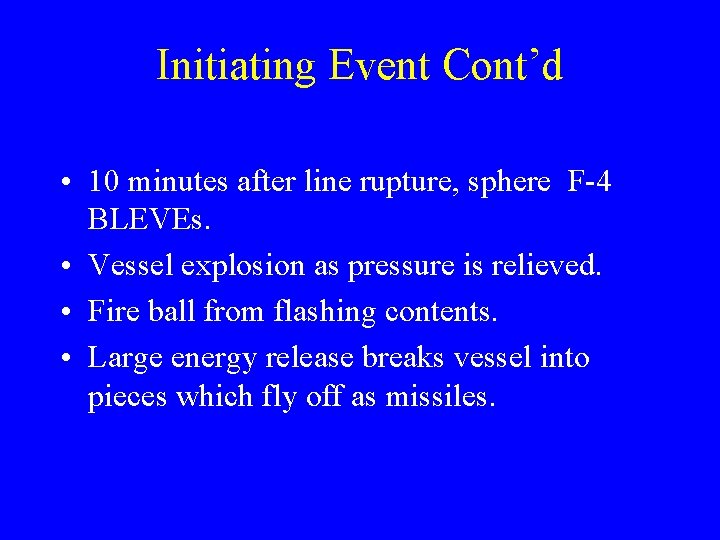
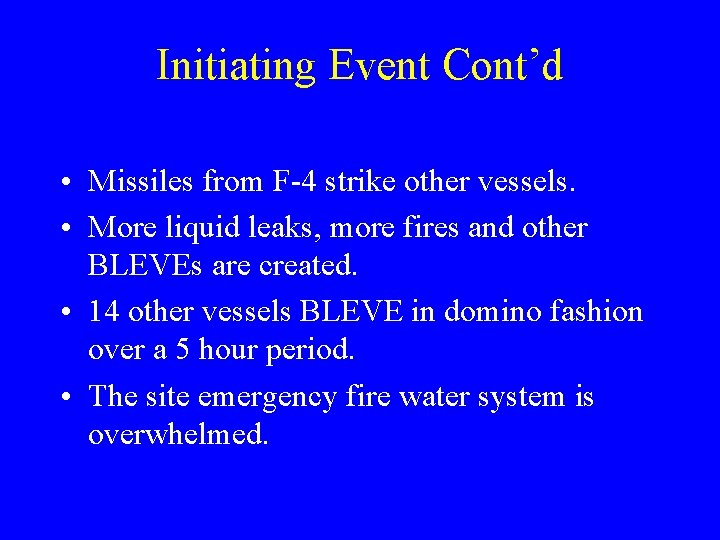
Initiating Event Cont’d • 10 minutes after line rupture, sphere F-4 BLEVEs. • Vessel explosion as pressure is relieved. • Fire ball from flashing contents. • Large energy release breaks vessel into pieces which fly off as missiles.
Initiating Event Cont’d • Missiles from F-4 strike other vessels. • More liquid leaks, more fires and other BLEVEs are created. • 14 other vessels BLEVE in domino fashion over a 5 hour period. • The site emergency fire water system is overwhelmed.
F-4 Failure
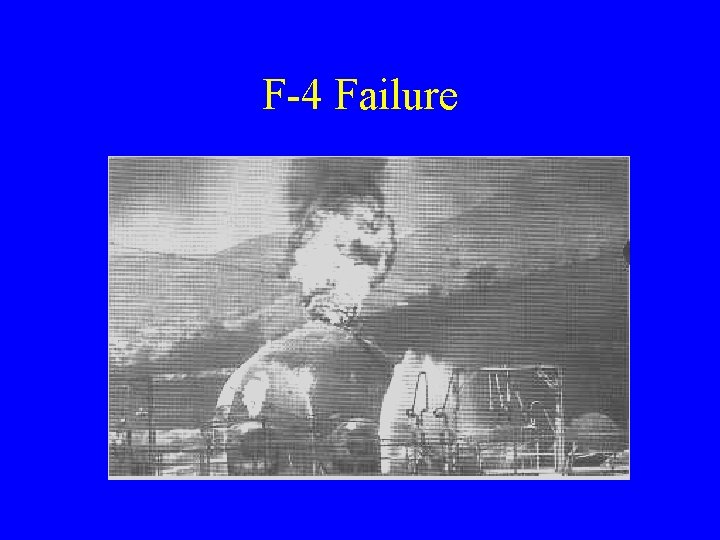
Bullet Tank Area
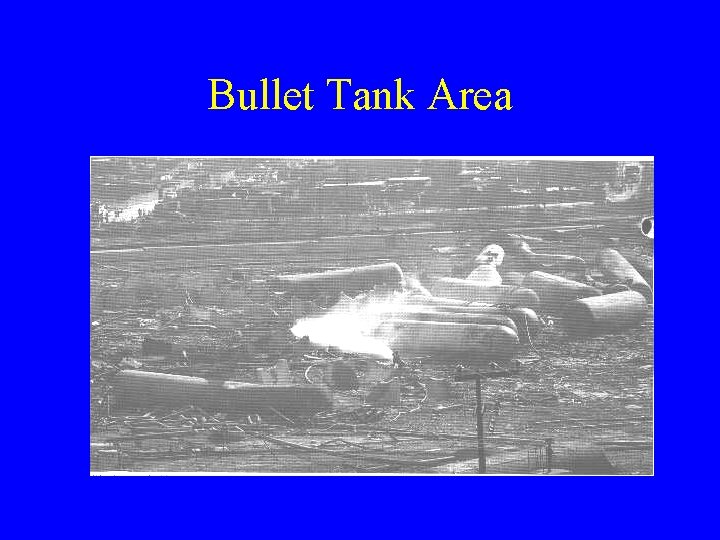
Nearby Houses
Missile Alert • • F 1, F 2, F 3 and F 4 spheres disappear. Avg. wt. of a bullet vessel was 20 tons. Furthest missile traveled 1, 200 meters. Burning HCs rained on neighboring village 130 m from fence line.
Maximum Missle
Emergency Response • First firefighters arrive 15 minutes after F-4 BLEVE. • 100 ambulances and 200 firefighters involved. • 985 medics and 1, 780 paramedics involved. • 1, 332 medical volunteers in 33 hospitals involved.
Lessons Learned • Old plant, too congested, poor maintenance & poor operator training were cited. • Village should have been 1, 500 meters from terminal (determined by QRA analysis). • Require many gas detectors and alarms. • EBV closure rates need adjustment. • Emergency plan required.
Possible Exam Questions • What do the letters in the acronym BLEVE stand for? • Name four possible causes of a BLEVE. • Describe the events that can take place in a BLEVE.