
The tragedy of Macbeth William Shakespeare Macbeth is
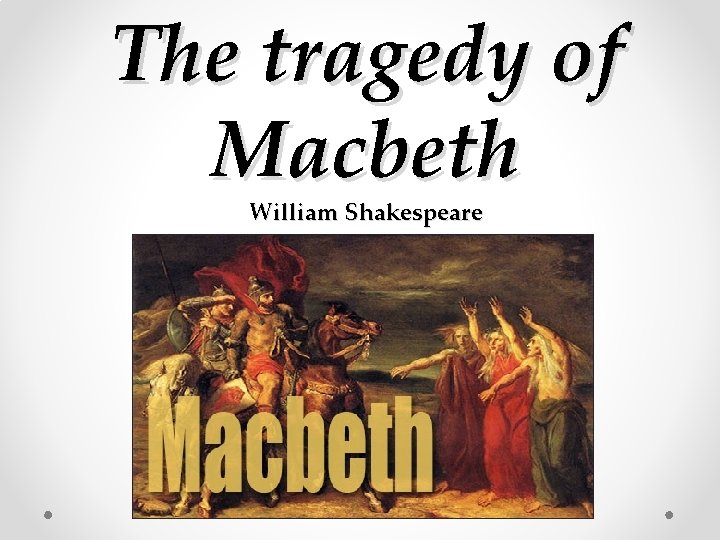
The tragedy of Macbeth William Shakespeare
Macbeth is a tragedy by William Shakespeare; it is thought to have been first performed in 1606. It dramatizes the damaging physical and psychological effects of political ambition on those who seek power for its own sake. Of all the plays that Shakespeare wrote during the reign of James I, who was patron of Shakespeare's acting company, Macbeth most clearly reflects the playwright's relationship with his sovereign. It was first published in the Folio of 1623, possibly from a prompt book, and is Shakespeare's shortest tragedy.
The main themes of Macbeth: good versus evil the dangers of ambition the influence of supernatural forces the contrast between appearance and reality • loyalty and guilt. • •
Issues of Macbeth • How does ambition motivate people, both as a positive and as a negative trait? Although he is encouraged by the Witches, Macbeth‘s true downfall is his own ambition. Lady Macbeth is as ambitious as her husband, encouraging him to commit murder to achieve their goals. Both Macbeths fail to see how their ambition makes them cross moral lines and will lead to their downfall. • To what extent and in what way does power influence a person’s actions? • When do you feel guilty and when do you experience remorse? Guilt haunts Macbeth, both as a ghost that he sees, as well as the heaviness on his conscious. He also is haunted by his killing of Banquo, a once trusted ally and friend, and is haunted by his ghost. Lady Macbeth's guilt causes her to sleepwalk and be haunted by Duncan's blood that she cannot 'clean' her hands of. Throughout the course of the play, the Three Witches and Lady Macbeth are the people with the most power over Macbeth’s life. The more power that a person has, the more corrupt they become. Many different people in Macbeth have power, and there are different ways to be powerful, Usually, men are the ones who are outward and aggressive about it, and women are more subdued about it. Lady Macbeth has a great deal of power over Macbeth the power which she holds over him, is the fact that she possesses more of the “manly” quality than Macbeth himself does. Because of this, Macbeth is ashamed of himself. As a result of Macbeth’s shame, he attempts to do everything in his power to prove himself to Lady Macbeth. As a result of Lady Macbeth’s doubts and mocking, Macbeth finally murders Duncan in a final attempt to prove himself to Lady Macbeth.
Witches and Witchcraft Witches were said to have “diabolical” powers. They could: • • predict the future bring on night in the daytime cause fogs and tempests kill animals curse enemies with fatal, wasting diseases cause nightmares and sterility take demonic possession of any individual raise evil spirits by concocting a brew It was believed that witches allowed the devil to suck their blood. Accused witches were examined for the “Devil’s Mark” - a red mark on their body from which the devil had sucked blood.
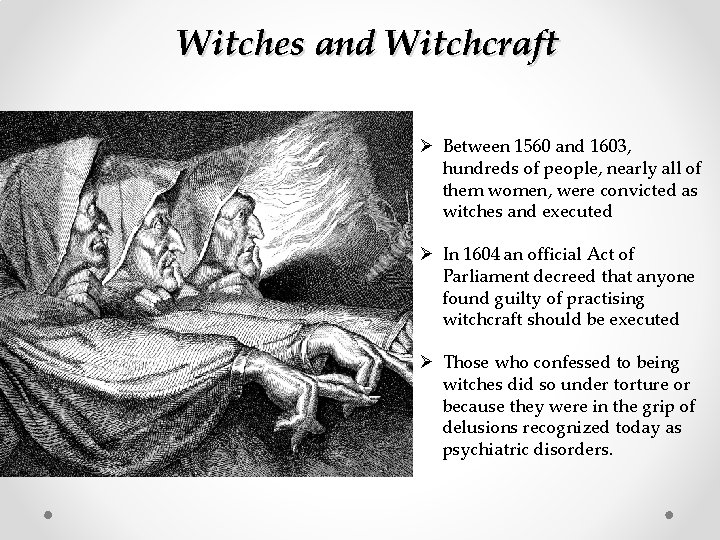
Witches and Witchcraft Ø Between 1560 and 1603, hundreds of people, nearly all of them women, were convicted as witches and executed Ø In 1604 an official Act of Parliament decreed that anyone found guilty of practising witchcraft should be executed Ø Those who confessed to being witches did so under torture or because they were in the grip of delusions recognized today as psychiatric disorders.
- Slides: 6