
The Traditional Chinese Culture and the Local Cultural
- Slides: 31
The Traditional Chinese Culture and the Local Cultural Highlights 中国地方文化 By Jenny sza 839886@jsmail. com. cn 1/20/2022 1
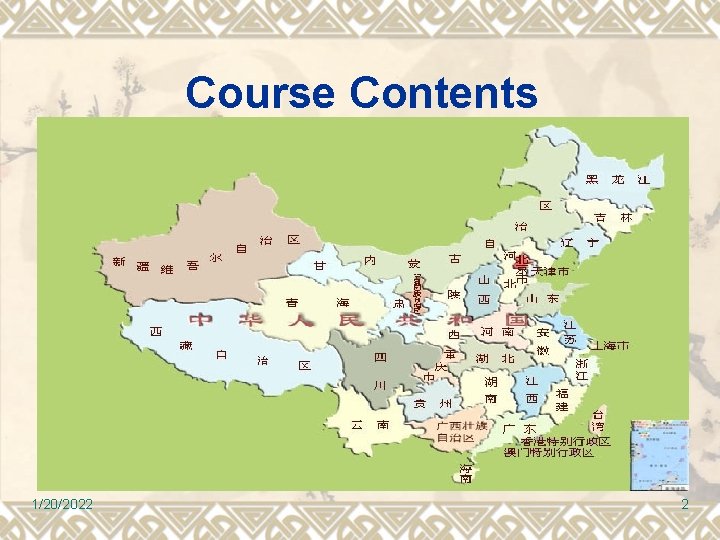
Course Contents 1/20/2022 2
Chapter One Origin of the Traditional Chinese Culture China is one of the areas where civilization developed earliest. It has a recorded history of nearly 5, 000 years. China,in Chinese “中 国”,the character of which literally translates as the “Middle Kingdom”, because the Chinese have always viewed their culture and nation as lying in the center of human civilization. 1/20/2022 3
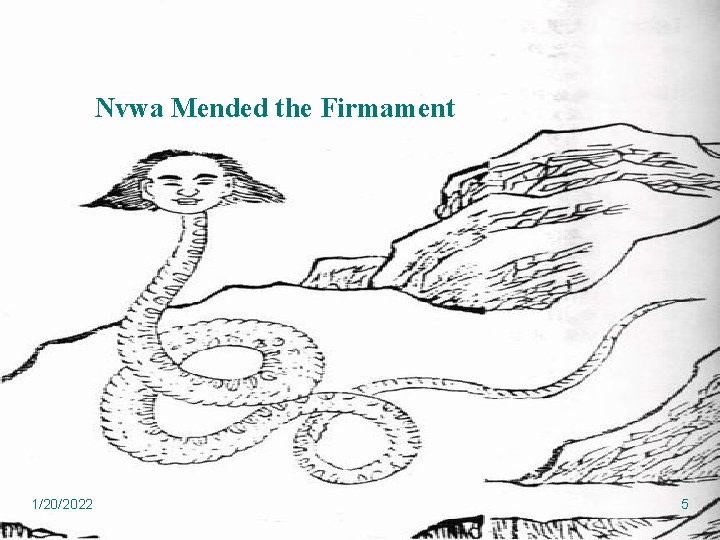
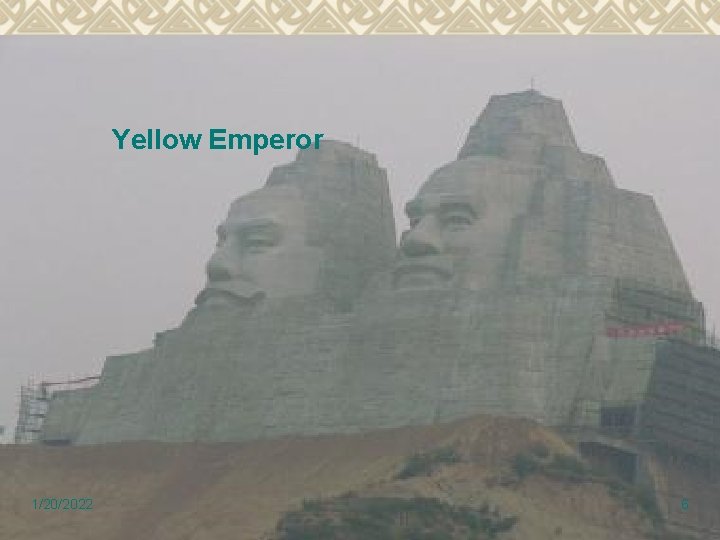
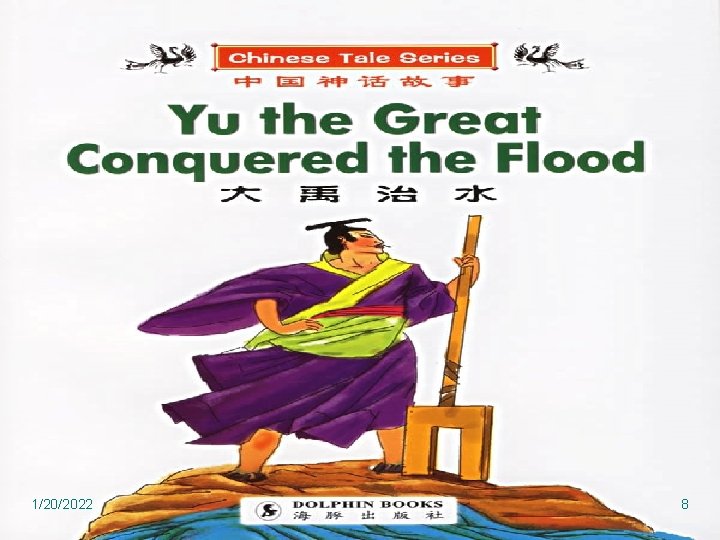
Ⅰ. Primitive Mythologies 1/20/2022 4
Nvwa Mended the Firmament 1/20/2022 5
Yellow Emperor 1/20/2022 6
Houyi shot the suns 1/20/2022 7
1/20/2022 8
II. A Galaxy of Early Civilization Early man in China and the Two Cradles v 2. Paragons of Ancient Economy & Culture v 1. 1/20/2022 9
Chapter Two Languages of China v The Chinese language, although not unique, is one of a very small group of languages in which the written form does not vary with different spoken forms. If the written form of the language is complex, the spoken variations are just as staggering. There are eight major language groups with some 600 dialects - all sharing the same written form. Learning Chinese is a challenge, but learn Putonghua and you will be able to communicate with over 20% of the world's population. 1/20/2022 10
v Ⅰ. The Myth of Chinese Language v II. Square Chinese Words and Characters in a Unique Style 1/20/2022 11
Languages 1. 2. A Poetic and Musical Language An Ancient Writing System 1/20/2022 12
Words and Characters 1. 2. The Structure of the Chinese Character Calligraphies 1/20/2022 13
Chapter Three Characteristics of Chinese Philosophy and History of the Educational System of China v Chinese culture has been molded by the three philosophical traditions: Confucianism, Taoism and Buddhism. Briefly, Confucianism deals with human relationship, Taoism deals with life in harmony with nature, and Buddhism deal with immortal world. For Chinese people, Confucianism, Taoism and Buddhism are more philosophies than religions. Most scholars believe that Chinese people have been less concerned with religions than other people are. Therefore, for Chinese people, Confucianism, Taoism and Buddhism are not religions but philosophical teachings 1/20/2022 14
v I. Confucianism v II. Taoism v III. Buddhism History of the Educational System of China v Ⅳ. 1/20/2022 15
Chapter Four The Classic Traditional Culture v China has a very old and rich tradition in culture development and exchange. It can be illustrated not only in science and technology, and sports, but also in literature and the performing arts. 1/20/2022 16
v I. Great Inventions v II. Miraculous Chinese Herbal Medicine Benefiting Human Beings v III. Literature v IV. The Performing Arts v V. Chinese Martial arts 1/20/2022 17
Chapter Five Historic Architecture in China v Ancient Chinese architecture is deeply rooted in traditional Chinese culture, so it obviously has national cultural characteristics, such as its readability, flexibility, introversion, super-stability, and interdependence. 1/20/2022 18
v I. The Number “Nine” and Imperial Buildings v II. Ancient Chinese Architectural Heritages: v Ⅲ. Feng Shui 1/20/2022 19
Chapter Six The Traditional Chinese Holidays Boasting rich cultural meaning and a long history, traditional Chinese festivals compose an important and brilliant part of Chinese culture. Most traditional festivals took shape during the Qin Dynasty (221 -206 BC). In the most prosperous Tang Dynasty (AD 618 -907), traditional festival liberated themselves from primitive sacrifice, taboo and mystery and became more entertaining. From them on, festive occasions turned more brisk and exciting and more folk customs were developed. 1/20/2022 20
v I. Chinese Lunar Calendar v II. The Associated Chinese Mythology and Folklore Tale III. Traditional Festivals and Customs v 1/20/2022 21
Chapter Seven Chinese Elements v 1/20/2022 As a product of human thought, the word “culture” encompasses a great deal. Many instruments, actions or living habits are displaying and underlying various modes of rich cultural value. Cooking, chopsticks, tea drinking are quite monocultural. In addition, art forms, such as pottery and porcelain, and Chinese fans are also component parts of the Chinese popular culture embodying rich Chinese elements. 22
v I. Food Culture v II. Tea Culture v Ⅲ. Chinese Fans v IV. Ceramics 1/20/2022 23
Chapter Eight Chinese Folk Handicrafts Arts v Chinese folk handicraft has its history more than 5, 000 years, as long as Chinese history. There are various unique traditional forms of folk art in China. This chapter introduces the paper-cuts, Chinese knots, woodblock New Year paintings, etc. They all stand out in their artistic creation and expression. With skillfully contrasted colors, characteristic themes, honest and graceful figures, each type of handicrafts give off a strong local flavor. 1/20/2022 24
Chinese Paper-cuts v II. Chinese Knots v III. Embroidery v IV. Paintings v I. 1/20/2022 25
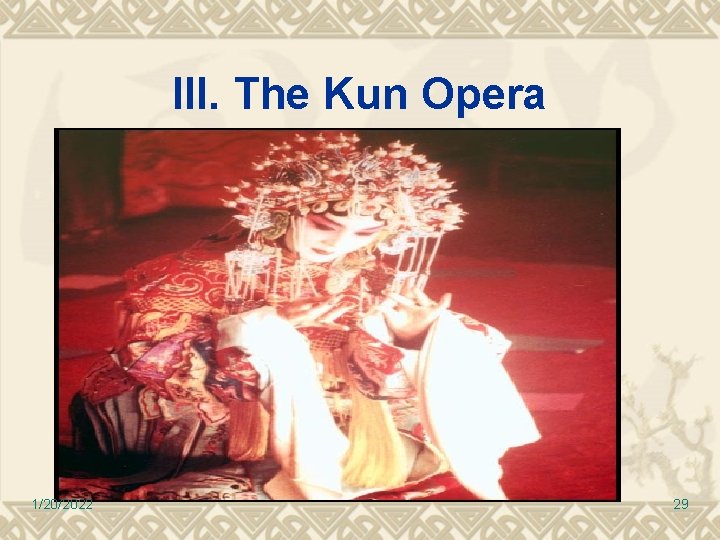
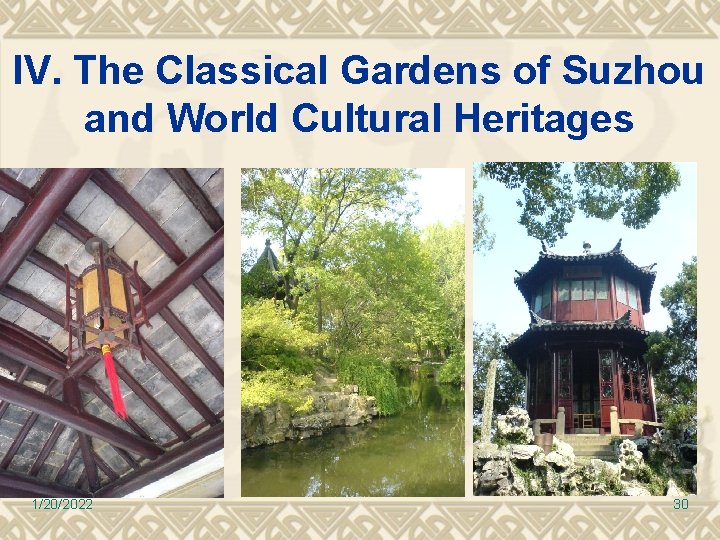
Chapter Nine The Local Culture of Suzhou---Wu Culture Suzhou, paradise in human world, is a wellknown tour or water city. Speaking of the historical and cultural city, many people will think of its classic gardens. Nine gardens in Suzhou are included on World Cultural Heritage List. And another heritage-- Kun Opera was also classed as a "Masterpiece of Oral and Intangible Cultural Heritage". Besides, the Wu dialect and Wu songs also strongly reflect the magnificent local colors. 1/20/2022 26
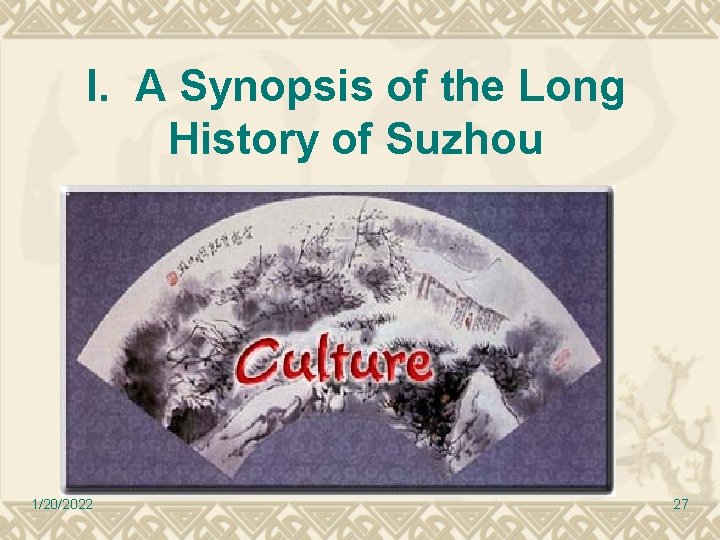
I. A Synopsis of the Long History of Suzhou 1/20/2022 27
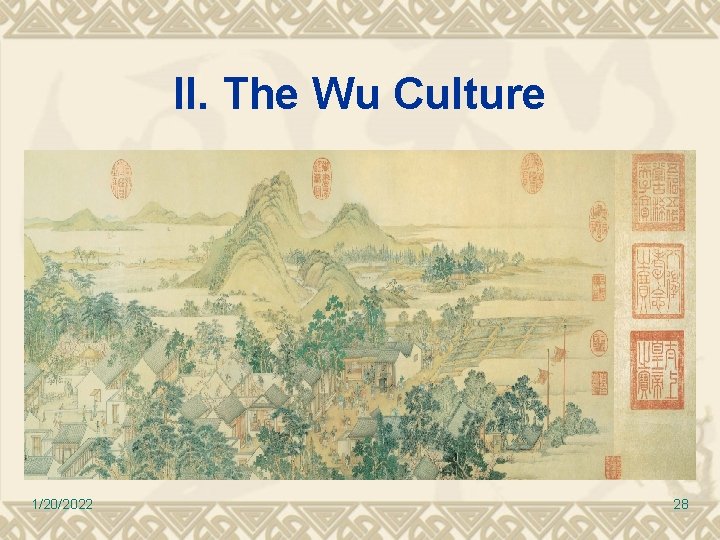
II. The Wu Culture 1/20/2022 28
III. The Kun Opera 1/20/2022 29
IV. The Classical Gardens of Suzhou and World Cultural Heritages 1/20/2022 30
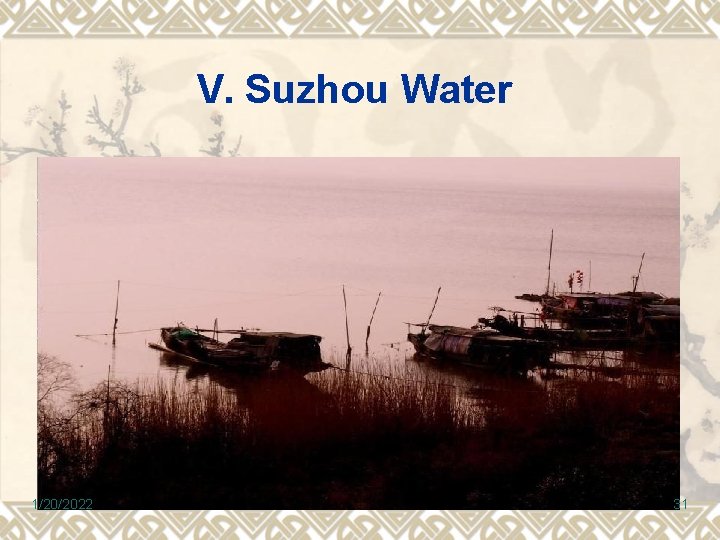
V. Suzhou Water 1/20/2022 31