
The Tokamak Invented in the 1950 s Leading
- Slides: 11
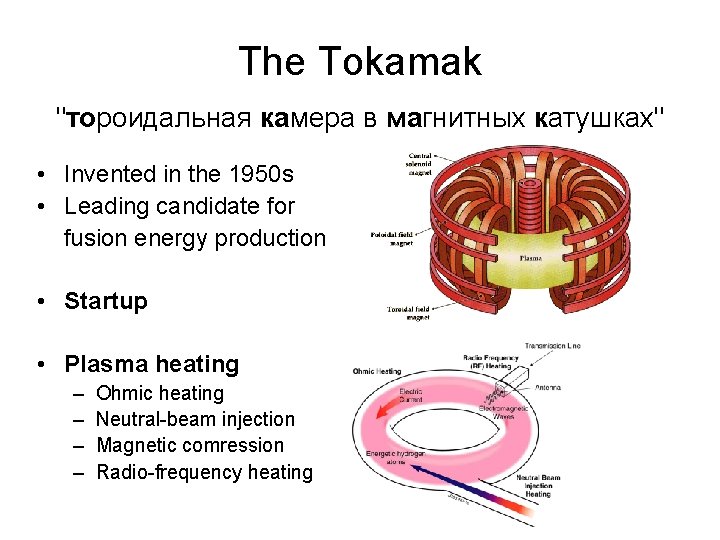
The Tokamak "тороидальная камера в магнитных катушках" • Invented in the 1950 s • Leading candidate for fusion energy production • Startup • Plasma heating – – Ohmic heating Neutral-beam injection Magnetic comression Radio-frequency heating
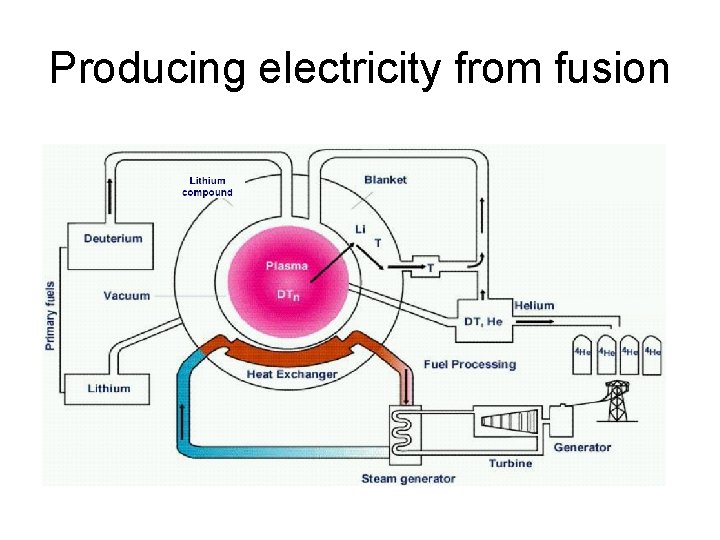
Producing electricity from fusion
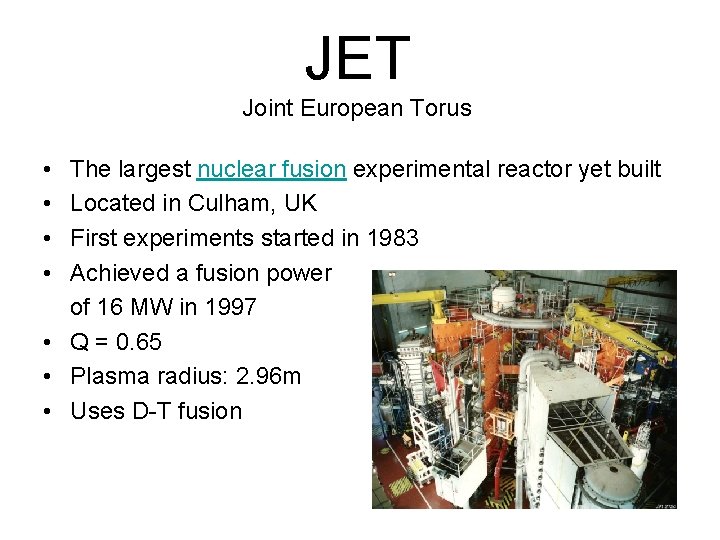
JET Joint European Torus • • The largest nuclear fusion experimental reactor yet built Located in Culham, UK First experiments started in 1983 Achieved a fusion power of 16 MW in 1997 • Q = 0. 65 • Plasma radius: 2. 96 m • Uses D-T fusion
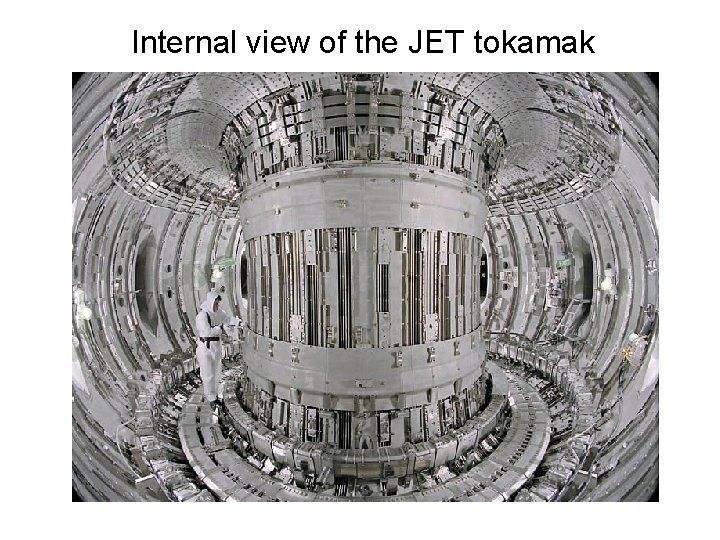
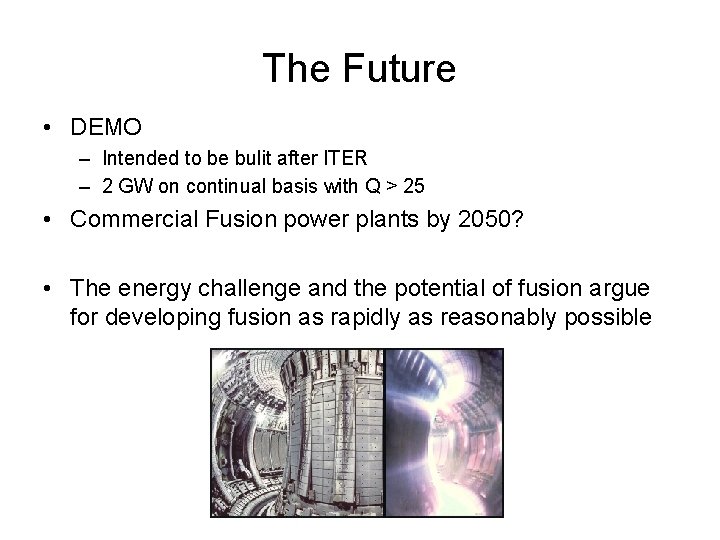
Internal view of the JET tokamak
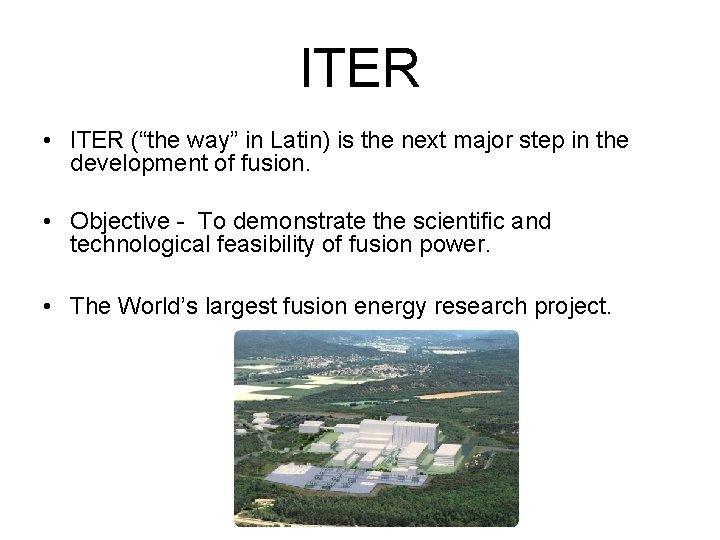
ITER • ITER (“the way” in Latin) is the next major step in the development of fusion. • Objective - To demonstrate the scientific and technological feasibility of fusion power. • The World’s largest fusion energy research project.
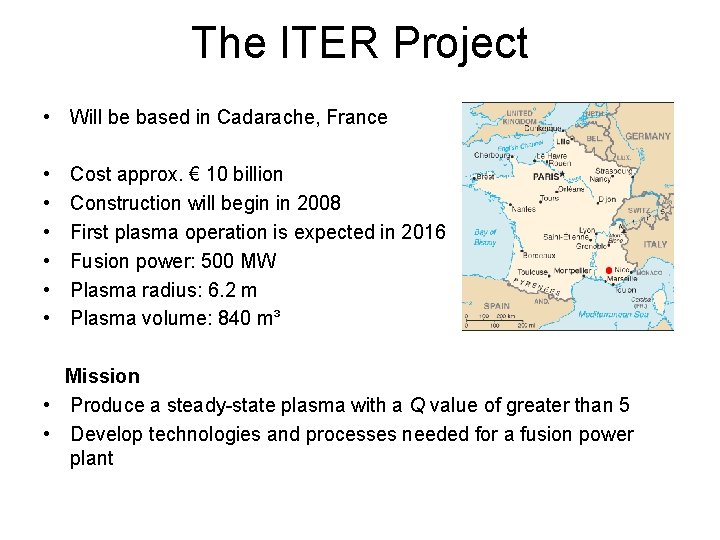
The ITER Project • Will be based in Cadarache, France • • • Cost approx. € 10 billion Construction will begin in 2008 First plasma operation is expected in 2016 Fusion power: 500 MW Plasma radius: 6. 2 m Plasma volume: 840 m³ Mission • Produce a steady-state plasma with a Q value of greater than 5 • Develop technologies and processes needed for a fusion power plant
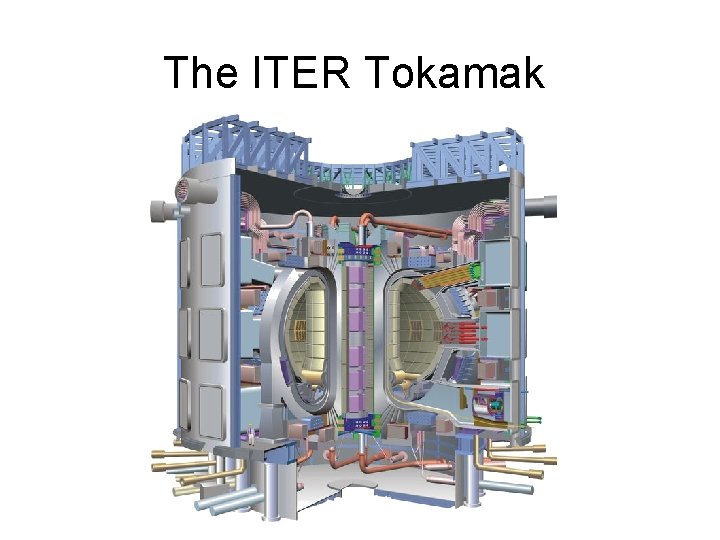
The ITER Tokamak
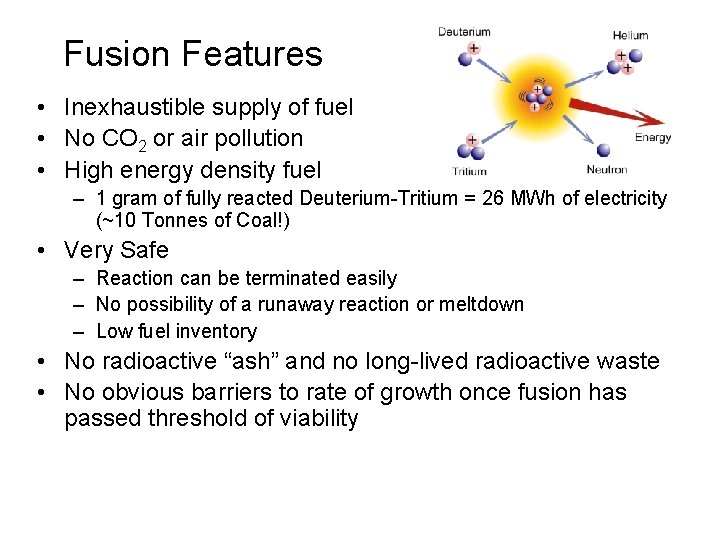
Fusion Features • Inexhaustible supply of fuel • No CO 2 or air pollution • High energy density fuel – 1 gram of fully reacted Deuterium-Tritium = 26 MWh of electricity (~10 Tonnes of Coal!) • Very Safe – Reaction can be terminated easily – No possibility of a runaway reaction or meltdown – Low fuel inventory • No radioactive “ash” and no long-lived radioactive waste • No obvious barriers to rate of growth once fusion has passed threshold of viability
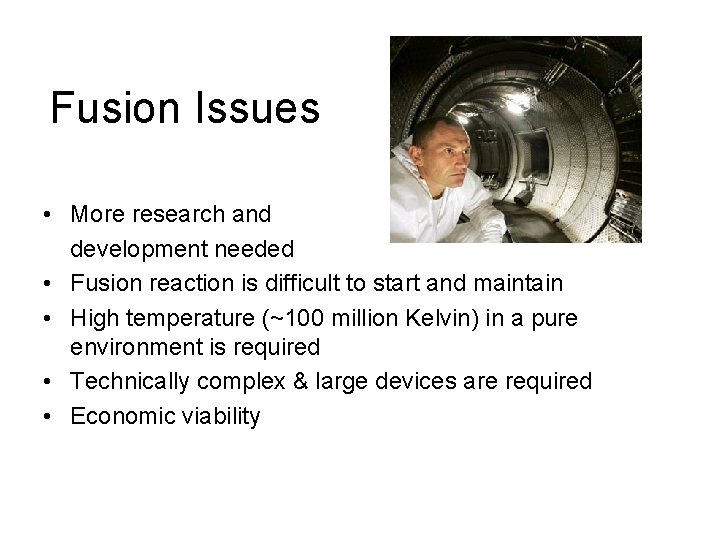
Fusion Issues • More research and development needed • Fusion reaction is difficult to start and maintain • High temperature (~100 million Kelvin) in a pure environment is required • Technically complex & large devices are required • Economic viability
The Future • DEMO – Intended to be bulit after ITER – 2 GW on continual basis with Q > 25 • Commercial Fusion power plants by 2050? • The energy challenge and the potential of fusion argue for developing fusion as rapidly as reasonably possible
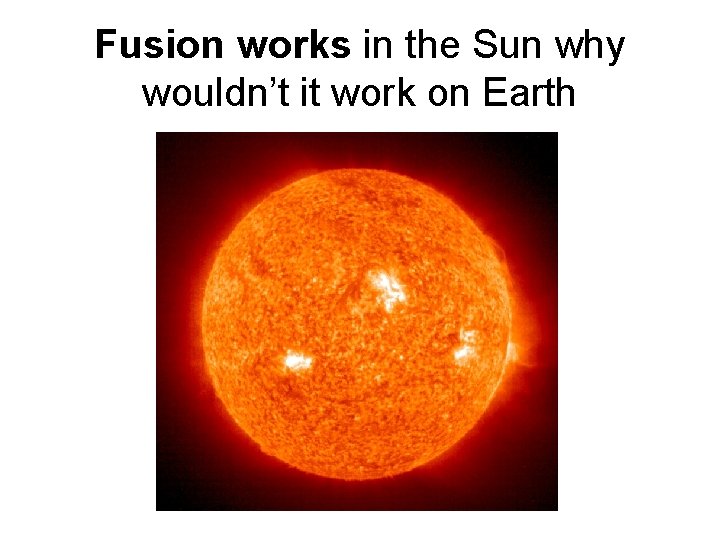
Fusion works in the Sun why wouldn’t it work on Earth