
The Tin Forest By Helen Ward and Wayne
The Tin Forest By Helen Ward and Wayne Anderson
Lesson One Tuesday L. I. I can create expanded noun phrases using two adjectives. I can convince Mrs Pearson.
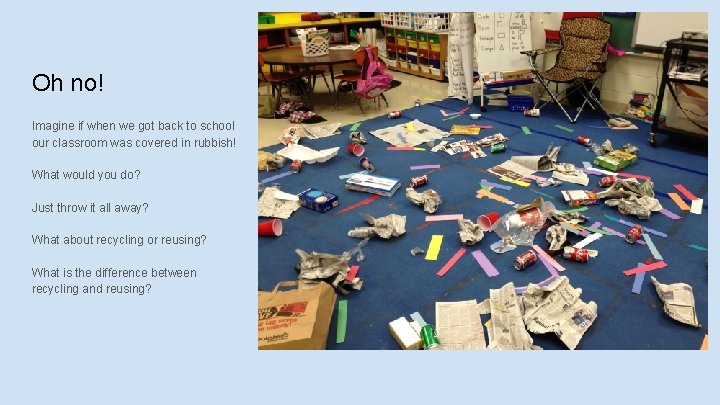
Oh no! Imagine if when we got back to school our classroom was covered in rubbish! What would you do? Just throw it all away? What about recycling or reusing? What is the difference between recycling and reusing?
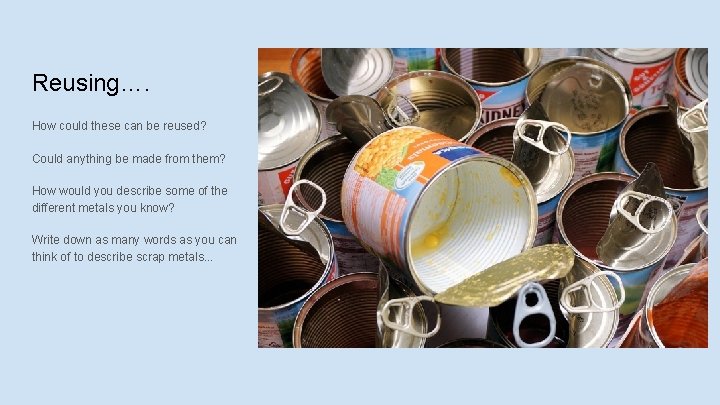
Reusing…. How could these can be reused? Could anything be made from them? How would you describe some of the different metals you know? Write down as many words as you can think of to describe scrap metals. . .

And Stop!
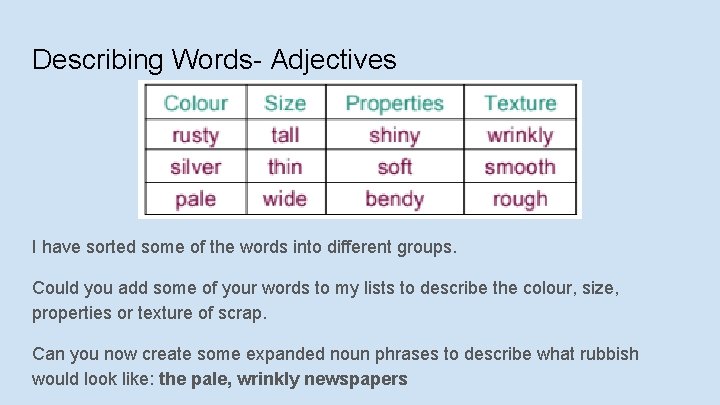
Describing Words- Adjectives I have sorted some of the words into different groups. Could you add some of your words to my lists to describe the colour, size, properties or texture of scrap. Can you now create some expanded noun phrases to describe what rubbish would look like: the pale, wrinkly newspapers
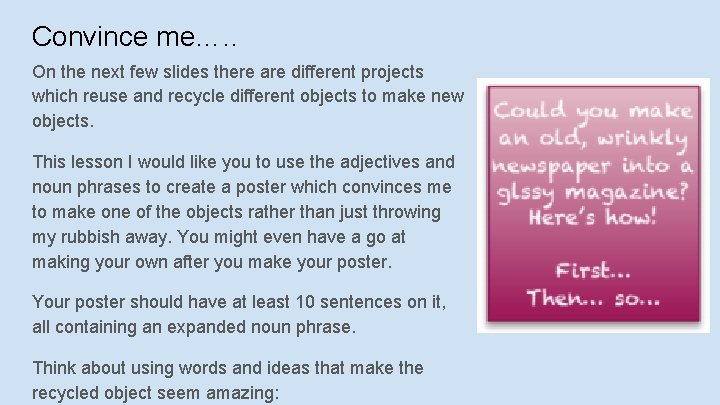
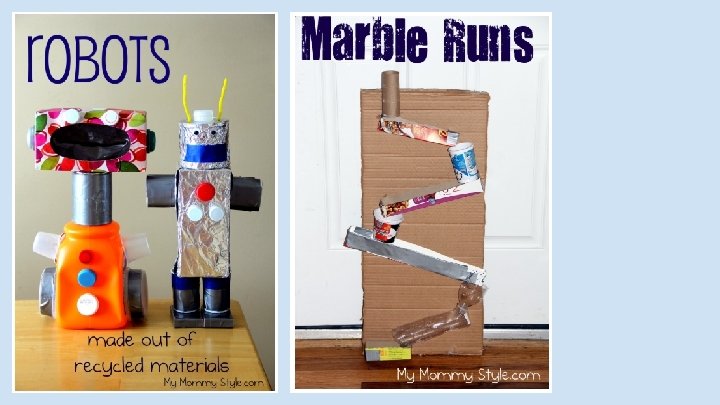
Convince me…. . On the next few slides there are different projects which reuse and recycle different objects to make new objects. This lesson I would like you to use the adjectives and noun phrases to create a poster which convinces me to make one of the objects rather than just throwing my rubbish away. You might even have a go at making your own after you make your poster. Your poster should have at least 10 sentences on it, all containing an expanded noun phrase. Think about using words and ideas that make the recycled object seem amazing:
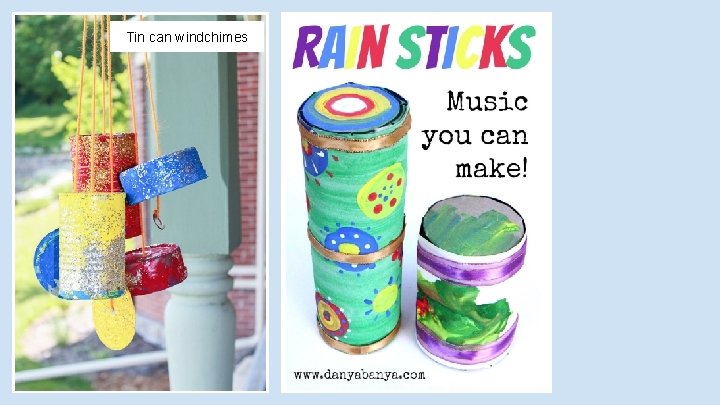
Tin can windchimes
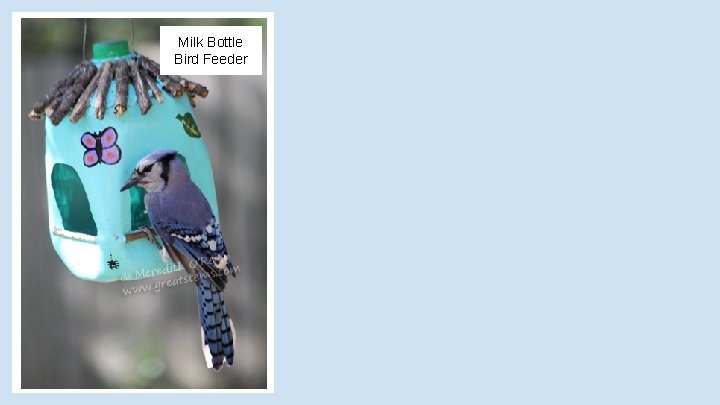
Milk Bottle Bird Feeder
Using Noun Phrases How would you use these phrases in a fiction story? When might the be useful?
Lesson Two Wednesday L. I. I can predict from an image. I can use conjunction to link ideas.
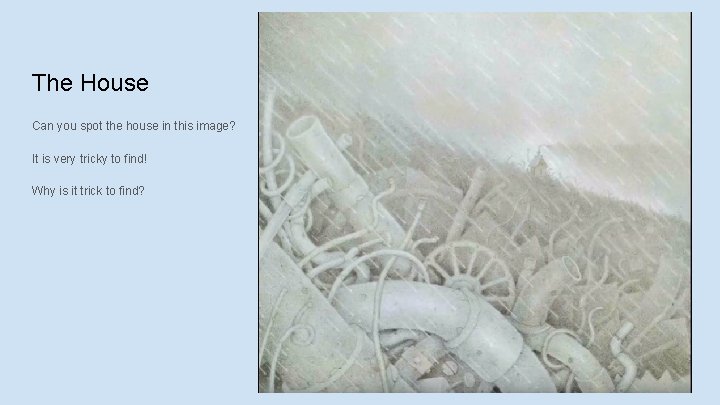
The House Can you spot the house in this image? It is very tricky to find! Why is it trick to find?
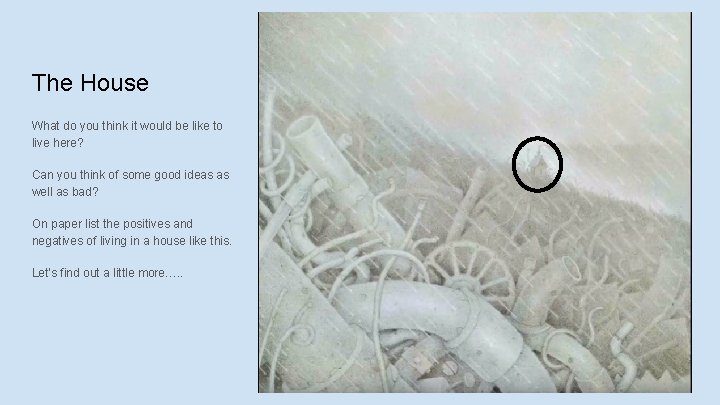
The House What do you think it would be like to live here? Can you think of some good ideas as well as bad? On paper list the positives and negatives of living in a house like this. Let’s find out a little more…. .
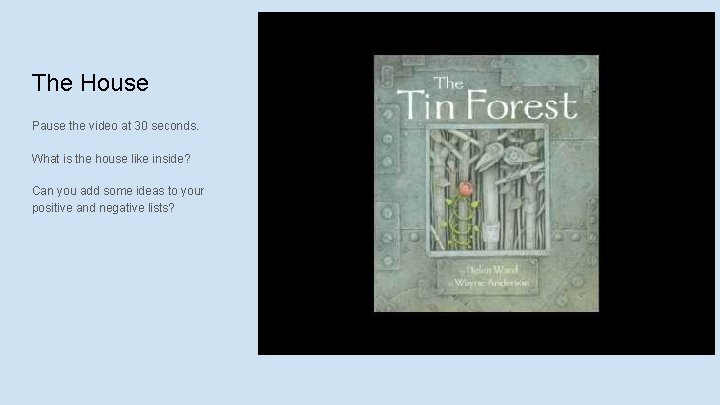
The House Pause the video at 30 seconds. What is the house like inside? Can you add some ideas to your positive and negative lists?
My Ideas…. Positives Negatives It is cosy and warm Outside is dirty and untidy There is no-one to bother him The weather is harsh quiet lonely I am sure you have lots of much better ideas to add to our list.
Turning My Ideas In To Writing Positives Negatives It is cosy and warm Outside is dirty and untidy There is no-one to bother him The weather is harsh quiet lonely I am going to use conjunctions to change my notes into a full section of text. This house looks cosy and warm however the weather outside seems to be very harsh. The man has noone around to bother or disturb him although this must make him very lonely. Although outside is very dirty and untidy, the man gets to sit in the quiet.
Your turn. . . You are now going to use your notes and the conjunctions to create your own sentences. You should use each conjunction at least once. Remember you can use the conjunction at the start of a sentence but you will then need a comma. Here is my writing to help: This house looks cosy and warm however the weather outside seems to be very harsh. The man has no-one around to bother or disturb him although this must make him very lonely. Although outside is very dirty and untidy, the man gets to sit in the quiet. However Although But On the other hand However Despite this
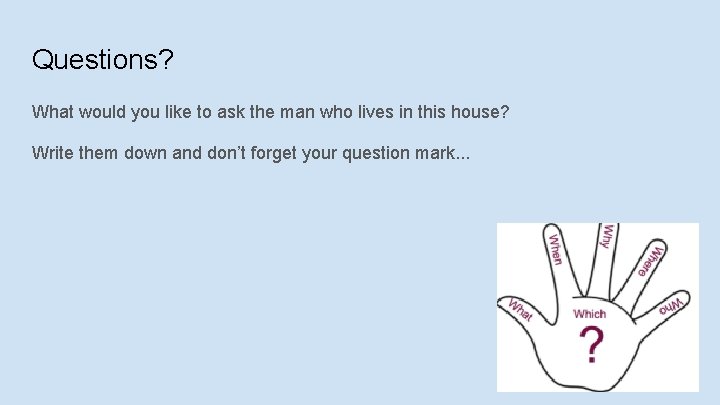
Questions? What would you like to ask the man who lives in this house? Write them down and don’t forget your question mark. . .
Lesson Three Thursday L. I. I can find verbs (actions) in sentences. I can choose a powerful verb.
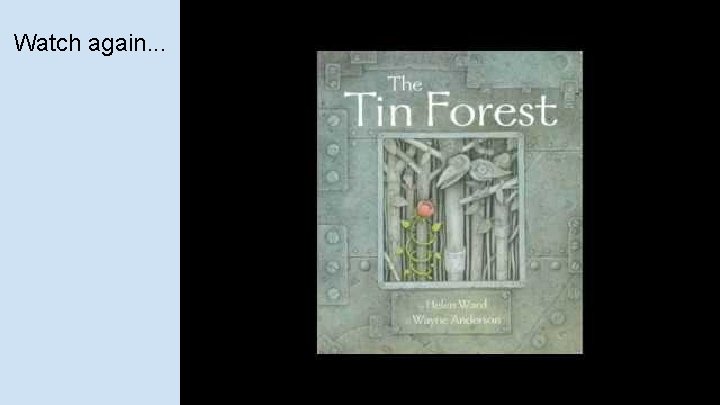
Watch again. . .
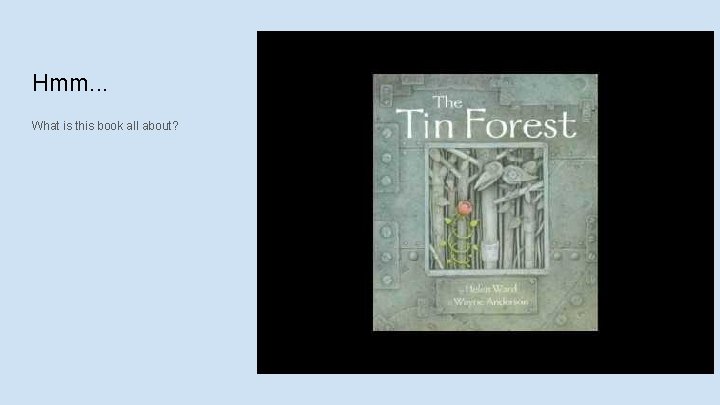
Hmm. . . What is this book all about?
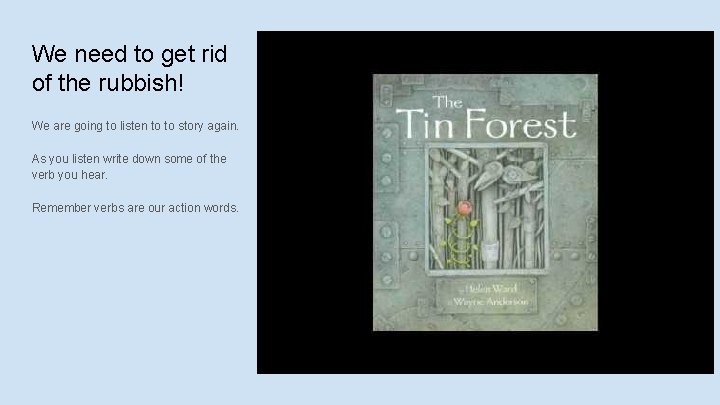
We need to get rid of the rubbish! We are going to listen to to story again. As you listen write down some of the verb you hear. Remember verbs are our action words.
What words did you find? sift burn sort tidy bury Did you notice some of these words were in pairs?
Same Sounds What is it called when we start pairs of words with the same sounds?
Alliteration I know you all shouted alliteration!! The authors in this book use pairs of words to create some alliteration: Sifting and sorting Burning and burying Let’s try creating one of our own. What could you put with picking?
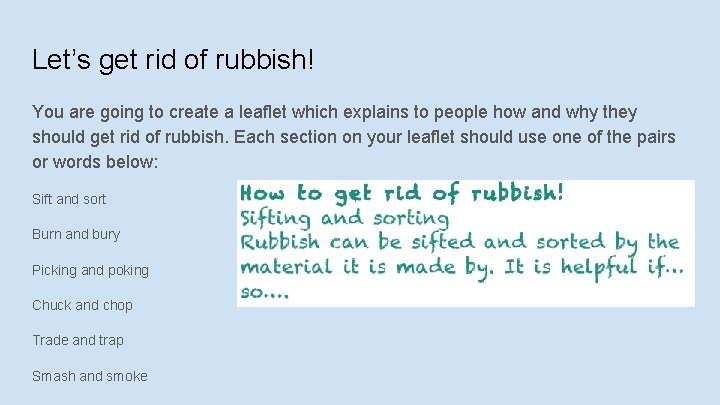
Let’s get rid of rubbish! You are going to create a leaflet which explains to people how and why they should get rid of rubbish. Each section on your leaflet should use one of the pairs or words below: Sift and sort Burn and bury Picking and poking Chuck and chop Trade and trap Smash and smoke
- Slides: 27