
The Time Machine Literal Study How does technologies

- Slides: 15
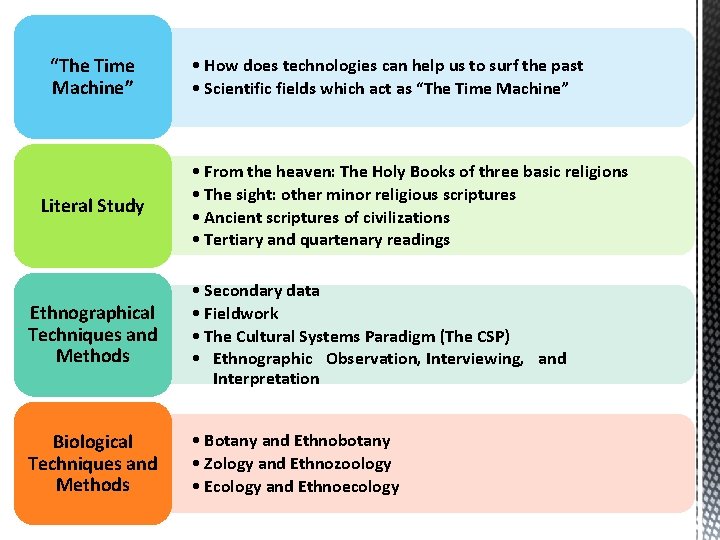
“The Time Machine” Literal Study • How does technologies can help us to surf the past • Scientific fields which act as “The Time Machine” • From the heaven: The Holy Books of three basic religions • The sight: other minor religious scriptures • Ancient scriptures of civilizations • Tertiary and quartenary readings Ethnographical Techniques and Methods • Secondary data • Fieldwork • The Cultural Systems Paradigm (The CSP) • Ethnographic Observation, Interviewing, and Interpretation Biological Techniques and Methods • Botany and Ethnobotany • Zology and Ethnozoology • Ecology and Ethnoecology
“The Time Machine”. . . 1 § Prehistoric people and how are they studied § Study from the remains: bones and teeth § Health state § Hereditary disorder and ilnessess § The Mummies § Peat-bog peoples § The Iceman § Study of the remaining stone-aged cultures (Africa, New Guinea, Australia) § Waste sites and food preservation areas § The artefacts § Arts from ancient ages § Buildings (Pyramids, Stonehenge. ) § Other organisms remains (insect eggs, insects fossils, etc. )
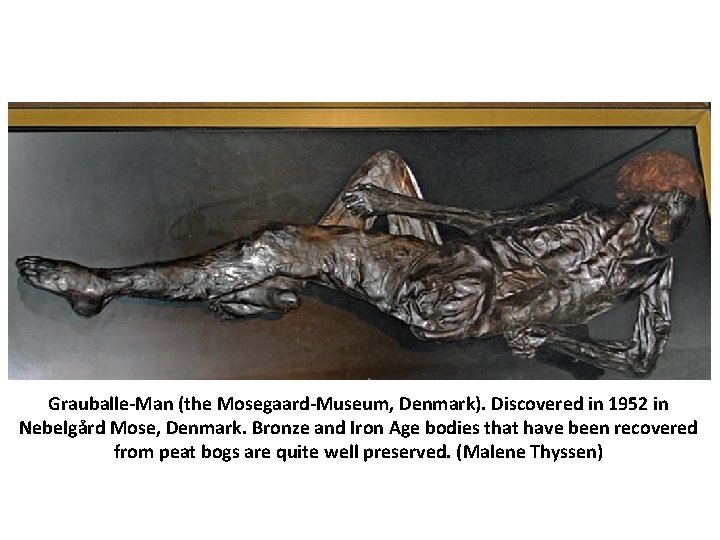
Grauballe-Man (the Mosegaard-Museum, Denmark). Discovered in 1952 in Nebelgård Mose, Denmark. Bronze and Iron Age bodies that have been recovered from peat bogs are quite well preserved. (Malene Thyssen)
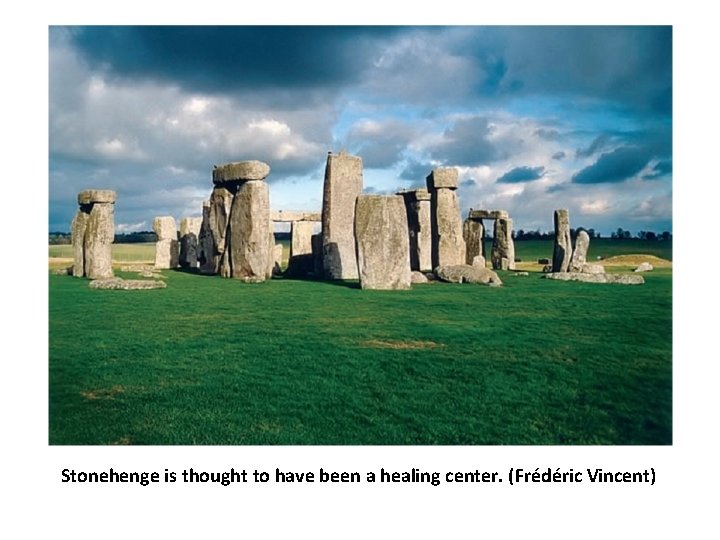
Stonehenge is thought to have been a healing center. (Frédéric Vincent)
“The Time Machine”. . . 2 § Modern techniques to reveal the past § Visual examinations § X-Rays § Computed Tomography (CT) Scans § Magnetic Resonance Imaging (MRI) § Electron Microscopy § Immunologic and chemical assays § Mass Spectrophotometry (MS) methods § DNA testings § Radiocarbon dating § Using isotope C-14 § 45, 000 -50, 000 years tracing (half-life decay) § Other radioisotope dating § K-40 (1. 25 billion years) § U-238 (4. 5 billion years) § Ru-87 (49 billion years)
“The Time Machine”. . . 3 Scientific fields which act as “The Time Machines” § Paleopathology The study of ancient people and their illnesses § Archaeology and its branches The study of human activity in the past, primarily through the recovery and analysis of the material culture and environmental data that they have left behind, which includes artifacts, architecture, biofacts and cultural landscapes (the archaeological record) § Anthropology and its branches The study of humankind, past and present, that draws and builds upon knowledge from social and biological sciences, as well as the humanities and the natural sciences § Ethnology The branch of anthropology that compares and analyzes the characteristics of different peoples and the relationship between them § Physic and instrumentations § Chemistry and the uses of chemical assays
Literal Studies § From the heaven: The Holy Books of three basic religions § Torah and Bible § The Qur’an § The sight: other minor religious scriptures § Vedic § Taoism § Qabalah’s magick § Animism and Dynamism § Ancient scriptures of civilizations § Papyruses of Egypt § Samhitas of Indian § Scriptures from China § Lontars and Serats from Indonesia § Tertiary and quartenary readings § Research journals § Combined documentations on books and review journals § Abstracts from proceedings
Ethnographical Techniques and Methods. . . 1 Secondary Data: What Can Ethnographers Collect From. . . § The importance of early hypothesis § Primary data where the secondary one comes from: § Scholarly and popular publications/products § Archival and statistical data found in administrative resources from government, etc. § Other archival documents such as maps, atlases, etc. § Personal and individual data such as diaries, family histories, biographies, etc.
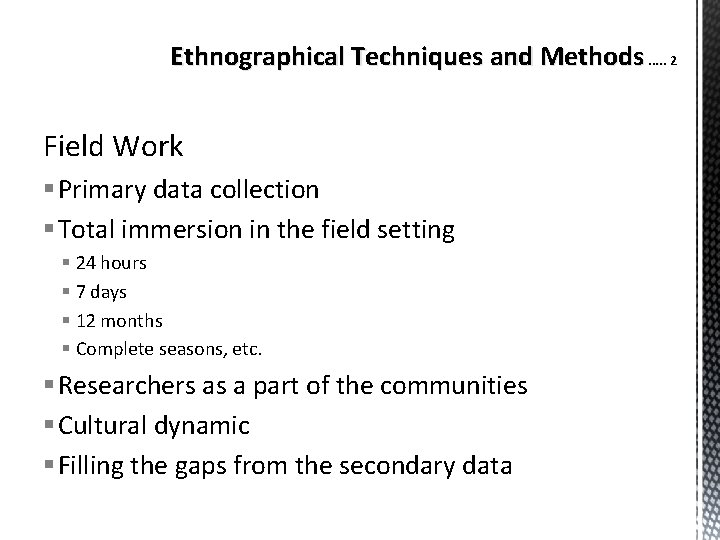
Ethnographical Techniques and Methods. . . 2 Field Work § Primary data collection § Total immersion in the field setting § 24 hours § 7 days § 12 months § Complete seasons, etc. § Researchers as a part of the communities § Cultural dynamic § Filling the gaps from the secondary data
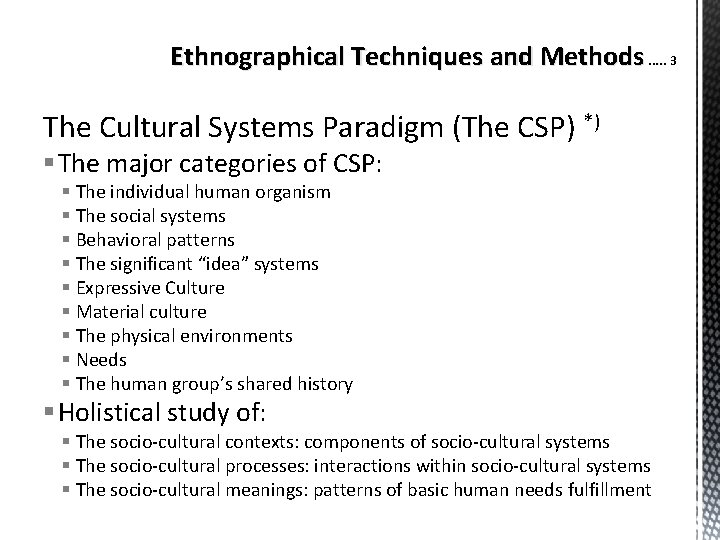
Ethnographical Techniques and Methods. . . 3 The Cultural Systems Paradigm (The CSP) *) § The major categories of CSP: § The individual human organism § The social systems § Behavioral patterns § The significant “idea” systems § Expressive Culture § Material culture § The physical environments § Needs § The human group’s shared history § Holistical study of: § The socio-cultural contexts: components of socio-cultural systems § The socio-cultural processes: interactions within socio-cultural systems § The socio-cultural meanings: patterns of basic human needs fulfillment
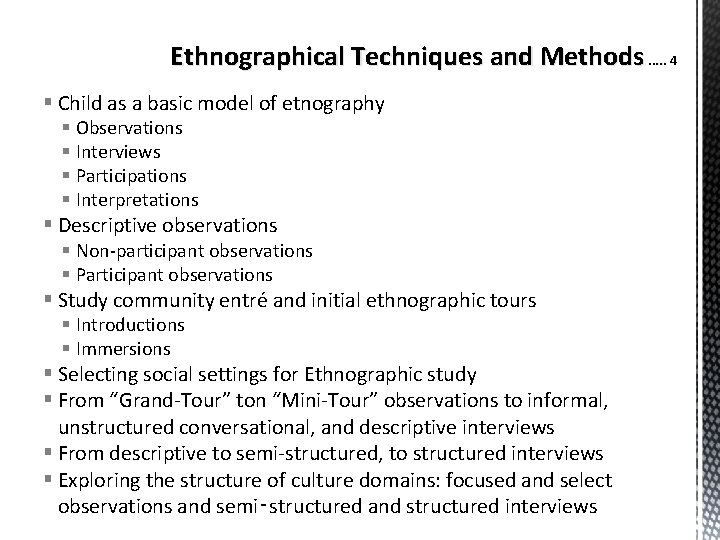
Ethnographical Techniques and Methods. . . 4 § Child as a basic model of etnography § Observations § Interviews § Participations § Interpretations § Descriptive observations § Non-participant observations § Participant observations § Study community entré and initial ethnographic tours § Introductions § Immersions § Selecting social settings for Ethnographic study § From “Grand-Tour” ton “Mini-Tour” observations to informal, unstructured conversational, and descriptive interviews § From descriptive to semi-structured, to structured interviews § Exploring the structure of culture domains: focused and select observations and semi‑structured and structured interviews
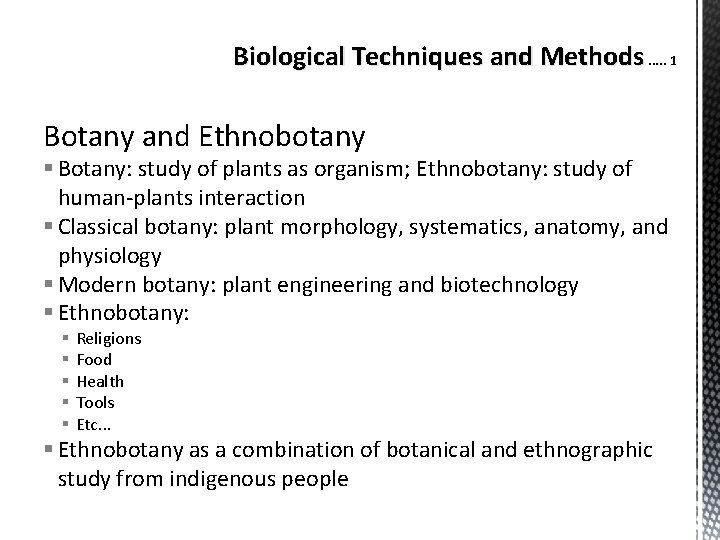
Biological Techniques and Methods. . . 1 Botany and Ethnobotany § Botany: study of plants as organism; Ethnobotany: study of human-plants interaction § Classical botany: plant morphology, systematics, anatomy, and physiology § Modern botany: plant engineering and biotechnology § Ethnobotany: § § § Religions Food Health Tools Etc. . . § Ethnobotany as a combination of botanical and ethnographic study from indigenous people
Biological Techniques and Methods. . . 2 Zoology and Ethnozoology § Zoology: study of animals as organism; Ethnozoology: study of human-animals interactions § Classical zoology: animal morphology, systematics, anatomy, and physiology § Animals and human cultures § Religions § Animals and human works § Foods, drugs, etc § Ethnozoology as a cultural views on animals
Biological Techniques and Methods. . . 3 Ecology and Ethnoecology § Ecology: study of environment as a living system; Ethnoecology: study of culture-living environment interactions § The Hierarchy of living systems: ecological fields § Populations § Communities § Ecosystems § Biomes § Biosphere § Ethnoecological views on landscaping § Ethno-landscape and humans health § Bioprospecting of future chalenges