
The Ties That Bind Women and Funerary Ritual
The Ties That Bind: Women and Funerary Ritual in Classical Athens Laura Mc. Clure University of Wisconsin-Madison
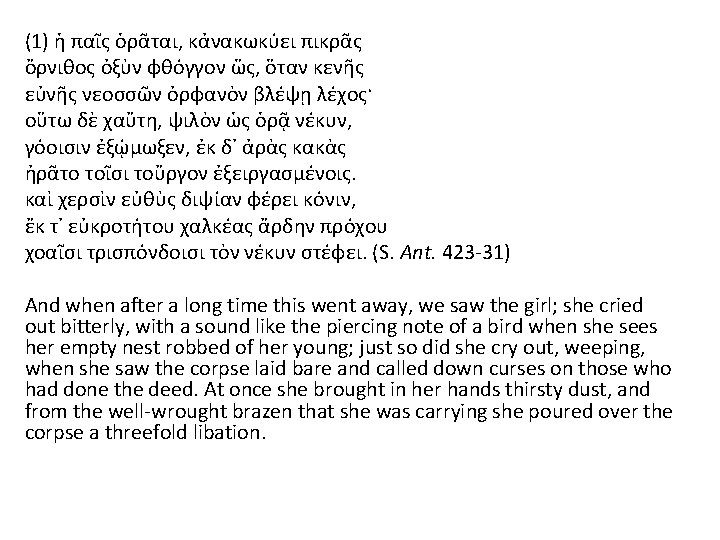
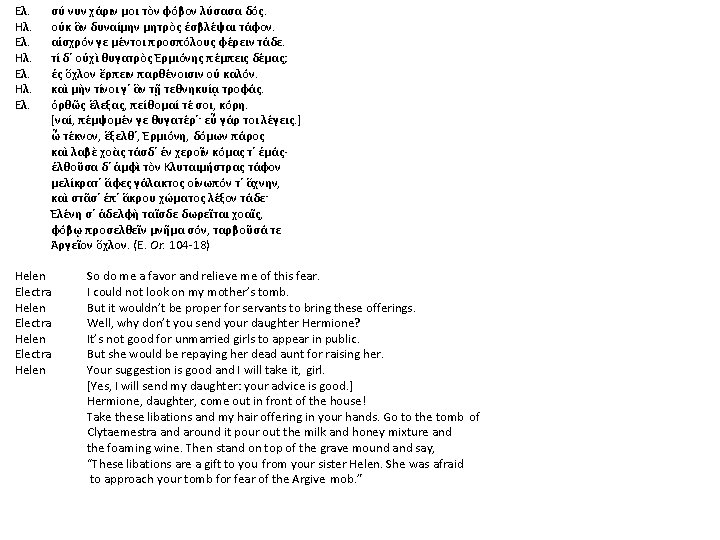
(1) ἡ παῖς ὁρᾶται, κἀνακωκύει πικρᾶς ὄρνιθος ὀξὺν φθόγγον ὥς, ὅταν κενῆς εὐνῆς νεοσσῶν ὀρφανὸν βλέψῃ λέχος· οὕτω δὲ χαὔτη, ψιλὸν ὡς ὁρᾷ νέκυν, γόοισιν ἐξῴμωξεν, ἐκ δ᾿ ἀρὰς κακὰς ἠρᾶτο τοῖσι τοὔργον ἐξειργασμένοις. καὶ χερσὶν εὐθὺς διψίαν φέρει κόνιν, ἔκ τ᾿ εὐκροτήτου χαλκέας ἄρδην πρόχου χοαῖσι τρισπόνδοισι τὸν νέκυν στέφει. (S. Ant. 423 -31) And when after a long time this went away, we saw the girl; she cried out bitterly, with a sound like the piercing note of a bird when she sees her empty nest robbed of her young; just so did she cry out, weeping, when she saw the corpse laid bare and called down curses on those who had done the deed. At once she brought in her hands thirsty dust, and from the well-wrought brazen that she was carrying she poured over the corpse a threefold libation.
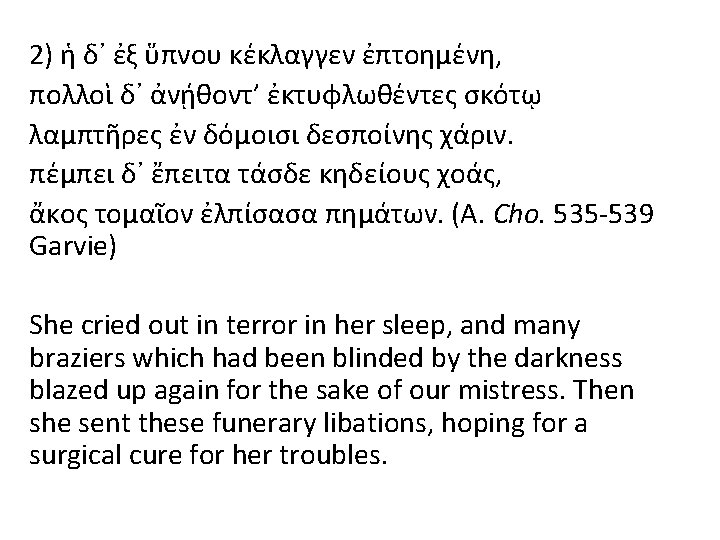
2) ἡ δ᾿ ἐξ ὕπνου κέκλαγγεν ἐπτοημένη, πολλοὶ δ᾿ ἀνῄθοντ’ ἐκτυφλωθέντες σκότῳ λαμπτῆρες ἐν δόμοισι δεσποίνης χάριν. πέμπει δ᾿ ἔπειτα τάσδε κηδείους χοάς, ἄκος τομαῖον ἐλπίσασα πημάτων. (A. Cho. 535 -539 Garvie) She cried out in terror in her sleep, and many braziers which had been blinded by the darkness blazed up again for the sake of our mistress. Then she sent these funerary libations, hoping for a surgical cure for her troubles.
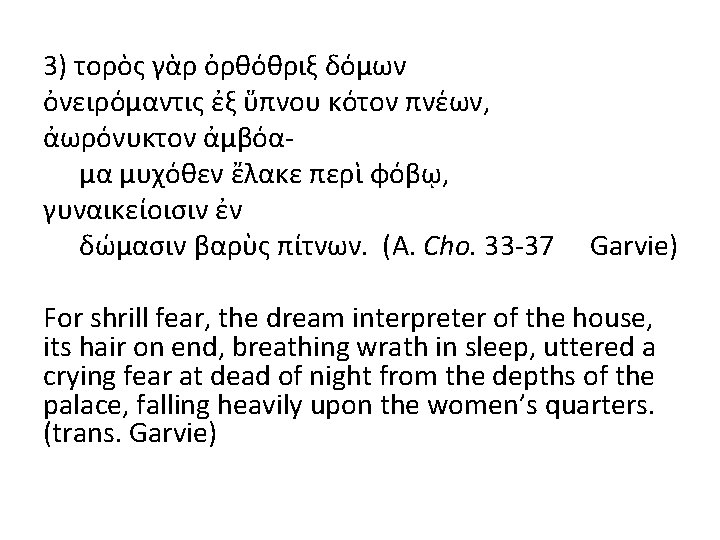
3) τορὸς γὰρ ὀρθόθριξ δόμων ὀνειρόμαντις ἐξ ὕπνου κότον πνέων, ἀωρόνυκτον ἀμβόαμα μυχόθεν ἔλακε περὶ φόβῳ, γυναικείοισιν ἐν δώμασιν βαρὺς πίτνων. (A. Cho. 33 -37 Garvie) For shrill fear, the dream interpreter of the house, its hair on end, breathing wrath in sleep, uttered a crying fear at dead of night from the depths of the palace, falling heavily upon the women’s quarters. (trans. Garvie)
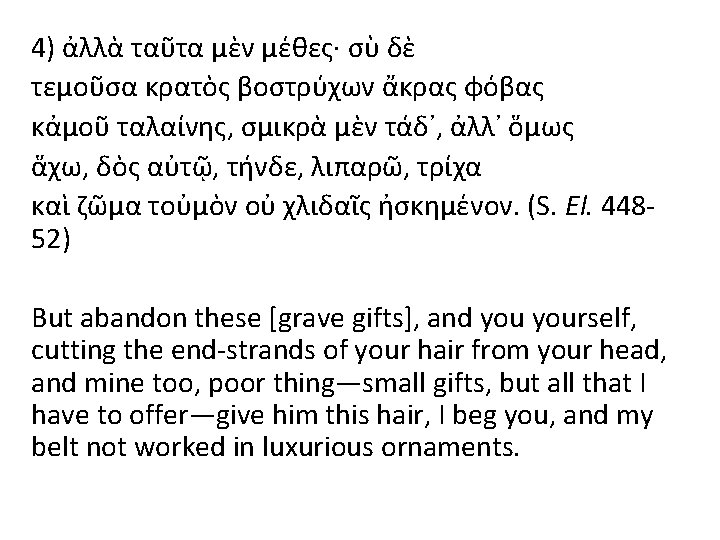
4) ἀλλὰ ταῦτα μὲν μέθες· σὺ δὲ τεμοῦσα κρατὸς βοστρύχων ἄκρας φόβας κἀμοῦ ταλαίνης, σμικρὰ μὲν τάδ᾿, ἀλλ᾿ ὅμως ἅχω, δὸς αὐτῷ, τήνδε, λιπαρῶ, τρίχα καὶ ζῶμα τοὐμὸν οὐ χλιδαῖς ἠσκημένον. (S. El. 44852) But abandon these [grave gifts], and yourself, cutting the end-strands of your hair from your head, and mine too, poor thing—small gifts, but all that I have to offer—give him this hair, I beg you, and my belt not worked in luxurious ornaments.
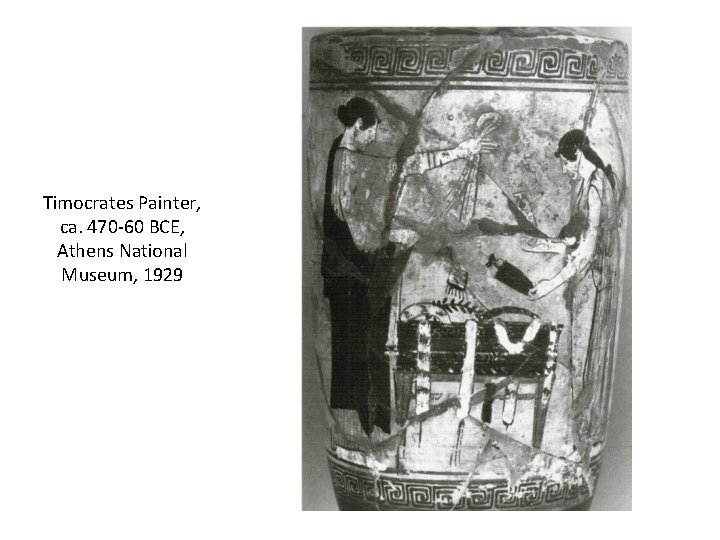
Timocrates Painter, ca. 470 -60 BCE, Athens National Museum, 1929
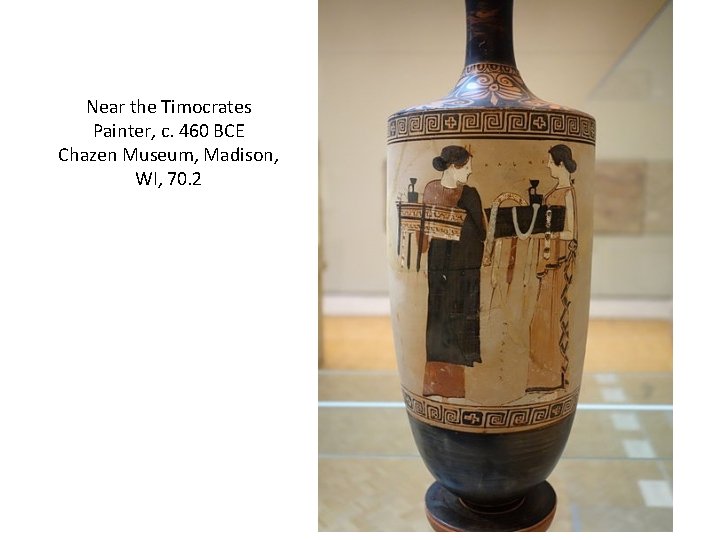
Near the Timocrates Painter, c. 460 BCE Chazen Museum, Madison, WI, 70. 2
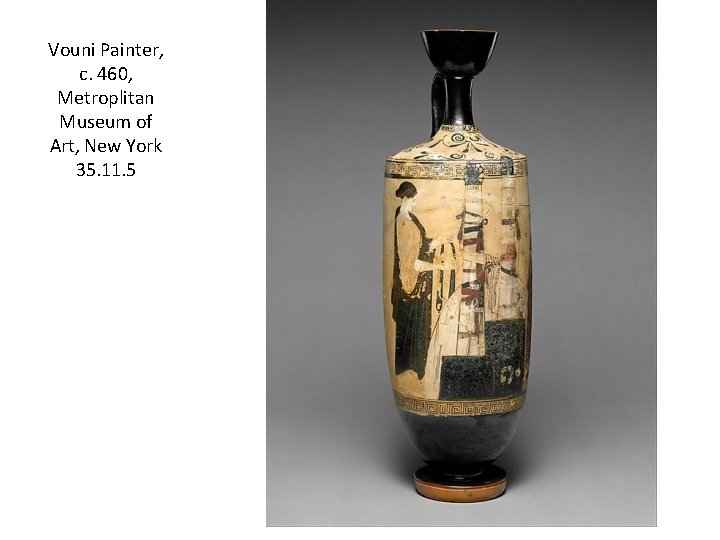
Vouni Painter, c. 460, Metroplitan Museum of Art, New York 35. 11. 5
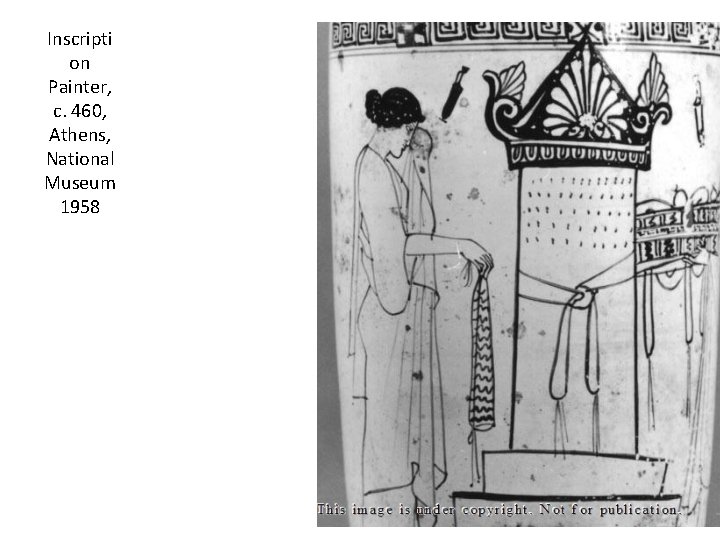
Inscripti on Painter, c. 460, Athens, National Museum 1958
Bibliography • Arrington, N. 2015. Ashes, Images, and memories. The Presence of the War Dead in Fifth Century Athens. Oxford. • _______. 2014. “Fallen Vessels and Risen Spirits: Conveying the Presence of the Dead on Whiteground Lekythoi. ” In J. Oakley (ed. ), Athenian Potters and Painters Volume III, pp. 1 -10. Oxford and Philadelphia. • Blok, J. 2004. “Recht und Ritus der Polis. ” HZ 28: 1 -26. • Connor, W. R. 1988. “‘Sacred’and ‘secular’: Hiera kai hosia and the Classical Athenian Concept of the State. ” Anc. Soc 19: 161– 188. • Eidinow, E. 2011. “Networks and Narratives: A Model for Ancient Greek Religion. ” Kernos 24: 9 -38. • Garland, R. 2001. The Greek Way of Death. 2 nd ed. Ithaca, NY. • Glazebrook, A. and Tsakirgis, B. (eds. ) 2016. Houses of Ill-Repute: The Archaeology of Brothels, Houses, and Taverns in the Greek World. Philadelphia, PA. • Houby-Nielsen, S. 1996. “Women and the Formation of the Athenian City State: The Evidence of Burial Customs. ” Metis 11: 233– 60. • Nevett, L. 2011. “Towards a Female Topography of the Ancient Greek City: Case Studies from Late Archaic and Early Classical Athens (c. 520– 400 BCE). ” Gender & History 23: 576– 596. • Oakley, J. 2004. Picturing Death in Classical Athens. Cambridge. • Reilly, J. 1989. “Many Brides: ‘Mistress and Maid’ on Athenian Lekythoi. ” Hesperia 58: 411 -44. • Shapiro, A. 1991. “The Iconography of Mourning in Athenian Art. ” AJP 95 1991: 629– 56. • Stansbury-O’Donnell, M. 2006. Vase Painting, Gender, and Social Identity in Archaic Athens. Cambridge. • Taylor, C. 2011. “Women's Social Networks and Female Friendship in the Ancient Greek • City. ” Gender & History 23: 703 -20.
- Slides: 11