
The Three Wishes by Ricardo E Alegria Review
The Three Wishes by Ricardo E. Alegria Review
1. “The Three Wishes” is a folk tale from Puerto Rico. According to the story, what do Puerto Ricans value most? Ø Love
2. Describe the life of the woodsman and his wife before they make three wishes. Ø They are poor, but they are happy, generous, and loving.
3. Why are the husband wife given three wishes? Ø They are always willing to share.
4. How does the couple use the first two wishes? Ø The wife wishes that her husband was at home, and the husband wishes that the wife would grow donkey ears.
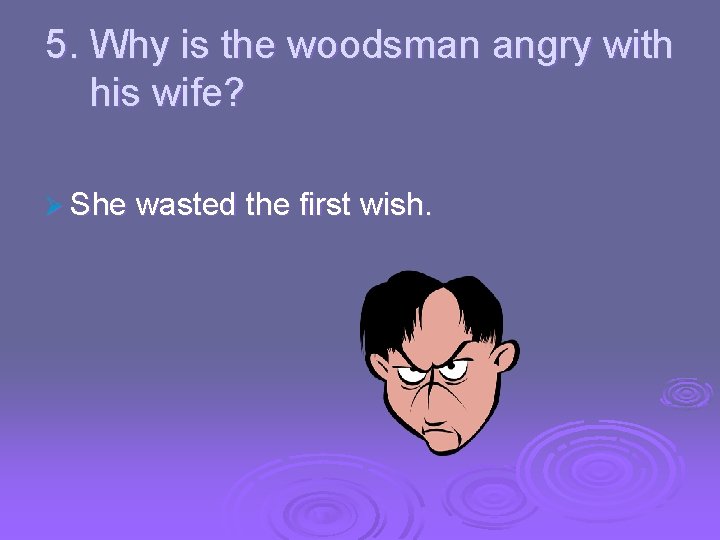
5. Why is the woodsman angry with his wife? Ø She wasted the first wish.
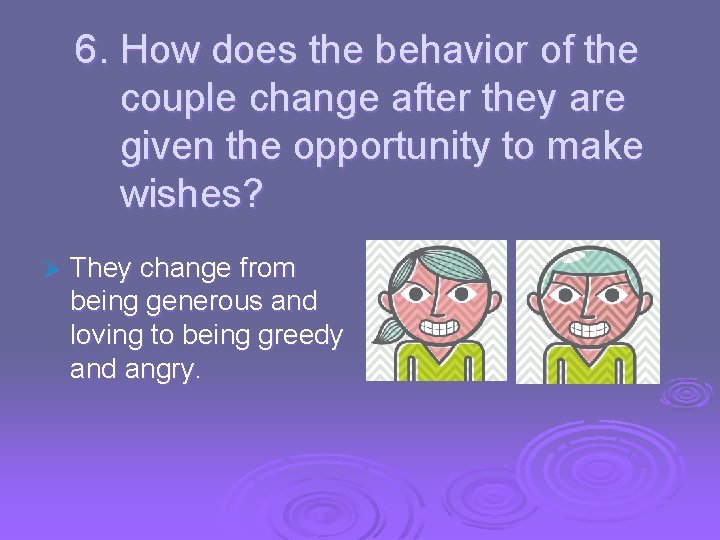
6. How does the behavior of the couple change after they are given the opportunity to make wishes? Ø They change from being generous and loving to being greedy and angry.
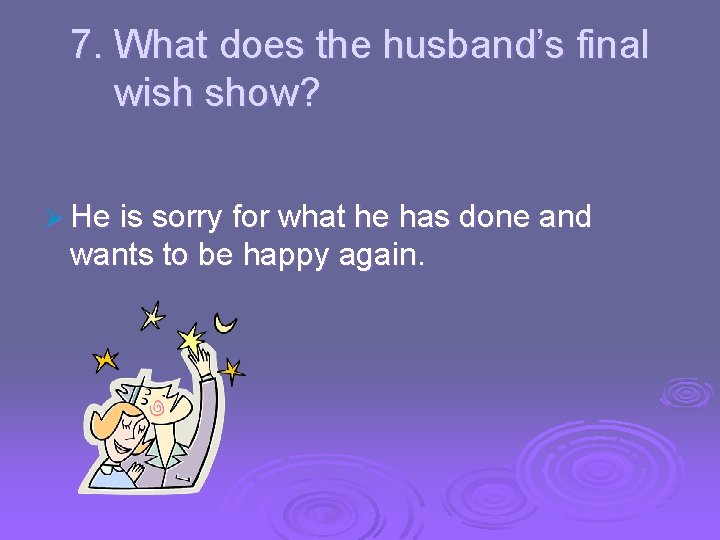
7. What does the husband’s final wish show? Ø He is sorry for what he has done and wants to be happy again.
8. What does the old man mean when he tells the couple they will receive the “greatest happiness a married couple could know? Ø The greatest happiness a married couple could know is a baby.
9. Why is the couple rewarded at the end of the story? Ø They have learned their lesson.
10. What is a theme? Ø A message or lesson about life.
11. What important lesson does this story teach? Ø The story teaches that we should be content with what we have.
12. What is a universal theme? Ø A message about life that is expressed regularly in many cultures and time periods. l Examples include the importance of courage, the power of love, and danger of greed.
13. How do you find a universal theme in a literary work? By examining the story’s conflict and the actions of the main character. Ø In addition, notice the changes he or she undergoes and the effects of these changes. Ø
14. What is the universal theme in this story? Ø Happiness comes from love, not from riches.
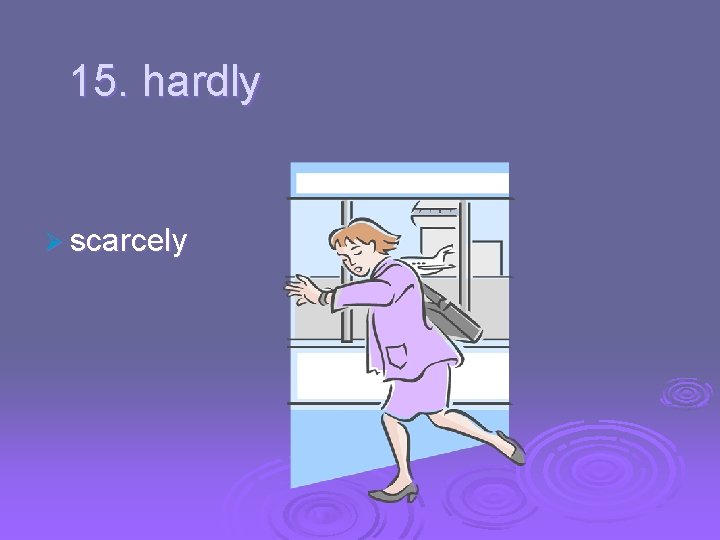
15. hardly Ø scarcely
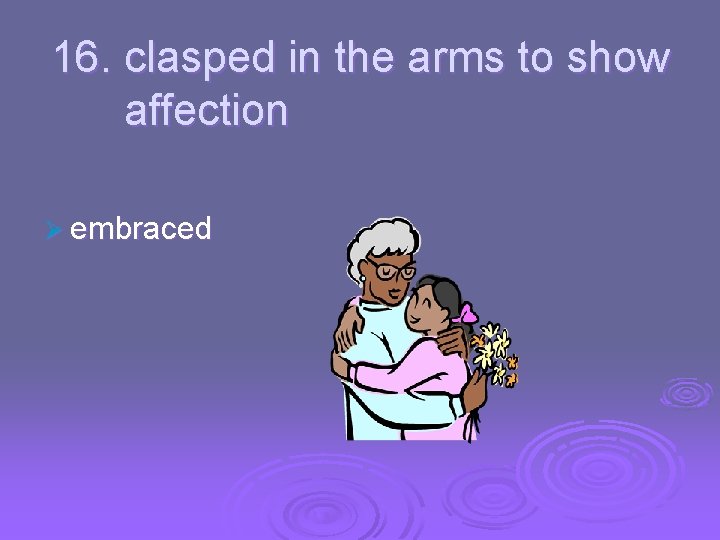
16. clasped in the arms to show affection Ø embraced
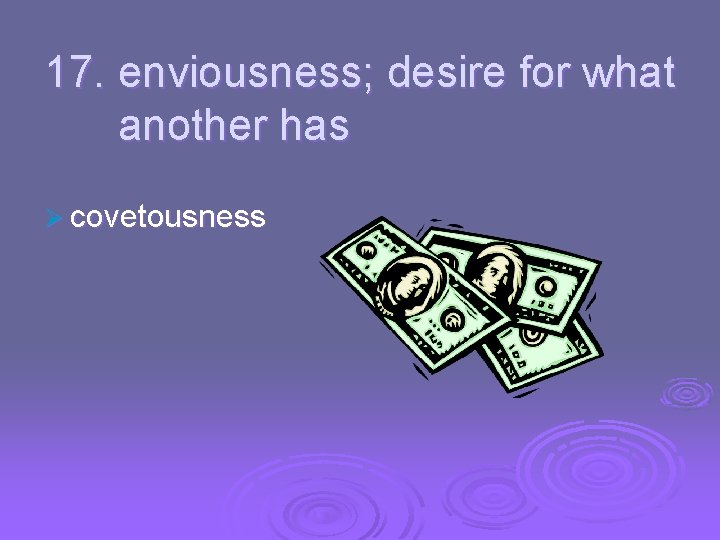
17. enviousness; desire for what another has Ø covetousness
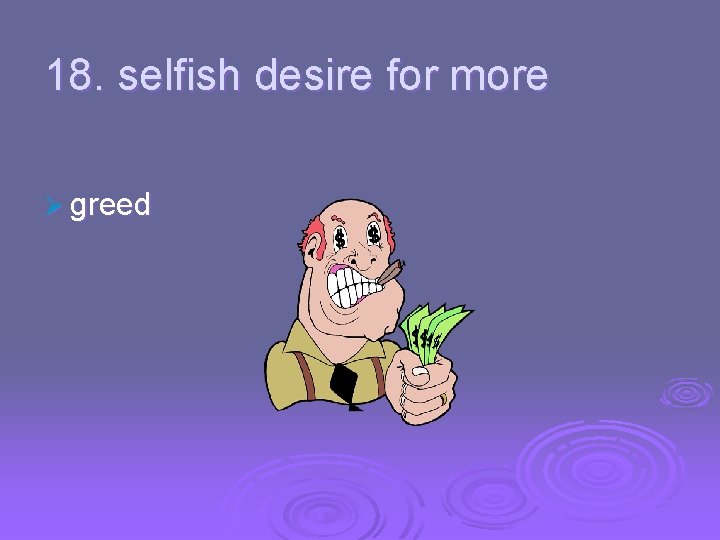
18. selfish desire for more Ø greed
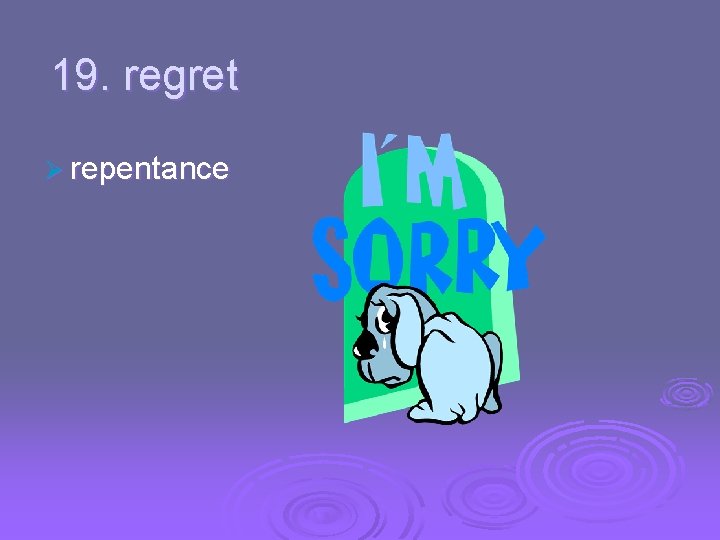
19. regret Ø repentance

The End
- Slides: 21