
The Three Little Pigs Project Integration of wind



- Slides: 13
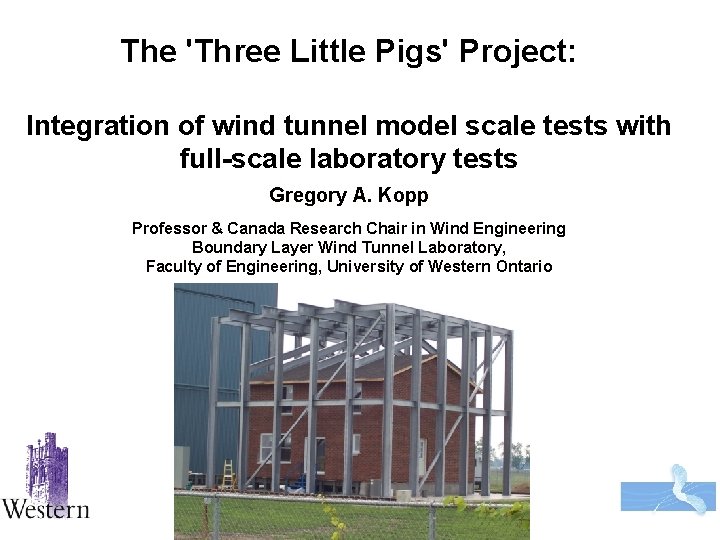
The 'Three Little Pigs' Project: Integration of wind tunnel model scale tests with full-scale laboratory tests Gregory A. Kopp Professor & Canada Research Chair in Wind Engineering Boundary Layer Wind Tunnel Laboratory, Faculty of Engineering, University of Western Ontario
Model scale testing of wind effects Alan Davenport (left) lead the testing on the World Trade Center Towers at Colorado State University, the only existing wind tunnel capable of modeling the atmospheric boundary layer at the time
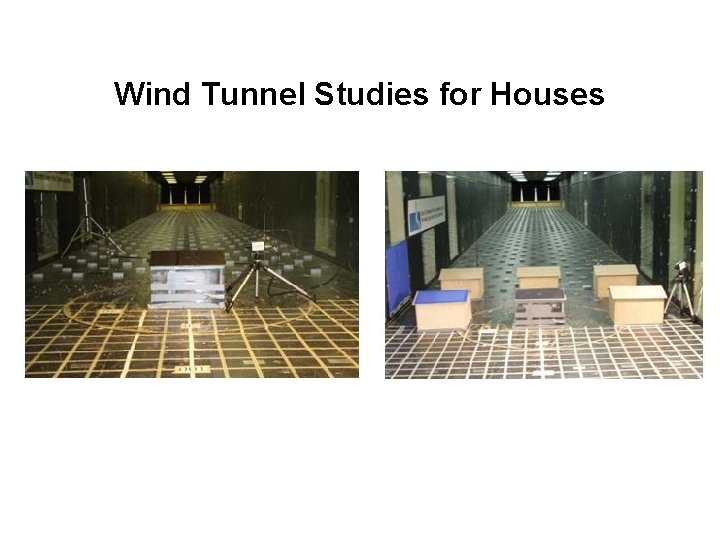
Wind Tunnel Studies for Houses
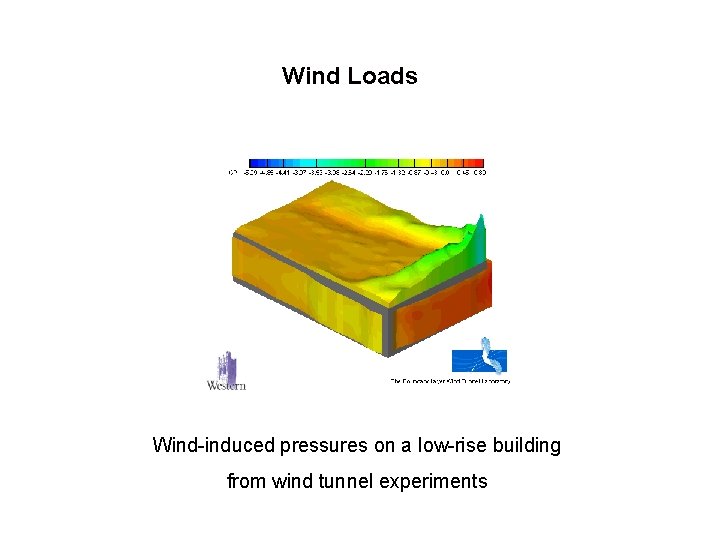
Wind Loads Wind-induced pressures on a low-rise building from wind tunnel experiments
Building Codes (ASCE 7 -05) Simple to use Should envelope true wind effects Are a great simplification of reality The process of defining code loads is well established
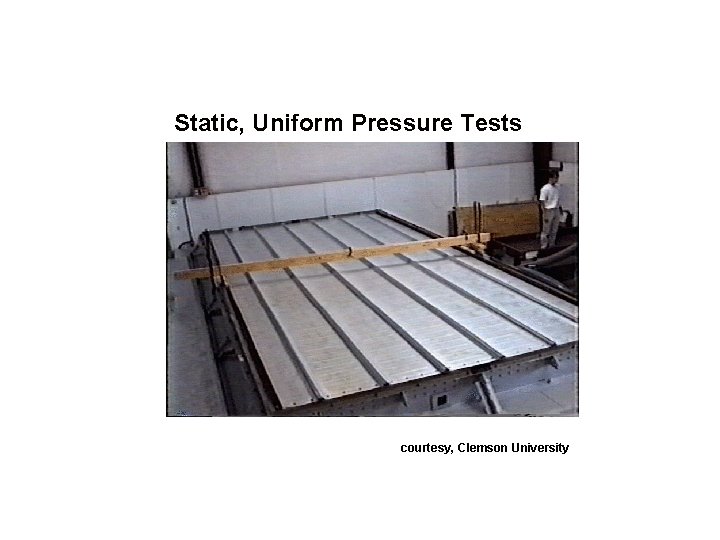
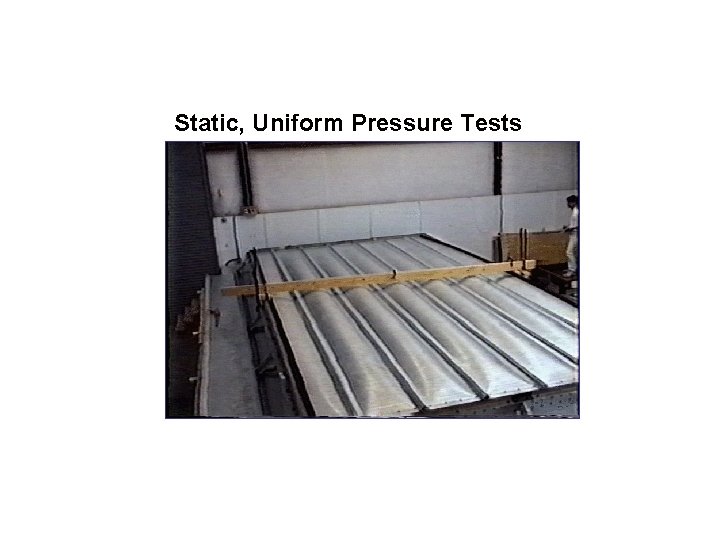
Static, Uniform Pressure Tests ADVANTAGES • Simple and cost-effective • May be conservative in some situations, but not in all. DISADVANTAGES • Boundary conditions are incorrect • May not obtain correct failure mechanism • Interpretation of results uncertain
Static, Uniform Pressure Tests courtesy, Clemson University
Static, Uniform Pressure Tests ADVANTAGES • Simple and cost-effective • May be conservative in some situations DISADVANTAGES • Interpretation of results uncertain • Boundary conditions are incorrect • May not obtain correct failure mechanism
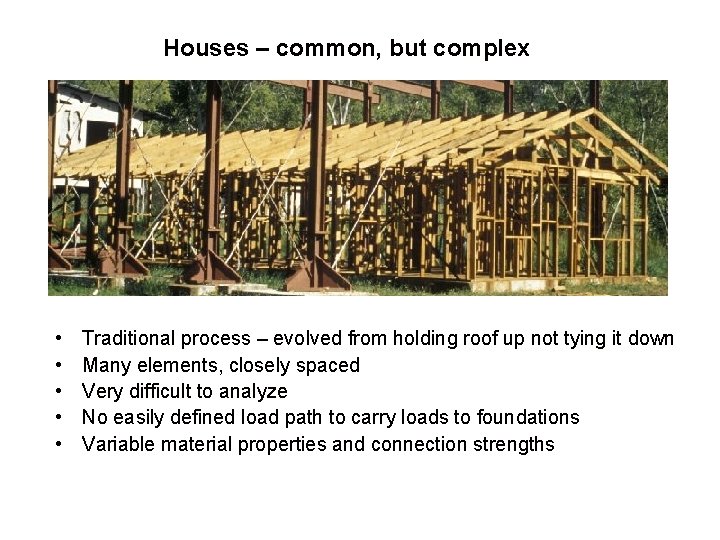
Houses – common, but complex • • • Traditional process – evolved from holding roof up not tying it down Many elements, closely spaced Very difficult to analyze No easily defined load path to carry loads to foundations Variable material properties and connection strengths
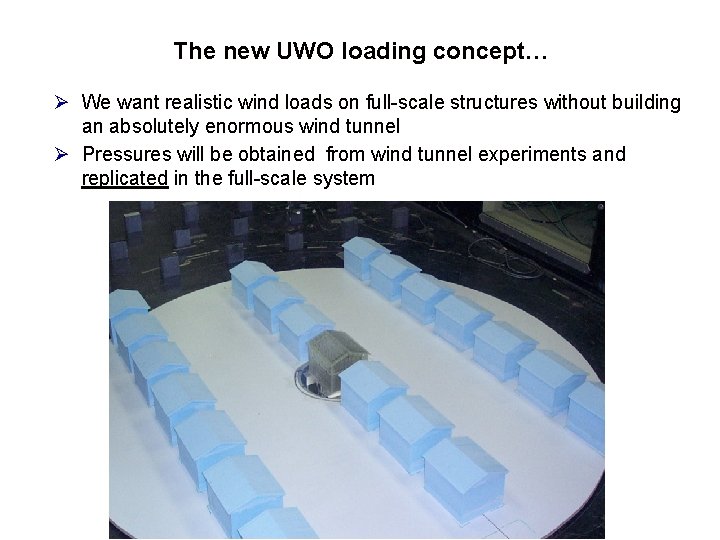
The new UWO loading concept… Ø We want realistic wind loads on full-scale structures without building an absolutely enormous wind tunnel Ø Pressures will be obtained from wind tunnel experiments and replicated in the full-scale system
Pressure Load Actuators Glass testing using the new system
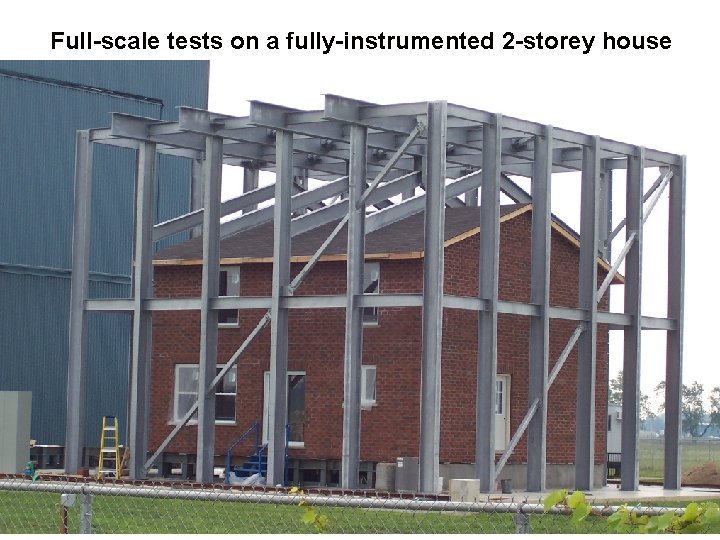
Full-scale tests on a fully-instrumented 2 -storey house
Summary We now have the technology to apply real wind loads on full structures in a controlled, repeatable manner. Since we are using this with wind tunnel data, we can unambiguously relate the wind loads to current building codes. With the same data we can apply loads to portions of structures appropriately. We can also ‘calibrate’ or even upgrade industry standard tests with these more realistic tests. Thus, code loads and component and/or structural responses can be unambiguously linked to the true loads allowing for optimization in design of products for hurricane regions with a level of risk consistent with the code (or any other) requirements.