
The three grades of metazoan animals Animalia KINGDOM
- Slides: 72
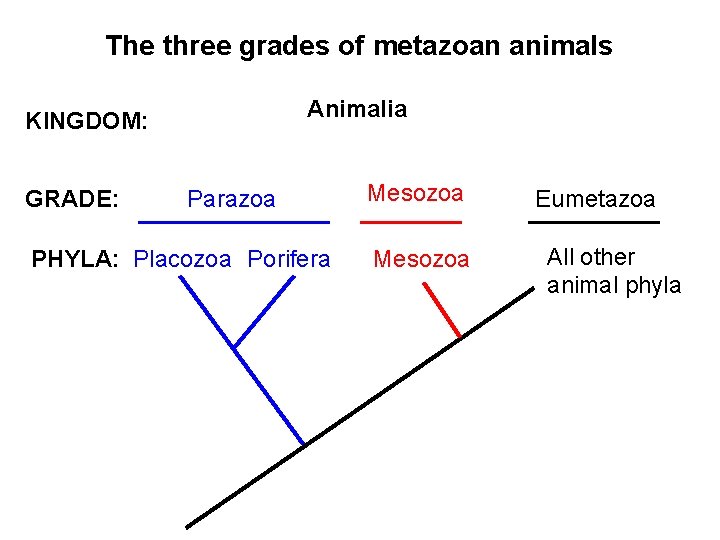
The three grades of metazoan animals Animalia KINGDOM: GRADE: Parazoa PHYLA: Placozoa Porifera Mesozoa Eumetazoa All other animal phyla
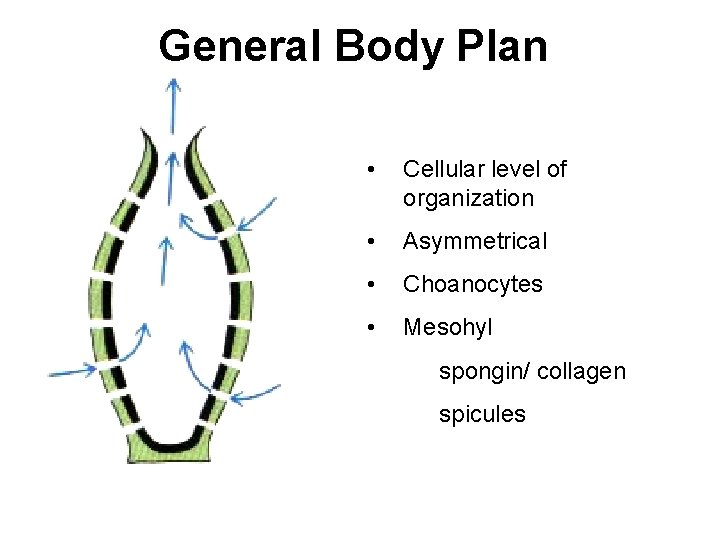
General Body Plan • Cellular level of organization • Asymmetrical • Choanocytes • Mesohyl spongin/ collagen spicules
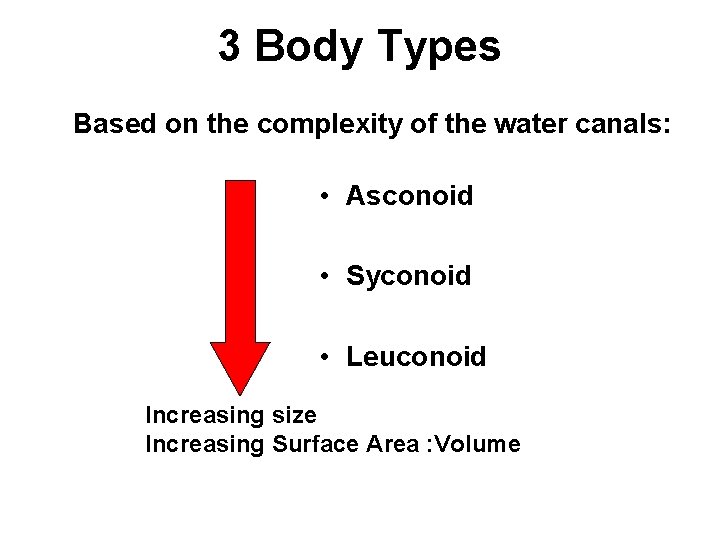
3 Body Types Based on the complexity of the water canals: • Asconoid • Syconoid • Leuconoid Increasing size Increasing Surface Area : Volume
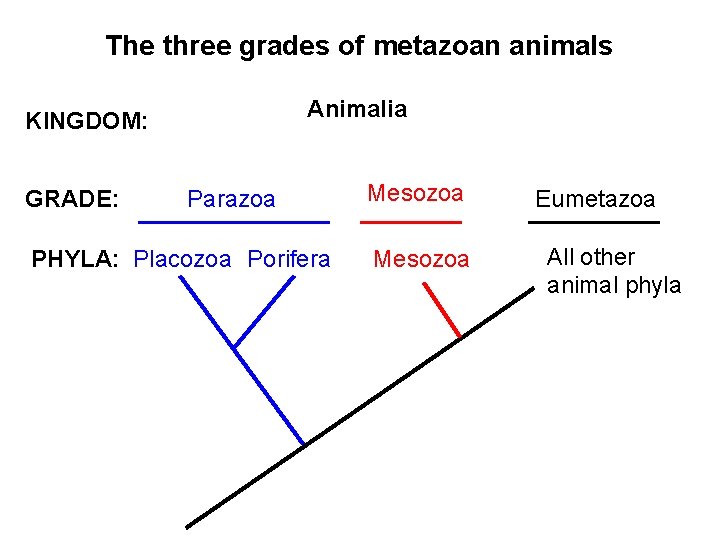
The three grades of metazoan animals Animalia KINGDOM: GRADE: Parazoa PHYLA: Placozoa Porifera Mesozoa Eumetazoa All other animal phyla
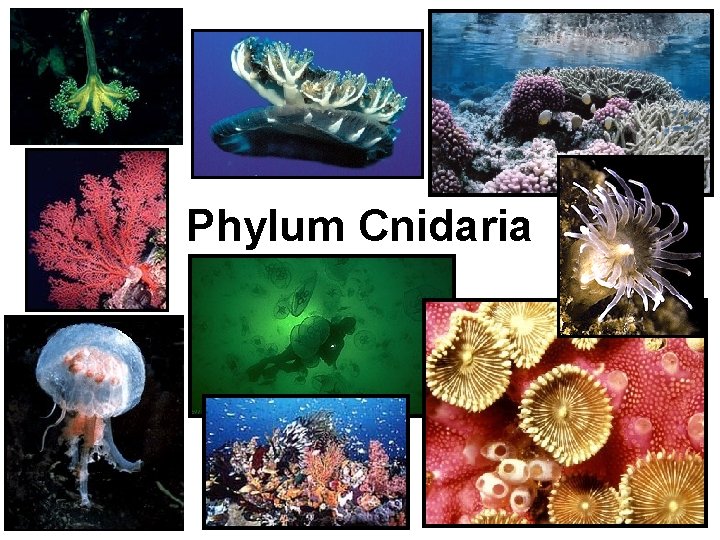
Phylum Cnidaria
Level of Organization Tissue -similar cells are organized into tissues that work together to accomplish a common function -Cnidarians are diploblastic: they have 2 germ layers
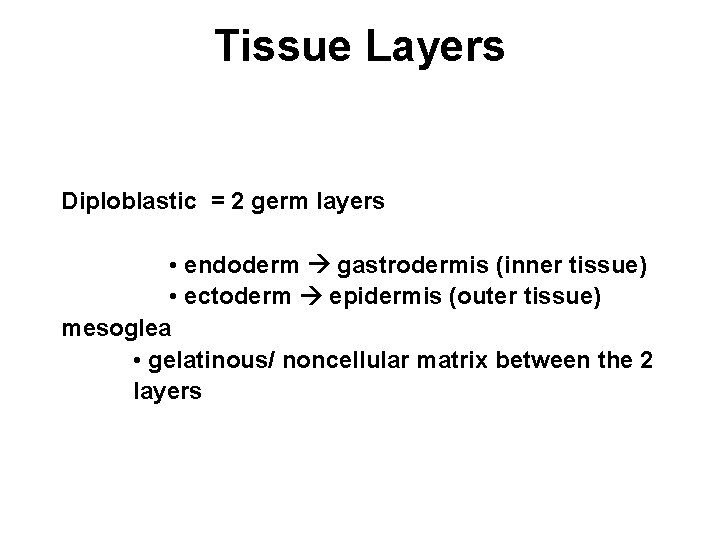
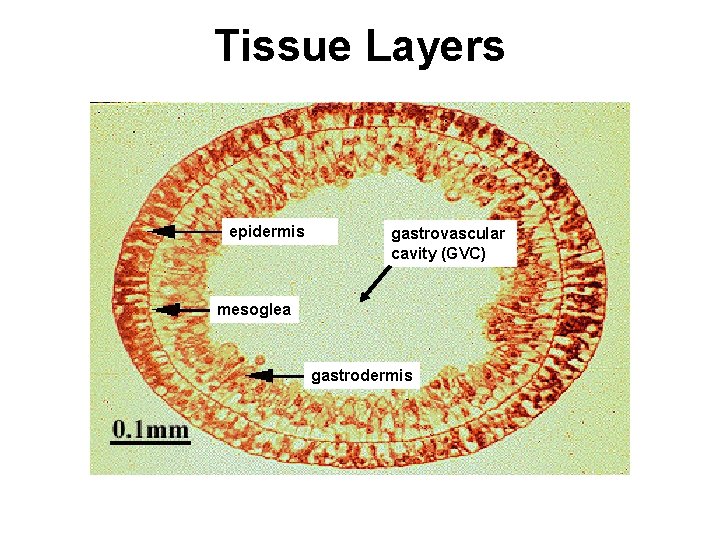
Tissue Layers Diploblastic = 2 germ layers • endoderm gastrodermis (inner tissue) • ectoderm epidermis (outer tissue) mesoglea • gelatinous/ noncellular matrix between the 2 layers
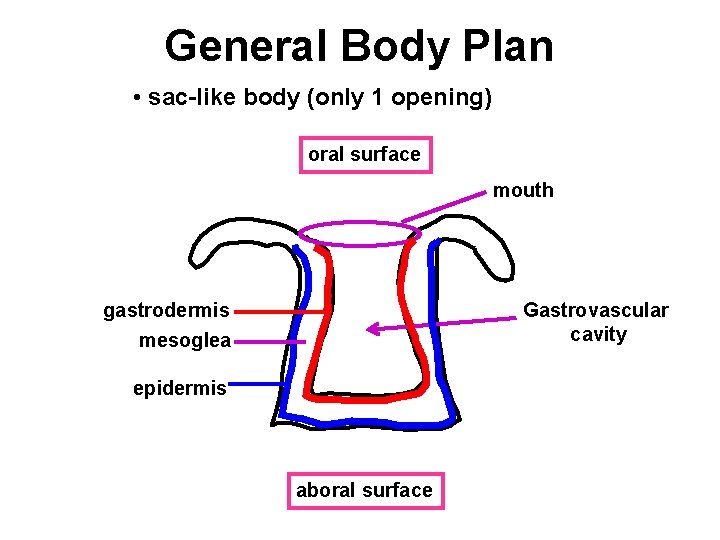
Tissue Layers epidermis gastrovascular cavity (GVC) mesoglea gastrodermis
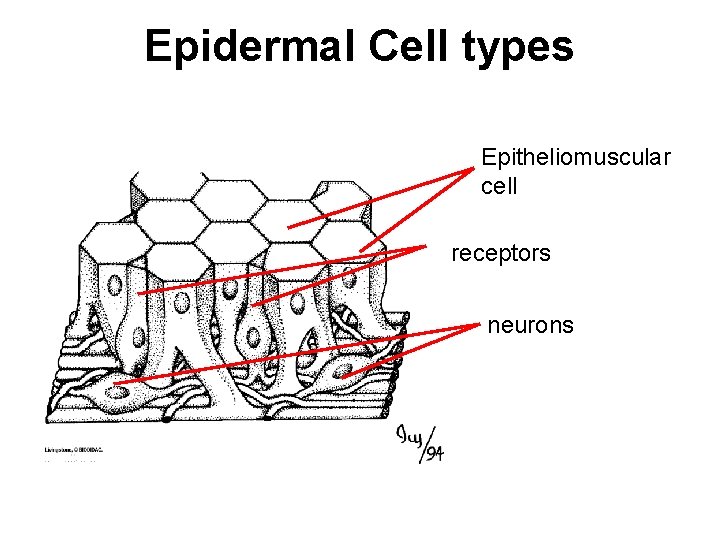
Epidermal Cell types Epitheliomuscular cell receptors neurons
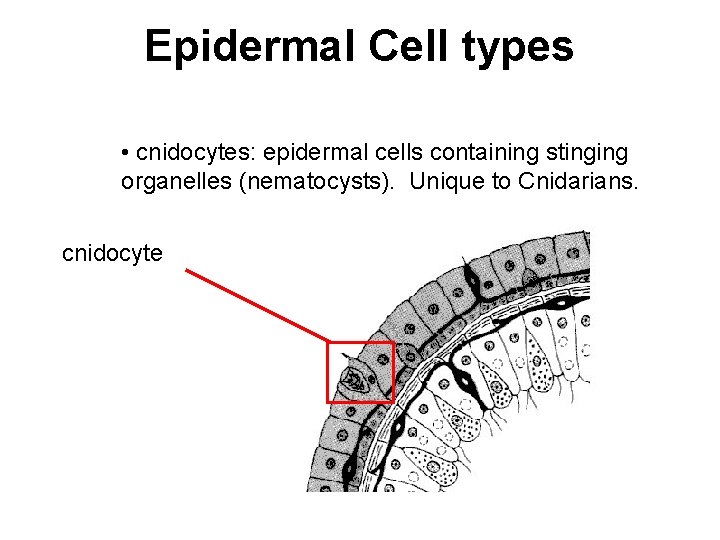
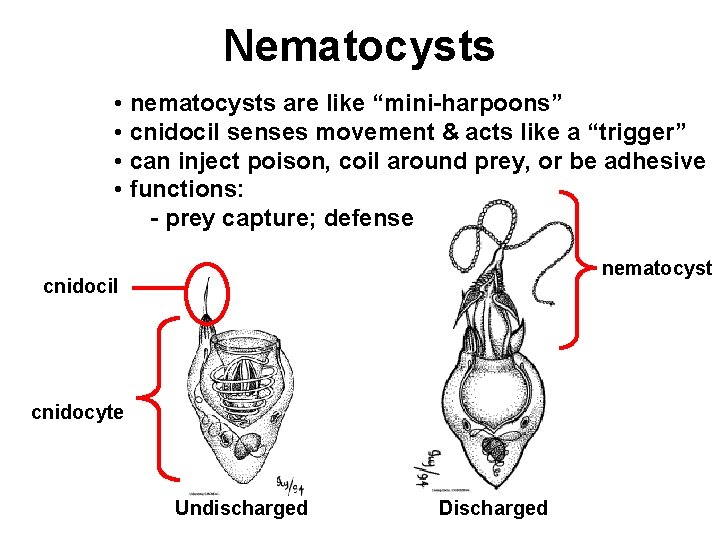
Epidermal Cell types • cnidocytes: epidermal cells containing stinging organelles (nematocysts). Unique to Cnidarians. cnidocyte
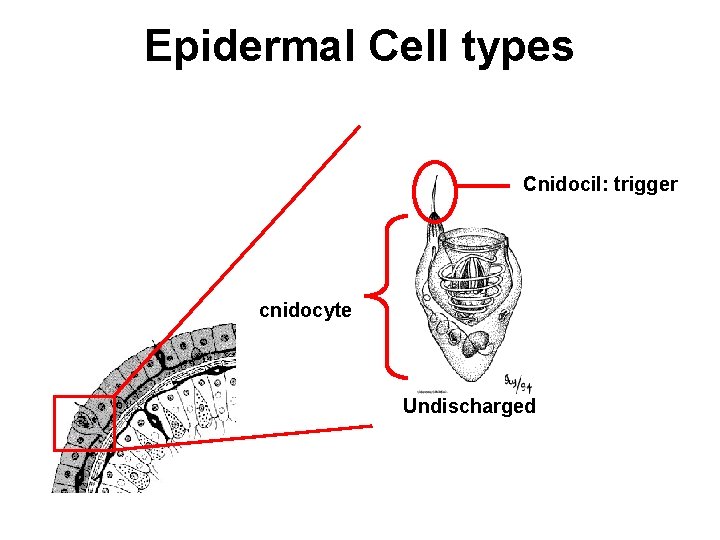
Epidermal Cell types Cnidocil: trigger cnidocyte Undischarged
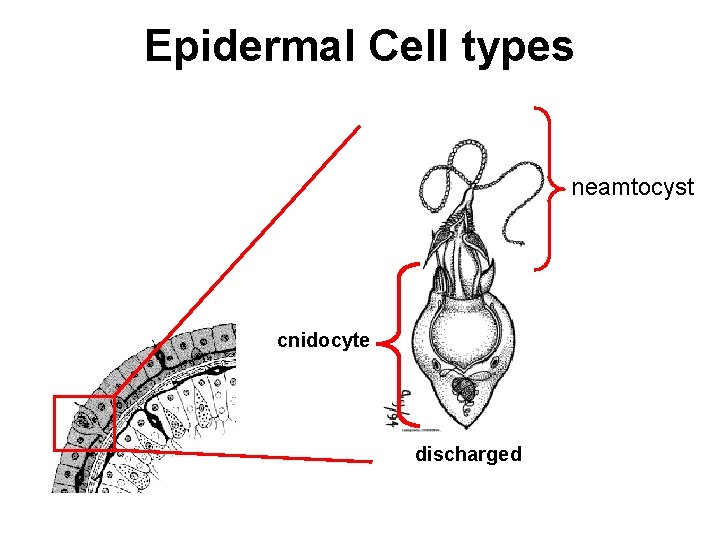
Epidermal Cell types neamtocyst cnidocyte discharged
Nematocysts • nematocysts are like “mini-harpoons” • cnidocil senses movement & acts like a “trigger” • can inject poison, coil around prey, or be adhesive • functions: - prey capture; defense nematocyst cnidocil cnidocyte Undischarged Discharged
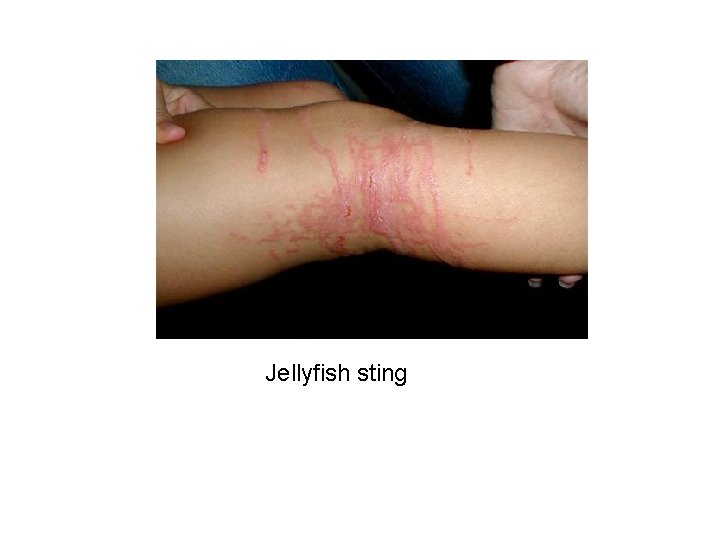
Jellyfish sting
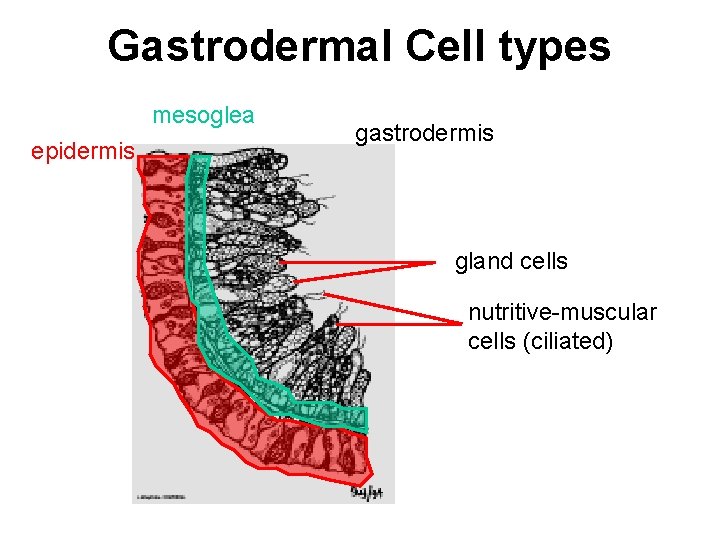
Gastrodermal Cell types mesoglea epidermis gastrodermis gland cells nutritive-muscular cells (ciliated)
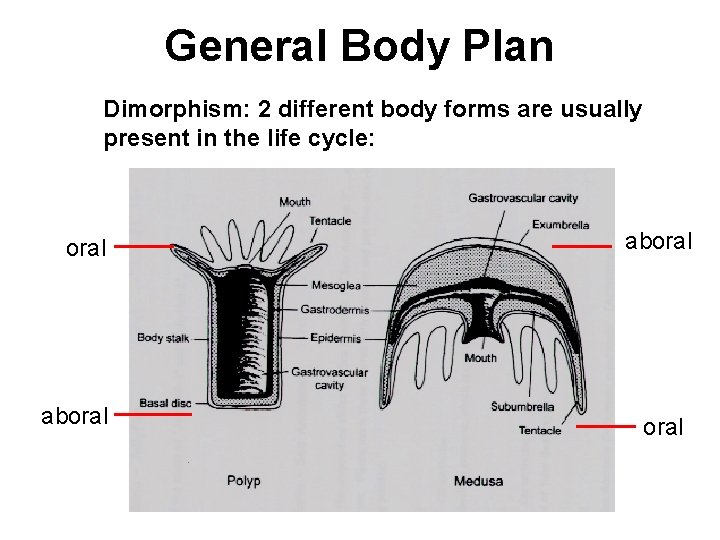
General Body Plan • sac-like body (only 1 opening) oral surface mouth gastrodermis mesoglea Gastrovascular cavity epidermis aboral surface
General Body Plan Dimorphism: 2 different body forms are usually present in the life cycle: oral aboral
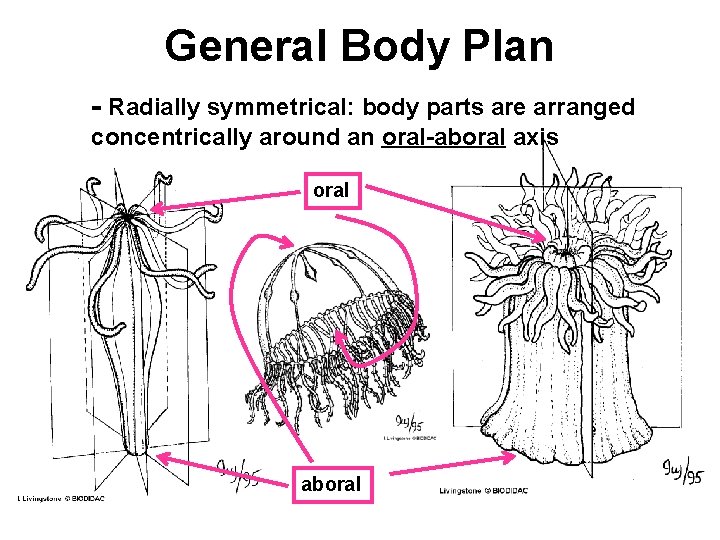
General Body Plan - Radially symmetrical: body parts are arranged concentrically around an oral-aboral axis oral aboral
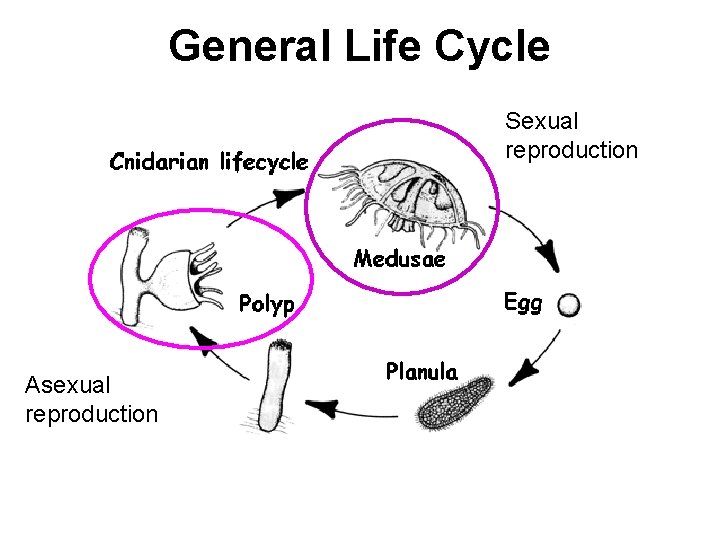
General Life Cycle Sexual reproduction Asexual reproduction
Feeding and Digestion Feeding – nematocysts capture prey – tentacles Digestion – extracellular (in GVC) – intracellular (by gastrodermal cells) – incomplete system (no anus)
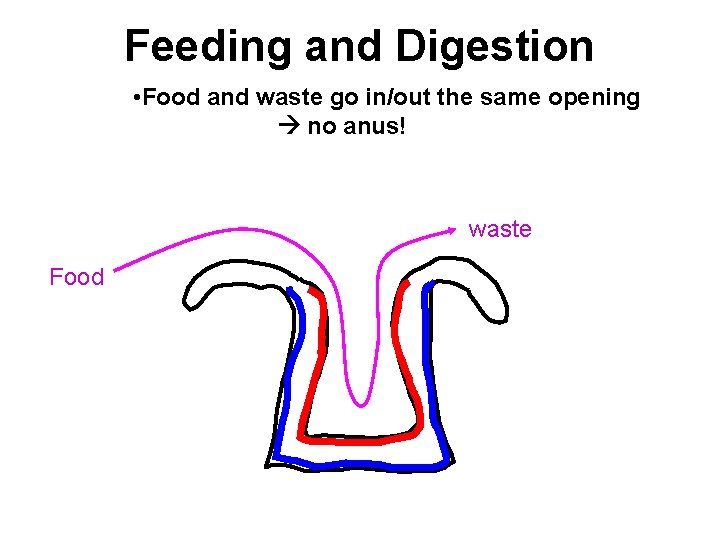
Feeding and Digestion • Food and waste go in/out the same opening no anus! waste Food
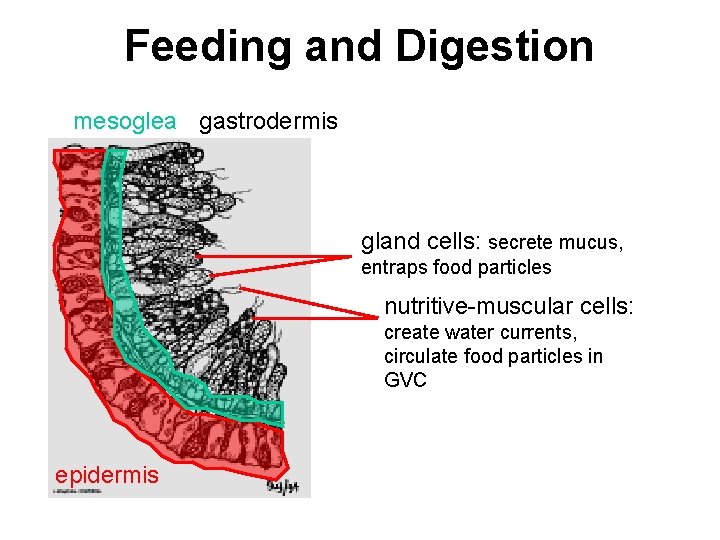
Feeding and Digestion mesoglea gastrodermis gland cells: secrete mucus, entraps food particles nutritive-muscular cells: create water currents, circulate food particles in GVC epidermis
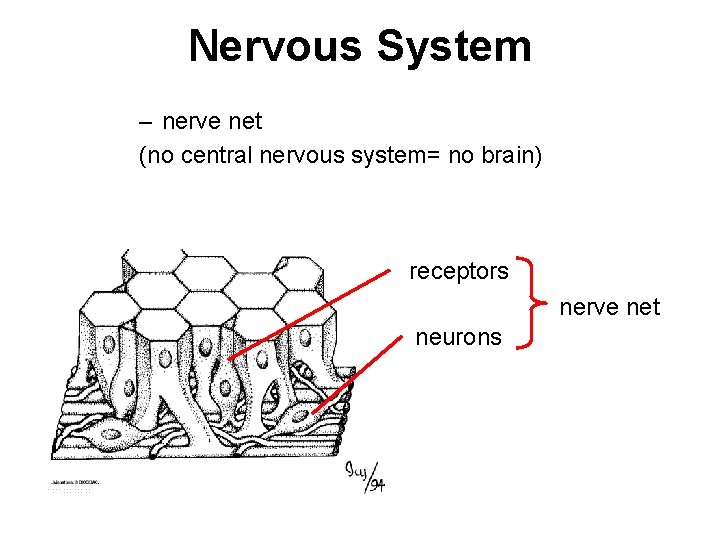
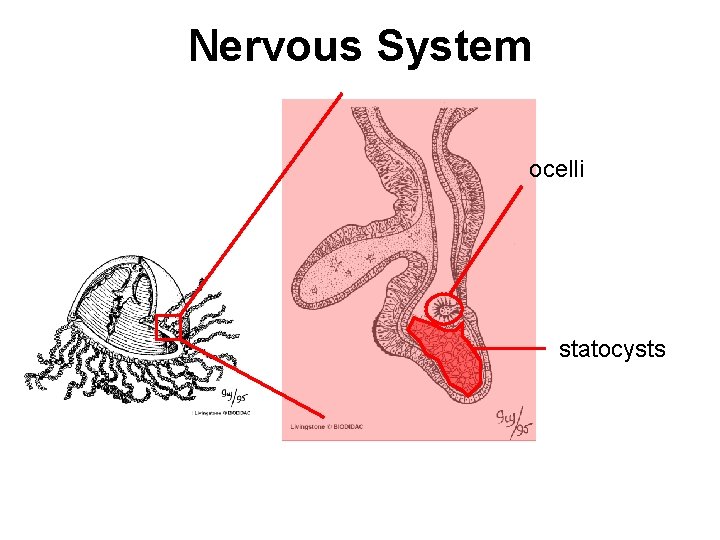
Nervous System – nerve net (no central nervous system= no brain) receptors nerve net neurons
Nervous System – sense organs – statocysts (equilibrium cells) – ocelli (photosensitive cells)
Nervous System ocelli statocysts
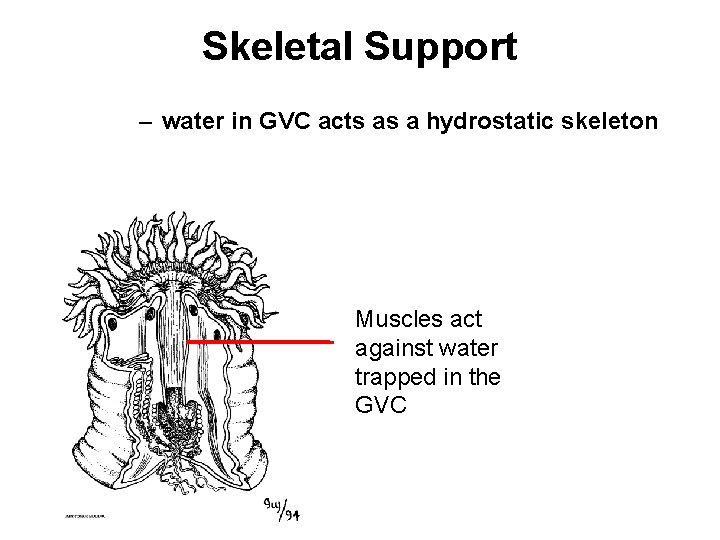
Skeletal Support – water in GVC acts as a hydrostatic skeleton Muscles act against water trapped in the GVC
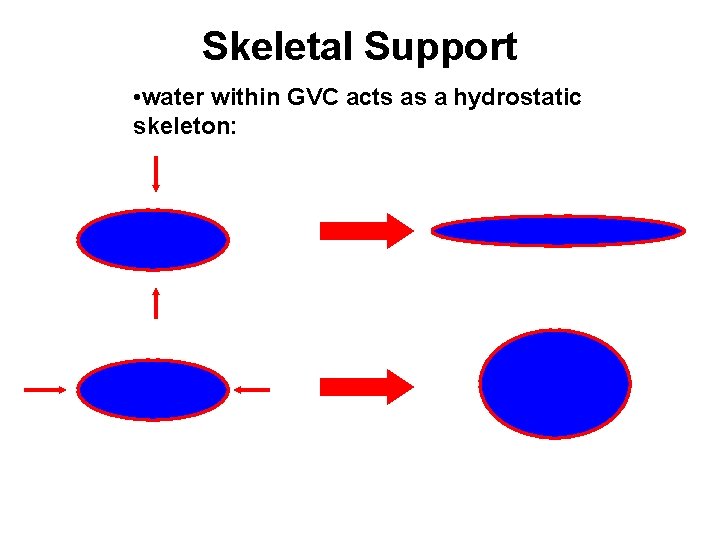
Skeletal Support • water within GVC acts as a hydrostatic skeleton:
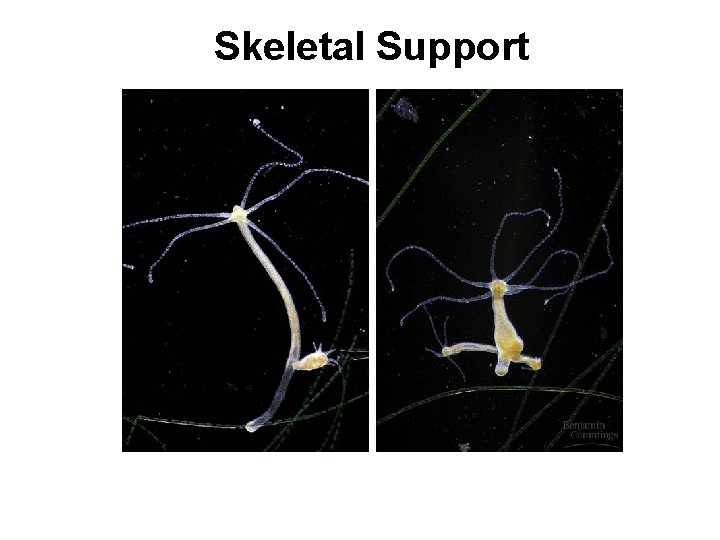
Skeletal Support
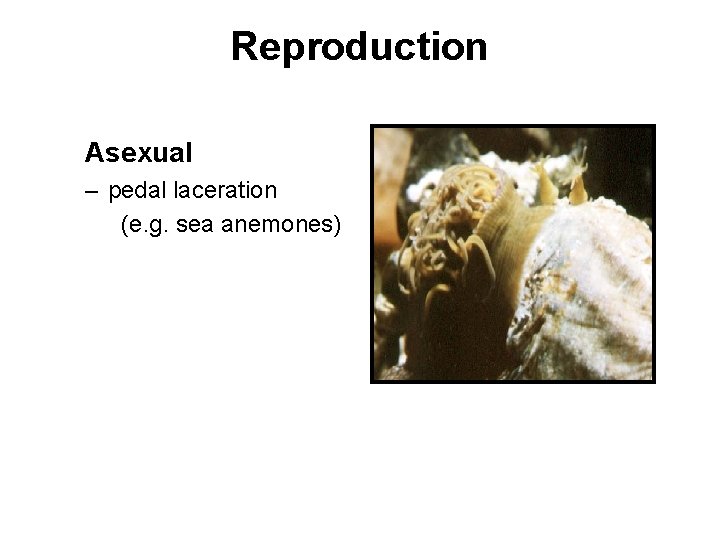
Reproduction Asexual – pedal laceration (e. g. sea anemones)
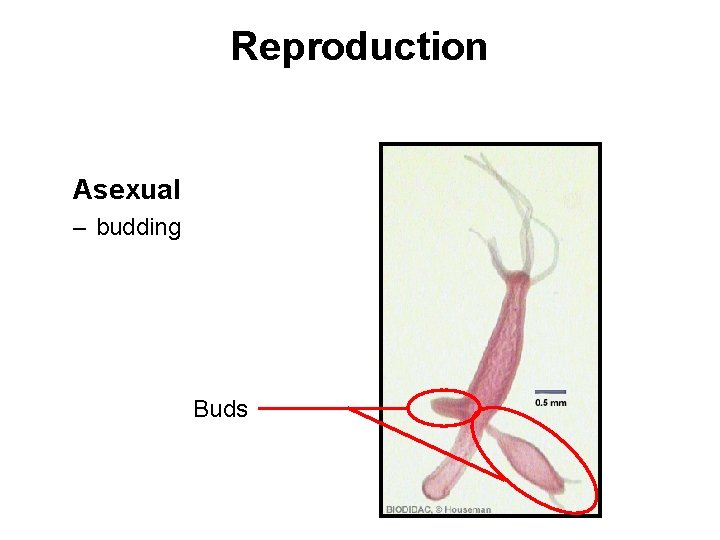
Reproduction Asexual – budding Buds
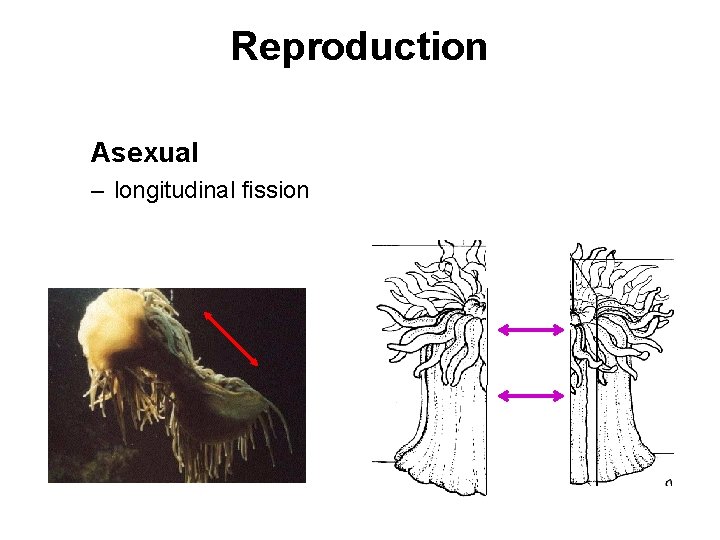
Reproduction Asexual – longitudinal fission
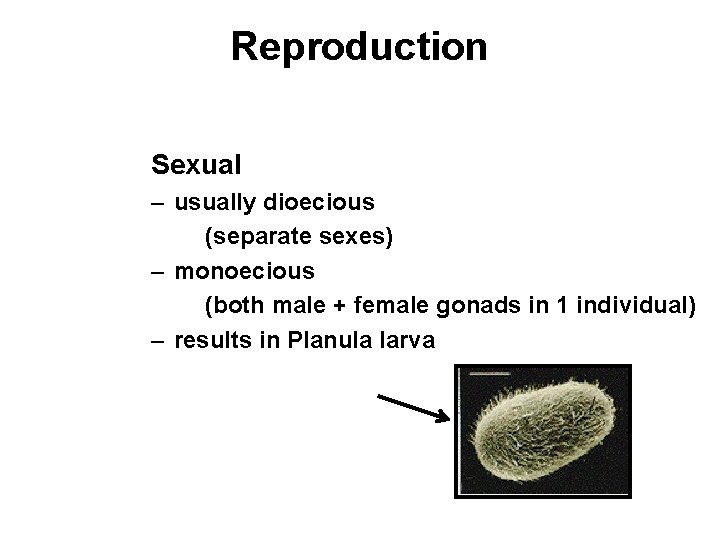
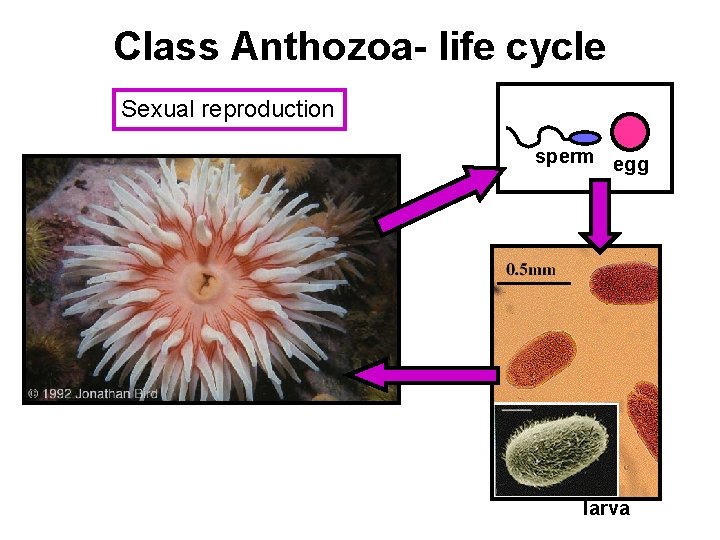
Reproduction Sexual – usually dioecious (separate sexes) – monoecious (both male + female gonads in 1 individual) – results in Planula larva
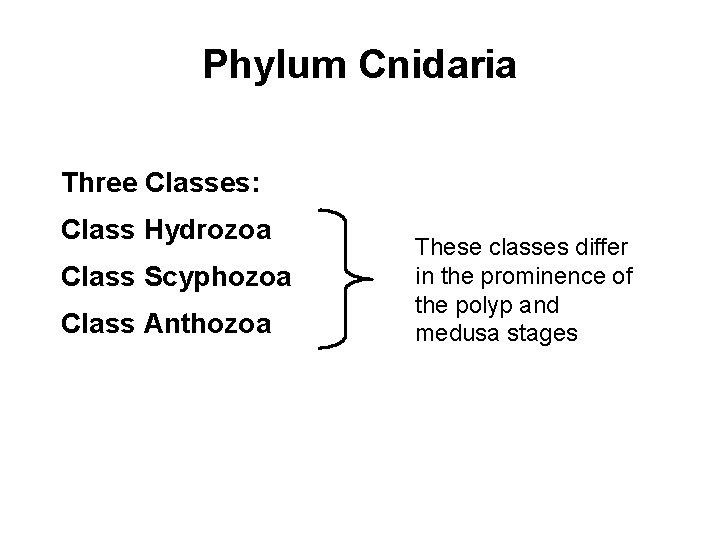
Phylum Cnidaria Three Classes: Class Hydrozoa Class Scyphozoa Class Anthozoa These classes differ in the prominence of the polyp and medusa stages
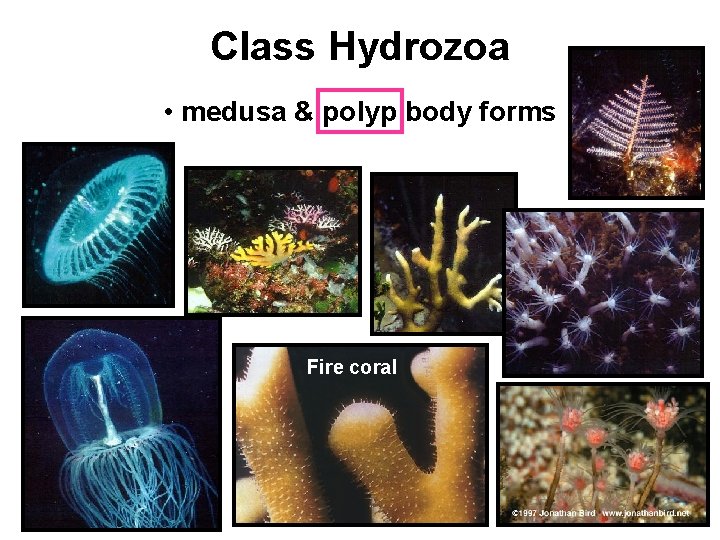
Class Hydrozoa • medusa & polyp body forms Fire coral
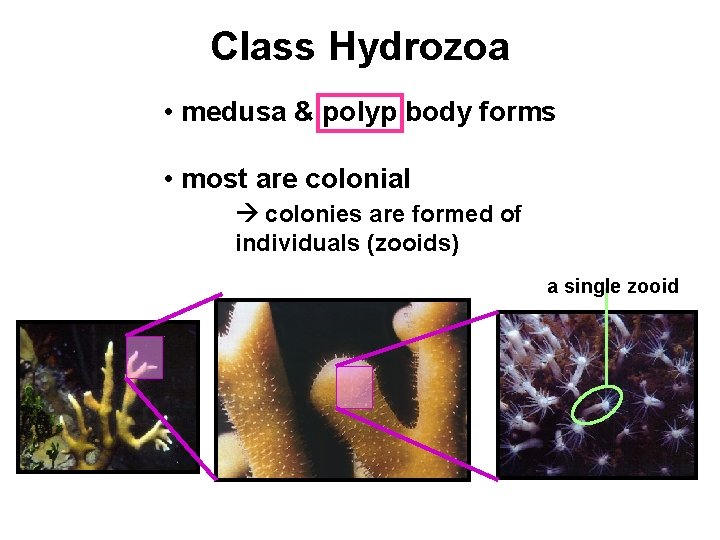
Class Hydrozoa • medusa & polyp body forms • most are colonial colonies are formed of individuals (zooids) a single zooid
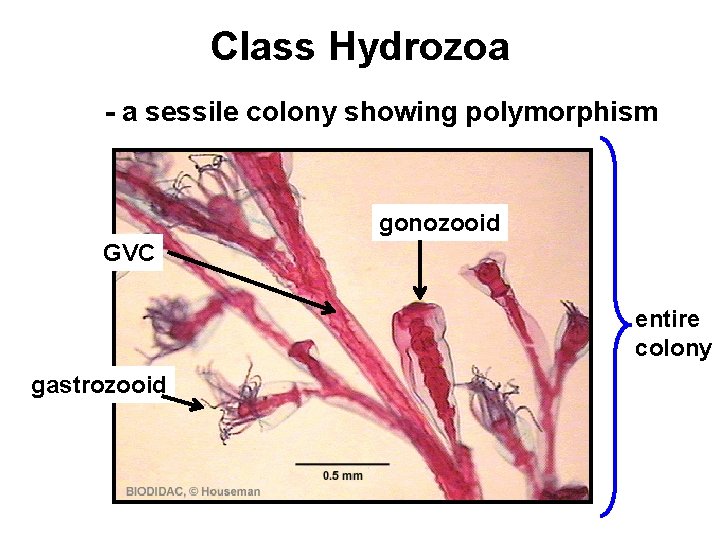
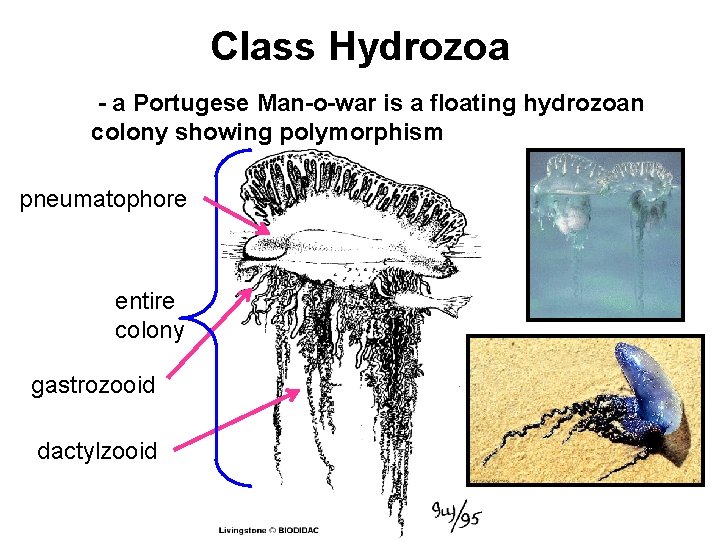
Class Hydrozoa • many of these colonies are polymorphic there are several different types of polyps/zooid and each type is specialized for a different function all the zooids within a colony are genetically identical and are connected by a common GVC
Class Hydrozoa - a sessile colony showing polymorphism GVC gastrozooid gonozooid entire colony
Class Hydrozoa - a Portugese Man-o-war is a floating hydrozoan colony showing polymorphism pneumatophore entire colony gastrozooid dactylzooid
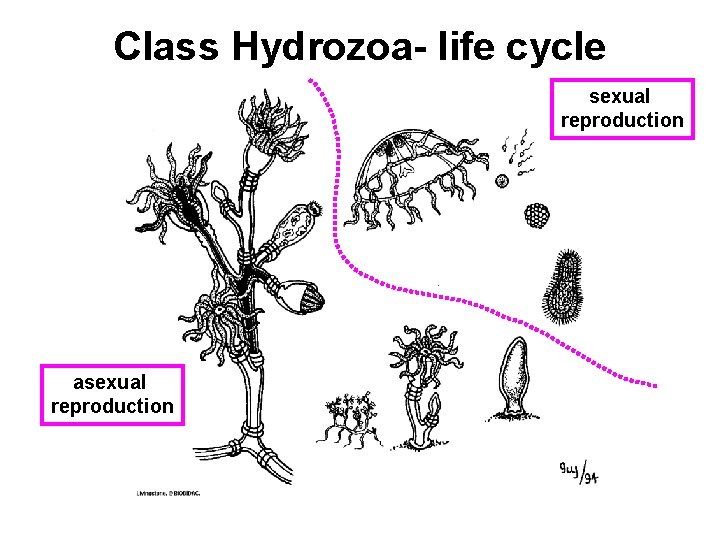
Class Hydrozoa- life cycle sexual reproduction asexual reproduction
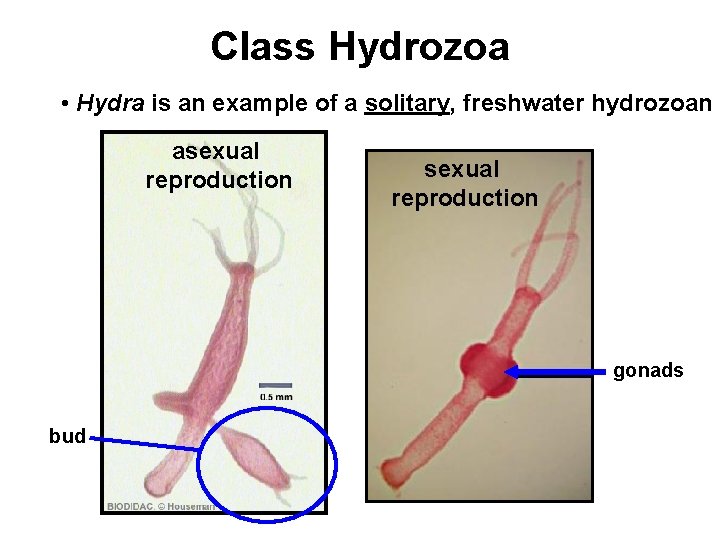
Class Hydrozoa • Hydra is an example of a solitary, freshwater hydrozoan asexual reproduction gonads bud
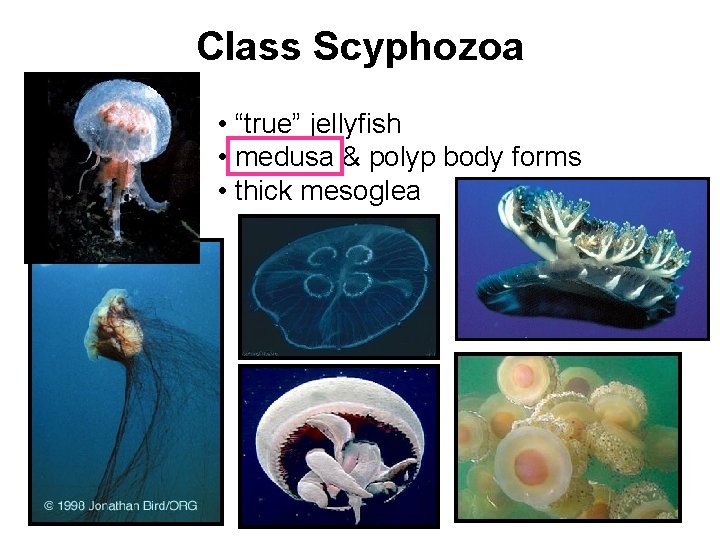
Class Scyphozoa • “true” jellyfish • medusa & polyp body forms • thick mesoglea
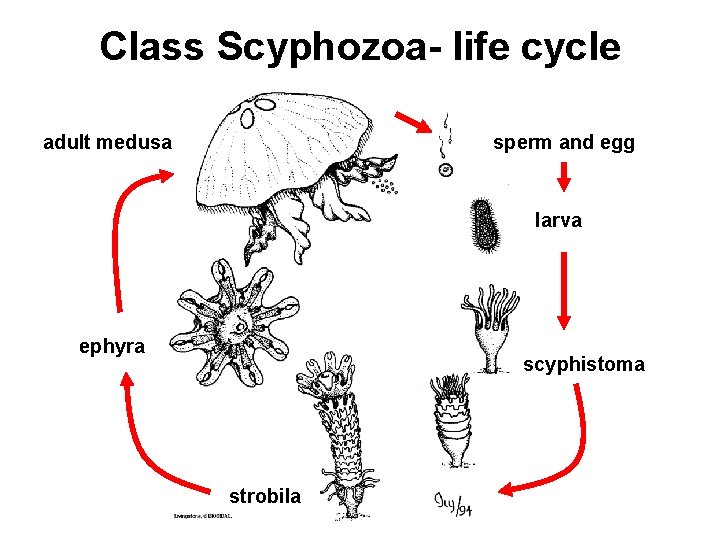
Class Scyphozoa- life cycle adult medusa sperm and egg larva ephyra scyphistoma strobila
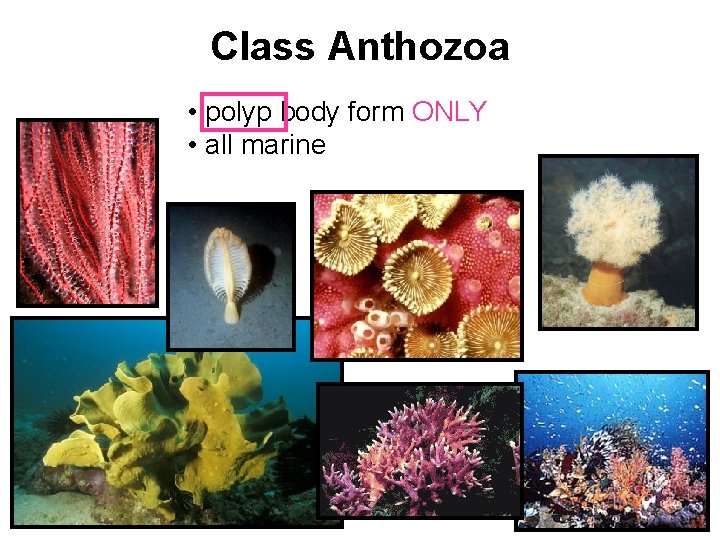
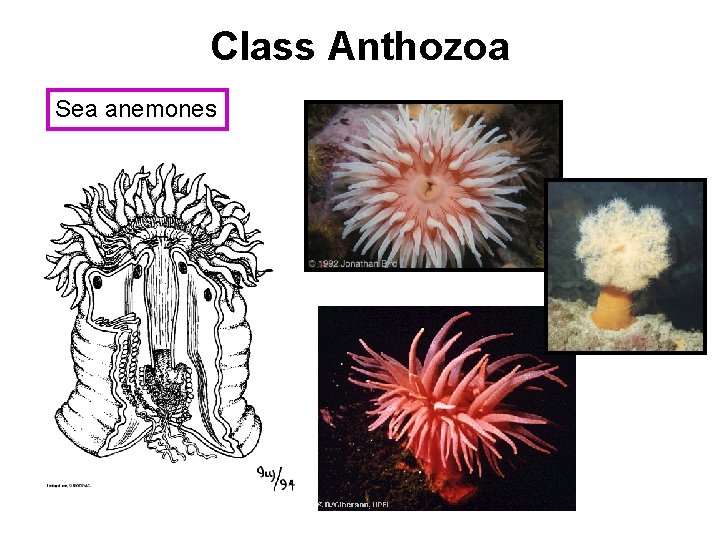
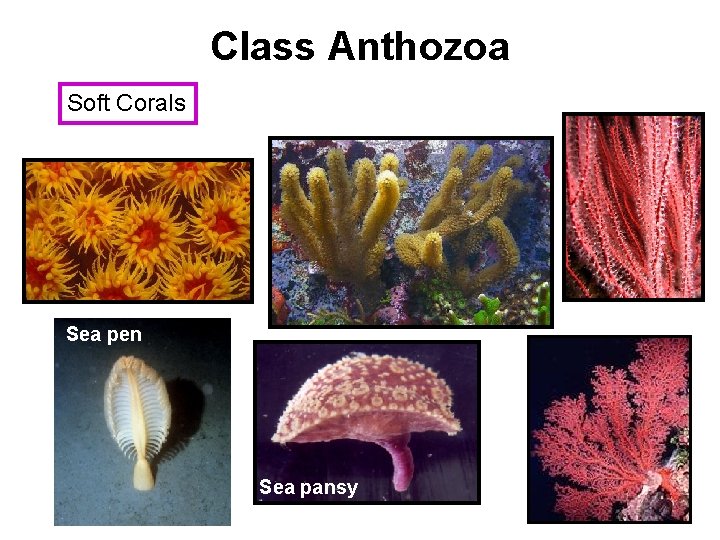
Class Anthozoa • polyp body form ONLY • all marine
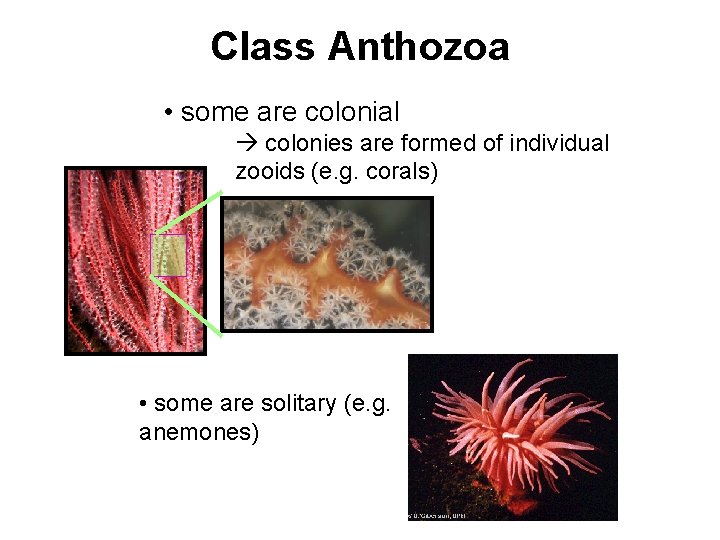
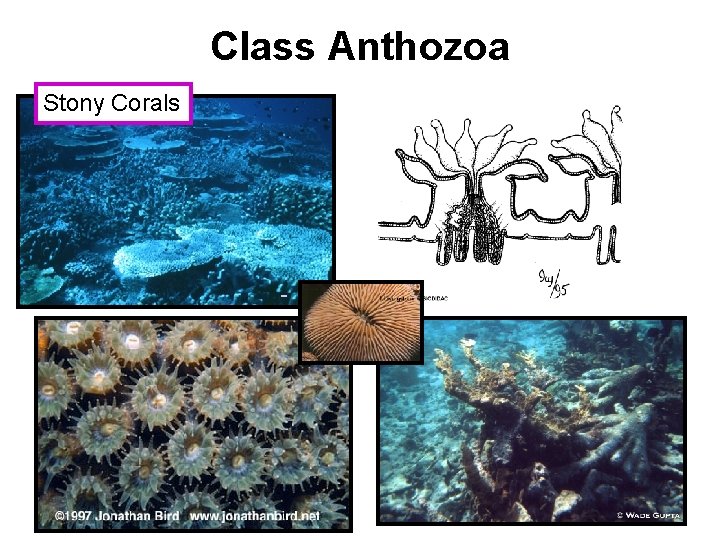
Class Anthozoa • some are colonial colonies are formed of individual zooids (e. g. corals) • some are solitary (e. g. anemones)
Class Anthozoa Sea anemones
Class Anthozoa Soft Corals Sea pen Sea pansy
Class Anthozoa Stony Corals
Class Anthozoa- life cycle Sexual reproduction sperm egg larva
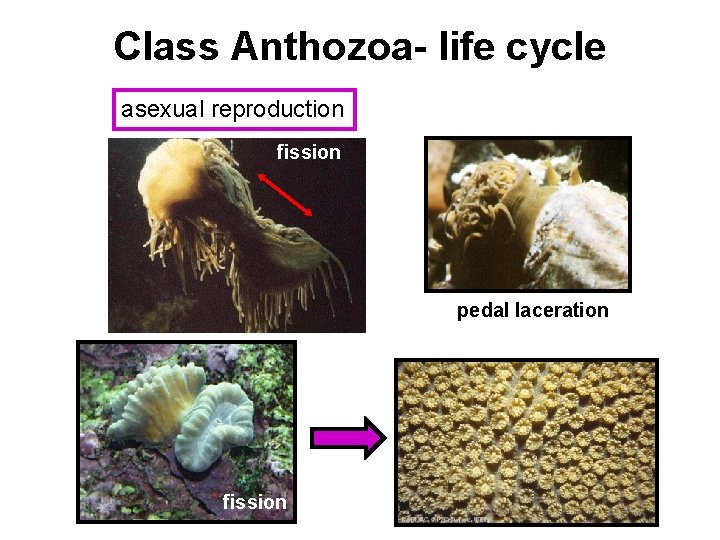
Class Anthozoa- life cycle asexual reproduction fission pedal laceration fission
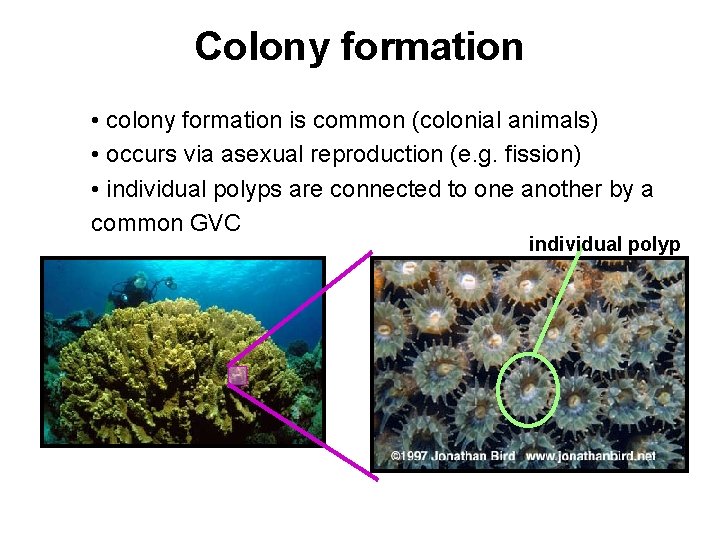
Colony formation • colony formation is common (colonial animals) • occurs via asexual reproduction (e. g. fission) • individual polyps are connected to one another by a common GVC individual polyp
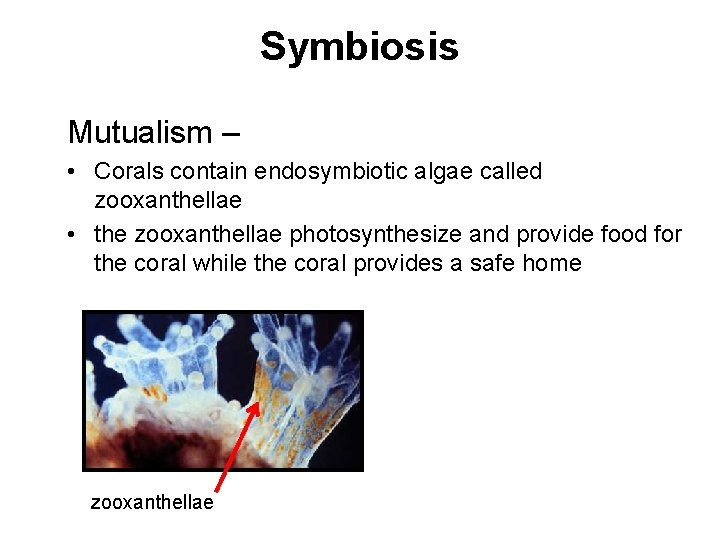
Symbiosis Mutualism – • Corals contain endosymbiotic algae called zooxanthellae • the zooxanthellae photosynthesize and provide food for the coral while the coral provides a safe home zooxanthellae
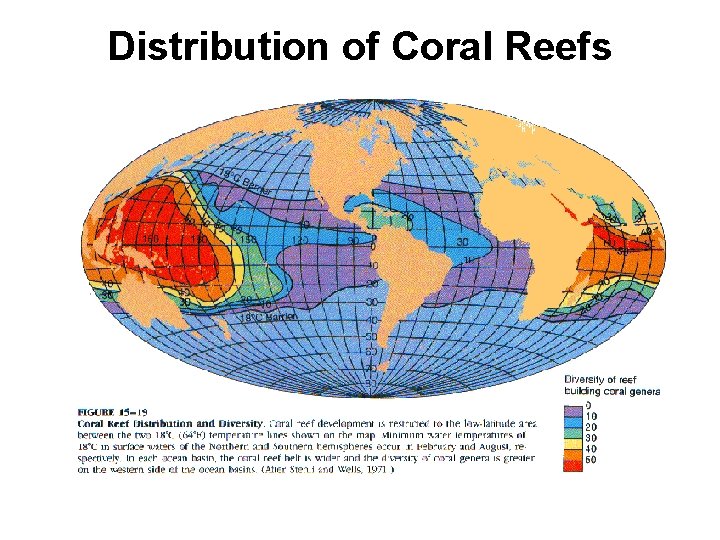
Coral Reefs What are they? • stony corals lay down a calcium carbonate skeleton • these skeletons are laid down on top of one another and over thousands of years, form large calcium carbonate structures • these large structures, along with the plants and animals that inhabit them, are known as coral reefs
Distribution of Coral Reefs
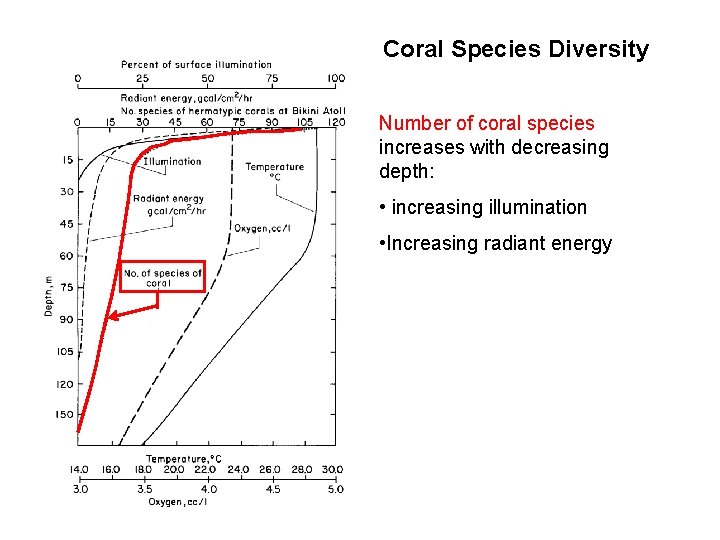
Coral Species Diversity Number of coral species increases with decreasing depth: • increasing illumination • Increasing radiant energy
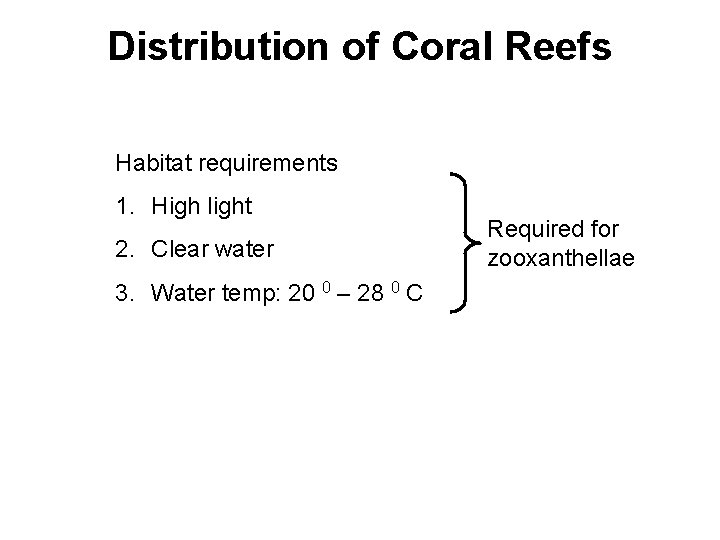
Distribution of Coral Reefs Habitat requirements 1. High light 2. Clear water 3. Water temp: 20 0 – 28 0 C Required for zooxanthellae
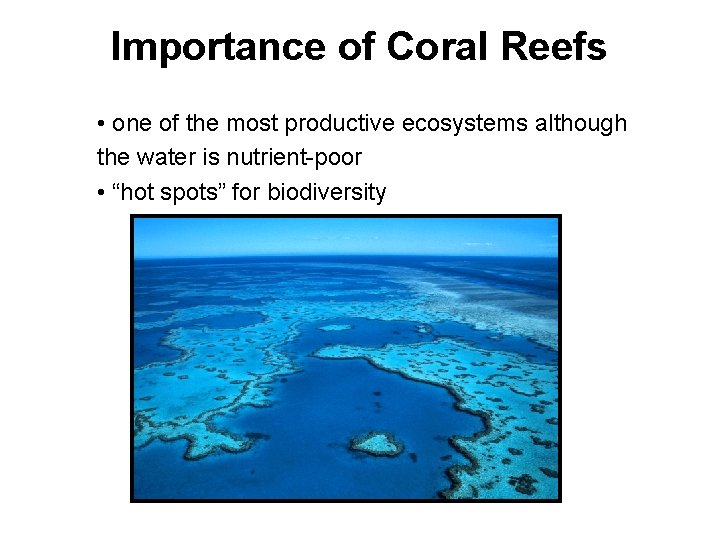
Importance of Coral Reefs • one of the most productive ecosystems although the water is nutrient-poor • “hot spots” for biodiversity
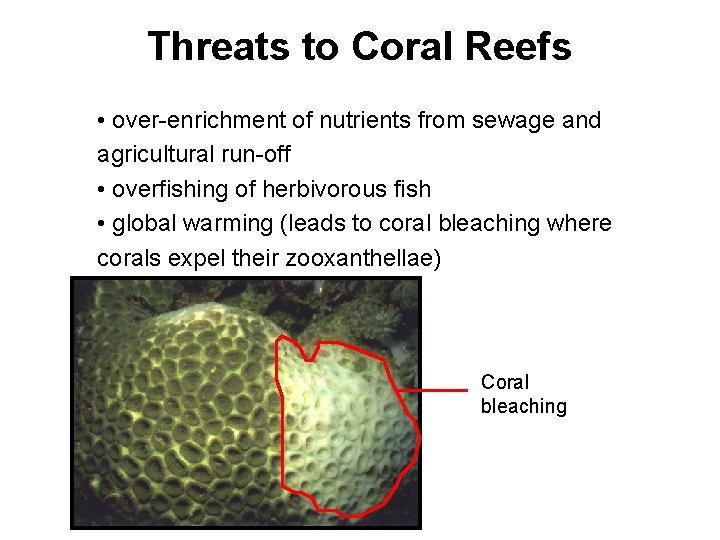
Threats to Coral Reefs • over-enrichment of nutrients from sewage and agricultural run-off • overfishing of herbivorous fish • global warming (leads to coral bleaching where corals expel their zooxanthellae) Coral bleaching
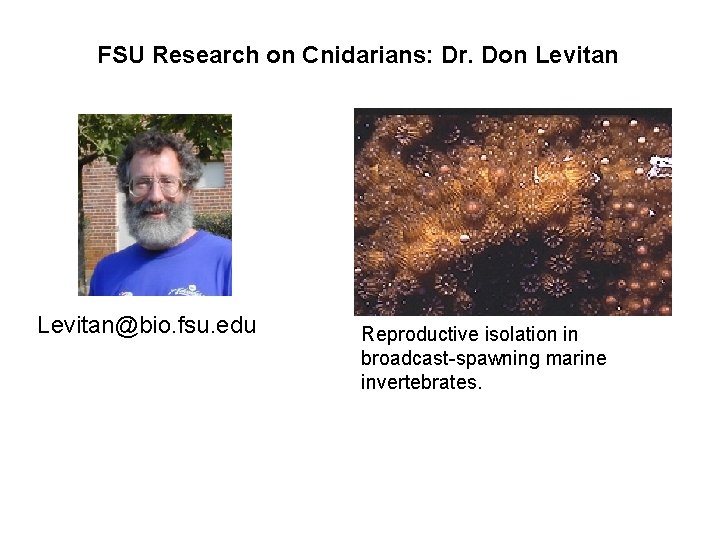
FSU Research on Cnidarians: Dr. Don Levitan@bio. fsu. edu Reproductive isolation in broadcast-spawning marine invertebrates.
Biological species concept: a species is a population or group of populations that can potentially interbreed and produce viable, fertile offspring, but that is reproductively isolated from other populations.
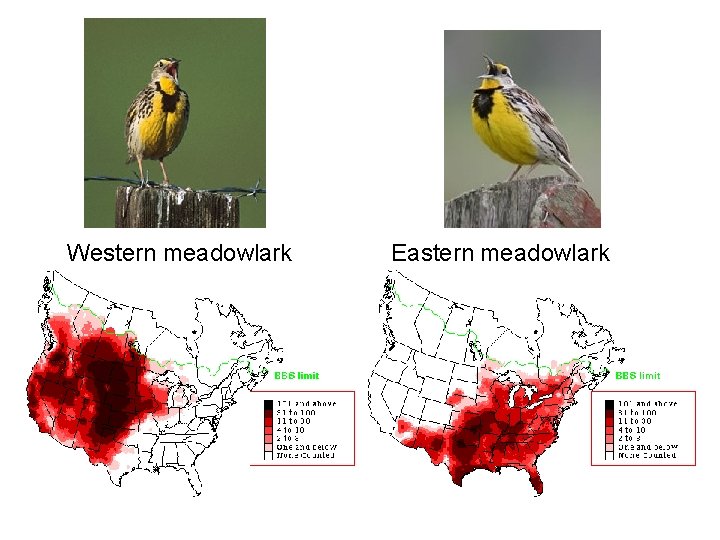
Western meadowlark Eastern meadowlark
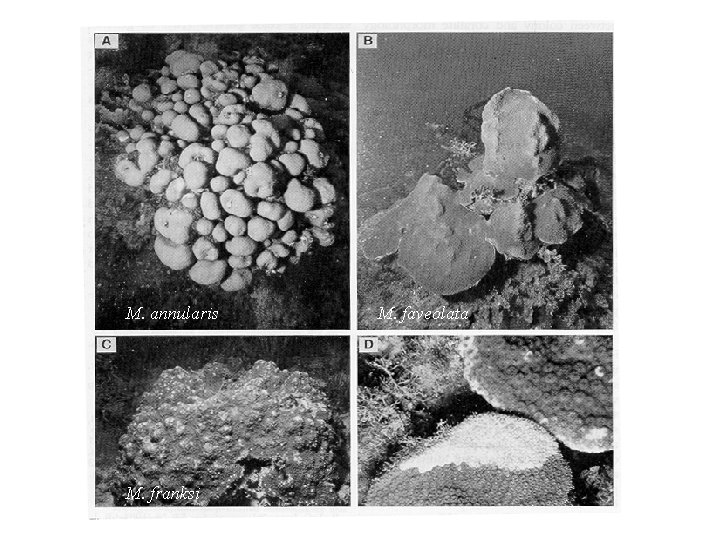
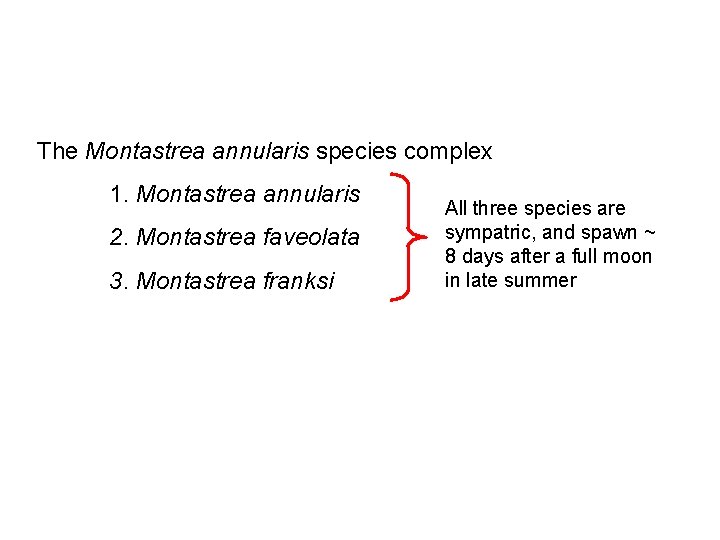
How do species of broadcast-spawning marine invertebrates remain reproductively isolated from one another? The Montastrea annularis species complex 1. Montastrea annularis 2. Montastrea faveolata 3. Montastrea franksi
M. annularis M. franksi M. faveolata
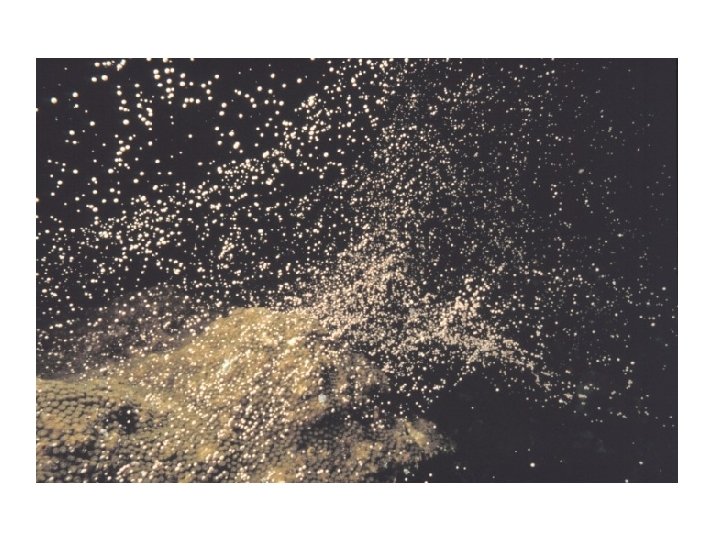
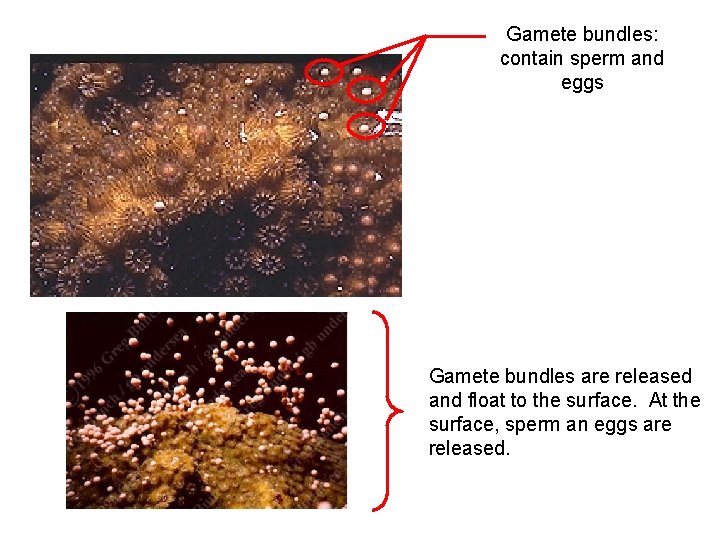
Gamete bundles: contain sperm and eggs Gamete bundles are released and float to the surface. At the surface, sperm an eggs are released.
The Montastrea annularis species complex 1. Montastrea annularis 2. Montastrea faveolata 3. Montastrea franksi All three species are sympatric, and spawn ~ 8 days after a full moon in late summer
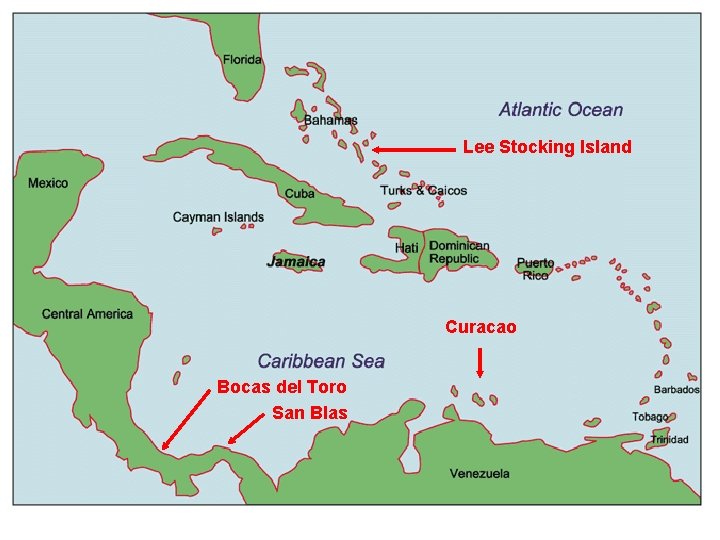
Lee Stocking Island Curacao Bocas del Toro San Blas
How do species of broadcast-spawning marine invertebrates remain reproductively isolated from one another? 1. Time of spawning Do species spawn at the same time after sunset?
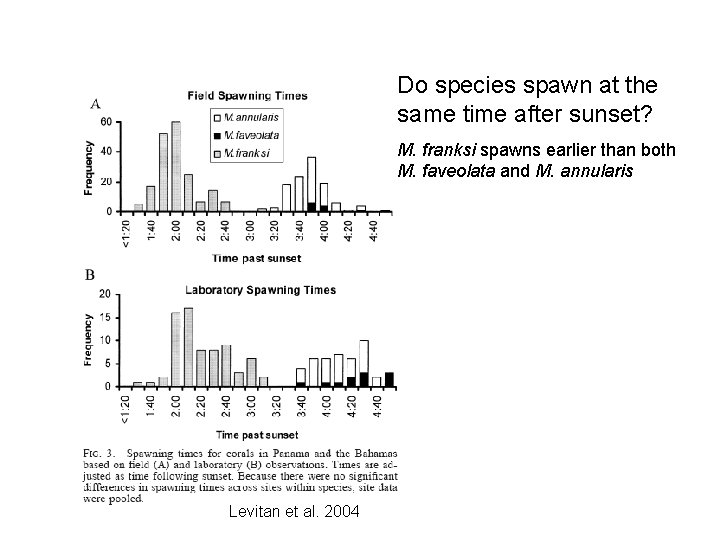
Do species spawn at the same time after sunset? M. franksi spawns earlier than both M. faveolata and M. annularis Levitan et al. 2004
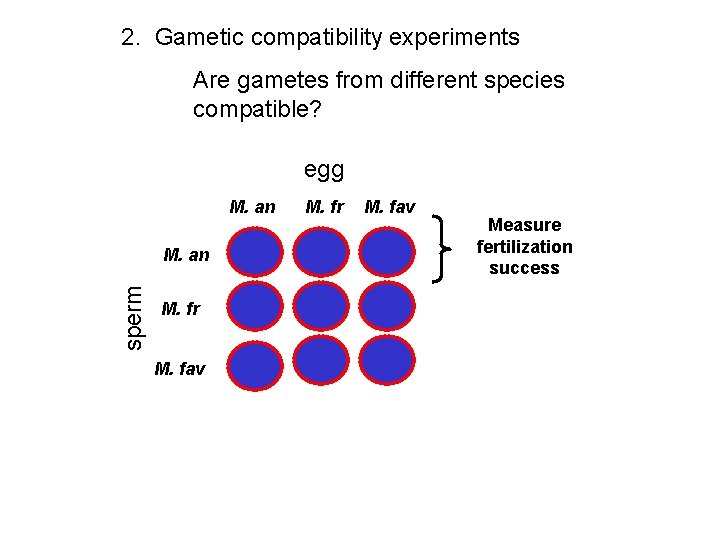
2. Gametic compatibility experiments Are gametes from different species compatible? egg M. an sperm M. an M. fr M. fav Measure fertilization success
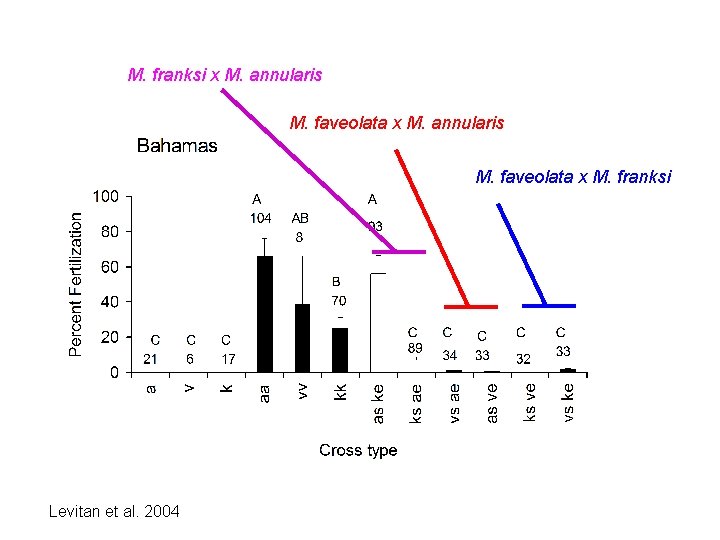
M. franksi x M. annularis M. faveolata x M. franksi Levitan et al. 2004
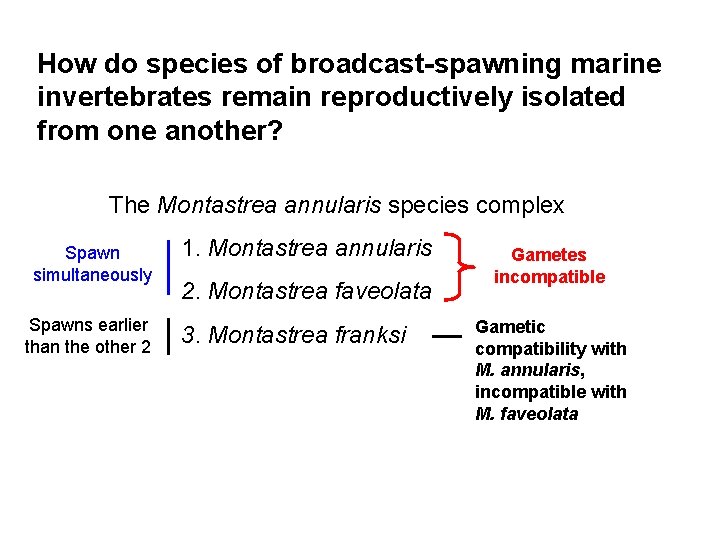
How do species of broadcast-spawning marine invertebrates remain reproductively isolated from one another? The Montastrea annularis species complex Spawn simultaneously Spawns earlier than the other 2 1. Montastrea annularis 2. Montastrea faveolata 3. Montastrea franksi Gametes incompatible Gametic compatibility with M. annularis, incompatible with M. faveolata
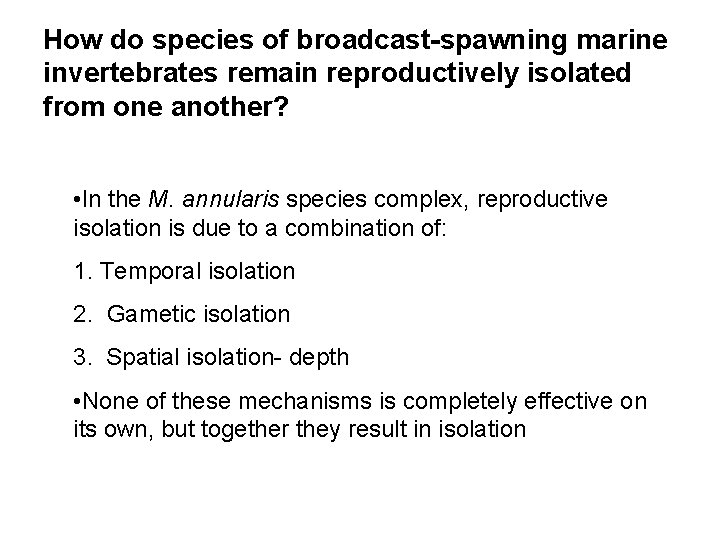
How do species of broadcast-spawning marine invertebrates remain reproductively isolated from one another? • In the M. annularis species complex, reproductive isolation is due to a combination of: 1. Temporal isolation 2. Gametic isolation 3. Spatial isolation- depth • None of these mechanisms is completely effective on its own, but together they result in isolation