
The Three Domains All organisms belong to one
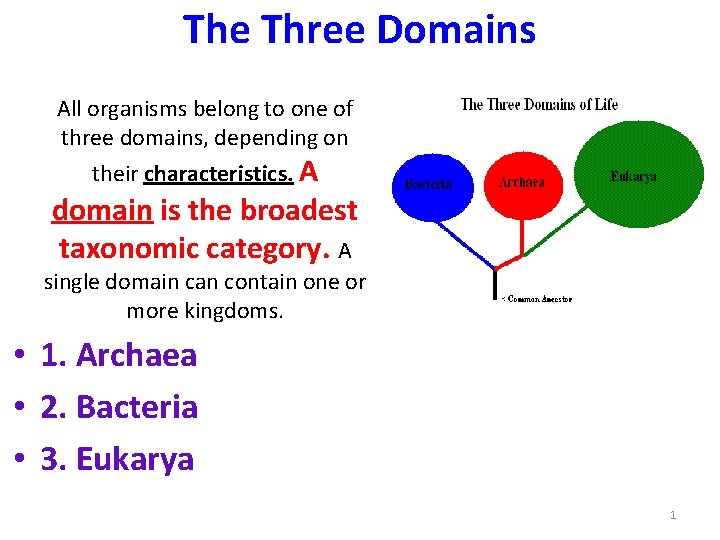
The Three Domains All organisms belong to one of three domains, depending on their characteristics. A domain is the broadest taxonomic category. A single domain can contain one or more kingdoms. • 1. Archaea • 2. Bacteria • 3. Eukarya 1
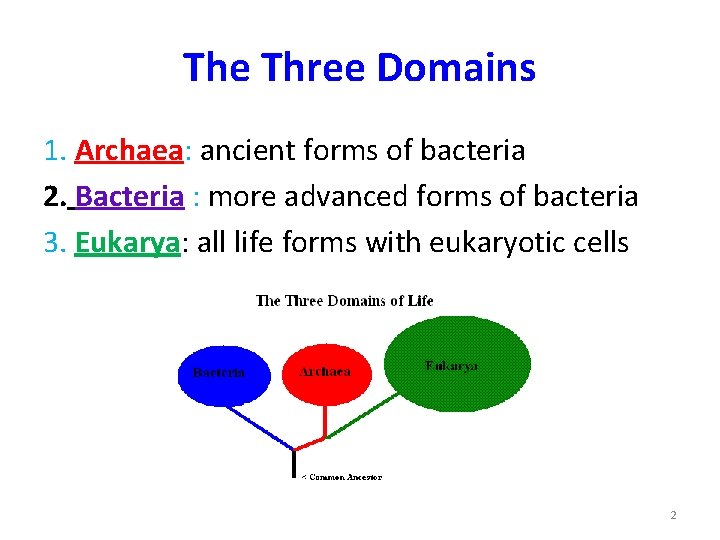
The Three Domains 1. Archaea: ancient forms of bacteria 2. Bacteria : more advanced forms of bacteria 3. Eukarya: all life forms with eukaryotic cells 2
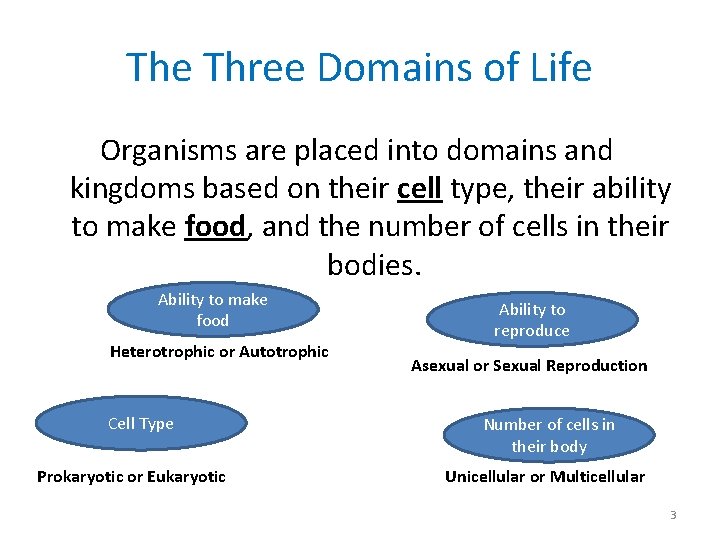
The Three Domains of Life Organisms are placed into domains and kingdoms based on their cell type, their ability to make food, and the number of cells in their bodies. Ability to make food Heterotrophic or Autotrophic Cell Type Prokaryotic or Eukaryotic Ability to reproduce Asexual or Sexual Reproduction Number of cells in their body Unicellular or Multicellular 3
The Three Domains of Life Organisms can be: • Prokaryotic – cells that lack a nucleus • Eukaryotic – cells that contain a nucleus • Unicellular – single-celled; made up of one cell • Multicellular – made up of many cells • • Autotrophic – can make their own food Heterotrophic – can not make their own food Asexual – reproduce with only one organism. Sexual reproduction – 2 parents are needed for reproduction. 4

The Three Domains of Life 2. Domain Bacteria (write this under the Domain Bacteria tab) Kingdom Eubacteria • 1. They are found everywhere on Earth except extreme environments. • 2. Unicellular, • 3. Prokaryotic – no nucleus • 4. Asexual • 5. Example: Bacteria 5
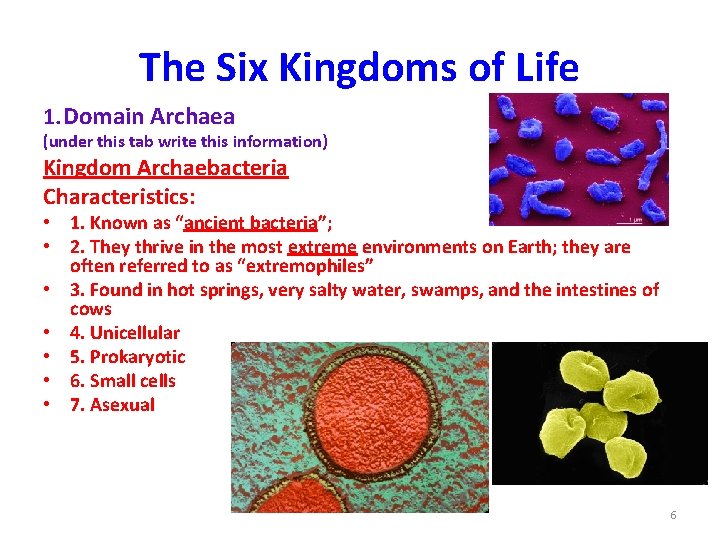
The Six Kingdoms of Life 1. Domain Archaea (under this tab write this information) Kingdom Archaebacteria Characteristics: • 1. Known as “ancient bacteria”; • 2. They thrive in the most extreme environments on Earth; they are often referred to as “extremophiles” • 3. Found in hot springs, very salty water, swamps, and the intestines of cows • 4. Unicellular • 5. Prokaryotic • 6. Small cells • 7. Asexual 6
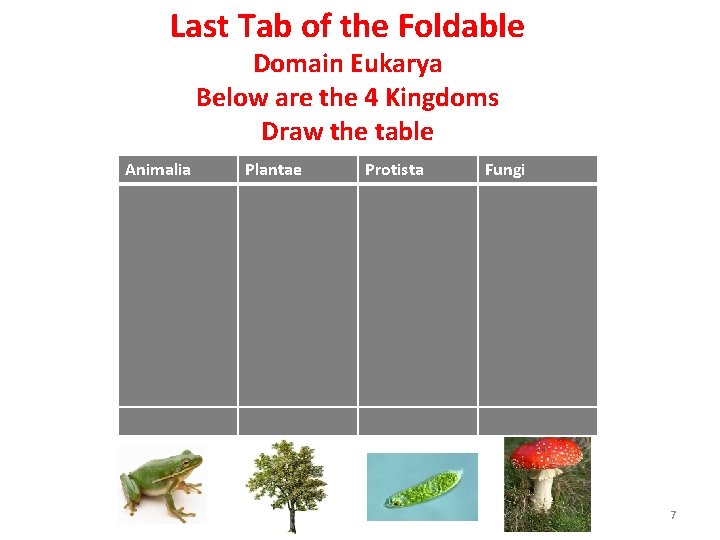
Last Tab of the Foldable Domain Eukarya Below are the 4 Kingdoms Draw the table Animalia Plantae Protista Fungi 7

Last Tab: 3. Domain Eukarya Kingdom Protista (Protists) • “the “odds and ends” kingdom; • includes any organism that can not be classified as a animal, plant, or fungus • eukaryotic • some are unicellular, others are multicellular • some are autotrophs, others are heterotrophs • Lives in moist environments. euglena amoeba paramecium 8
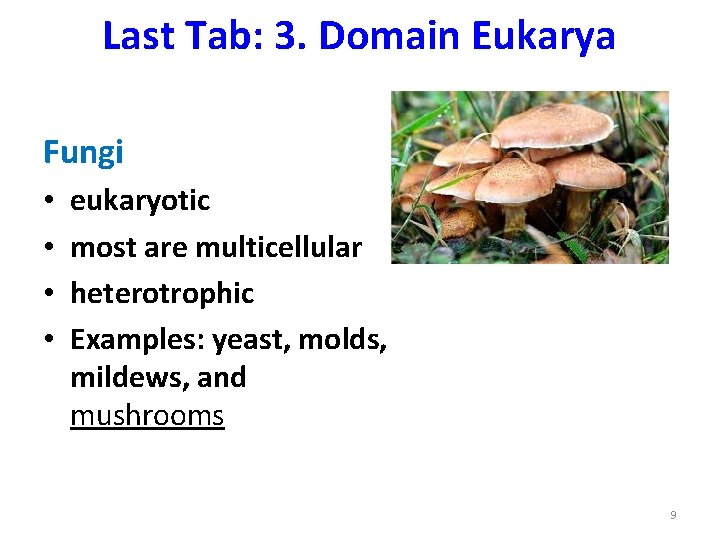
Last Tab: 3. Domain Eukarya Fungi • • eukaryotic most are multicellular heterotrophic Examples: yeast, molds, mildews, and mushrooms 9
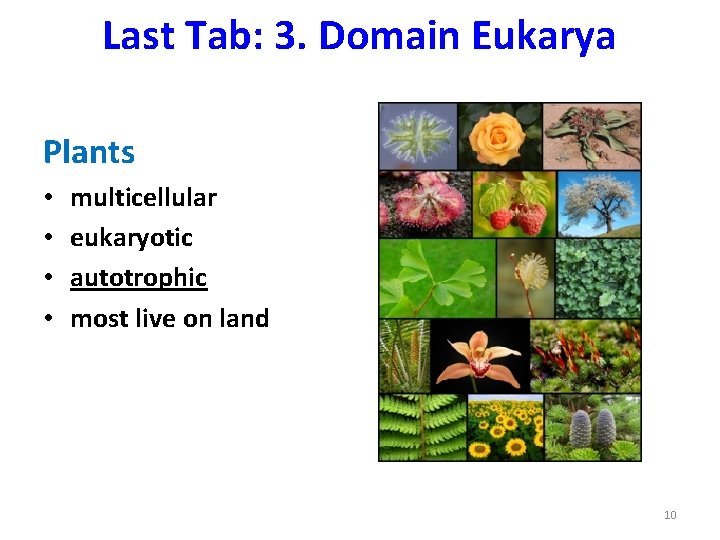
Last Tab: 3. Domain Eukarya Plants • • multicellular eukaryotic autotrophic most live on land 10
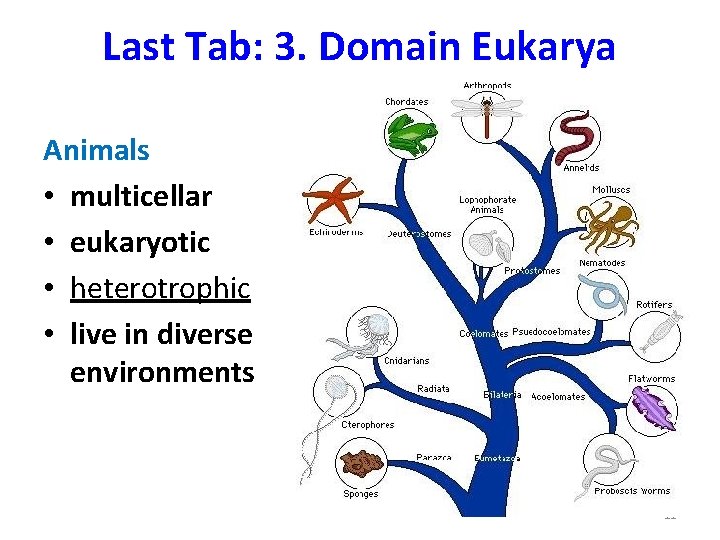
Last Tab: 3. Domain Eukarya Animals • multicellar • eukaryotic • heterotrophic • live in diverse environments 11
- Slides: 11