
THE THREE BRANCHES OF THE U S GOVERNMENT
THE THREE BRANCHES OF THE U. S. GOVERNMENT LEAGUE OF WOMEN VOTERS® OF FLORIDA
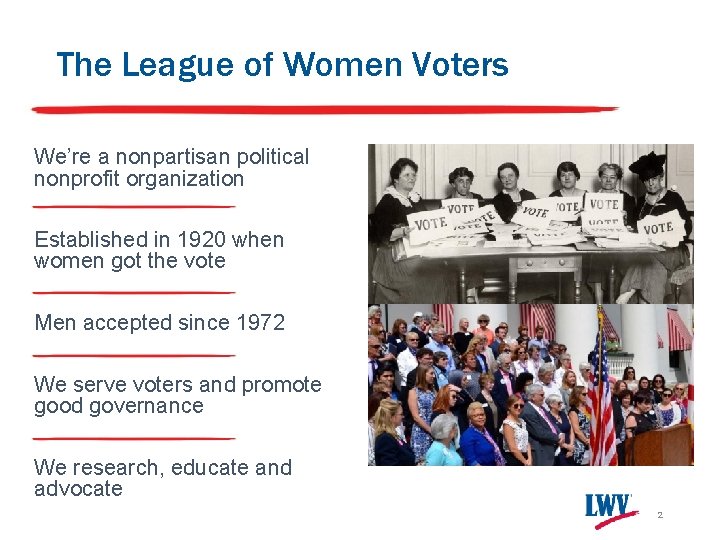
The League of Women Voters We’re a nonpartisan political nonprofit organization Established in 1920 when women got the vote Men accepted since 1972 We serve voters and promote good governance We research, educate and advocate 2
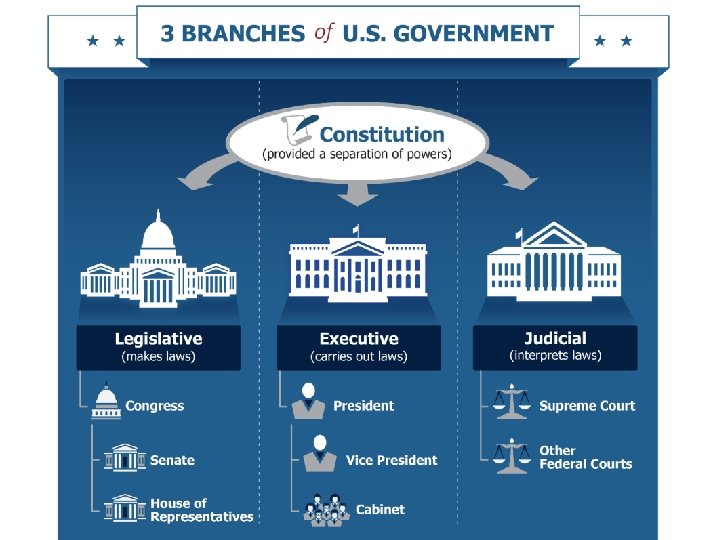
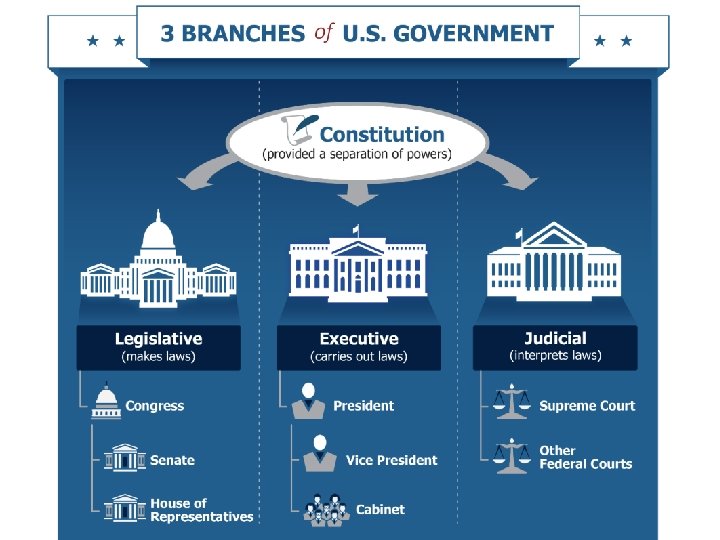
The Legislative Branch • Confirms or rejects Presidential appointments • Makes laws and passes taxes • Authorized to declare war
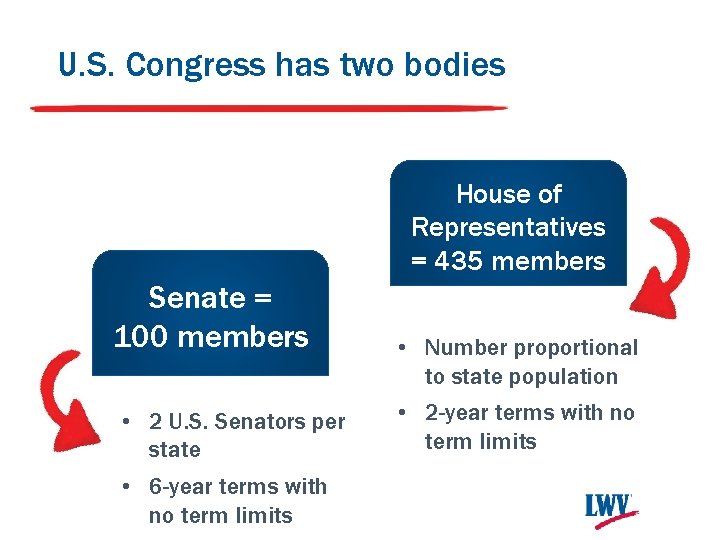
U. S. Congress has two bodies House of Representatives = 435 members Senate = 100 members • 2 U. S. Senators per state • 6 -year terms with no term limits • Number proportional to state population • 2 -year terms with no term limits
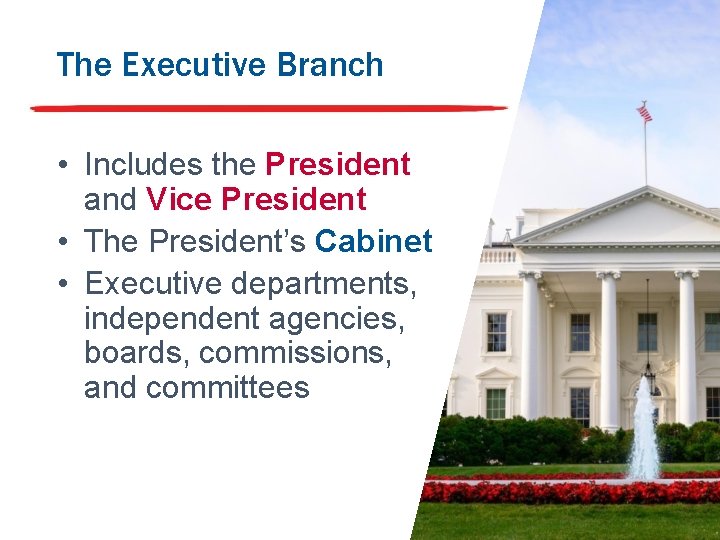
The Executive Branch • Includes the President and Vice President • The President’s Cabinet • Executive departments, independent agencies, boards, commissions, and committees
Eligibility for office of U. S. President 1. Natural-born citizen of the U. S. 2. 35 years of age 3. Resident of U. S. for 14 years 7
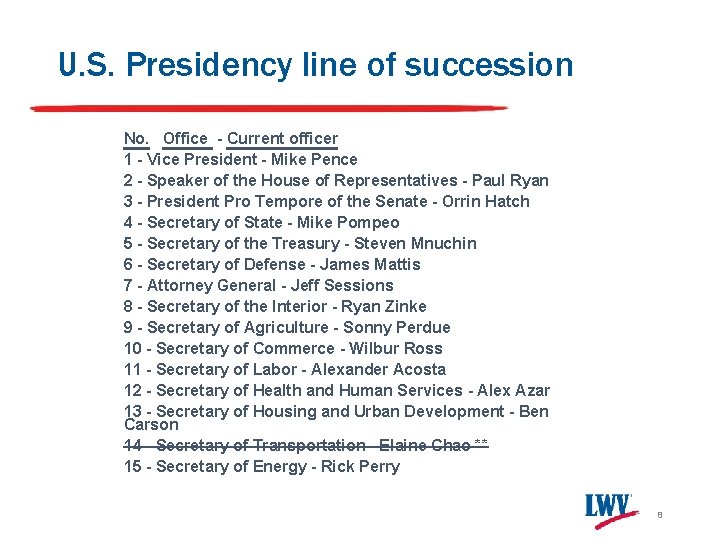
U. S. Presidency line of succession No. Office - Current officer 1 - Vice President - Mike Pence 2 - Speaker of the House of Representatives - Paul Ryan 3 - President Pro Tempore of the Senate - Orrin Hatch 4 - Secretary of State - Mike Pompeo 5 - Secretary of the Treasury - Steven Mnuchin 6 - Secretary of Defense - James Mattis 7 - Attorney General - Jeff Sessions 8 - Secretary of the Interior - Ryan Zinke 9 - Secretary of Agriculture - Sonny Perdue 10 - Secretary of Commerce - Wilbur Ross 11 - Secretary of Labor - Alexander Acosta 12 - Secretary of Health and Human Services - Alex Azar 13 - Secretary of Housing and Urban Development - Ben Carson 14 - Secretary of Transportation - Elaine Chao ** 15 - Secretary of Energy - Rick Perry 8
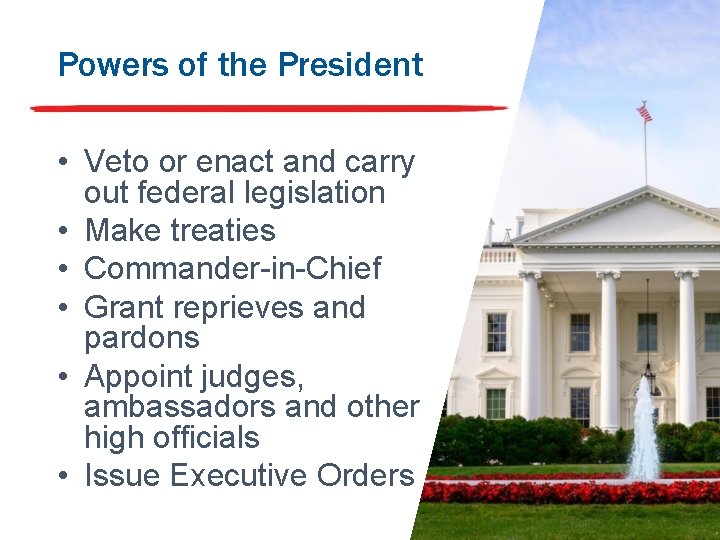
Powers of the President • Veto or enact and carry out federal legislation • Make treaties • Commander-in-Chief • Grant reprieves and pardons • Appoint judges, ambassadors and other high officials • Issue Executive Orders
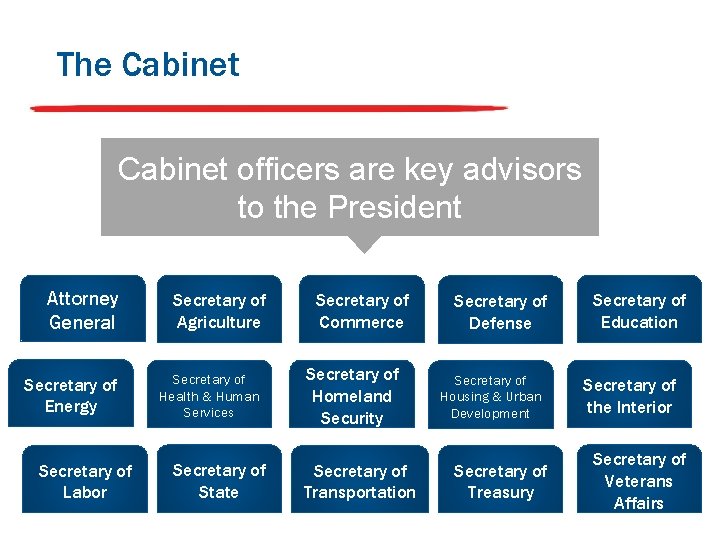
The Cabinet officers are key advisors to the President Attorney General Secretary of Energy Secretary of Labor Secretary of Agriculture Secretary of Health & Human Services Secretary of State Secretary of Commerce Secretary of Homeland Security Secretary of Transportation Secretary of Defense Secretary of Housing & Urban Development Secretary of Treasury Secretary of Education Secretary of the Interior Secretary of Veterans Affairs
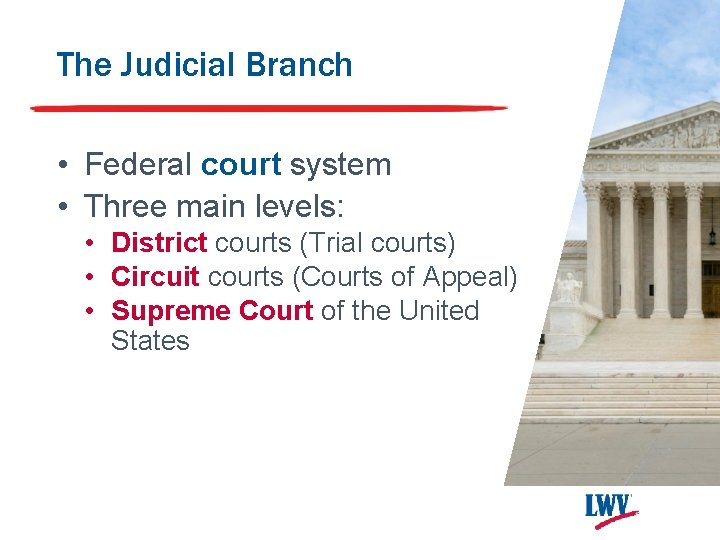
The Judicial Branch • Federal court system • Three main levels: • District courts (Trial courts) • Circuit courts (Courts of Appeal) • Supreme Court of the United States
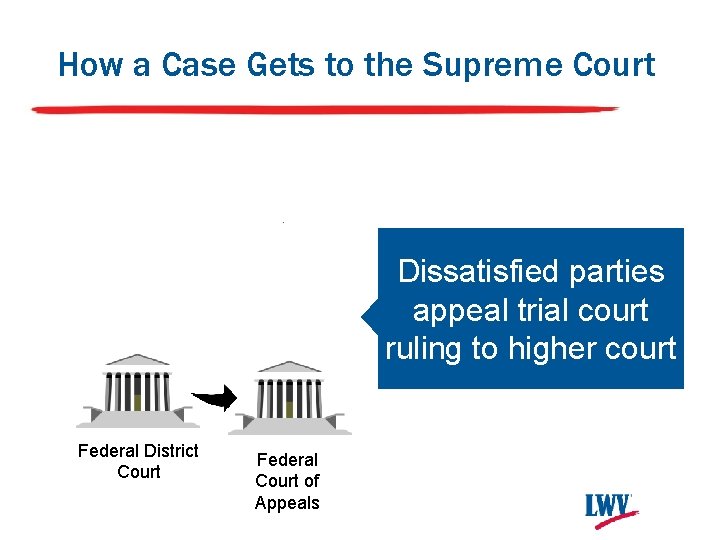
How a Case Gets to the Supreme Court . Dissatisfied parties appeal trial court ruling to higher court Federal District Court Federal Court of Appeals
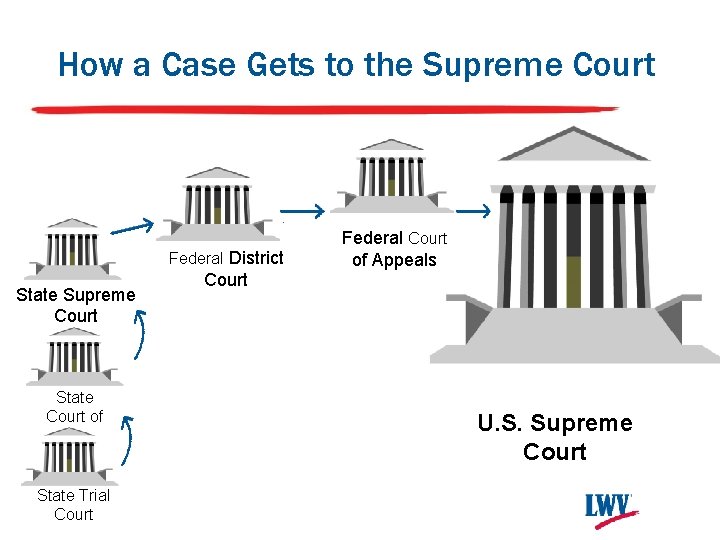
How a Case Gets to the Supreme Court . Federal District State Supreme Court State Court of Appeals State Trial Court Federal Court of Appeals U. S. Supreme Court
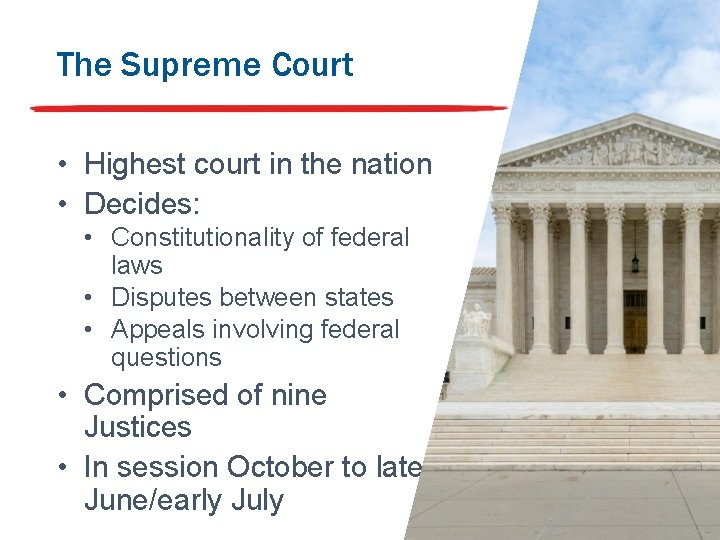
The Supreme Court • Highest court in the nation • Decides: • Constitutionality of federal laws • Disputes between states • Appeals involving federal questions • Comprised of nine Justices • In session October to late June/early July
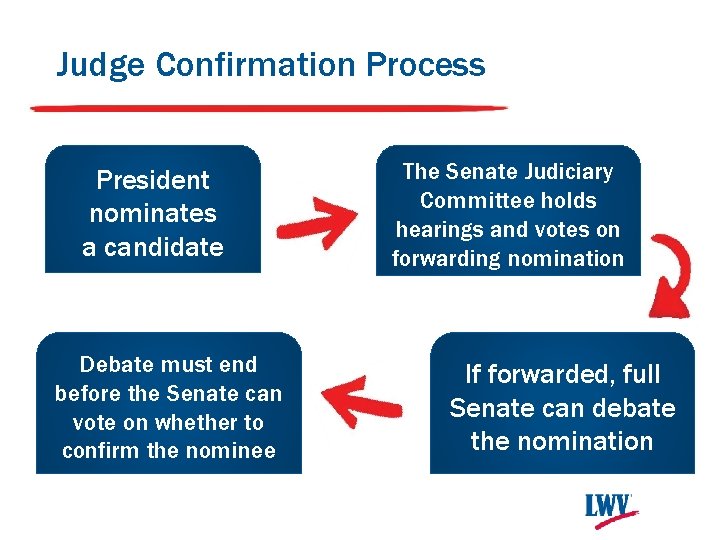
Judge Confirmation Process President nominates a candidate Debate must end before the Senate can vote on whether to confirm the nominee The Senate Judiciary Committee holds hearings and votes on forwarding nomination If forwarded, full Senate can debate the nomination
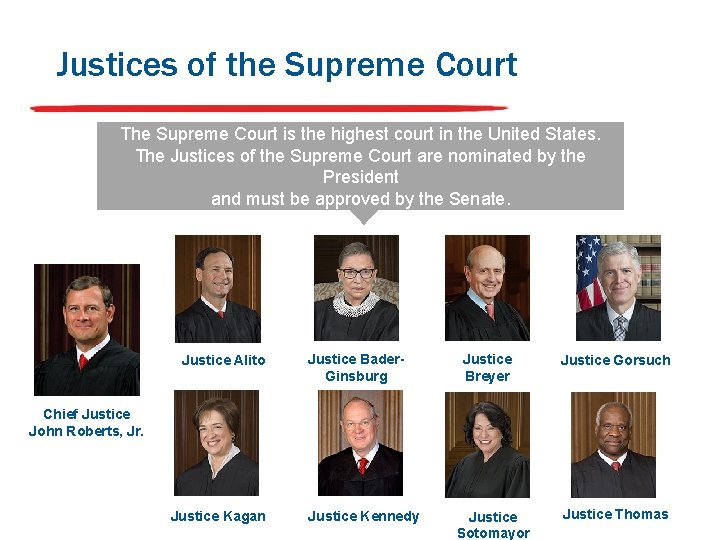
Justices of the Supreme Court The Supreme Court is the highest court in the United States. The Justices of the Supreme Court are nominated by the President and must be approved by the Senate. Justice Alito Justice Bader. Ginsburg Justice Breyer Justice Gorsuch Chief Justice John Roberts, Jr. Justice Kagan Justice Kennedy Justice Sotomayor Justice Thomas
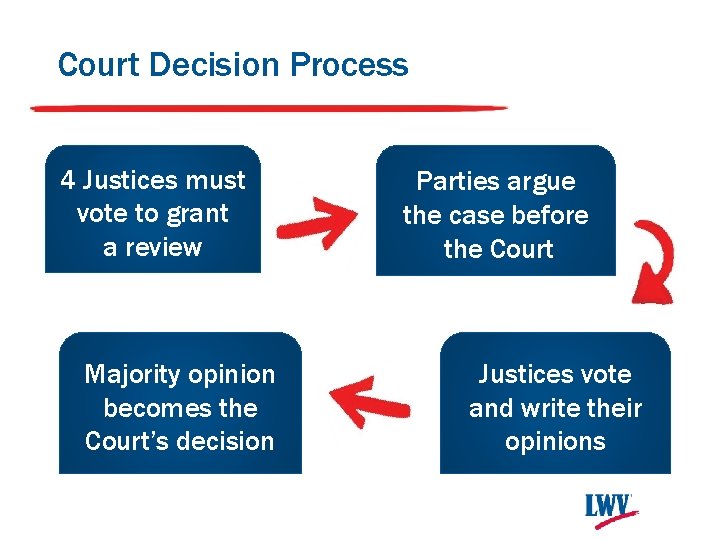
Court Decision Process 4 Justices must vote to grant a review Majority opinion becomes the Court’s decision Parties argue the case before the Court Justices vote and write their opinions
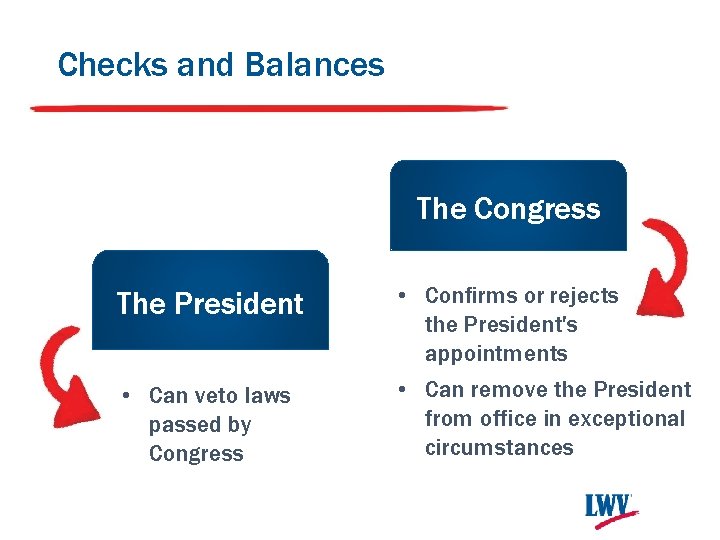
Checks and Balances The Congress The President • Can veto laws passed by Congress • Confirms or rejects the President's appointments • Can remove the President from office in exceptional circumstances
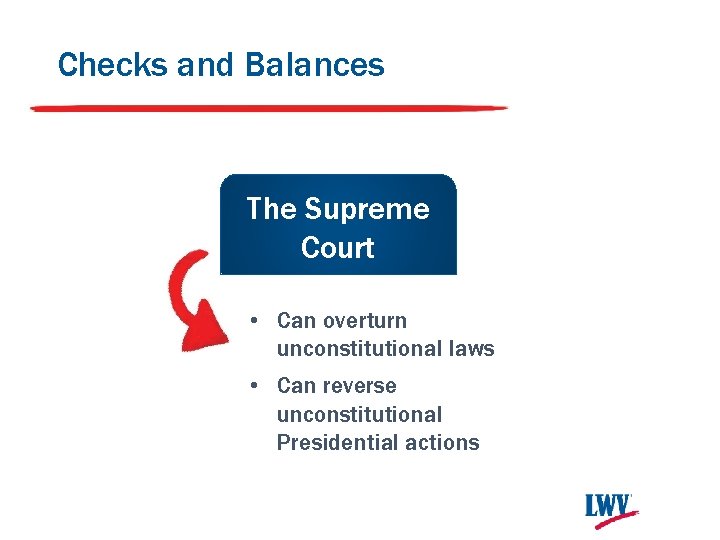
Checks and Balances The Supreme Court • Can overturn unconstitutional laws • Can reverse unconstitutional Presidential actions
THANK YOU Learn more at USA. gov. OF FLORIDA www. lwvfl. org
- Slides: 21