
The ThompsonMc Fadden Commission the Public Health Service

The Thompson-Mc. Fadden Commission, the Public Health Service, and Pellagra Steve Mooney Epic: Using R for Simulation June 2015
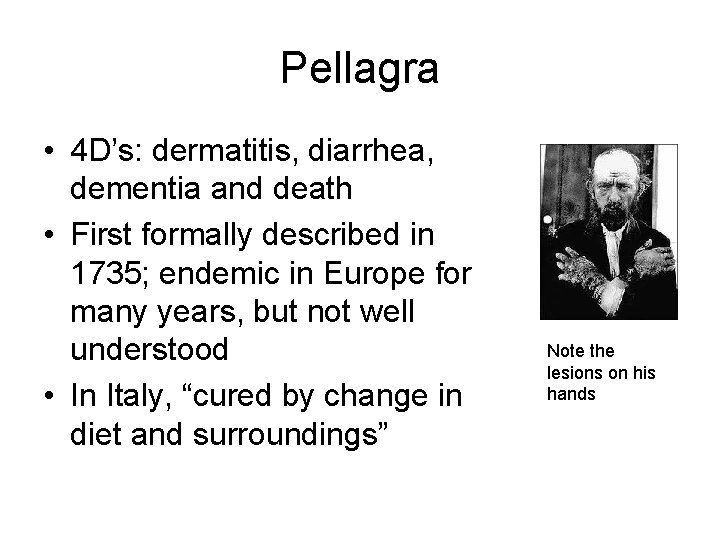
Pellagra • 4 D’s: dermatitis, diarrhea, dementia and death • First formally described in 1735; endemic in Europe for many years, but not well understood • In Italy, “cured by change in diet and surroundings” Note the lesions on his hands
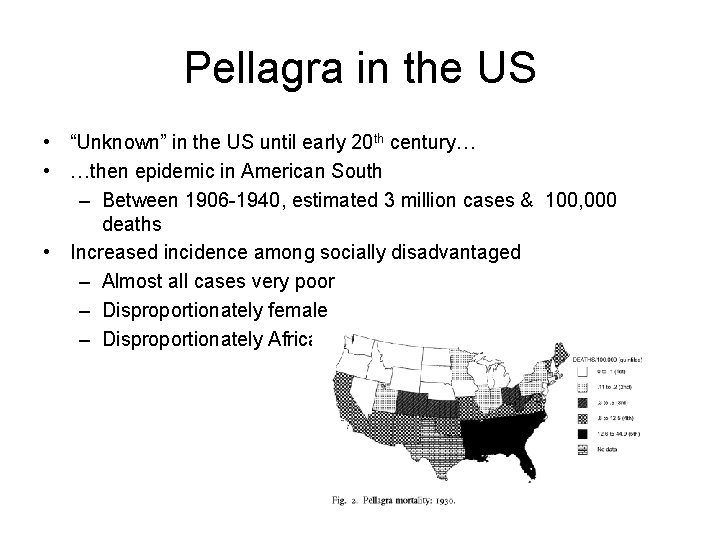
Pellagra in the US • “Unknown” in the US until early 20 th century… • …then epidemic in American South – Between 1906 -1940, estimated 3 million cases & 100, 000 deaths • Increased incidence among socially disadvantaged – Almost all cases very poor – Disproportionately female – Disproportionately African-American
Theories of Pellagra Etiology At Start of US Epidemic • Dietary, but dietary agent unidentified – Toxin in diet (agent=bad) – Deficiency in diet (agent=good) • Infectious, but infectious agent unidentified “You might as well ask me to believe the boll weevil is not alive as to ask me to believe that pellagra is not caused by a living organism” -Dr. E. H. Martin of Hot Springs, Arkansas
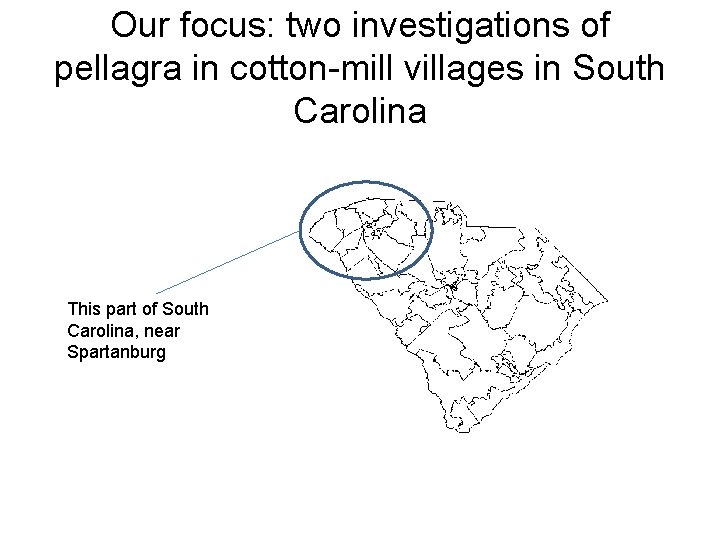
Our focus: two investigations of pellagra in cotton-mill villages in South Carolina This part of South Carolina, near Spartanburg
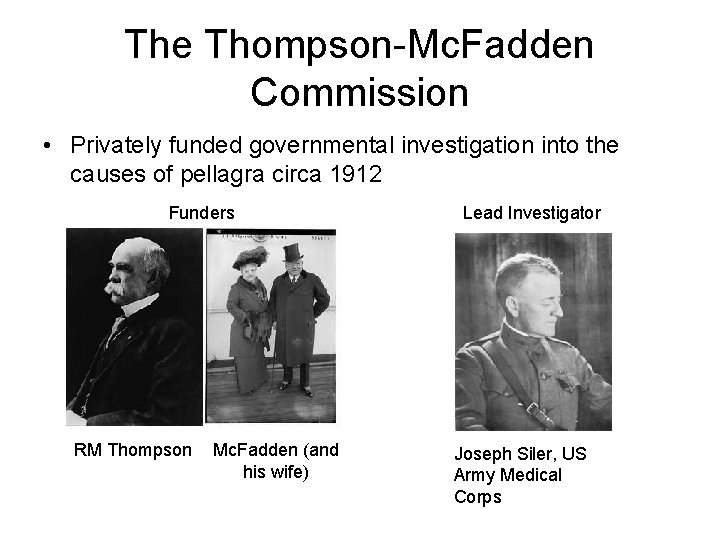
The Thompson-Mc. Fadden Commission • Privately funded governmental investigation into the causes of pellagra circa 1912 Funders RM Thompson Mc. Fadden (and his wife) Lead Investigator Joseph Siler, US Army Medical Corps
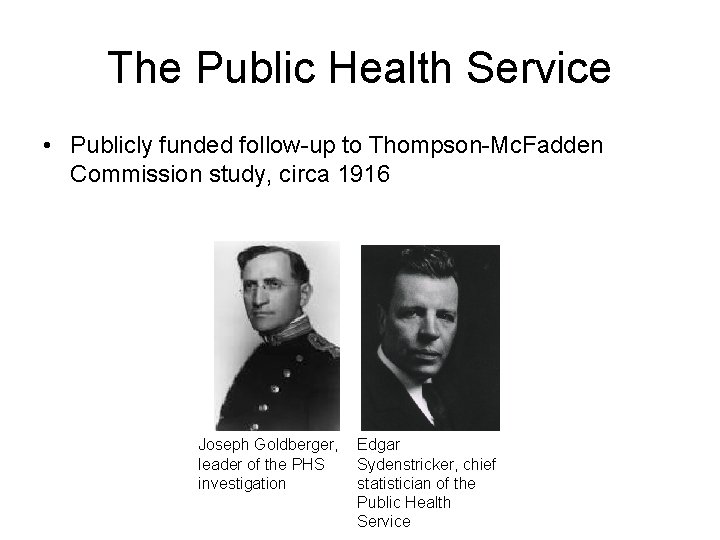
The Public Health Service • Publicly funded follow-up to Thompson-Mc. Fadden Commission study, circa 1916 Joseph Goldberger, leader of the PHS investigation Edgar Sydenstricker, chief statistician of the Public Health Service
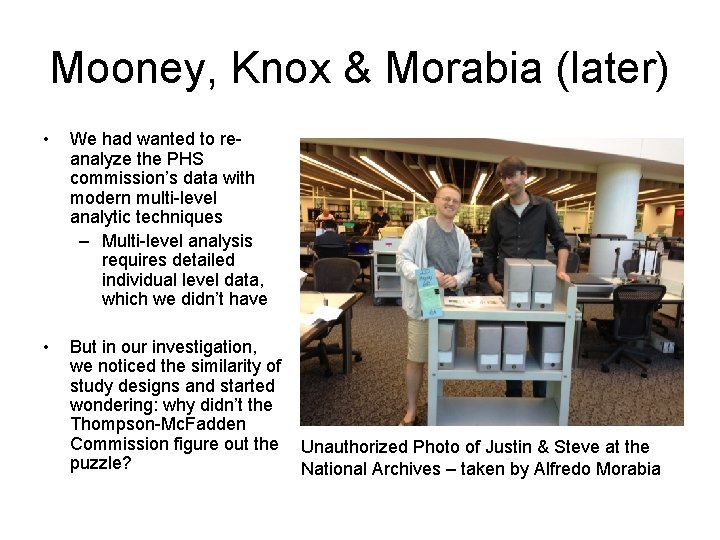
Mooney, Knox & Morabia (later) • We had wanted to reanalyze the PHS commission’s data with modern multi-level analytic techniques – Multi-level analysis requires detailed individual level data, which we didn’t have • But in our investigation, we noticed the similarity of study designs and started wondering: why didn’t the Thompson-Mc. Fadden Commission figure out the puzzle? Unauthorized Photo of Justin & Steve at the National Archives – taken by Alfredo Morabia
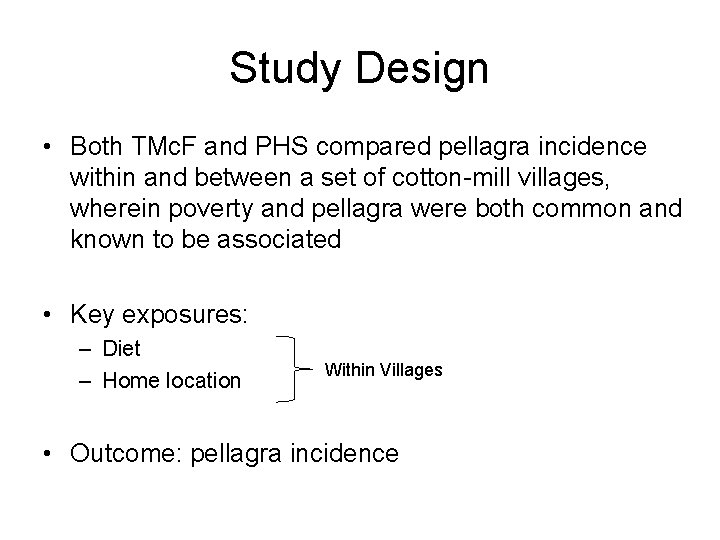
Study Design • Both TMc. F and PHS compared pellagra incidence within and between a set of cotton-mill villages, wherein poverty and pellagra were both common and known to be associated • Key exposures: – Diet – Home location Within Villages • Outcome: pellagra incidence
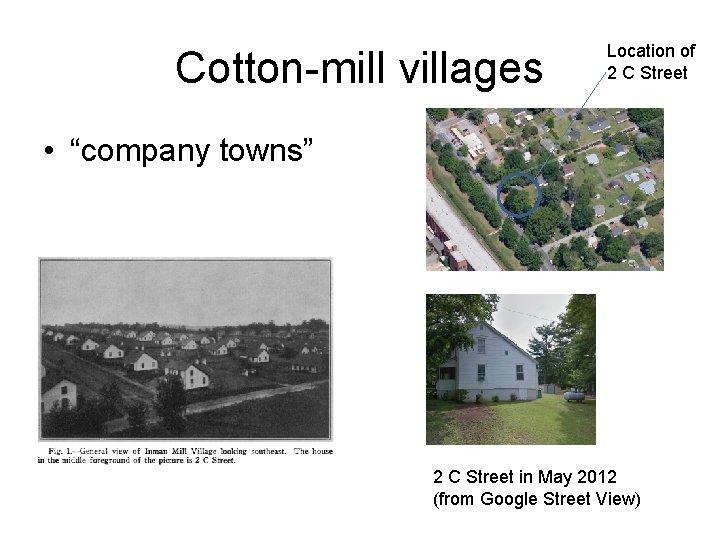
Cotton-mill villages Location of 2 C Street • “company towns” 2 C Street in May 2012 (from Google Street View)
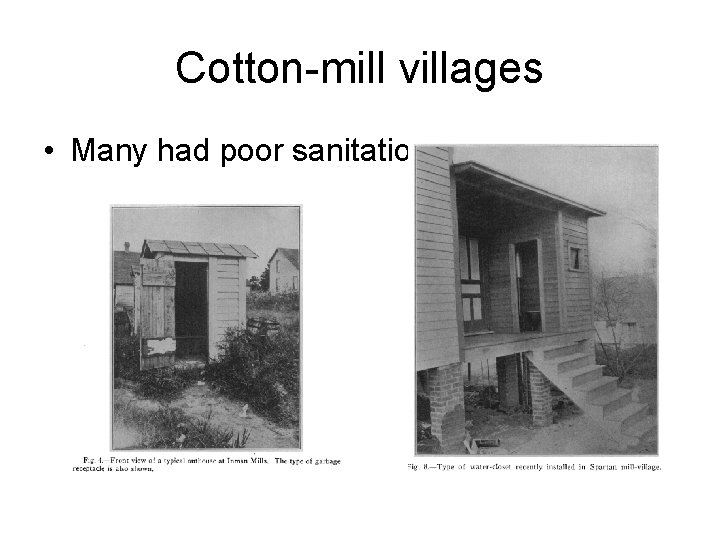
Cotton-mill villages • Many had poor sanitation
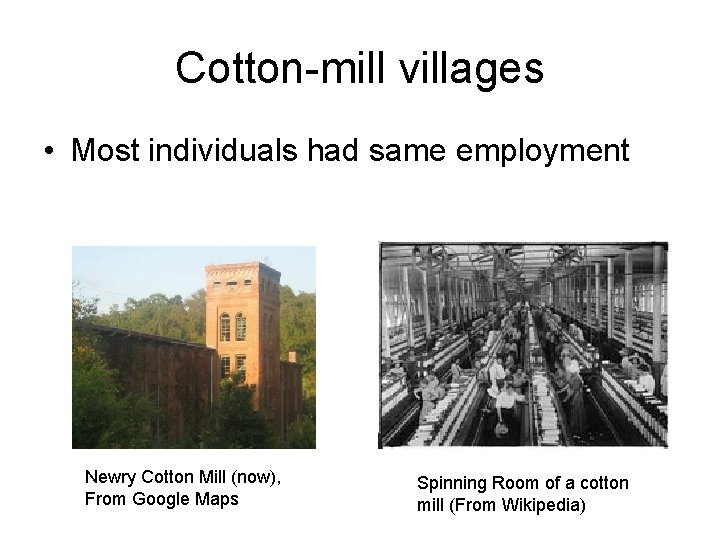
Cotton-mill villages • Most individuals had same employment Newry Cotton Mill (now), From Google Maps Spinning Room of a cotton mill (From Wikipedia)
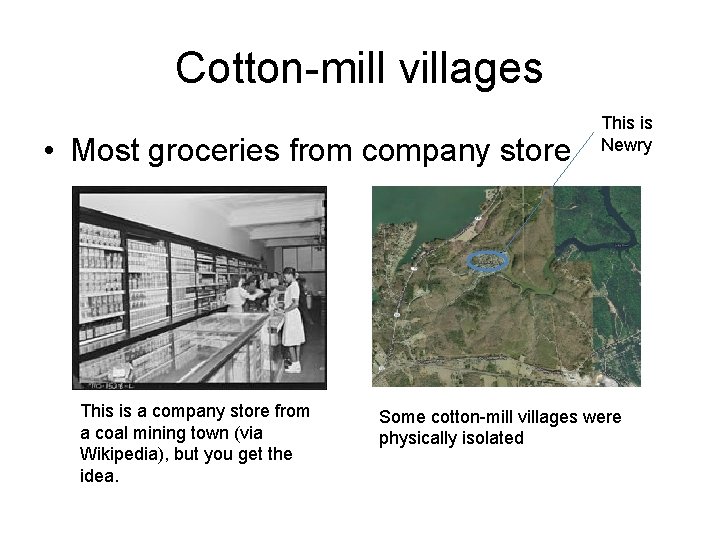
Cotton-mill villages • Most groceries from company store This is a company store from a coal mining town (via Wikipedia), but you get the idea. This is Newry Some cotton-mill villages were physically isolated
Different villages • The PHS picked a set of villages that overlapped with TMc. F’s selection, but were slightly different: – TMc. F: Inman Mills, Whitney, Pacolet Mills, Saxon Mills, Arkwright, and Spartan Mills – PHS: Inman Mills, Whitney, Saxon Mills, Arkwright, Newry, Republic, and Seneca • Why did PHS select different villages? – Never explicitly stated, but my belief is that they were attempting to address the sanitation issue • Newry and Republic had “improved” sewage systems (internal plumbing? ), unlike the other villages • TMc. F had contrasted Seneca (poor sanitation, high pellagra) and Newry (good sanitation, no pellagra) in a prior analysis (not the cotton-mill village study)
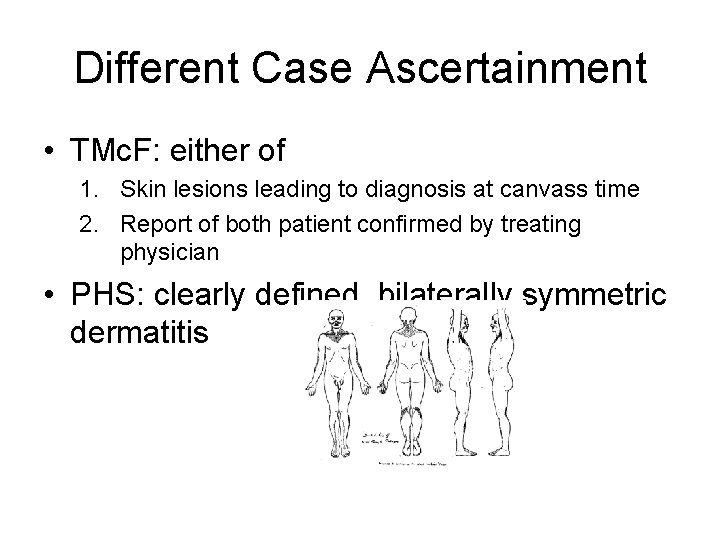
Different Case Ascertainment • TMc. F: either of 1. Skin lesions leading to diagnosis at canvass time 2. Report of both patient confirmed by treating physician • PHS: clearly defined, bilaterally symmetric dermatitis
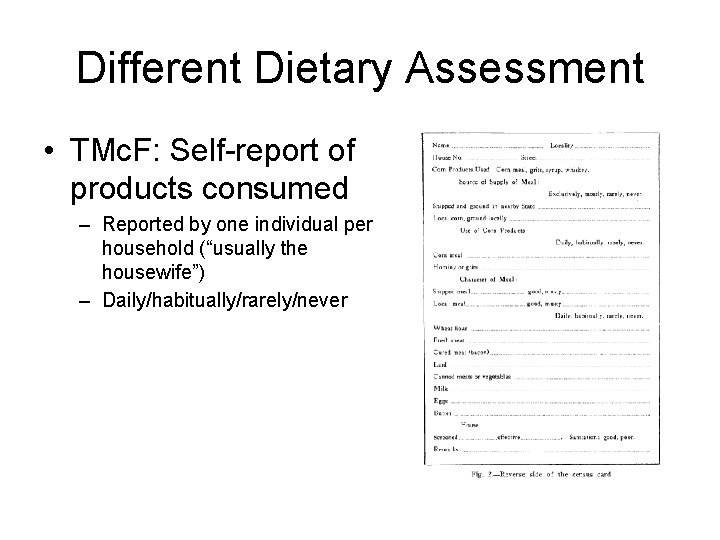
Different Dietary Assessment • TMc. F: Self-report of products consumed – Reported by one individual per household (“usually the housewife”) – Daily/habitually/rarely/never
Different Dietary Assessment • PHS: Using administrative data – Company store records – Additional follow-up with other possible food suppliers (“hucksters”, etc. ) • Note: PHS assessed food supply rather than food consumption. Why? – Avoid both recall bias and poor recall – Allowed focus on seasonal supply – Estimation of portion sizes, given household composition
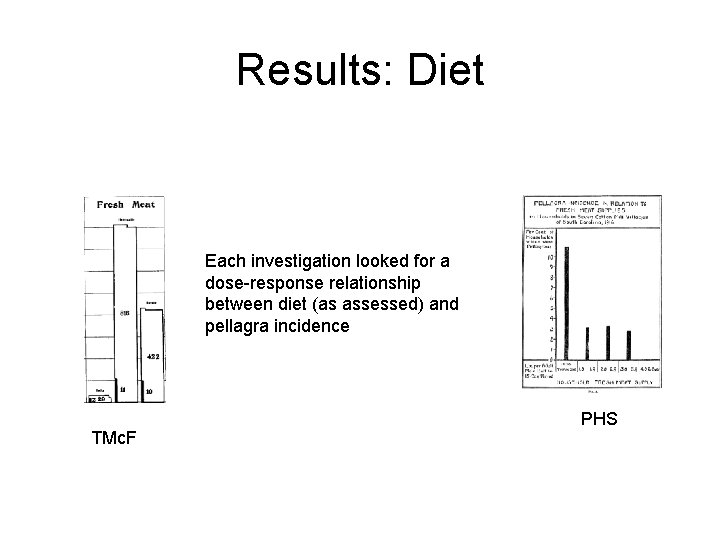
Results: Diet Each investigation looked for a dose-response relationship between diet (as assessed) and pellagra incidence TMc. F PHS
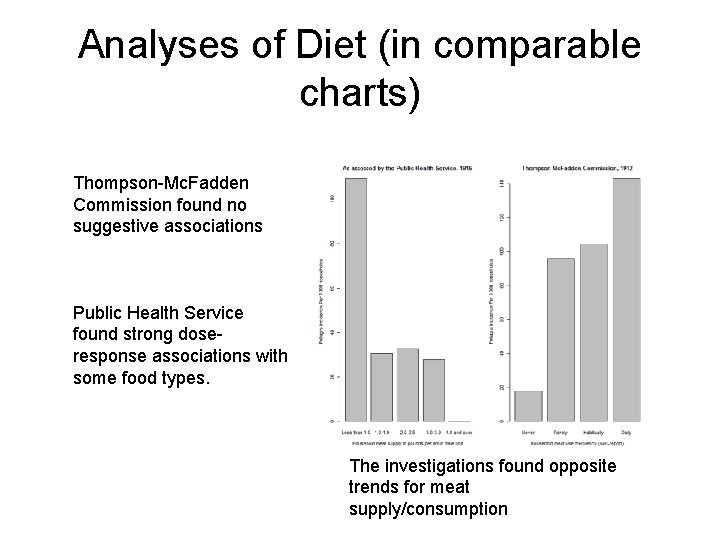
Analyses of Diet (in comparable charts) Thompson-Mc. Fadden Commission found no suggestive associations Public Health Service found strong doseresponse associations with some food types. The investigations found opposite trends for meat supply/consumption
Our Analysis • We could not find original PHS data, so we could not reanalyze it. – Dang! • But as we read about the studies, another question arose: why didn’t TMc. F find the right answer? – Couldn’t they have taken PHS’s multi-level approach? – Could measurement error explain TMc. F’s null results?
Our Analysis • Assessing effects of measurement error using simulation: – Using incidence data from the villages both assessed, treating PHS incidence as the gold standard and assuming perfect sensitivity, we backed into a diagnostic specificity of 97. 8% for TMc. F – So, we misclassified 2% of non-cases as cases… – … and then ran repeated simulations with measurement error in PHS’s meat assessment to see what it takes to erase meat/pellagra association in PHS data
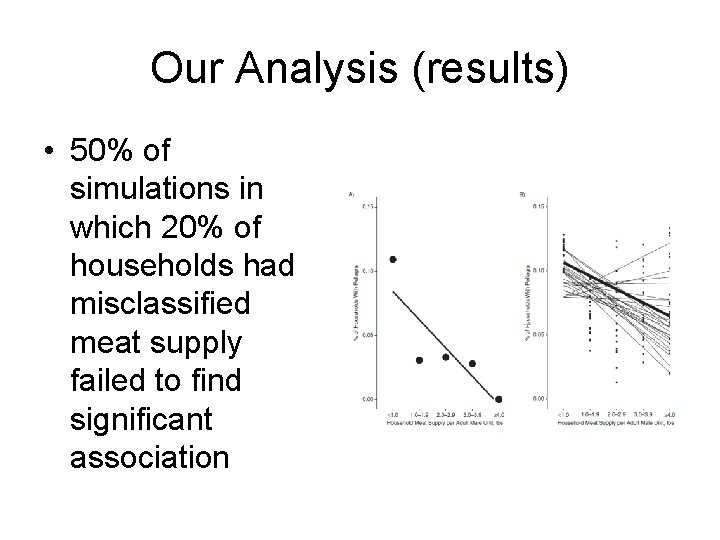
Our Analysis (results) • 50% of simulations in which 20% of households had misclassified meat supply failed to find significant association
Our Analysis (conclusions) • Not a lot of measurement error needed to erase real association – 100% sensitivity, 97. 8% specificity, 20% meat misclassification isn’t out of the question • PHS’s superior study design choices led to more accurate measurement and ultimately, the right conclusions.
Summary • PHS’s key insights: – Importance of measurement • The use of company store records and the Atwater scale allowed better assessment than self-report • Strict case definition ruled out pellagra sine pellagra – Importance of sampling • Broader set of villages allowed between-village analysis to break collinearity of poverty and diet.
Summary (an Ironic Footnote) • Encouraged by these results, in 1917, the PHS broadened their investigation: – Included more villages (24 total) – Relaxed the case definition (not bilateral) • (which made the relation with diet less apparent) – Results not published until 1929.

Thanks • Alfredo Morabia • Justin Knox • EPIC Fund (for funding our travel to the National Archive)
- Slides: 26