
The Theory of Plate Tectonics What is it

- Slides: 11
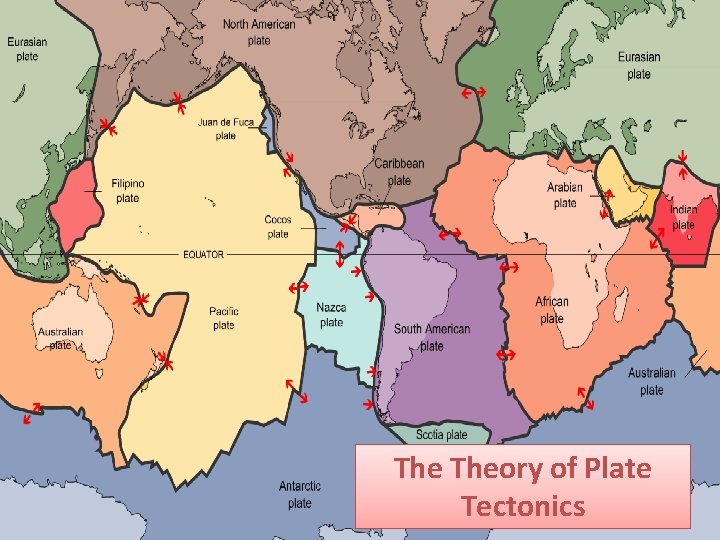
The Theory of Plate Tectonics
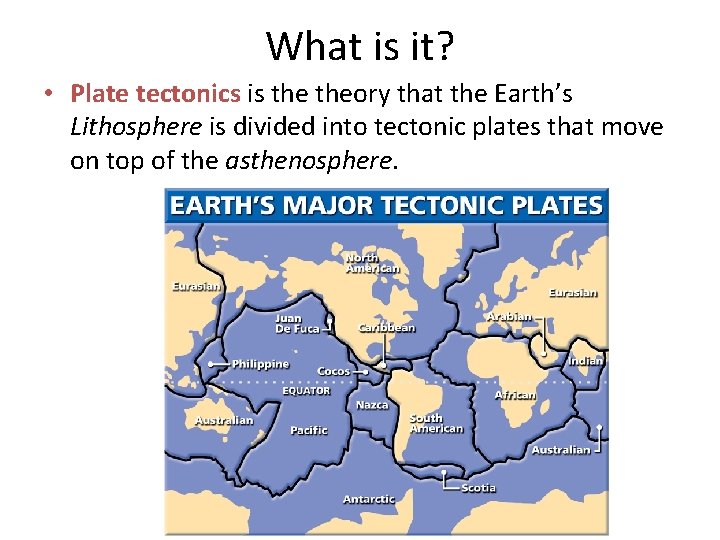
What is it? • Plate tectonics is theory that the Earth’s Lithosphere is divided into tectonic plates that move on top of the asthenosphere.
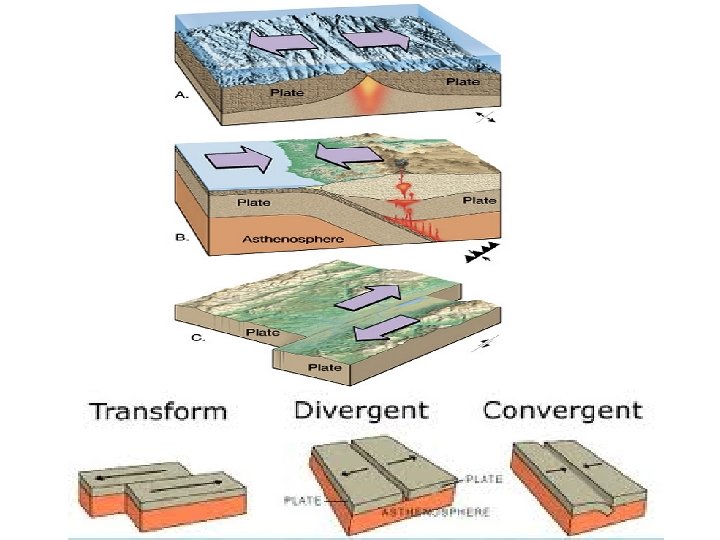
Tectonic plate boundaries are places where the plates touch. Divided into 3 types. Convergent – When two plates collide. Can be continental –continental, continental-oceanic, and oceanic-oceanic. Divergent – When two plates separate. Mid-ocean ridges are the most common of this type. Transform – When two plates slide past each other horizontally. San Andreas Fault in CA is a good example.
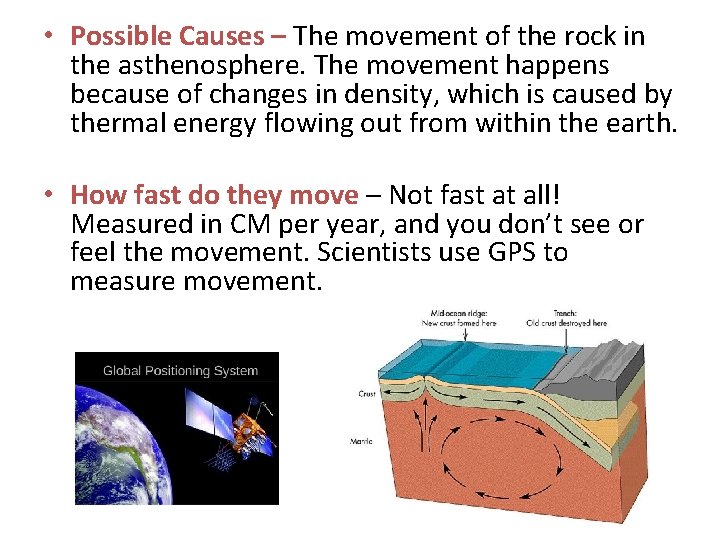
• Possible Causes – The movement of the rock in the asthenosphere. The movement happens because of changes in density, which is caused by thermal energy flowing out from within the earth. • How fast do they move – Not fast at all! Measured in CM per year, and you don’t see or feel the movement. Scientists use GPS to measure movement.
DEFORMING THE EARTH’S CRUST • Deformation – process where the shape of rock changes because of stress.
Compression and Tension • Compression – The type of stress that occurs when an object is squeezed, like when two plates collide. • Tension – The stress that occurs when forces stretch an object, often happens in divergent boundaries
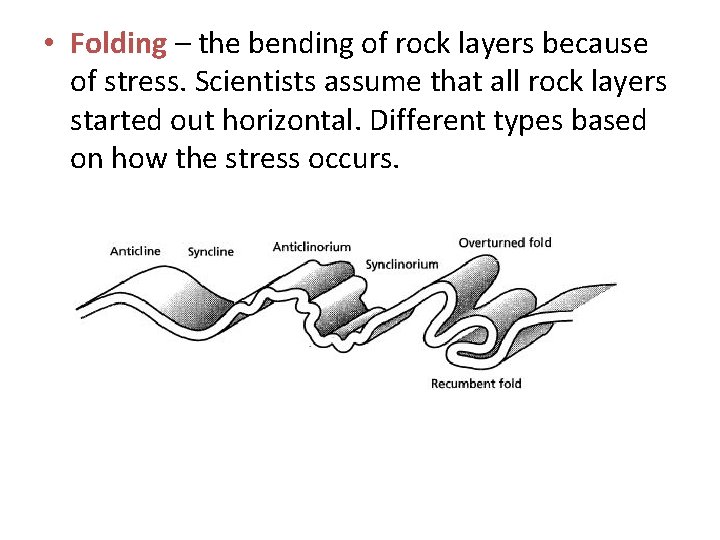
• Folding – the bending of rock layers because of stress. Scientists assume that all rock layers started out horizontal. Different types based on how the stress occurs.
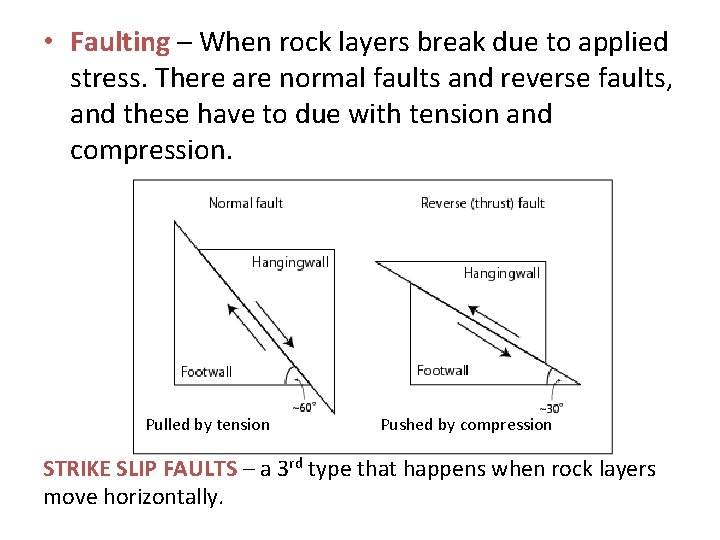
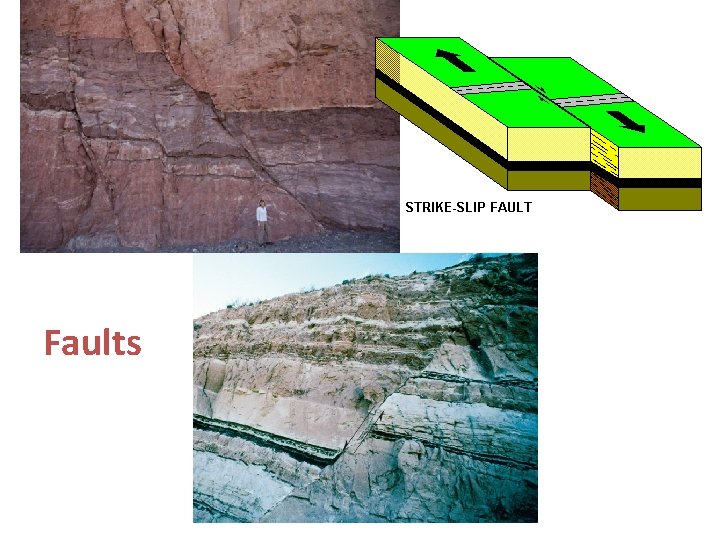
• Faulting – When rock layers break due to applied stress. There are normal faults and reverse faults, and these have to due with tension and compression. Pulled by tension Pushed by compression STRIKE SLIP FAULTS – a 3 rd type that happens when rock layers move horizontally.
Faults
Mountain Building • Folded Mountains – The highest mountains in the world are folded. Convergent boundaries.