
The Theory of Plate Tectonics Plate Tectonics Became
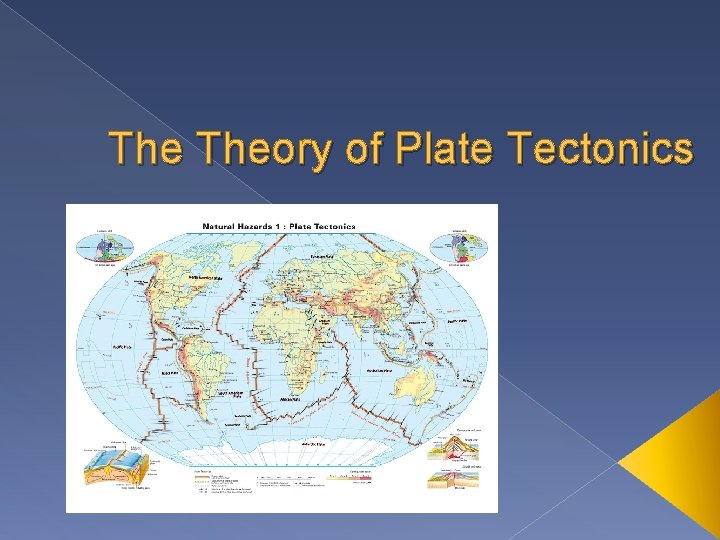
The Theory of Plate Tectonics
Plate Tectonics � Became a theory in the 1960’s � Describes plate movements AND explains why they move
Plate Tectonics � Two types of crust: Oceanic and Continental � Plates are usually made of both � Plates: Chunks of lithosphere “floating” around on the asthenosphere
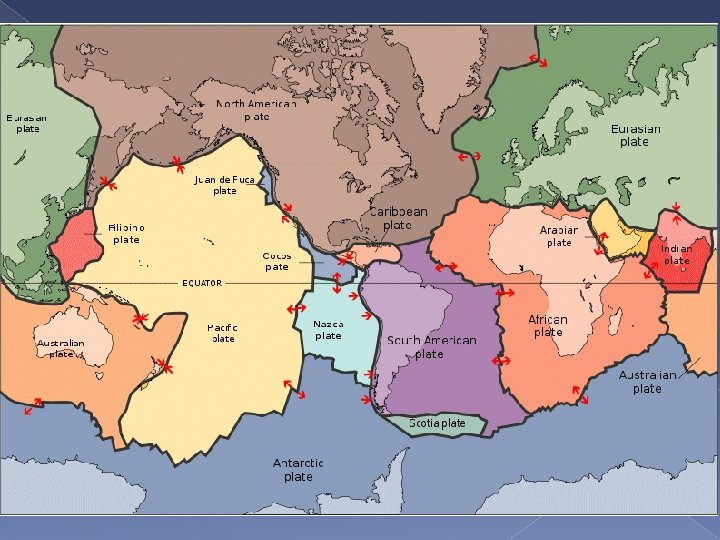
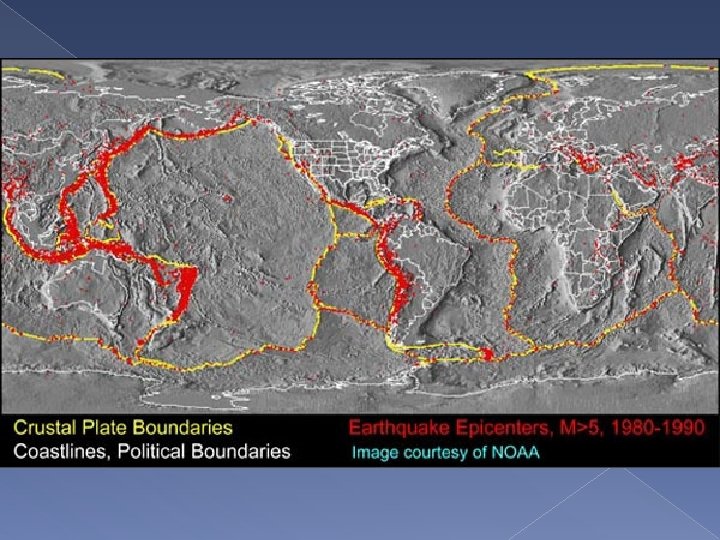
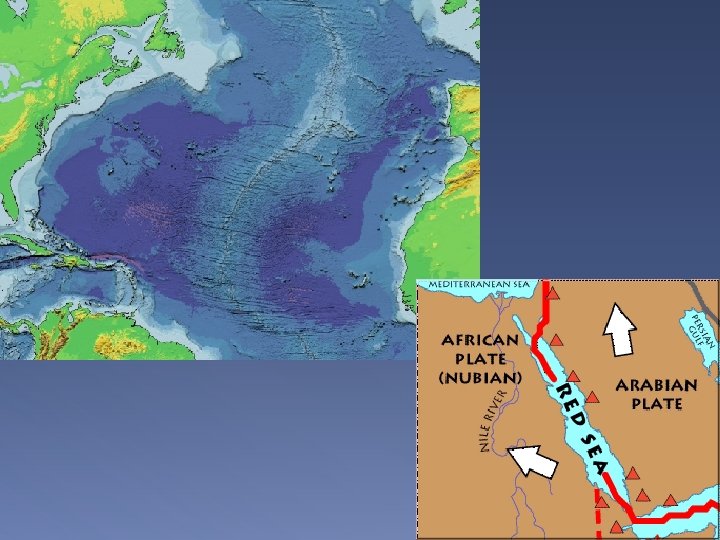
Plate Boundaries � Three Types: � Divergent Boundaries: two plates moving away from each other › Plates move apart, molten rock from asthenosphere fills gap › Most found on ocean floor (mid-ocean ridges) › Rift valley: valley in the center of the mid-ocean ridge
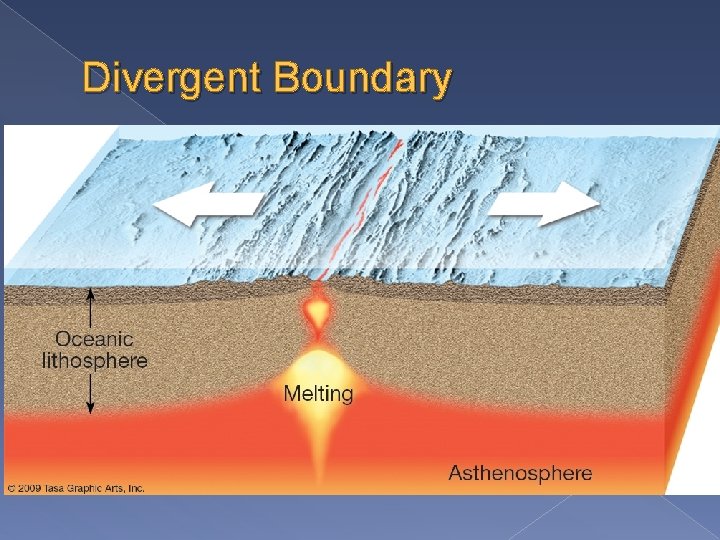
Divergent Boundary

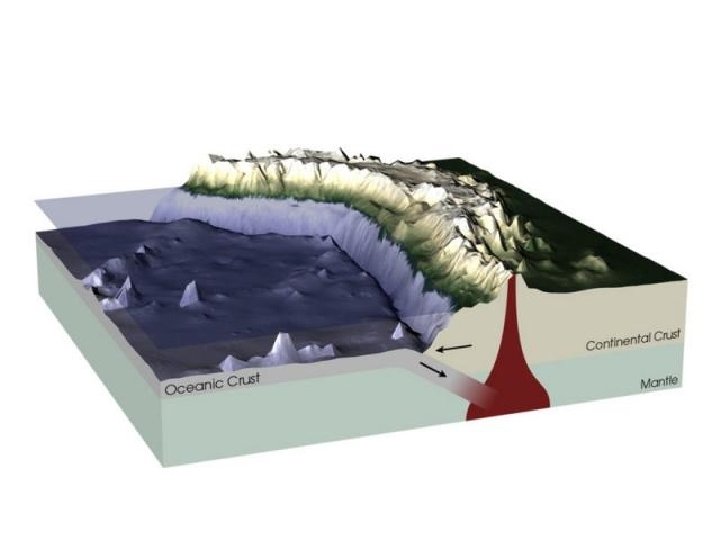
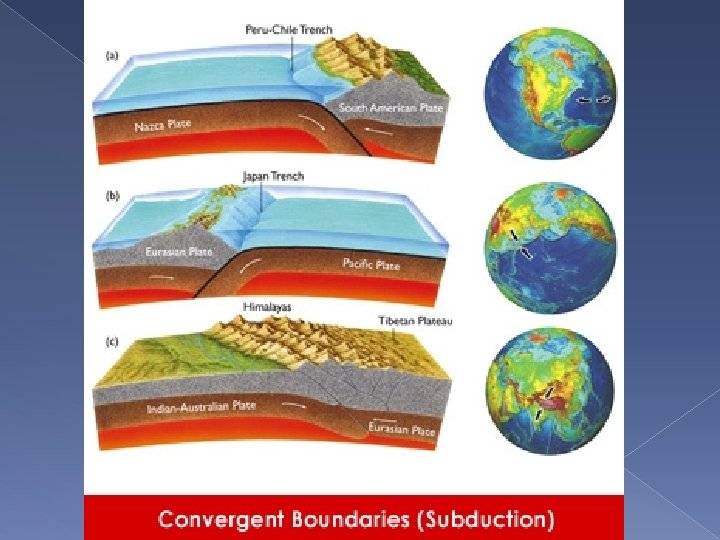
Convergent Boundaries � Two plates colliding (Three types of collisions) › Ocean – Continental: ocean crust is denser, so it is subducted: forced under the continental crust �Ocean trench forms �Subducting crust melts, some rises through the continental crust to form volcanic mountains
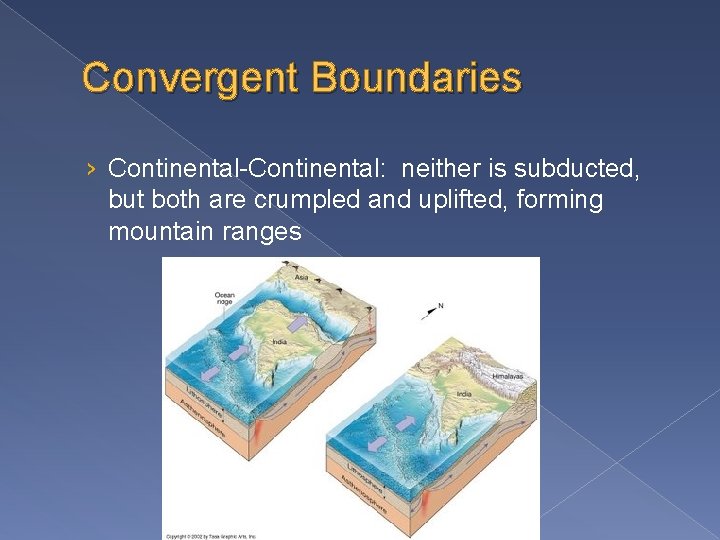
Convergent Boundaries › Continental-Continental: neither is subducted, but both are crumpled and uplifted, forming mountain ranges
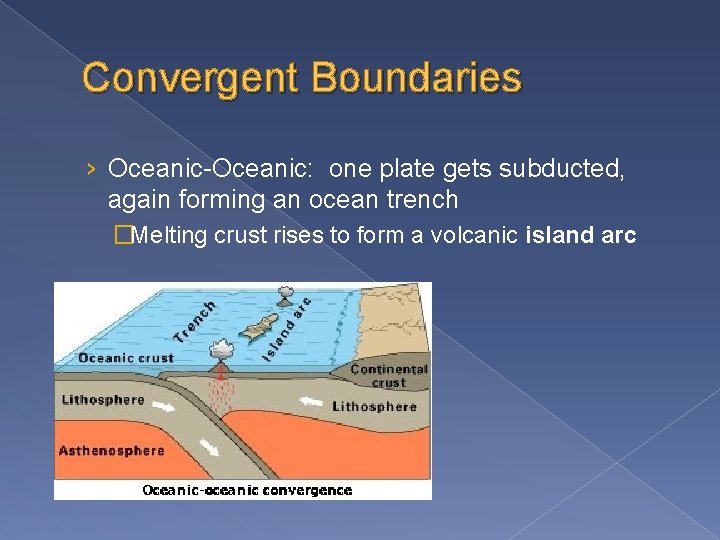
Convergent Boundaries › Oceanic-Oceanic: one plate gets subducted, again forming an ocean trench �Melting crust rises to form a volcanic island arc
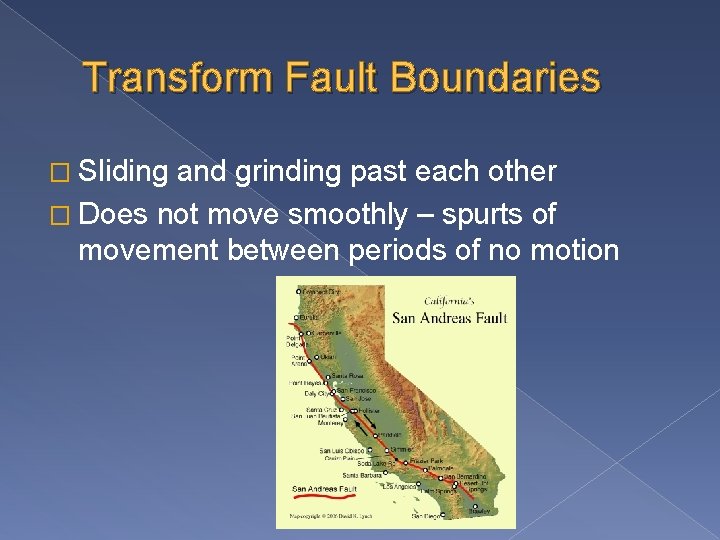
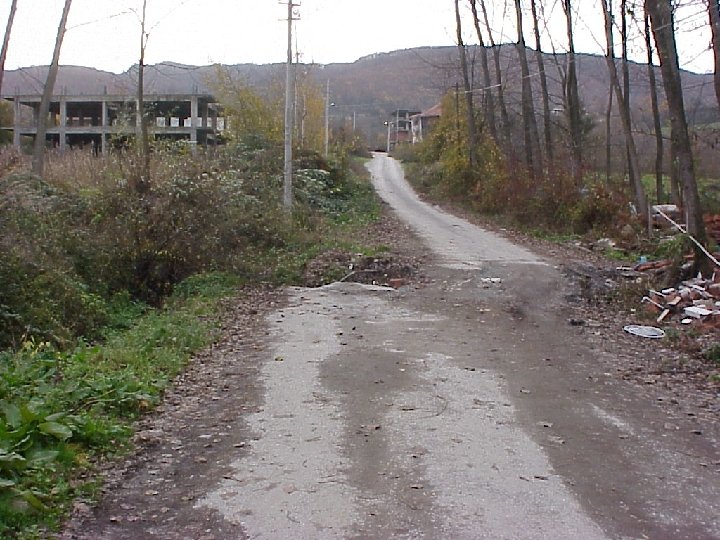
Transform Fault Boundaries � Sliding and grinding past each other � Does not move smoothly – spurts of movement between periods of no motion
Causes of Plate Motion � Convection › Hot asthenosphere rises, cools, sinks convection currents › Lithospheric plates ride on top of these conveyer belts � Evidence: More heat near divergent plate boundaries than elsewhere along ocean floor
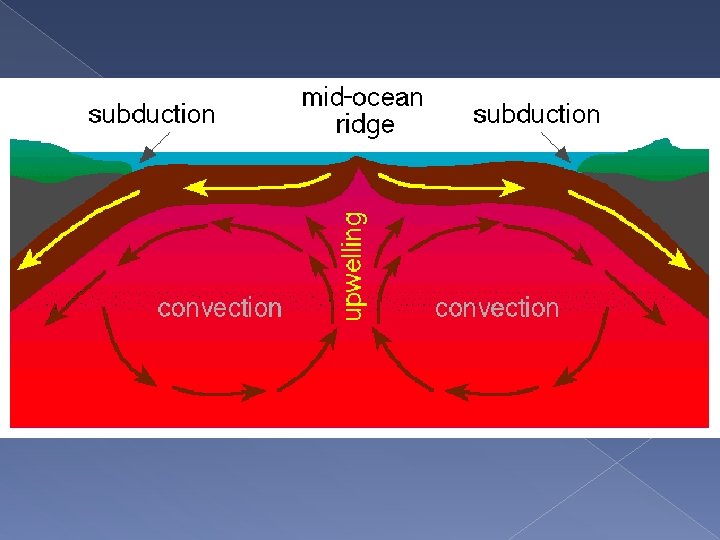
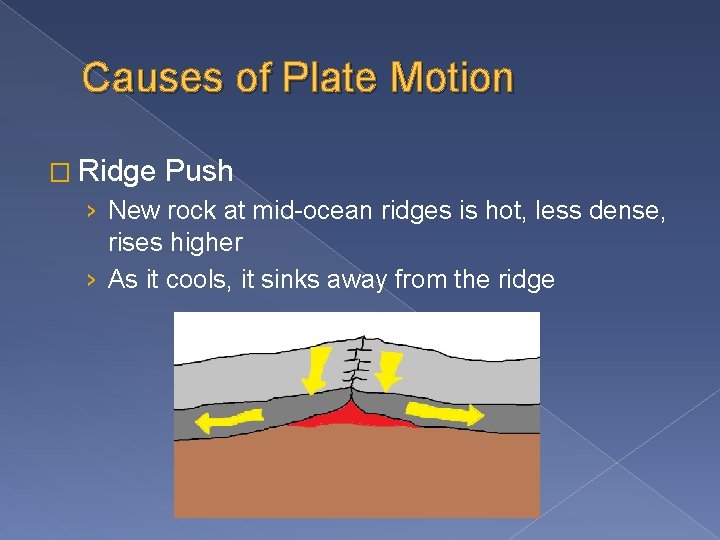
Causes of Plate Motion � Ridge Push › New rock at mid-ocean ridges is hot, less dense, rises higher › As it cools, it sinks away from the ridge
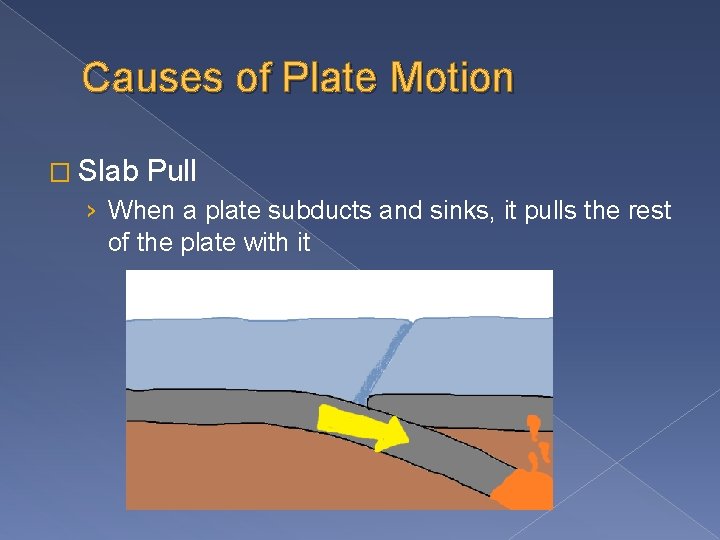
Causes of Plate Motion � Slab Pull › When a plate subducts and sinks, it pulls the rest of the plate with it
- Slides: 19