
The theory of Plate tectonics is the basis
The theory of Plate tectonics is the basis of Earth Science. But how did theory of Plate tectonics develop?
The Development of a theory In science, a theory is developed to explain many observations. Theories may be widely accepted, controversial, discarded or new.
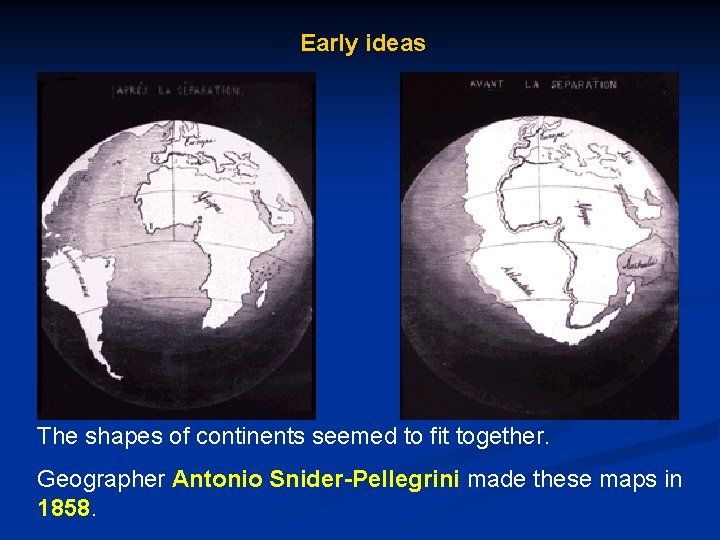
Early ideas The shapes of continents seemed to fit together. Geographer Antonio Snider-Pellegrini made these maps in 1858.
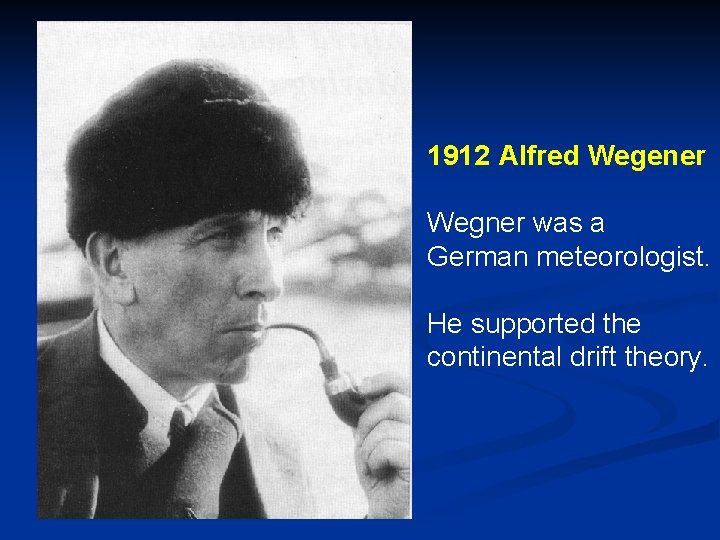
1912 Alfred Wegener Wegner was a German meteorologist. He supported the continental drift theory.
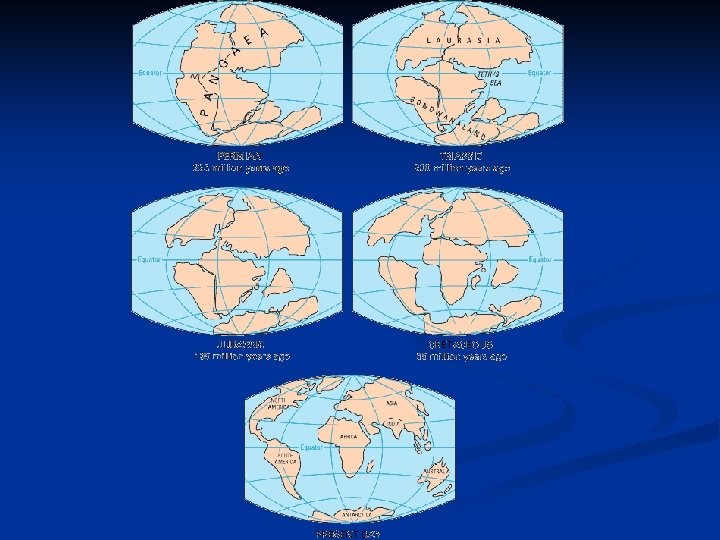
The Hypothesis of Continental Drift • Continents were once together in a super continent he called Pangea. • They then broke up into two super continents call Laurasia and Gondwanaland. • Continents can move by plowing through the crust like ships in the sea. • Continents are still moving today.
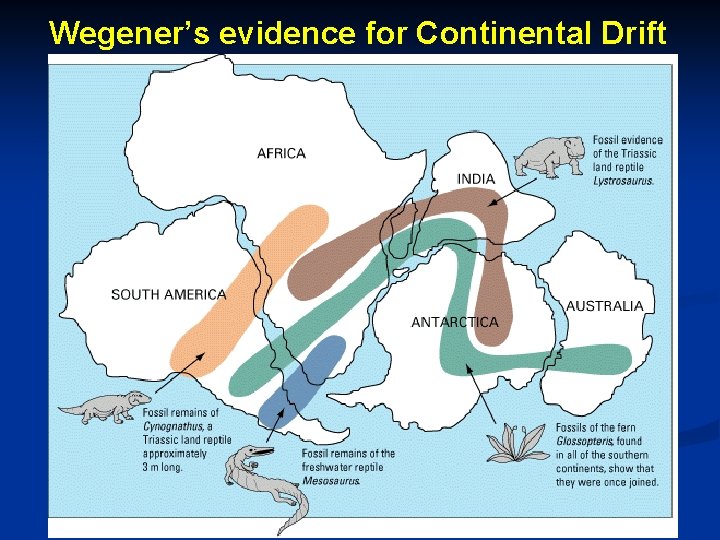
Wegener’s evidence for Continental Drift
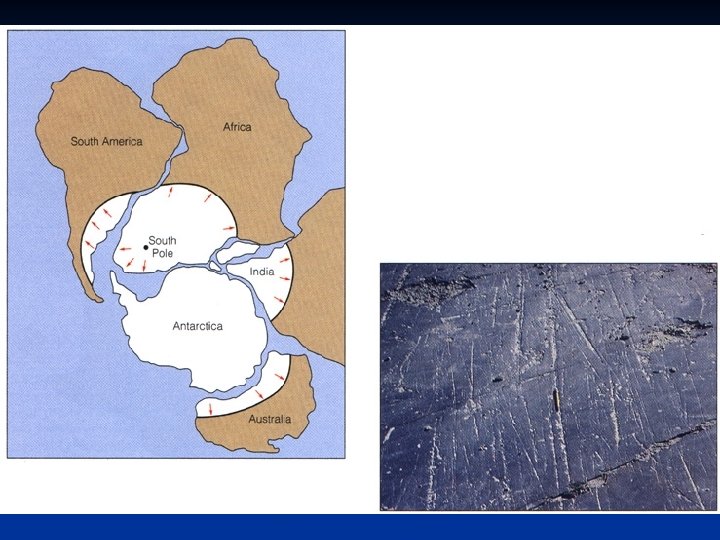
The scientific community ridiculed Wegener’s ideas. His theory was rejected • Continents & Oceans don’t move! • What forces could possibly move continents over such large distances? • The fossil evidence was from the southern hemisphere only.
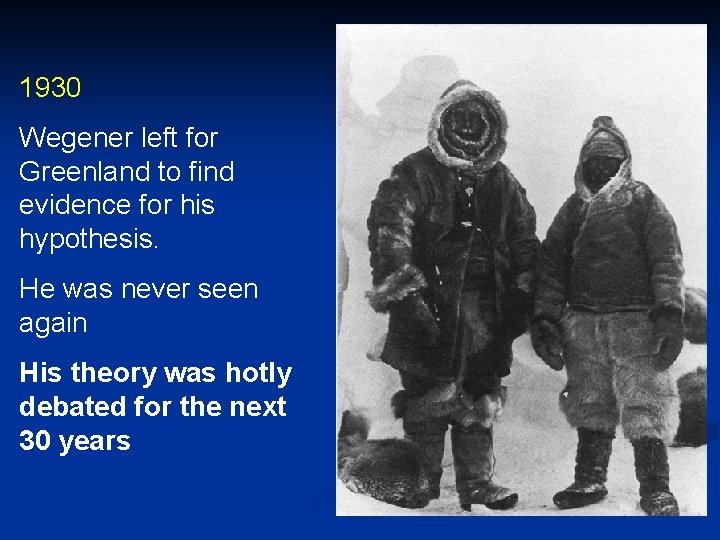
1930 Wegener left for Greenland to find evidence for his hypothesis. He was never seen again His theory was hotly debated for the next 30 years
1947 The ocean floor is mapped • Before the 19 th century most people thought that the ocean floor was relatively flat & featureless. • 19 th century measurements improved, resulting in the discovery of underwater mountains in the mid Atlantic Ocean. • After World War I, early sonar showed the ocean floor was much more rugged than was previously thought. • In 1947 the survey ship Atlantis found that the sediment layer on the floor of the ocean was very thin. • In the 1950’s a great mountain range on the ocean floor was discovered that virtually encircled the Earth. (Global midocean ridge) It zigzags between the continents with an average height of 4, 500 m.
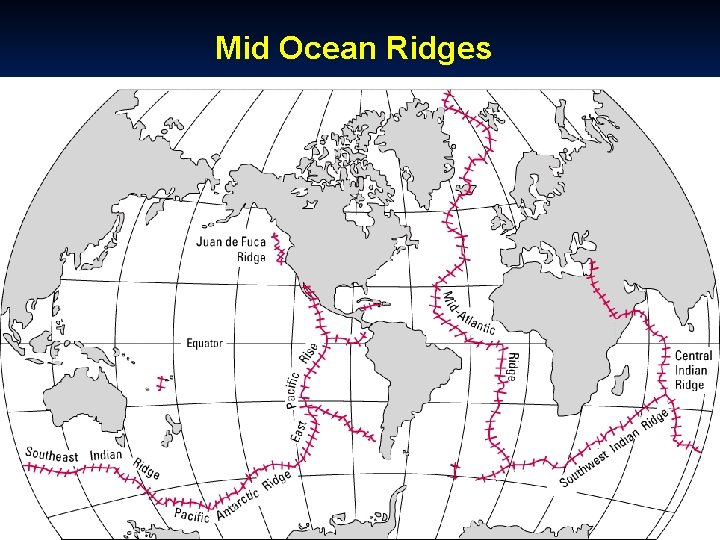
Mid Ocean Ridges
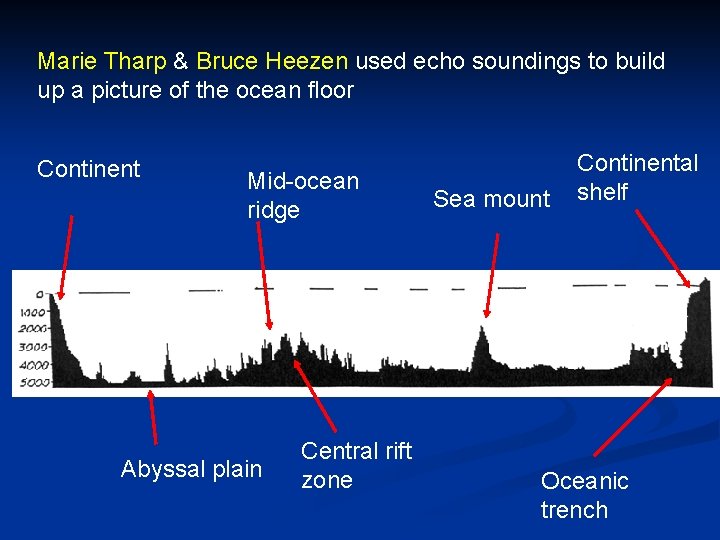
Marie Tharp & Bruce Heezen used echo soundings to build up a picture of the ocean floor Continent Mid-ocean ridge Abyssal plain Central rift zone Sea mount Continental shelf Oceanic trench
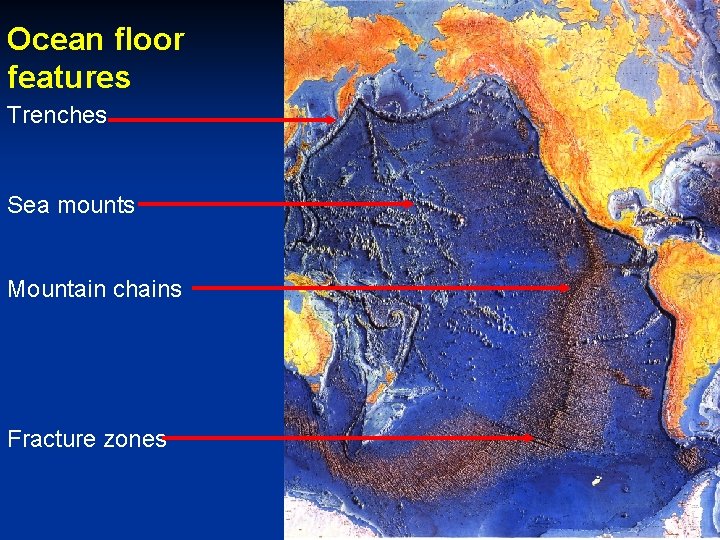
Ocean floor features Trenches Sea mounts Mountain chains Fracture zones
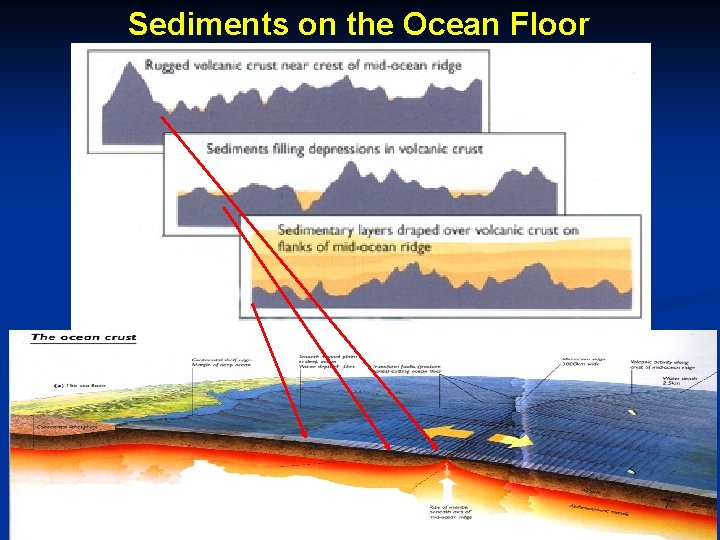
Sediments on the Ocean Floor
1950’s More evidence is discovered Magnetic strips & Polar reversals After World War II magnetometers that were used to find submarines began finding odd magnetic patterns across the ocean floor. The ocean floor is made up of Basalt, which is rich in magnetite. Basalt had already been found that had different magnet properties. Some has normal polarity in which the magnetic crystals have the same polarity as the Earth’s present magnetic field. (The north end of the rock’s crystal points toward the magnetic pole). Other rocks have reversed polarity.
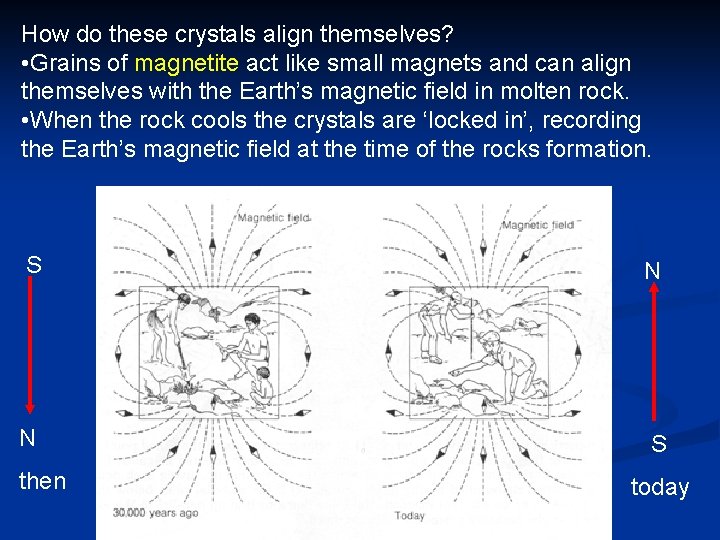
How do these crystals align themselves? • Grains of magnetite act like small magnets and can align themselves with the Earth’s magnetic field in molten rock. • When the rock cools the crystals are ‘locked in’, recording the Earth’s magnetic field at the time of the rocks formation. S N N S then today
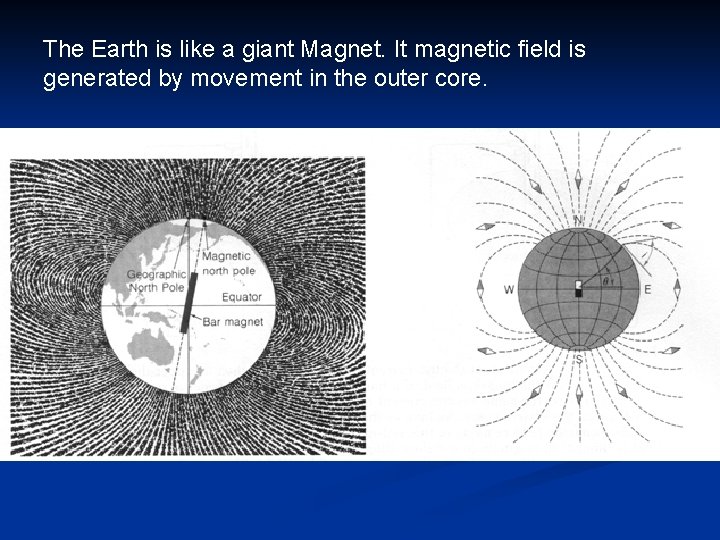
The Earth is like a giant Magnet. It magnetic field is generated by movement in the outer core.
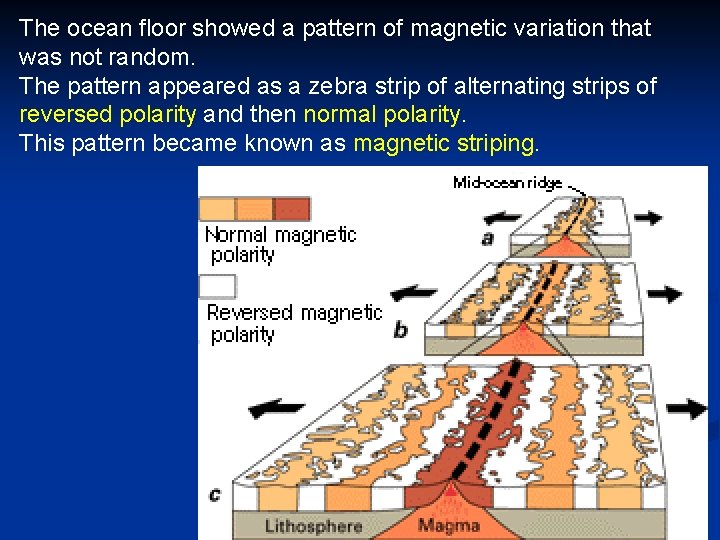
The ocean floor showed a pattern of magnetic variation that was not random. The pattern appeared as a zebra strip of alternating strips of reversed polarity and then normal polarity. This pattern became known as magnetic striping.
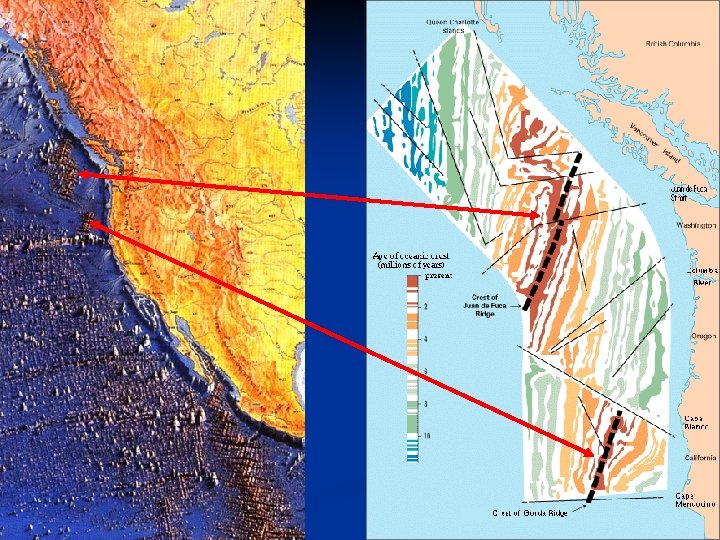
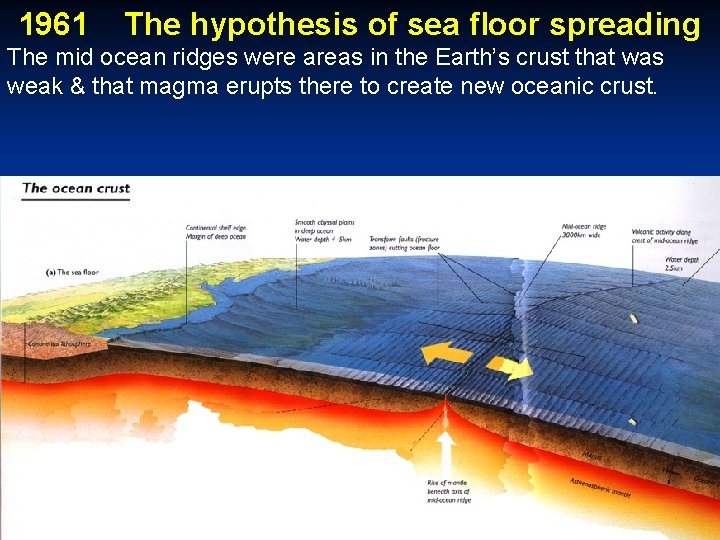
1961 The hypothesis of sea floor spreading The mid ocean ridges were areas in the Earth’s crust that was weak & that magma erupts there to create new oceanic crust.
Evidence for the Sea floor spreading Hypothesis • The rocks are younger near the oceanic ridge and older as you move away • The younger rocks always have present day (normal) polarity • The stripes run parallel to the ridge and alternate between normal -reverse-normal suggesting that the Earth’s magnetic field has reversed in the past many times. The sea floor spreading hypothesis gained many converts. This lead to the “expanding Earth” hypothesis to explain the moving continents. This theory was not accepted and so the question became how can the new crust be added without the Earth increasing in size?
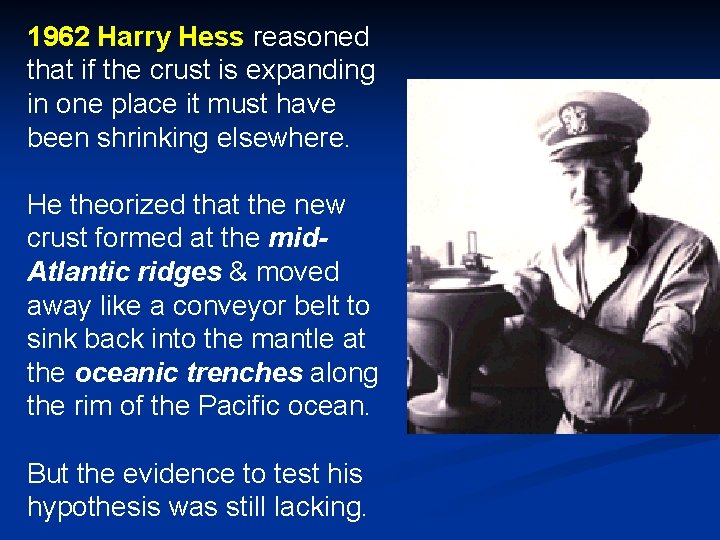
1962 Harry Hess reasoned that if the crust is expanding in one place it must have been shrinking elsewhere. He theorized that the new crust formed at the mid. Atlantic ridges & moved away like a conveyor belt to sink back into the mantle at the oceanic trenches along the rim of the Pacific ocean. But the evidence to test his hypothesis was still lacking.
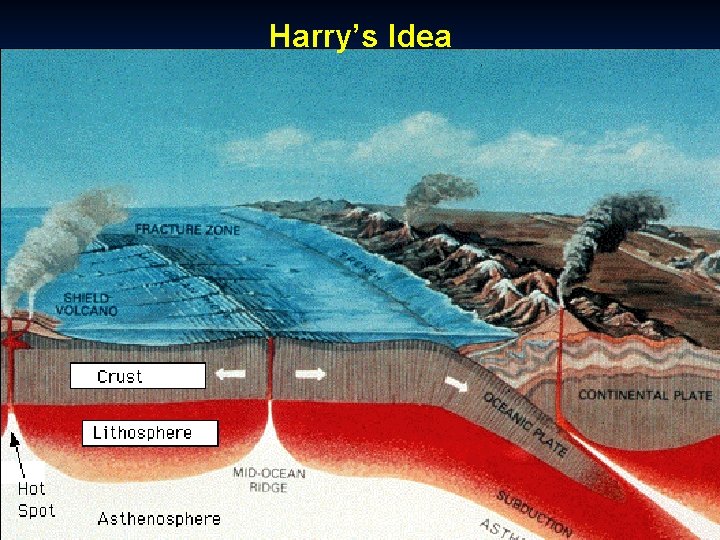
Harry’s Idea
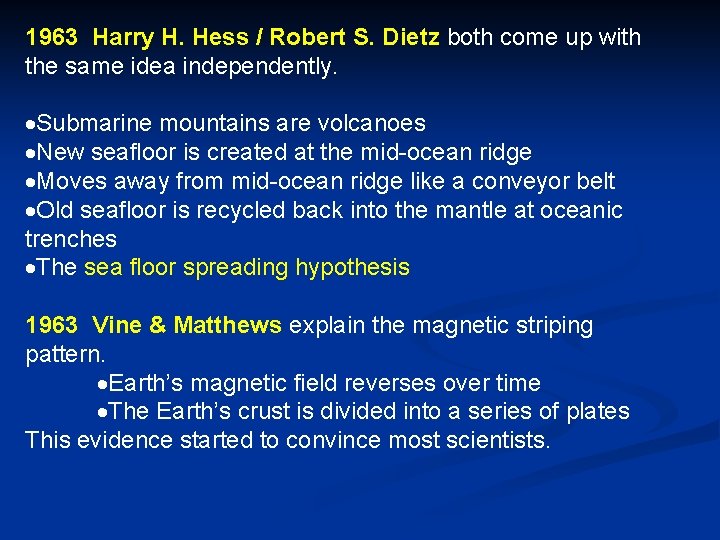
1963 Harry H. Hess / Robert S. Dietz both come up with the same idea independently. ·Submarine mountains are volcanoes ·New seafloor is created at the mid-ocean ridge ·Moves away from mid-ocean ridge like a conveyor belt ·Old seafloor is recycled back into the mantle at oceanic trenches ·The sea floor spreading hypothesis 1963 Vine & Matthews explain the magnetic striping pattern. ·Earth’s magnetic field reverses over time ·The Earth’s crust is divided into a series of plates This evidence started to convince most scientists.
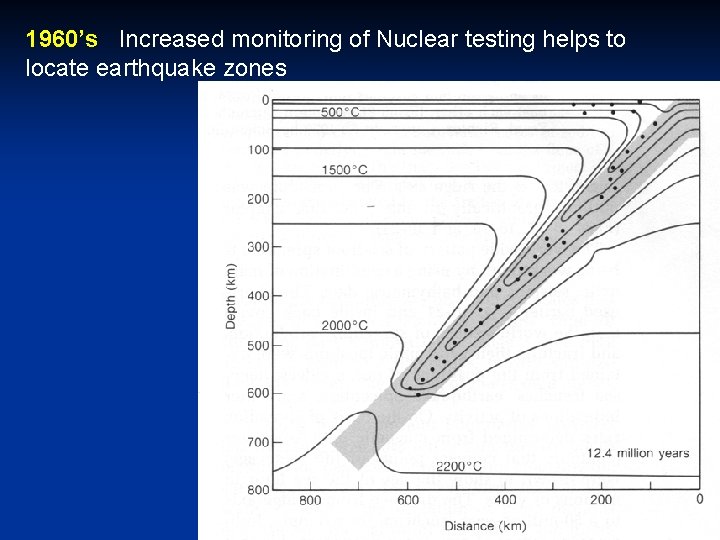
1960’s Increased monitoring of Nuclear testing helps to locate earthquake zones
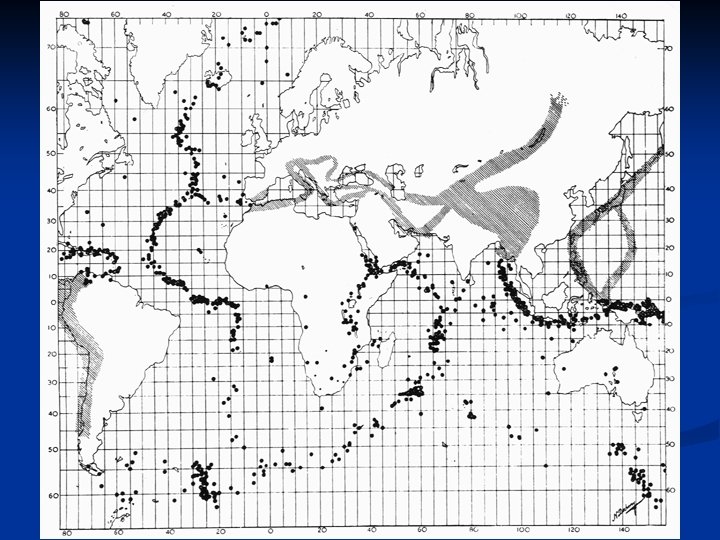
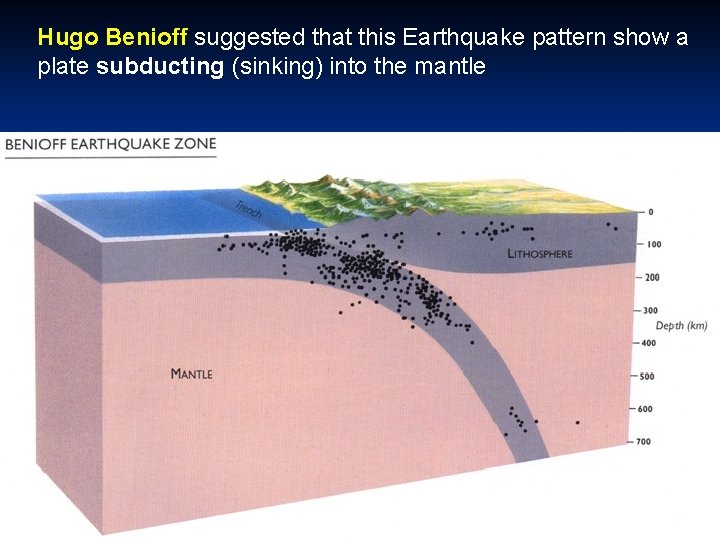
Hugo Benioff suggested that this Earthquake pattern show a plate subducting (sinking) into the mantle
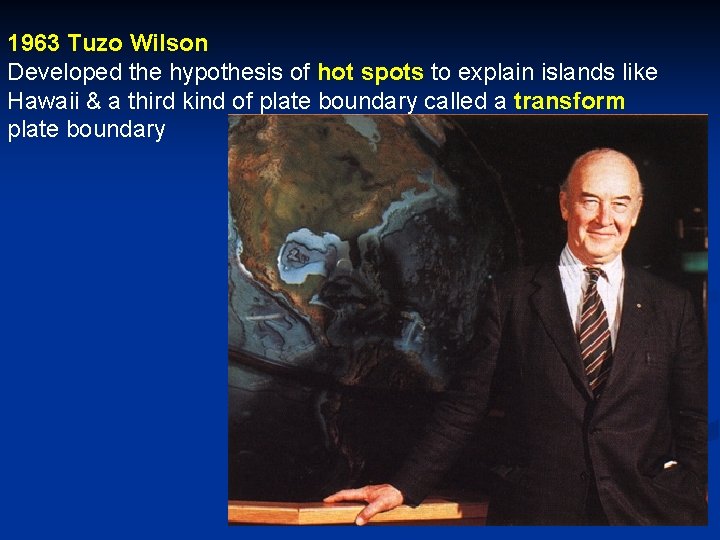
1963 Tuzo Wilson Developed the hypothesis of hot spots to explain islands like Hawaii & a third kind of plate boundary called a transform plate boundary
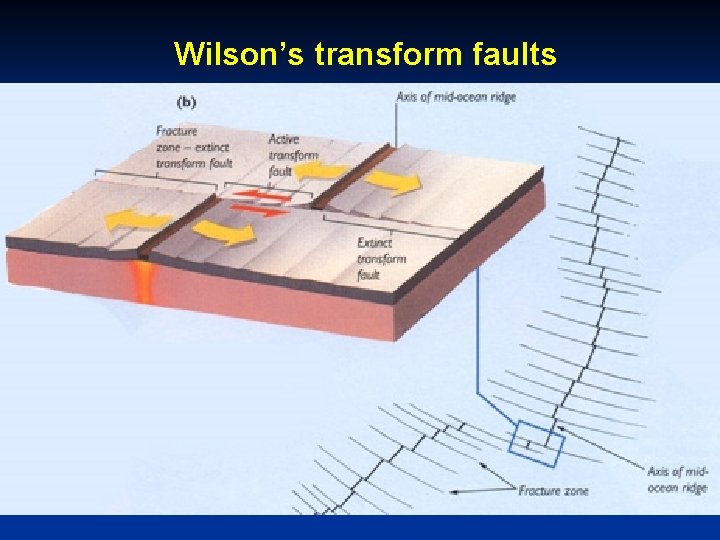
Wilson’s transform faults
Sir Edward Bullard measures ocean temperatures Heat coming from central ridges 1967 Bruce Heezen hypotheses that the Earth is expanding from the mid-ocean ridges
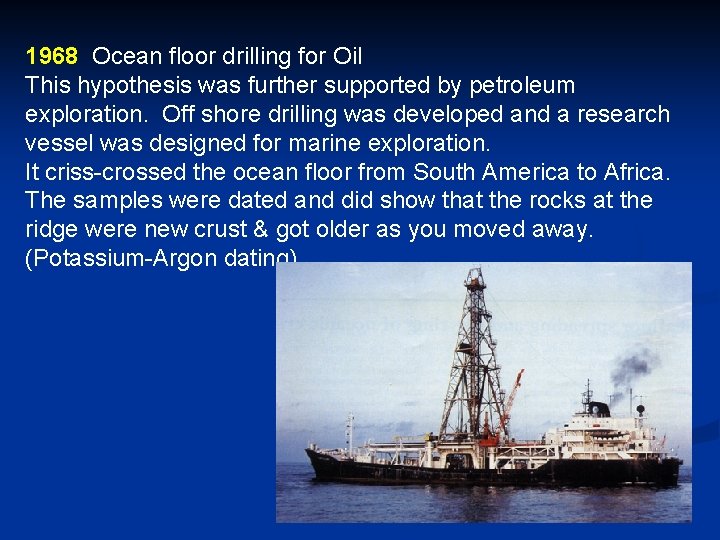
1968 Ocean floor drilling for Oil This hypothesis was further supported by petroleum exploration. Off shore drilling was developed and a research vessel was designed for marine exploration. It criss-crossed the ocean floor from South America to Africa. The samples were dated and did show that the rocks at the ridge were new crust & got older as you moved away. (Potassium-Argon dating)
1968 Jason Morgan (Princeton) & Dan Mc. Kenzie (Cambridge) independently suggest that the Earth’s crust is divided into plates. They put the final touches on what is now called the Plate Tectonics Theory.
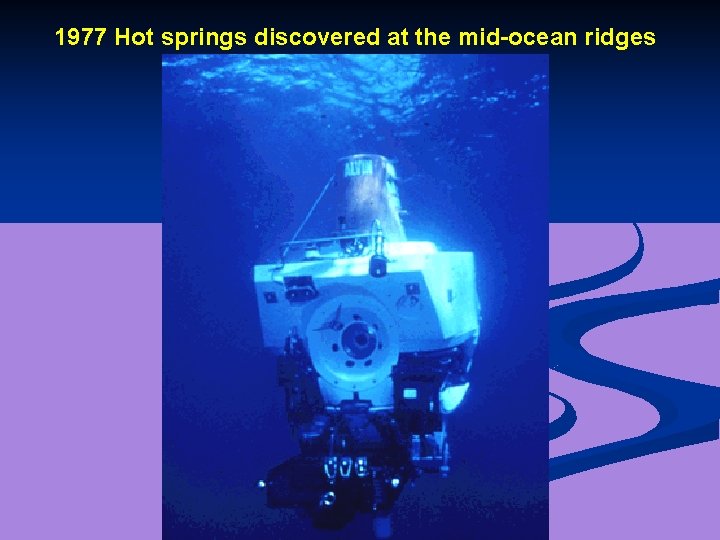
1977 Hot springs discovered at the mid-ocean ridges
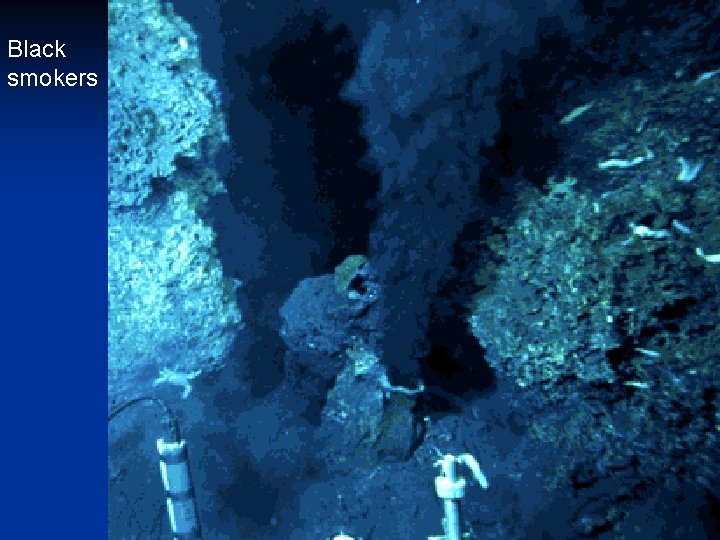
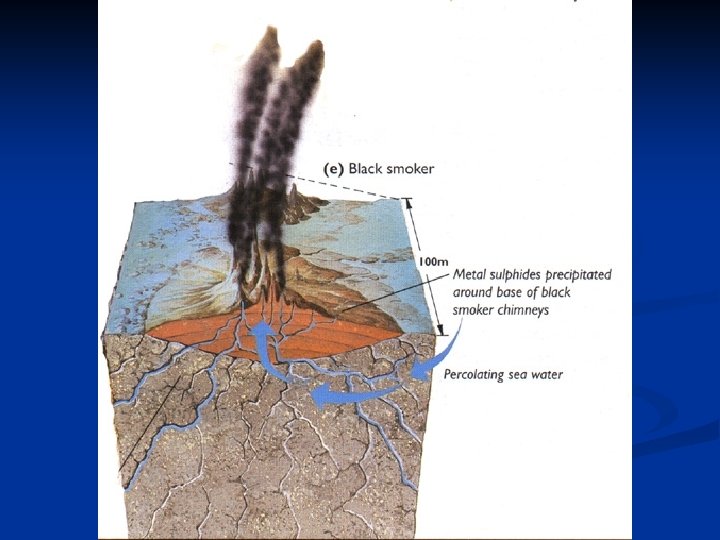
Black smokers
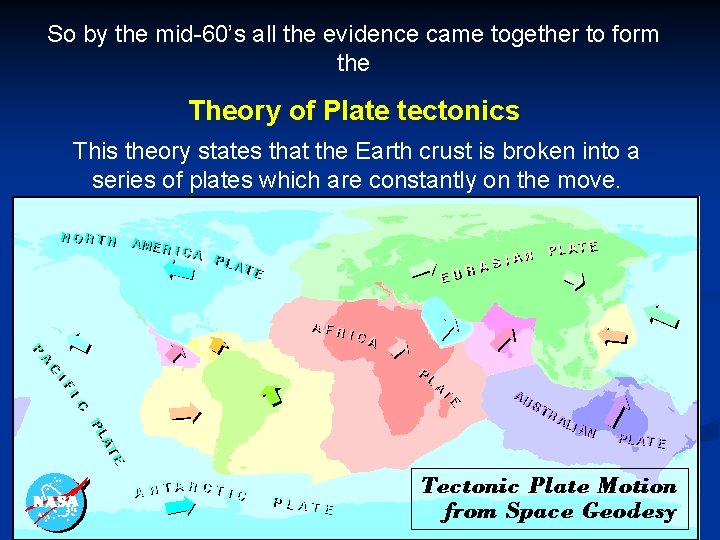
So by the mid-60’s all the evidence came together to form the Theory of Plate tectonics This theory states that the Earth crust is broken into a series of plates which are constantly on the move.
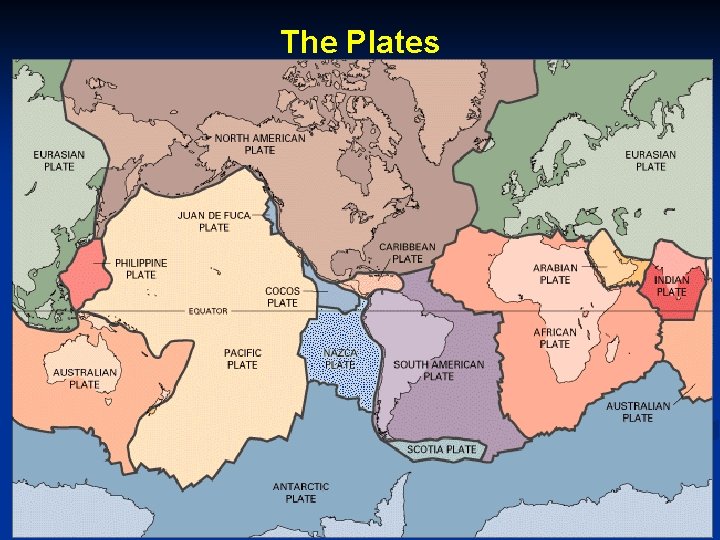
The Plates
- Slides: 38