
The Theory of Plate Tectonics 1965 J Tuzo
- Slides: 14
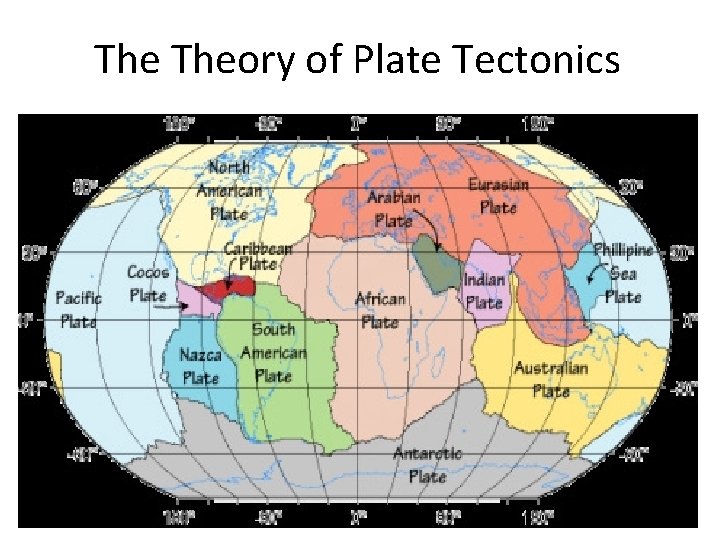
The Theory of Plate Tectonics
• 1965 J. Tuzo Wilson a Canadian scientist saw that there were cracks in the continents like those on the ocean floor • Lithosphere is broken into separate sections called plates • Wilson combined sea-floor spreading and continental drift into a single theory (plate tectonics) • Scientific theory is a well-tested concept that explains a wide range of observations
How Plates Move • Plate tectonics is the pieces of the Earth’s lithosphere are in slow, constant motion, driven by convection currents in the mantle • Plate tectonics explains the formation, movement, and subduction of Earth’s plates • Subduction – gravity pulls one edge of the plate down into the mantle, causing the rest of the plate to move
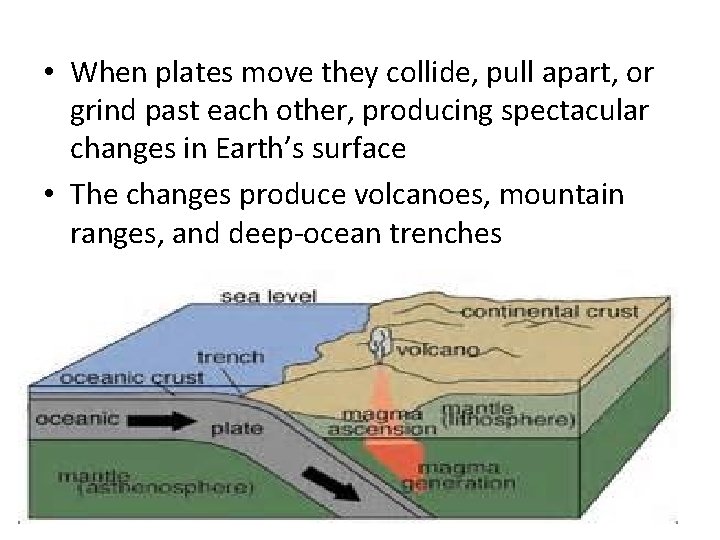
• When plates move they collide, pull apart, or grind past each other, producing spectacular changes in Earth’s surface • The changes produce volcanoes, mountain ranges, and deep-ocean trenches
Plate Boundaries • The edge of Earth’s plates meet at plate boundaries and extend deep into the lithosphere • Faults – breaks in Earth’s crust form along these boundaries • Three kinds of plate boundaries – Divergent boundaries – Convergent boundaries – Transform boundaries • Each of these boundaries moves in different directions
• Scientists using satellites have measured the plate movement to be 1 to 24 centimeters per year • American and Eurasian plates move apart at about 2. 5 centimeters per year • Plates have been moving for tens of millions of years
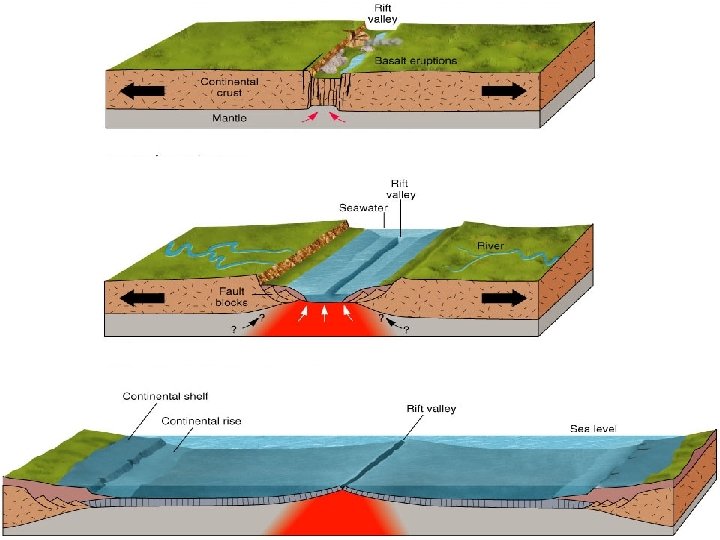
Divergent Boundaries • Divergent Boundaries – where two plates move apart • Most occur along the mid-ocean ridges where seafloor spreading occurs • On land it is called a rift valley where two of Earth’s plates pull apart
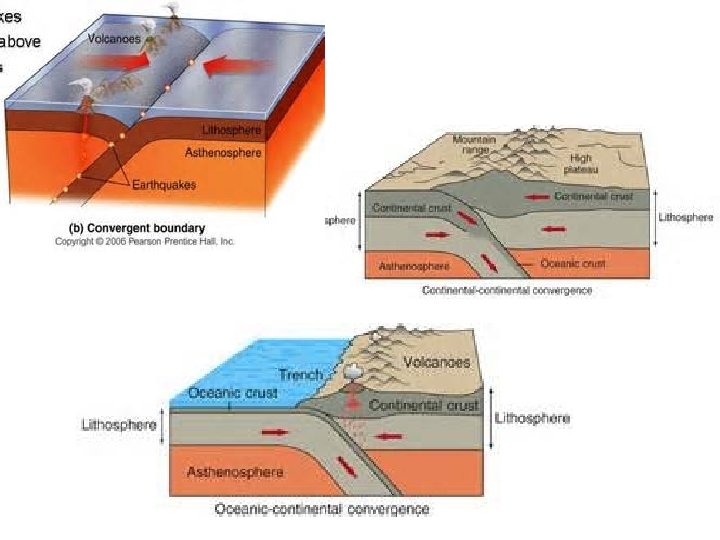
Convergent Boundaries • Convergent boundary – were two plates come together • The density of the plates determines which one come goes up and which goes down
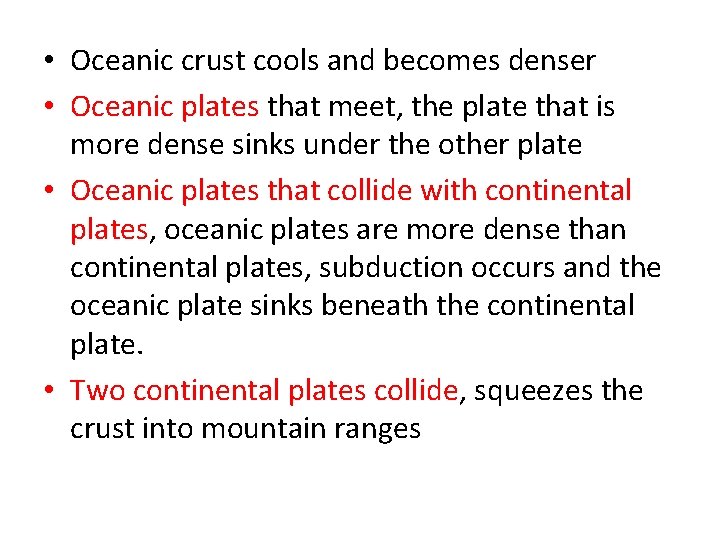
• Oceanic crust cools and becomes denser • Oceanic plates that meet, the plate that is more dense sinks under the other plate • Oceanic plates that collide with continental plates, oceanic plates are more dense than continental plates, subduction occurs and the oceanic plate sinks beneath the continental plate. • Two continental plates collide, squeezes the crust into mountain ranges
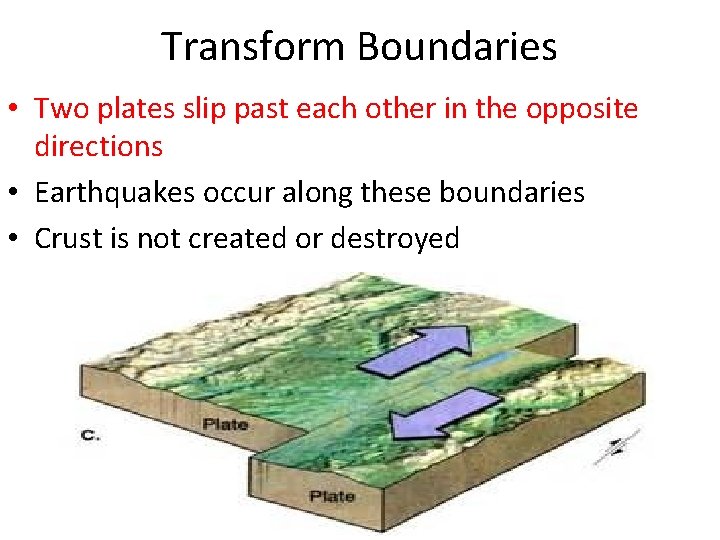
Transform Boundaries • Two plates slip past each other in the opposite directions • Earthquakes occur along these boundaries • Crust is not created or destroyed
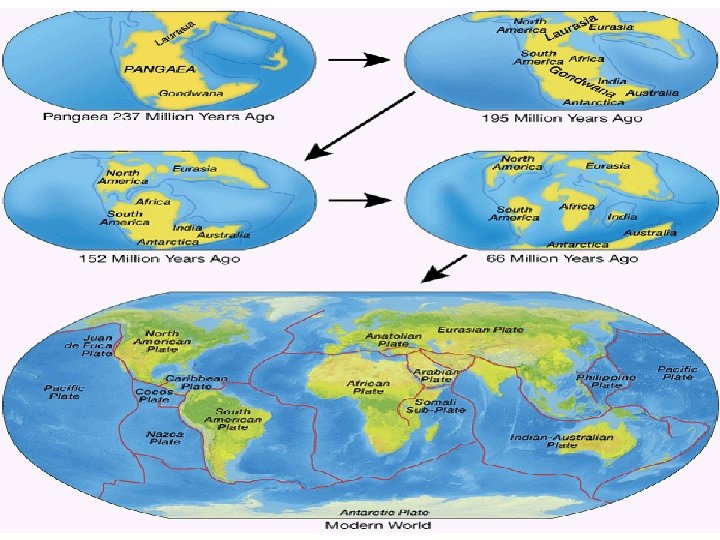
Plate Motions over Time • Pangaea were landmasses moved together about 260 million years ago • 225 million years ago Pangaea started to move apart