
The Theory of Evolution by Natural Selection Do

The Theory of Evolution by Natural Selection
Do Now 3/13 n. In part 1 of the POGIL why were some types of E. coli able to survive while others died?
Per 6 n When the environment chooses what traits are beneficial for living and passed on to offspring, meaning living things are determined by environmental factors. n Do we still like this definition? n Lab practical Monday/Tuesday
Per 9 n In an environment untouched by humans the more traits that an organism has that suits the environment the more likely they are to survive, thrive, and reproduce.
Do Now 3/14 n. Why do most hand sanitizers say they kill 99. 99% of bacteria?

Per 1 n The process by which organisms better adapted to their environment will survive more successfully than those not so, and will produce more offspring. n Do we still like this definition? n Lab practical Monday/Tuesday
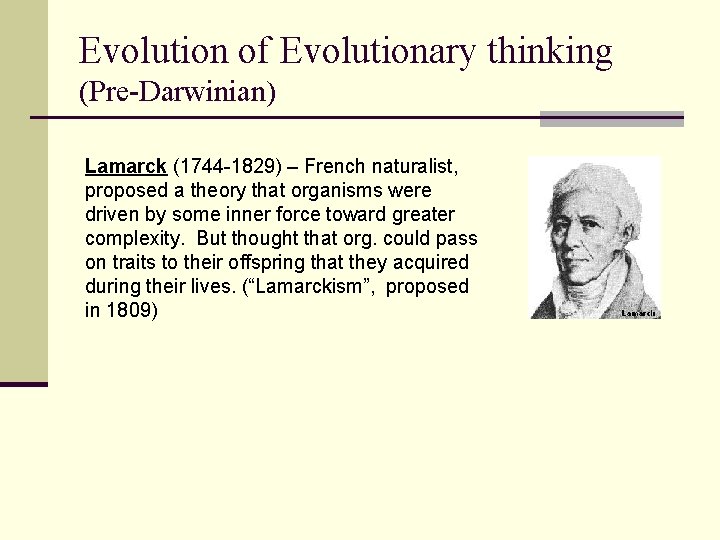
Evolution of Evolutionary thinking (Pre-Darwinian) Lamarck (1744 -1829) – French naturalist, proposed a theory that organisms were driven by some inner force toward greater complexity. But thought that org. could pass on traits to their offspring that they acquired during their lives. (“Lamarckism”, proposed in 1809)
Lamarckism Lamarck based his theory on two observations thought to be true in his day: 1. “Use it or lose it” - Individuals lose characteristics they do not require and develop those which are useful. 2. Inheritance of acquired traits - Individuals inherit the acquired traits of their ancestors.

Lamarckism n Examples include: the stretching by giraffes to reach leaves leads to offspring with longer necks; n Strengthening of muscles in a blacksmith's arm leads to sons with similiar muscular development. This theory was later disproved!
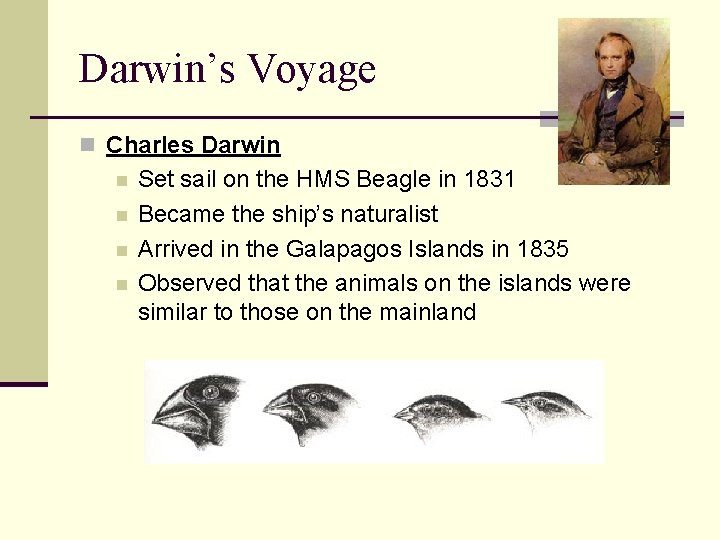
Darwin’s Voyage n Charles Darwin n n Set sail on the HMS Beagle in 1831 Became the ship’s naturalist Arrived in the Galapagos Islands in 1835 Observed that the animals on the islands were similar to those on the mainland
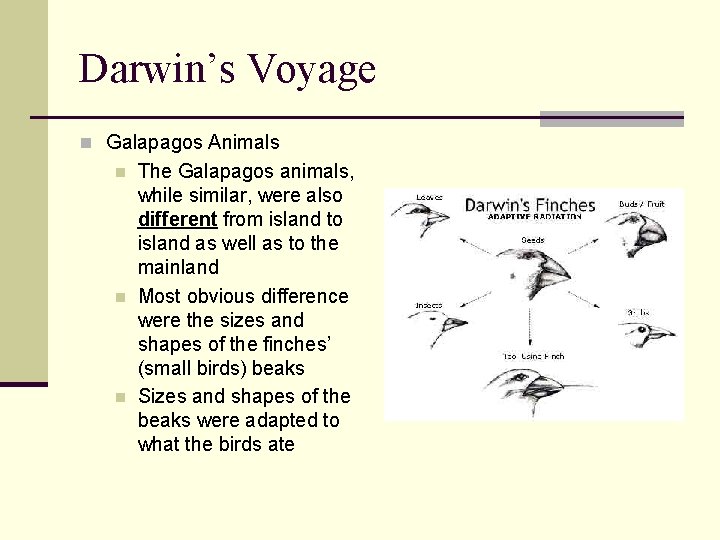
Darwin’s Voyage n Galapagos Animals n n n The Galapagos animals, while similar, were also different from island to island as well as to the mainland Most obvious difference were the sizes and shapes of the finches’ (small birds) beaks Sizes and shapes of the beaks were adapted to what the birds ate
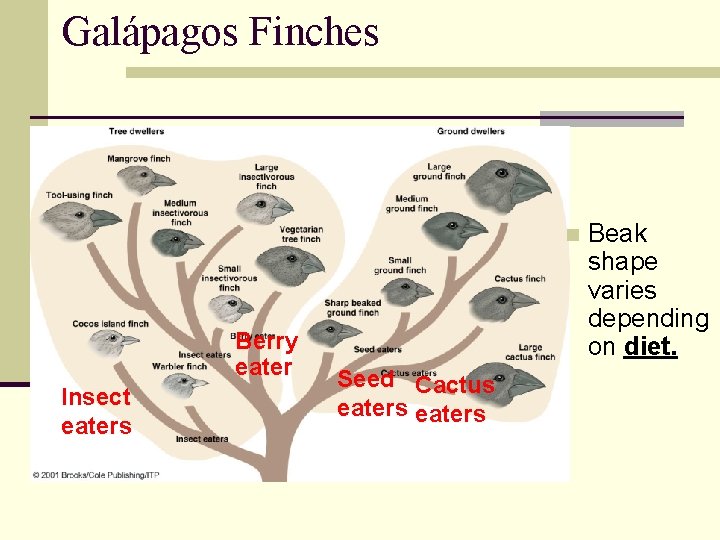
Galápagos Finches n Berry eater Insect eaters Seed Cactus eaters Beak shape varies depending on diet.
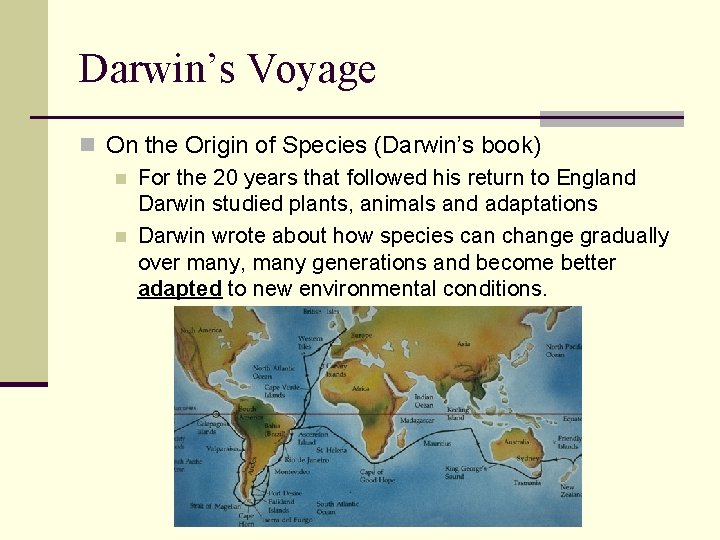
Darwin’s Voyage n On the Origin of Species (Darwin’s book) n For the 20 years that followed his return to England Darwin studied plants, animals and adaptations n Darwin wrote about how species can change gradually over many, many generations and become better adapted to new environmental conditions.
Do Now 3/27 n How do you think Earth was different when the first living organisms were here? n HW due Friday

Evolution n The gradual change in a species over time. n The basic theory of biological evolution states that the Earth’s present-day species developed from earlier, distinctly different species.
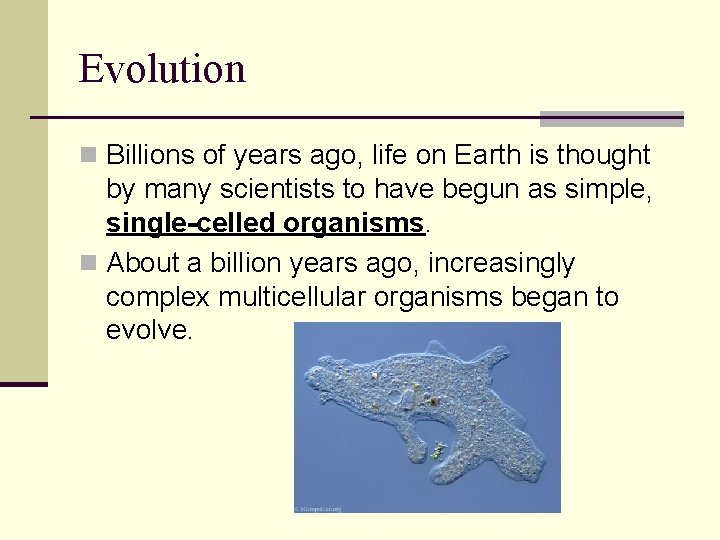
Evolution n Billions of years ago, life on Earth is thought by many scientists to have begun as simple, single-celled organisms. n About a billion years ago, increasingly complex multicellular organisms began to evolve.
Do Now 3/27 n How do you think Earth was different when the first living organisms were here? n HW due Friday
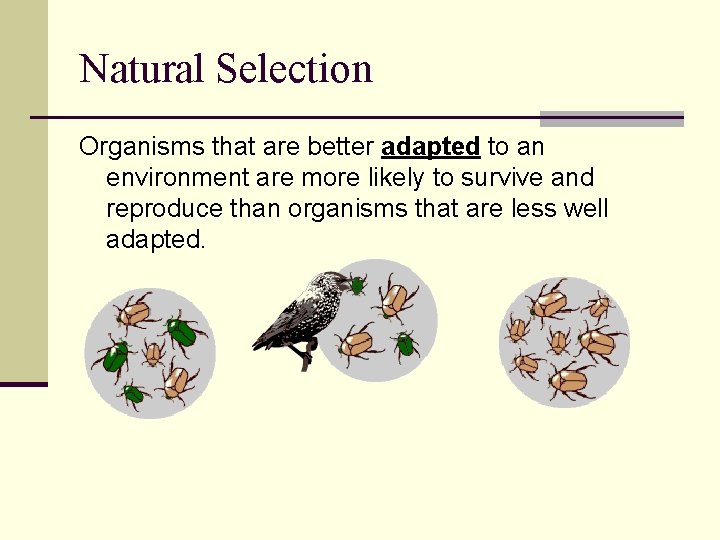
Natural Selection Organisms that are better adapted to an environment are more likely to survive and reproduce than organisms that are less well adapted.
Evolution of Antibiotic Resistant Bacteria n Some bacteria have a mutation in their genes that prevents them from being killed by antibiotics n When exposed to antibiotics, most bacteria die, except for the resistant ones. n Resistant bacteria survive and reproduce.
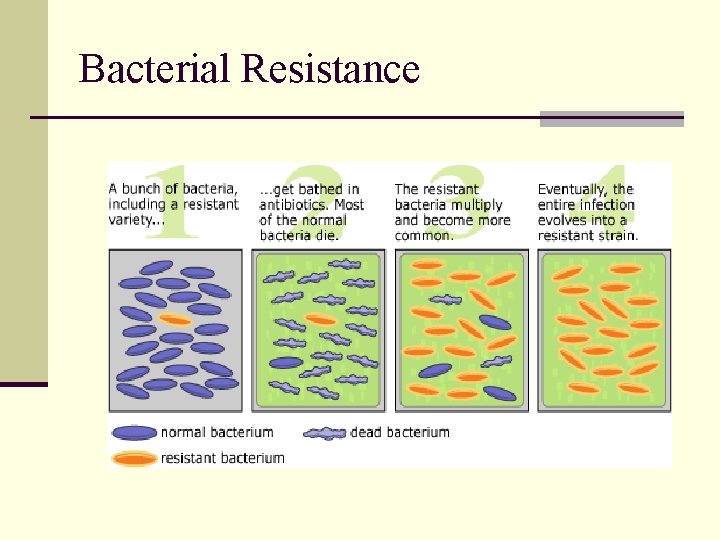
Bacterial Resistance

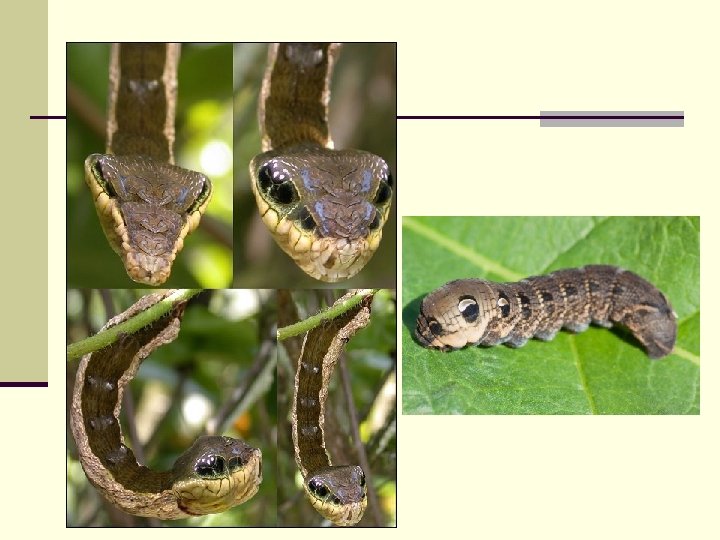
Adaptations Katydids have camouflage to look like leaves. Non-venomous king snakes mimic venomous coral snakes.
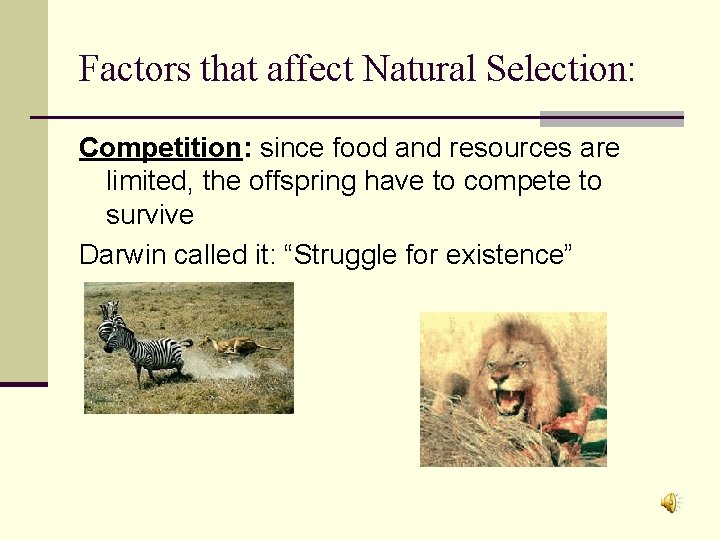
Factors that affect Natural Selection: Competition: since food and resources are limited, the offspring have to compete to survive Darwin called it: “Struggle for existence”
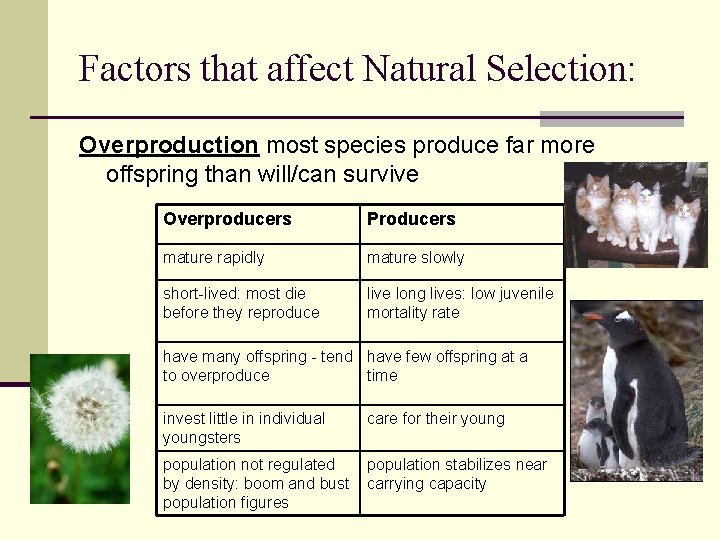
Factors that affect Natural Selection: Overproduction most species produce far more offspring than will/can survive Overproducers Producers mature rapidly mature slowly short-lived: most die before they reproduce live long lives: low juvenile mortality rate have many offspring - tend have few offspring at a to overproduce time invest little in individual youngsters care for their young population not regulated population stabilizes near by density: boom and bust carrying capacity population figures
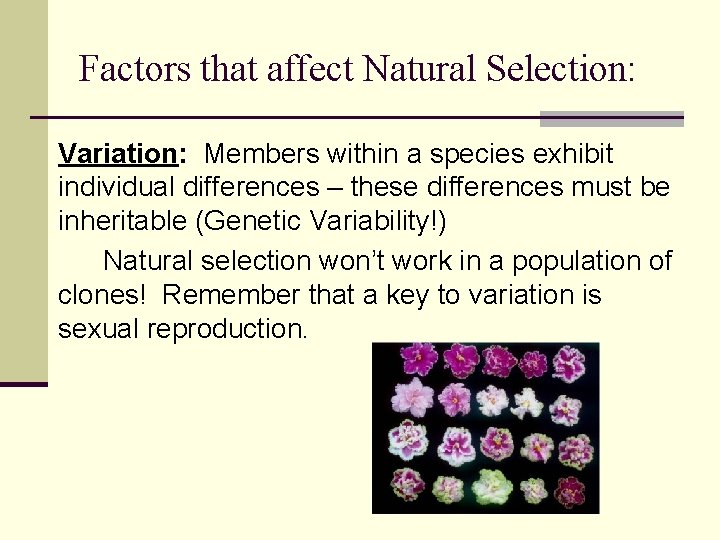
Factors that affect Natural Selection: Variation: Members within a species exhibit individual differences – these differences must be inheritable (Genetic Variability!) Natural selection won’t work in a population of clones! Remember that a key to variation is sexual reproduction.
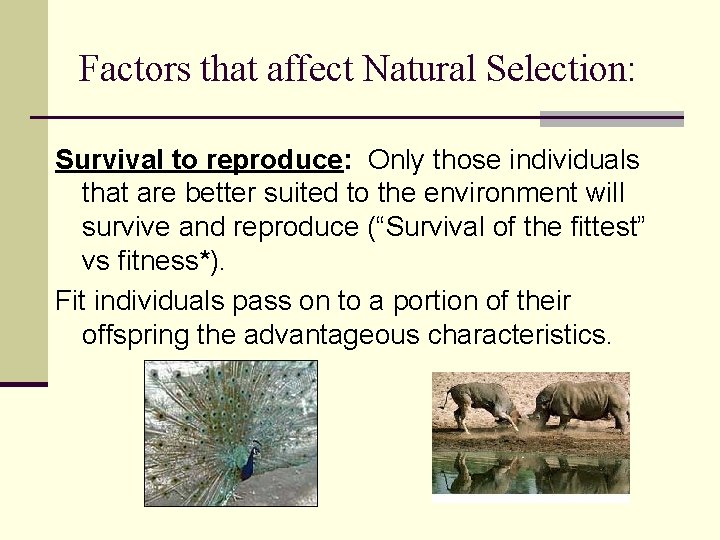
Factors that affect Natural Selection: Survival to reproduce: Only those individuals that are better suited to the environment will survive and reproduce (“Survival of the fittest” vs fitness*). Fit individuals pass on to a portion of their offspring the advantageous characteristics.

Question n Explain how one factor we talked about can affect natural selection and the evolution of a species. n What type of characteristics is “survival of the fittest” describing. What may be a better word to describe this?

How do new species form? n Natural Selection n Continental Drift n Changes in environment n Mutations n Man
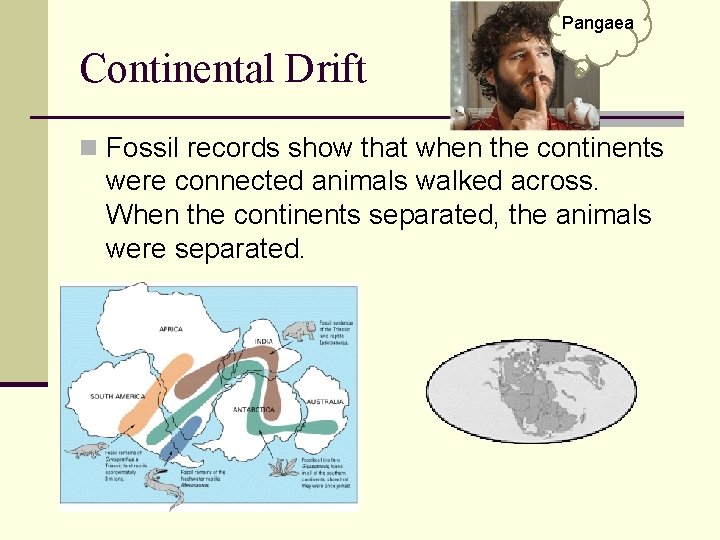
Pangaea Continental Drift n Fossil records show that when the continents were connected animals walked across. When the continents separated, the animals were separated.
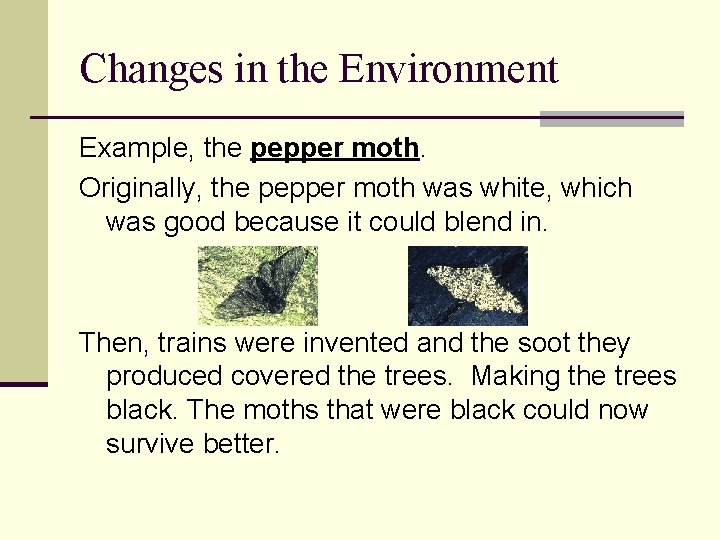
Changes in the Environment Example, the pepper moth. Originally, the pepper moth was white, which was good because it could blend in. Then, trains were invented and the soot they produced covered the trees. Making the trees black. The moths that were black could now survive better.
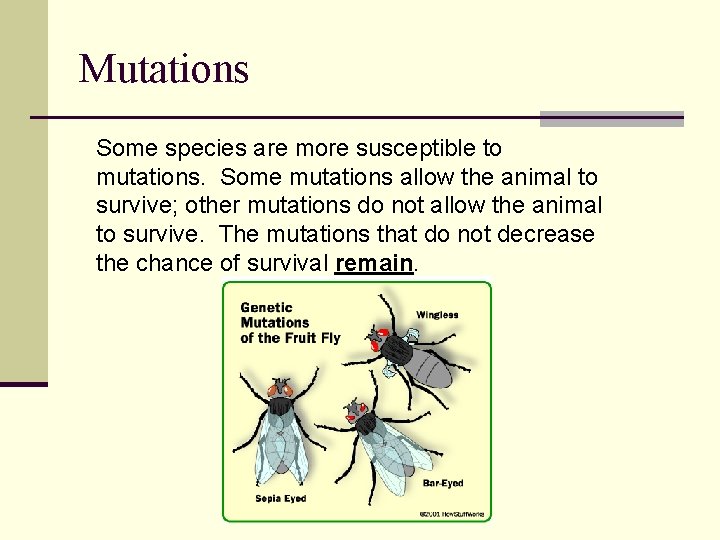
Mutations Some species are more susceptible to mutations. Some mutations allow the animal to survive; other mutations do not allow the animal to survive. The mutations that do not decrease the chance of survival remain.
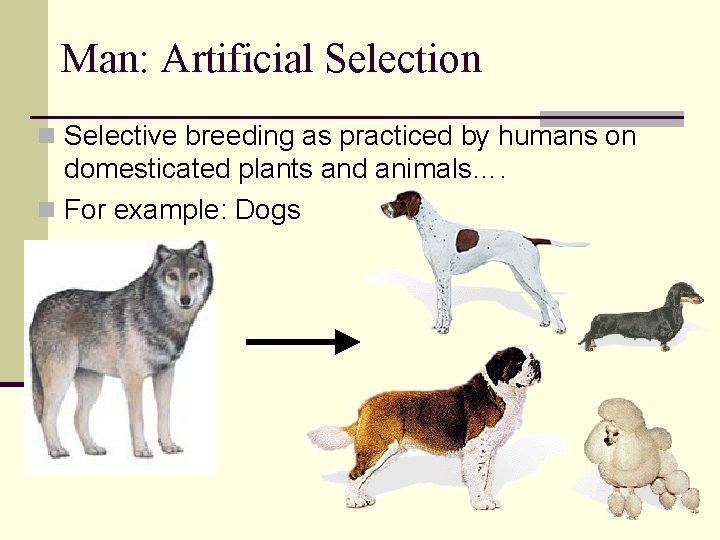
Man: Artificial Selection n Selective breeding as practiced by humans on domesticated plants and animals…. n For example: Dogs
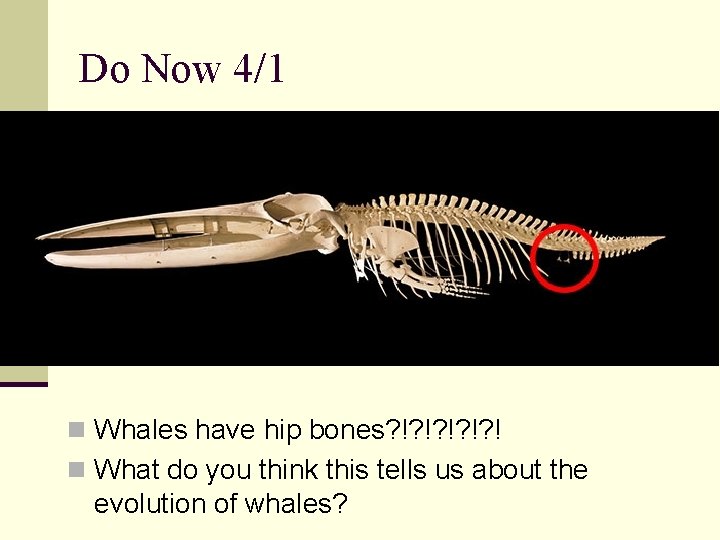
Do Now 4/1 n Whales have hip bones? !? !? ! n What do you think this tells us about the evolution of whales?

Do Now 4/2 n Complete the front of the sheet from yesterday. n HW: 3 -5 multiple choice questions with 4 potential answers by Thursday n TEST FRIDAY

Evidence of Evolution n Fossil Record n Similarities in Body Structure n Similarities in Early Development n Vestigial Structures n Similarities in DNA
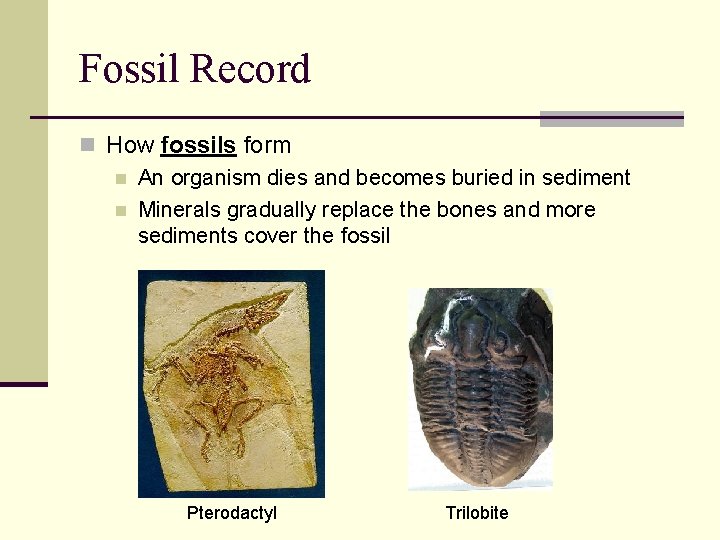
Fossil Record n How fossils form n An organism dies and becomes buried in sediment n Minerals gradually replace the bones and more sediments cover the fossil Pterodactyl Trilobite
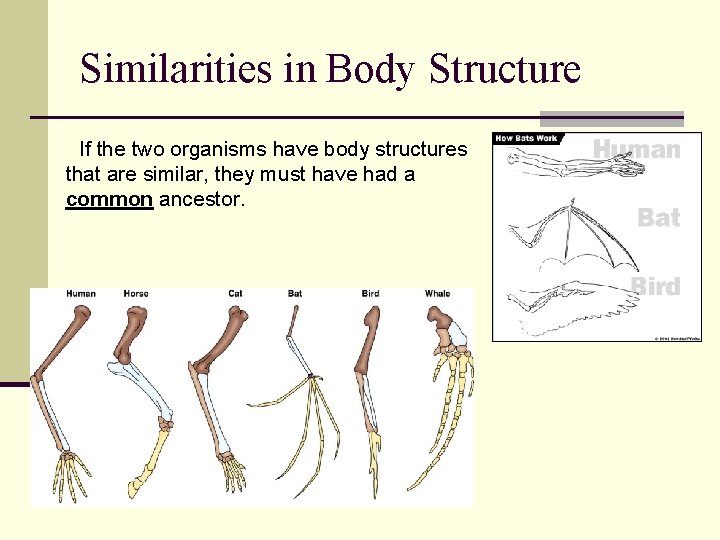
Similarities in Body Structure If the two organisms have body structures that are similar, they must have had a common ancestor.
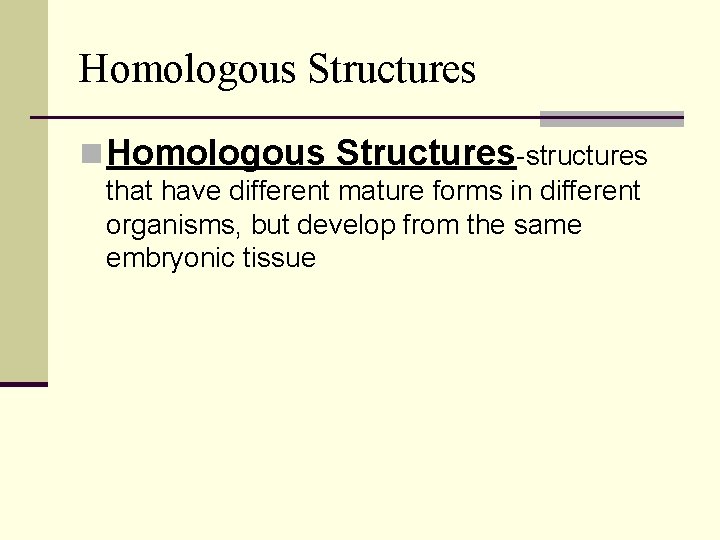
Homologous Structures n Homologous Structures-structures that have different mature forms in different organisms, but develop from the same embryonic tissue
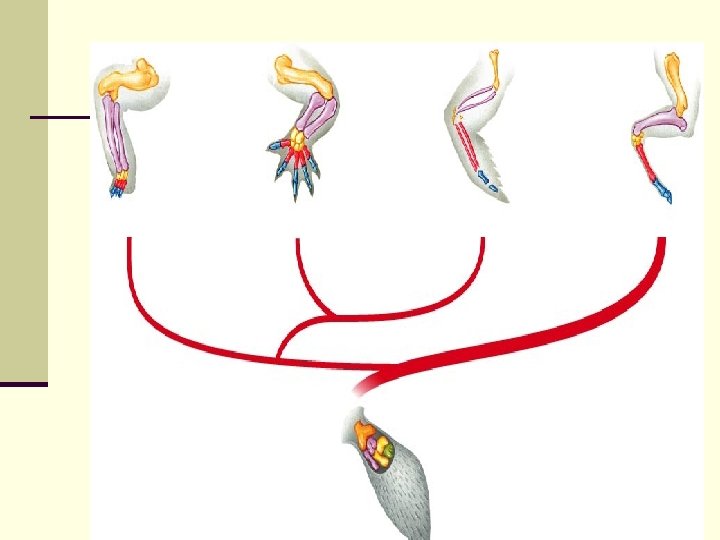
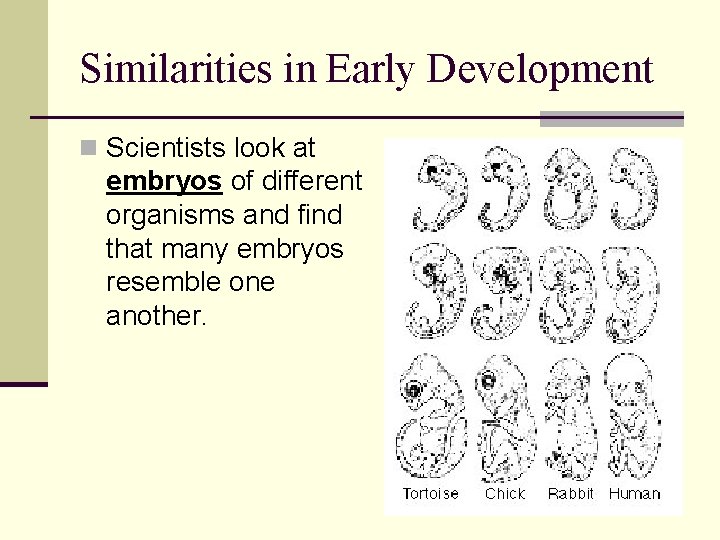
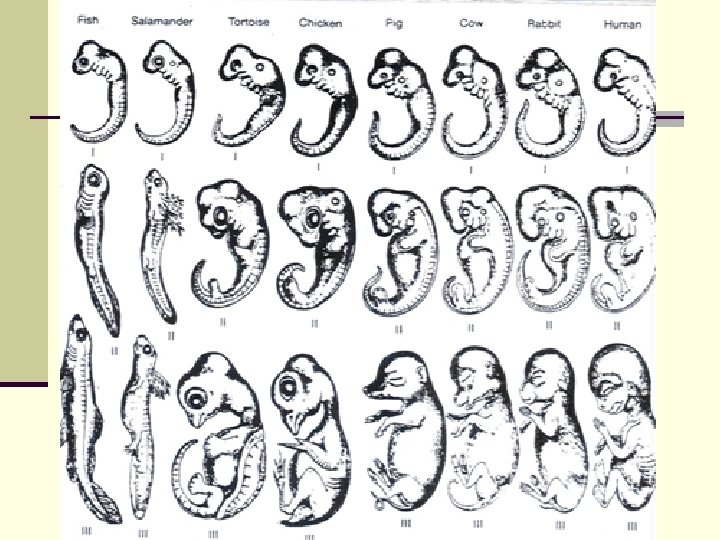
Similarities in Early Development n Scientists look at embryos of different organisms and find that many embryos resemble one another.
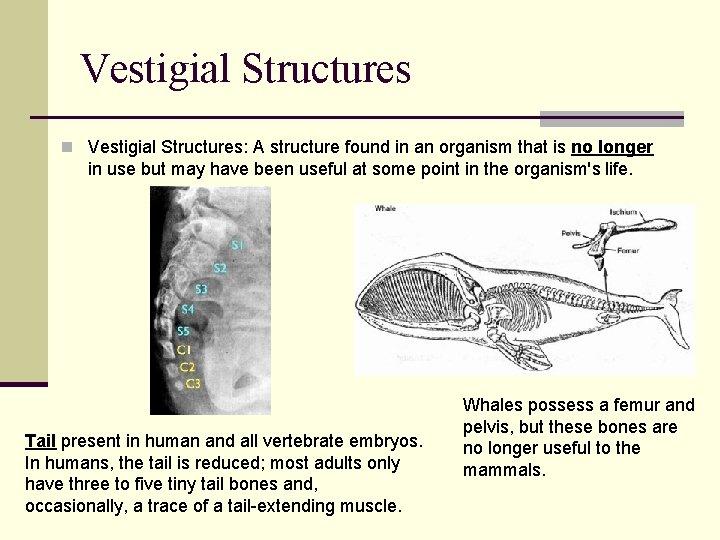
Vestigial Structures n Vestigial Structures: A structure found in an organism that is no longer in use but may have been useful at some point in the organism's life. Tail present in human and all vertebrate embryos. In humans, the tail is reduced; most adults only have three to five tiny tail bones and, occasionally, a trace of a tail-extending muscle. Whales possess a femur and pelvis, but these bones are no longer useful to the mammals.
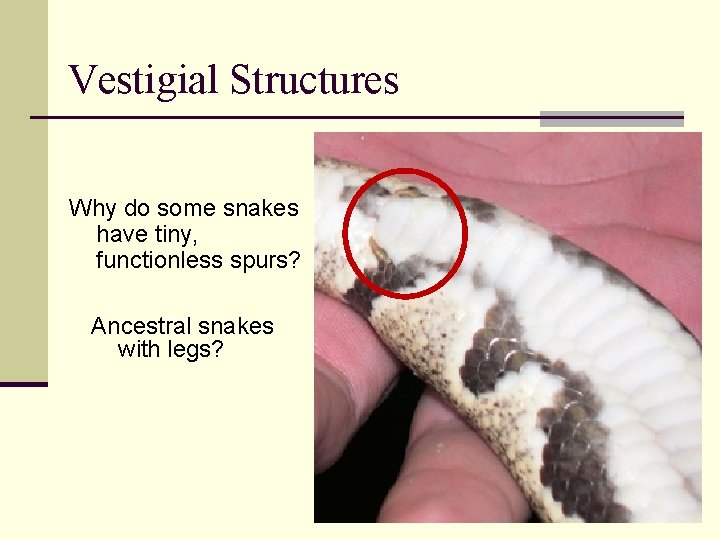
Vestigial Structures Why do some snakes have tiny, functionless spurs? Ancestral snakes with legs?
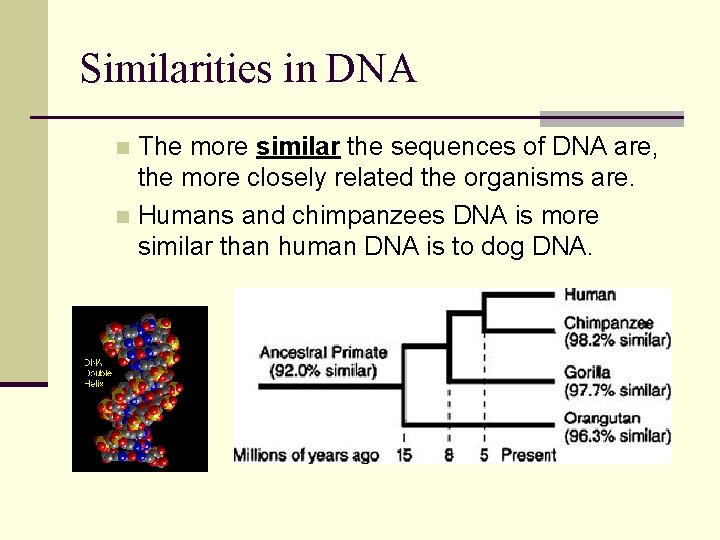
Similarities in DNA The more similar the sequences of DNA are, the more closely related the organisms are. n Humans and chimpanzees DNA is more similar than human DNA is to dog DNA. n

Vestigial Structures n Vestigial Structures: A structure found in an organism that is no longer in use but may have been useful at some point in the organism's life. Whales possess a femur and pelvis, but these bones are no longer useful to the mammals.
- Slides: 46