
The theme of the lesson Growing up Topic

- Slides: 29
The theme of the lesson: Growing up
� Topic : growing up in different parts of the world. Reading and listening: a text about a coming of age ceremony in Papua New Guinea, � a quiz about age limits, the origins of the coming of age ceremony. � Writing: about a special day in our country. � Grammar: present simple passive � Vocabulary: Describing a person’s age
I. Organization moment II. Warm up III. The main part of the lesson: a. Checking up the home task b. Working with the text c. Introduction of grammar material d. Doing exercise e. Working with the pictures f. Vocabulary IV. Conclusion. a. Giving the homework. b. Marks.
�Unit check Ex: 1 omplete this email from an American teen to a friend in the UK. Use the words in the box. Ex : 2 Choose the correct answer. Ex : 3 Find the words in American English for the words in the box.
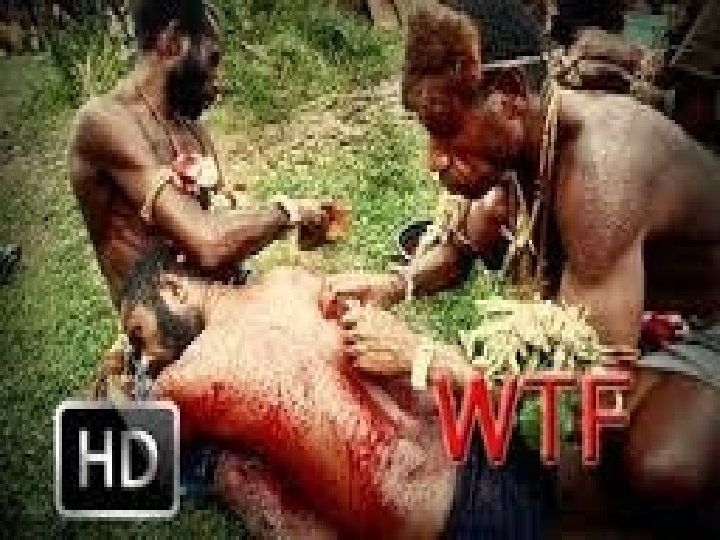
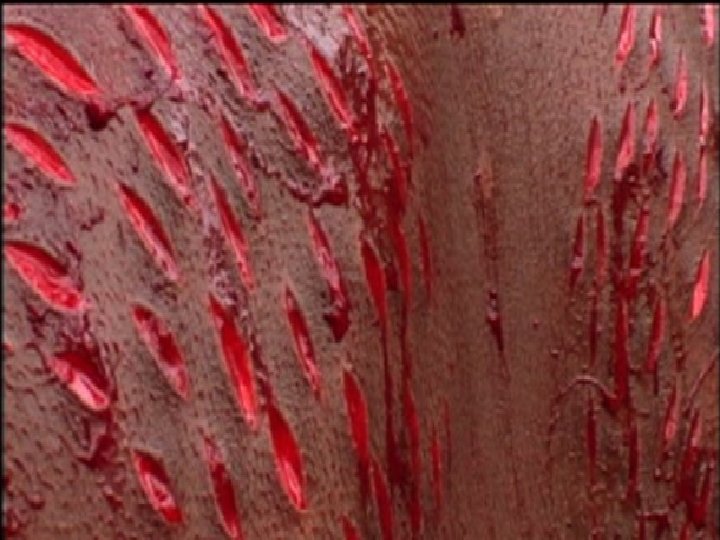
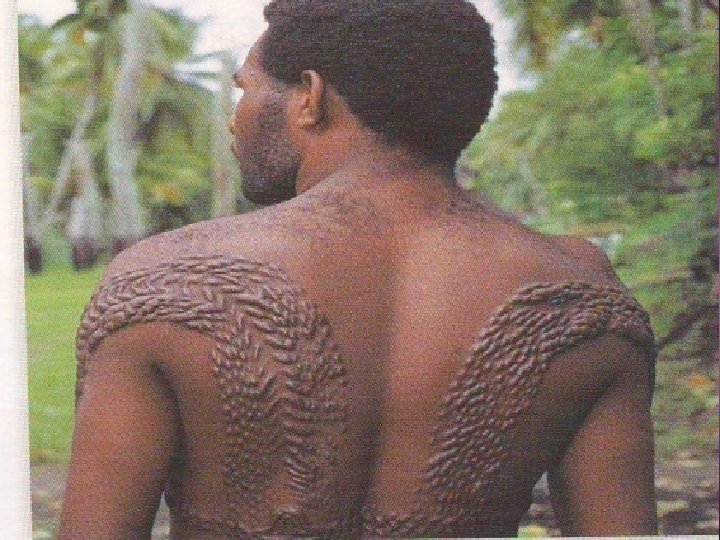
b. Working with the text Ex: 1( a) p 40. Look at the blackboаrd , Where is the man in the picture from? What do you think he has got on his back?
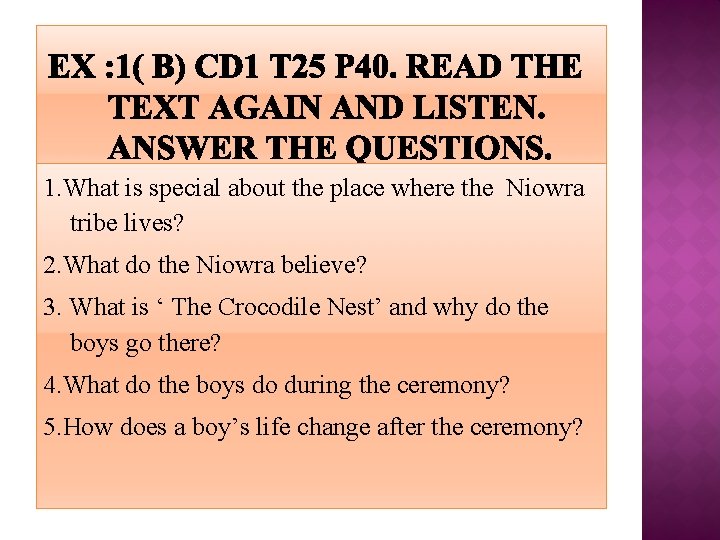
1. What is special about the place where the Niowra tribe lives? 2. What do the Niowra believe? 3. What is ‘ The Crocodile Nest’ and why do the boys go there? 4. What do the boys do during the ceremony? 5. How does a boy’s life change after the ceremony?
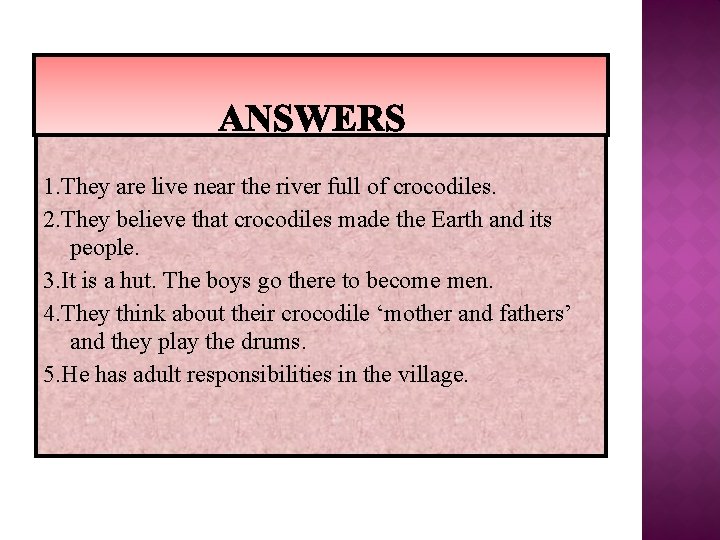
1. They are live near the river full of crocodiles. 2. They believe that crocodiles made the Earth and its people. 3. It is a hut. The boys go there to become men. 4. They think about their crocodile ‘mother and fathers’ and they play the drums. 5. He has adult responsibilities in the village.
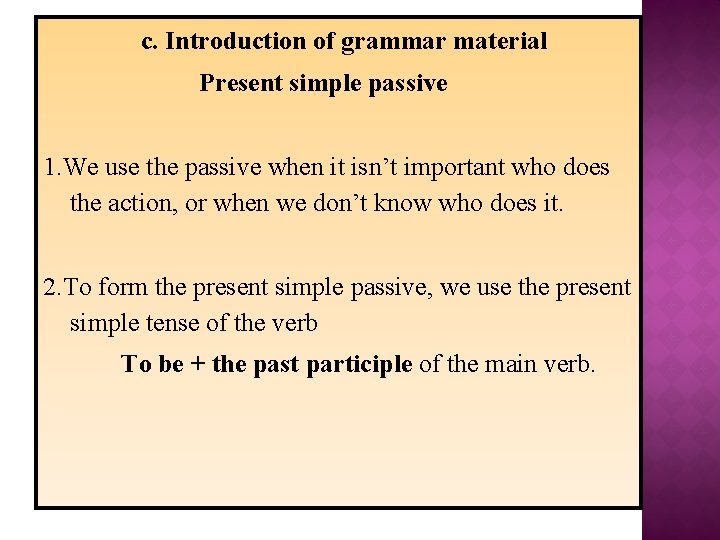
c. Introduction of grammar material Present simple passive 1. We use the passive when it isn’t important who does the action, or when we don’t know who does it. 2. To form the present simple passive, we use the present simple tense of the verb To be + the past participle of the main verb.
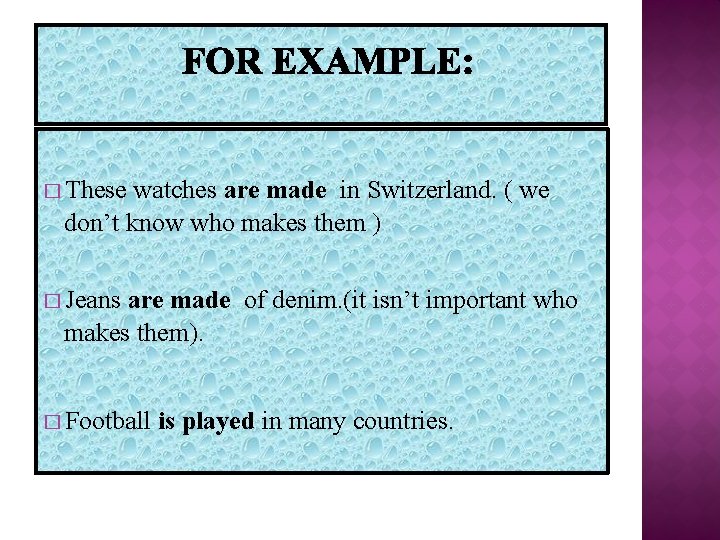
� These watches are made in Switzerland. ( we don’t know who makes them ) � Jeans are made of denim. (it isn’t important who makes them). � Football is played in many countries.
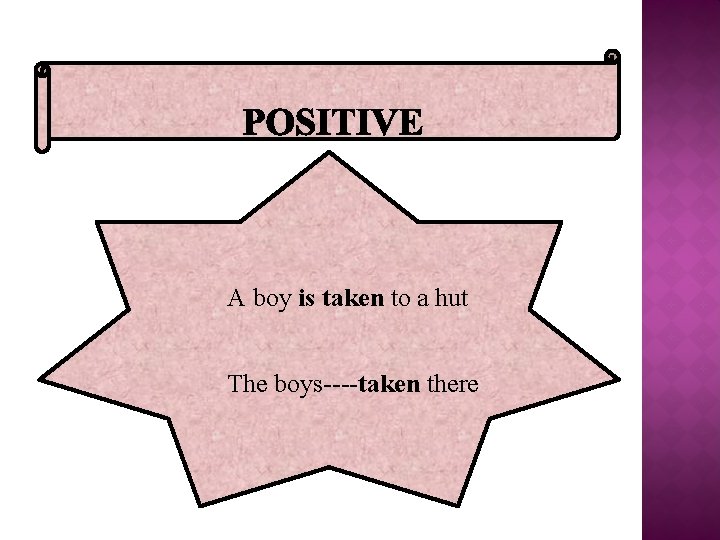
A boy is taken to a hut The boys----taken there
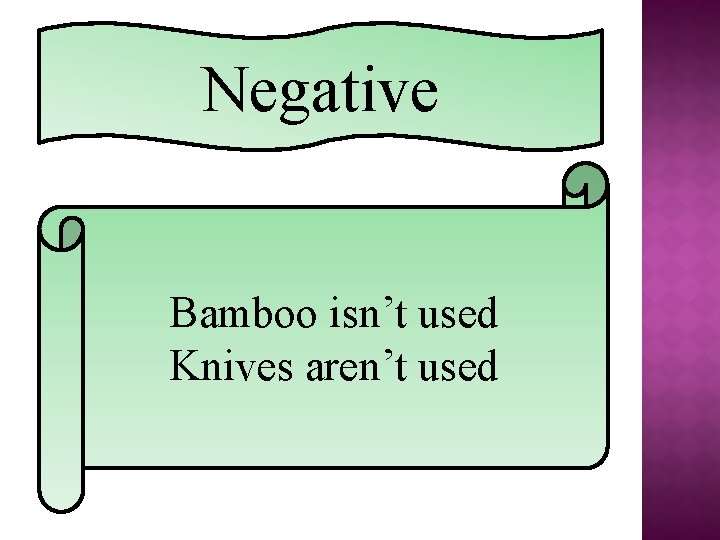
Negative Bamboo isn’t used Knives aren’t used
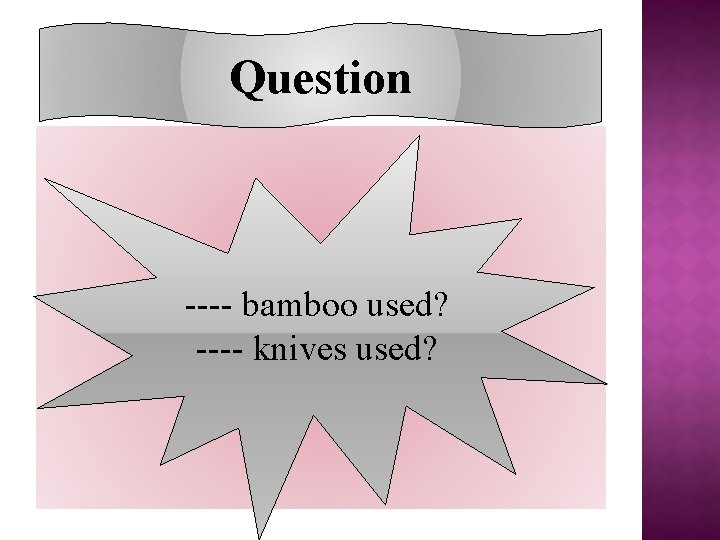
Question ---- bamboo used? ---- knives used?
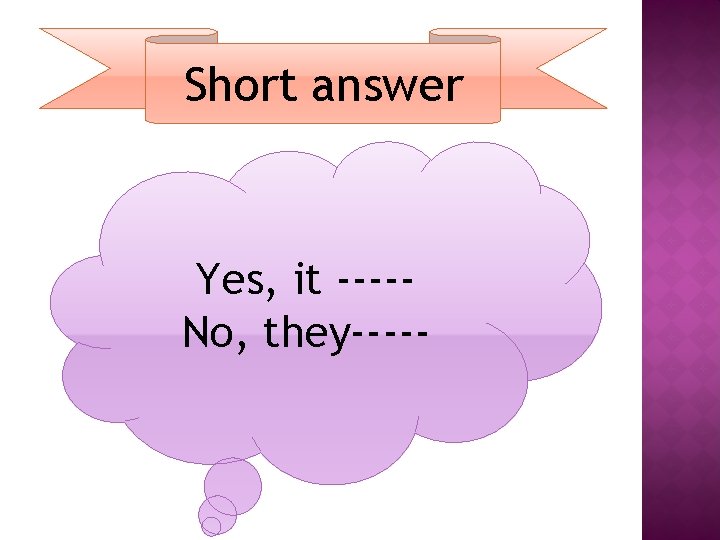
Short answer Yes, it ----No, they-----
Ex : 2(b) p 41. Underline other examples of the present simple passive in the text on page 40.
Answer The boys are told; they are beaten; the crocodile men are given.
Ex : 2(d) p 41. Complete the sentences with the present simple passive form of the verb. 1. Millions of pizzas ----- (eat) in the world every year. 2. How many emails ----- (write) every day. 3. Chocolate ------(sell) in almost every country in the world. 4. Rice ----(not grow) in England, but it ----in Spain. 5. -----most emails -----(send) from home computer. 6. Ferrari cars -------in Italy.
1. People make jeans in the USA. Jeans are made in the USA 2. Someone picks up the litter every morning. The litter --------------------3. People cut down a lot of trees every year. A lot -----------------------4. People waste too much water. Too much ---------------------5. Postal workers deliver thousands of letters. Thousands ----------------------6. Do they make successful films in Hollywood? Are ------------------------------
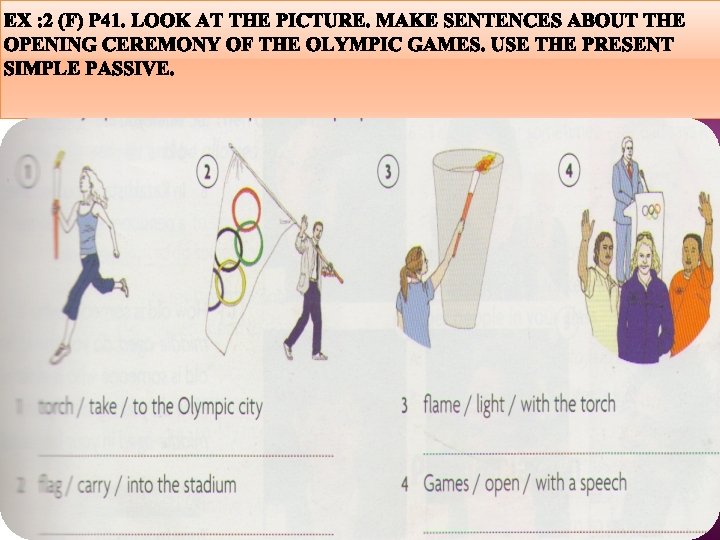
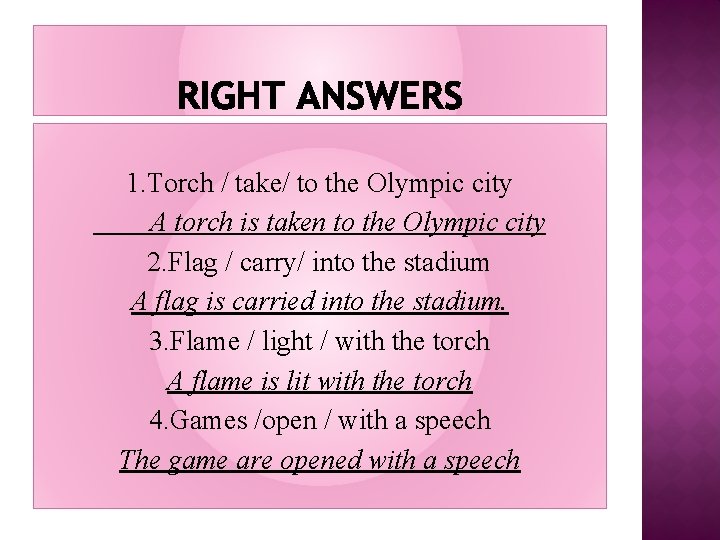
1. Torch / take/ to the Olympic city A torch is taken to the Olympic city 2. Flag / carry/ into the stadium A flag is carried into the stadium. 3. Flame / light / with the torch A flame is lit with the torch 4. Games /open / with a speech The game are opened with a speech
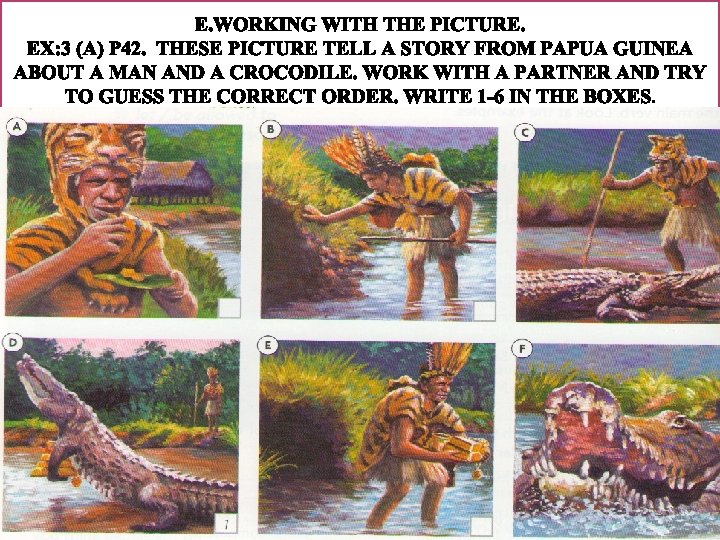
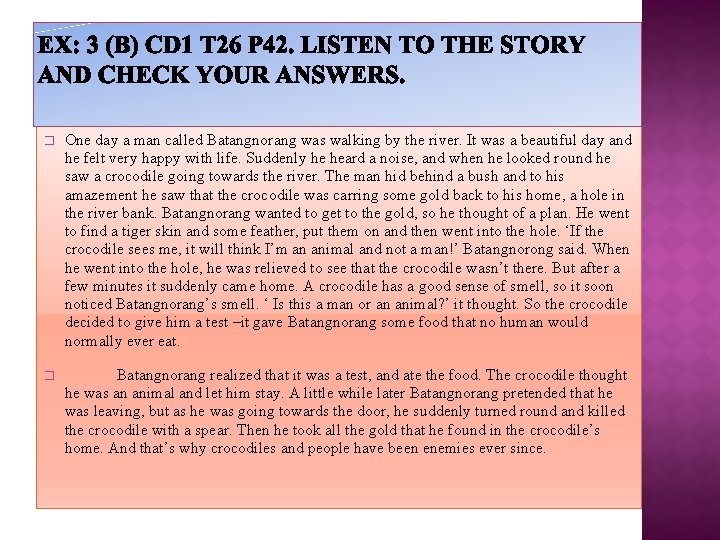
� One day a man called Batangnorang was walking by the river. It was a beautiful day and he felt very happy with life. Suddenly he heard a noise, and when he looked round he saw a crocodile going towards the river. The man hid behind a bush and to his amazement he saw that the crocodile was carring some gold back to his home, a hole in the river bank. Batangnorang wanted to get to the gold, so he thought of a plan. He went to find a tiger skin and some feather, put them on and then went into the hole. ‘If the crocodile sees me, it will think I’m an animal and not a man!’ Batangnorong said. When he went into the hole, he was relieved to see that the crocodile wasn’t there. But after a few minutes it suddenly came home. A crocodile has a good sense of smell, so it soon noticed Batangnorang’s smell. ‘ Is this a man or an animal? ’ it thought. So the crocodile decided to give him a test –it gave Batangnorang some food that no human would normally ever eat. � Batangnorang realized that it was a test, and ate the food. The crocodile thought he was an animal and let him stay. A little while later Batangnorang pretended that he was leaving, but as he was going towards the door, he suddenly turned round and killed the crocodile with a spear. Then he took all the gold that he found in the crocodile’s home. And that’s why crocodiles and people have been enemies ever since.
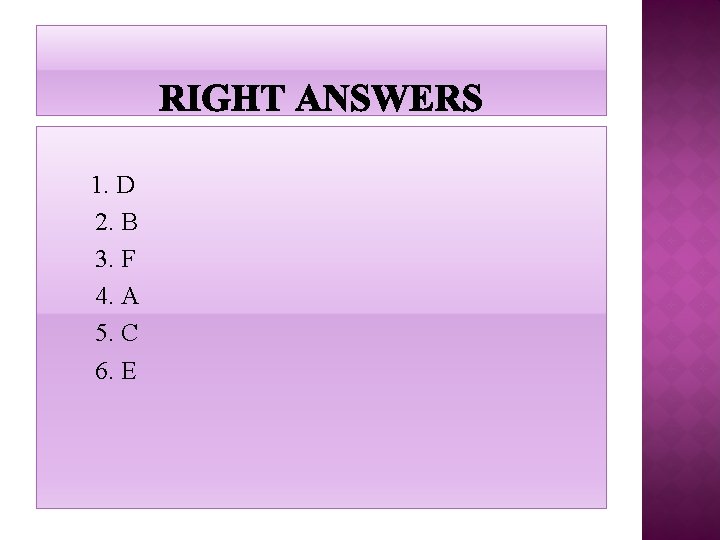
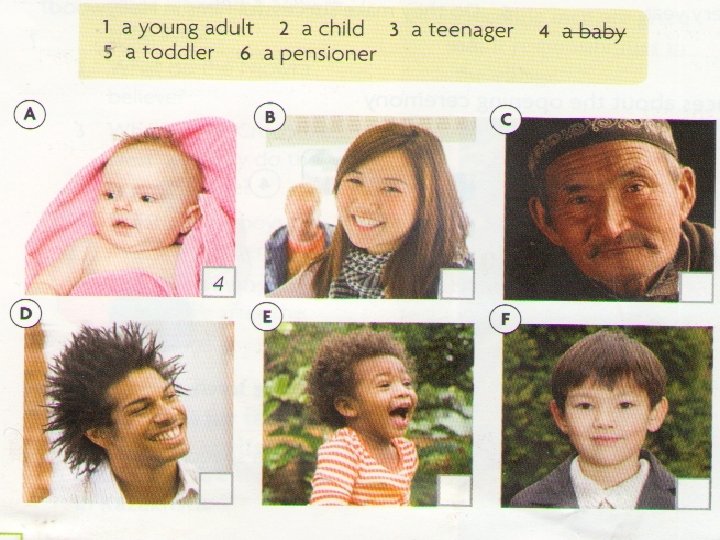
1. D 2. B 3. F 4. A 5. C 6. E
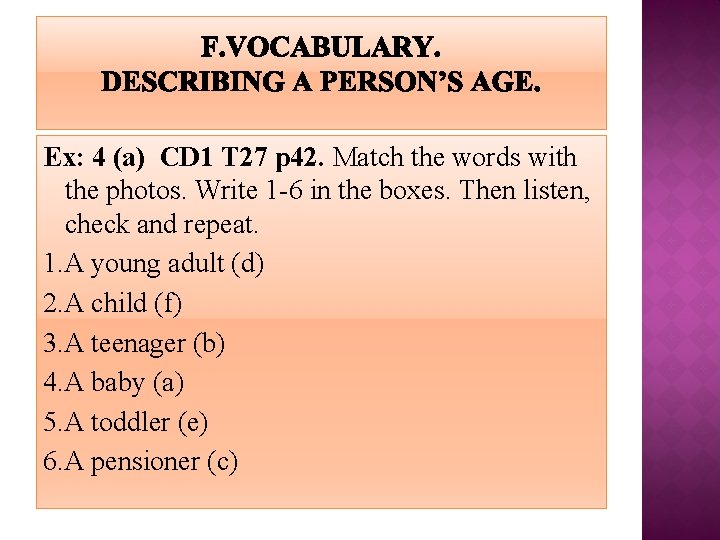
Ex: 4 (a) CD 1 T 27 p 42. Match the words with the photos. Write 1 -6 in the boxes. Then listen, check and repeat. 1. A young adult (d) 2. A child (f) 3. A teenager (b) 4. A baby (a) 5. A toddler (e) 6. A pensioner (c)
a. Giving the homework. Ex: 4 (b) p 42. Complete the sentences with your own ideas. Ex : 4 (c) p 42. Turn to page 113. Vocabulary bank. b. Marks
Thank you for your attention!