
The Tertiary Sector SERVICES any activity that fulfills



- Slides: 58
The Tertiary Sector. SERVICES - any activity that fulfills a human want or need. PPT by Abe Goldman
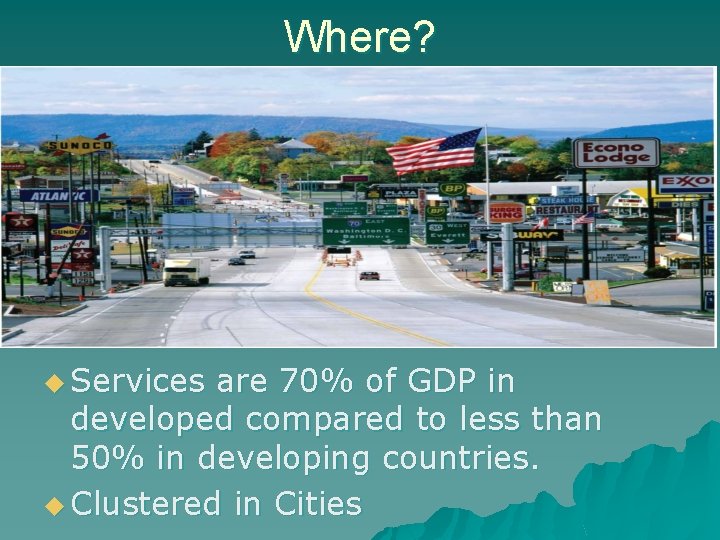
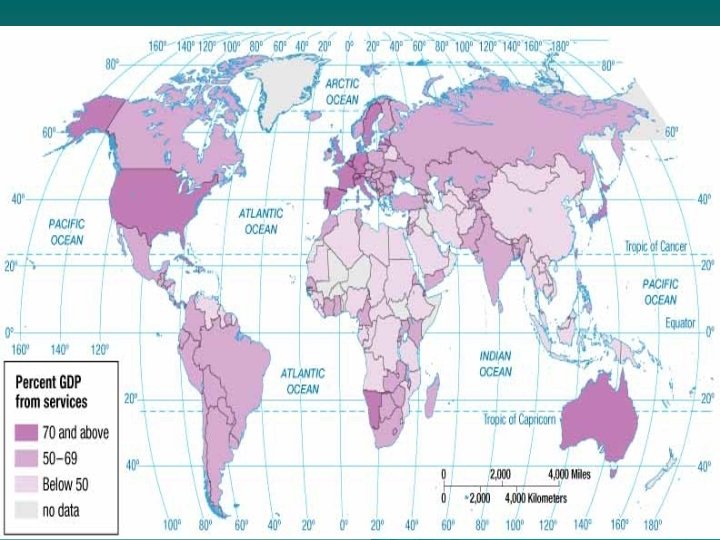
Where? u Services are 70% of GDP in developed compared to less than 50% in developing countries. u Clustered in Cities
What career would you like to have in the future? Discuss with group…
Three types of Services in US
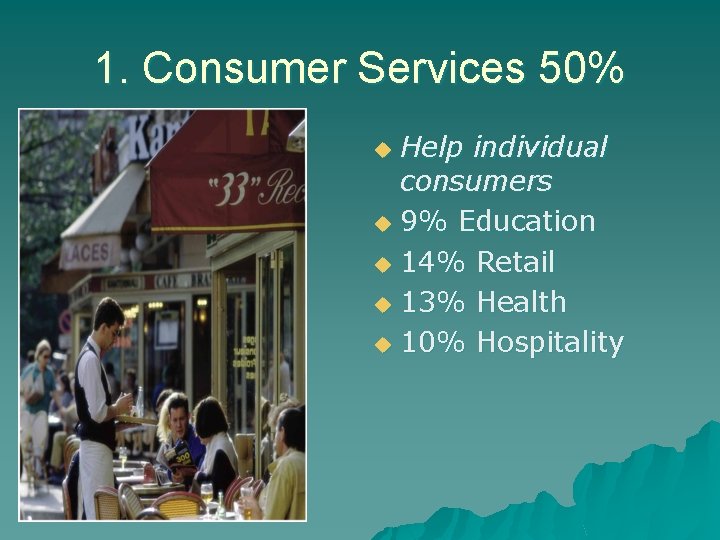
1. Consumer Services 50% Help individual consumers u 9% Education u 14% Retail u 13% Health u 10% Hospitality u
2. Business Services 25% Help out other businesses u Professional 16% u Financial 6% u Transportation and Information 6% u
3. Public Services 10% Provide security and protection u Police Officers u Firefighters u Military u
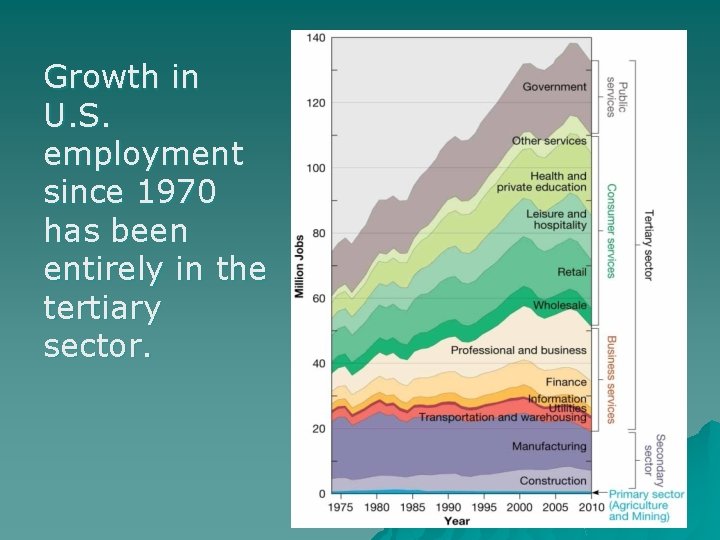
Growth in U. S. employment since 1970 has been entirely in the tertiary sector.
Why would a furniture store locate right next to another furniture store? Discuss…
Agglomeration Effect u The clustering of similar businesses for the purpose of saving money by sharing talents, services, and facilities u Examples:
What are some more examples of the agglomeration effect? Discuss
Hotelling’s Model of Spatial Competition (take notes from this video) https: //www. youtube. com/watch? v=j. ILgxe. NBK_8&safe=ac tive
Central Place Theory by Walter Christaller Each service has a most profitable location.
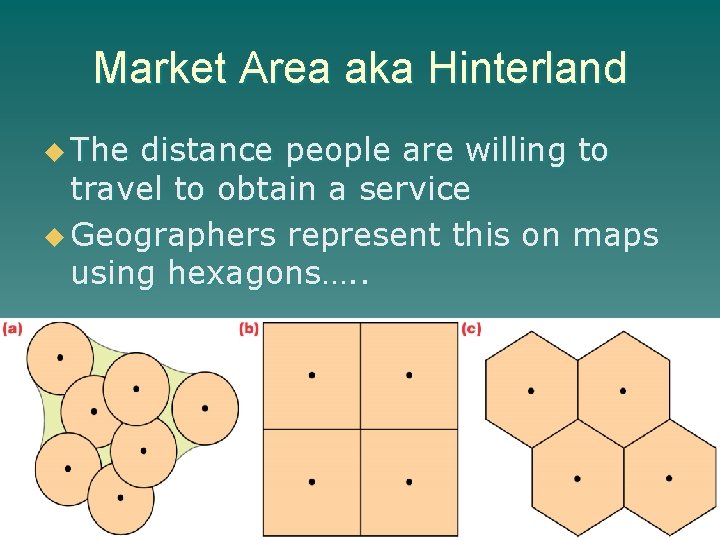
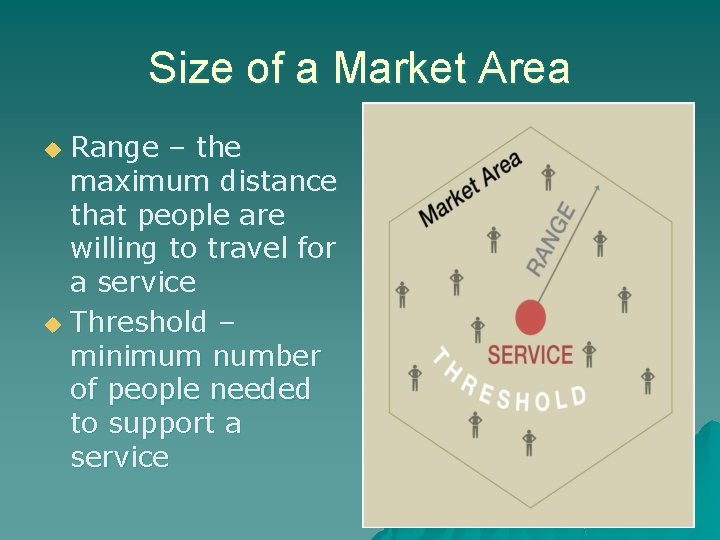
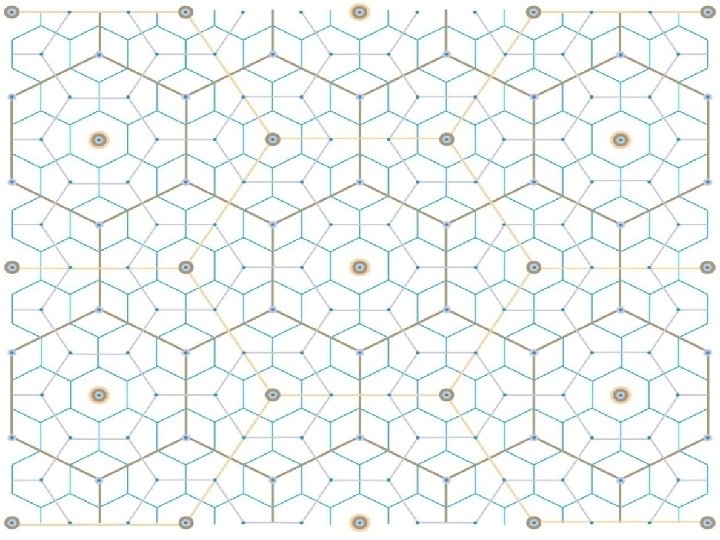
Market Area aka Hinterland u The distance people are willing to travel to obtain a service u Geographers represent this on maps using hexagons…. .
Size of a Market Area Range – the maximum distance that people are willing to travel for a service u Threshold – minimum number of people needed to support a service u
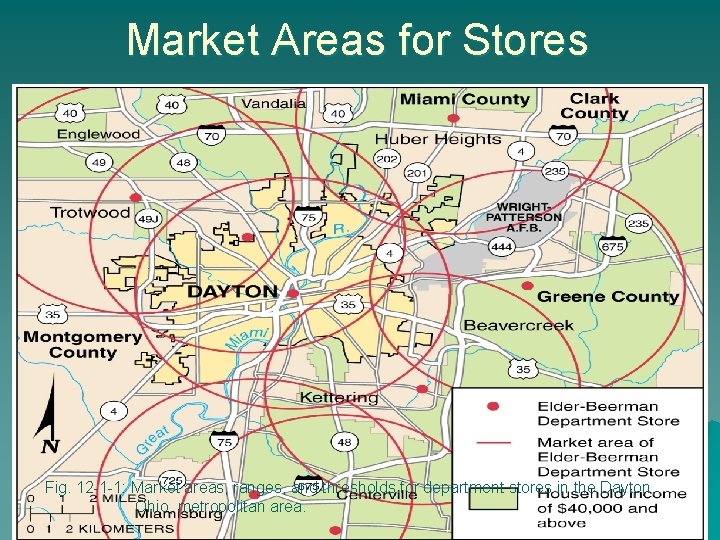
Market Areas for Stores Fig. 12 -1 -1: Market areas, ranges, and thresholds for department stores in the Dayton, Ohio, metropolitan area.
JOTD u. What is the minimum amount of fruit needed to supply a grocery store? u. The freshold
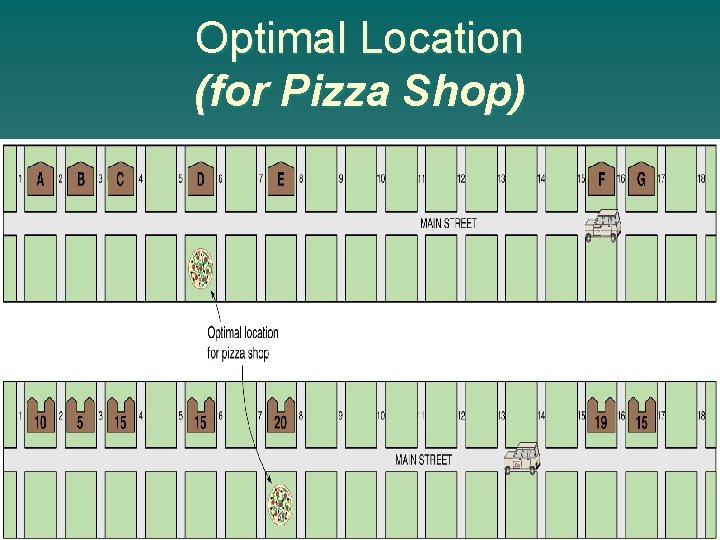
Gravity Model u u 1. 2. predicts optimal location of a service Consumer behavior based on: More people in an area means more customers The closer to a business, the more likely to visit it.
Optimal Location (for Pizza Shop)
What other factors determine where a service will be located?
What kind of services would you find in a small town versus a big city? Compare the range and thresholds of each.
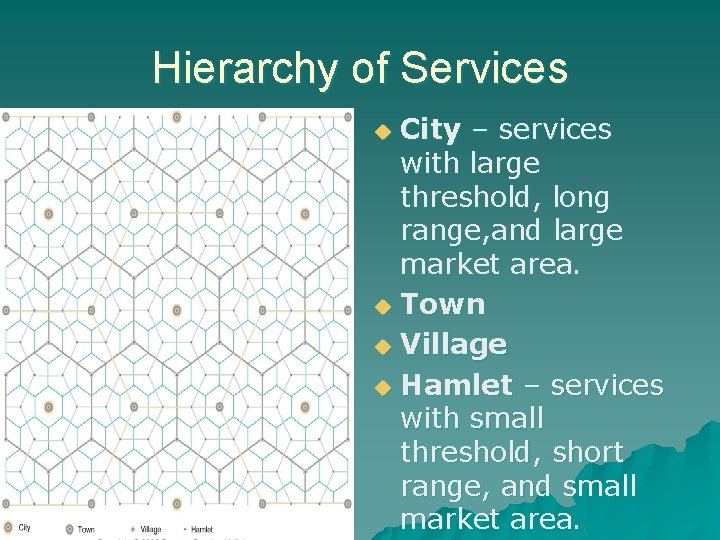
Hierarchy of Services City – services with large threshold, long range, and large market area. u Town u Village u Hamlet – services with small threshold, short range, and small market area. u
Would a developing nation look like a honeycomb?
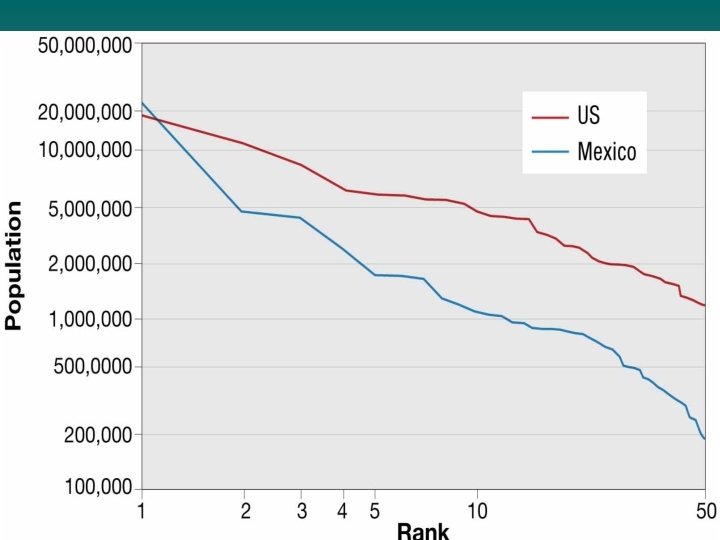
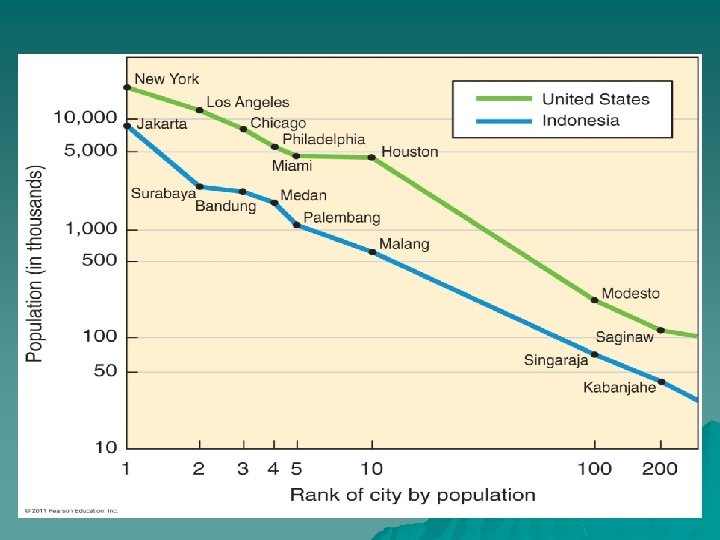
Rank Size Rule u. A country’s nth largest city is 1/n the population u 2 nd largest is 50% the population of the 1 st u 3 rd is 33. 3% of the 1 st u 4 th is 25% and so on… u Examples: To be filled in after completing assignment.
Primate City Rule u The largest city has over twice as many people as the second ranking city. u One city dominates the country. u Examples:
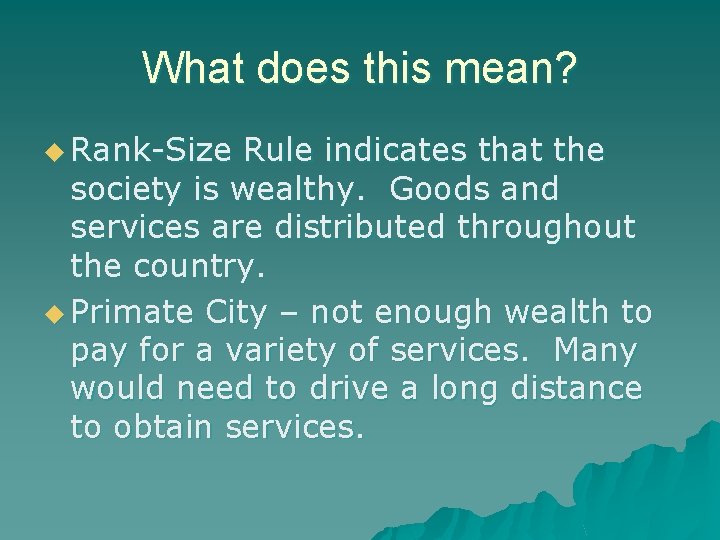
What does this mean? u Rank-Size Rule indicates that the society is wealthy. Goods and services are distributed throughout the country. u Primate City – not enough wealth to pay for a variety of services. Many would need to drive a long distance to obtain services.
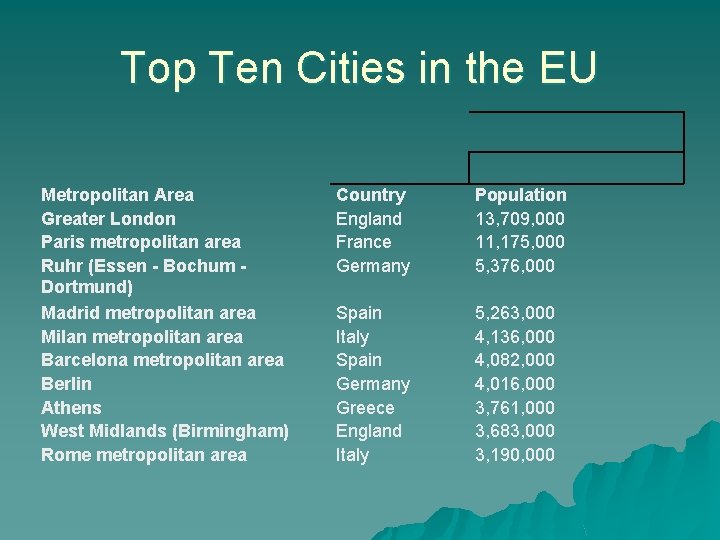
Top Ten Cities in the EU Metropolitan Area Greater London Paris metropolitan area Ruhr (Essen - Bochum Dortmund) Madrid metropolitan area Milan metropolitan area Barcelona metropolitan area Berlin Athens West Midlands (Birmingham) Rome metropolitan area Country England France Germany Population 13, 709, 000 11, 175, 000 5, 376, 000 Spain Italy Spain Germany Greece England Italy 5, 263, 000 4, 136, 000 4, 082, 000 4, 016, 000 3, 761, 000 3, 683, 000 3, 190, 000
Evolution of Cities
Ancient World Cities u Four Hearths: u Mesopotamia u Egypt u China u India u Concept of urban settlements diffused to the rest of the world from these four hearths.
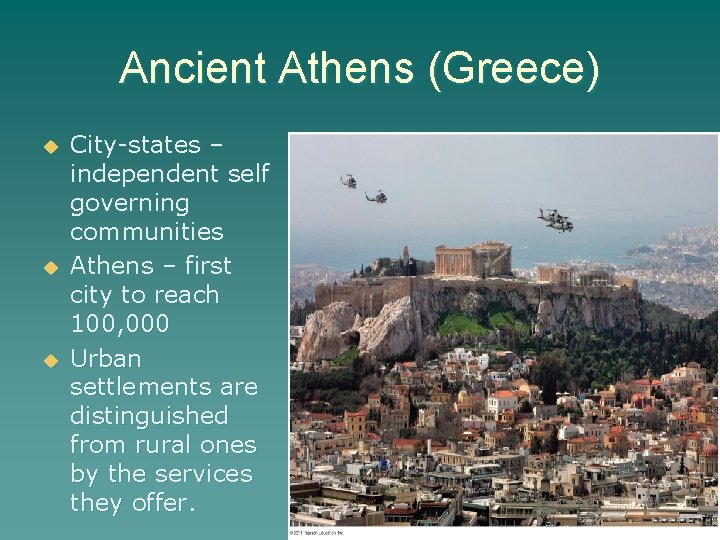
Ancient Athens (Greece) u u u City-states – independent self governing communities Athens – first city to reach 100, 000 Urban settlements are distinguished from rural ones by the services they offer.
Ancient Rome u Rise of Rome encouraged urban settlement u Settlements were established for trade and retail services. u Rome – 1 million people u Fall of Rome meant no more secure trade …. Urban settlements diminished.
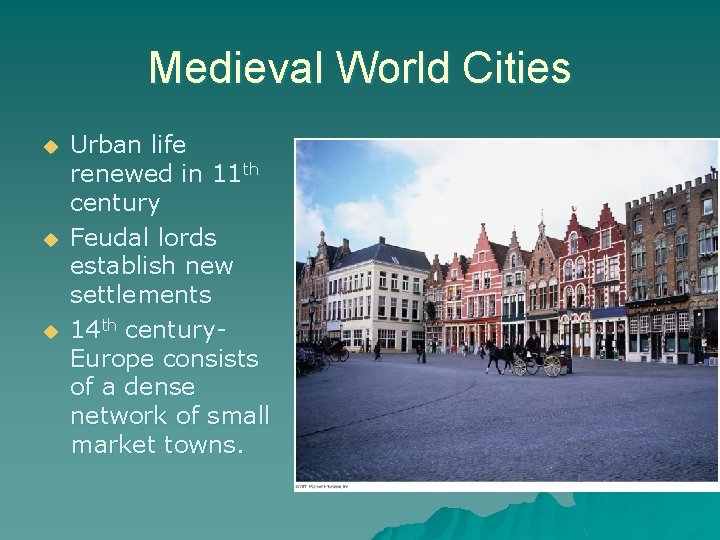
Medieval World Cities u u u Urban life renewed in 11 th century Feudal lords establish new settlements 14 th century. Europe consists of a dense network of small market towns.
Middle Ages u Most populous cities were in Asia, not Europe: u Largest cities in 900: u Baghdad u Constantinople (Istanbul) u Kyoto u Beijing
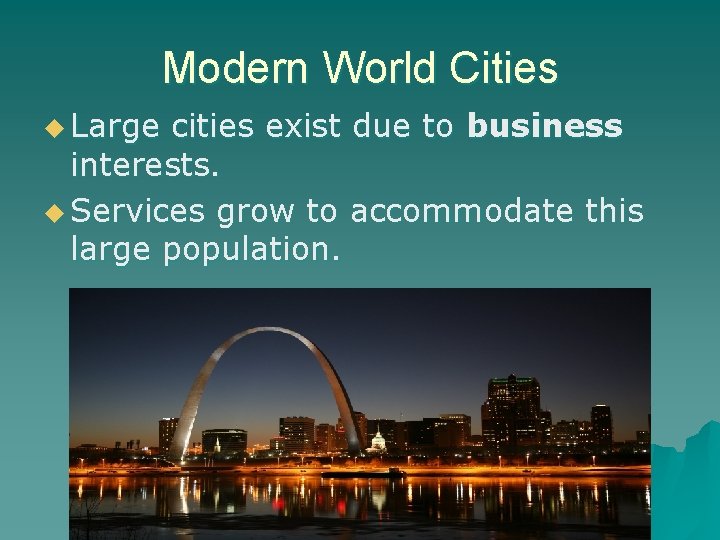
Modern World Cities u Large cities exist due to business interests. u Services grow to accommodate this large population.
Economic Base of Settlements u Basic industries – export primarily to consumers outside of the city. u Nonbasic industries – customers live in the same city. Which is more important? u Basic industries bring money in and stimulate nonbasic industries.
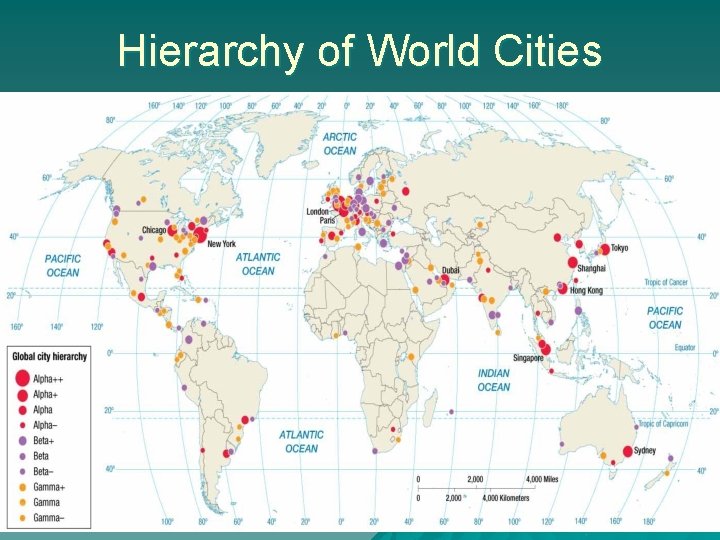
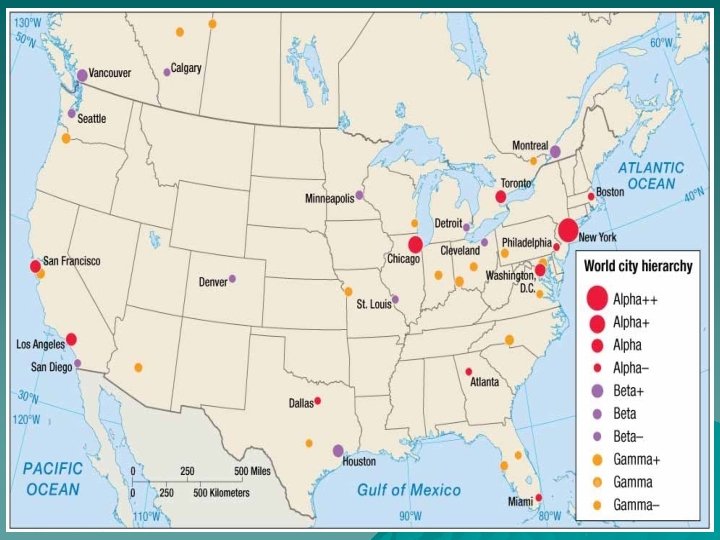
Global Cities Highly specialized u Offer most concerts, restaurants, museums, theaters etc. u Three tier ranking… u Alphau Betau Gammau All cities are connected and dependent on each other! u
Hierarchy of World Cities
Specialized Producers u Offer a narrow and specialized variety of services u Examples u Entertainment in Las Vegas u Education in Raleigh-Durham u Military in Huntsville, Knoxville etc.
If you could live in any US city, which would you choose?
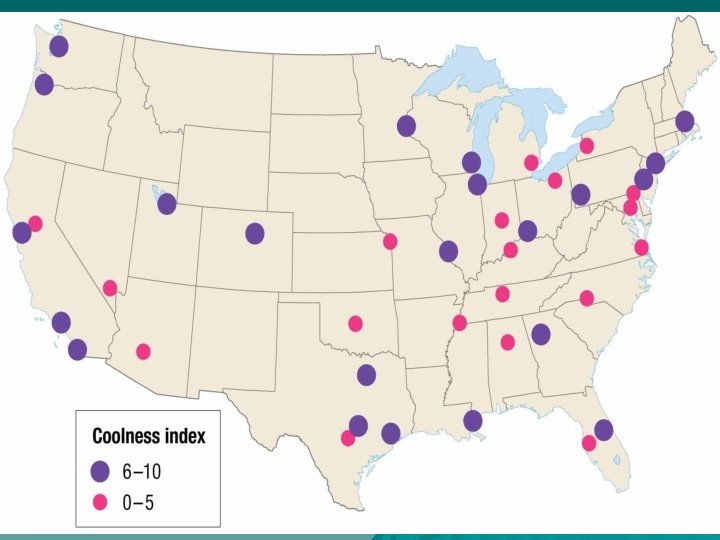
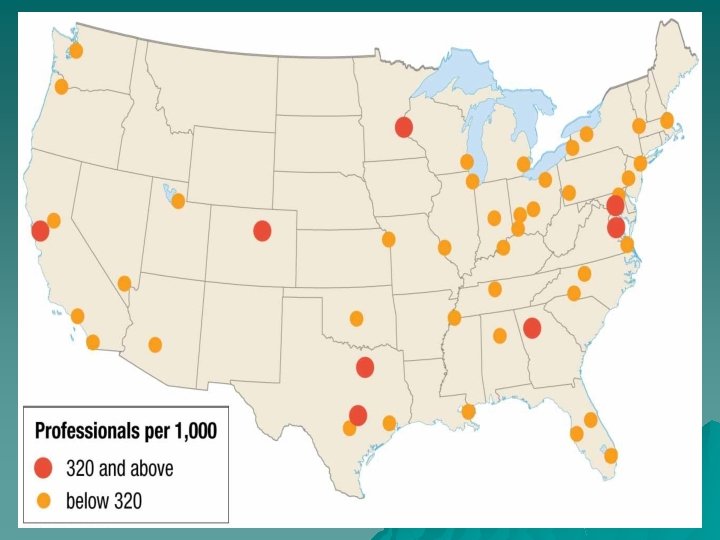
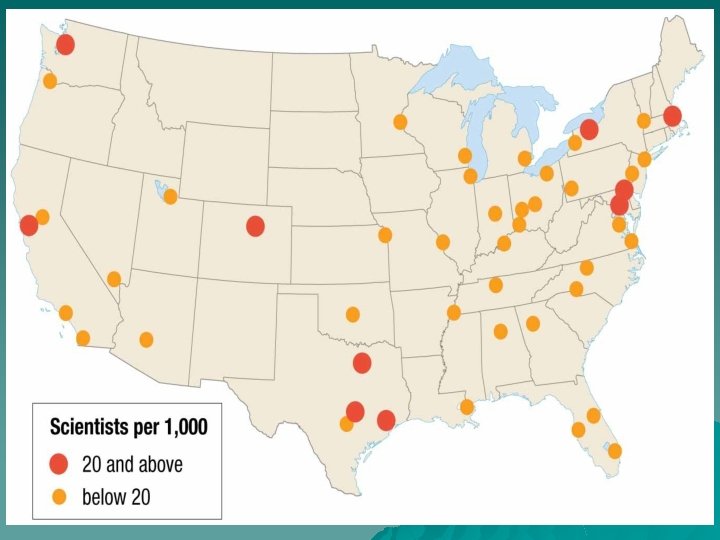
Distribution of Talent u College graduates, scientists, engineers, professionals, etc. are clustered in cities. u And developed countries u Talented people prefer cultural diverse ‘cool’ cities.
Services in Rural Settlements
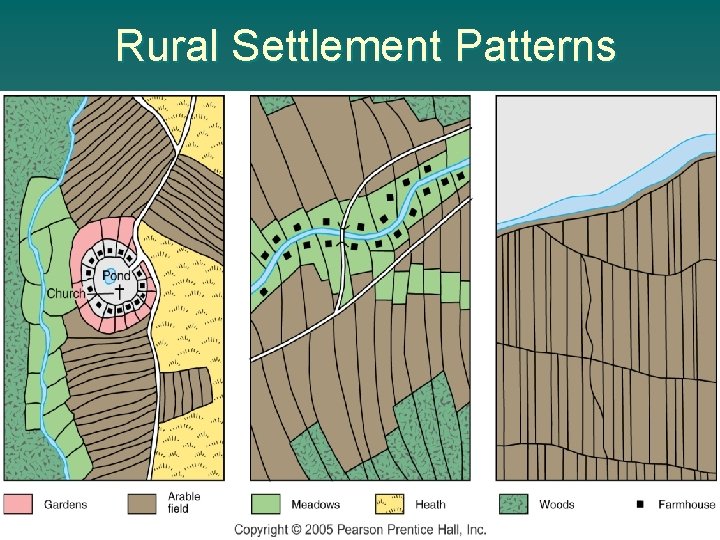
1. Clustered Rural Settlements u Aka hamlet u Number of people live close together with fields surrounding them u Little has changed since ancient times
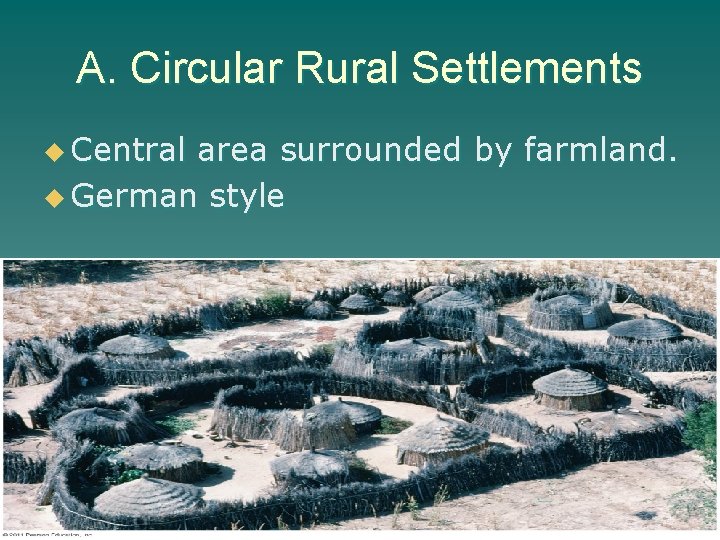
A. Circular Rural Settlements u Central area surrounded by farmland. u German style
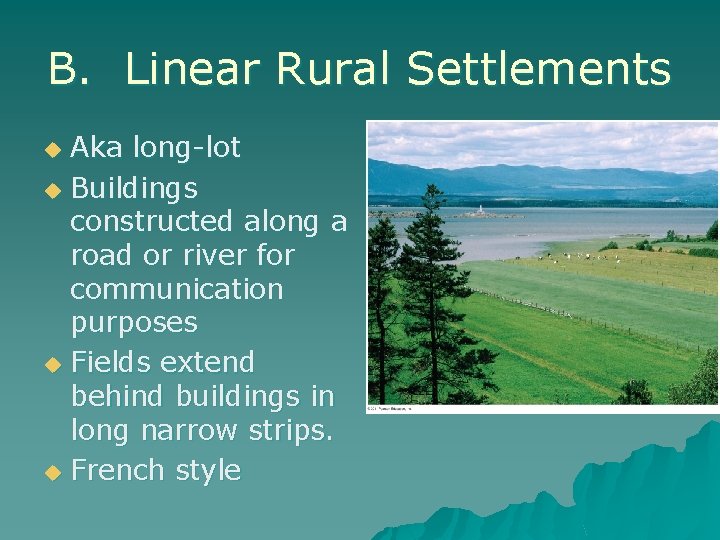
B. Linear Rural Settlements Aka long-lot u Buildings constructed along a road or river for communication purposes u Fields extend behind buildings in long narrow strips. u French style u
Rural Settlement Patterns
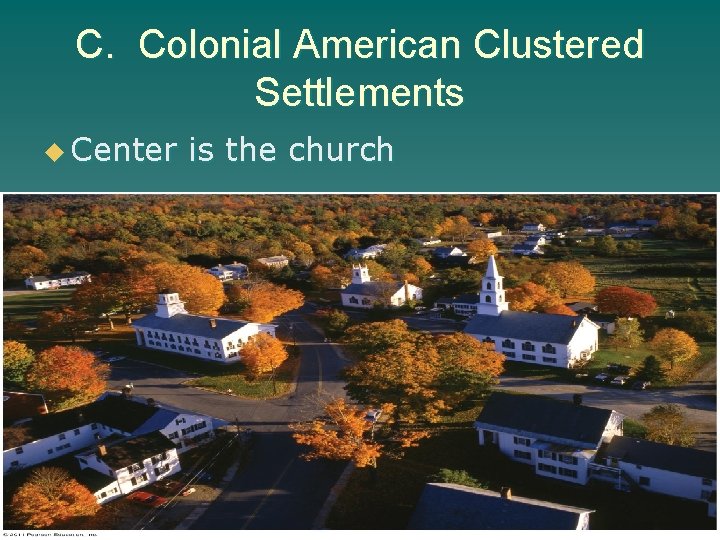
C. Colonial American Clustered Settlements u Center is the church
2. Dispersed Rural Settlements u New style u More common in developed world. u Seen as more efficient than clustered rural settlements u Isolated from neighbors.
A. DRS in US u Middle Atlantic colonies – most came as individuals, different churches/cultures u New England region – became more dispersed as cultural bonds weakened
Origin of Services u 1. Religion - settlements probably originated to provide burial services or religious ceremonies. u 2. Protection – settlements vulnerable to attack, soldiers created u 3. Food – settlements became warehouses for storing extra food. u Settlements served as neutral ground for trade. Retail is born.
Nature of Cities u 1. 2. 3. 4. These themes exist regardless of when or where a city existed: All have an economic base to support themselves. Each is part of a larger society Each has an orderly system of land use. All cities have experienced social conflict.