
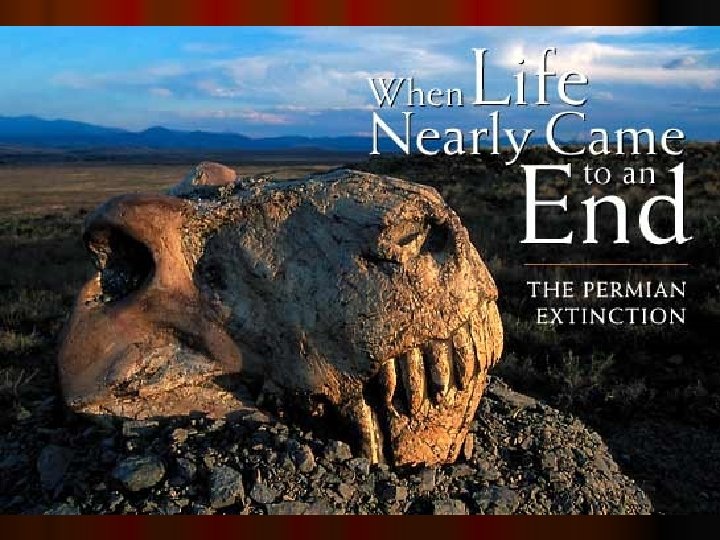
The Terminal Permian Extinction l Greatest mass extinction
- Slides: 10
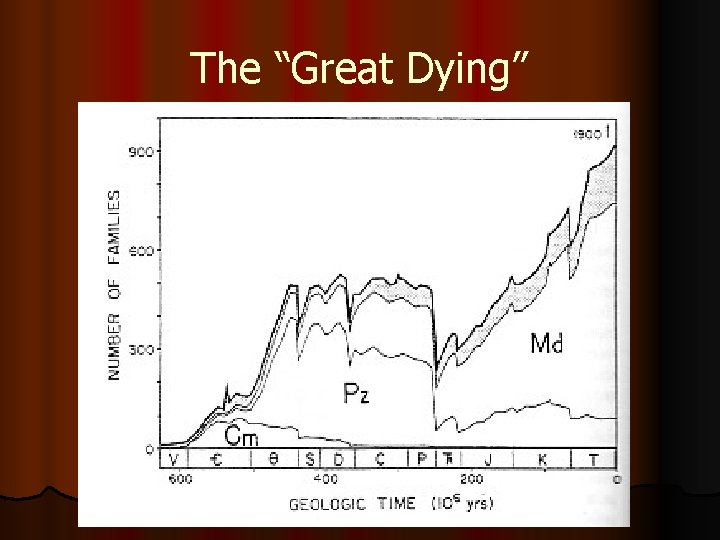
The Terminal Permian Extinction l Greatest mass extinction ever l 90 -95% of marine taxa l Approximately 70% of terrestrial taxa l Multiple hypotheses regarding cause l If it happened once, it could happen again! l Modern day mass extinction
The “Great Dying” l l l 90 - 95% of all marine organisms Trilobites Rugose and Tabulate Corals Fusilinid Foraminifera Acanthodian and Placoderm Fish Blastoids Many crinoids and other echinoderms Most brachiopods Most eurypterids Many bryozoans Many ammonoid cephalopods
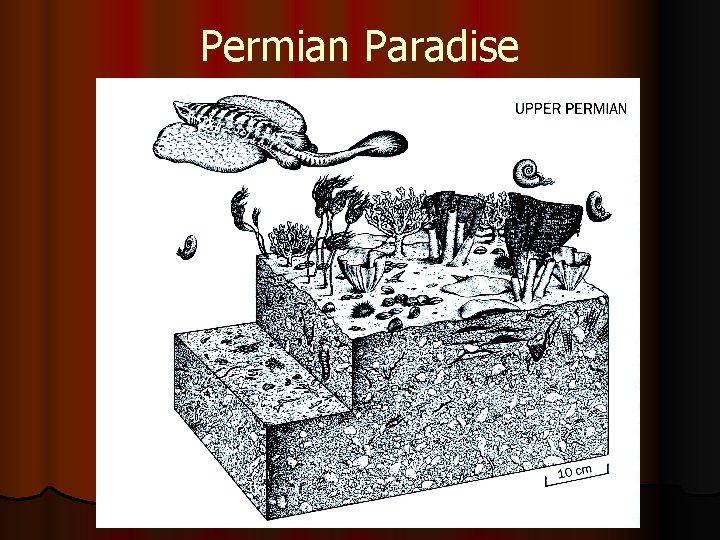
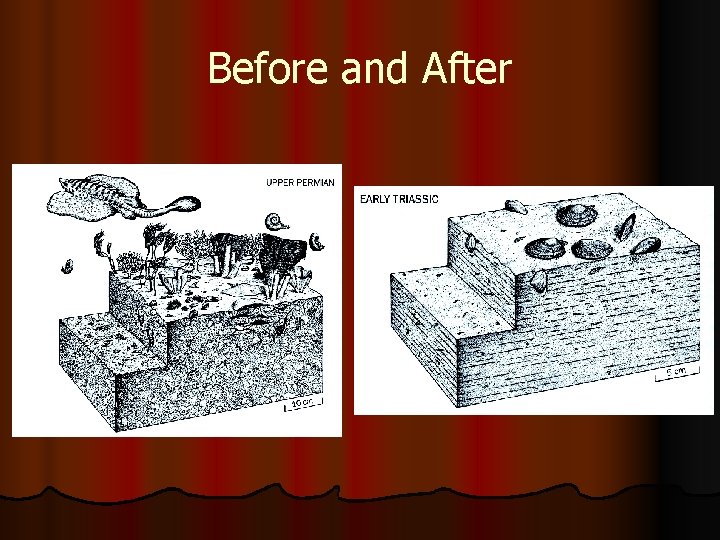
Permian Paradise
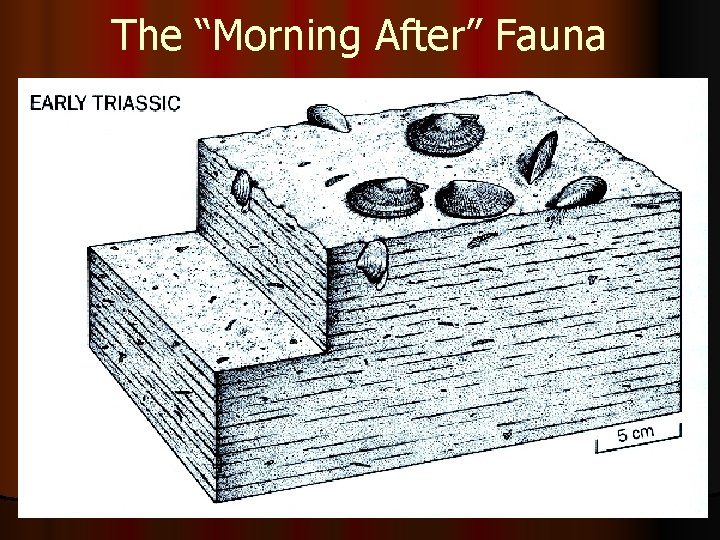
The “Morning After” Fauna
Before and After
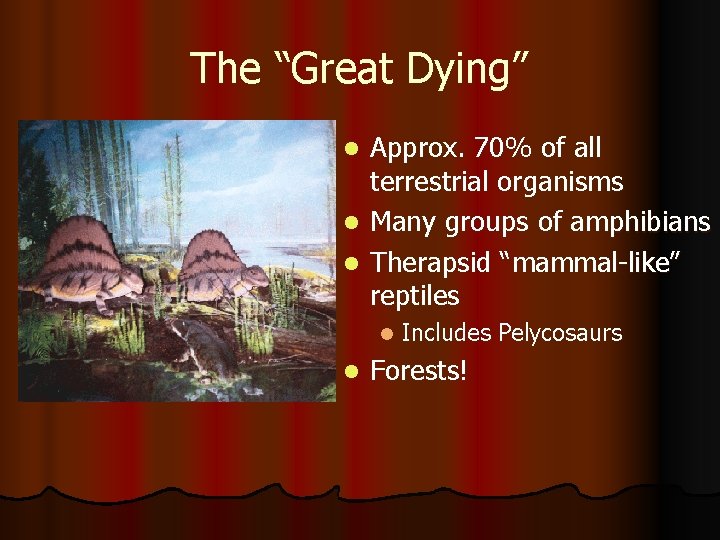
The “Great Dying” l l l Approx. 70% of all terrestrial organisms Many groups of amphibians Therapsid “mammal-like” reptiles l l Includes Pelycosaurs Forests!
The “Great Dying”
Why did this happen? l Effects of Pangea l Loss of shallow shelves l Climate change: warming and drying l Melting ice cap changes ocean circulation l Oceanic stratification l Deep ocean anoxia and incursion on shelves l Volcanism – Siberian traps
Is anybody happy about this? l Survivors and Lazarus taxa l Ecological opportunity: jobs to fill! l Adaptive radiation l Beginnings of modern-appearing marine communities l Niches vacated by amphibians are filled by reptiles l Reptiles l Enter are better adapted to dry climates the dinosaurs