
The technology affordances of personal wikis in higher
- Slides: 26
The technology affordances of personal wikis in higher education Peter Mc. Dowell School of Education Charles Darwin University peter. mcdowell@cdu. edu. au
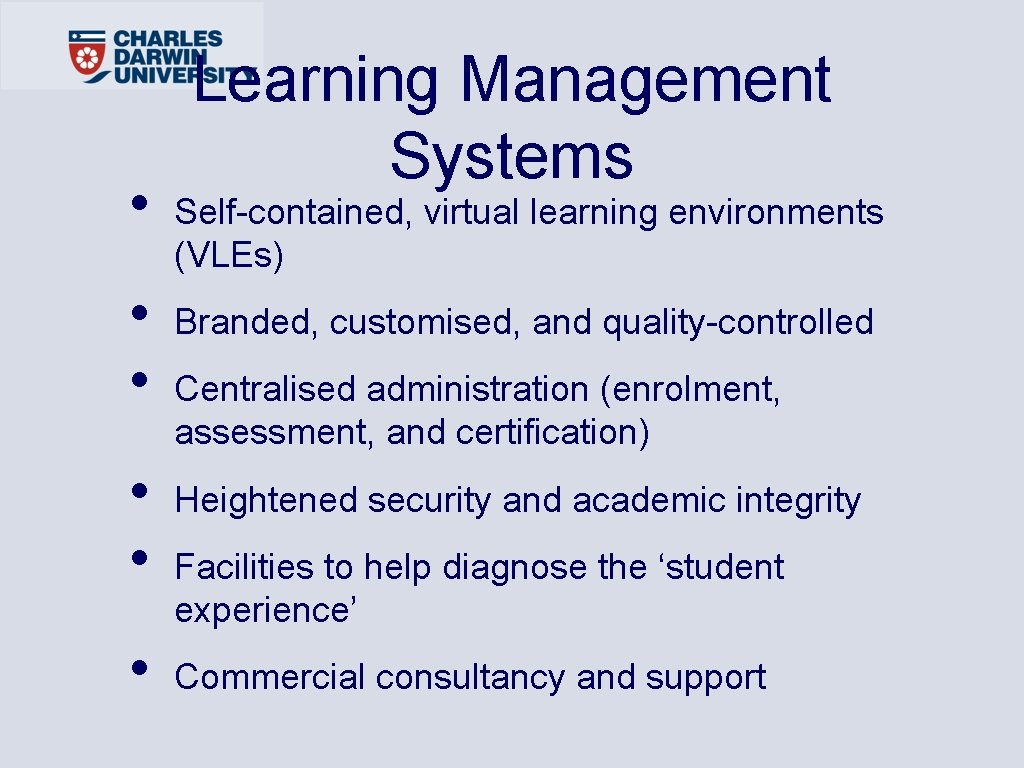
• • • Learning Management Systems Self-contained, virtual learning environments (VLEs) Branded, customised, and quality-controlled Centralised administration (enrolment, assessment, and certification) Heightened security and academic integrity Facilities to help diagnose the ‘student experience’ Commercial consultancy and support
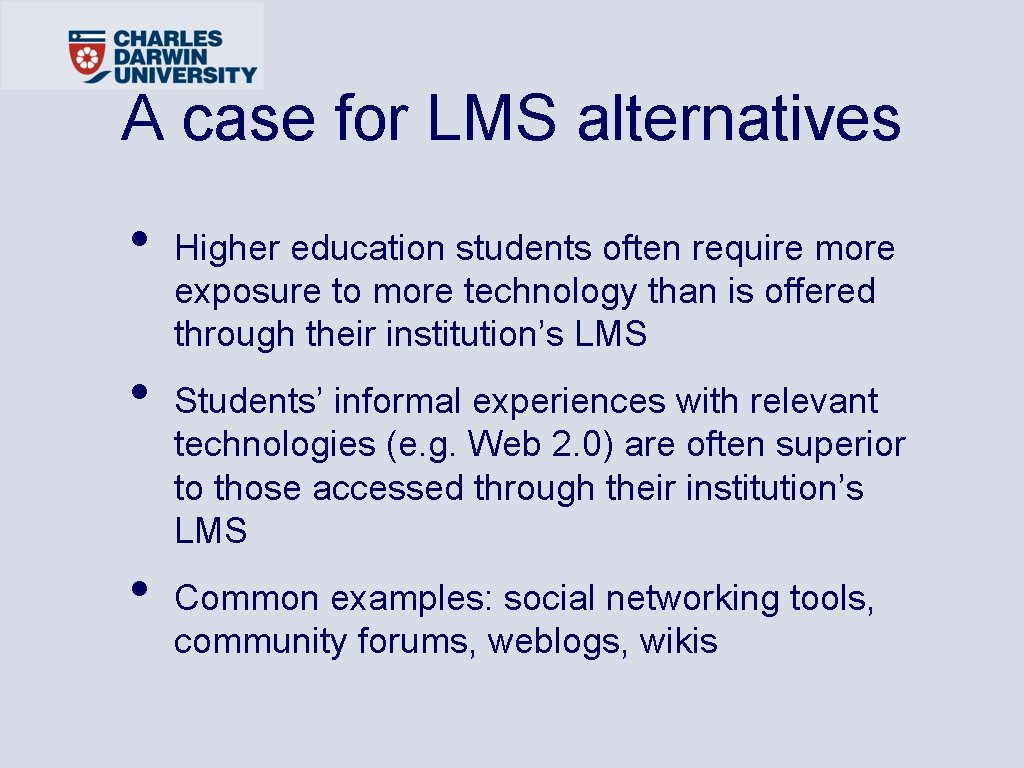
A case for LMS alternatives • • • Higher education students often require more exposure to more technology than is offered through their institution’s LMS Students’ informal experiences with relevant technologies (e. g. Web 2. 0) are often superior to those accessed through their institution’s LMS Common examples: social networking tools, community forums, weblogs, wikis
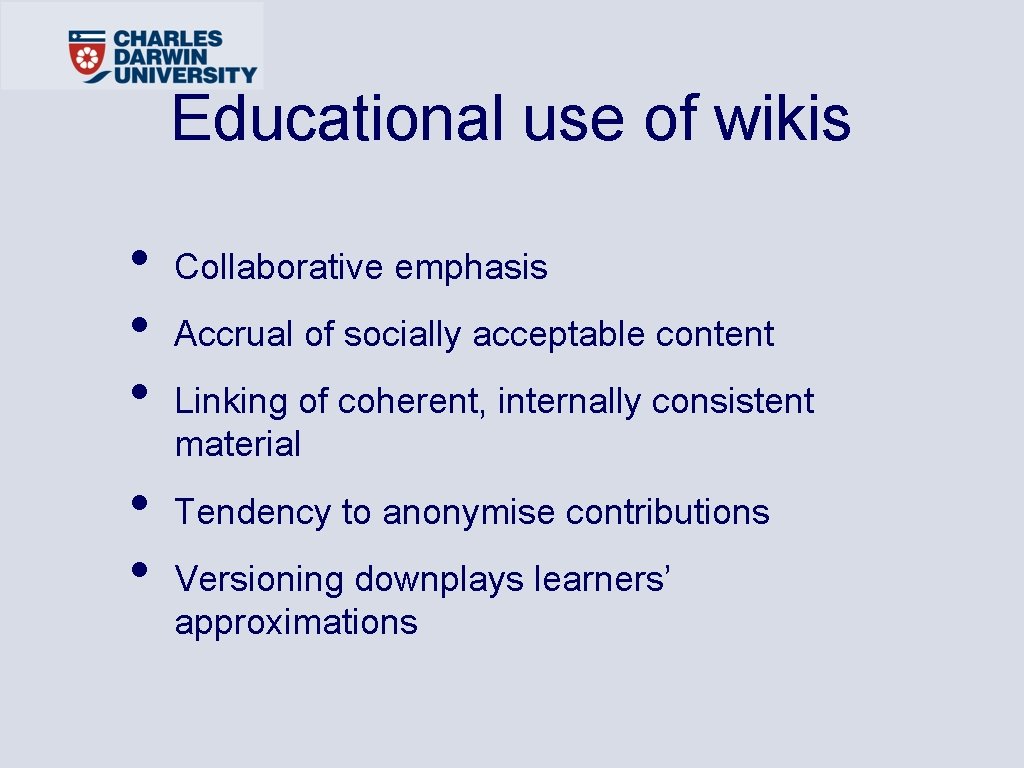
Educational use of wikis • • • Collaborative emphasis Accrual of socially acceptable content Linking of coherent, internally consistent material Tendency to anonymise contributions Versioning downplays learners’ approximations
Repurposing wikis • • • Structuring diverse sources of information Making connections with prior learning Considering alternative interpretations Modelling complex situations Managing knowledge acquisition
Personal wikis • • Emphasise the information handling potential of wikis (the repurposing) Harness (where appropriate) the collaborative benefits of wikis
Research questions • • How suitable are personal wikis as an LMS alternative? What are the technology affordances of personal wikis in higher education?
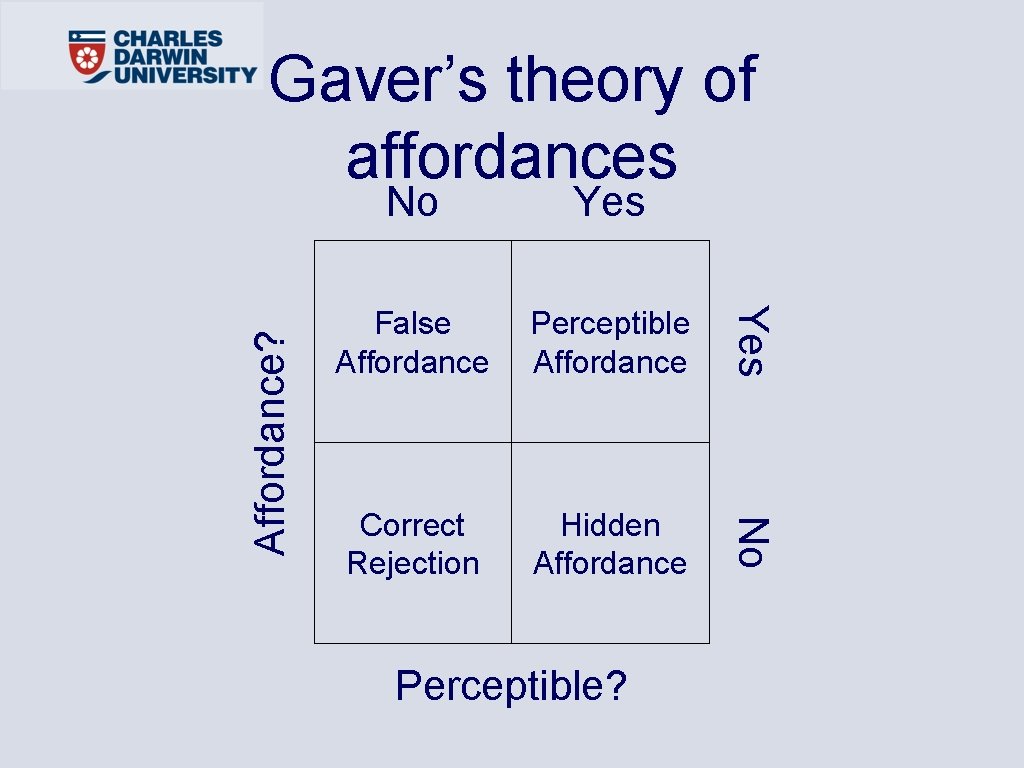
Gaver’s theory of affordances • • Developing the idea of an affordance as the potential for an artefact to become involved in human activity Stresses the importance of analysing the interdependence of artefacts, humans, and the information available to systems of perception (especially at the human-machine interface)
Yes False Affordance Perceptible Affordance Correct Rejection Hidden Affordance No Affordance? No Yes Gaver’s theory of affordances Perceptible?
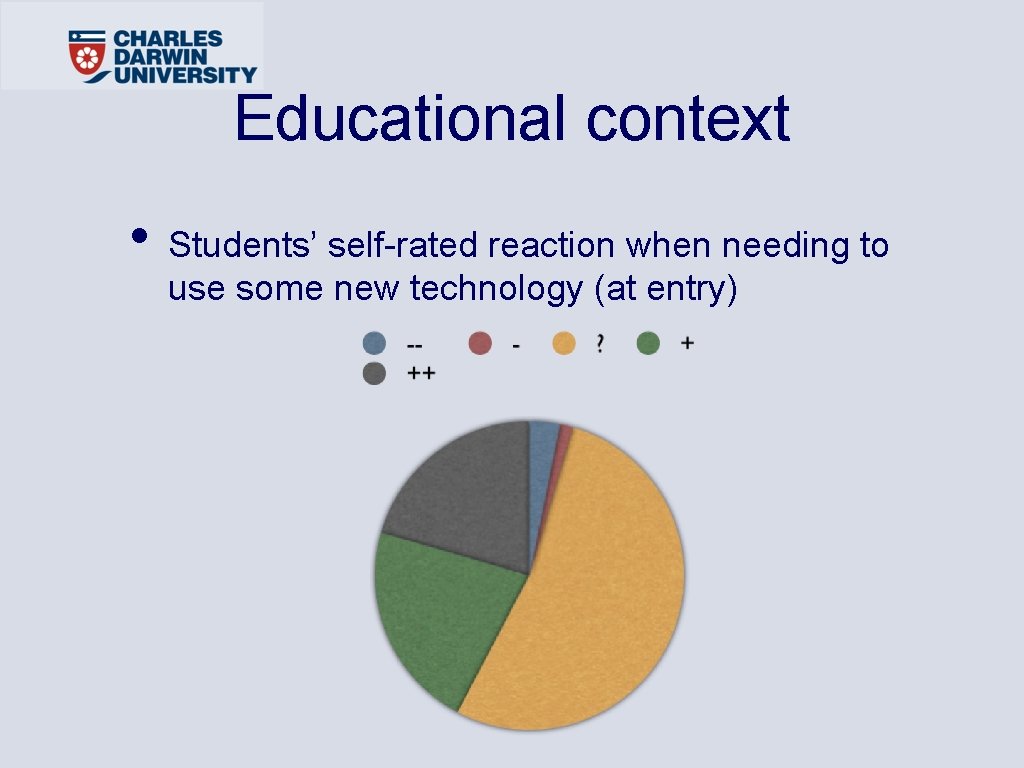
Educational context • Students’ self-rated reaction when needing to use some new technology (at entry)
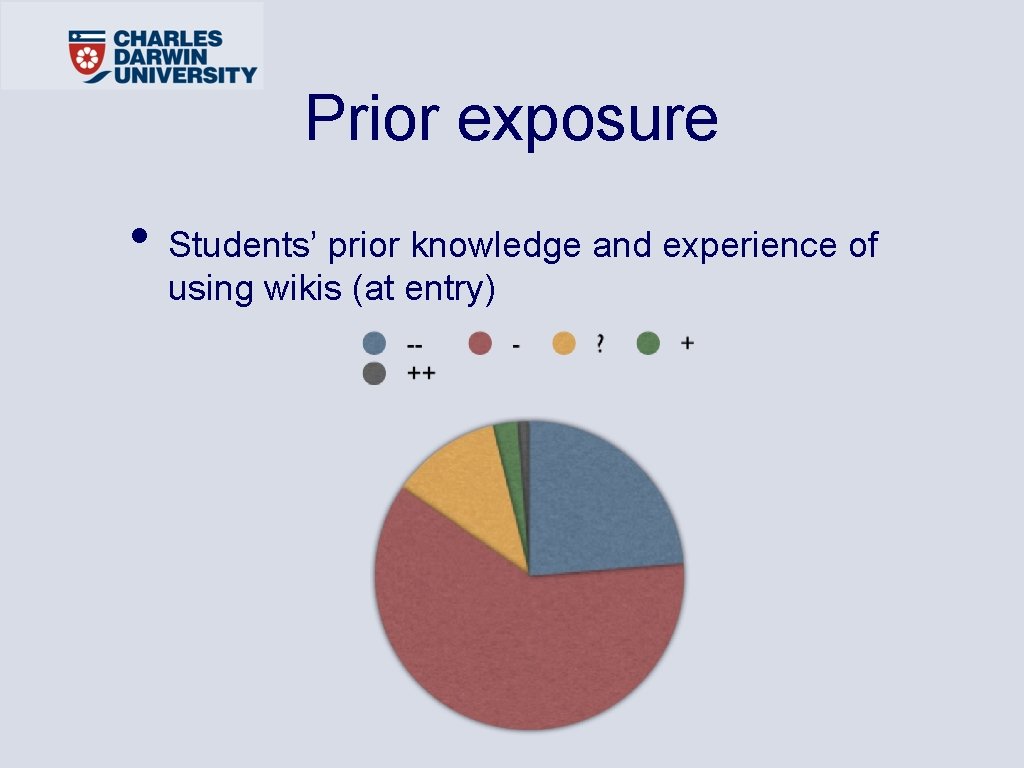
Prior exposure • Students’ prior knowledge and experience of using wikis (at entry)
Revised research question • Do personal wikis have any specific technology affordances: • • that might promote positive student interest in technological exploration? that might enhance pre-service teachers’ awareness of the advantages of technologyenhanced learning?
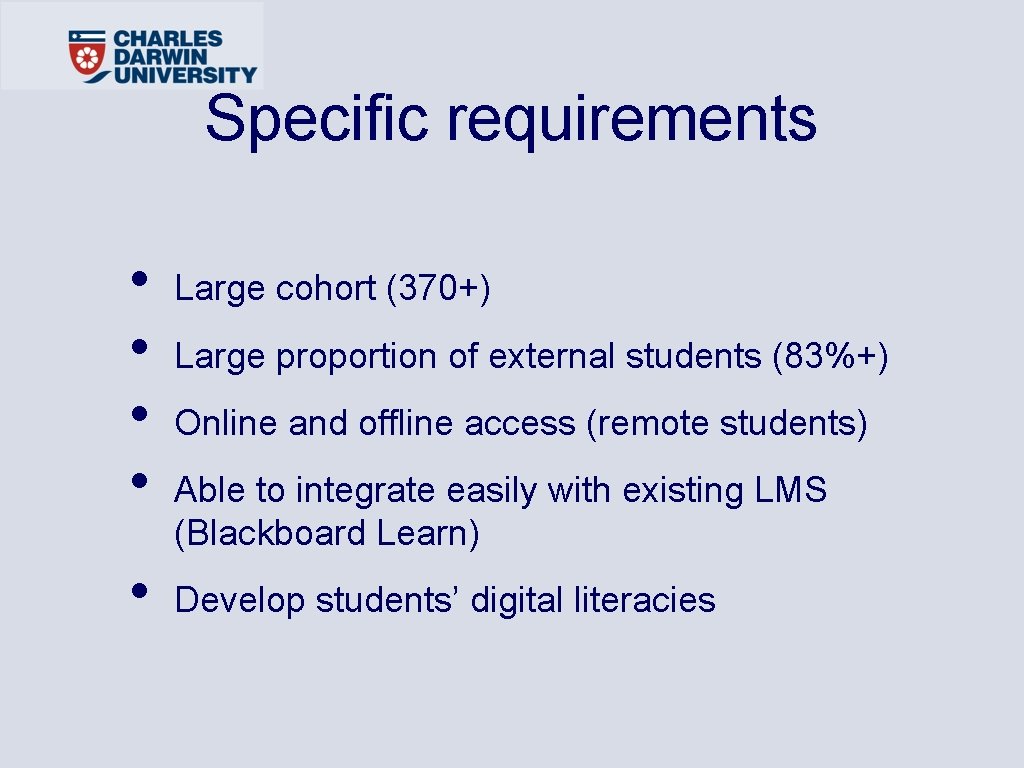
Specific requirements • • • Large cohort (370+) Large proportion of external students (83%+) Online and offline access (remote students) Able to integrate easily with existing LMS (Blackboard Learn) Develop students’ digital literacies
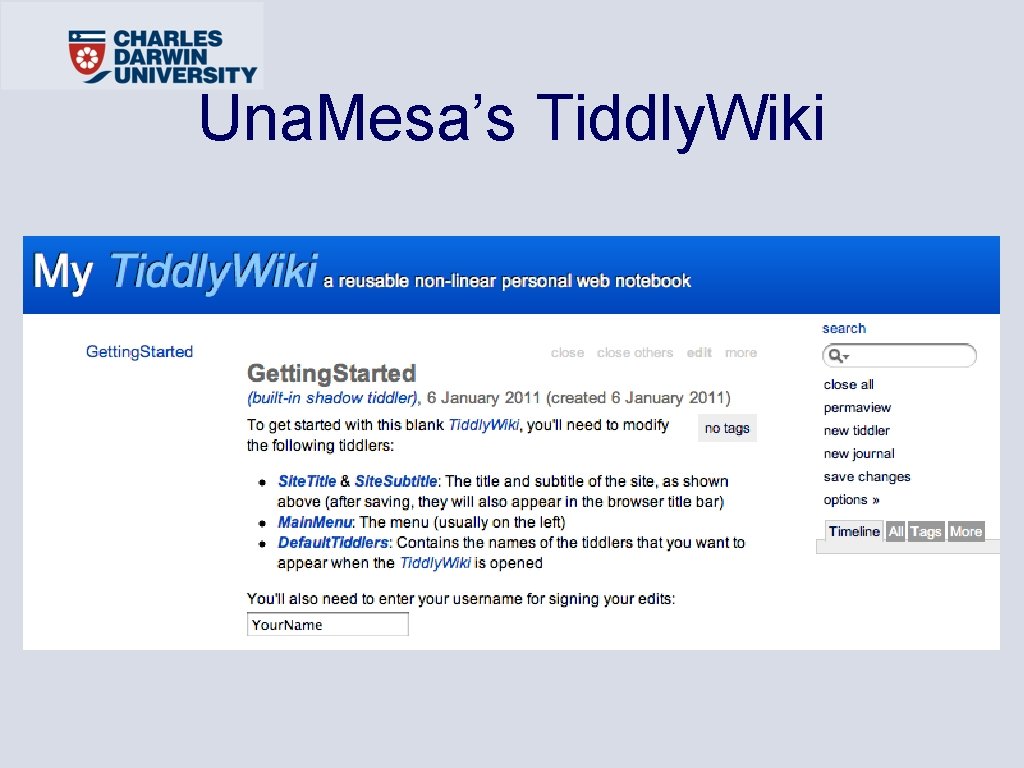
Una. Mesa’s Tiddly. Wiki
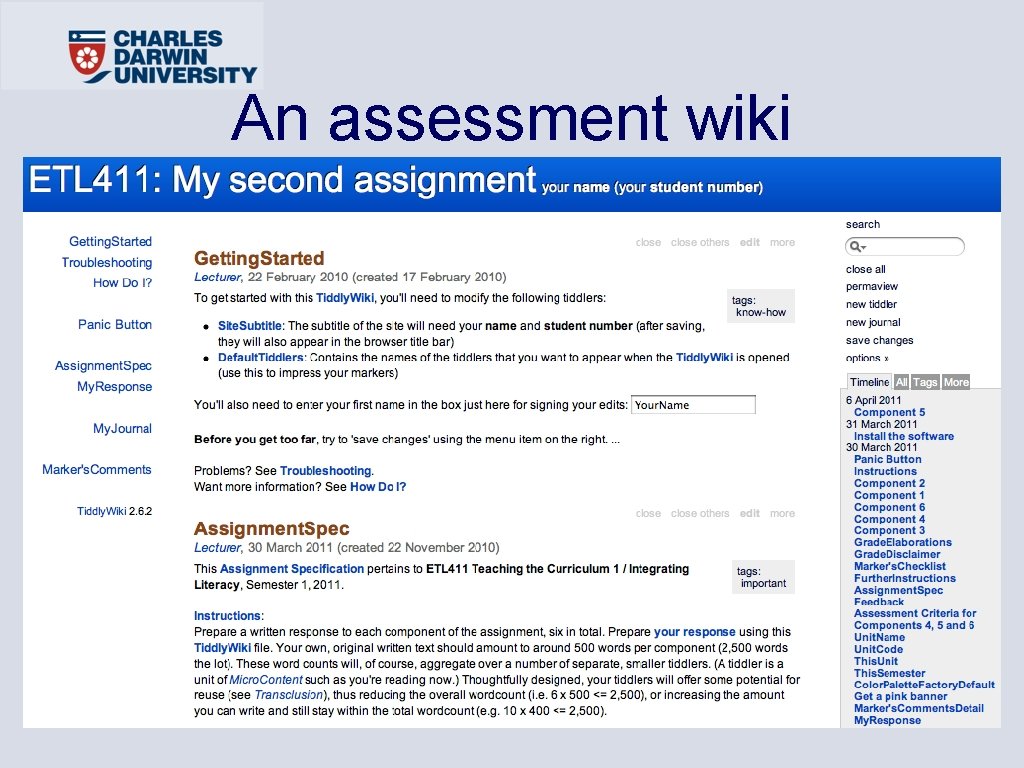
An assessment wiki
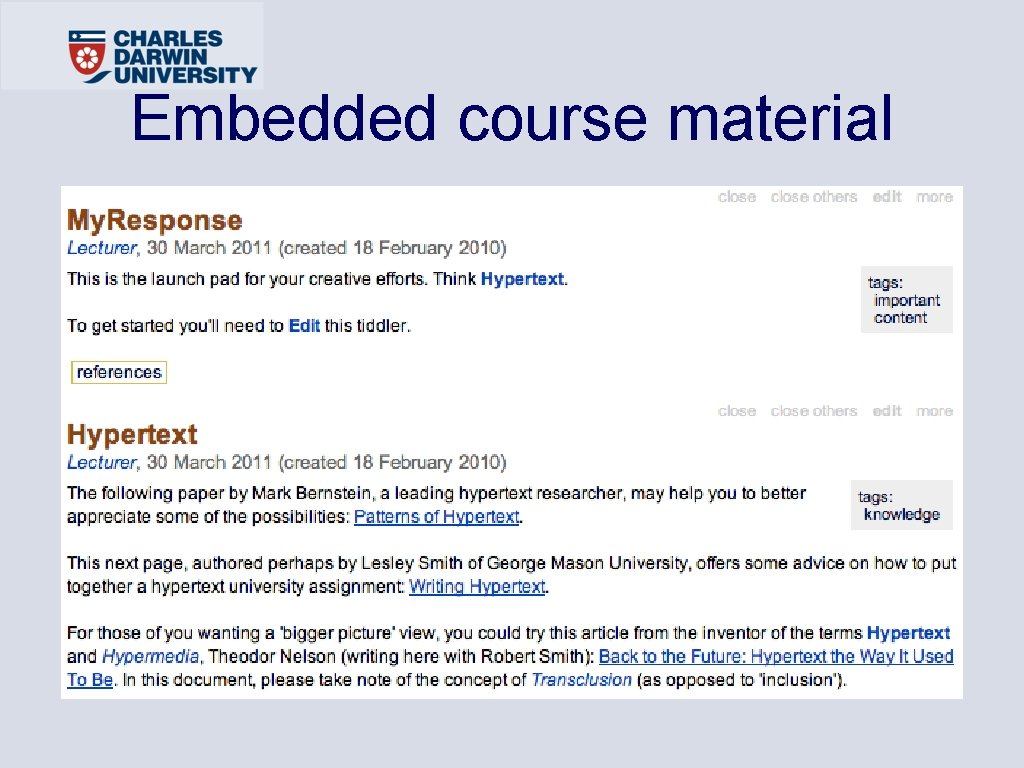
Embedded course material
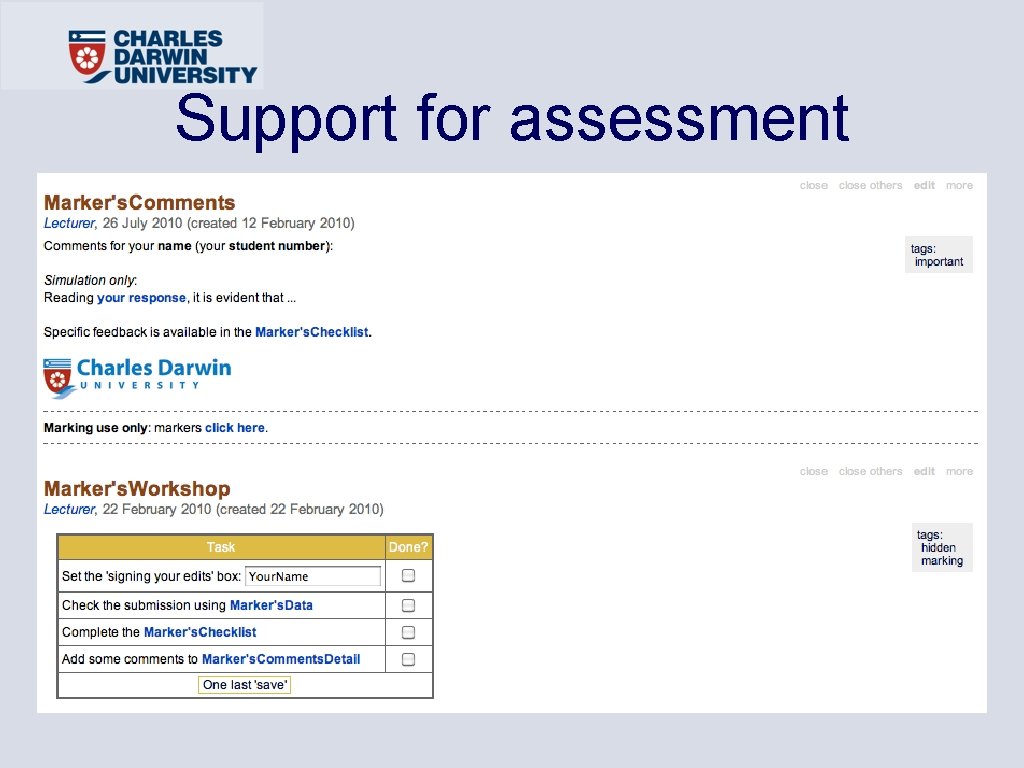
Support for assessment
Perceptible affordances • • • Course package Micro-content (‘tiddlers’) Hyperlinking (deliberate and automatic) Extensible (programming of additional features) Embedded assessment
Hidden affordances • • Able to trace students’ work practices, learning, and contributions through the timeline Support for reflective journalling
False affordances • • Downloading the file required before opening File versioning (timestamped backup files are made prior to update)
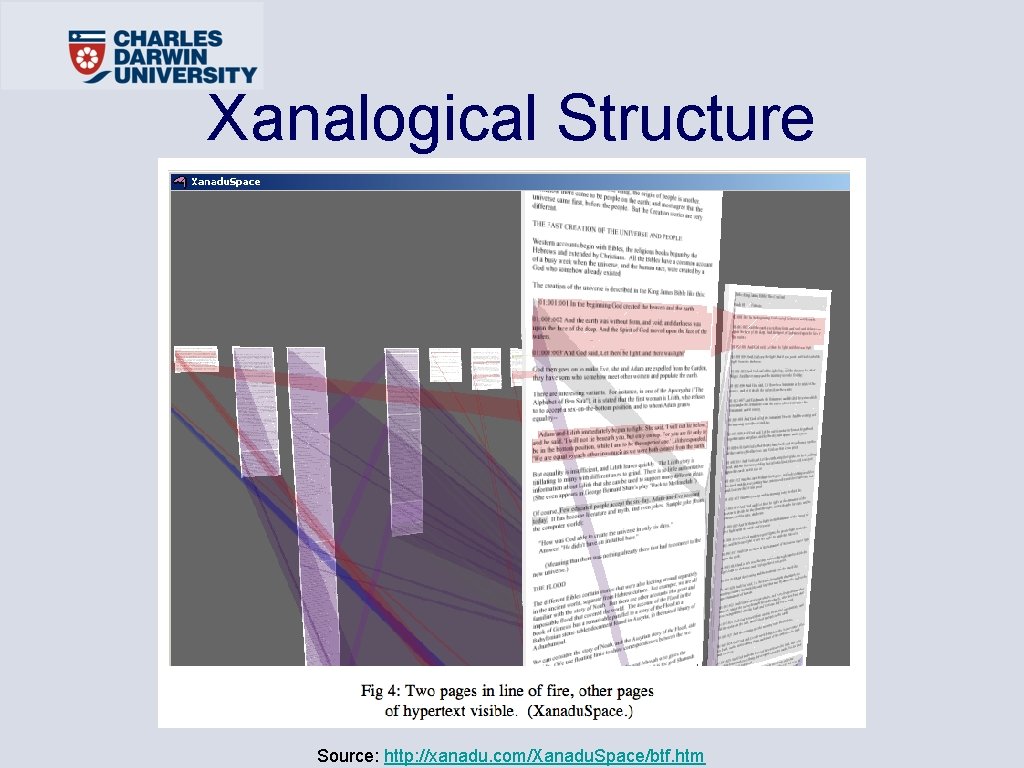
Novel affordances • • • Support for transclusion Transclusion is a crucial aspect of Theodor Nelson’s notion of hypertext Linking sends the reader elsewhere Hyperlinks should also be two-way Transclusion brings content from elsewhere to the reader (blended into the present context)
Xanalogical Structure Source: http: //xanadu. com/Xanadu. Space/btf. htm
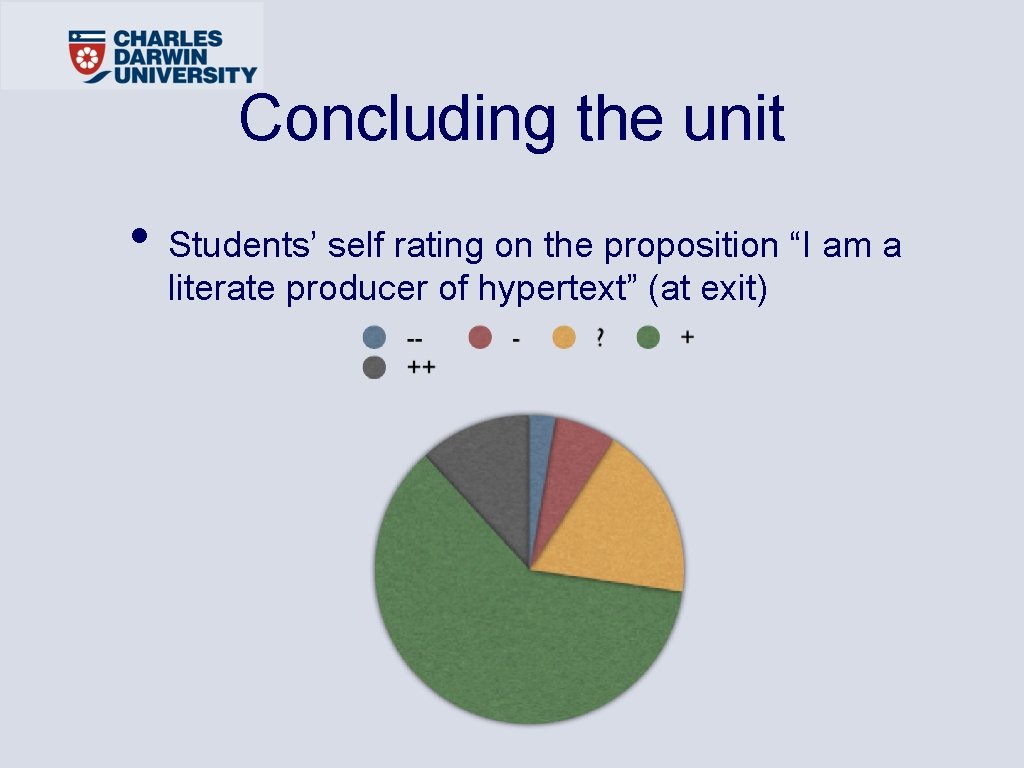
Concluding the unit • Students’ self rating on the proposition “I am a literate producer of hypertext” (at exit)
Complex objects • • Place considerable demands on human agency Encourage active exploration Students’ exploration of the affordances leads to discovery of the system (a hidden affordance) The reverse does not hold: awareness of the system does not mean that the affordances are perceptible
Implications • • Potential formal and informal learning (ubiquitous learning) Supporting a richer notion of hypertext promotes conceptual modelling and general systems thinking Hypertext pedagogy is still emerging Further research is needed on the interplay between learning through complex objects (in this case, personal wikis) and student assessment
Thank you. peter. mcdowell@cdu. edu. au