
The Table of Nations A Fascinating Preview of
The Table of Nations: A Fascinating Preview of Biblical History
Genesis 10: 1 “Now these are the generations of the sons of Noah, Shem, Ham, and Japheth: and unto them were sons born after the flood. ” What makes this verse and chapter of Scripture so significant? Genesis 9: 19 “These are three sons of Noah: and of them was the whole earth overspread. ”
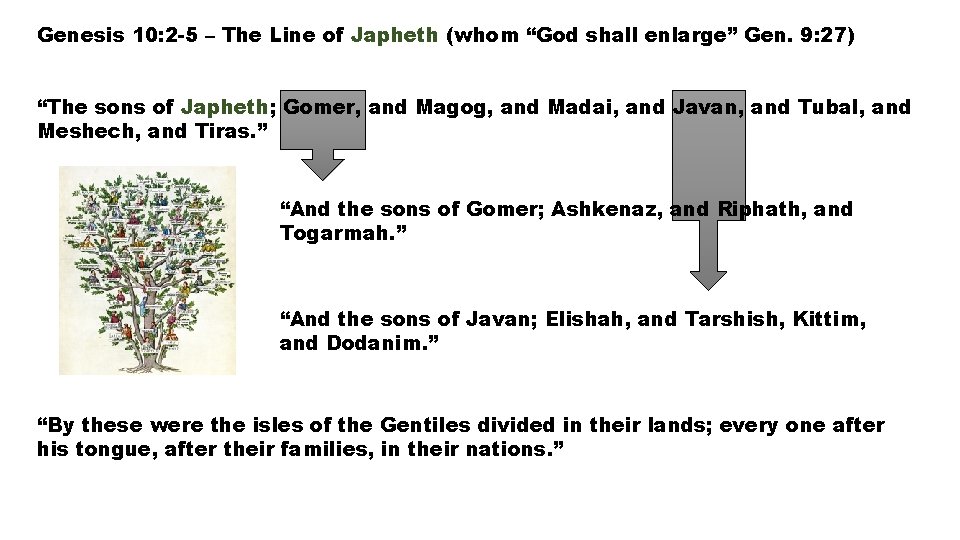
Genesis 10: 2 -5 – The Line of Japheth (whom “God shall enlarge” Gen. 9: 27) “The sons of Japheth; Gomer, and Magog, and Madai, and Javan, and Tubal, and Meshech, and Tiras. ” “And the sons of Gomer; Ashkenaz, and Riphath, and Togarmah. ” “And the sons of Javan; Elishah, and Tarshish, Kittim, and Dodanim. ” “By these were the isles of the Gentiles divided in their lands; every one after his tongue, after their families, in their nations. ”

Japheth Gomer Magog Madai Javan Tubal Meshech Tiras Ashkenaz Riphath Togarmah Elishah Tarshish Kittim Dodanim

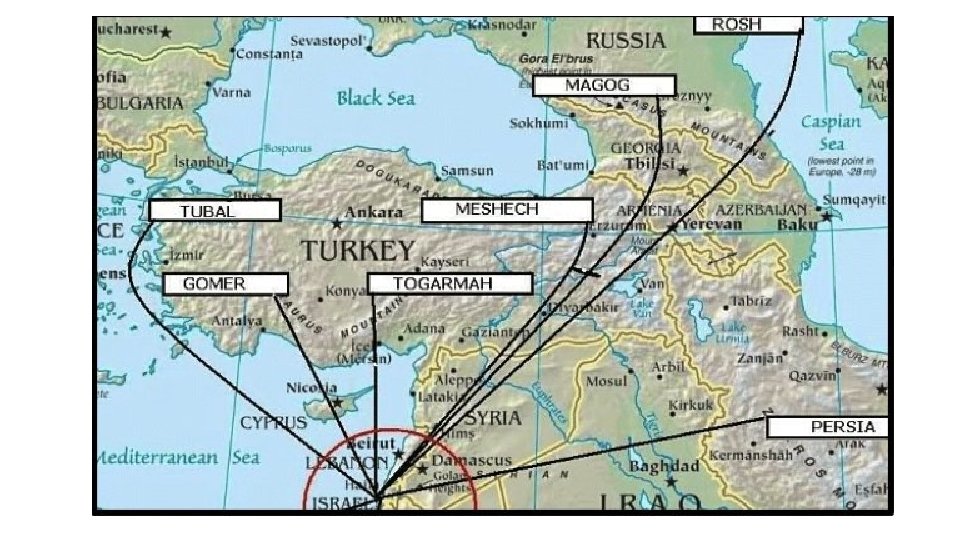
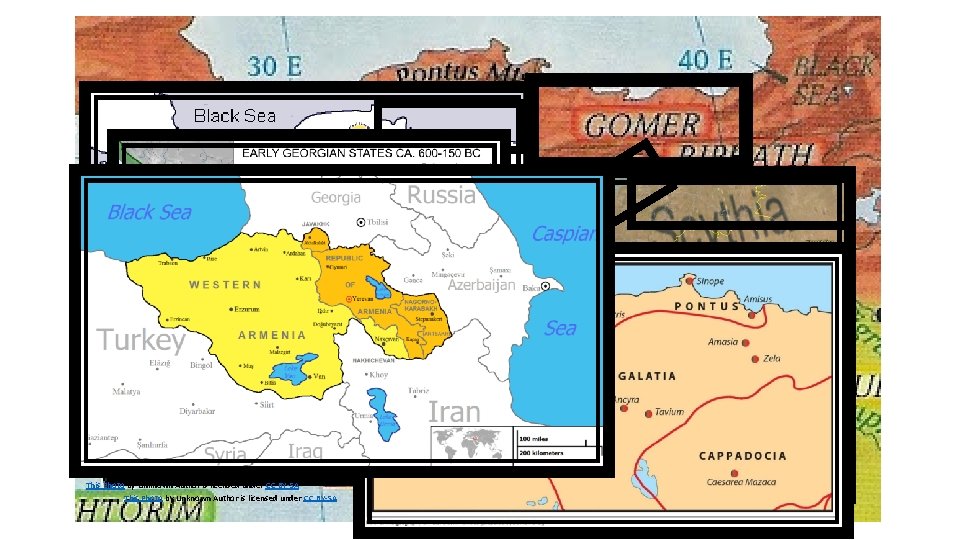
Ezekiel 38 -39 In these chapters we see that in the end times, the descendants of Gomer, Magog, Tubal, Meshech, Togarmah, and Tarshish will all participate in an unprovoked raid of Israel and suffer judgment from God. These peoples are named in verses 38: 2, 3, 6, 13, and 39: 1, 6 Verses 38: 8 -12 describe the reason for the attack. Verses 38: 14 -23 describe the outcome of the attack. Verse 39: 1 -7 describes the terrible judgments upon these attackers. Several times these attackers are said to come from “the north. ” See 38: 6, 38: 15, 39: 2
This Photo by Unknown Author is licensed under CC BY-SA
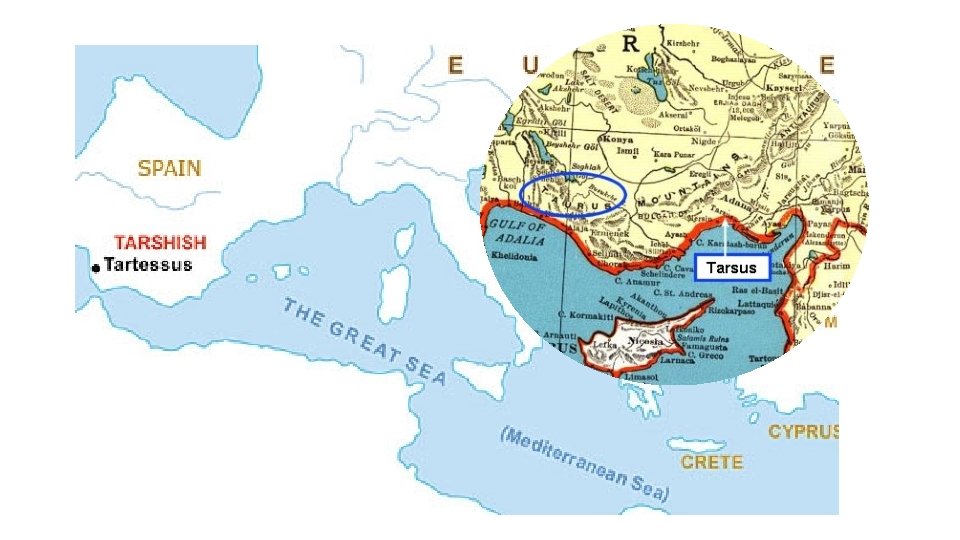
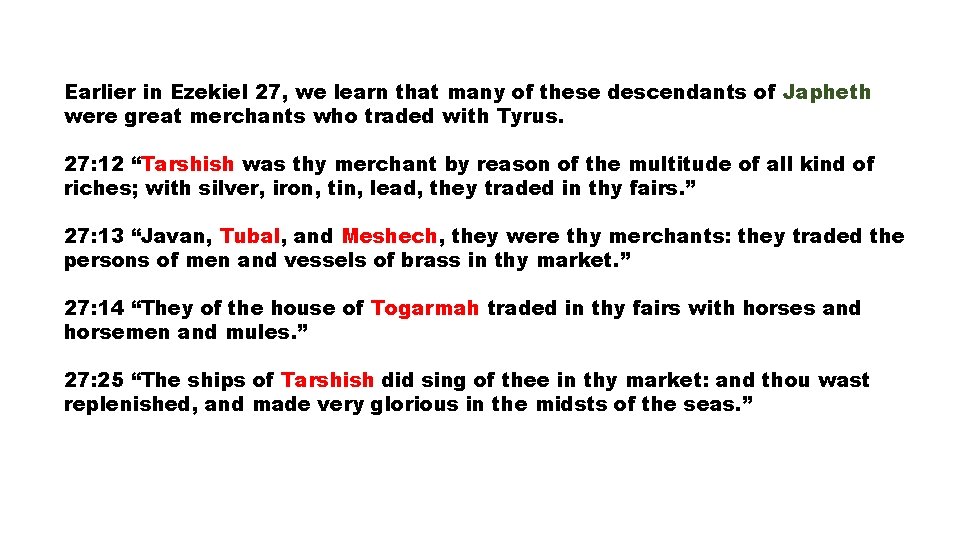
Earlier in Ezekiel 27, we learn that many of these descendants of Japheth were great merchants who traded with Tyrus. 27: 12 “Tarshish was thy merchant by reason of the multitude of all kind of riches; with silver, iron, tin, lead, they traded in thy fairs. ” 27: 13 “Javan, Tubal, and Meshech, they were thy merchants: they traded the persons of men and vessels of brass in thy market. ” 27: 14 “They of the house of Togarmah traded in thy fairs with horses and horsemen and mules. ” 27: 25 “The ships of Tarshish did sing of thee in thy market: and thou wast replenished, and made very glorious in the midsts of the seas. ”

Japheth Gomer Magog Madai Javan Tubal Meshech Tiras Ashkenaz Riphath Togarmah Elishah Tarshish Kittim Dodanim
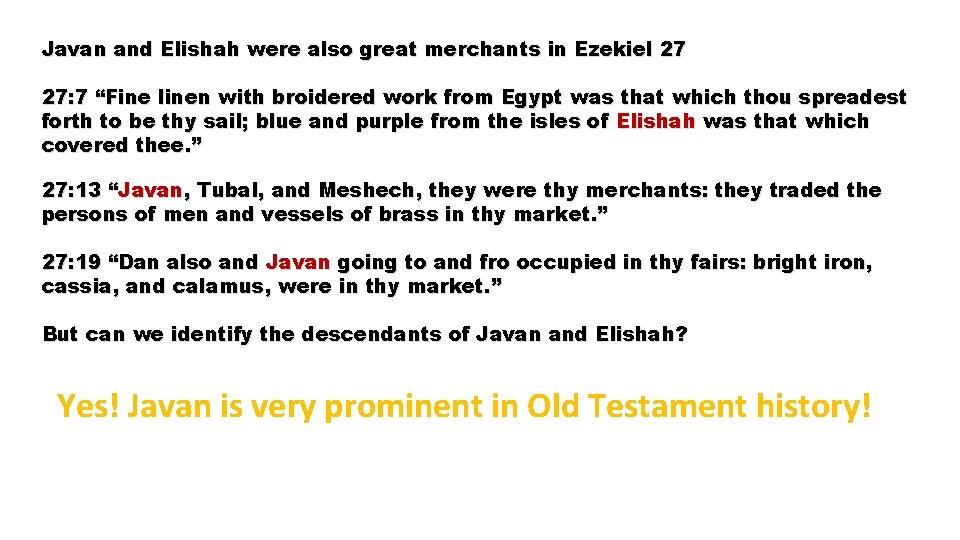
Javan and Elishah were also great merchants in Ezekiel 27 27: 7 “Fine linen with broidered work from Egypt was that which thou spreadest forth to be thy sail; blue and purple from the isles of Elishah was that which covered thee. ” 27: 13 “Javan, Tubal, and Meshech, they were thy merchants: they traded the persons of men and vessels of brass in thy market. ” 27: 19 “Dan also and Javan going to and fro occupied in thy fairs: bright iron, cassia, and calamus, were in thy market. ” But can we identify the descendants of Javan and Elishah? Yes! Javan is very prominent in Old Testament history!
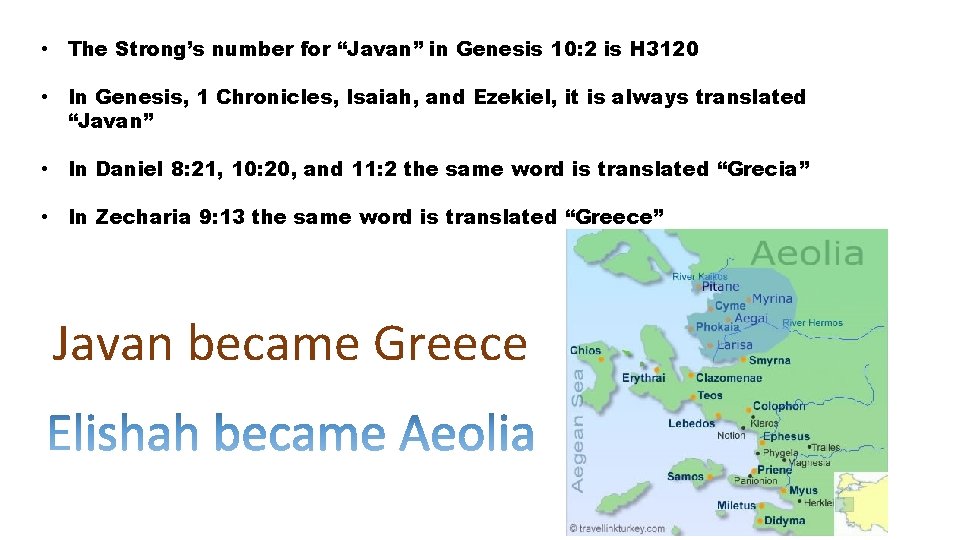
• The Strong’s number for “Javan” in Genesis 10: 2 is H 3120 • In Genesis, 1 Chronicles, Isaiah, and Ezekiel, it is always translated “Javan” • In Daniel 8: 21, 10: 20, and 11: 2 the same word is translated “Grecia” • In Zecharia 9: 13 the same word is translated “Greece” Javan became Greece
Now lastly, though the descendants of Japheth are not prominent in biblical history, they are certainly peoples whom God loves and desires to see come to salvation. In Isaiah 66: 19, when Israel is finally enjoying the fulfilment of their covenanted promises from God, God will send them as missionaries to the “isles of the Gentiles. ” “And I will set a sign among them, and I will send those that escape of them unto the nations, to Tarshish, Pul, and Lud, that draw the bow, to Tubal, and Javan, to the isles afar off, that have not heard my fame, neither have seen my glory; and they shall declare my glory among the Gentiles. ”

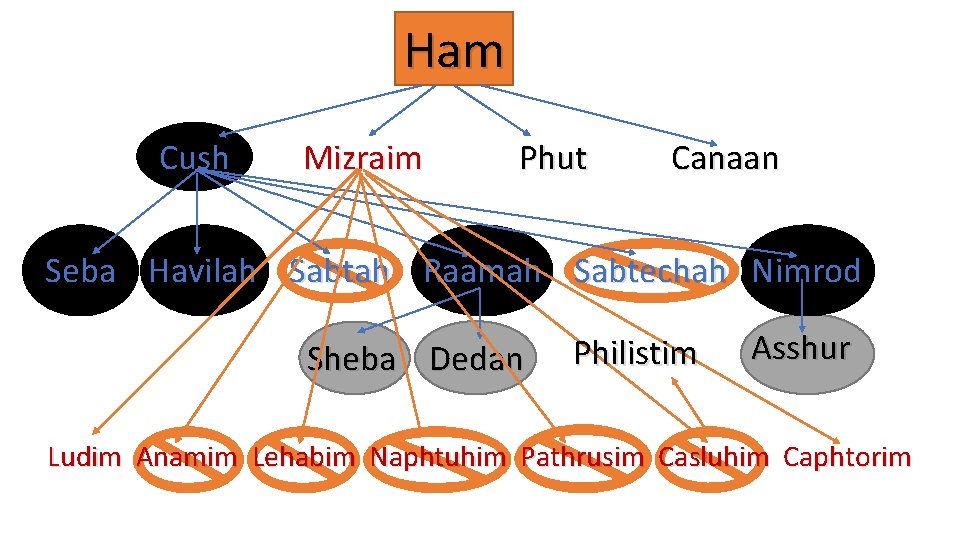
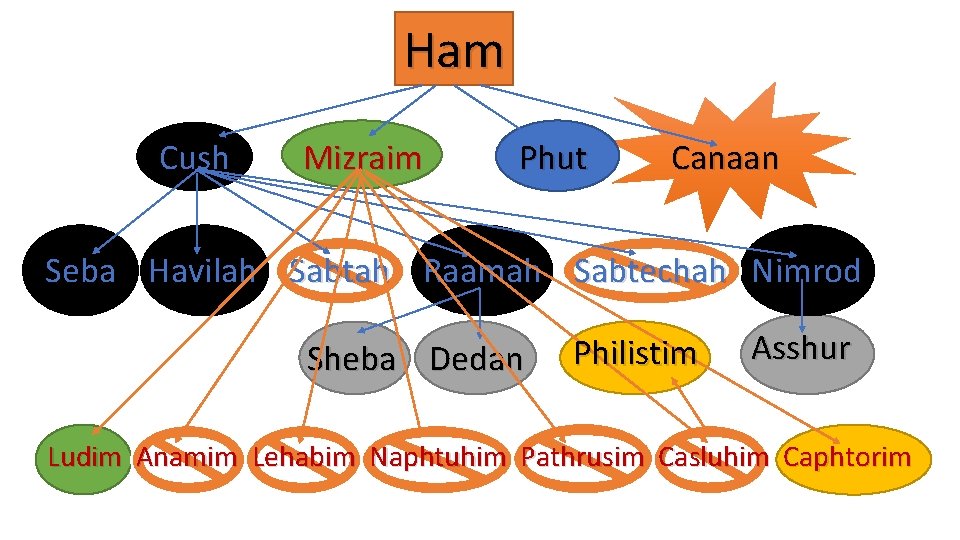
Genesis 10: 6 -20 – The line of Ham (and Canaan who was cursed Genesis 9: 25) “And the sons of Ham, Cush, and Mizraim, and Phut, and Canaan. ” “And the sons of Cush; Seba, and Havilah, and Sabtah, and Raamah, and Sabtechah… … and the sons of Raamah; Sheba, and Dedan. ” “And Cush begat Nimrod: he began to be a mighty one in the earth. He was a mighty hunter before the LORD: wherefore it is said, Even as Nimrod the mighty hunter before the LORD. And the beginning of his kingdom was Babel, and Erech, and Accad, and Calneh, in the land of Shinar. Out of that land went forth Asshur, and builded Nineveh, and the city of Rehoboth, and Calah, And Resen between Nineveh and Calah: the same is a great city. ” ”

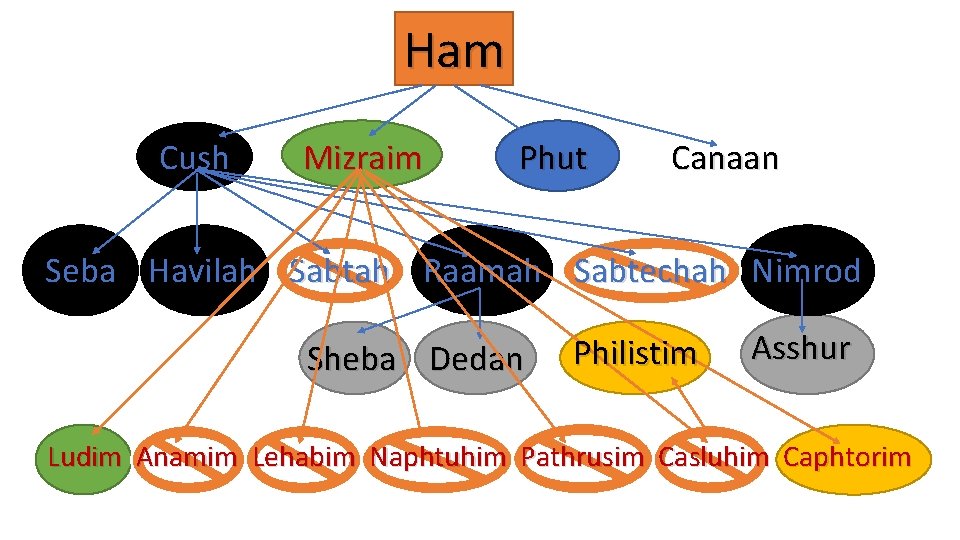
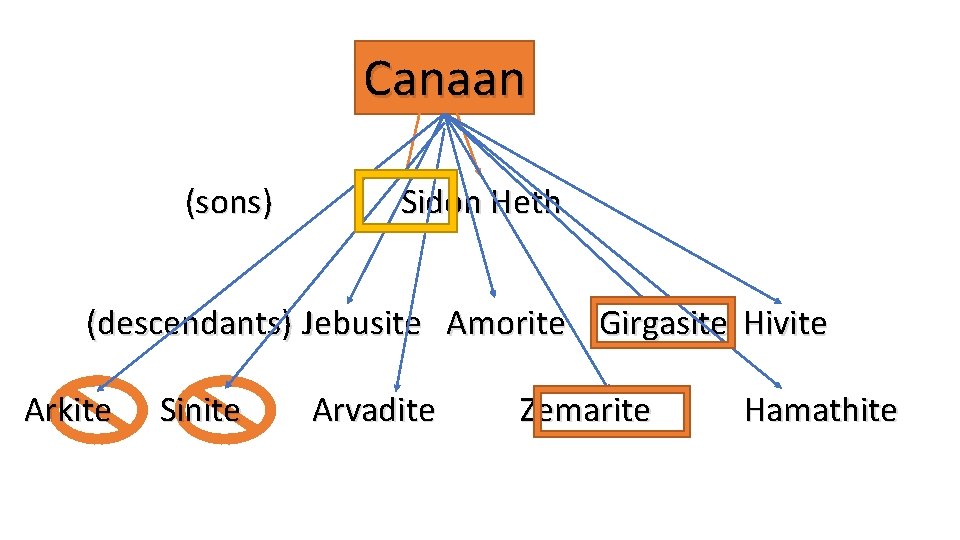
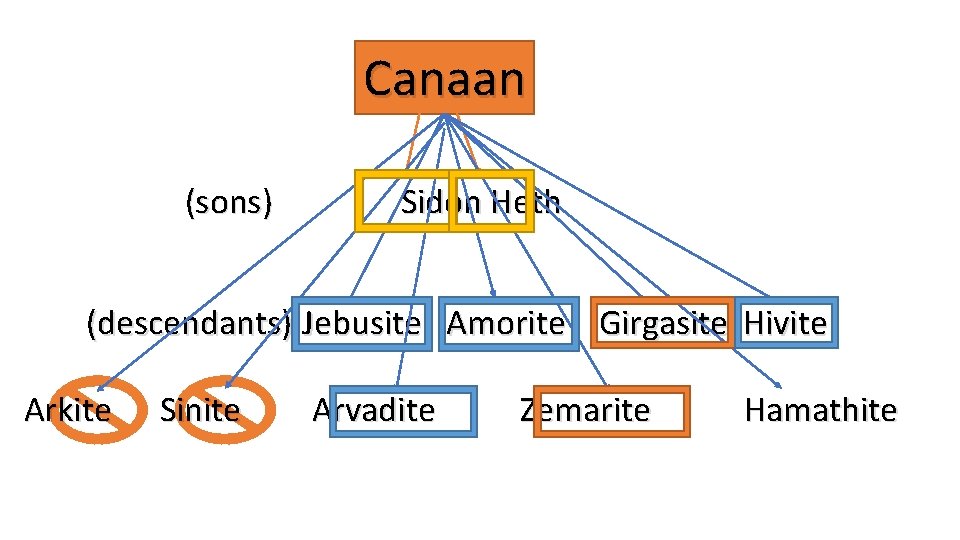
Genesis 10: 6 -20 – The line of Ham (and Canaan who was cursed Genesis 9: 25) “And the sons of Ham, Cush, and Mizraim, and Phut, and Canaan. ” “And Mizraim begat Ludim, and Anamim, and Lehabim, and Naphtuhim, And Pathrusim, and Calsuhim, (out of whom came Philistim, ) and Caphtorim. ” “And Canaan begat Sidon his firstborn, and Heth, and the Jebusite, and the Amorite, and the Girgasite, And the Hivite, and the Arkite, and the Sinite, And the Arvadite, and the Zemarite, and the Hamathite: and afterward were the families of the Canaanites spread abroad. And the border of the Canaanites was from Sidon, as thou comest to Gerar, unto Gaza; as thou goest, unto Sodom, and Gomorrah, and Admah, and Zeboim, even unto Lasha. These are the sons of Ham, after their families, after their tongues, in their countries, and in their nations. ”

Ham Cush Mizraim Phut Canaan Seba Havilah Sabtah Raamah Sabtechah Nimrod Sheba Dedan Philistim Asshur Ludim Anamim Lehabim Naphtuhim Pathrusim Casluhim Caphtorim
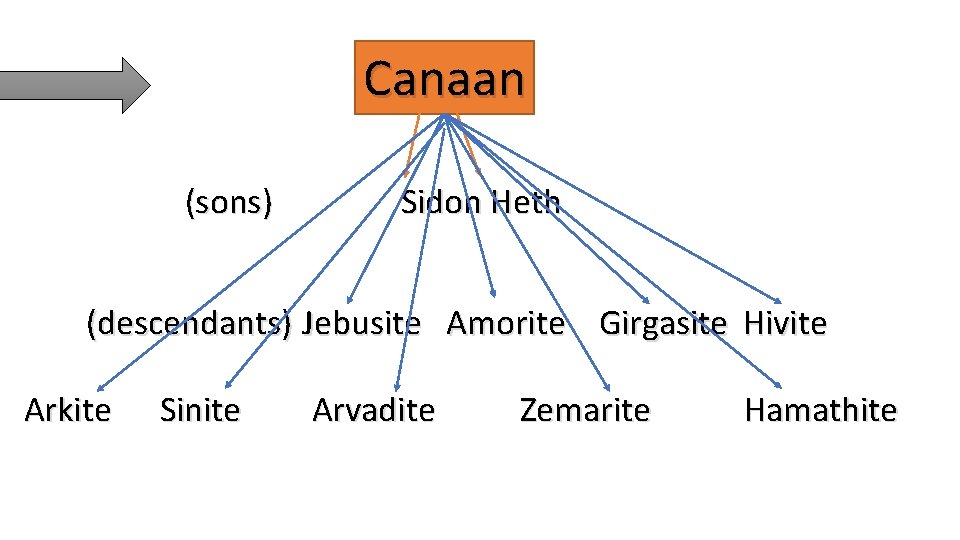
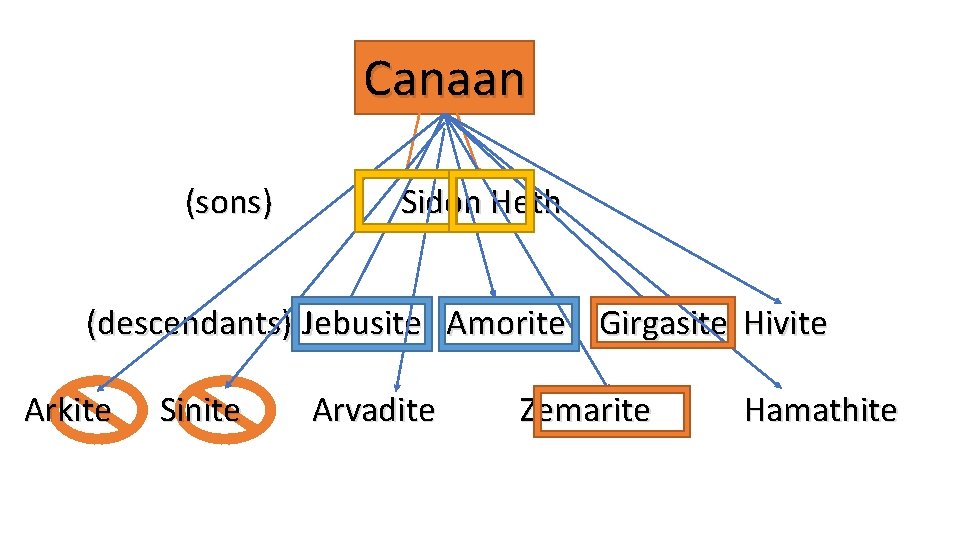
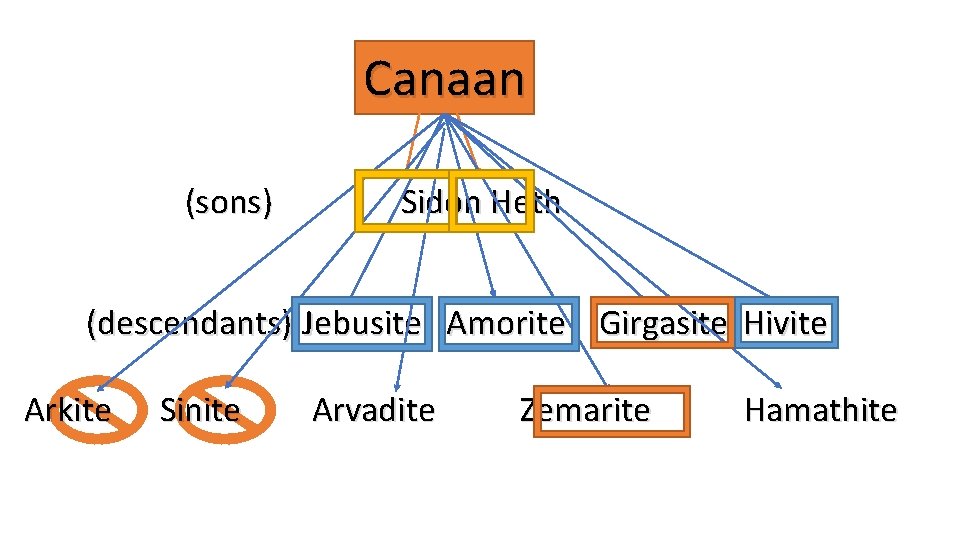
Canaan (sons) Sidon Heth (descendants) Jebusite Amorite Girgasite Hivite Arkite Sinite Arvadite Zemarite Hamathite
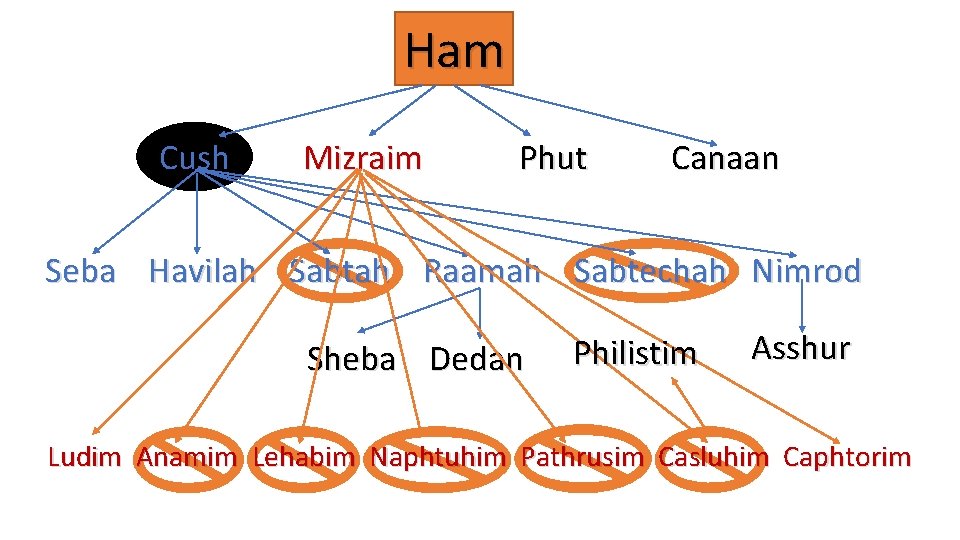
Ham Cush Mizraim Phut Canaan Seba Havilah Sabtah Raamah Sabtechah Nimrod Sheba Dedan Philistim Asshur Ludim Anamim Lehabim Naphtuhim Pathrusim Casluhim Caphtorim
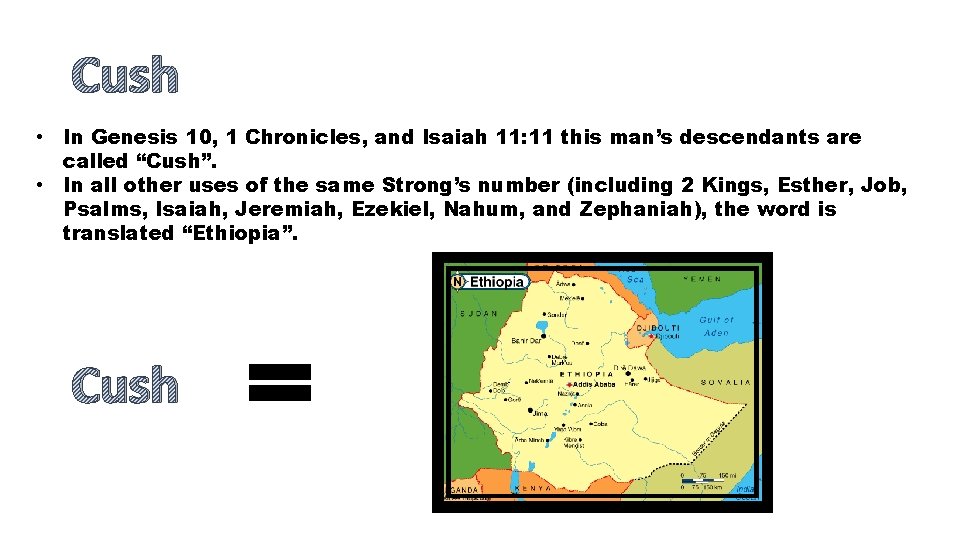
Cush • In Genesis 10, 1 Chronicles, and Isaiah 11: 11 this man’s descendants are called “Cush”. • In all other uses of the same Strong’s number (including 2 Kings, Esther, Job, Psalms, Isaiah, Jeremiah, Ezekiel, Nahum, and Zephaniah), the word is translated “Ethiopia”. Cush
Cush (Ethiopia) does play a part in biblical prophecy, thou not a prominent role in biblical history. • Job 28: 19 compares the value of wisdom to Ethiopian prosperity. “The topaz of Ethiopia shall not equal it, neither shall it be valued with pure gold. ” • Jeremiah 46: 9 describes the military prowess of the Ethiopians. “Come up, ye horses; and rage, ye chariots; and let the mighty men comeforth; the Ethiopians, and the Lybans, that handle the shield; and the Lydians, that handle and bend the bow. ” (see also Ezekiel 38: 5) • In Isaiah 11: 11 some of the remnant of God’s people are recovered “from Cush. ” • In Isaiah 45: 14 and Psalm 68: 31 it is noted that Ethiopia will one day acknowledge God. The psalm reads: “Princes shall come out of Egypt; Ethiopia shall soon stretch out her hands unto God. ”
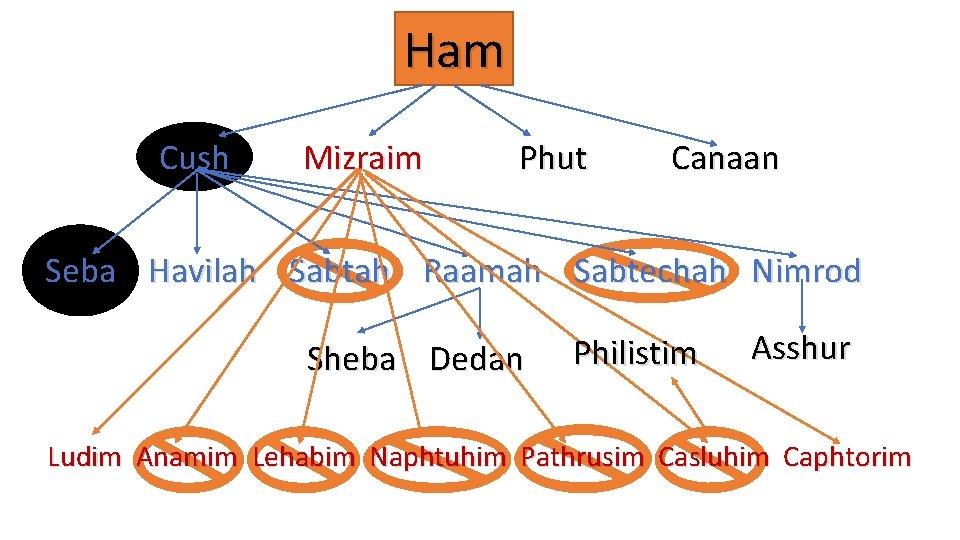
Ham Cush Mizraim Phut Canaan Seba Havilah Sabtah Raamah Sabtechah Nimrod Sheba Dedan Philistim Asshur Ludim Anamim Lehabim Naphtuhim Pathrusim Casluhim Caphtorim
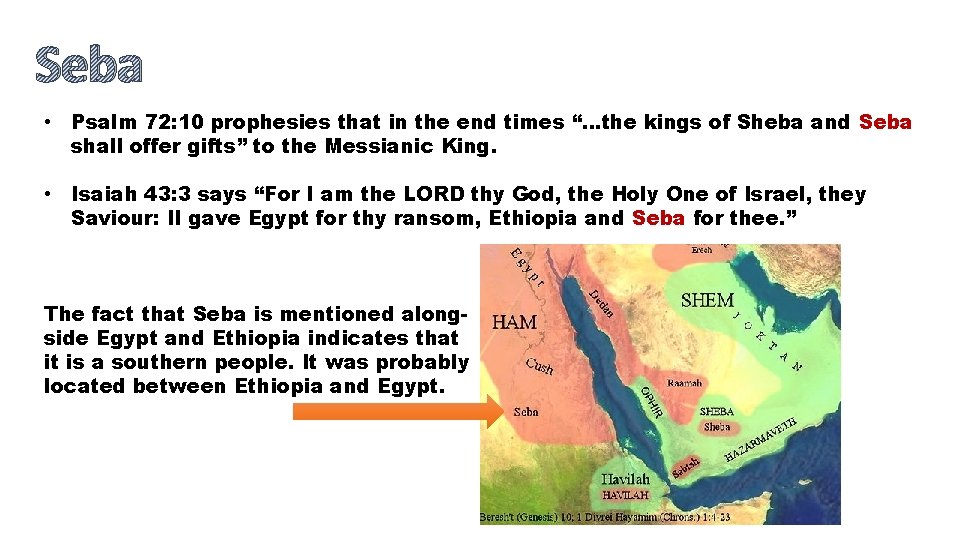
Seba • Psalm 72: 10 prophesies that in the end times “…the kings of Sheba and Seba shall offer gifts” to the Messianic King. • Isaiah 43: 3 says “For I am the LORD thy God, the Holy One of Israel, they Saviour: II gave Egypt for thy ransom, Ethiopia and Seba for thee. ” The fact that Seba is mentioned alongside Egypt and Ethiopia indicates that it is a southern people. It was probably located between Ethiopia and Egypt.
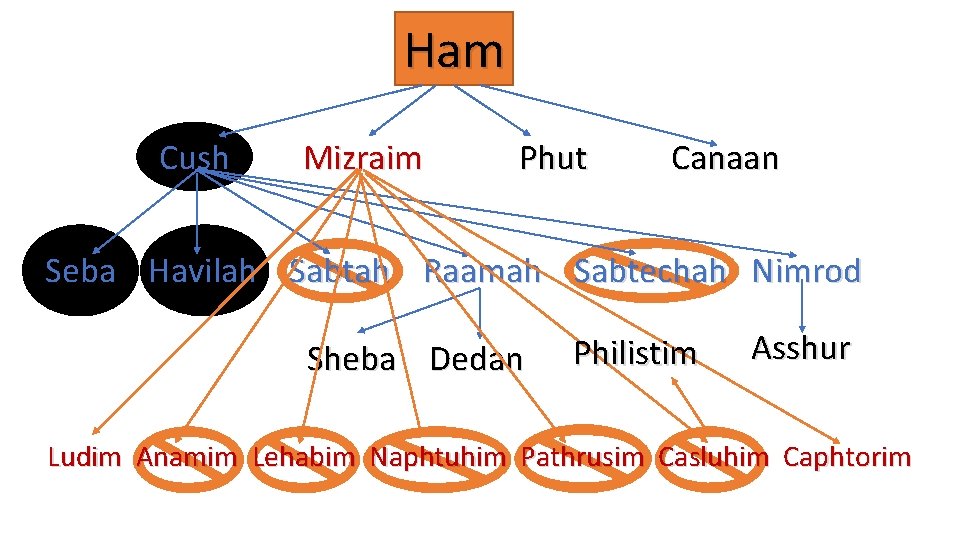
Ham Cush Mizraim Phut Canaan Seba Havilah Sabtah Raamah Sabtechah Nimrod Sheba Dedan Philistim Asshur Ludim Anamim Lehabim Naphtuhim Pathrusim Casluhim Caphtorim
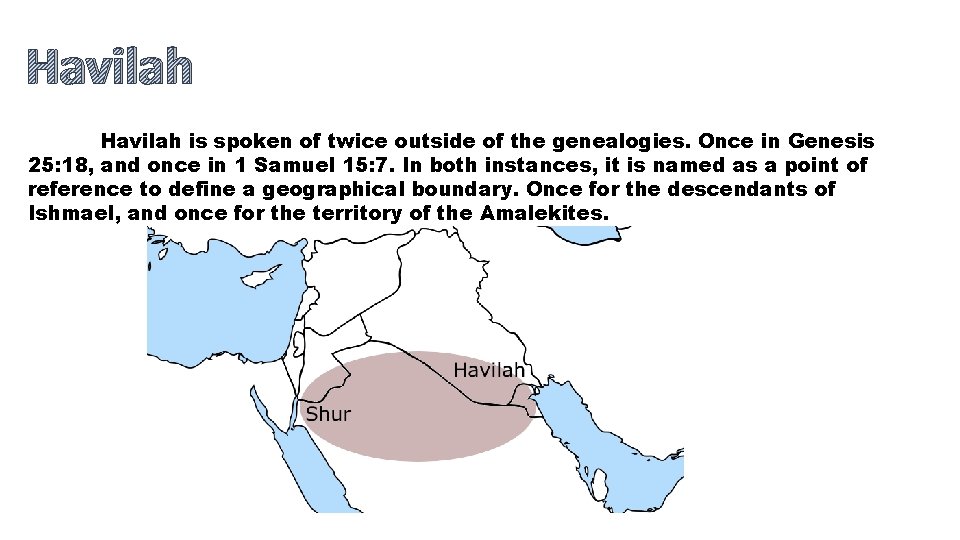
Havilah is spoken of twice outside of the genealogies. Once in Genesis 25: 18, and once in 1 Samuel 15: 7. In both instances, it is named as a point of reference to define a geographical boundary. Once for the descendants of Ishmael, and once for the territory of the Amalekites.
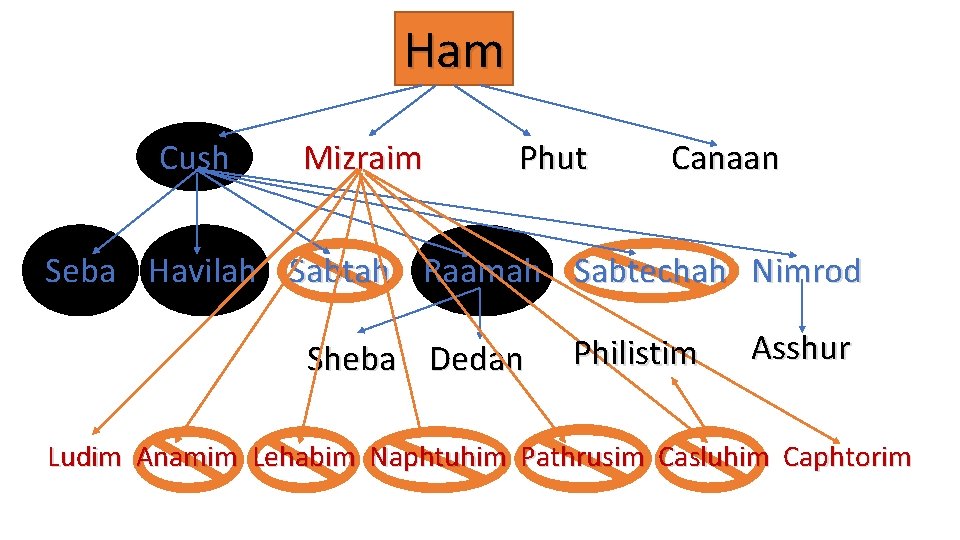
Ham Cush Mizraim Phut Canaan Seba Havilah Sabtah Raamah Sabtechah Nimrod Sheba Dedan Philistim Asshur Ludim Anamim Lehabim Naphtuhim Pathrusim Casluhim Caphtorim

Raamah is only mentioned outside of the genealogies once. In Ezekiel 27: 22, in the lament for Tyrus, it says: “The merchants of Sheba and Raamah, they were thy merchants: they occupied in thy fairs with chief of all spices, and with all precious stones, and gold. ” Josephus writes that Raamah settled in the area know as Arabia Felix, near the Persian Gulf.
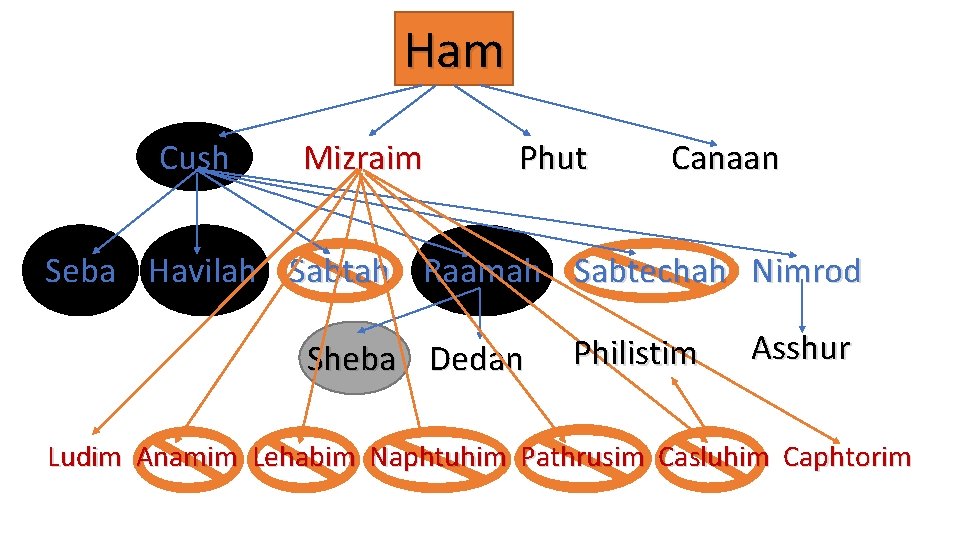
Ham Cush Mizraim Phut Canaan Seba Havilah Sabtah Raamah Sabtechah Nimrod Sheba Dedan Philistim Asshur Ludim Anamim Lehabim Naphtuhim Pathrusim Casluhim Caphtorim
Sheba has a number of lesser mentions in Scripture, and one very prominent one. • Sheba is mentioned poetically in Job 6: 19 • Sheba will bring gifts, especially gold and incense, to the Messianic Christ in Psalm 72: 10, 14 and Isaiah 60: 6. • Sheba is mentioned in the Lament for Tyrus in Ezekiel 27: 22 -23, and in the prophecy against God in 38: 13 • The word for “Sheba” is rendered “Sabeans” in Job 1: 15. They killed some of Job’s servants and stole his cattle. • But Sheba is most notable in biblical history in the account of King Solomon’s visit from the Queen of Sheba. This account is related in both 1 Kings 10: 1 -13, and 2 Chronicles 9: 1 -12
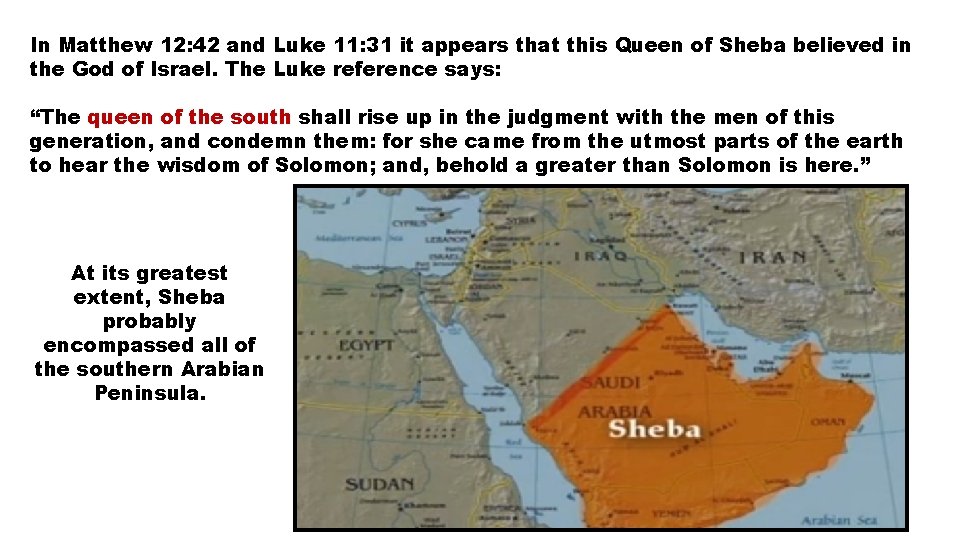
In Matthew 12: 42 and Luke 11: 31 it appears that this Queen of Sheba believed in the God of Israel. The Luke reference says: “The queen of the south shall rise up in the judgment with the men of this generation, and condemn them: for she came from the utmost parts of the earth to hear the wisdom of Solomon; and, behold a greater than Solomon is here. ” At its greatest extent, Sheba probably encompassed all of the southern Arabian Peninsula.
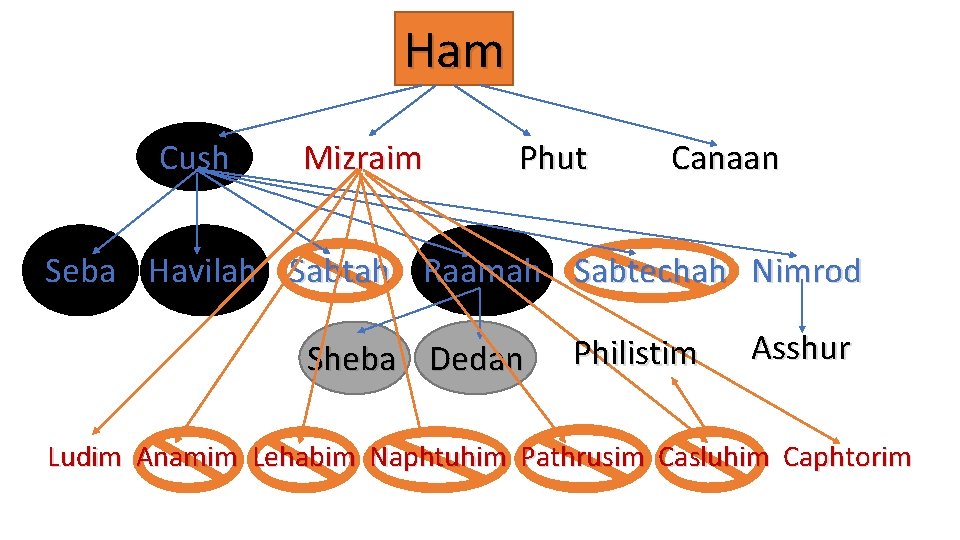
Ham Cush Mizraim Phut Canaan Seba Havilah Sabtah Raamah Sabtechah Nimrod Sheba Dedan Philistim Asshur Ludim Anamim Lehabim Naphtuhim Pathrusim Casluhim Caphtorim
Dedan While Dedan has no significant place in biblical history or prophecy, it is mentioned several times. • In Jeremiah 25: 23, 49: 8, and Ezekiel 25: 13 Dedan is the recipient of God’s judgment. • In Ezekiel 27: 15, 20, Dedan is mentioned in the lament for Tyrus. They are here called merchants of “horns of ivory and ebony, and “precious clothes for chariots. ” • In Ezekiel 38: 13, Dedan is mentioned in the prophecy against Gog.
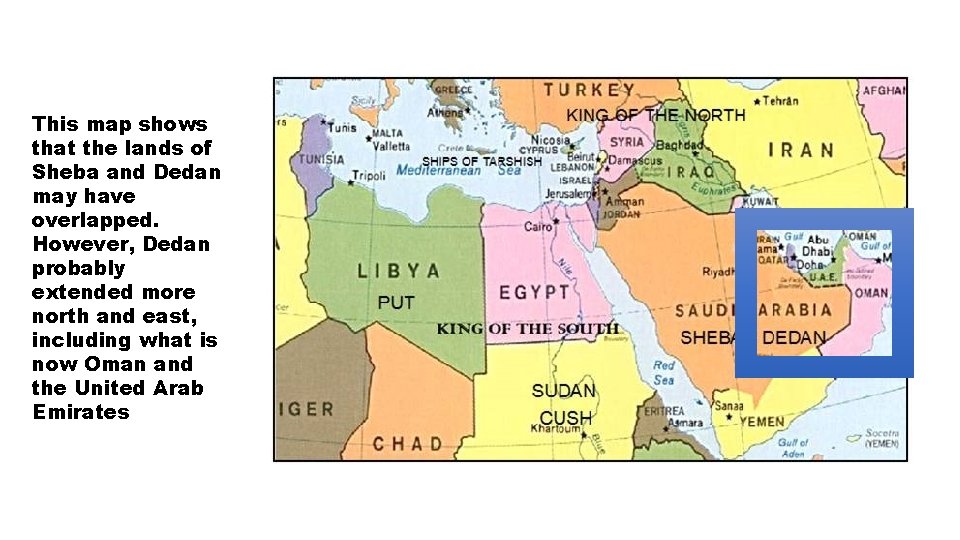
This map shows that the lands of Sheba and Dedan may have overlapped. However, Dedan probably extended more north and east, including what is now Oman and the United Arab Emirates
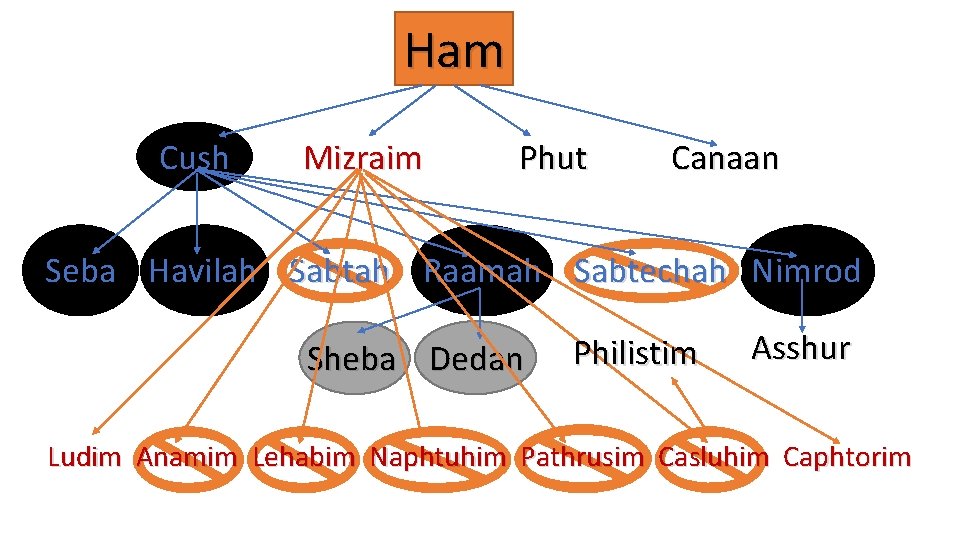
Ham Cush Mizraim Phut Canaan Seba Havilah Sabtah Raamah Sabtechah Nimrod Sheba Dedan Philistim Asshur Ludim Anamim Lehabim Naphtuhim Pathrusim Casluhim Caphtorim
Nimrod First, notice what Genesis 10: 8 -10 says about Nimrod: • He began to be a “mighty one in the earth. ” Ancient Jewish and Arabian historians write that he was the first man to set up a formal government and kingdom, and to subjugate men under it. • “He was a mighty hunter before the LORD. ” Either he literally was such a master hunter that he earned this reputation, or it refers to his ability to conquer other people. • His kingdom was founded upon four great cities: Babel, Erech, Accad, and Calneh.
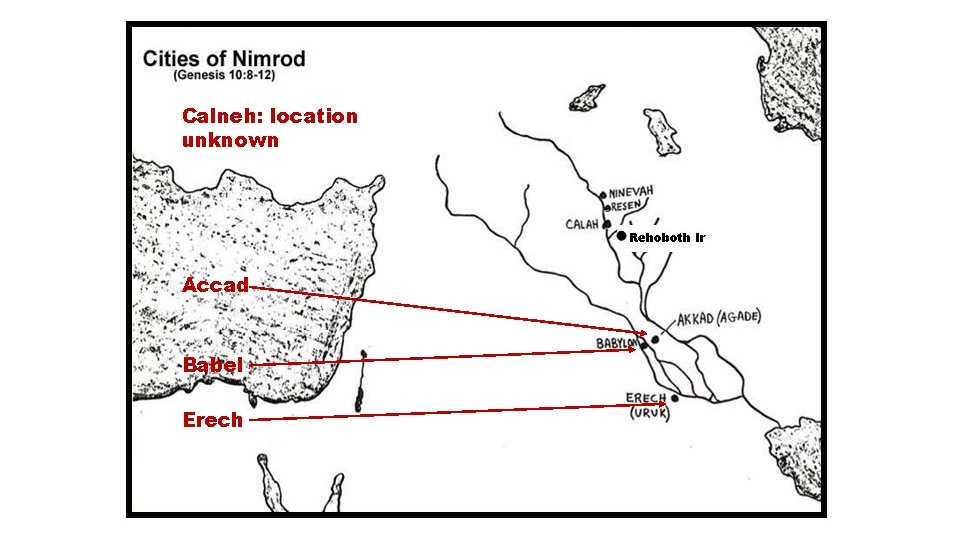
Calneh: location unknown Accad Babel Erech
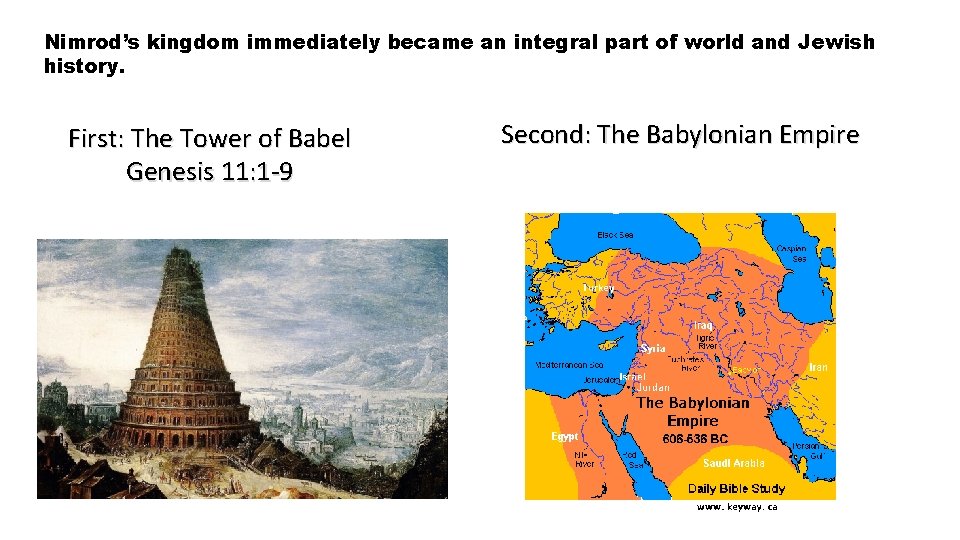
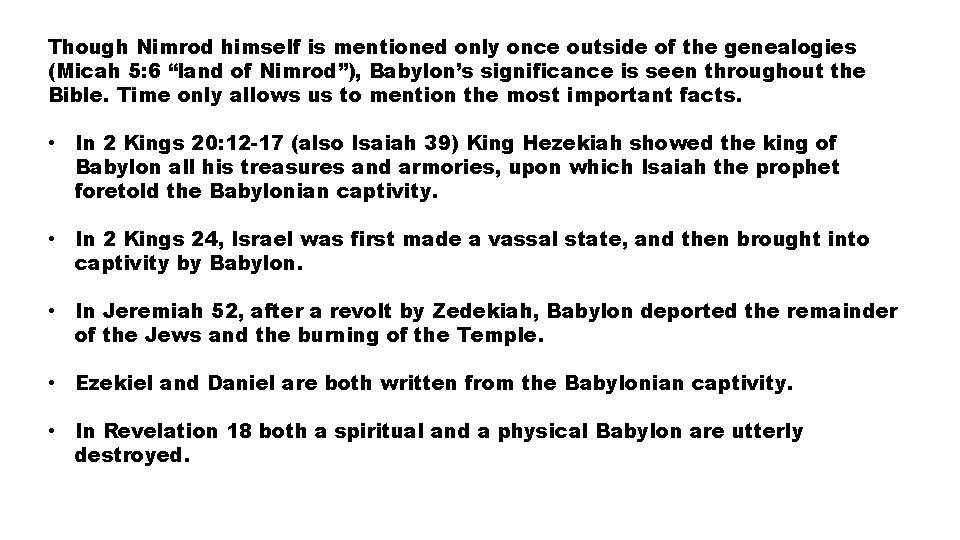
Nimrod’s kingdom immediately became an integral part of world and Jewish history. First: The Tower of Babel Genesis 11: 1 -9 Second: The Babylonian Empire
Though Nimrod himself is mentioned only once outside of the genealogies (Micah 5: 6 “land of Nimrod”), Babylon’s significance is seen throughout the Bible. Time only allows us to mention the most important facts. • In 2 Kings 20: 12 -17 (also Isaiah 39) King Hezekiah showed the king of Babylon all his treasures and armories, upon which Isaiah the prophet foretold the Babylonian captivity. • In 2 Kings 24, Israel was first made a vassal state, and then brought into captivity by Babylon. • In Jeremiah 52, after a revolt by Zedekiah, Babylon deported the remainder of the Jews and the burning of the Temple. • Ezekiel and Daniel are both written from the Babylonian captivity. • In Revelation 18 both a spiritual and a physical Babylon are utterly destroyed.
Ham Cush Mizraim Phut Canaan Seba Havilah Sabtah Raamah Sabtechah Nimrod Sheba Dedan Philistim Asshur Ludim Anamim Lehabim Naphtuhim Pathrusim Casluhim Caphtorim
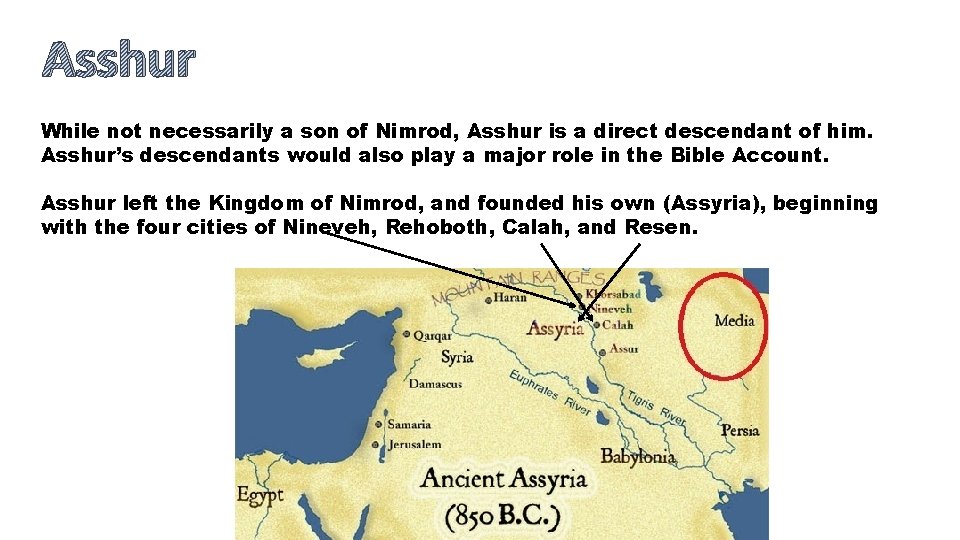
Asshur While not necessarily a son of Nimrod, Asshur is a direct descendant of him. Asshur’s descendants would also play a major role in the Bible Account. Asshur left the Kingdom of Nimrod, and founded his own (Assyria), beginning with the four cities of Nineveh, Rehoboth, Calah, and Resen.
Asshur is the founder of the Assyrian Empire. Prominent occurrences in biblical history are as follows. • In 2 Kings 18: 9 -12 Assyria defeated the norther tribes of Israel, “Samaria”, and carried them away captive. • In 2 Kings 19, after capturing 46 of Judah’s fortified cities, God turned back the armies of Assyria by slaying 185, 000 soldiers in their camp. • The book of Jonah is an account of a missionary journey into Assyria. • The book of Nahum is a prophecy of judgment against Assyria (Nineveh) • In Isaiah 19: 23 -25, Assyria and Egypt receive a special promise of blessings in the messianic kingdom of Christ.
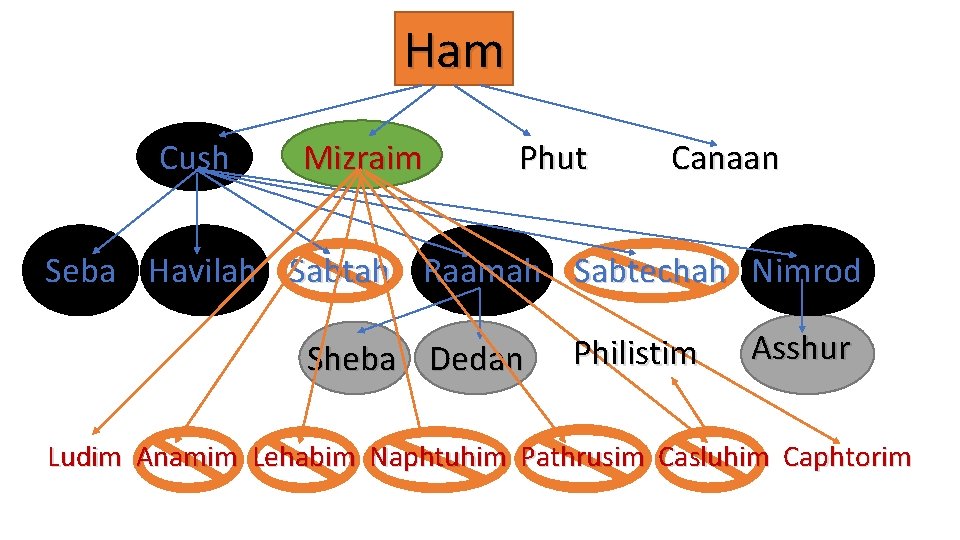
Ham Cush Mizraim Phut Canaan Seba Havilah Sabtah Raamah Sabtechah Nimrod Sheba Dedan Philistim Asshur Ludim Anamim Lehabim Naphtuhim Pathrusim Casluhim Caphtorim
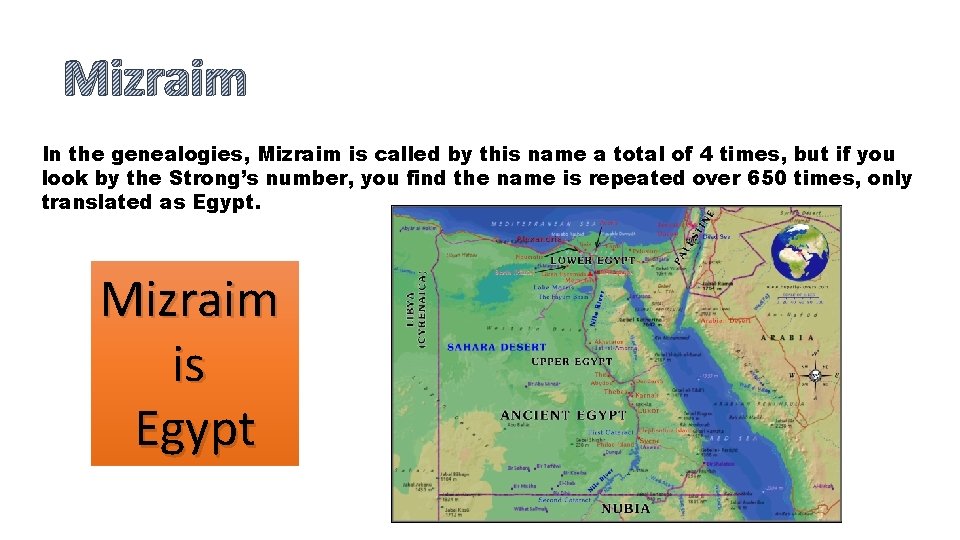
Mizraim In the genealogies, Mizraim is called by this name a total of 4 times, but if you look by the Strong’s number, you find the name is repeated over 650 times, only translated as Egypt. Mizraim is Egypt
Again, to list all the significant mentions of Egypt (Mizraim) in Scripture would require far more time than we have available to us. Here a few of the most significant. • Abraham travels to Egypt to escape famine in Genesis 12. • Joseph is sold as a slave to Egypt, where he rises to second in command of the kingdom. His family moves to Egypt later to escape great famine. • Egypt eventually enslaves the Hebrews, and the book of Exodus tells of God’s victory over Egypt in redeeming His people. • Egypt would impose tribute upon Israel in the time of the Kings. • Jesus fled to Egypt in Matthew 2: 14 in fulfilment of the prophecy of Hosea 11: 1
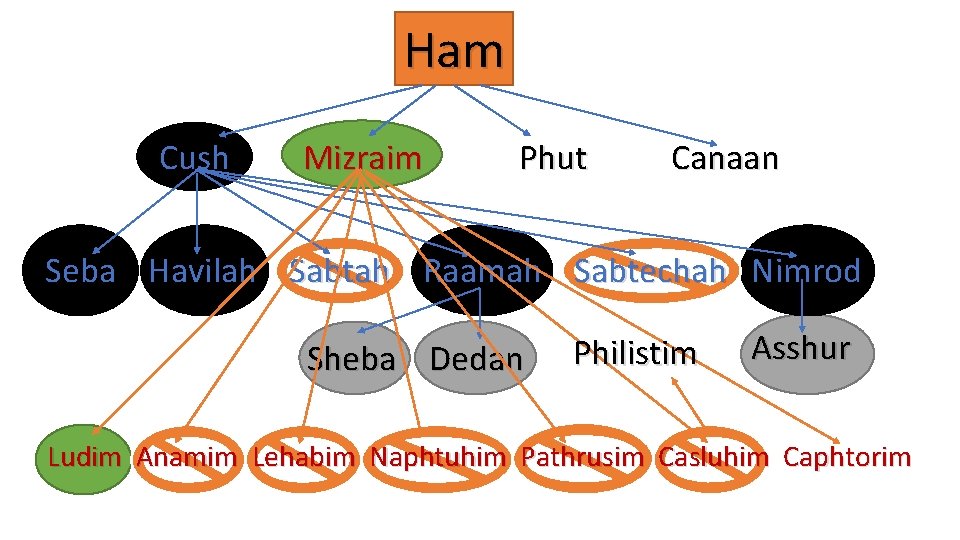
Ham Cush Mizraim Phut Canaan Seba Havilah Sabtah Raamah Sabtechah Nimrod Sheba Dedan Philistim Asshur Ludim Anamim Lehabim Naphtuhim Pathrusim Casluhim Caphtorim
Ludim Other than the genealogies, Ludim is mentioned one time in Scripture. The Strong’s word in Jeremiah 46: 9 is translated “Lydians” in a prophecy concerning Egypt. “Come up, ye horses; and rage, ye chariots; and let the mighty men come forth; the Ethiopians and the Libyans, that handle the shield; and the Lydians, that handle and bend the bow. ” It is possible that they are also referred to as Lud in Isaiah 66: 19.

Possible location of Ludim
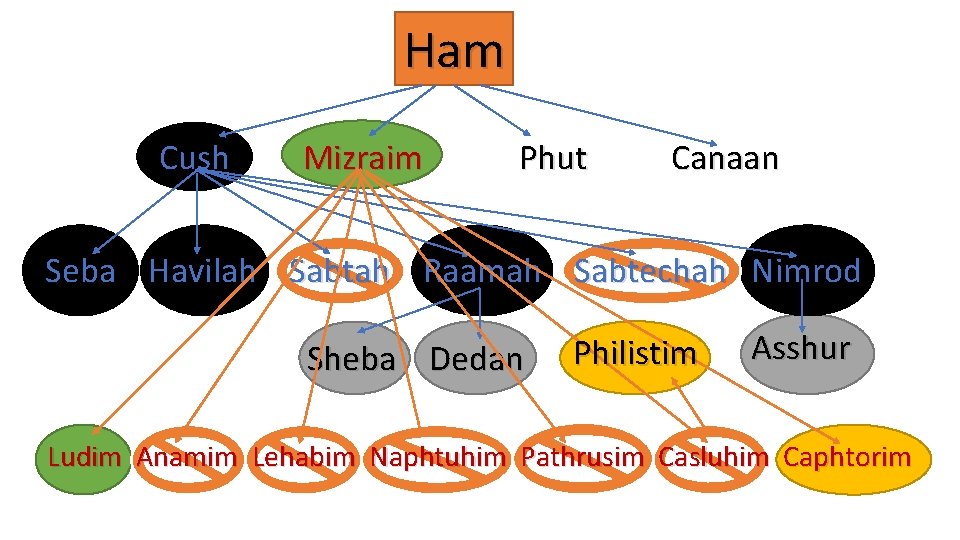
Ham Cush Mizraim Phut Canaan Seba Havilah Sabtah Raamah Sabtechah Nimrod Sheba Dedan Philistim Asshur Ludim Anamim Lehabim Naphtuhim Pathrusim Casluhim Caphtorim
Philistim and Caphtorim Philistim was the forefather of the nation know as the Philistines. These people were also prominent in biblical history, especially during the times of the Judges and the first kings Saul and David. • The origin of the Philistines seems to be from the island inhabited by Caphtorim, though their blood is traced directly through Casluhim. Possibly they were enslaved by the Caphtorim before their exodus to Palestine. • Amos 9: 7 says: “Are ye not as children of the Ethiopians unto me, O children of Israel? Saith the LORD. Have not I brought up Israel out of the land of Egypt? And the Philistines from Caphtor, and the Syrians from Kir? ” • Jeremiah 47: 4 says: “Because of the day that cometh to spoil all the Philistines, and to cut off from Tyrus and Zidon every helper that remaineth; for the LORD will spoil the Philistines, the remnant of the country of Caphtor. ”
The most significant mentions of the Philistines in Scripture as follows: • In Genesis 20 and 21, Abraham makes a league with Abimelech, king of the Philistines. Isaac also has contact with the Philistines in Genesis 26. • In Exodus 13: 17, “and it came to pass, when Pharaoh had let the people go, that God led them not through the way of the land of the Philistines, although that was near; for God said, Lest peradventure the people repent when they see war, and they return to Egypt. ” • The story of Sampson is centered around conflict with the Philistines (Judges 13 -16). • The Philistines capture the Ark of the Covenant in 1 Samuel 4: 11 • Saul and David war against the Philistines in 1 Samuel. One notable account is David’d defeat of the Philistine hero Goliath in chapter 17. • David defeats the Philistines for good in 2 Samuel 5: 17 -25.
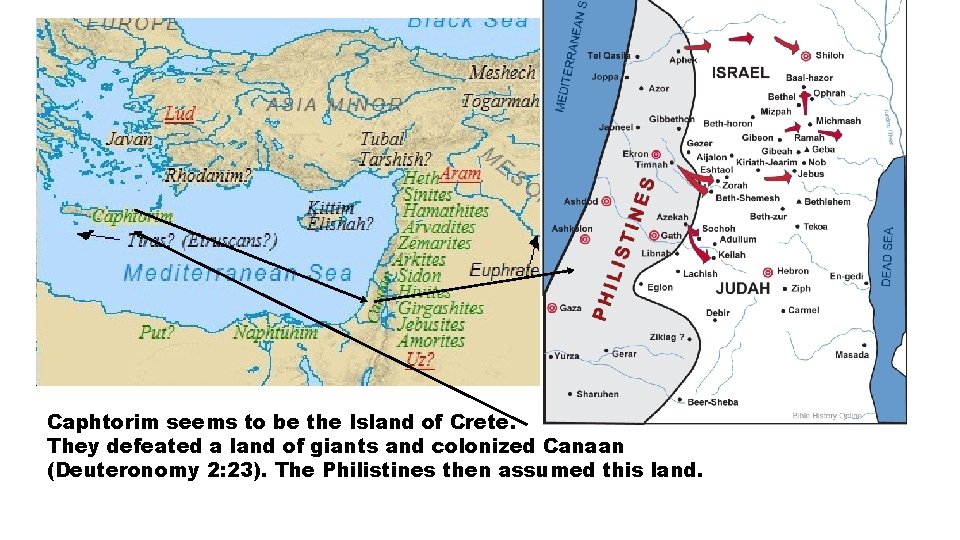
Caphtorim seems to be the Island of Crete. They defeated a land of giants and colonized Canaan (Deuteronomy 2: 23). The Philistines then assumed this land.
Ham Cush Mizraim Phut Canaan Seba Havilah Sabtah Raamah Sabtechah Nimrod Sheba Dedan Philistim Asshur Ludim Anamim Lehabim Naphtuhim Pathrusim Casluhim Caphtorim
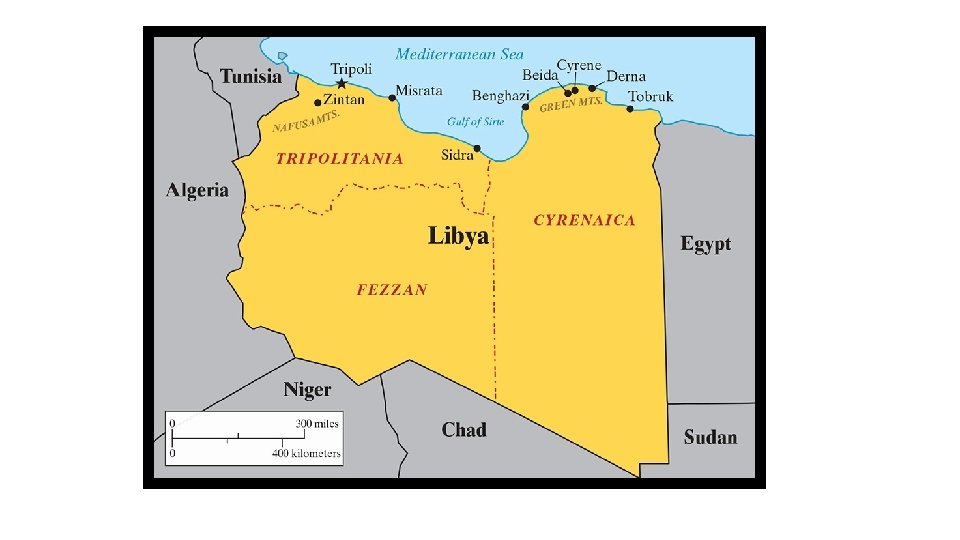
Phut While Phut has no extensive connection to biblical history, they are mentioned a number of times throughout the Old Testamnet. This is because Phut seems to have been eager to go to war as a mercenary. • A look at the Strong’s numbers shows that Phut (also Put) is the same as Libya • Babylon uses Libyan foot soldiers against Egypt in Jeremiah 46: 9 (also Ezekiel 30: 5) • Tyrus used Libyan soldiers in Ezekiel 27: 10 • Gog uses Libyan soldiers in Ezekiel 38: 5 • Assyrian Nineveh hired Libyan soldiers in Nahum 3: 9
Ham Cush Mizraim Phut Canaan Seba Havilah Sabtah Raamah Sabtechah Nimrod Sheba Dedan Philistim Asshur Ludim Anamim Lehabim Naphtuhim Pathrusim Casluhim Caphtorim
Canaan (sons) Sidon Heth (descendants) Jebusite Amorite Girgasite Hivite Arkite Sinite Arvadite Zemarite Hamathite
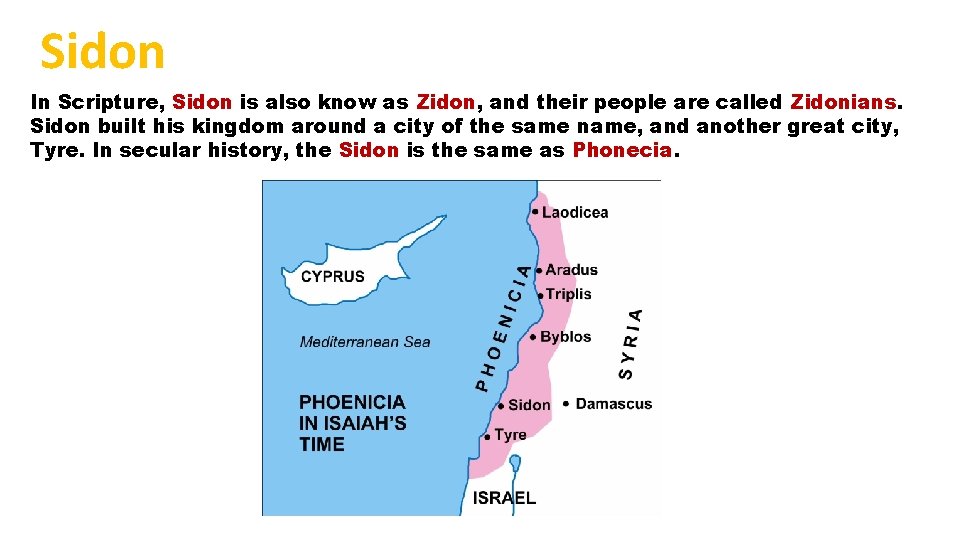
Sidon In Scripture, Sidon is also know as Zidon, and their people are called Zidonians. Sidon built his kingdom around a city of the same name, and another great city, Tyre. In secular history, the Sidon is the same as Phonecia.
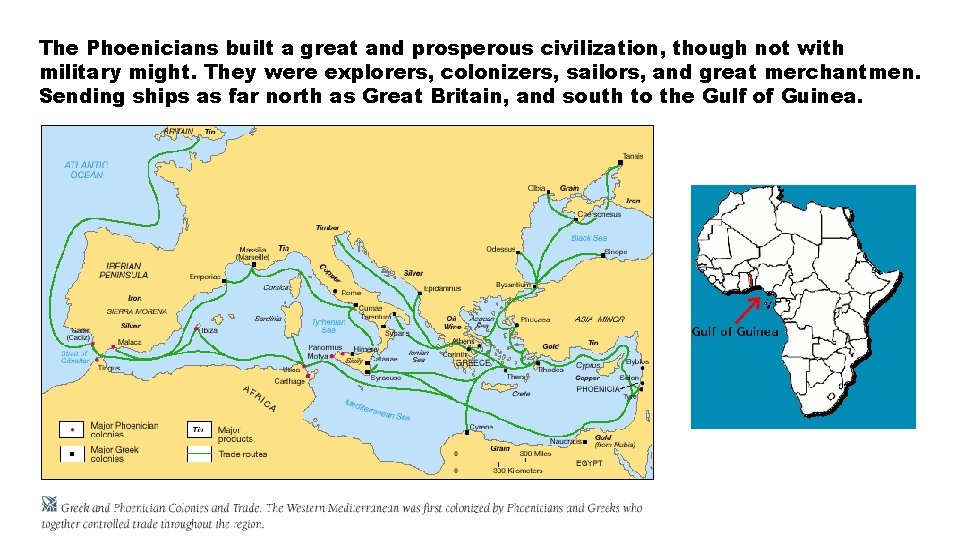
The Phoenicians built a great and prosperous civilization, though not with military might. They were explorers, colonizers, sailors, and great merchantmen. Sending ships as far north as Great Britain, and south to the Gulf of Guinea.
With this context it is easier to understand the great lament for Tyrus in Ezekiel 26 -28, her greatest folly being her pride: • Ezekiel 28: 2 says, “Son of man, say unto the prince of Tyrus, Thus saith the Lord GOD; because thine heart is lifted up, and thou hast said, I am a God, I sit in the seat of God, in the midst of the seas; yet thou art a man, and not God, though thou set thine heart as the heart of God: ” • Ezekiel 28: 12 -19, description of Tyrus’ folly is also used do describe Satan’s. • Elsewhere in Scripture, we see that Phoenician craftsmen were hired by David to build his palace (1 Chronicles 14: 1), and also by Solomon to construct the first temple (I Kings 5: 7 -12). • Jesus traveled to Phoenician cities in Matthew 15: 21 -31. Here he cast out a demon from the son of a Canaanite woman, and did many other miracles.
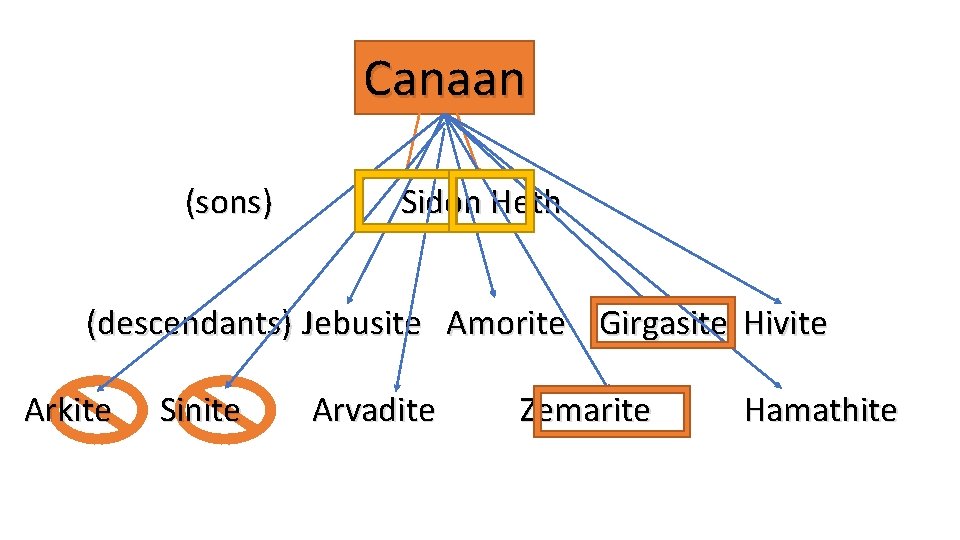
Canaan (sons) Sidon Heth (descendants) Jebusite Amorite Girgasite Hivite Arkite Sinite Arvadite Zemarite Hamathite
Heth The descendants of Heth are mentioned numerous times in the book of Genesis. • Abraham purchased a field and cave in which to bury Sarah from the “children of Heth” (Genesis 23). • There in 23: 10 we see that the children of Heth were the Hittites. • It was Rebekah’s estimation of the women of Heth that caused Isaac to send Jacob to Laban to find a wife (Genesis 27: 46). • Outside of Genesis, Heth is referred to as the Hittites, and became one of the seven Canaanite nations that God would drive out before Israel. • In I Kings 11: 1, King Solomon took Hittite wives.
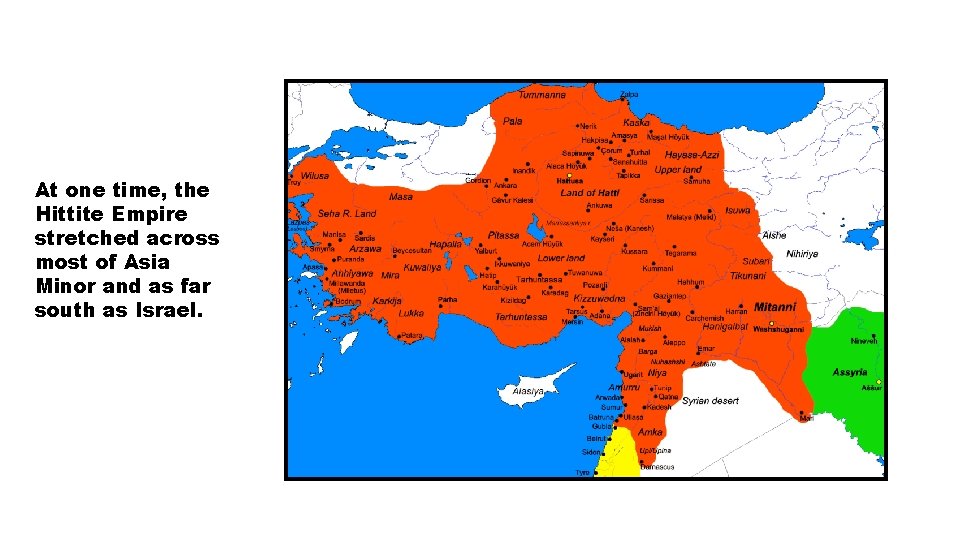
At one time, the Hittite Empire stretched across most of Asia Minor and as far south as Israel.
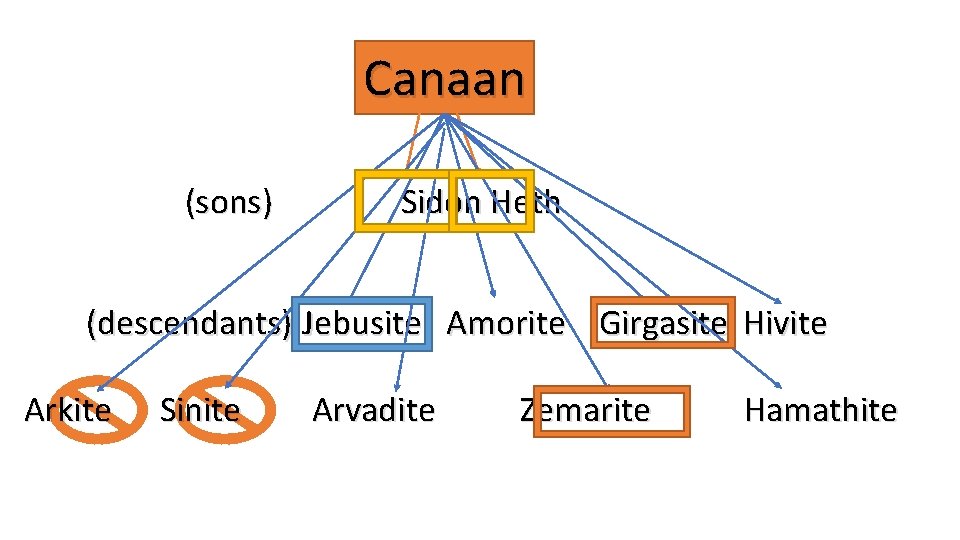
Canaan (sons) Sidon Heth (descendants) Jebusite Amorite Girgasite Hivite Arkite Sinite Arvadite Zemarite Hamathite
Jebusite Because the nations of the Canaanites were clustered so closely together, it is hard to distinguish their borders and cities exactly. However, we do know a few facts. • Jerusalem was a city of the Jebusites. Judges 1: 21 says: “And the children of Benjamin did not drive out the Jebusites that inhabited Jerusalem; but the Jebusites dwell with the children of Benjamin in Jerusalem unto this day. ” • Numbers 13: 29 indicates that the Jebusites “dwell in the mountains. ” • Later in 2 Samuel 5: 6 -10 King David defeat the Jebusites in Jerusalem.
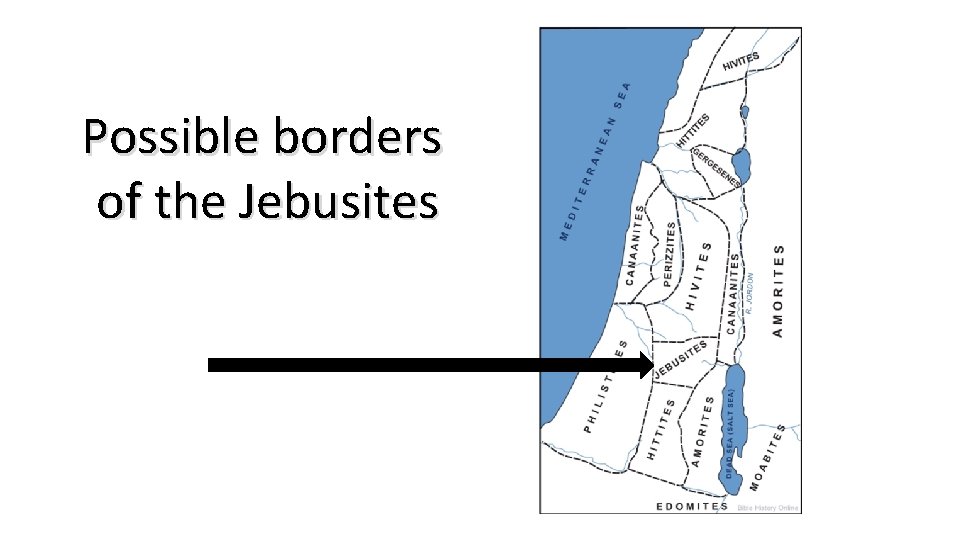
Possible borders of the Jebusites
Canaan (sons) Sidon Heth (descendants) Jebusite Amorite Girgasite Hivite Arkite Sinite Arvadite Zemarite Hamathite
Amorite We have a little more information on the Amorites: • Several Amorite cities are named, including Hazezontamar, Heshbon, Bashan, Gilead, Astaroth, Edrei, and Aroer. • The Amorites also seemed to inhabit the mountain territories. • Several verses indicate that Amorite is sometimes used to reference all of the Canaanites (Genesis 15: 16, Joshua 10: 5, Joshua 24: 15, 2 Samuel 21: 2). • Some of the Amorites were “of the Giants” Amos 2: 9, Deuteronomy 3: 11.
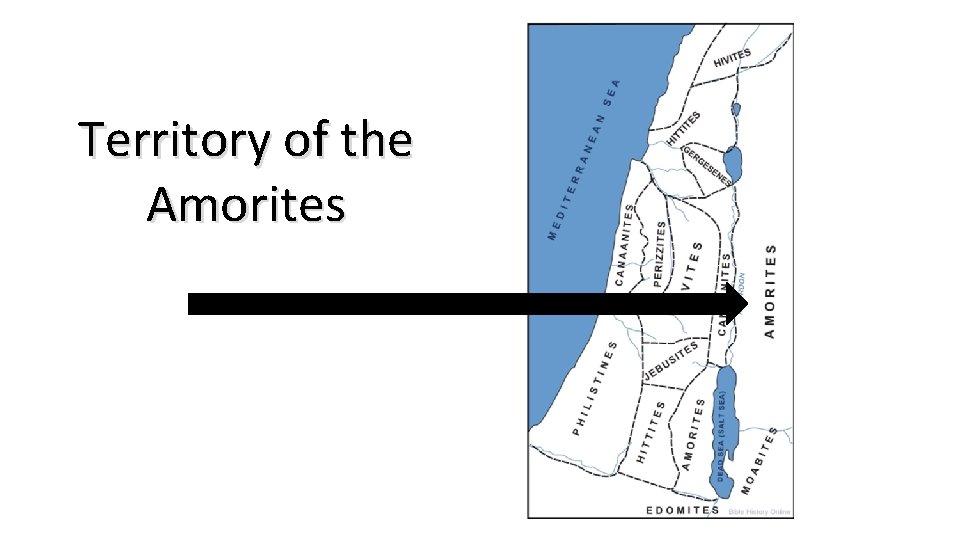
Territory of the Amorites
Canaan (sons) Sidon Heth (descendants) Jebusite Amorite Girgasite Hivite Arkite Sinite Arvadite Zemarite Hamathite
Hivite The Hivites have an interesting part in Jewish history. • First, they were among the nations that God promised He would “drive out” and that God commanded to “utterly destroy” (Deuteronomy 20: 17, Joshua 3: 10) • However, in Joshua 9: 3 -27, the Hivites of Gibeon tricked Joshua into making a league of protection with them. • Joshua 11: 19 says: “There was not a city that made peace with the children of Israel, save the Hivites the inhabitants of Gibeon: all other they took in battle. ” • In 2 Samuel 21 God sent severe famine on Israel because Saul had broken the league with the Gibeonites and killed some. David executed 7 sons of Saul to make things right with the Gibeonites.
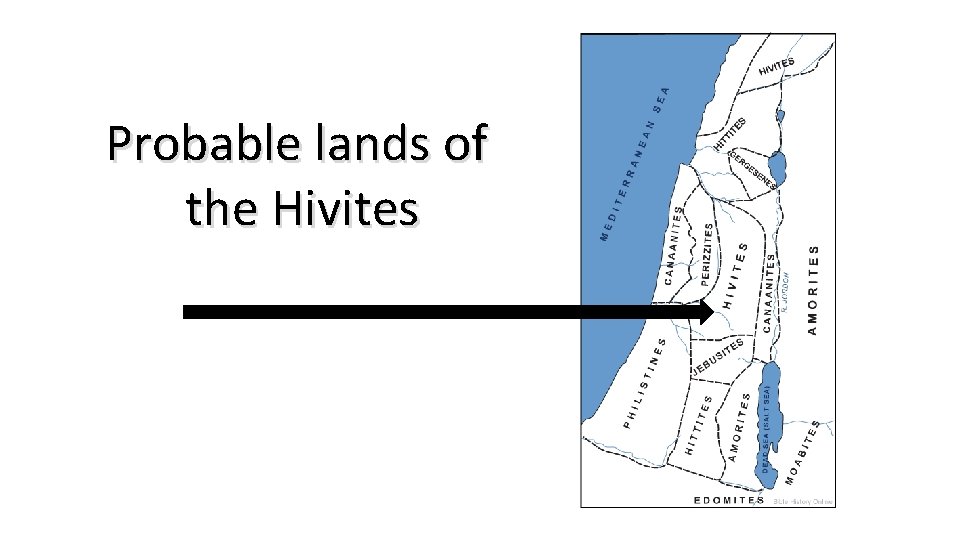
Probable lands of the Hivites
Canaan (sons) Sidon Heth (descendants) Jebusite Amorite Girgasite Hivite Arkite Sinite Arvadite Zemarite Hamathite
Arvadite The Arvadites are mentioned only twice outside of the genealogies. Both occurrences are in the lament for Tyrus in Ezekiel 27. • Ezekiel 27: 8, “The inhabitants of Zidon and Arvad were thy mariners: thy wise men, O Tyrus, that were in thee, were thy pilots. ” This verse indicates that the Arvadites were accomplished sailors. • Ezekiel 27: 11, “The men of Arvad with thine army were upon thy walls round about…” This verse indicates that Arvad also served as a mercenary. • Arvadite is not one of the 7 nations that Israel destroyed.
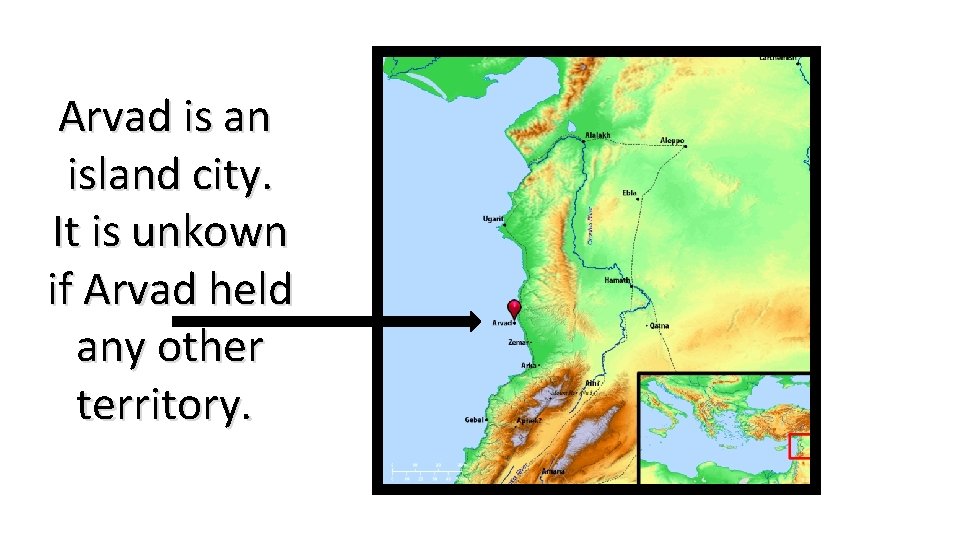
Arvad is an island city. It is unkown if Arvad held any other territory.
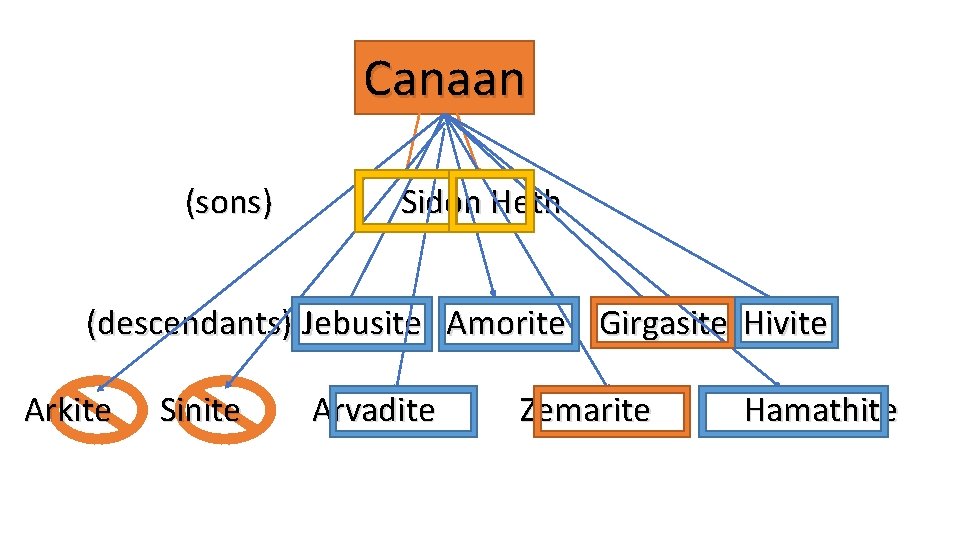
Canaan (sons) Sidon Heth (descendants) Jebusite Amorite Girgasite Hivite Arkite Sinite Arvadite Zemarite Hamathite
Hamathite The Hamathites have a few interesting connections to Israel. • In 2 Samuel 8: 9 -10, Toi, King of Hamath, sent emissaries with gifts to David in gratefulness for David’s defeat of Hadadezer. • In 2 Kings 17: 24, Hamathites were brought in to inhabit Samaria after Assyria defeated the northern tribes of Israel. • Hamath is mentioned numerous times as a reference for borders of various lands.

Location of Hamath
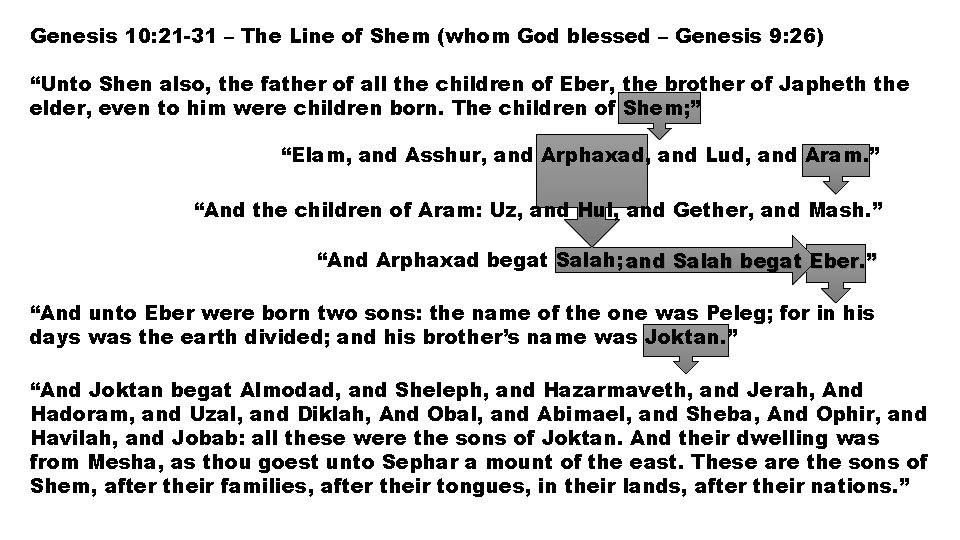
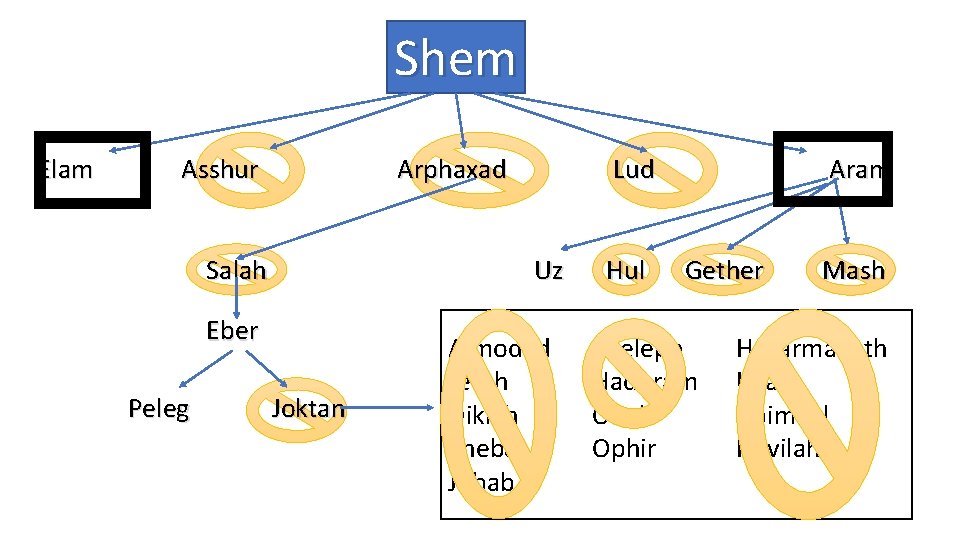
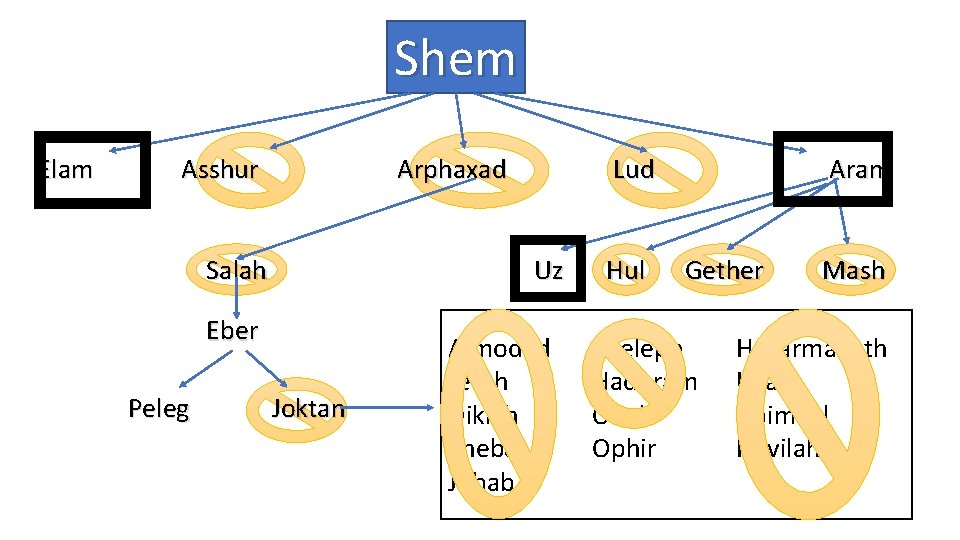
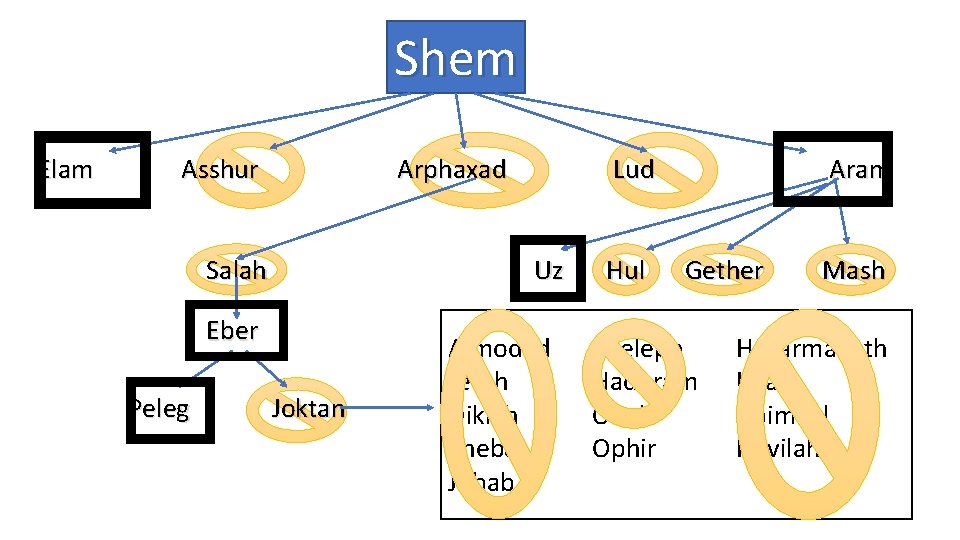
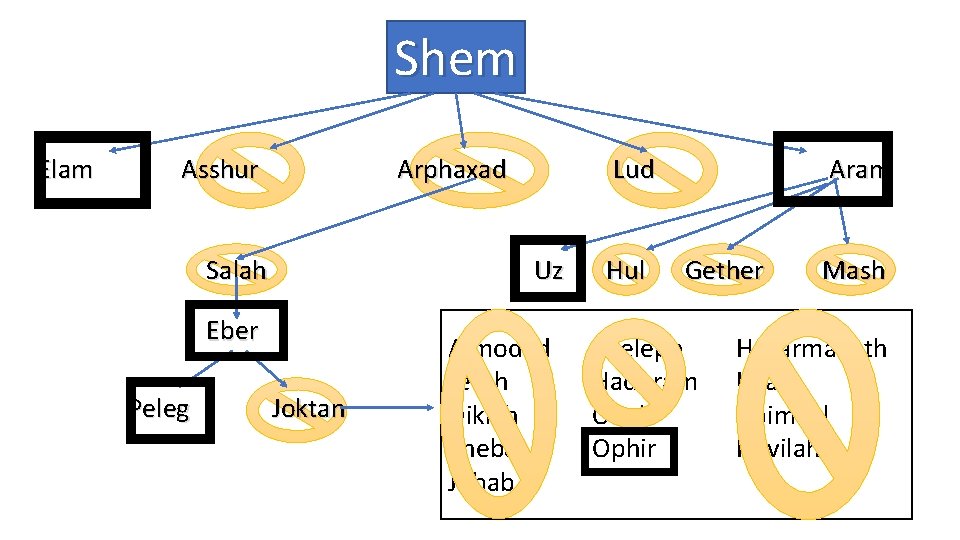
Genesis 10: 21 -31 – The Line of Shem (whom God blessed – Genesis 9: 26) “Unto Shen also, the father of all the children of Eber, the brother of Japheth the elder, even to him were children born. The children of Shem; ” “Elam, and Asshur, and Arphaxad, and Lud, and Aram. ” “And the children of Aram: Uz, and Hul, and Gether, and Mash. ” “And Arphaxad begat Salah; and Salah begat Eber. ” “And unto Eber were born two sons: the name of the one was Peleg; for in his days was the earth divided; and his brother’s name was Joktan. ” “And Joktan begat Almodad, and Sheleph, and Hazarmaveth, and Jerah, And Hadoram, and Uzal, and Diklah, And Obal, and Abimael, and Sheba, And Ophir, and Havilah, and Jobab: all these were the sons of Joktan. And their dwelling was from Mesha, as thou goest unto Sephar a mount of the east. These are the sons of Shem, after their families, after their tongues, in their lands, after their nations. ”
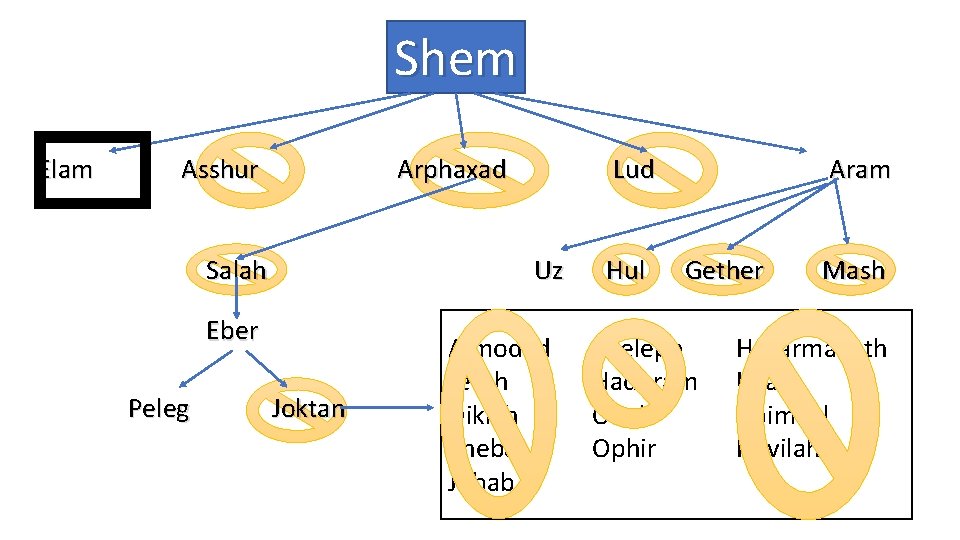
Shem Elam Asshur Arphaxad Salah Uz Eber Peleg Lud Joktan Almodad Jerah Diklah Sheba Jobab Hul Aram Gether Sheleph Hadoram Obal Ophir Mash Hazarmaveth Uzal Abimael Havilah
Elam is important in biblical history, though not often spoken of with this name. • In Genesis 14: 1, 9, Chedorlaomer king of Elam was one of several kings that attacked Sodom and Gomorrah. They carried Lot away captive and Abraham did battle against them to deliver his nephew. • In Acts 2: 9, Elamites are mentioned in a list of peoples who heard the Gospel in their tongue on the Day of Pentecost. • Extra-biblical evidence informs us that the descendants of Elam founded the Persian Empire. We see biblical support for this in Isaiah 21: 2 where Elam and Media are mentioned together.
Persia, of course, plays important roles in Scripture. Here a few: • The events in the book of Esther occur in the land of Persia. • The Persian empire conquered the Babylonian at the time of Daniel and the Jewish captivity. • In 2 Chronicles 36: 22 -23, Cyrus king of Persia is charged by God with the rebuilding of the Temple that had been destroyed by the Babylonians. • The book of Ezra describes the rebuilding of the temple beginning under Cyrus king of Persia. • Daniel also includes prophecies concerning Persia.
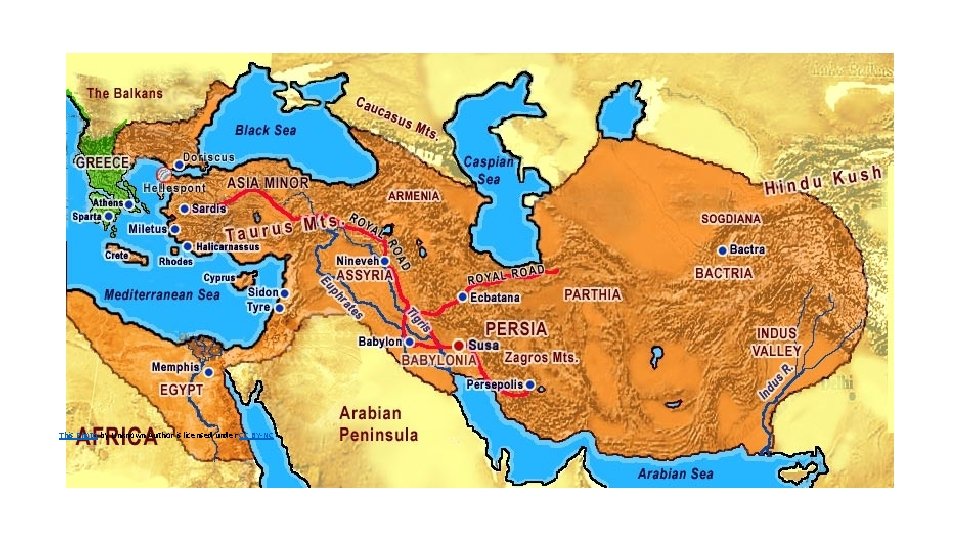
This Photo by Unknown Author is licensed under CC BY-NC
Shem Elam Asshur Arphaxad Salah Uz Eber Peleg Lud Joktan Almodad Jerah Diklah Sheba Jobab Hul Aram Gether Sheleph Hadoram Obal Ophir Mash Hazarmaveth Uzal Abimael Havilah
Aram A look at the Strong’s numbers reveals that the word for “Aram” is usually translated “Syria” in Scripture. • In the books of Samuel, Kings, and Chronicles Syria appears numerous times. Naaman the leper was a general of the Syrian army who came to faith in God in 2 Kings 5. • In 2 Kings 8, Elisha is used by God to anoint Hazael king over Syria. In chapter 13 this same king would oppress Israel. • Paul would do some missionary work in Syria.
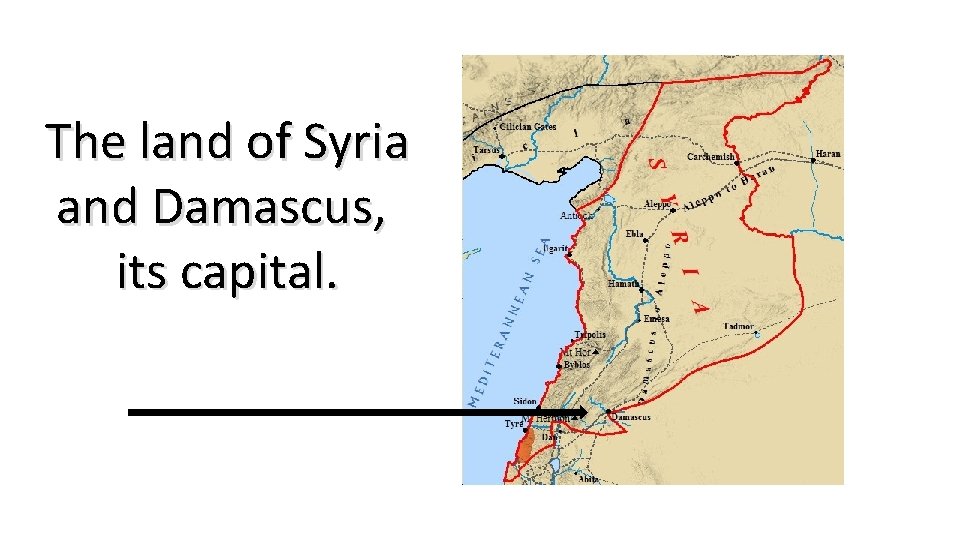
The land of Syria and Damascus, its capital.
Shem Elam Asshur Arphaxad Salah Uz Eber Peleg Lud Joktan Almodad Jerah Diklah Sheba Jobab Hul Aram Gether Sheleph Hadoram Obal Ophir Mash Hazarmaveth Uzal Abimael Havilah
Uz While Uz is mentioned very few times in Scripture, it does provide us an important account. • Job 1: 1 tells us: “There was a man in the land of Uz, whose name was Job; and that man was perfect and upright, and one that feared God, and eschewed evil. ” • In Jeremiah 25: 20, “the kings of the land of Uz” are included in those who would drink the cup of God’s wrath. • Lamentations 4: 21 gives us a clue as to where Uz is located. “Rejoice and be glad, O daughter of Edom, that dwellest in the land of Uz…” Edom seems to have inherited the land of Uz.
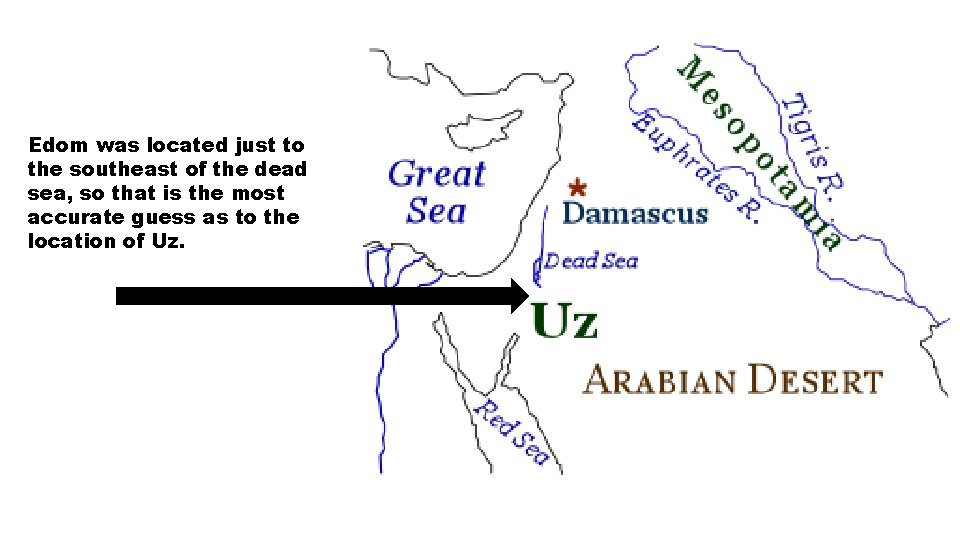
Edom was located just to the southeast of the dead sea, so that is the most accurate guess as to the location of Uz.
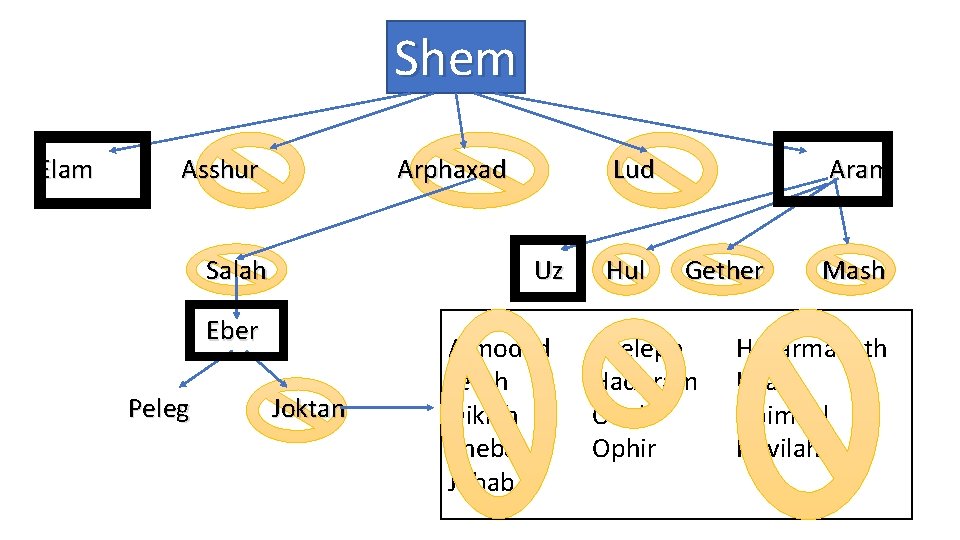
Shem Elam Asshur Arphaxad Salah Uz Eber Peleg Lud Joktan Almodad Jerah Diklah Sheba Jobab Hul Aram Gether Sheleph Hadoram Obal Ophir Mash Hazarmaveth Uzal Abimael Havilah
Eber seems to be mentioned just once outside of the genealogies in Numbers 24: 24 in Balaam’s parables. • That passage says: “And ships shall come from the coast of Chittim, and shall afflict Asshur, and shall afflict Eber, and he also shall perish for ever. ” • Many have equated Eber as the father of the Hebrews. We do not see the term “Hebrew” in the Bible until Genesis 14: 13 where Abraham was called “Abram the Hebrew. ” • However, in Genesis 12 (see 11: 28) we observe that Abraham came from Ur of the Chaldees (early Babylonia). Since Babylon came from Nimrod, this may indicate that Eber did not have a definitive land until God gave the promised land to Abraham and the Jews.
Shem Elam Asshur Arphaxad Salah Uz Eber Peleg Lud Joktan Almodad Jerah Diklah Sheba Jobab Hul Aram Gether Sheleph Hadoram Obal Ophir Mash Hazarmaveth Uzal Abimael Havilah
Peleg While we have no mention of Peleg outside of the genealogies, he is included because of the world changing event that took place in his lifetime. • Genesis 10: 25 b says: “…for in his days was the earth divided. ” • This is not a reference to continental drifting following the flood. There are sound scientific arguments that continental splitting occurred rapidly while the flood was still underway. • This is a reference to the Tower of Babel and the division of the tongues, families, and nations. This fits far better with the context of Genesis 10. Peleg would be contemporary with Nimrod and his sons. • Genesis 11: 9 says: Therefore is the name of it called Babel; because the LORD did there confound the language of all the earth: and from thence did the LORD scatter them abroad upon the face of all the earth. ”
Shem Elam Asshur Arphaxad Salah Uz Eber Peleg Lud Joktan Almodad Jerah Diklah Sheba Jobab Hul Aram Gether Sheleph Hadoram Obal Ophir Mash Hazarmaveth Uzal Abimael Havilah
Ophir The mention of Ophir in Scripture seems to be synonymous with wealth, especially gold. The ten mentions of Ophir outside of the genealogies all have the words “Ophir” and “gold” in the same verse. Here a few. • 1 Kings 9: 28, 10: 11 – Gold of Ophir used by Solomon to construct the Temple. • In Job 22: 23 -24, one of Job’s friends says: “If thou return to the Almighty…. Then shalt thou lay up gold as dust, and the gold of Ophir as the stones of the brooks. ” • In Job 28: 16 Job says of wisdom: “It cannot be [gotten or] valued with the gold of Ophir, with the precious onyx, or the sapphire. ” • Isaiah 13: 12 speaks of a legendary bar of gold: “I will make a man more precious than fine gold; even a man the golden wedge of Ophir. ”
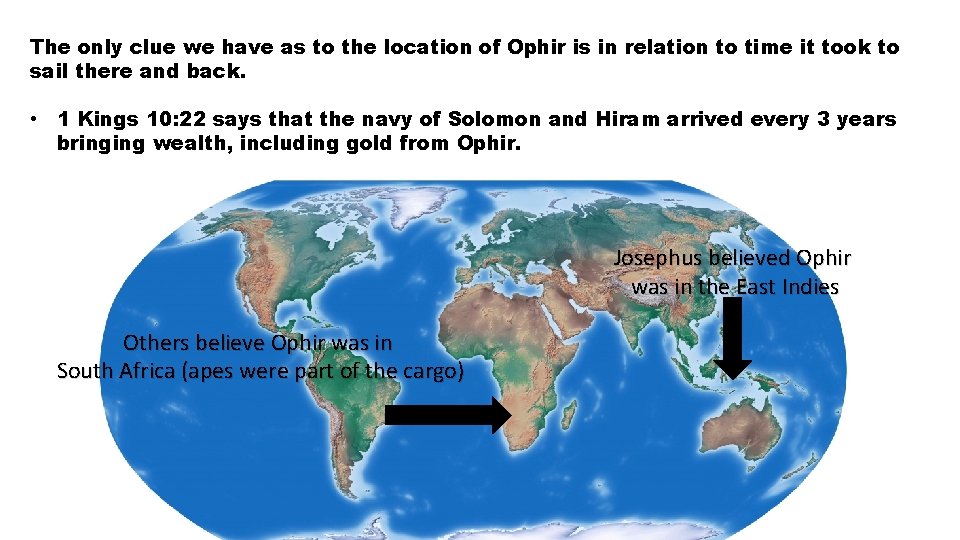
The only clue we have as to the location of Ophir is in relation to time it took to sail there and back. • 1 Kings 10: 22 says that the navy of Solomon and Hiram arrived every 3 years bringing wealth, including gold from Ophir. Josephus believed Ophir was in the East Indies Others believe Ophir was in South Africa (apes were part of the cargo)
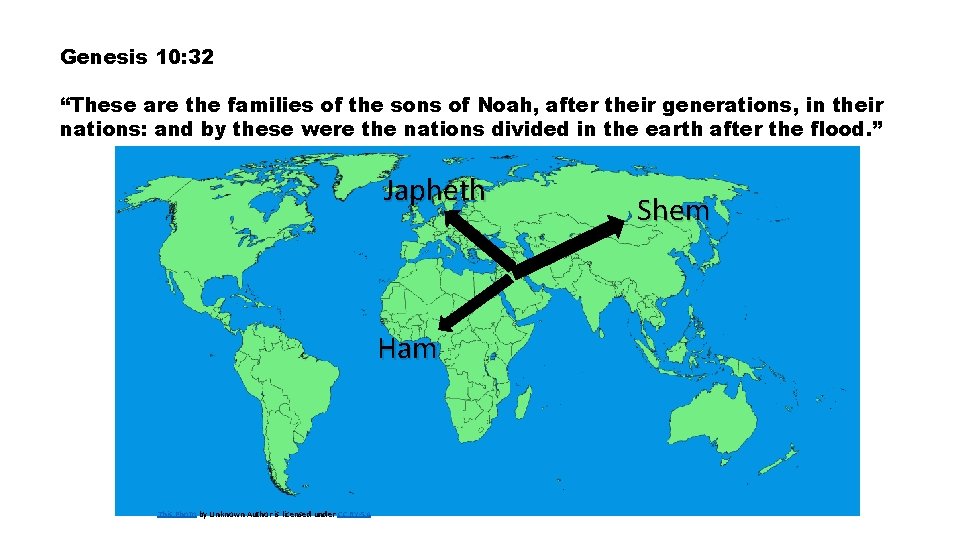
Genesis 10: 32 “These are the families of the sons of Noah, after their generations, in their nations: and by these were the nations divided in the earth after the flood. ” Japheth Ham This Photo by Unknown Author is licensed under CC BY-SA Shem
- Slides: 95