
THE SYSTEMS GRADE 8 SCIENCE CELLS AND SYSTEMS

- Slides: 33
THE SYSTEMS GRADE 8 SCIENCE CELLS AND SYSTEMS
WHAT ARE SYSTEMS?
WHAT IS A SYSTEM? Quick! Find it in your textbook!
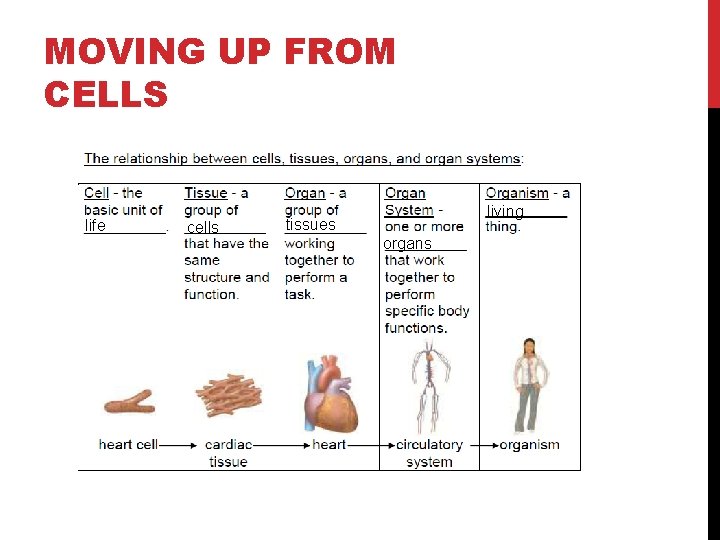
MOVING UP FROM CELLS life cells living tissues organs
THINK ABOUT IT! With your Table Groups, come up with another relationship between cells, tissues, organs and organ systems.
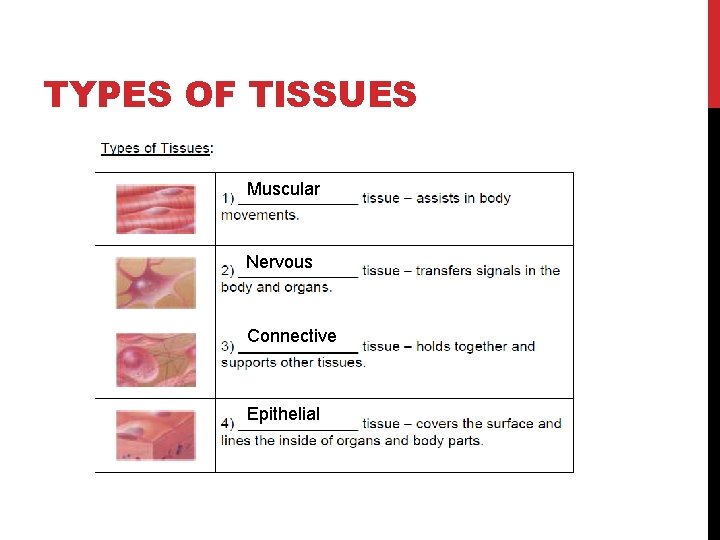
TYPES OF TISSUES Muscular Nervous Connective Epithelial
DIGESTIVE SYSTEM
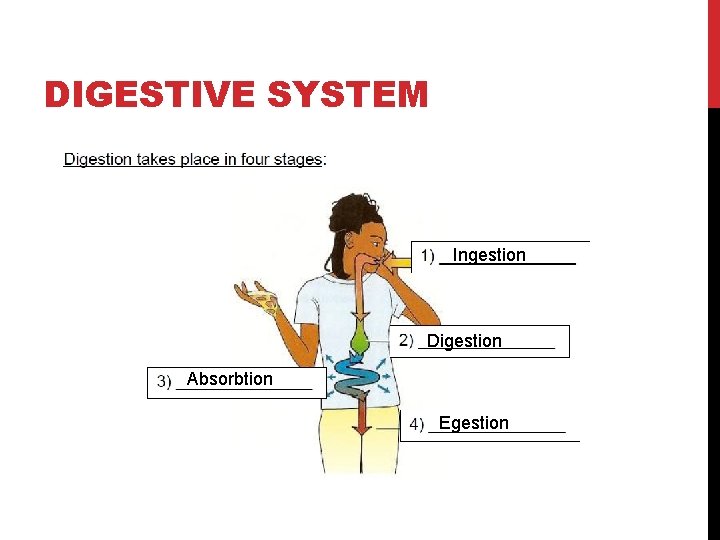
DIGESTIVE SYSTEM Ingestion Digestion Absorbtion Egestion
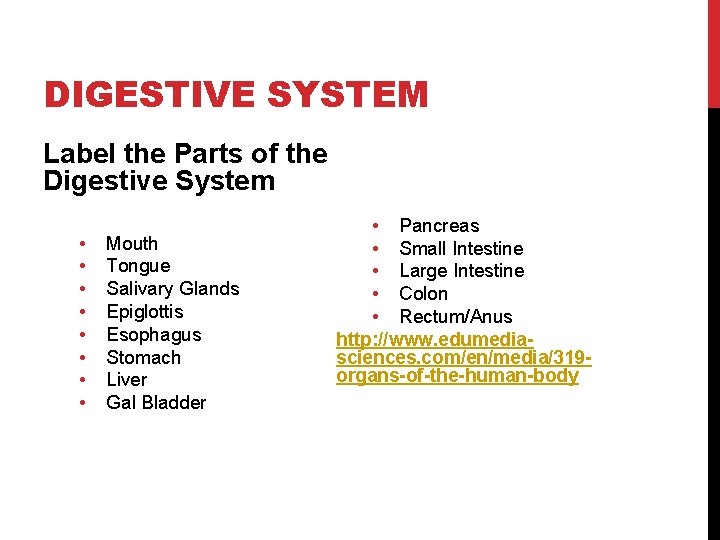
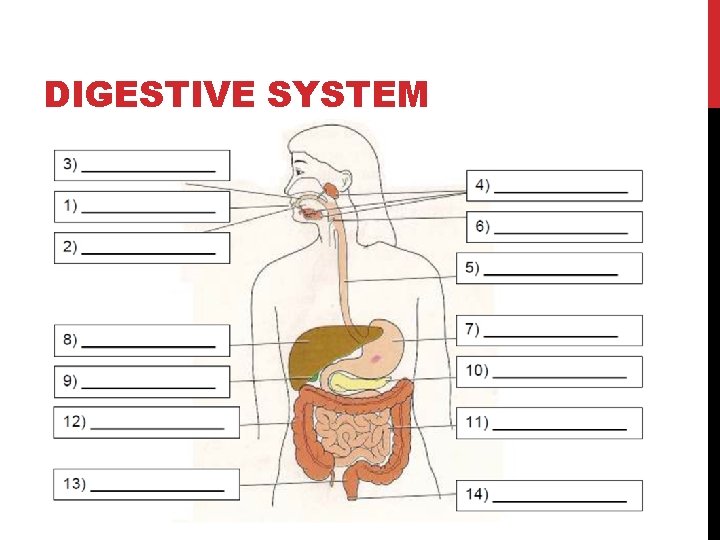
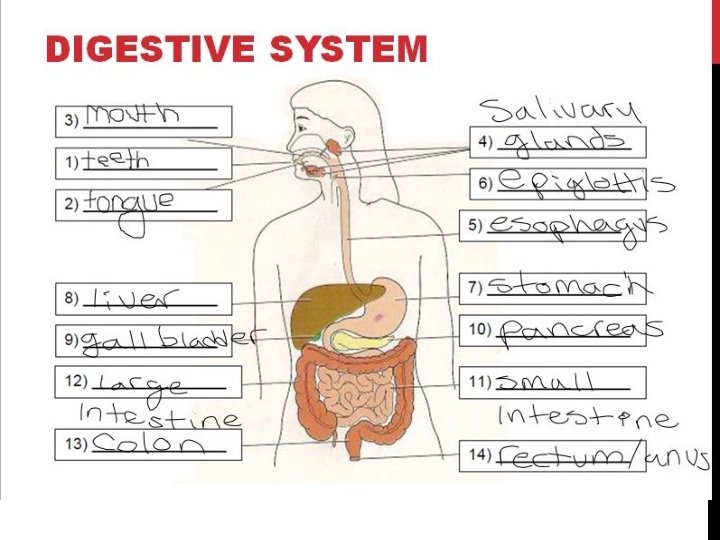
DIGESTIVE SYSTEM Label the Parts of the Digestive System • • Mouth Tongue Salivary Glands Epiglottis Esophagus Stomach Liver Gal Bladder • Pancreas • Small Intestine • Large Intestine • Colon • Rectum/Anus http: //www. edumediasciences. com/en/media/319 organs-of-the-human-body
DIGESTIVE SYSTEM
DIGESTIVE SYSTEM
DIGESTIVE SYSTEM
DIGESTIVE SYSTEM
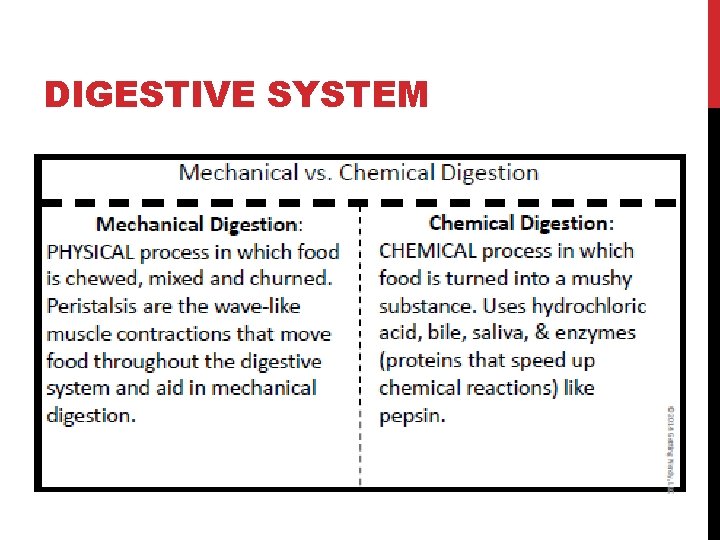
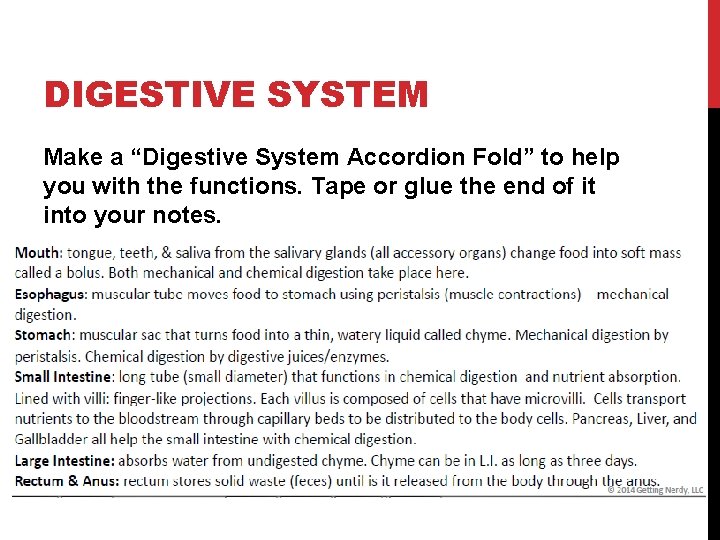
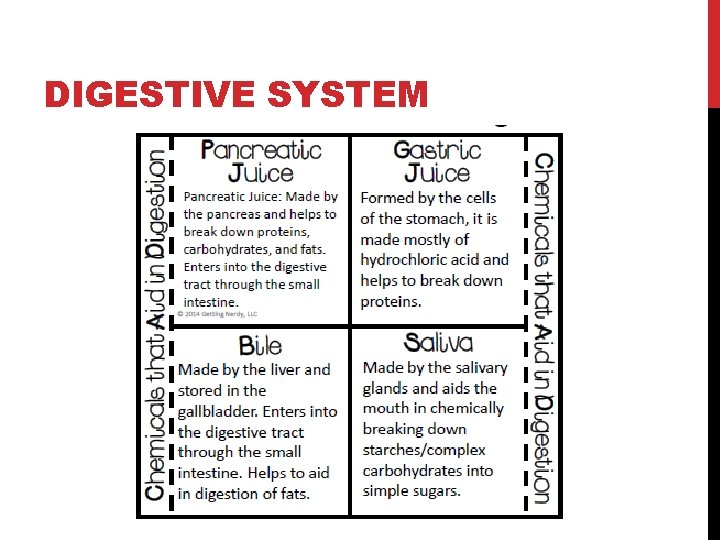
DIGESTIVE SYSTEM Make a “Digestive System Accordion Fold” to help you with the functions. Tape or glue the end of it into your notes.
DIGESTIVE SYSTEM
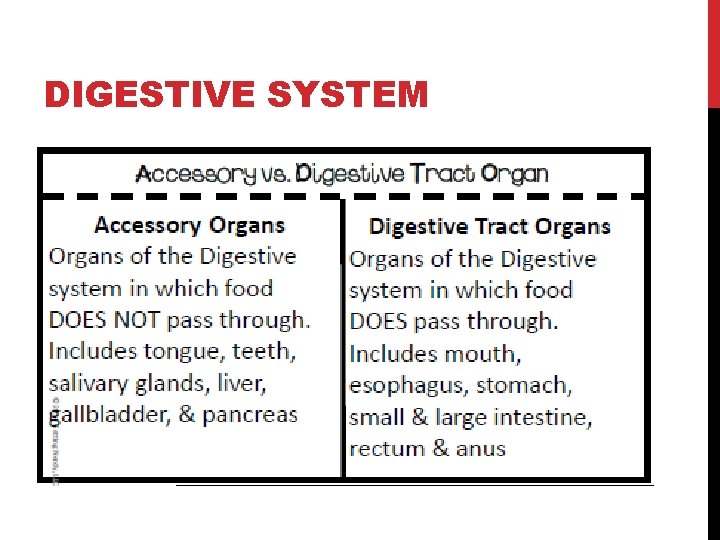
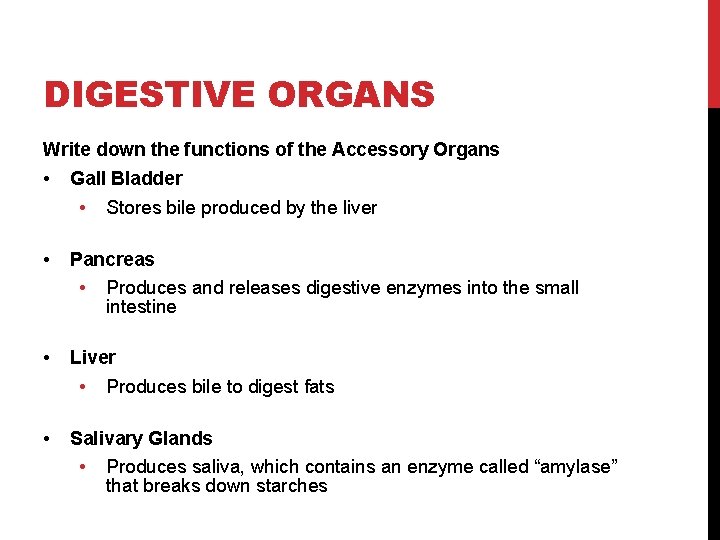
DIGESTIVE ORGANS Write down the functions of the Accessory Organs • Gall Bladder • • Pancreas • • Produces and releases digestive enzymes into the small intestine Liver • • Stores bile produced by the liver Produces bile to digest fats Salivary Glands • Produces saliva, which contains an enzyme called “amylase” that breaks down starches
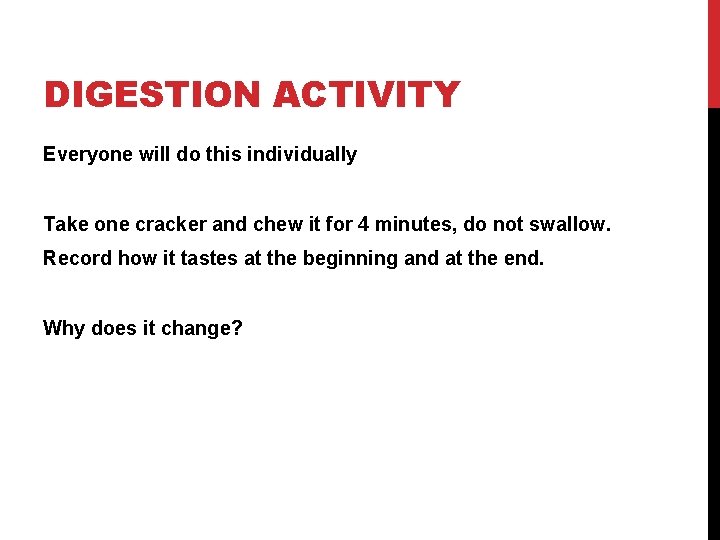
DIGESTION ACTIVITY Everyone will do this individually Take one cracker and chew it for 4 minutes, do not swallow. Record how it tastes at the beginning and at the end. Why does it change?
EXCRETORY SYSTEM
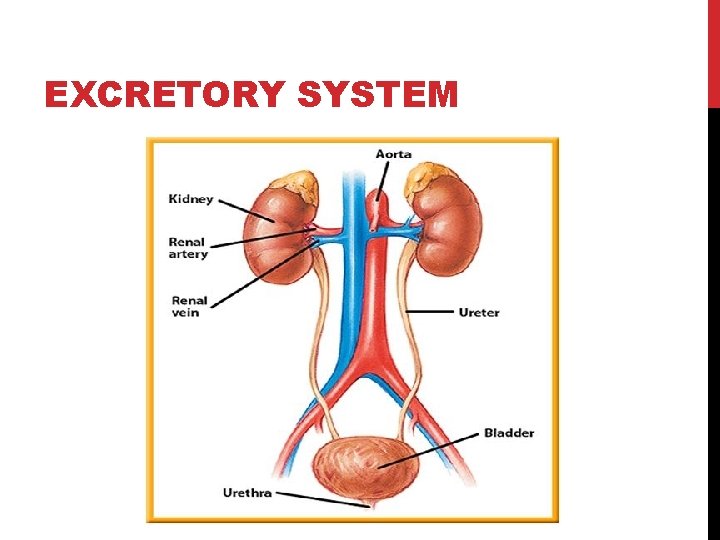
EXCRETORY SYSTEM The excretory system removes gas and liquids from your body. The Kidneys filter your blood to remove the waste. Urea is formed, and moves down the ureter to be stored in the bladder. When the bladder is full, the body removes it through Urination
EXCRETORY SYSTEM
CIRCULATORY SYSTEM
CIRCULATORY SYSTEM The Circulatory system moves blood through the body. It consists of the heart, three types of blood vessels, and blood.
THE HEART The Heart is a muscular organ that pumps blood through the body. It consists of 4 chambers 2 upper atria 2 lower ventricles Between the chambers are valves Each valve only allows for blood to flow one direction. The “lub dub” sound you hear while listening to your heart is the opening and closing of the valves.
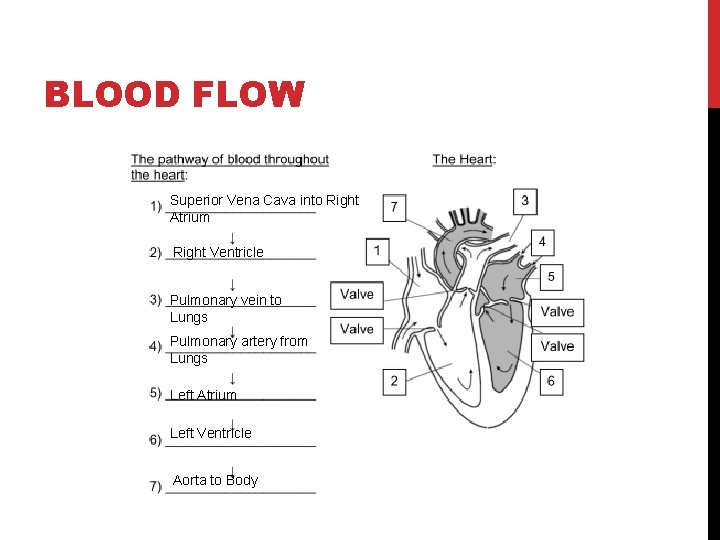
BLOOD FLOW Superior Vena Cava into Right Atrium Right Ventricle Pulmonary vein to Lungs Pulmonary artery from Lungs Left Atrium Left Ventricle Aorta to Body
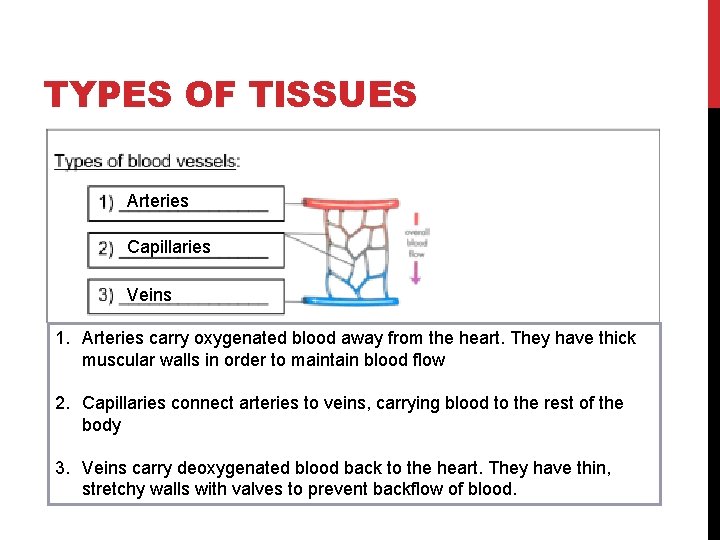
TYPES OF TISSUES Arteries Capillaries Veins 1. Arteries carry oxygenated blood away from the heart. They have thick muscular walls in order to maintain blood flow 2. Capillaries connect arteries to veins, carrying blood to the rest of the body 3. Veins carry deoxygenated blood back to the heart. They have thin, stretchy walls with valves to prevent backflow of blood.
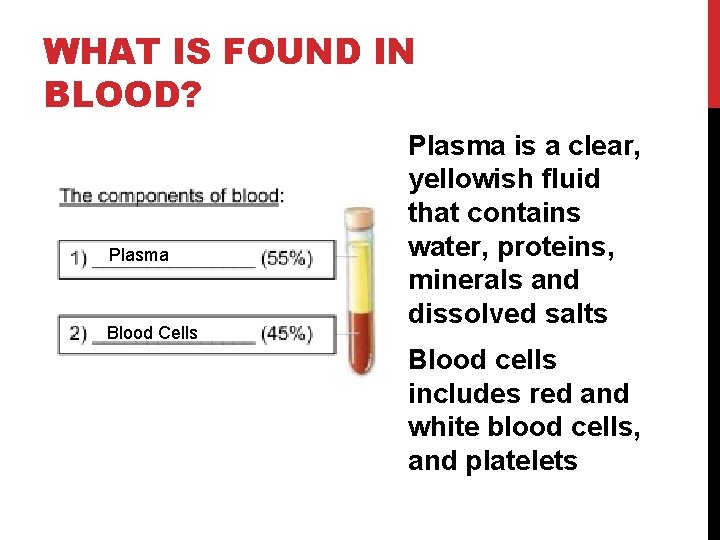
WHAT IS FOUND IN BLOOD? Plasma Blood Cells Plasma is a clear, yellowish fluid that contains water, proteins, minerals and dissolved salts Blood cells includes red and white blood cells, and platelets
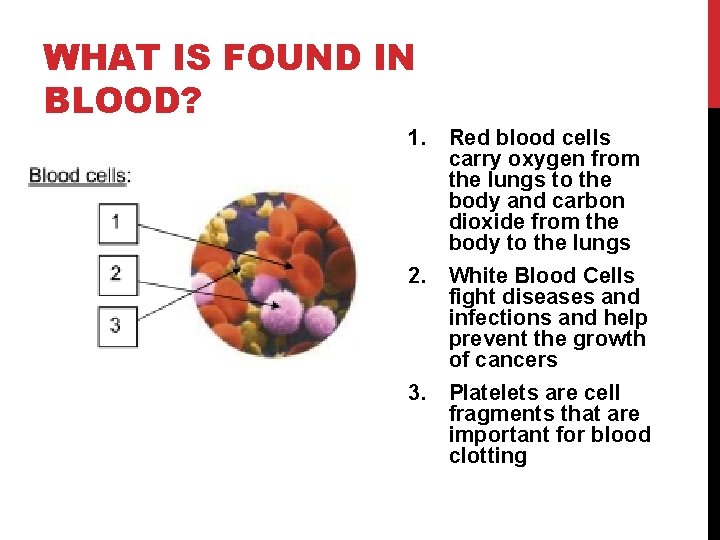
WHAT IS FOUND IN BLOOD? 1. Red blood cells carry oxygen from the lungs to the body and carbon dioxide from the body to the lungs 2. White Blood Cells fight diseases and infections and help prevent the growth of cancers 3. Platelets are cell fragments that are important for blood clotting
RESPIRATORY SYSTEM
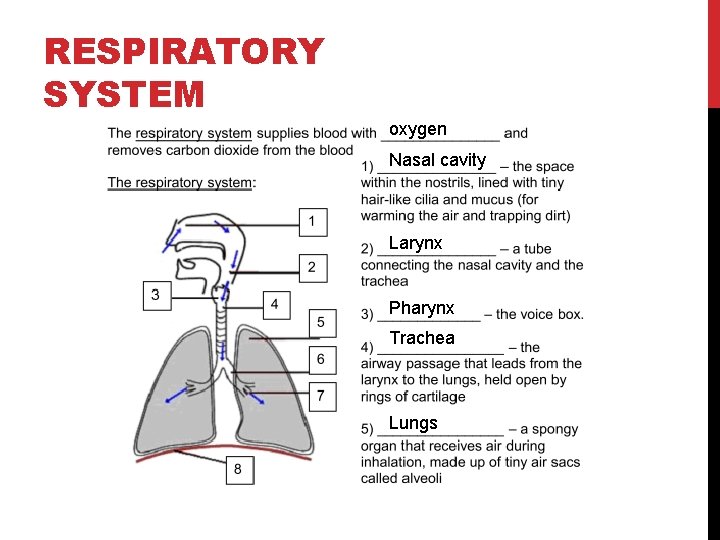
RESPIRATORY SYSTEM oxygen Nasal cavity Larynx Pharynx Trachea Lungs
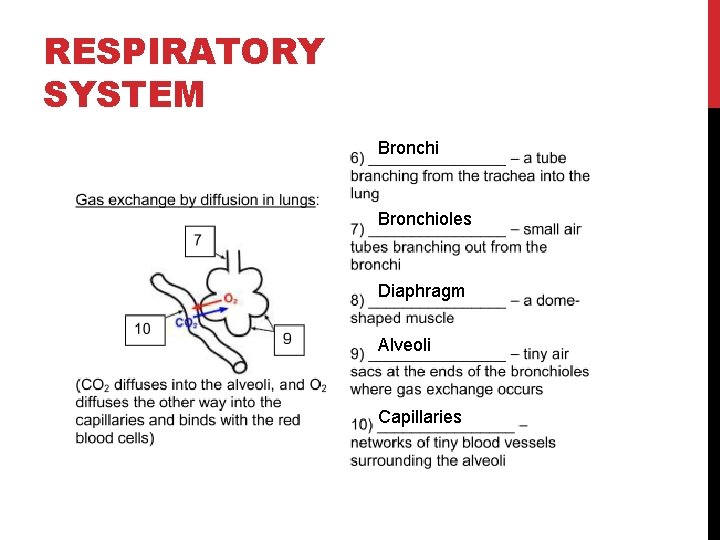
RESPIRATORY SYSTEM Bronchioles Diaphragm Alveoli Capillaries
NERVOUS SYSTEM
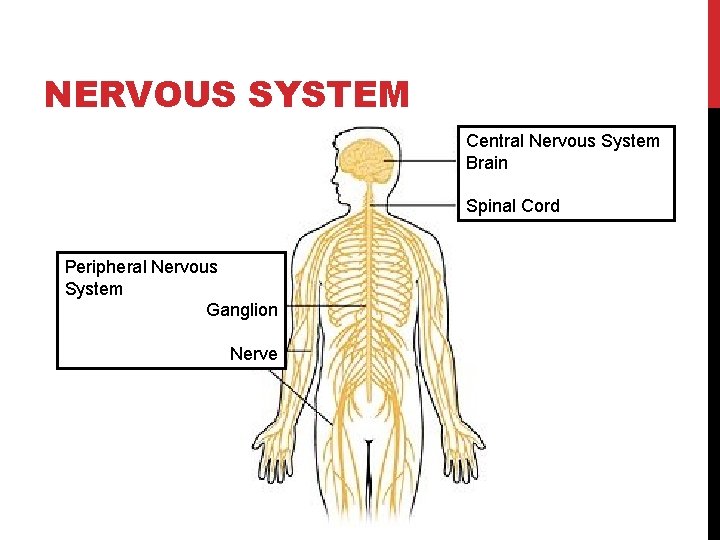
NERVOUS SYSTEM Central Nervous System Brain Spinal Cord Peripheral Nervous System Ganglion Nerve
NERVOUS SYSTEM The function of the nervous system: The nervous system is the highway along which your brain sends and receives information about what is happening in the body and around it. This highway is made up of billions of nerve cells, or neurons which join together to make nerves. • A nerve is a fibre that sends impulses through the body. • These fibres are covered by fatty substance called myelin. • Myelin helps the messages go fast through the neurons. • Nerve cells work by a mixture of chemical and electrical action.