
The synergy of Polarimetry and Spectroscopy for the
- Slides: 21
The synergy of Polarimetry and Spectroscopy for the physical characterization of the asteroids. A. Cellino, INAF- Torino Observatory
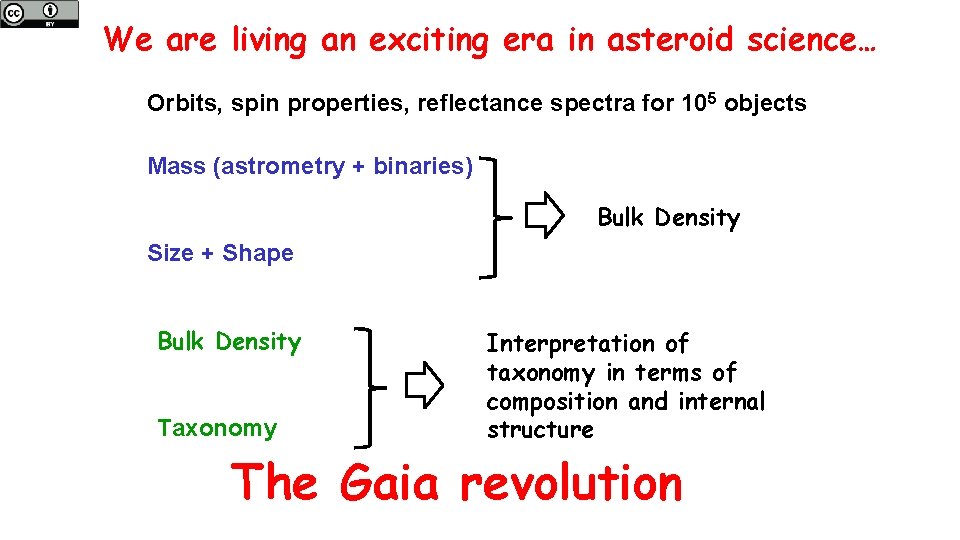
We are living an exciting era in asteroid science… Orbits, spin properties, reflectance spectra for 105 objects Mass (astrometry + binaries) Bulk Density Size + Shape Bulk Density Taxonomy Interpretation of taxonomy in terms of composition and internal structure The Gaia revolution
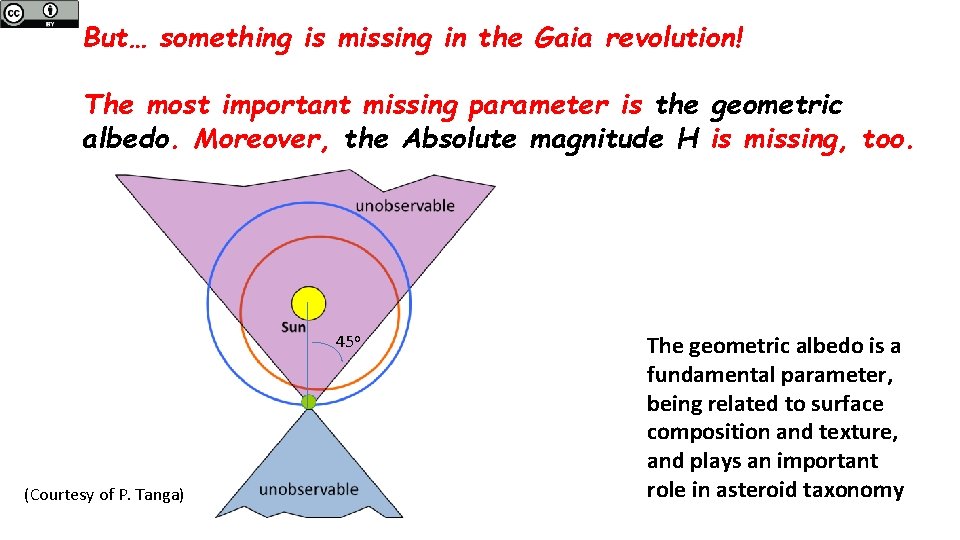
But… something is missing in the Gaia revolution! The most important missing parameter is the geometric albedo. Moreover, the Absolute magnitude H is missing, too. 45 o (Courtesy of P. Tanga) The geometric albedo is a fundamental parameter, being related to surface composition and texture, and plays an important role in asteroid taxonomy
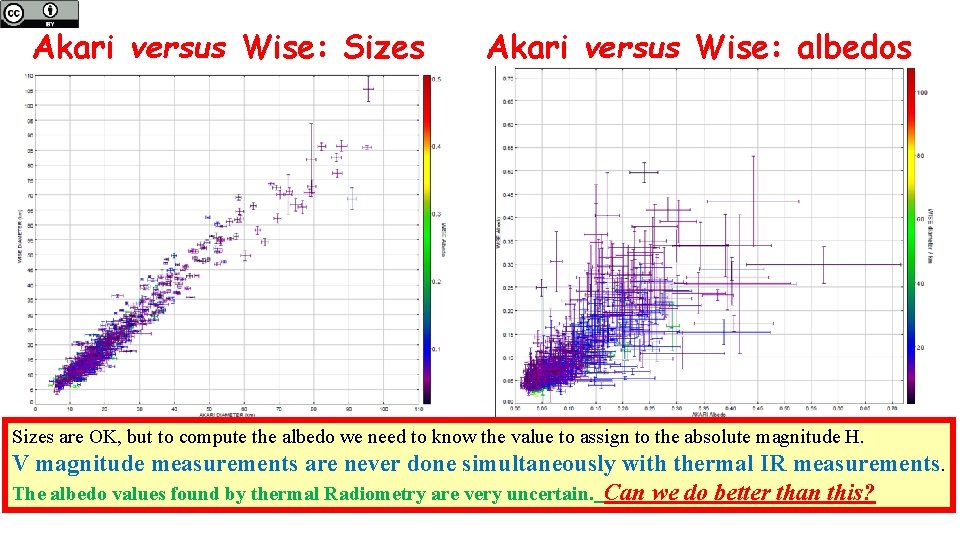
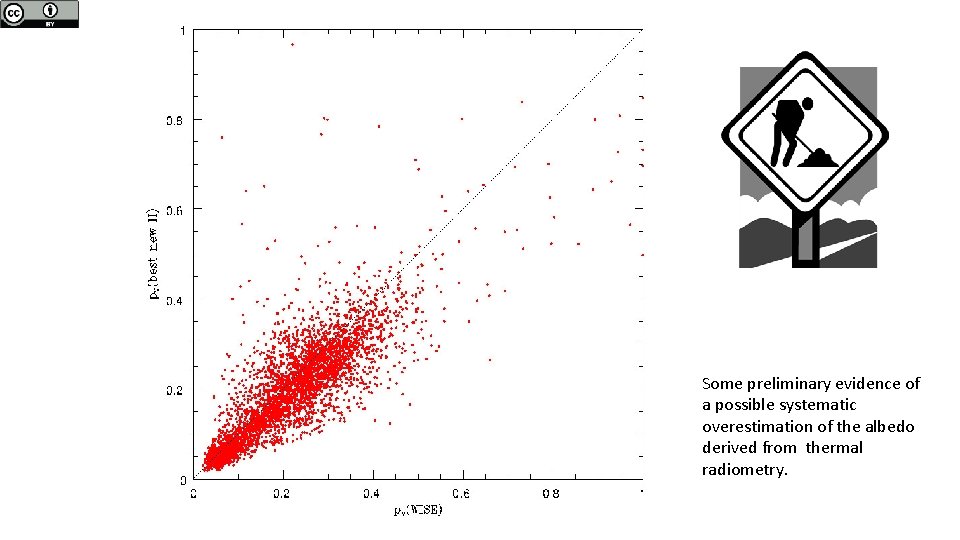
Akari versus Wise: Sizes Akari versus Wise: albedos Sizes are OK, but to compute the albedo we need to know the value to assign to the absolute magnitude H. V magnitude measurements are never done simultaneously with thermal IR measurements. The albedo values found by thermal Radiometry are very uncertain. Can we do better than this?
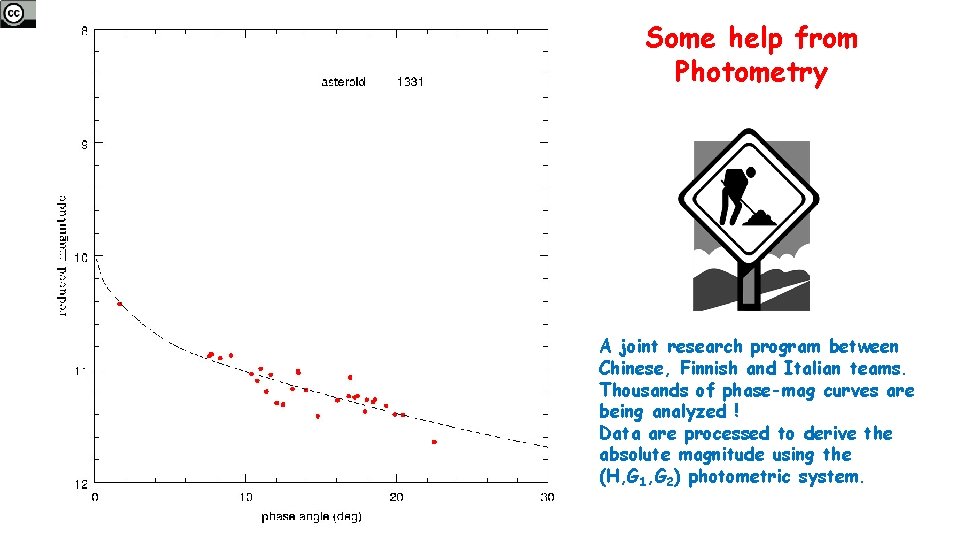
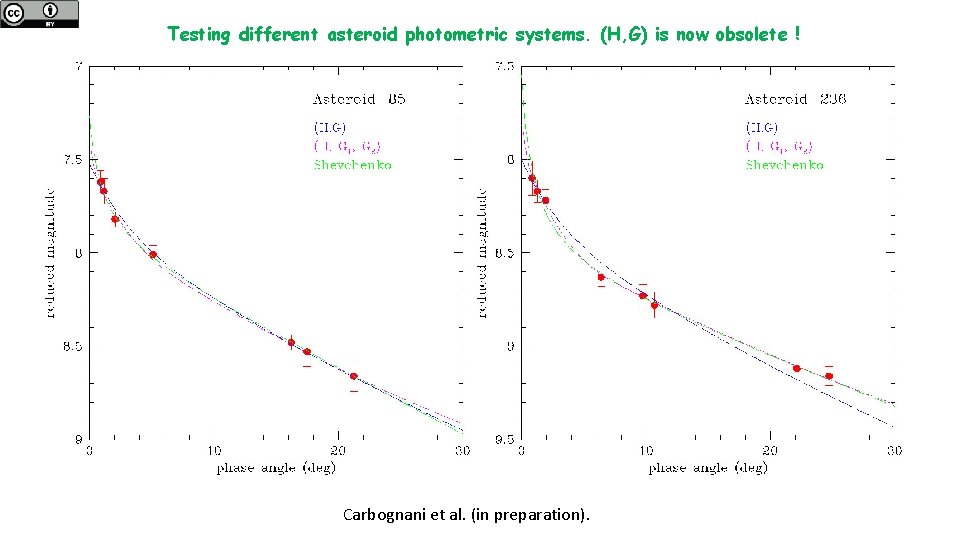
Some help from Photometry A joint research program between Chinese, Finnish and Italian teams. Thousands of phase-mag curves are being analyzed ! Data are processed to derive the absolute magnitude using the (H, G 1, G 2) photometric system.
Some preliminary evidence of a possible systematic overestimation of the albedo derived from thermal radiometry.
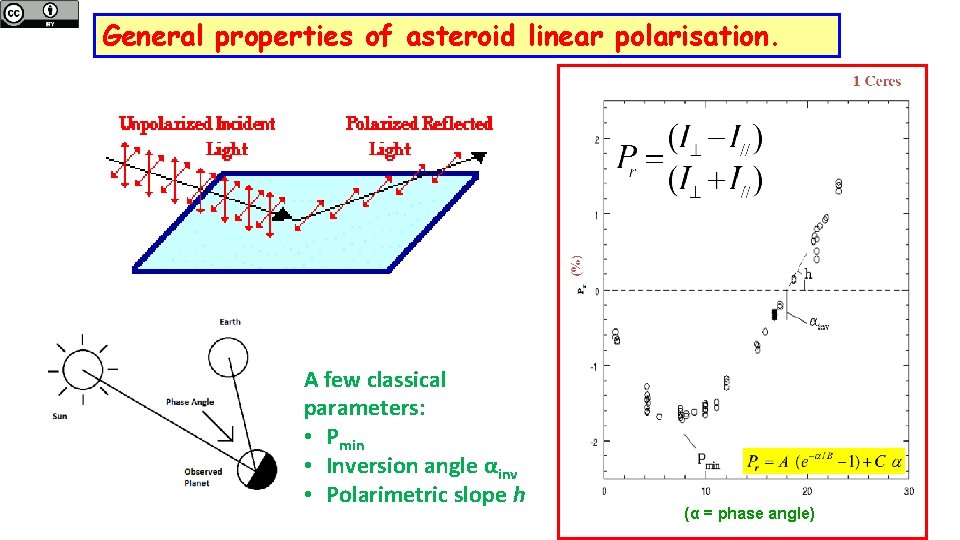
General properties of asteroid linear polarisation. A few classical parameters: • Pmin • Inversion angle αinv • Polarimetric slope h (α = phase angle)
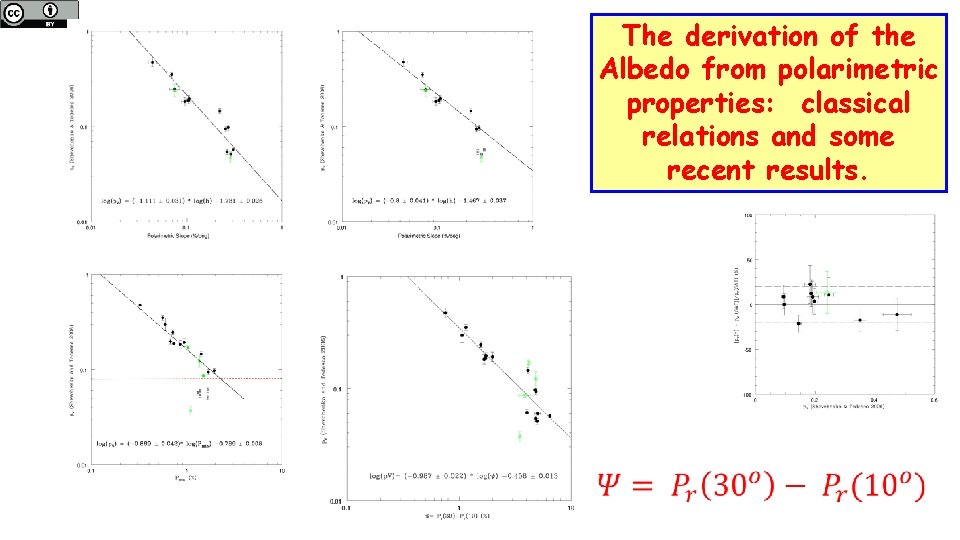
The derivation of the Albedo from polarimetric properties: classical relations and some recent results.
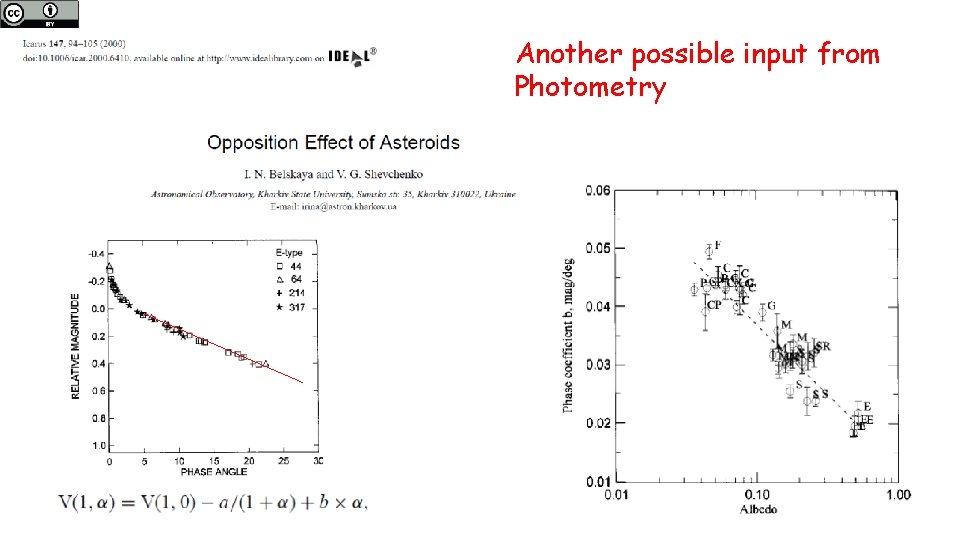
Another possible input from Photometry
From Gaia photometry, we will measure the slope of the mag – phase relation for tens of thousands asteroids ! If the Belskaya & Shevchenko relation is confirmed and well calibrated, we will obtain reasonable estimates the albedos of tens of thousands asteroids from their photometric slopes ! For free ! And albedo information will be very useful in producing a new taxonomy. To do that we need to determine for a big sample of objects accurate measurements of both the albedo from polarimetry and the mag – phase slope from photometry. There is a lot of work to be done ! There are currently only 23 objects for which this information is available!
Testing different asteroid photometric systems. (H, G) is now obsolete ! Carbognani et al. (in preparation).
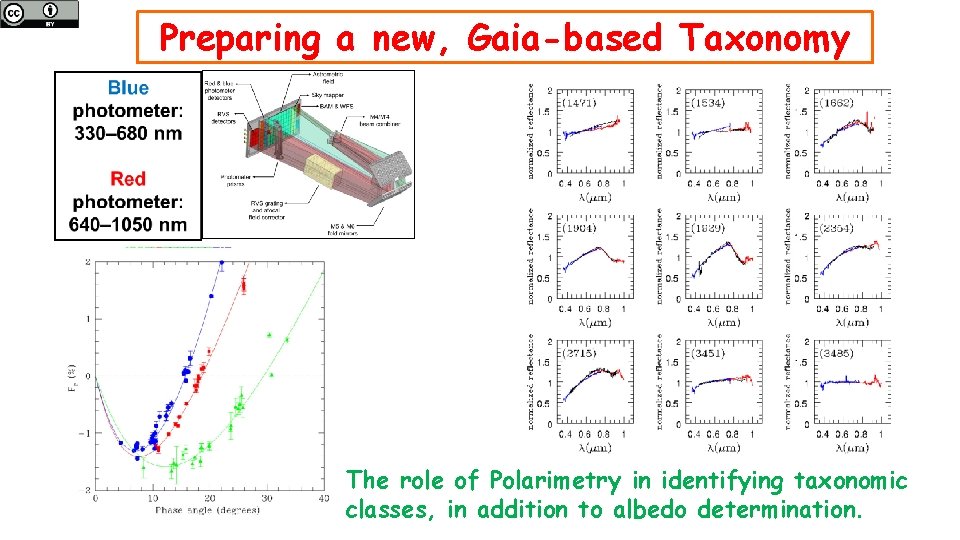
Preparing a new, Gaia-based Taxonomy The role of Polarimetry in identifying taxonomic classes, in addition to albedo determination.
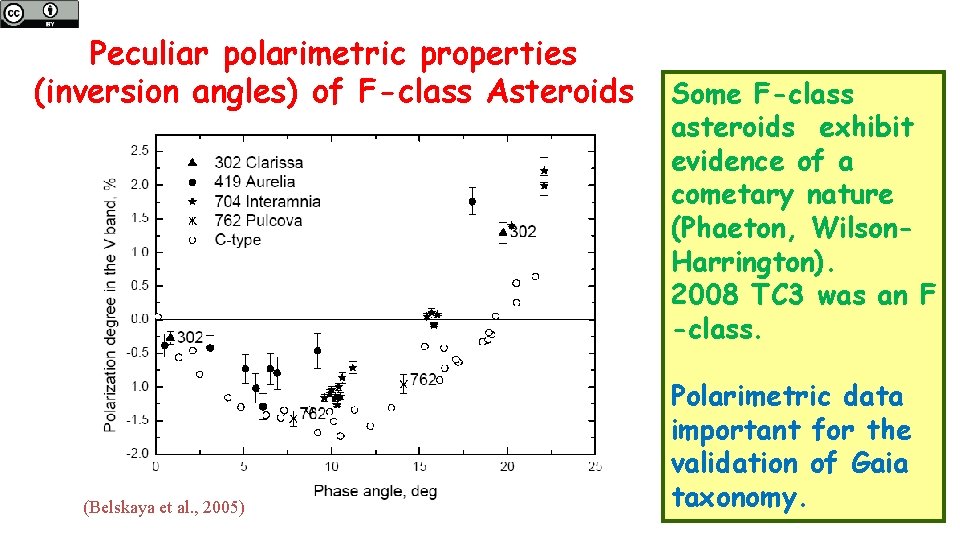
Peculiar polarimetric properties (inversion angles) of F-class Asteroids (Belskaya et al. , 2005) Some F-class asteroids exhibit evidence of a cometary nature (Phaeton, Wilson. Harrington). 2008 TC 3 was an F -class. Polarimetric data important for the validation of Gaia taxonomy.
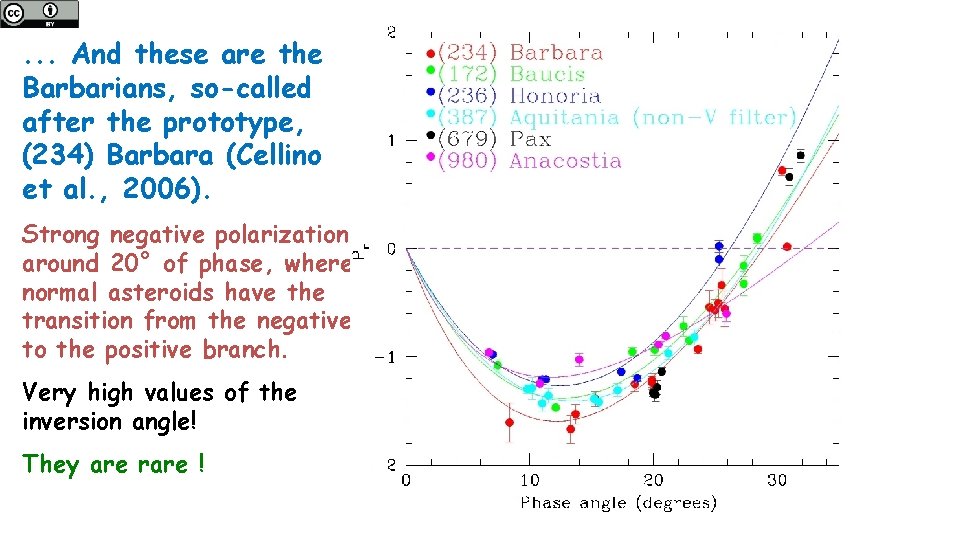
. . . And these are the Barbarians, so-called after the prototype, (234) Barbara (Cellino et al. , 2006). Strong negative polarization around 20° of phase, where normal asteroids have the transition from the negative to the positive branch. Very high values of the inversion angle! They are rare !
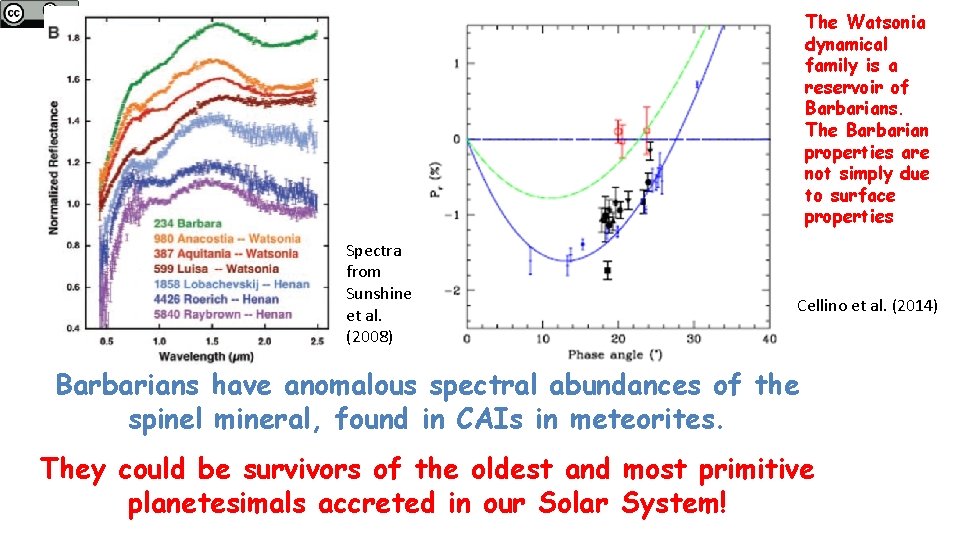
The Watsonia dynamical family is a reservoir of Barbarians. The Barbarian properties are not simply due to surface properties Spectra from Sunshine et al. (2008) Cellino et al. (2014) Barbarians have anomalous spectral abundances of the spinel mineral, found in CAIs in meteorites. They could be survivors of the oldest and most primitive planetesimals accreted in our Solar System!
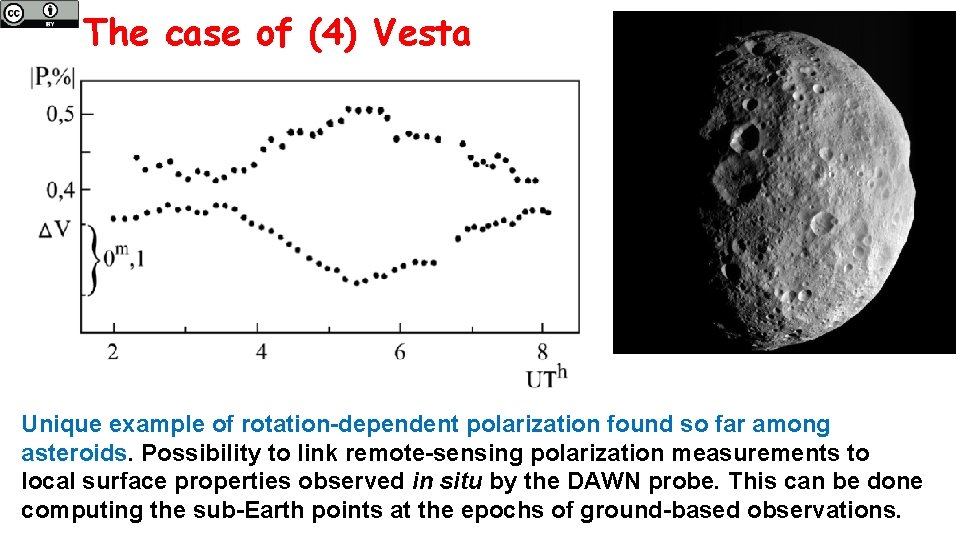
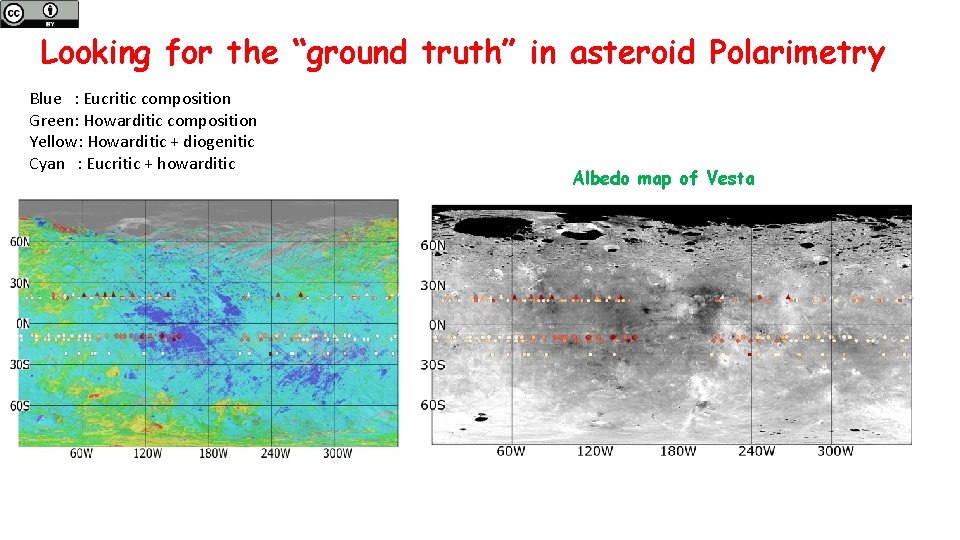
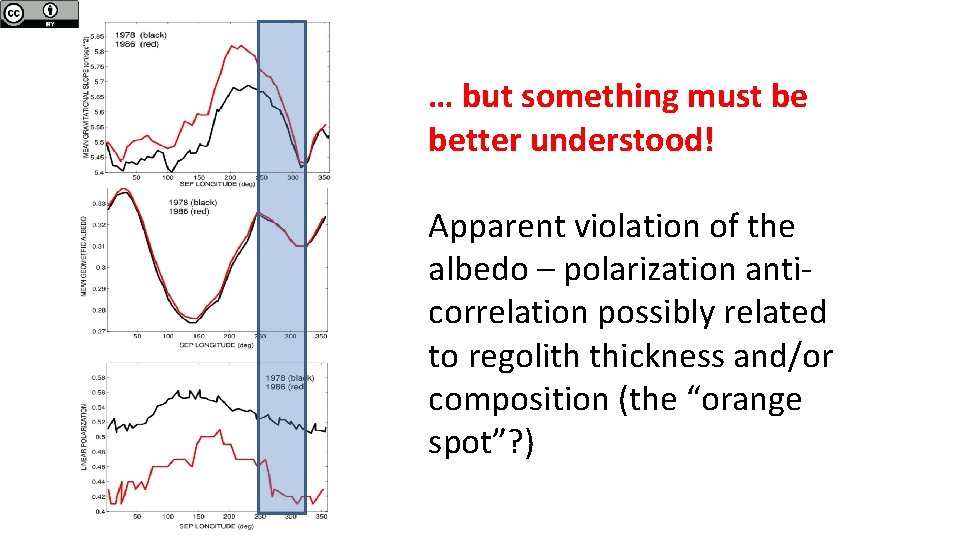
The case of (4) Vesta Unique example of rotation-dependent polarization found so far among asteroids. Possibility to link remote-sensing polarization measurements to local surface properties observed in situ by the DAWN probe. This can be done computing the sub-Earth points at the epochs of ground-based observations.
Looking for the “ground truth” in asteroid Polarimetry Blue : Eucritic composition Green: Howarditic composition Yellow: Howarditic + diogenitic Cyan : Eucritic + howarditic Albedo map of Vesta
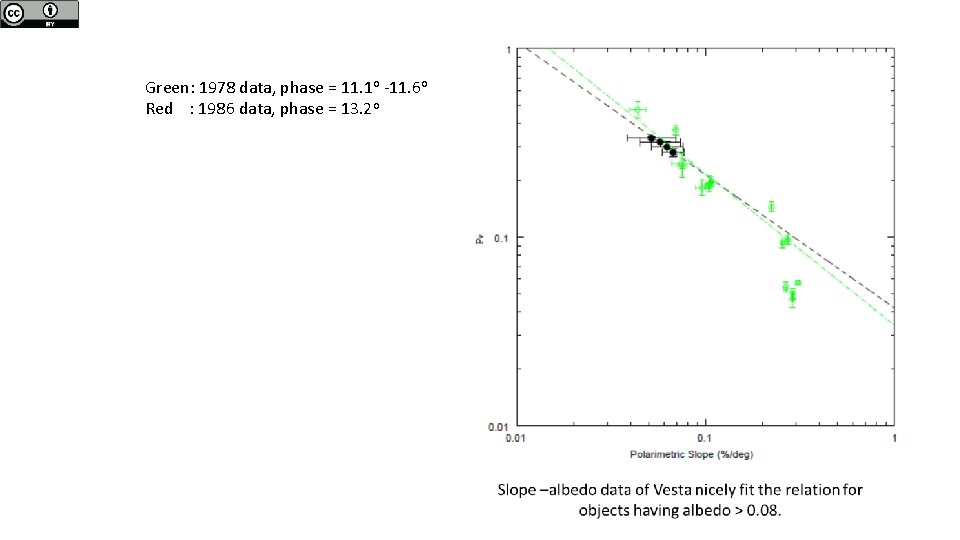
Green: 1978 data, phase = 11. 1 o -11. 6 o Red : 1986 data, phase = 13. 2 o
… but something must be better understood! Apparent violation of the albedo – polarization anticorrelation possibly related to regolith thickness and/or composition (the “orange spot”? )
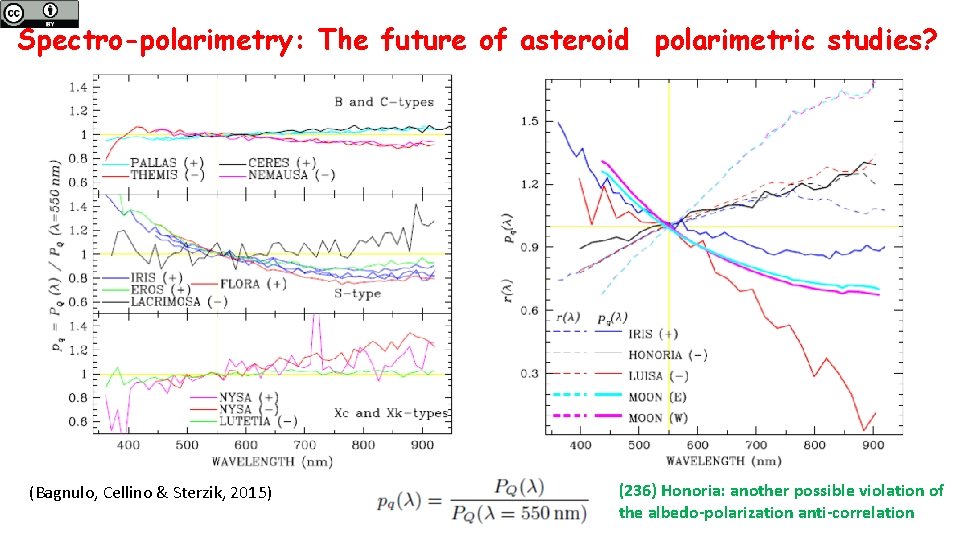
Spectro-polarimetry: The future of asteroid polarimetric studies? (Bagnulo, Cellino & Sterzik, 2015) (236) Honoria: another possible violation of the albedo-polarization anti-correlation
We must take profit of the synergy of polarization studies and spectroscopy/photometry. We need to improve our understanding of light scattering mechanisms both on theoretical and on the observational/laboratory side. The results will be extremely useful to complement, extend and improve the imminent Gaia revolution. Thank you