
The Swahili Coast Introduction Trading ports along coast
- Slides: 9
The Swahili Coast
Introduction • Trading ports along coast (Zenj- term used by Arab geographers to refer to this area) • Strong Muslim influence • Islamatization was slow to reach the general population and when it did it was a compromise between Islam & indigenous ways
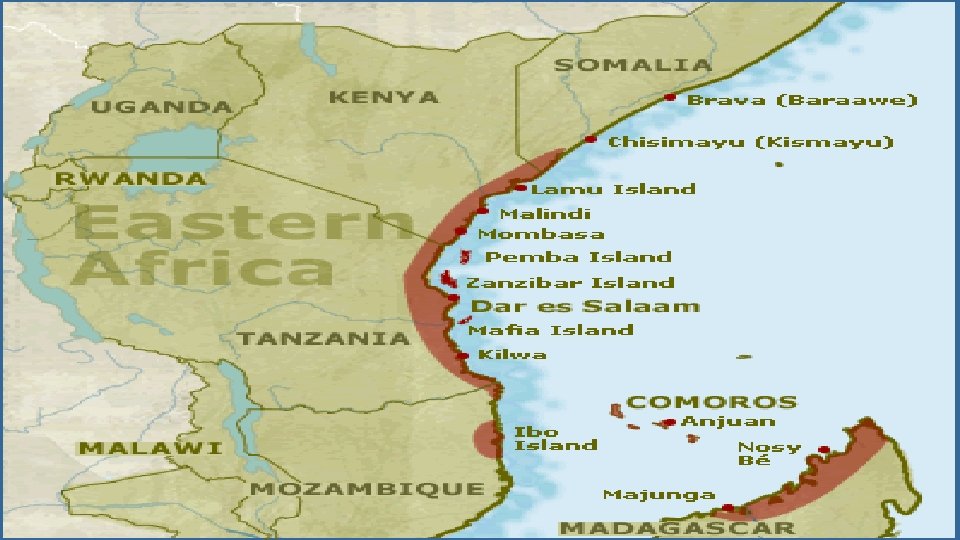
The Coastal Trading Ports • Mogadishu • Mombasa • Malindi • Kilwa • Pate • Zanzibar • Sofala
Madagascar • Asian immigrants from Indonesia (Malaya) • Bananas & coconuts introduced
Urbanized Trading ports • Trading towns shared the Bantu-based & Arabic influenced Swahili language • Ibn Battuta impressed with towns • Towns tied to each other via coastal commerce • Trade with China • Ivory, gold, slaves, & exotic animals exported from the Coast
Mixture of Cultures on the Swahili Coast • Islam facilitated long-distance commerce Provided religious bond and law • Class-based – generally elite converted • • African culture remained strong • Swahili language mixed Arabic words & was written in Arabic
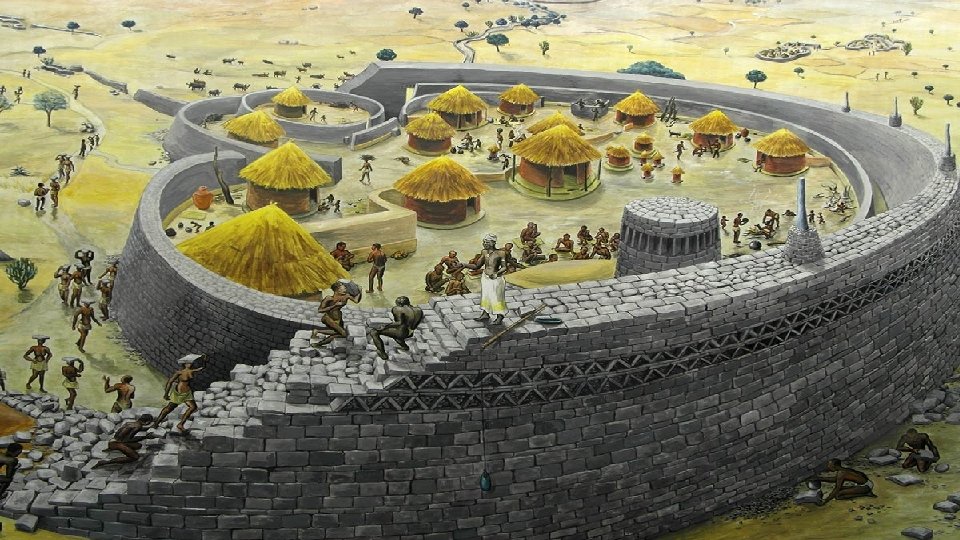
Great Zimbabwe • The largest stone complex built before the modern era • The term Zimbabwe translates to “judicial center” or “ruler’s court or house. ” • Built between the 11 th and 15 th centuries • Occupied by the Shona people • At its height it consisted of at least 7 states and The complex may have housed some 20, 000 people • May have benefited economically from gold traded to the Swahili Coast at Sofala and Kilwa.