
The Suns Magnetic Field Rotation of the Sun
- Slides: 7
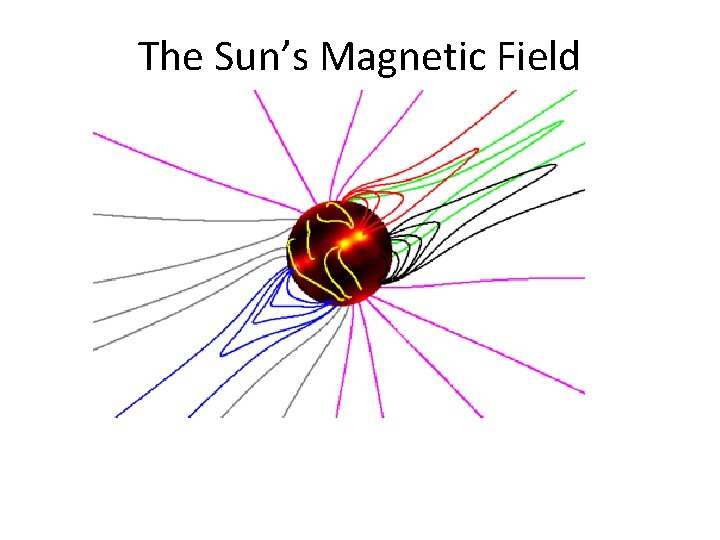
The Sun’s Magnetic Field
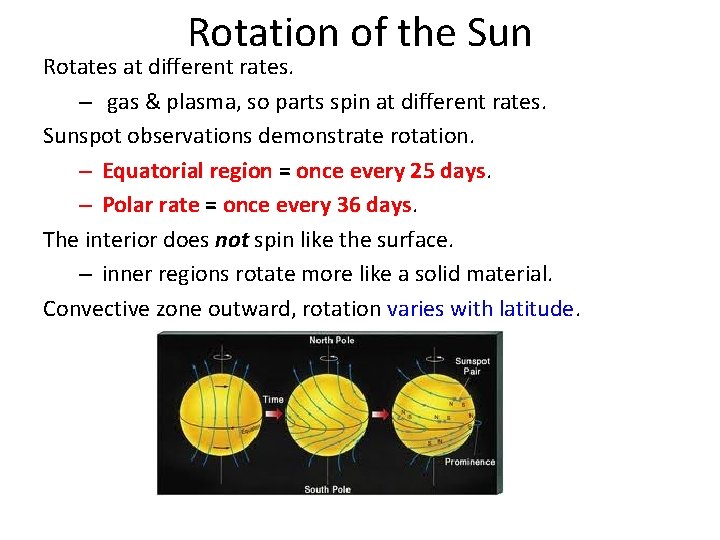
Rotation of the Sun Rotates at different rates. – gas & plasma, so parts spin at different rates. Sunspot observations demonstrate rotation. – Equatorial region = once every 25 days. – Polar rate = once every 36 days. The interior does not spin like the surface. – inner regions rotate more like a solid material. Convective zone outward, rotation varies with latitude.
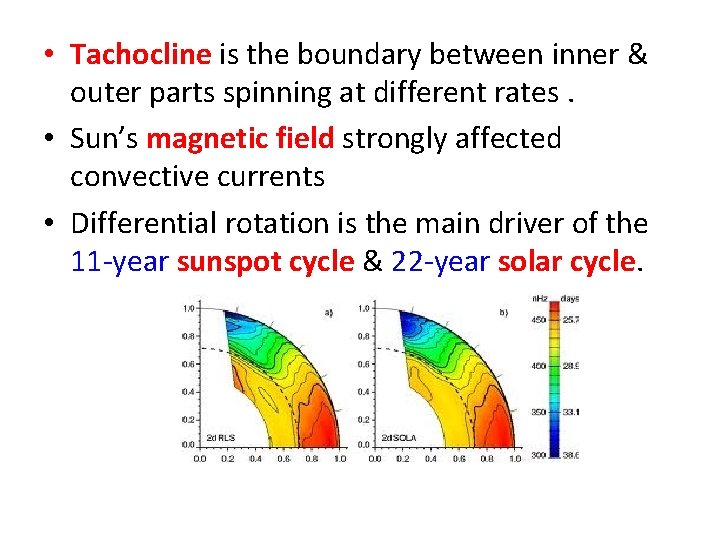
• Tachocline is the boundary between inner & outer parts spinning at different rates. • Sun’s magnetic field strongly affected convective currents • Differential rotation is the main driver of the 11 -year sunspot cycle & 22 -year solar cycle.
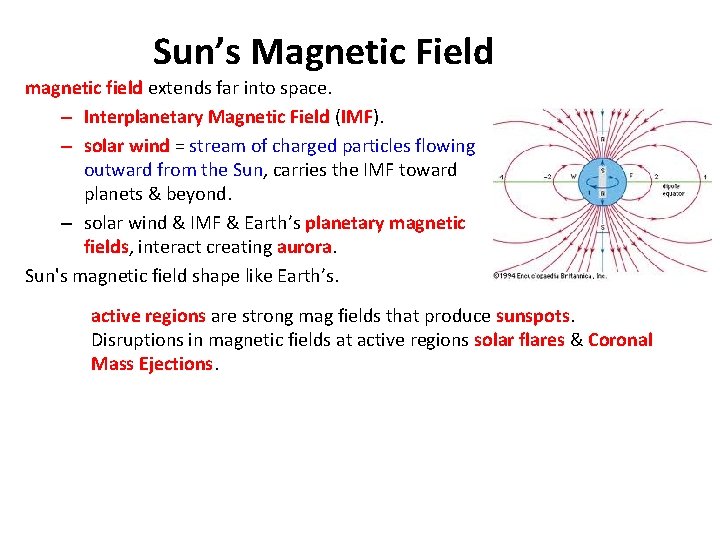
Sun’s Magnetic Field magnetic field extends far into space. – Interplanetary Magnetic Field (IMF). – solar wind = stream of charged particles flowing outward from the Sun, carries the IMF toward planets & beyond. – solar wind & IMF & Earth’s planetary magnetic fields, interact creating aurora. Sun's magnetic field shape like Earth’s. active regions are strong mag fields that produce sunspots. Disruptions in magnetic fields at active regions solar flares & Coronal Mass Ejections.
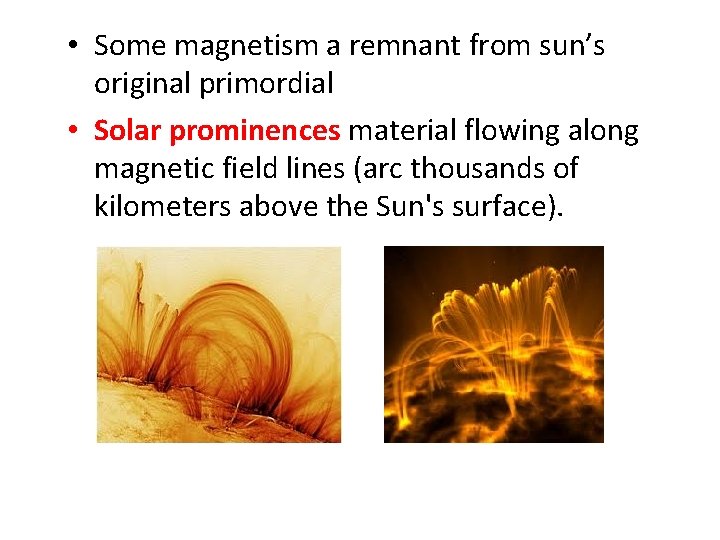
• Some magnetism a remnant from sun’s original primordial • Solar prominences material flowing along magnetic field lines (arc thousands of kilometers above the Sun's surface).
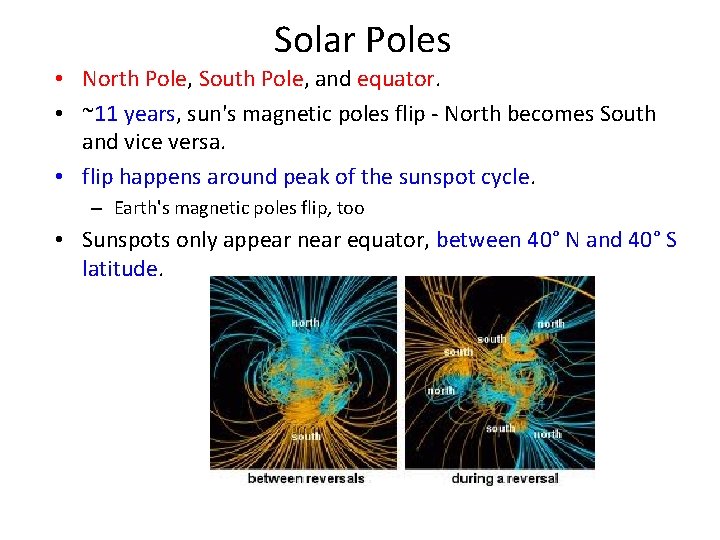
Solar Poles • North Pole, South Pole, and equator. • ~11 years, sun's magnetic poles flip - North becomes South and vice versa. • flip happens around peak of the sunspot cycle. – Earth's magnetic poles flip, too • Sunspots only appear near equator, between 40° N and 40° S latitude.
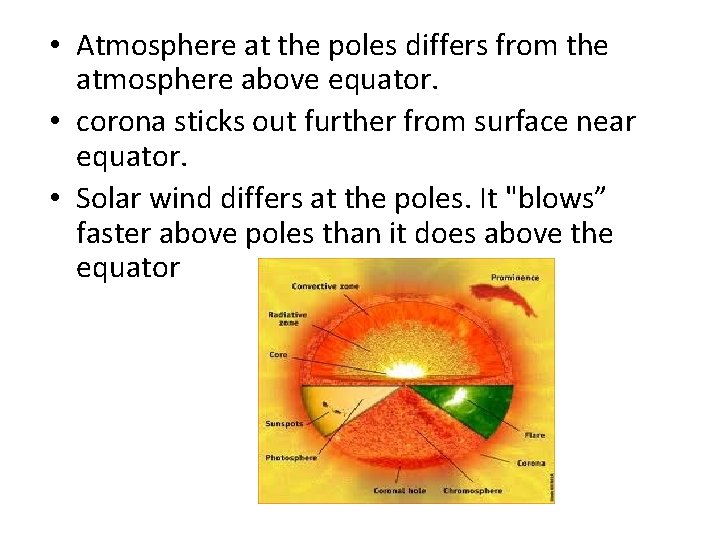
• Atmosphere at the poles differs from the atmosphere above equator. • corona sticks out further from surface near equator. • Solar wind differs at the poles. It "blows” faster above poles than it does above the equator