
The Sun The Sun Big Bang nucleosynthesis 5

The Sun
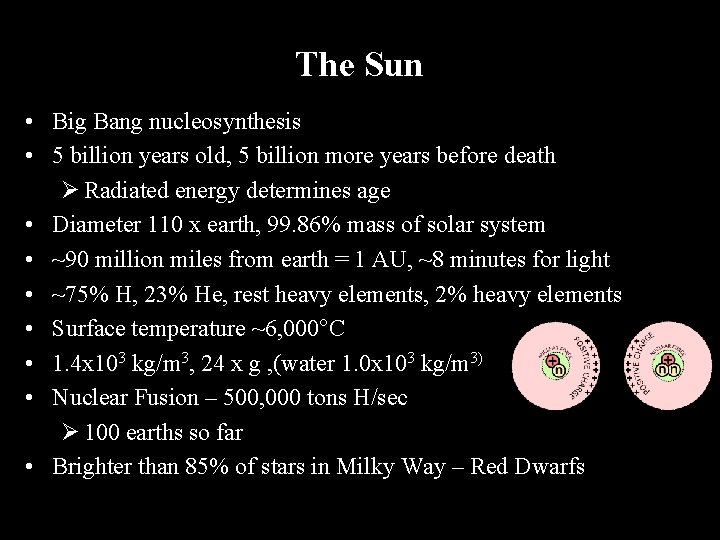
The Sun • Big Bang nucleosynthesis • 5 billion years old, 5 billion more years before death Ø Radiated energy determines age • Diameter 110 x earth, 99. 86% mass of solar system • ~90 million miles from earth = 1 AU, ~8 minutes for light • ~75% H, 23% He, rest heavy elements, 2% heavy elements • Surface temperature ~6, 000°C • 1. 4 x 10³ kg/m 3, 24 x g , (water 1. 0 x 103 kg/m 3) • Nuclear Fusion – 500, 000 tons H/sec Ø 100 earths so far • Brighter than 85% of stars in Milky Way – Red Dwarfs 2
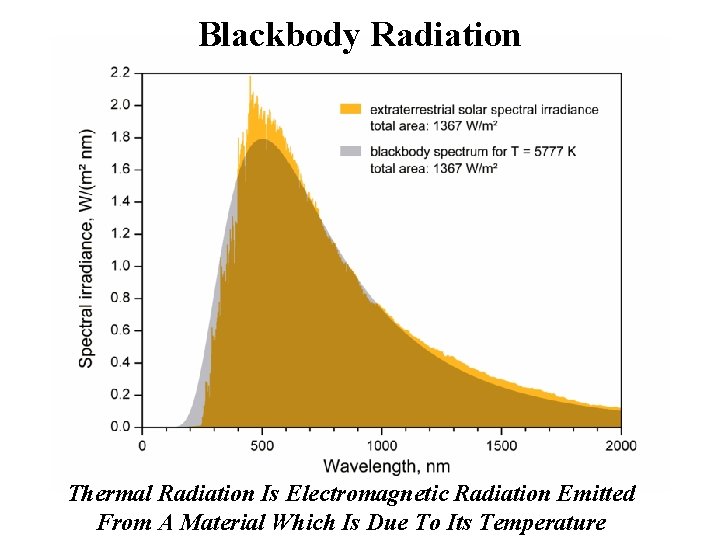
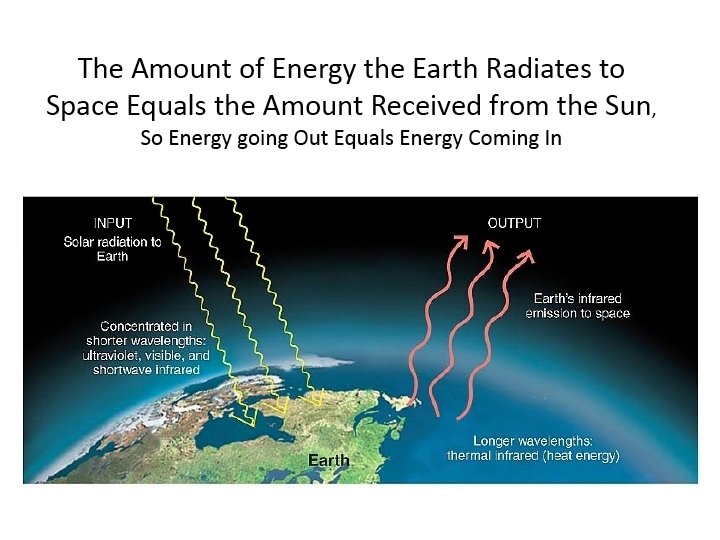
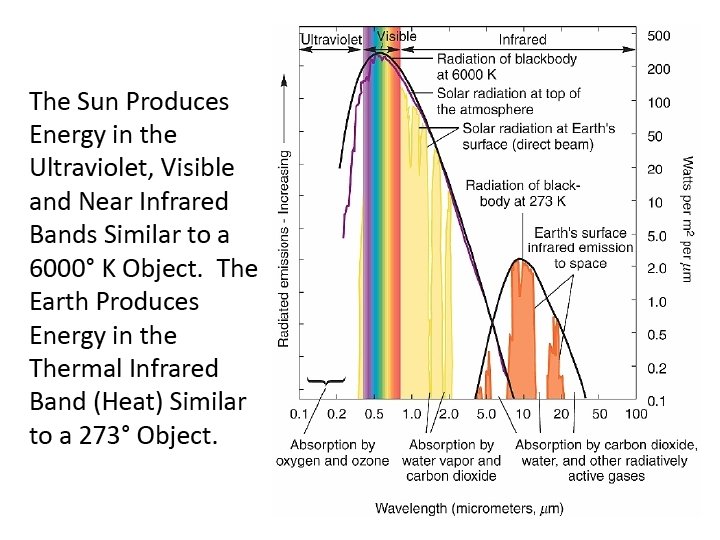
Blackbody Radiation Thermal Radiation Is Electromagnetic Radiation Emitted From A Material Which Is Due To Its Temperature
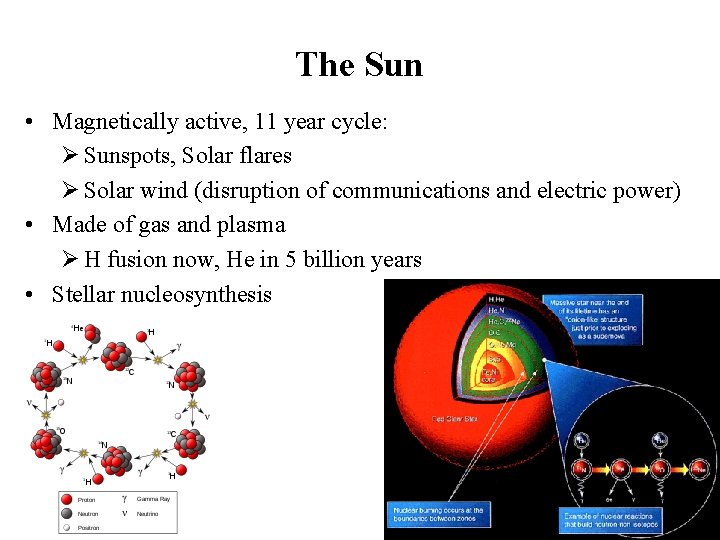
The Sun • Magnetically active, 11 year cycle: Ø Sunspots, Solar flares Ø Solar wind (disruption of communications and electric power) • Made of gas and plasma Ø H fusion now, He in 5 billion years • Stellar nucleosynthesis 5
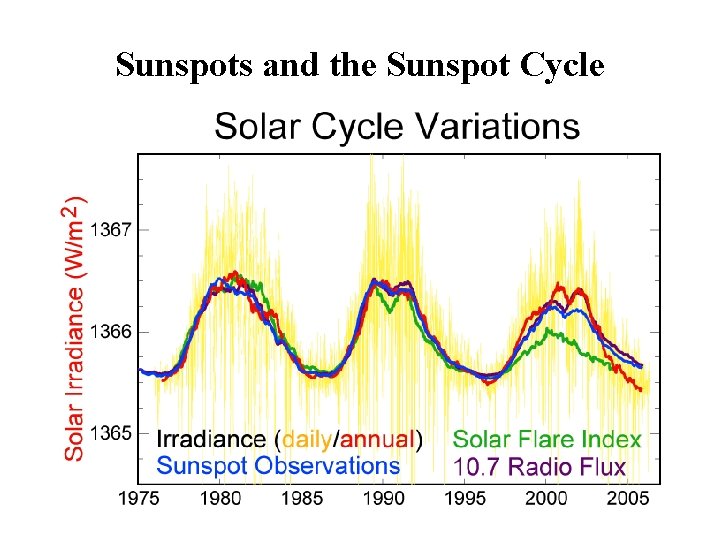
Sunspots and the Sunspot Cycle
Photovoltaics
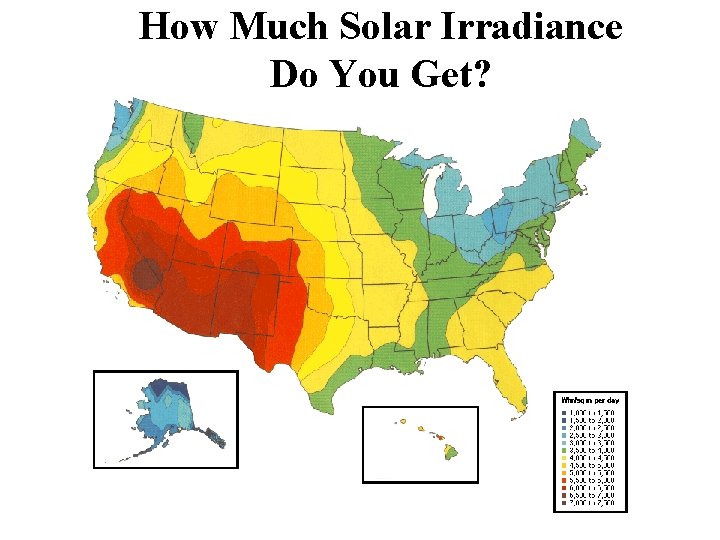
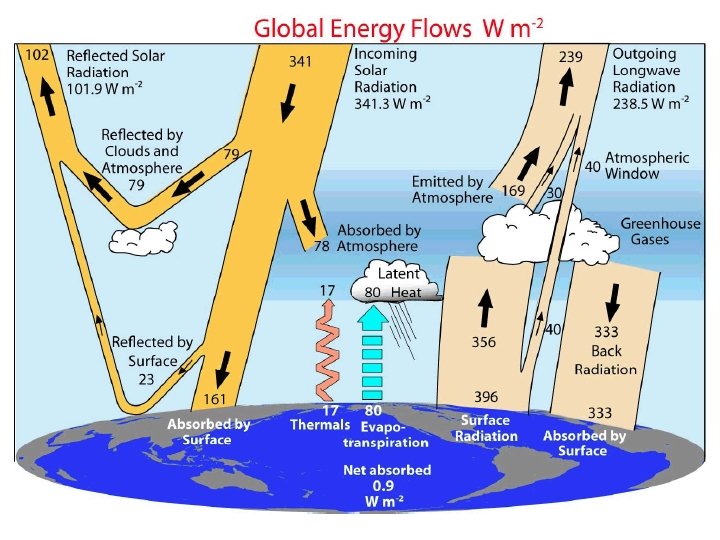
How Much Solar Irradiance Do You Get?
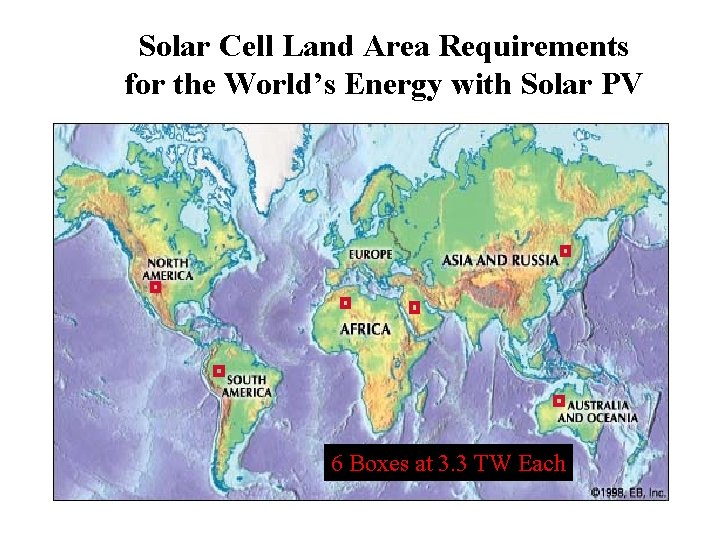
Solar Cell Land Area Requirements for the World’s Energy with Solar PV 6 Boxes at 3. 3 TW Each
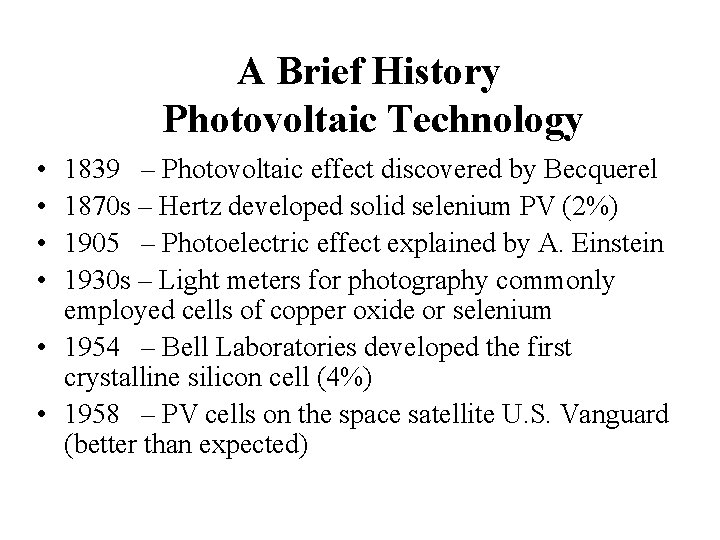
A Brief History Photovoltaic Technology • • 1839 – Photovoltaic effect discovered by Becquerel 1870 s – Hertz developed solid selenium PV (2%) 1905 – Photoelectric effect explained by A. Einstein 1930 s – Light meters for photography commonly employed cells of copper oxide or selenium • 1954 – Bell Laboratories developed the first crystalline silicon cell (4%) • 1958 – PV cells on the space satellite U. S. Vanguard (better than expected)
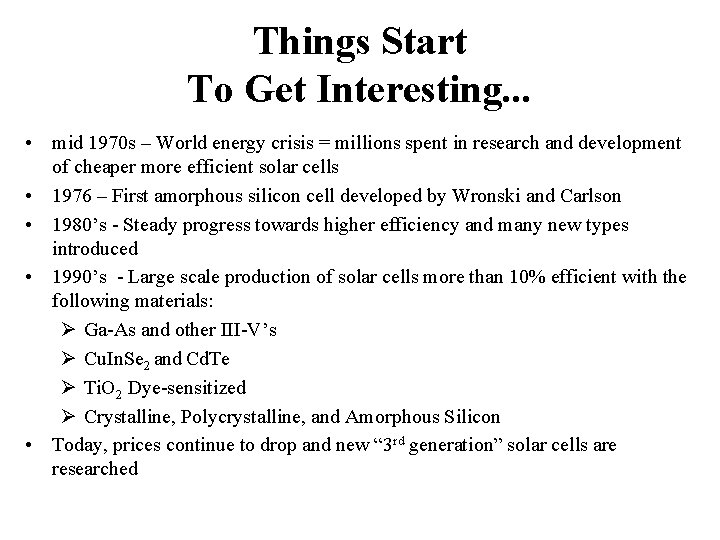
Things Start To Get Interesting. . . • mid 1970 s – World energy crisis = millions spent in research and development of cheaper more efficient solar cells • 1976 – First amorphous silicon cell developed by Wronski and Carlson • 1980’s - Steady progress towards higher efficiency and many new types introduced • 1990’s - Large scale production of solar cells more than 10% efficient with the following materials: Ø Ga-As and other III-V’s Ø Cu. In. Se 2 and Cd. Te Ø Ti. O 2 Dye-sensitized Ø Crystalline, Polycrystalline, and Amorphous Silicon • Today, prices continue to drop and new “ 3 rd generation” solar cells are researched
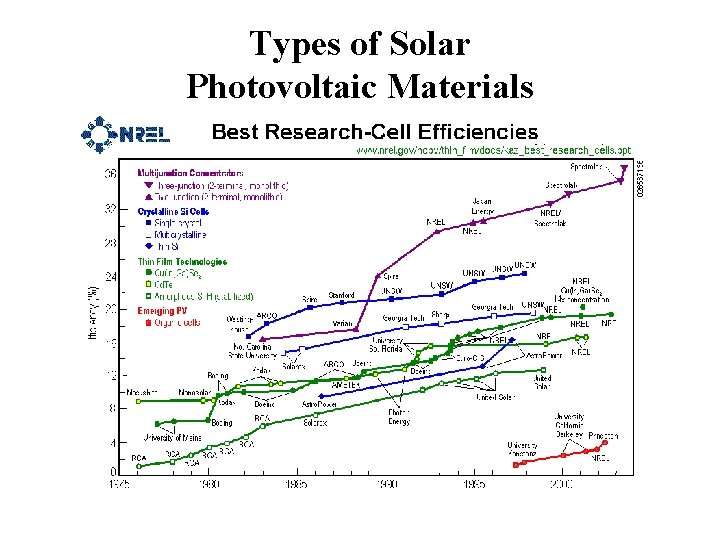
Types of Solar Photovoltaic Materials
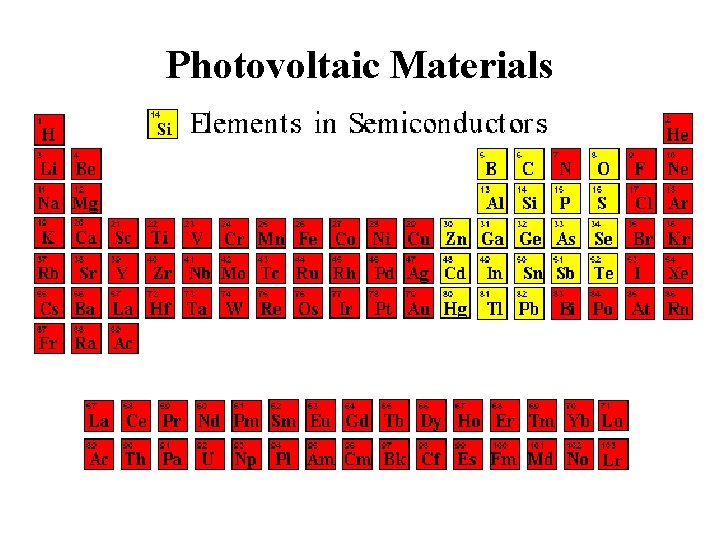
Photovoltaic Materials
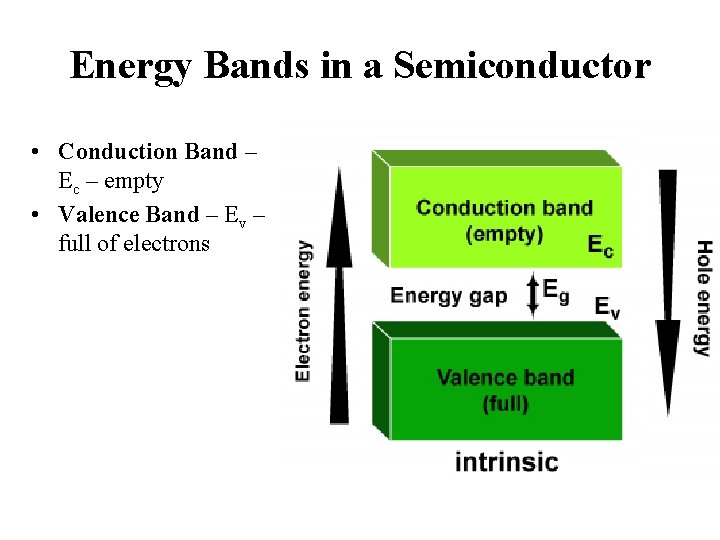
Energy Bands in a Semiconductor • Conduction Band – Ec – empty • Valence Band – Ev – full of electrons
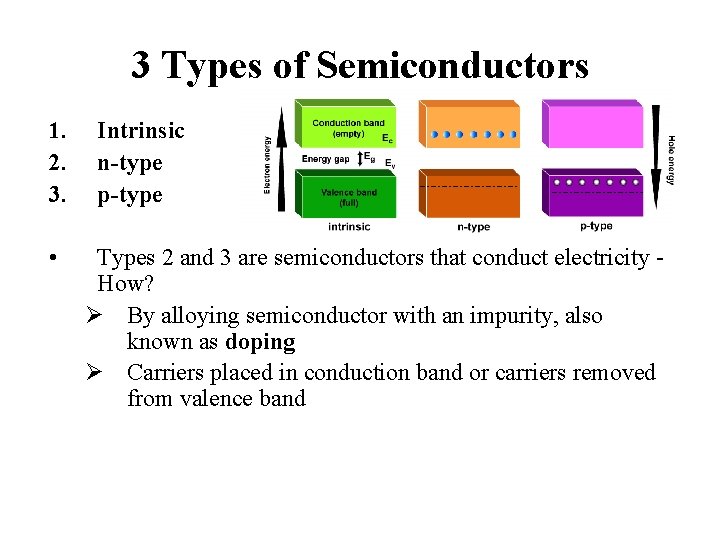
3 Types of Semiconductors 1. 2. 3. • Intrinsic n-type p-type Types 2 and 3 are semiconductors that conduct electricity How? Ø By alloying semiconductor with an impurity, also known as doping Ø Carriers placed in conduction band or carriers removed from valence band
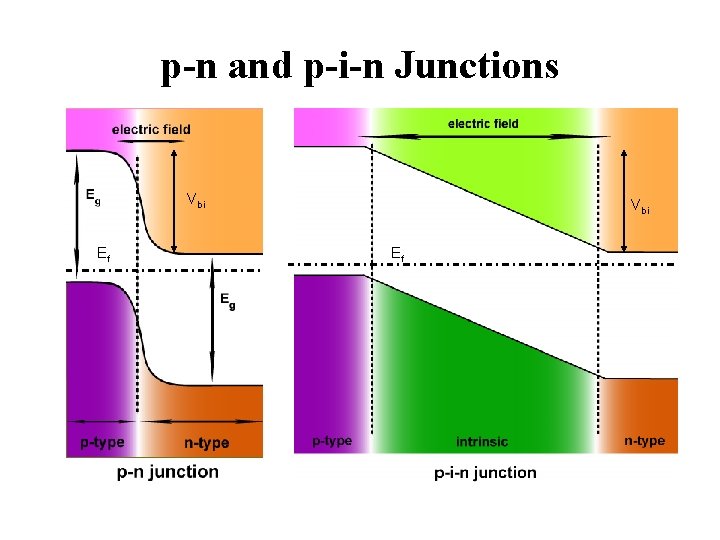
p-n and p-i-n Junctions Vbi Ef
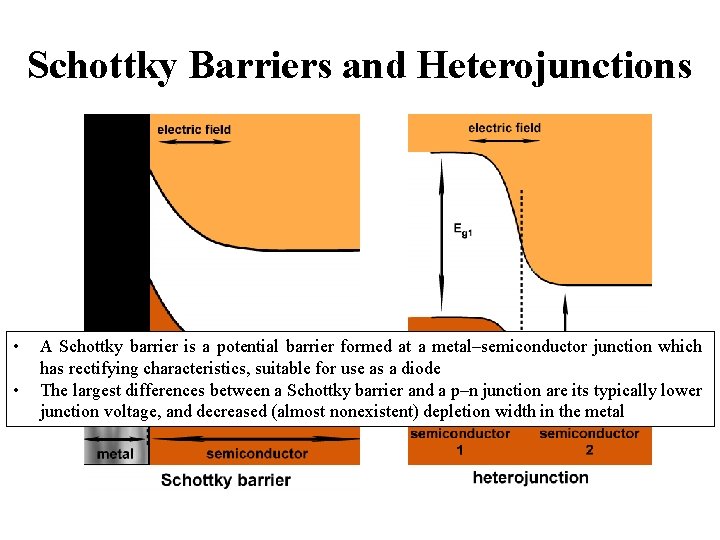
Schottky Barriers and Heterojunctions • • A Schottky barrier is a potential barrier formed at a metal–semiconductor junction which has rectifying characteristics, suitable for use as a diode The largest differences between a Schottky barrier and a p–n junction are its typically lower junction voltage, and decreased (almost nonexistent) depletion width in the metal
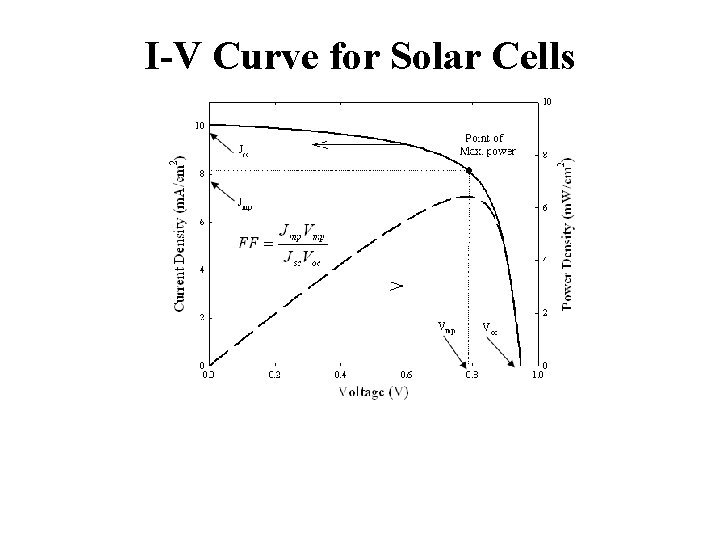
I-V Curve for Solar Cells
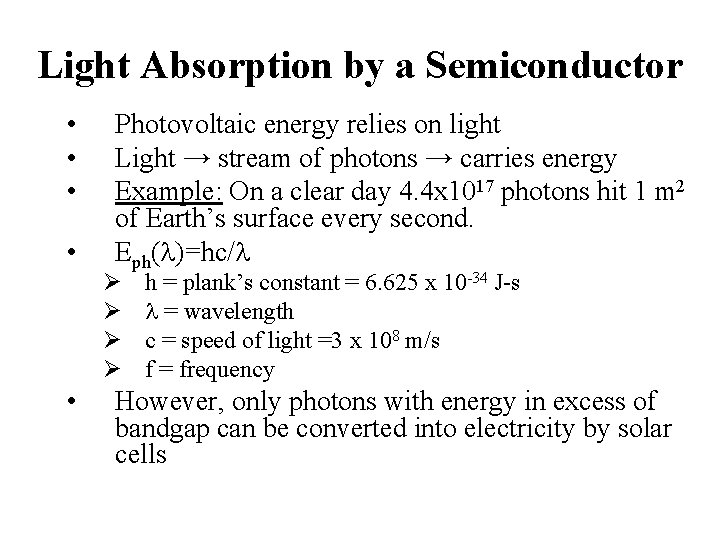
Light Absorption by a Semiconductor • • Photovoltaic energy relies on light Light → stream of photons → carries energy Example: On a clear day 4. 4 x 10¹⁷ photons hit 1 m 2 of Earth’s surface every second. Eph( )=hc/ Ø Ø • h = plank’s constant = 6. 625 x 10 -34 J-s = wavelength c = speed of light =3 x 10⁸ m/s f = frequency However, only photons with energy in excess of bandgap can be converted into electricity by solar cells
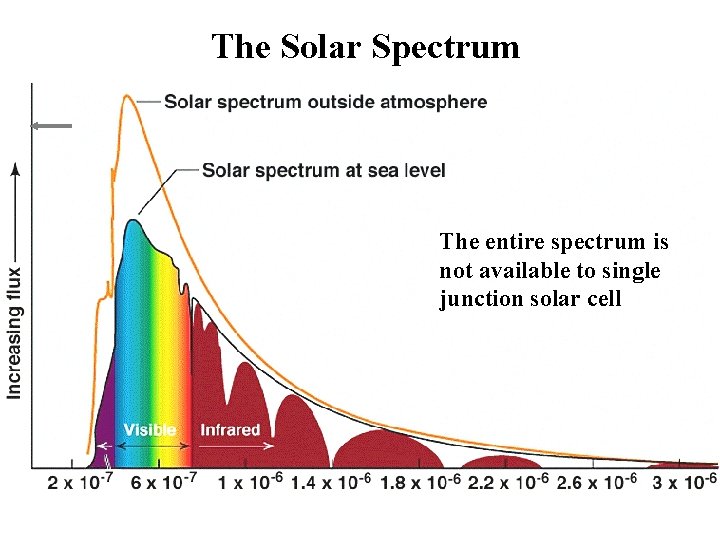
The Solar Spectrum The entire spectrum is not available to single junction solar cell
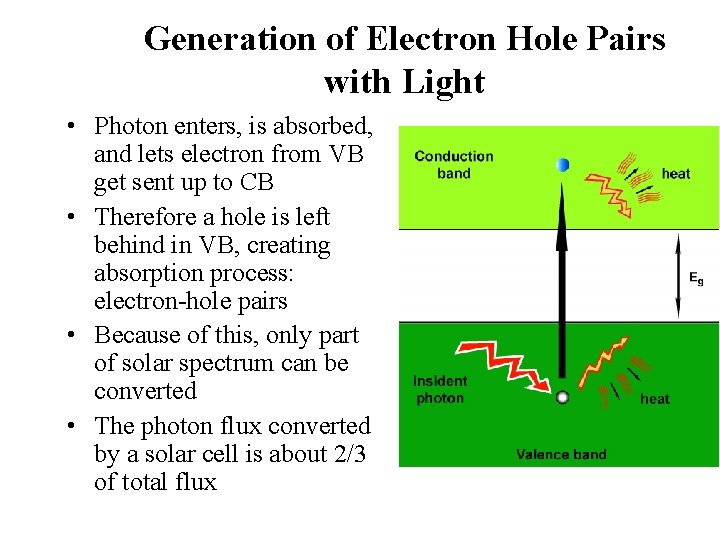
Generation of Electron Hole Pairs with Light • Photon enters, is absorbed, and lets electron from VB get sent up to CB • Therefore a hole is left behind in VB, creating absorption process: electron-hole pairs • Because of this, only part of solar spectrum can be converted • The photon flux converted by a solar cell is about 2/3 of total flux
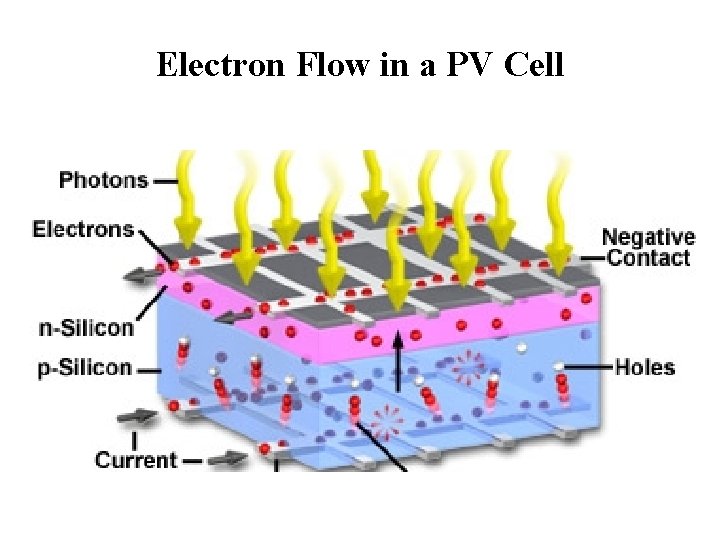
Electron Flow in a PV Cell
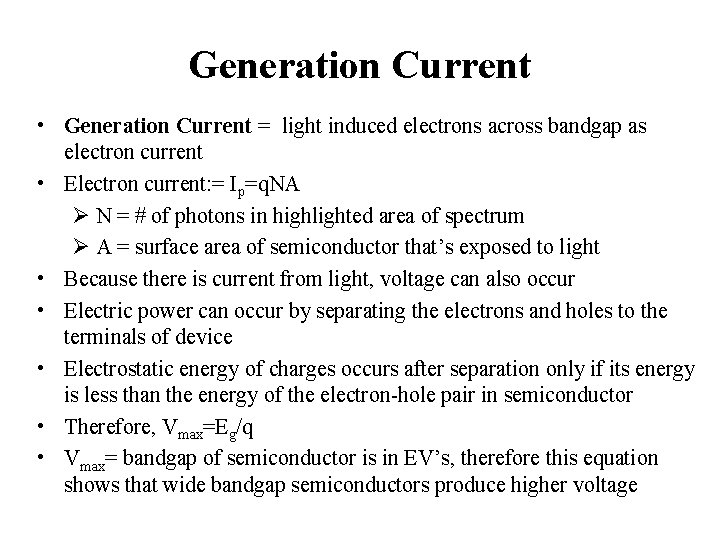
Generation Current • Generation Current = light induced electrons across bandgap as electron current • Electron current: = Ip=q. NA Ø N = # of photons in highlighted area of spectrum Ø A = surface area of semiconductor that’s exposed to light • Because there is current from light, voltage can also occur • Electric power can occur by separating the electrons and holes to the terminals of device • Electrostatic energy of charges occurs after separation only if its energy is less than the energy of the electron-hole pair in semiconductor • Therefore, Vmax=Eg/q • Vmax= bandgap of semiconductor is in EV’s, therefore this equation shows that wide bandgap semiconductors produce higher voltage
Different Types of Photovoltaic Solar Cells Diffusion Drift Excitonic
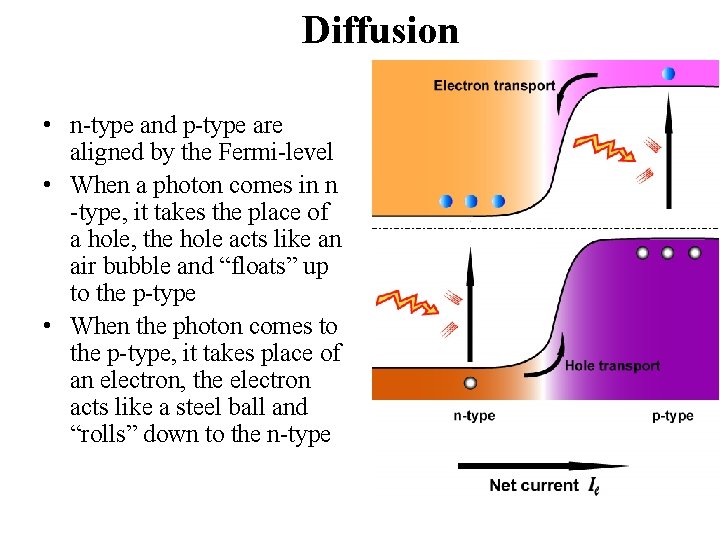
Diffusion • n-type and p-type are aligned by the Fermi-level • When a photon comes in n -type, it takes the place of a hole, the hole acts like an air bubble and “floats” up to the p-type • When the photon comes to the p-type, it takes place of an electron, the electron acts like a steel ball and “rolls” down to the n-type
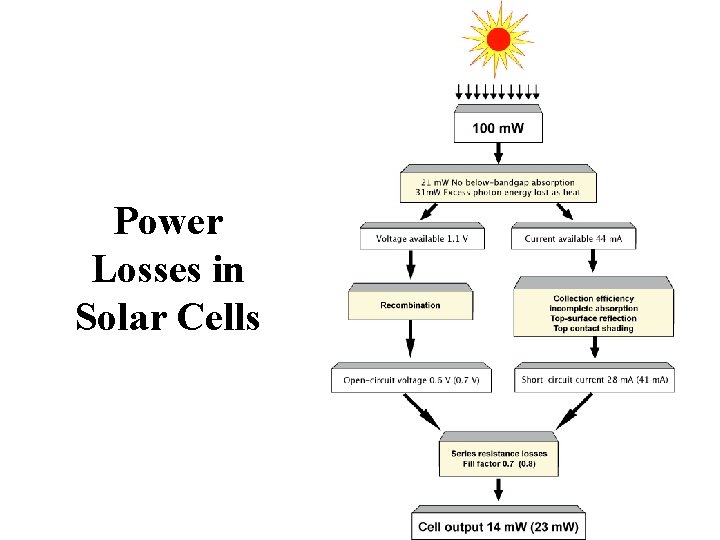
Power Losses in Solar Cells
Recombination • Opposite of carrier generation, where electron-hole pair is annihilated • Most common at: Øimpurities Ødefects of crystal structure Øsurface of semiconductor • Reducing both voltage and current
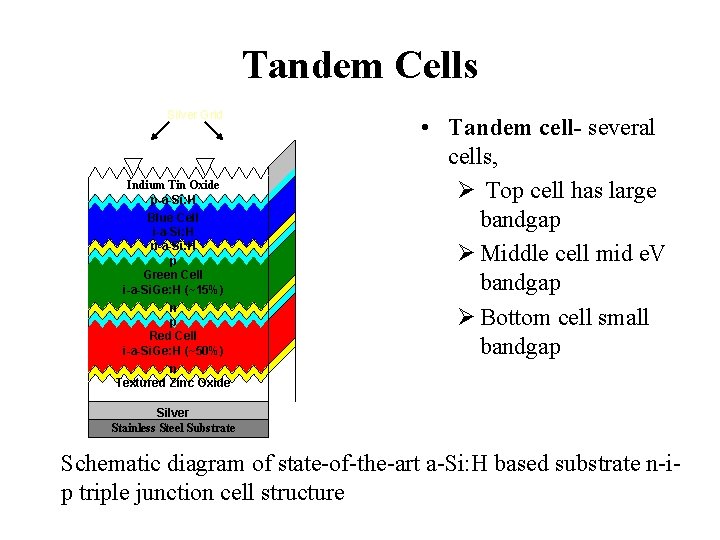
Tandem Cells Silver Grid Indium Tin Oxide p-a-Si: H Blue Cell i-a-Si: H n-a-Si: H p Green Cell i-a-Si. Ge: H (~15%) n p Red Cell i-a-Si. Ge: H (~50%) n Textured Zinc Oxide • Tandem cell- several cells, Ø Top cell has large bandgap Ø Middle cell mid e. V bandgap Ø Bottom cell small bandgap Silver Stainless Steel Substrate Schematic diagram of state-of-the-art a-Si: H based substrate n-ip triple junction cell structure
- Slides: 32