
The Sun and the Motions of Objects in
The Sun and the Motions of Objects in the Solar System Expectations: D 3. 4, D 3. 5
The Sun Our Star! l Averaged sized, middle age star l Huge globe of ¾ hydrogen and ¼ helium l 1. 4 million km in diameter 110 X the diameter of earth l video l
The Sun Emits energy (radiation) some of which is absorbed by the Earth’s atmosphere and some is reflected into space l This radiation is the driving force behind our weather and climate and provides energy for life to exist l
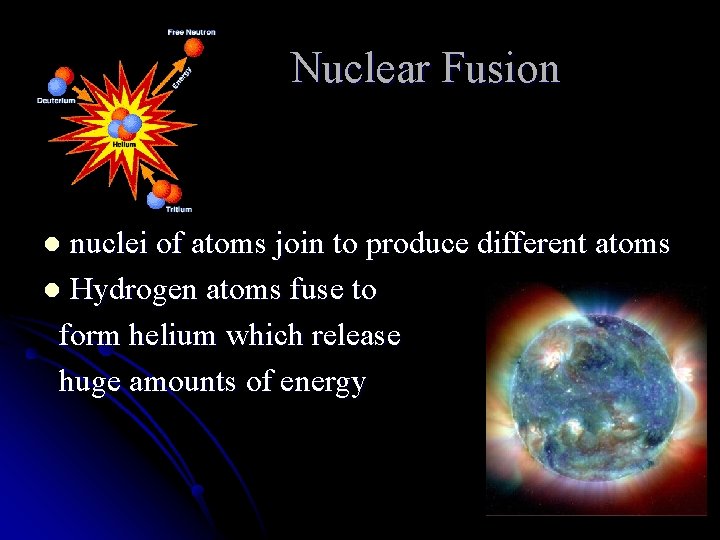
Nuclear Fusion nuclei of atoms join to produce different atoms l Hydrogen atoms fuse to form helium which release huge amounts of energy l
Structure l At the core, nuclear fusion occurs (H fuses to He), it is the hottest part of the Sun (15 000ºC) l First layer –radiative zone l Second layer- convective zone l Third layer- photosphere (5500ºC) l Sun’s atmosphere includes the chromosphere (65 500ºC) and corona (halo that extends millions of km)

Structure of the Sun
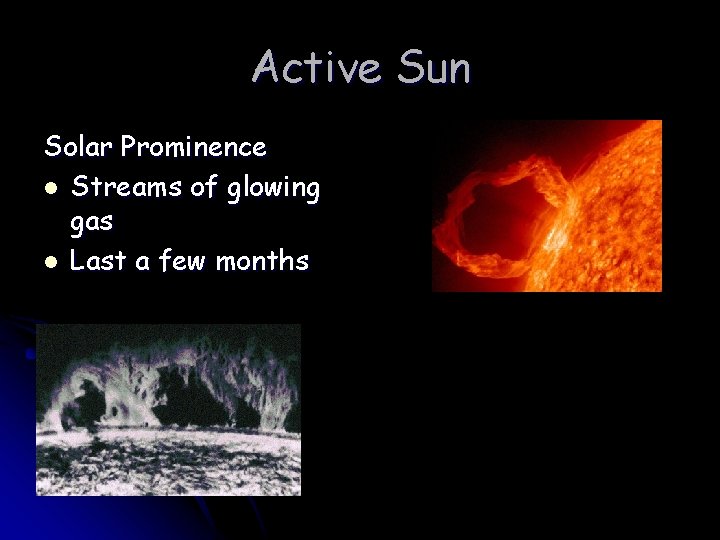
Active Sun Solar Prominence l Streams of glowing gas l Last a few months
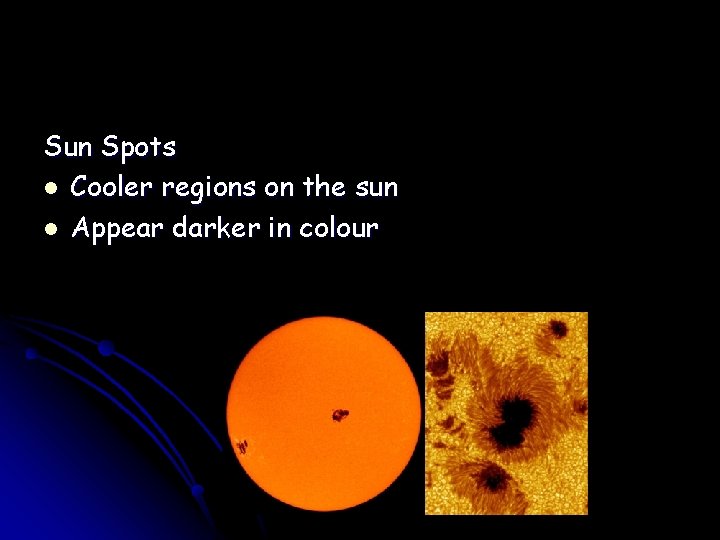
Sun Spots l Cooler regions on the sun l Appear darker in colour
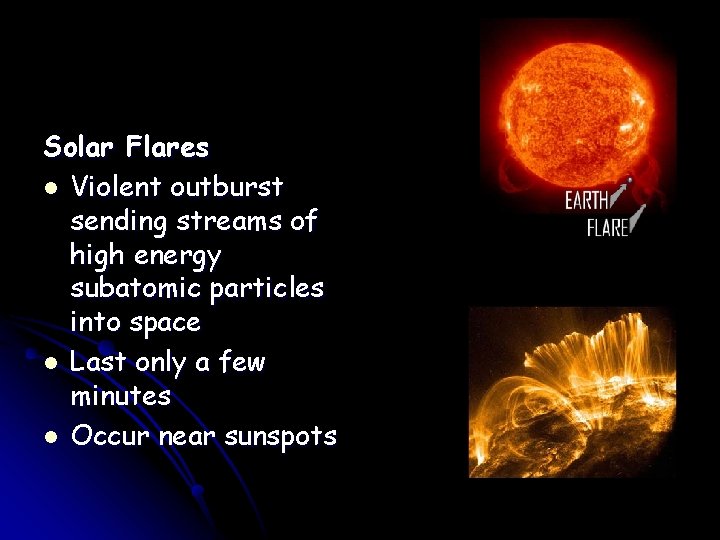
Solar Flares l Violent outburst sending streams of high energy subatomic particles into space l Last only a few minutes l Occur near sunspots
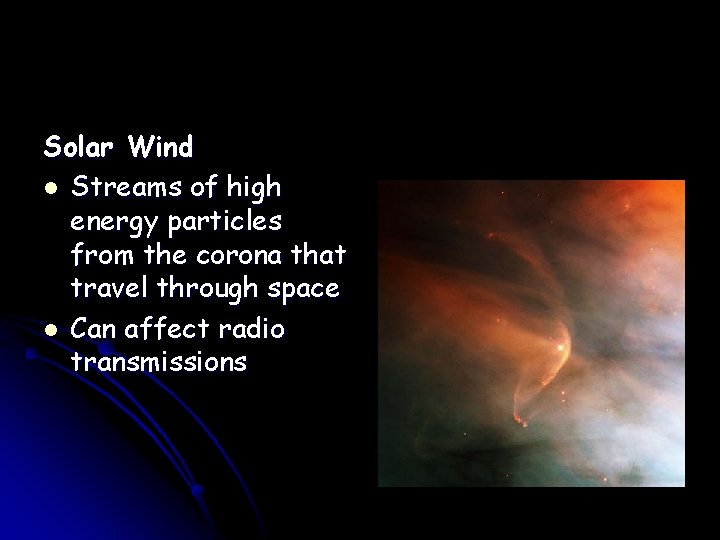
Solar Wind l Streams of high energy particles from the corona that travel through space l Can affect radio transmissions
Effects on Earth l Auroras l Shifting colours in the sky l Due to collisions between solar particles & matter in the Earth’s upper atmosphere l Northern lights (aurora borealis) l Southern lights (aurora australis) l BBC Video
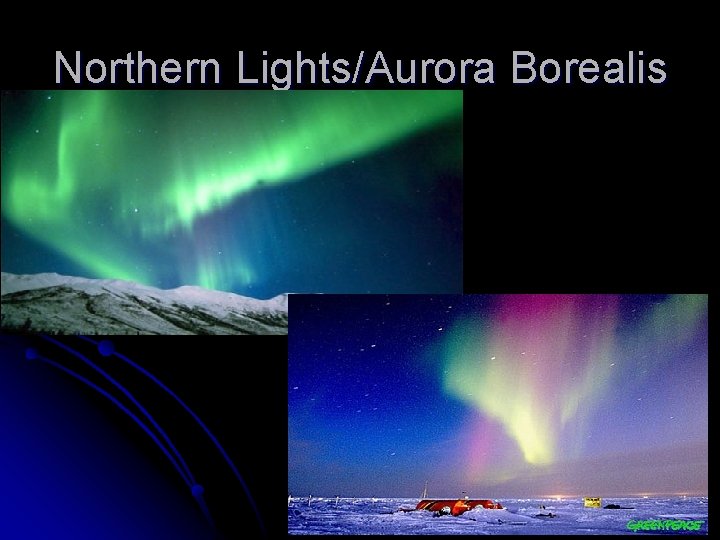
Northern Lights/Aurora Borealis
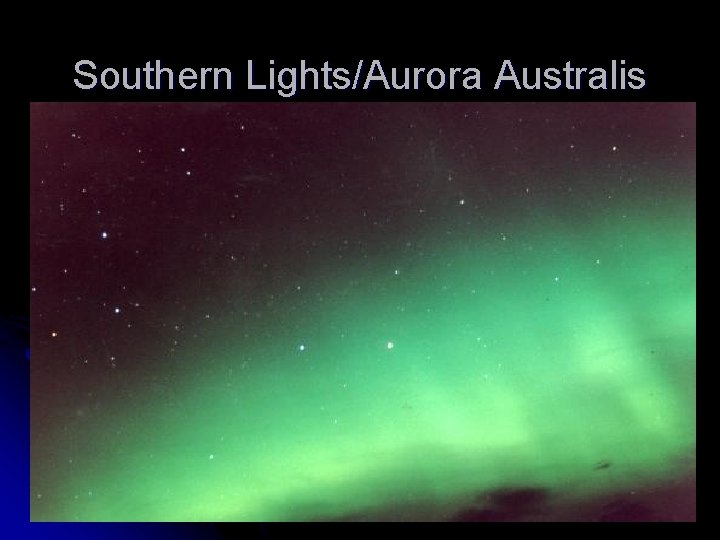
Southern Lights/Aurora Australis
Other Effects l Communication disruptions and radiation hazards l Particles ejected by the Sun can damage information on satellites, therefore tv and cell phone disruption l Radiation in solar storms can be harmful to astronauts and people travelling in planes
Motion of Planets rotate and revolve. l Rotation: the spin on the planets axis. l l The Earth takes 24 hours to rotate. l The Sun appears to rise and set because the Earth is spinning. l Revolution: the orbit around the sun. l The Earth takes 365. 25 days to orbit the Sun. l The reason we have seasons is due to the Earth’s tilt (23. 5º).
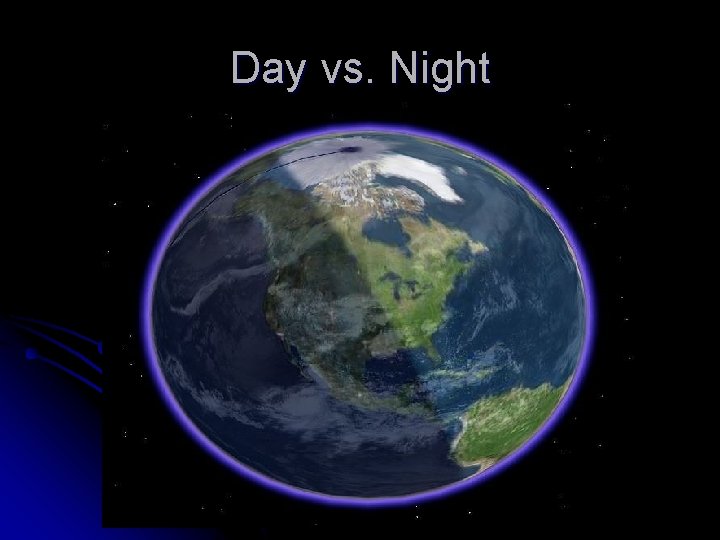
Day vs. Night
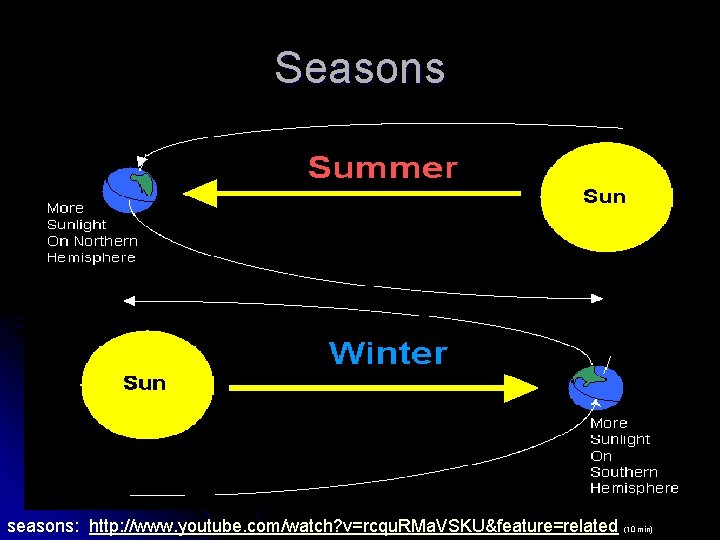
Seasons seasons: http: //www. youtube. com/watch? v=rcqu. RMa. VSKU&feature=related (10 min)
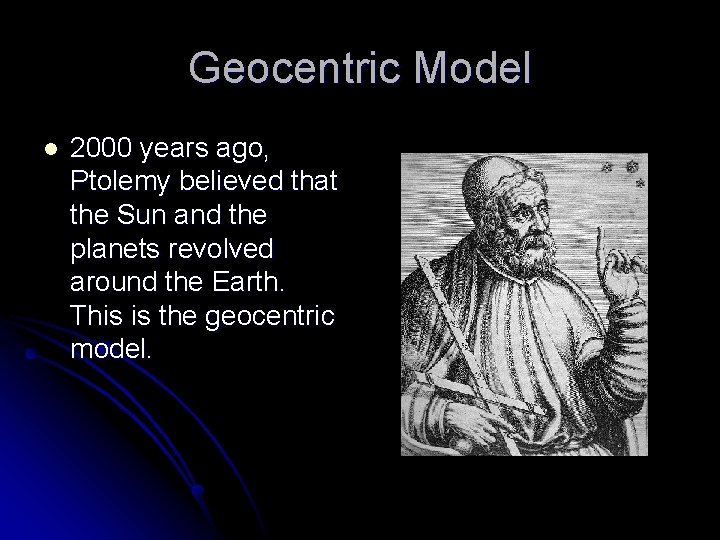
Geocentric Model l 2000 years ago, Ptolemy believed that the Sun and the planets revolved around the Earth. This is the geocentric model.
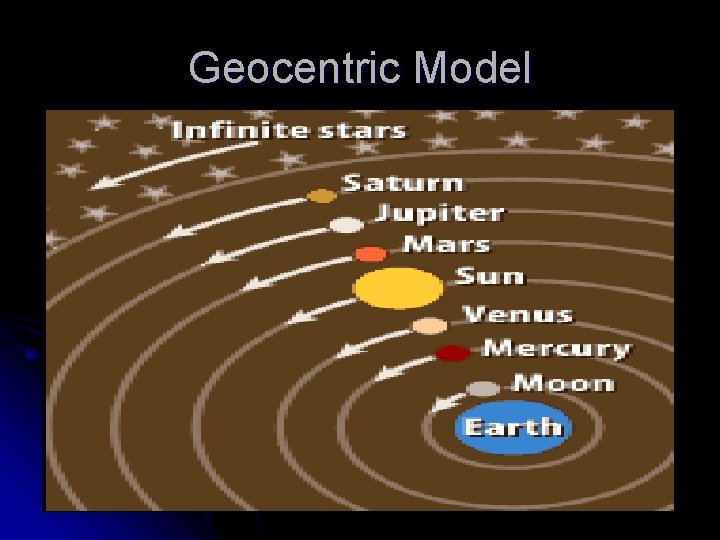
Geocentric Model
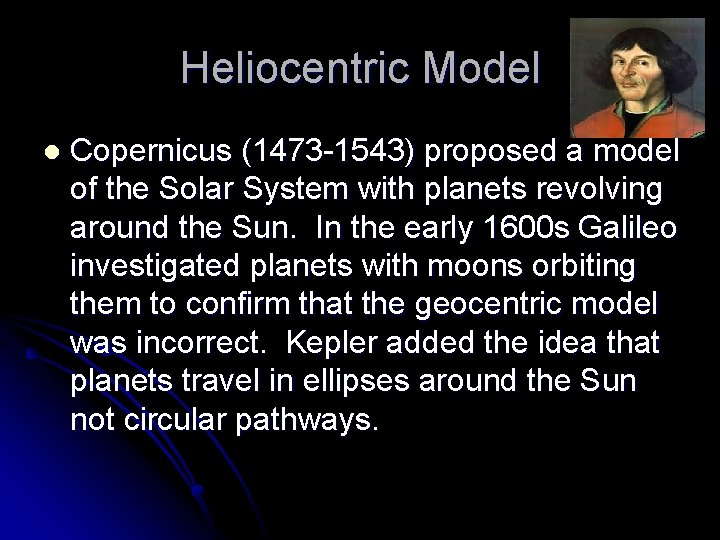
Heliocentric Model l Copernicus (1473 -1543) proposed a model of the Solar System with planets revolving around the Sun. In the early 1600 s Galileo investigated planets with moons orbiting them to confirm that the geocentric model was incorrect. Kepler added the idea that planets travel in ellipses around the Sun not circular pathways.
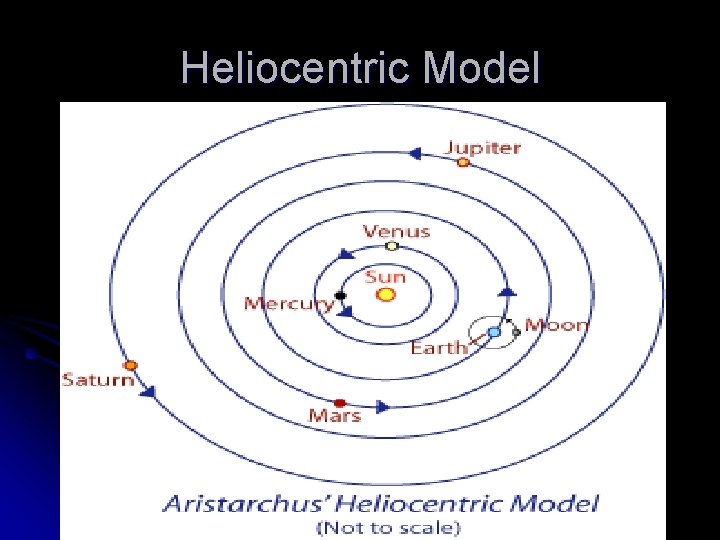
Heliocentric Model
Homework Page 312 # 7 l Page 328 # 2, 3, 8 -10 l
- Slides: 22