
The Sumerians John Stevenson 2017 Maps by David
The Sumerians © John Stevenson, 2017 Maps by David P. Barrett used by permission
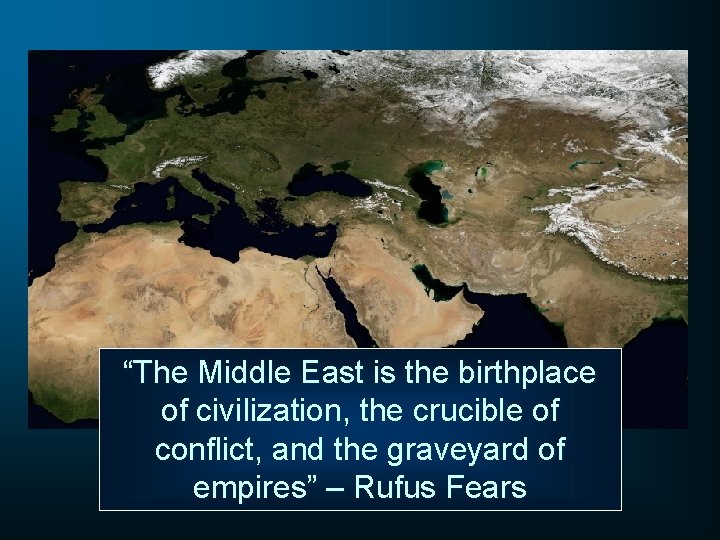
“The Middle East is the birthplace of civilization, the crucible of conflict, and the graveyard of empires” – Rufus Fears
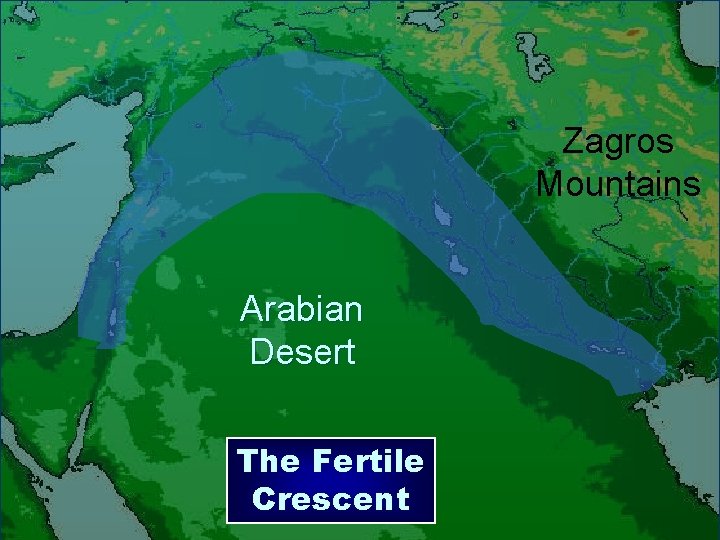
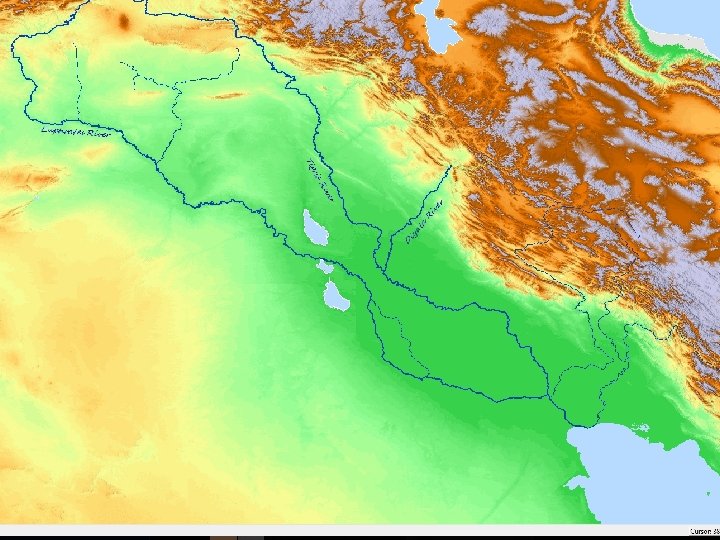
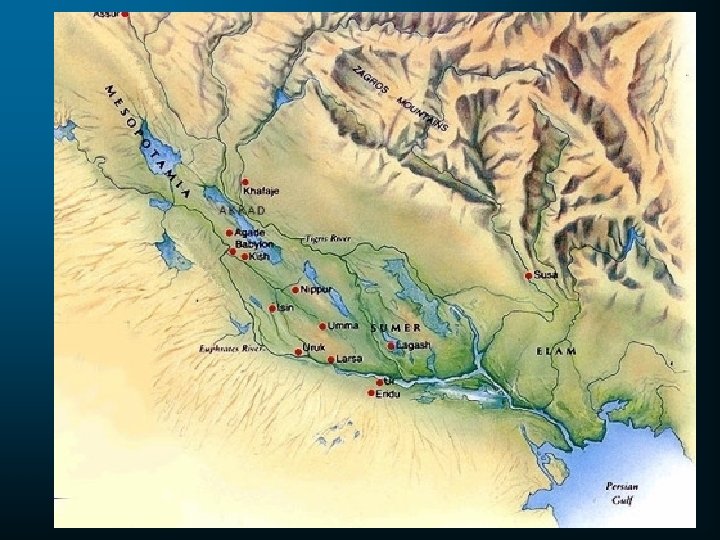
Zagros Mountains Arabian Desert The Fertile Crescent
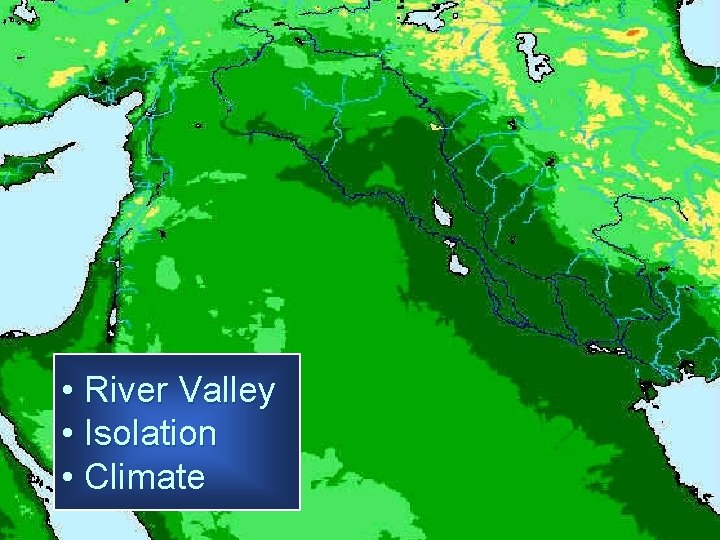
• River Valley • Isolation • Climate
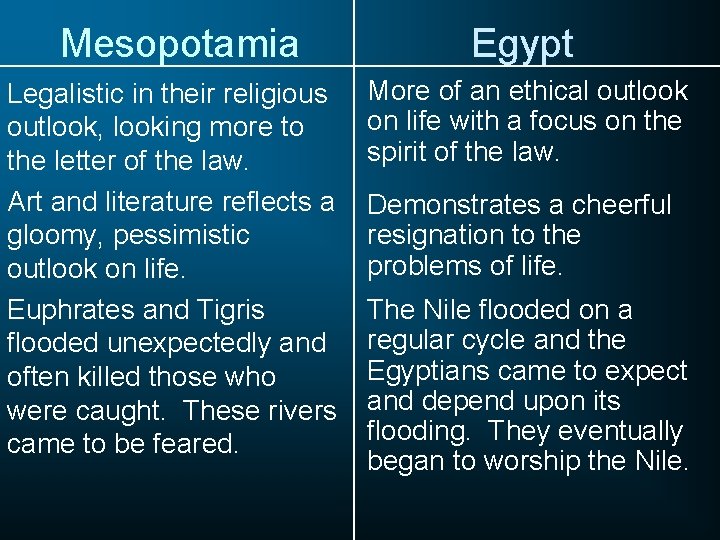
Mesopotamia Legalistic in their religious outlook, looking more to the letter of the law. Art and literature reflects a gloomy, pessimistic outlook on life. Euphrates and Tigris flooded unexpectedly and often killed those who were caught. These rivers came to be feared. Egypt More of an ethical outlook on life with a focus on the spirit of the law. Demonstrates a cheerful resignation to the problems of life. The Nile flooded on a regular cycle and the Egyptians came to expect and depend upon its flooding. They eventually began to worship the Nile.
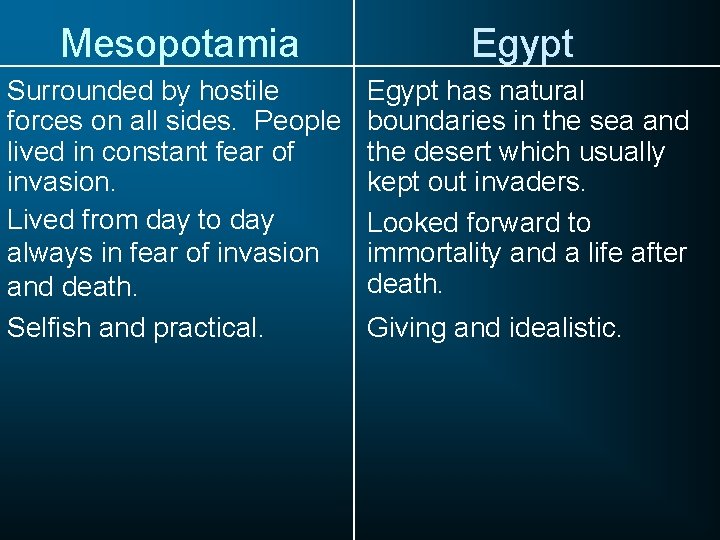
Mesopotamia Surrounded by hostile forces on all sides. People lived in constant fear of invasion. Lived from day to day always in fear of invasion and death. Selfish and practical. Egypt has natural boundaries in the sea and the desert which usually kept out invaders. Looked forward to immortality and a life after death. Giving and idealistic.
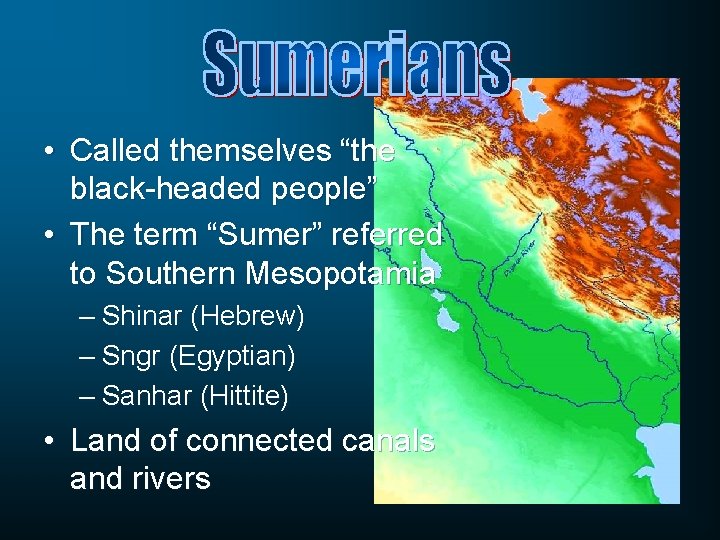
• Called themselves “the black-headed people” • The term “Sumer” referred to Southern Mesopotamia – Shinar (Hebrew) – Sngr (Egyptian) – Sanhar (Hittite) • Land of connected canals and rivers
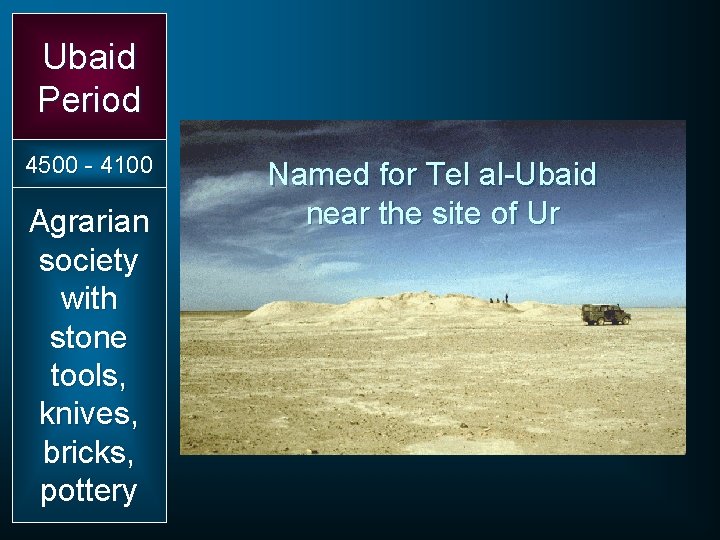
Ubaid Period 4500 - 4100 Agrarian society with stone tools, knives, bricks, pottery Named for Tel al-Ubaid near the site of Ur
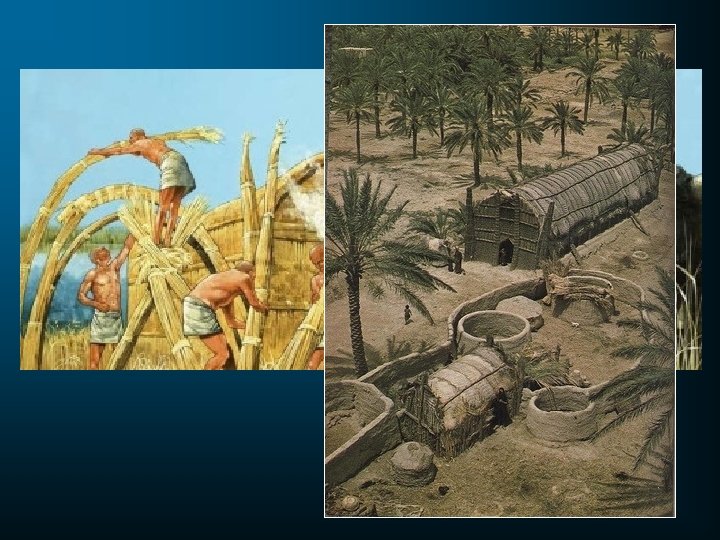
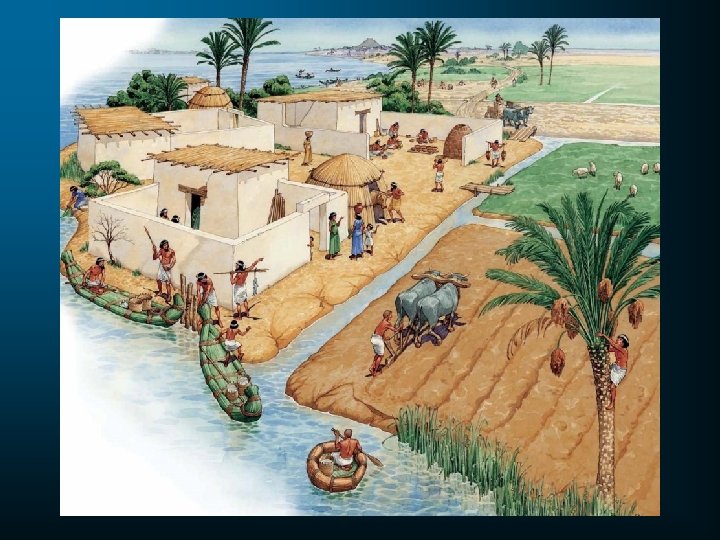
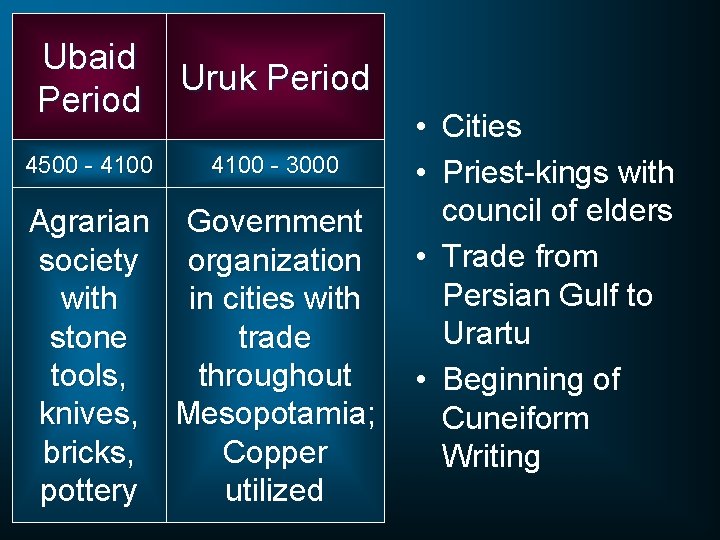
Ubaid Uruk Period • Cities 4500 - 4100 - 3000 • Priest-kings with council of elders Agrarian Government society organization • Trade from Persian Gulf to with in cities with Urartu stone trade tools, throughout • Beginning of knives, Mesopotamia; Cuneiform bricks, Copper Writing pottery utilized
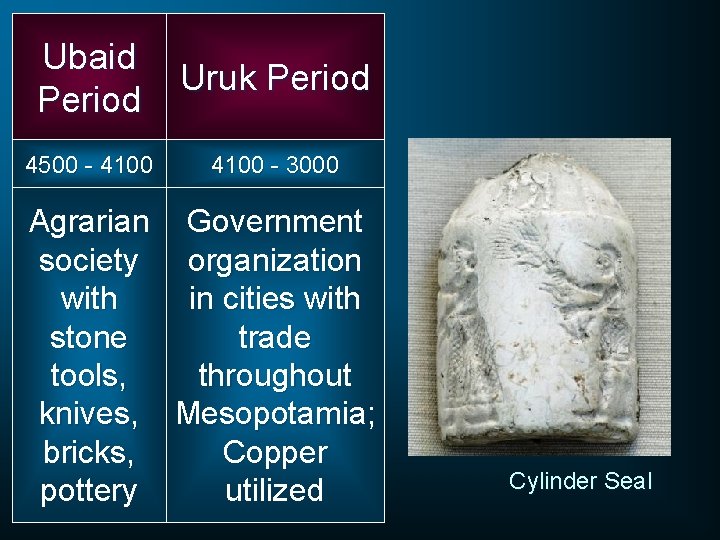
Ubaid Uruk Period 4500 - 4100 - 3000 Agrarian society with stone tools, knives, bricks, pottery Government organization in cities with trade throughout Mesopotamia; Copper utilized Cylinder Seal
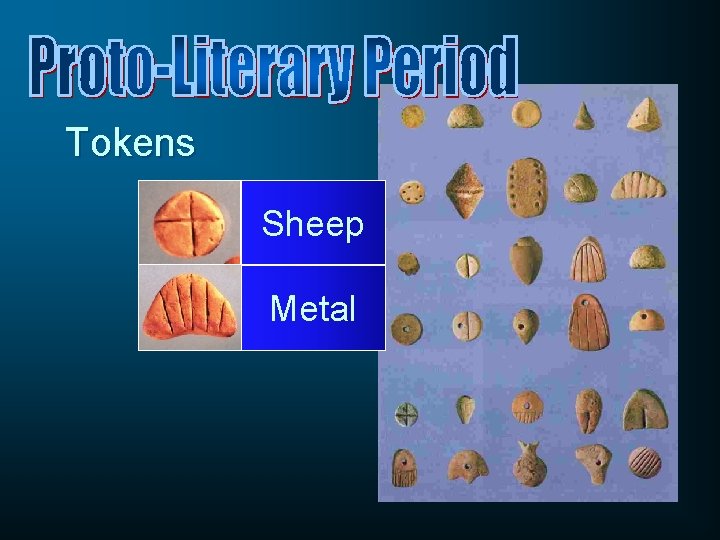
Tokens Sheep Metal
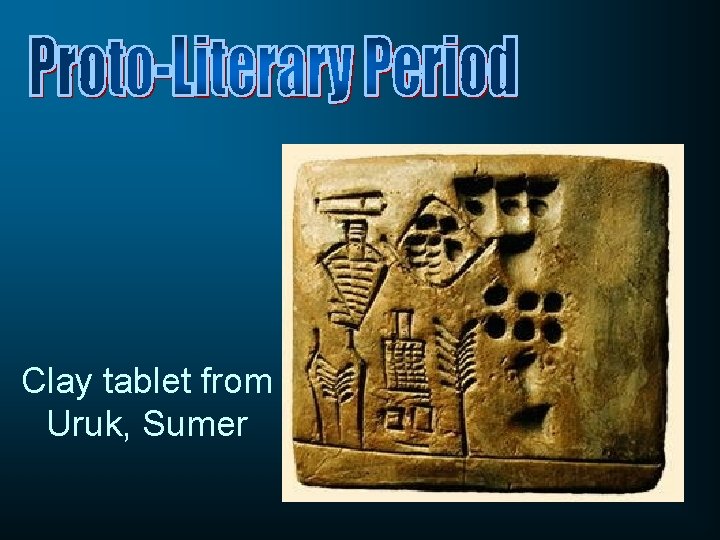
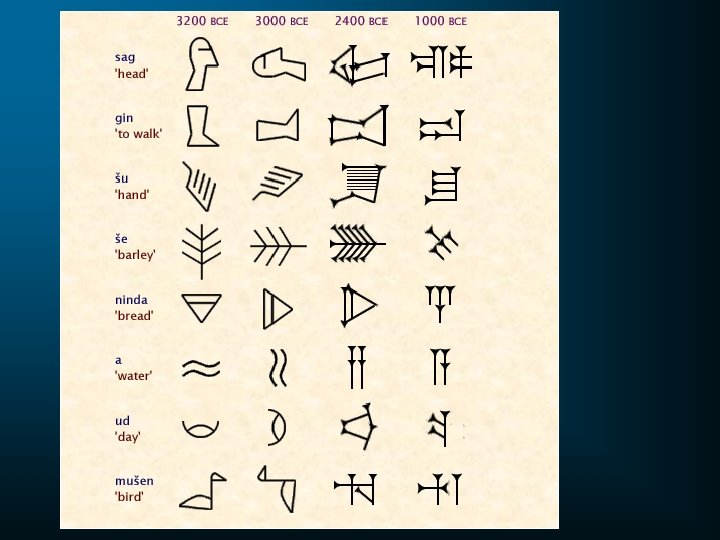
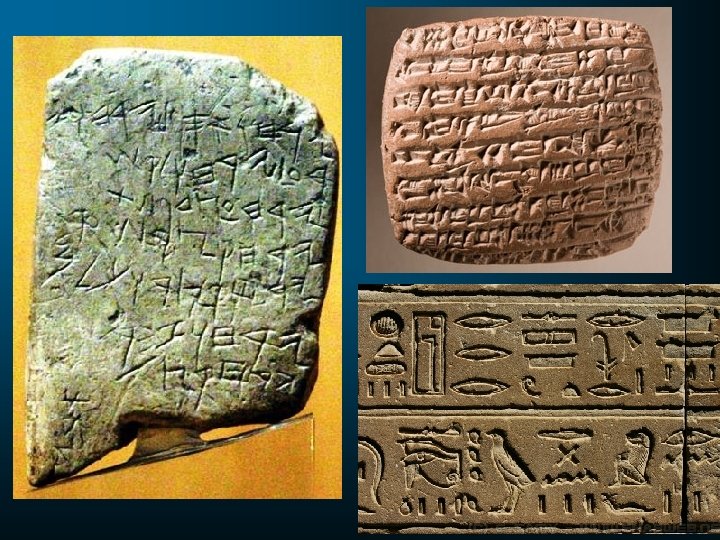
Clay tablet from Uruk, Sumer
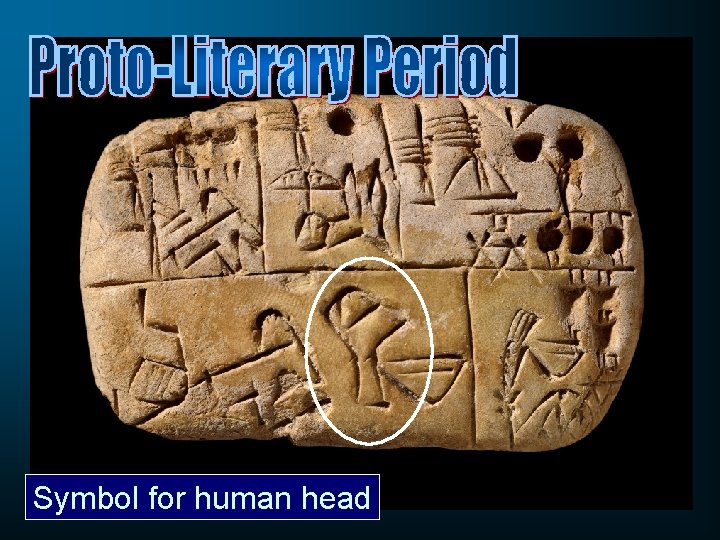
Symbol for human head
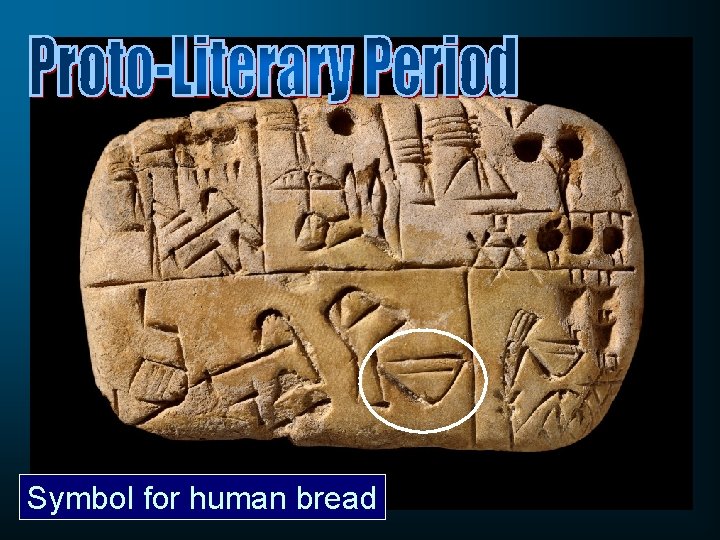
Symbol for human bread
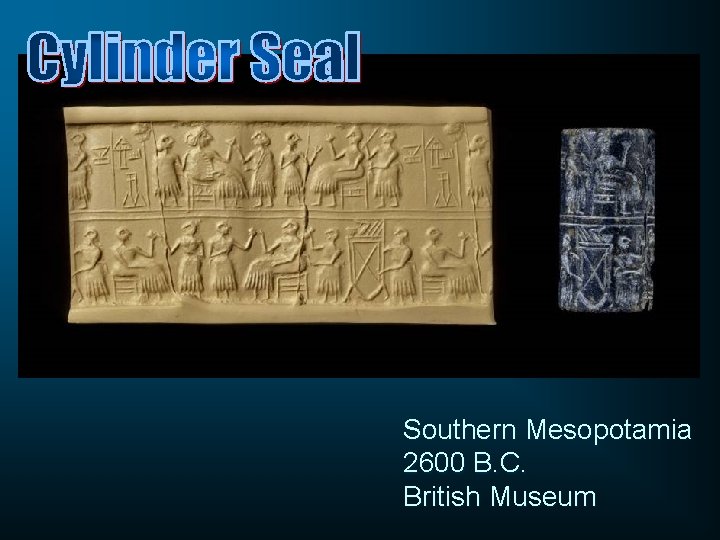
Southern Mesopotamia 2600 B. C. British Museum
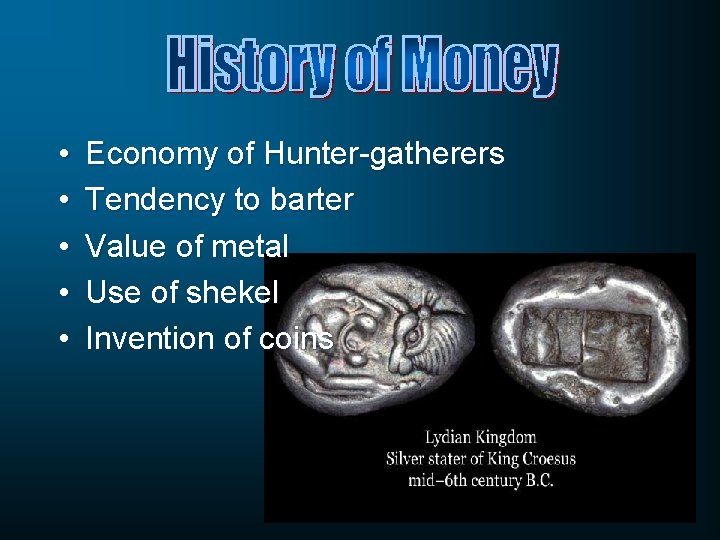
• • • Economy of Hunter-gatherers Tendency to barter Value of metal Use of shekel Invention of coins
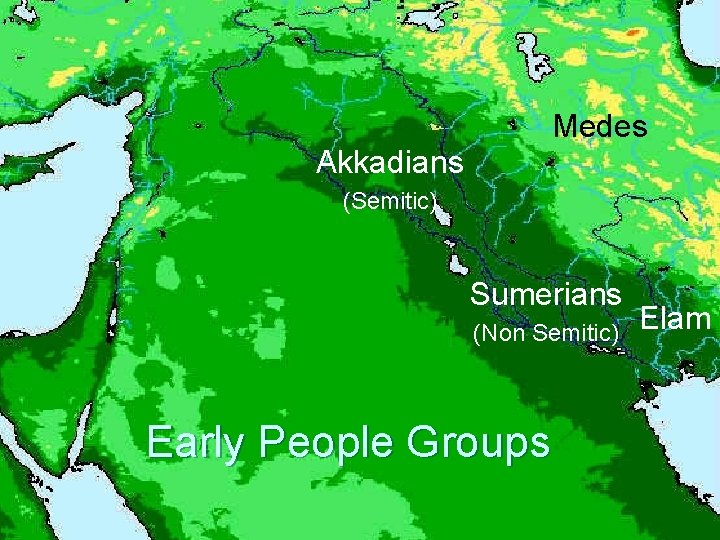
Medes Akkadians (Semitic) Sumerians (Non Semitic) Early People Groups Elam
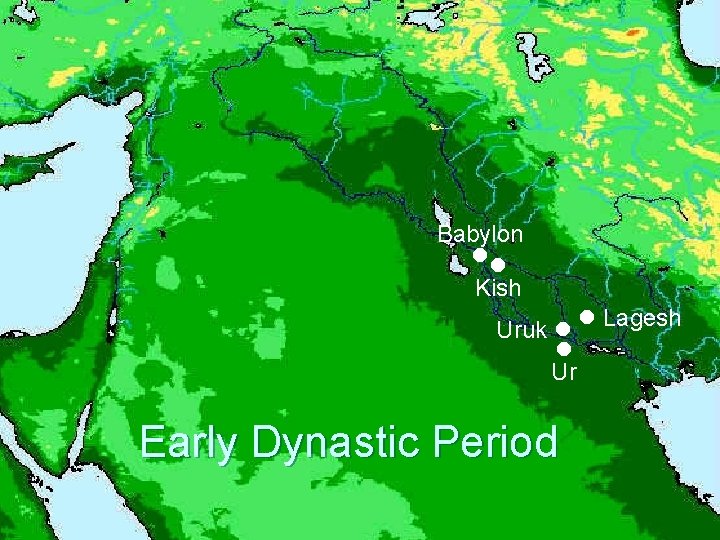
Babylon Kish Uruk Lagesh Ur Early Dynastic Period
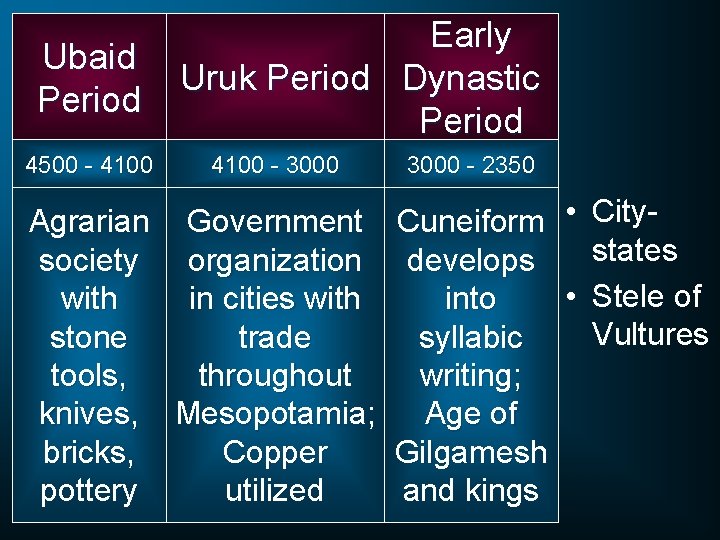
Early Ubaid Uruk Period Dynastic Period 4500 - 4100 Agrarian society with stone tools, knives, bricks, pottery 4100 - 3000 - 2350 Government Cuneiform • organization develops • in cities with into trade syllabic throughout writing; Mesopotamia; Age of Copper Gilgamesh utilized and kings Citystates Stele of Vultures
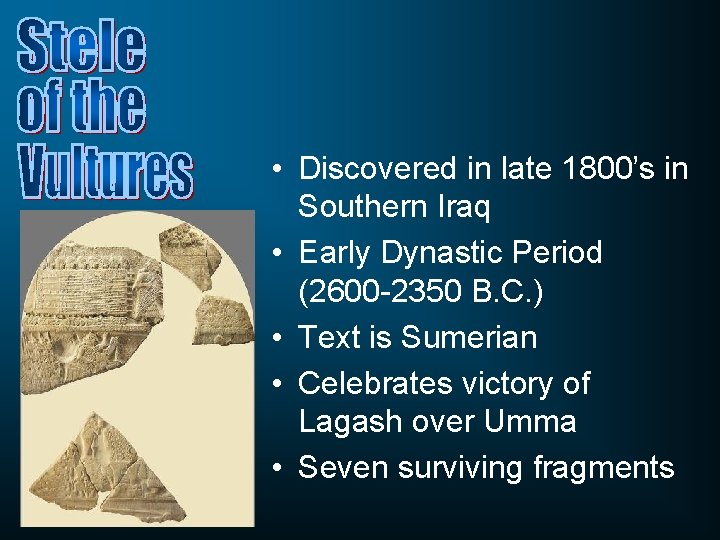
• Discovered in late 1800’s in Southern Iraq • Early Dynastic Period (2600 -2350 B. C. ) • Text is Sumerian • Celebrates victory of Lagash over Umma • Seven surviving fragments
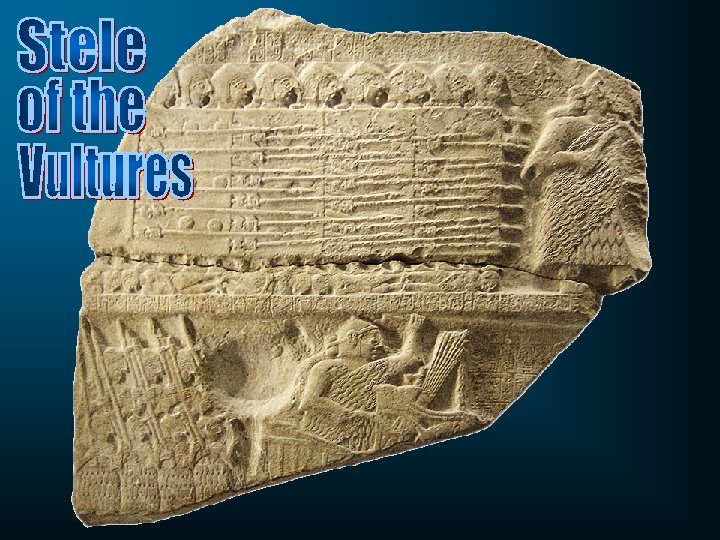
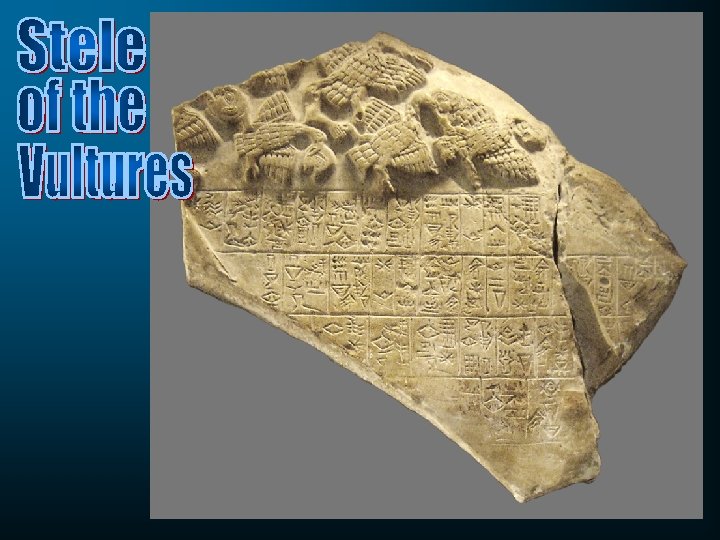
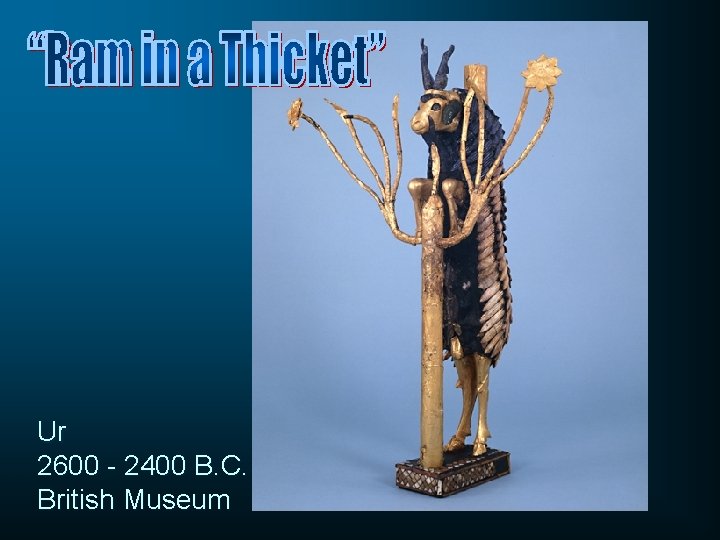
Ur 2600 - 2400 B. C. British Museum
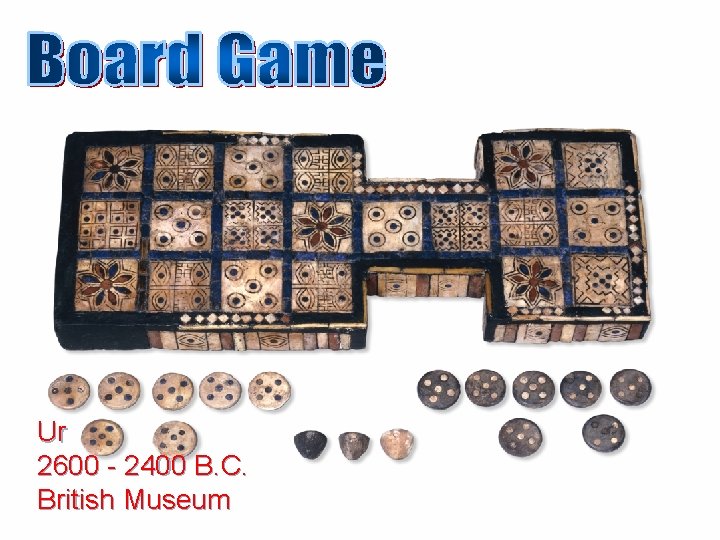
Ur 2600 - 2400 B. C. British Museum
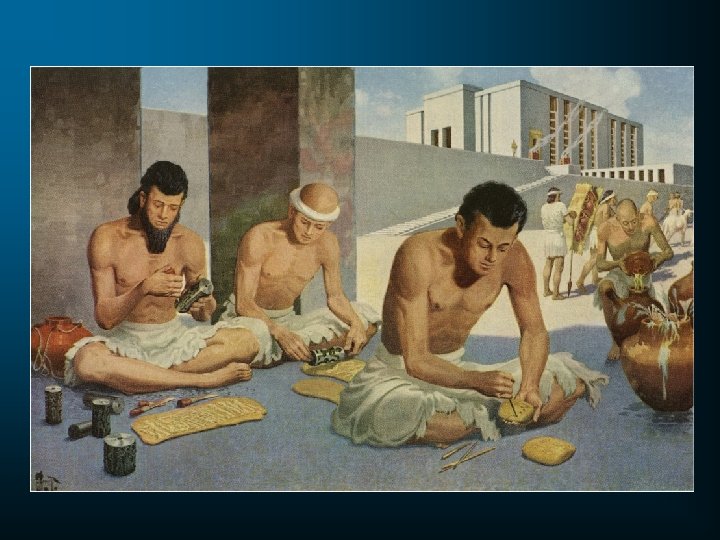
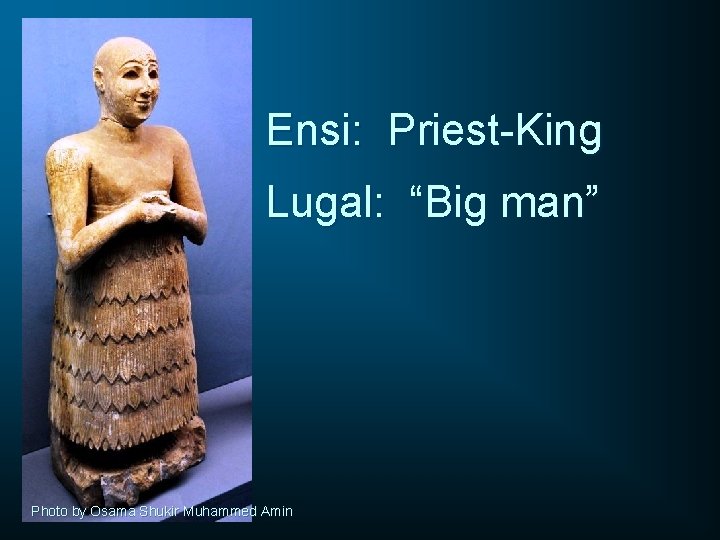
Ensi: Priest-King Lugal: “Big man” Photo by Osama Shukir Muhammed Amin
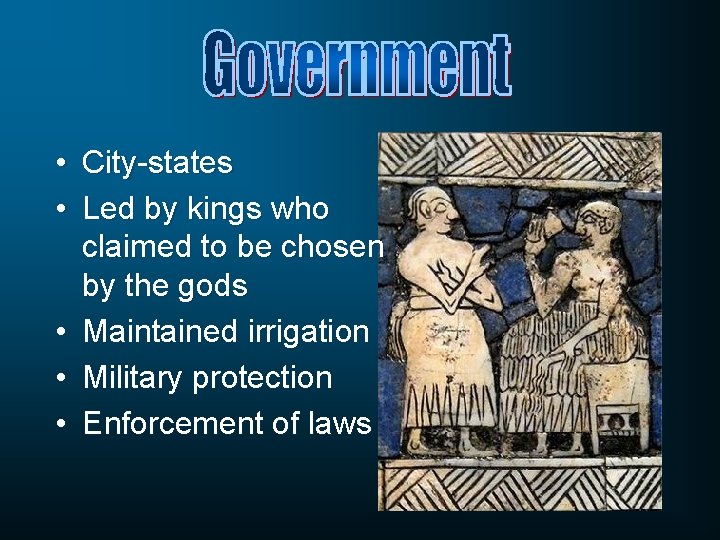
• City-states • Led by kings who claimed to be chosen by the gods • Maintained irrigation • Military protection • Enforcement of laws
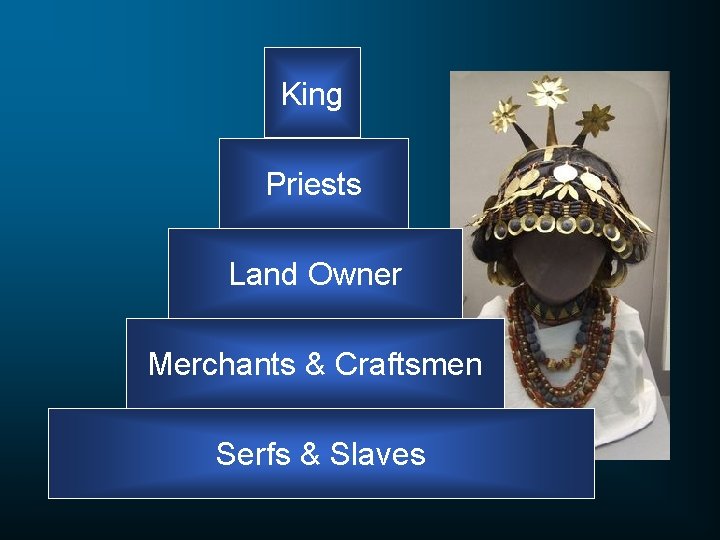
King Priests Land Owner Merchants & Craftsmen Serfs & Slaves
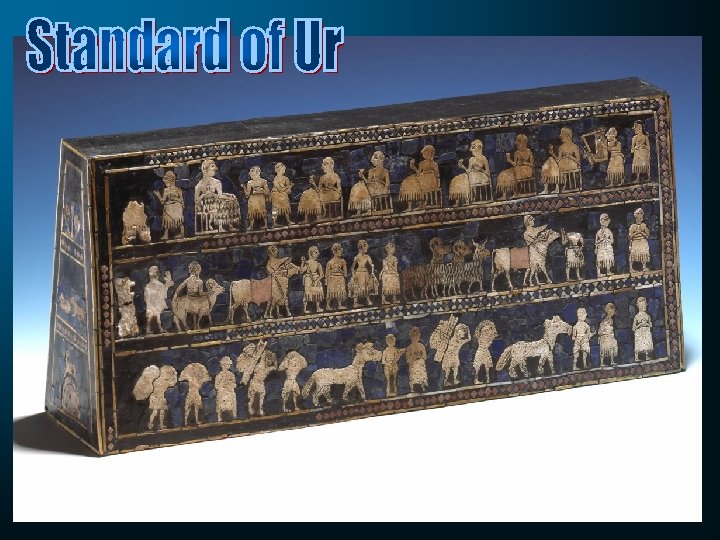
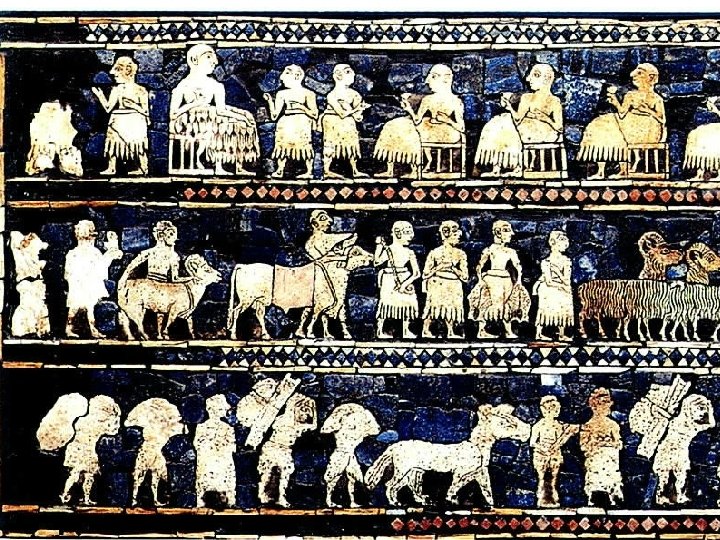
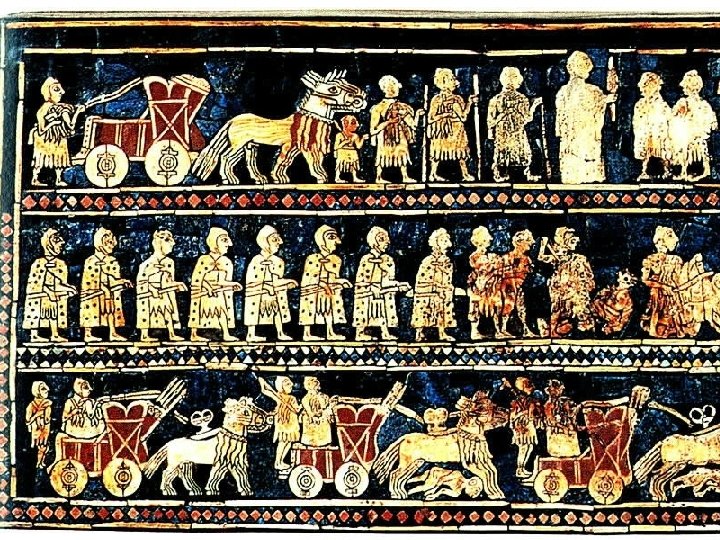
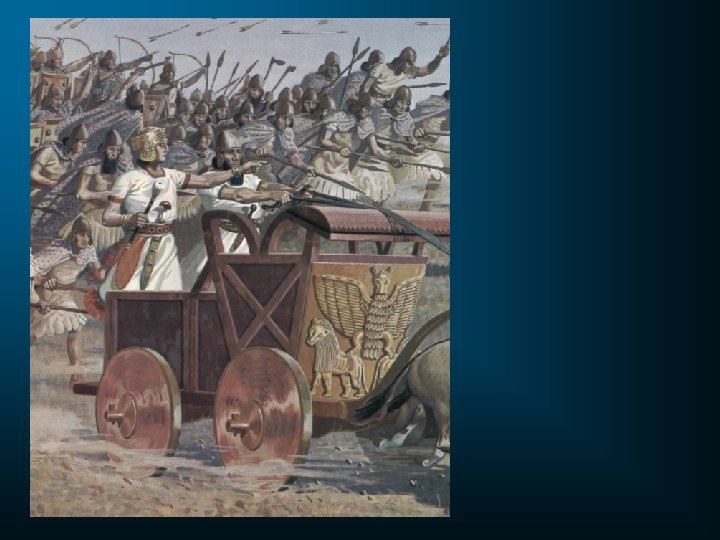
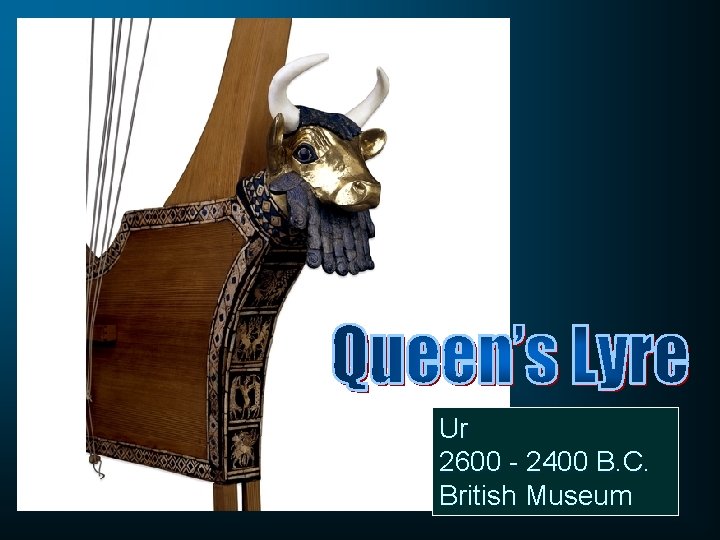
Ur 2600 - 2400 B. C. British Museum
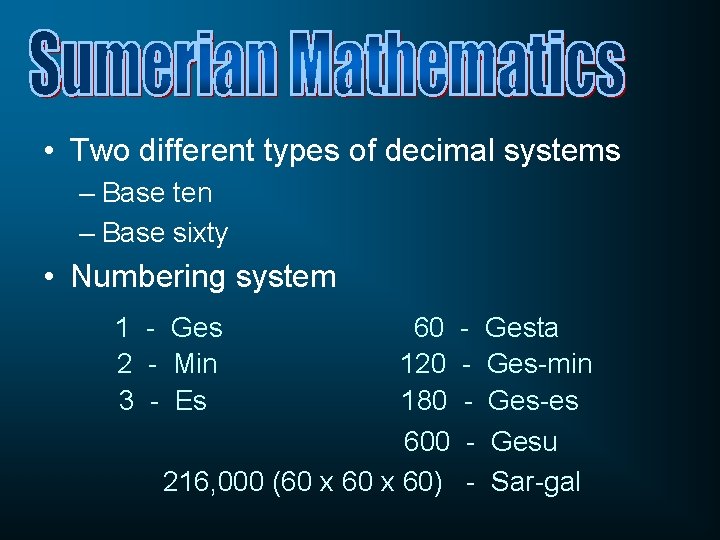
• Two different types of decimal systems – Base ten – Base sixty • Numbering system 1 - Ges 2 - Min 3 - Es 60 - Gesta 120 - Ges-min 180 - Ges-es 600 - Gesu 216, 000 (60 x 60) - Sar-gal
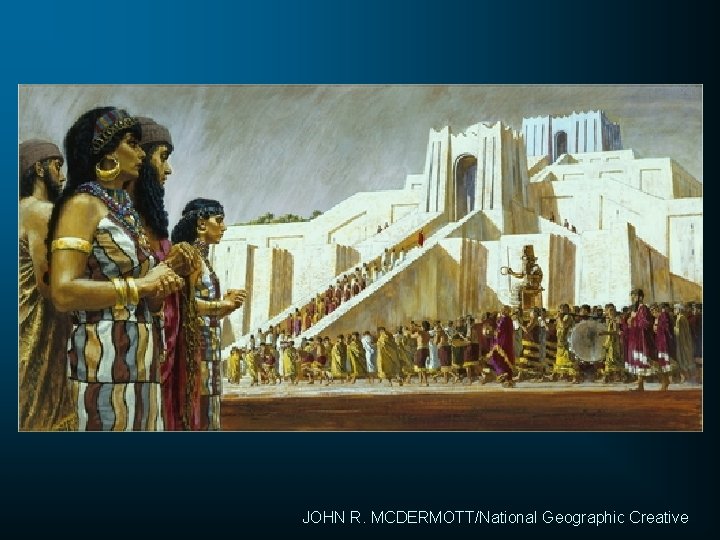
JOHN R. MCDERMOTT/National Geographic Creative
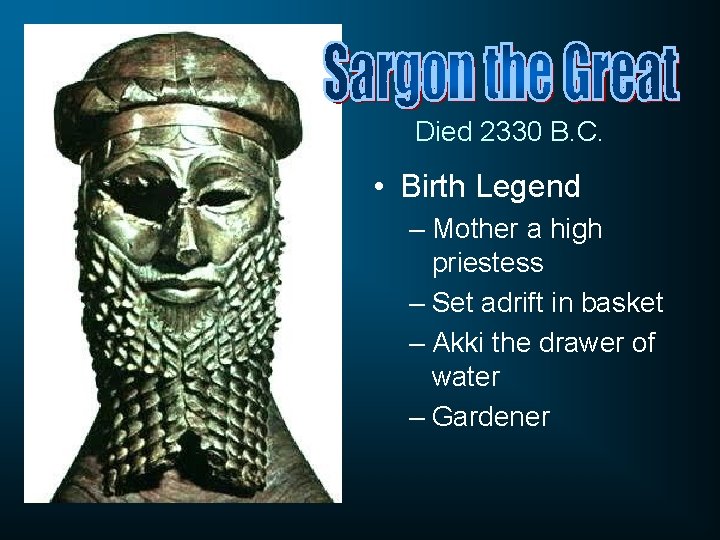
Died 2330 B. C. • Birth Legend – Mother a high priestess – Set adrift in basket – Akki the drawer of water – Gardener
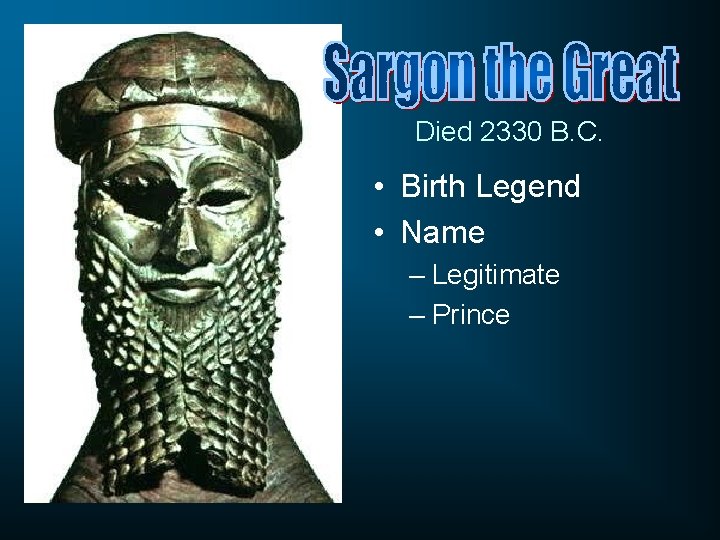
Died 2330 B. C. • Birth Legend • Name – Legitimate – Prince
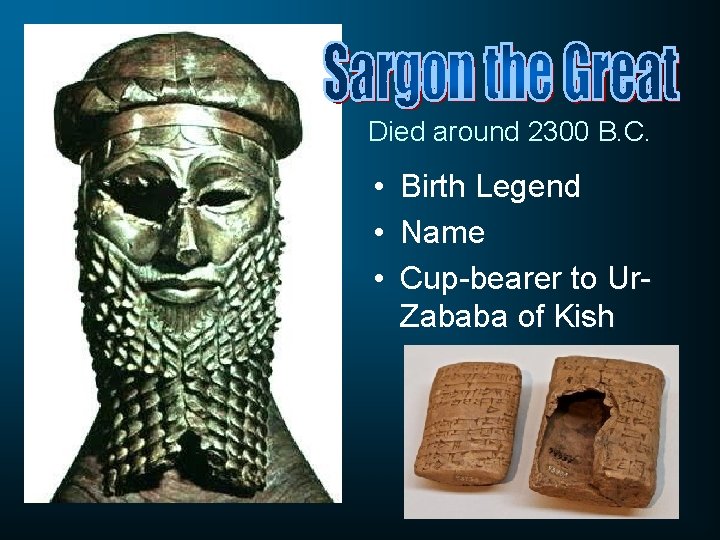
Died around 2300 B. C. • Birth Legend • Name • Cup-bearer to Ur. Zababa of Kish
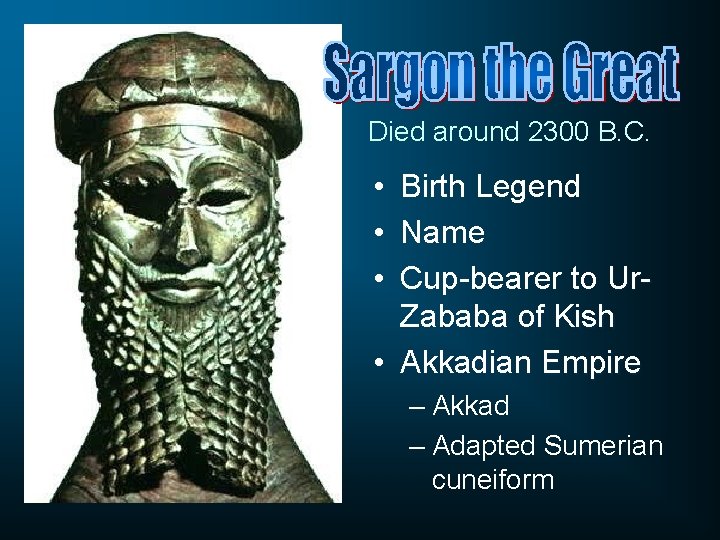
Died around 2300 B. C. • Birth Legend • Name • Cup-bearer to Ur. Zababa of Kish • Akkadian Empire – Akkad – Adapted Sumerian cuneiform
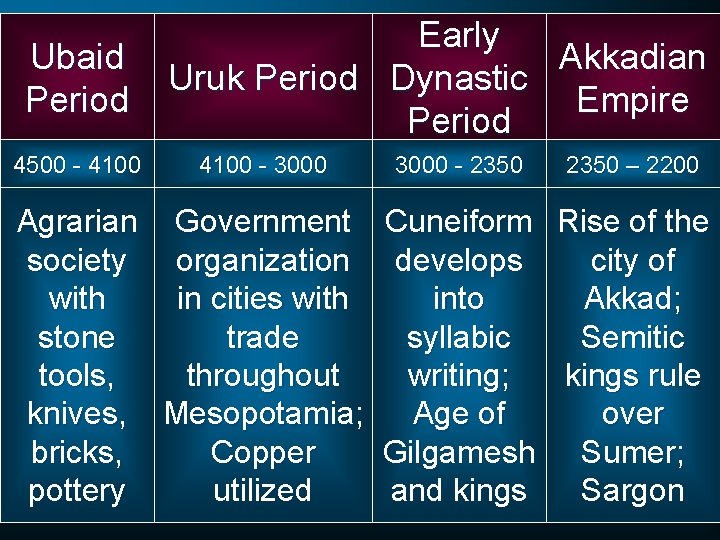
Early Ubaid Akkadian Uruk Period Dynastic Period Empire Period 4500 - 4100 Agrarian society with stone tools, knives, bricks, pottery 4100 - 3000 - 2350 – 2200 Government Cuneiform Rise of the organization develops city of in cities with into Akkad; trade syllabic Semitic throughout writing; kings rule Mesopotamia; Age of over Copper Gilgamesh Sumer; utilized and kings Sargon
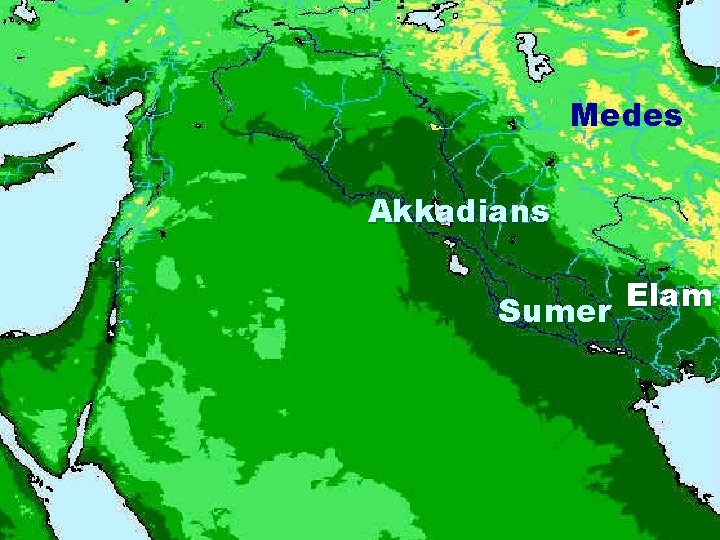
Medes Akkadians Elam Sumer
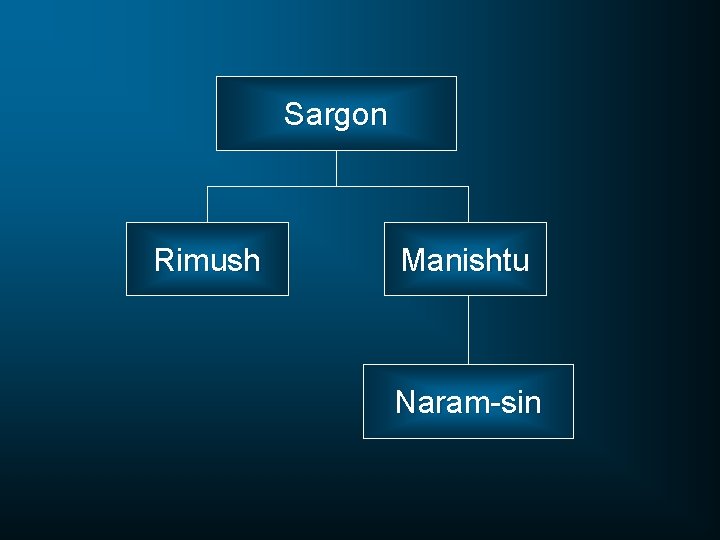
Sargon Rimush Manishtu Naram-sin
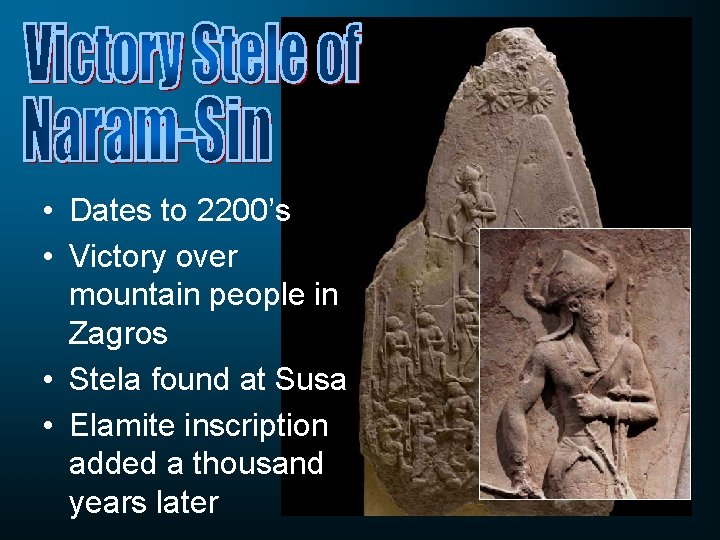
• Dates to 2200’s • Victory over mountain people in Zagros • Stela found at Susa • Elamite inscription added a thousand years later
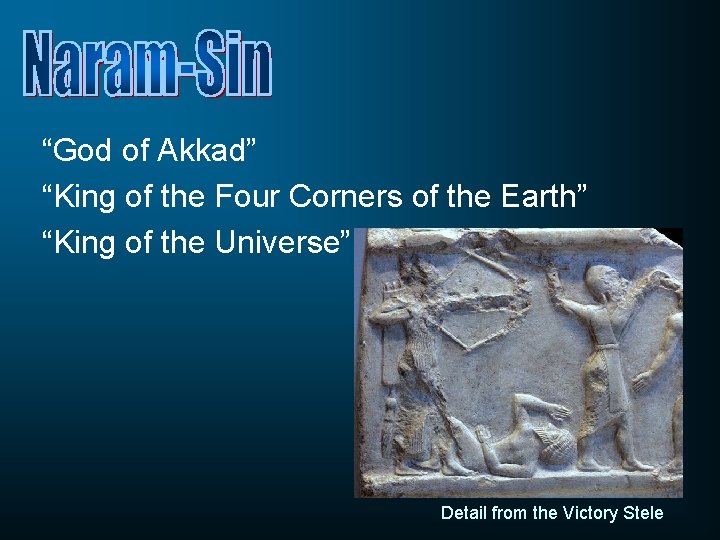
“God of Akkad” “King of the Four Corners of the Earth” “King of the Universe” Detail from the Victory Stele
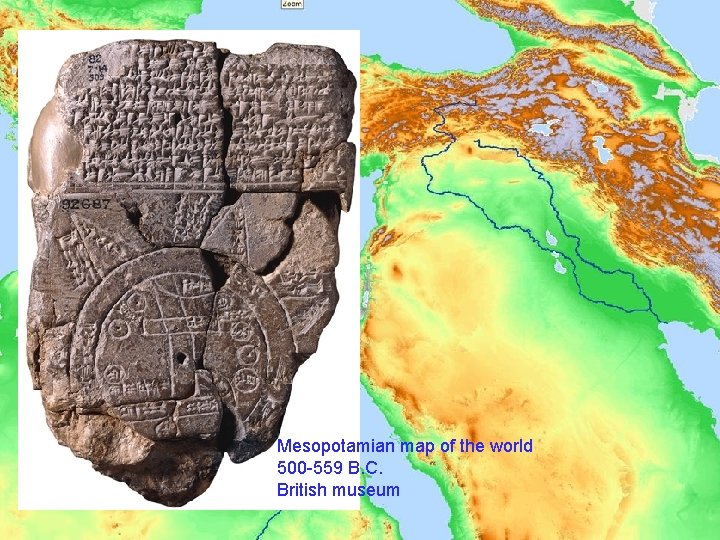
Mesopotamian map of the world 500 -559 B. C. British museum
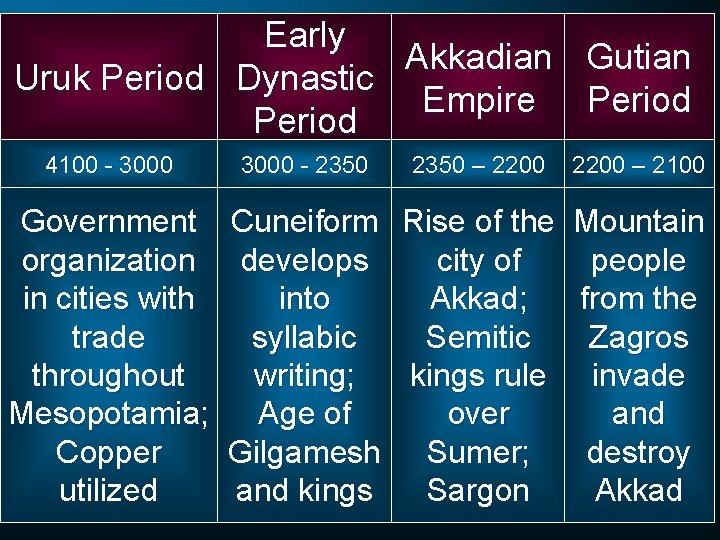
Early Akkadian Gutian Uruk Period Dynastic Empire Period 4100 - 3000 - 2350 – 2200 – 2100 Government Cuneiform Rise of the Mountain organization develops city of people in cities with into Akkad; from the trade syllabic Semitic Zagros throughout writing; kings rule invade Mesopotamia; Age of over and Copper Gilgamesh Sumer; destroy utilized and kings Sargon Akkad
2100 – 2000 B. C.
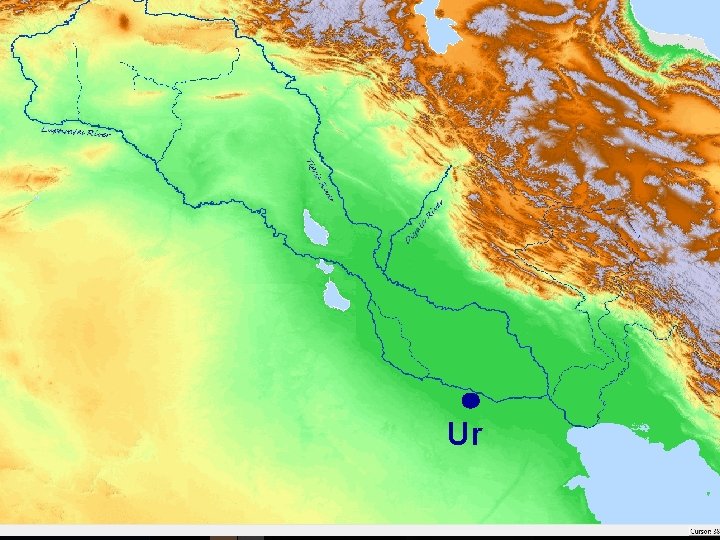
Ur
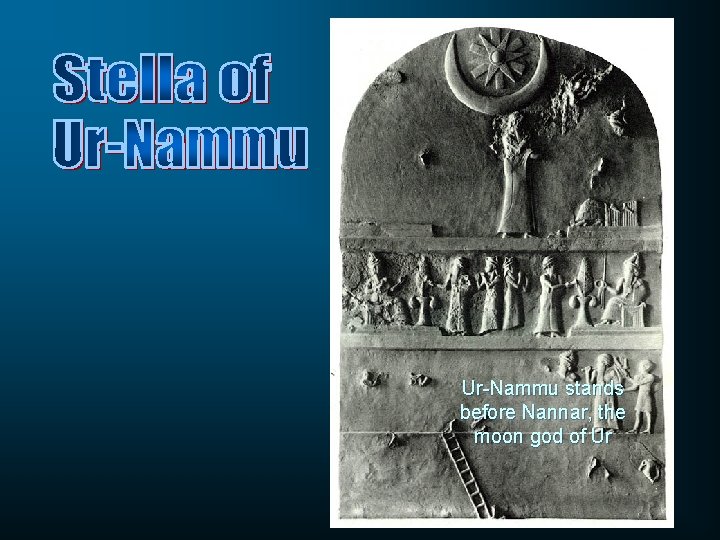
Ur-Nammu stands before Nannar, the moon god of Ur
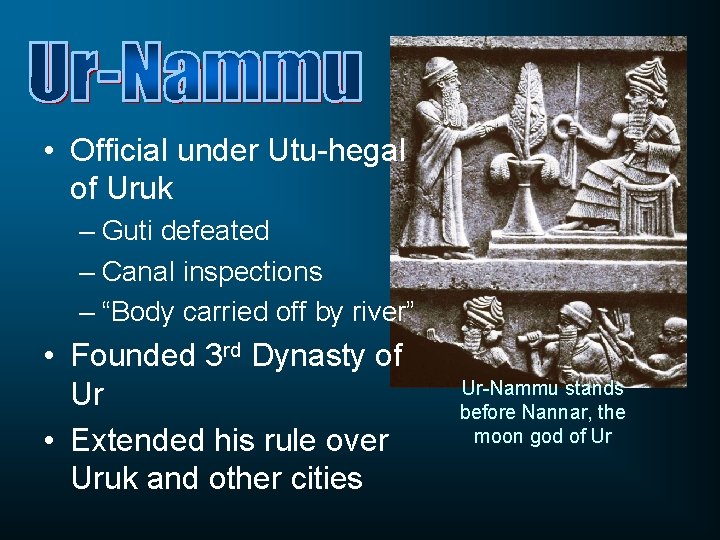
• Official under Utu-hegal of Uruk – Guti defeated – Canal inspections – “Body carried off by river” • Founded 3 rd Dynasty of Ur • Extended his rule over Uruk and other cities Ur-Nammu stands before Nannar, the moon god of Ur
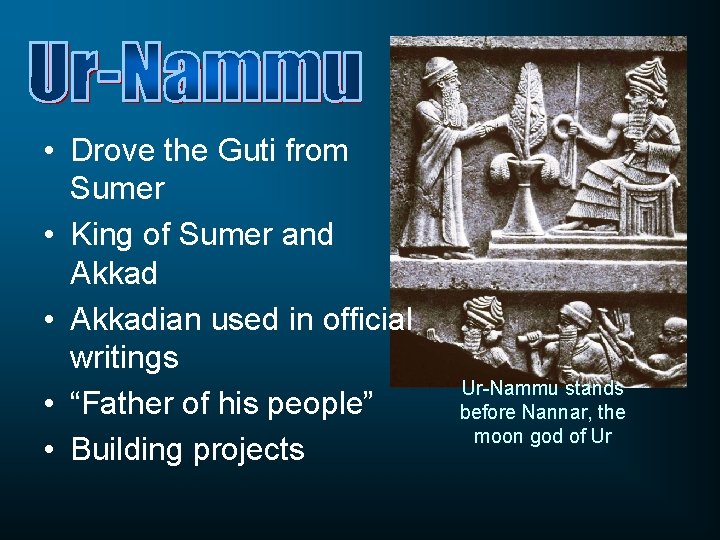
• Drove the Guti from Sumer • King of Sumer and Akkad • Akkadian used in official writings • “Father of his people” • Building projects Ur-Nammu stands before Nannar, the moon god of Ur
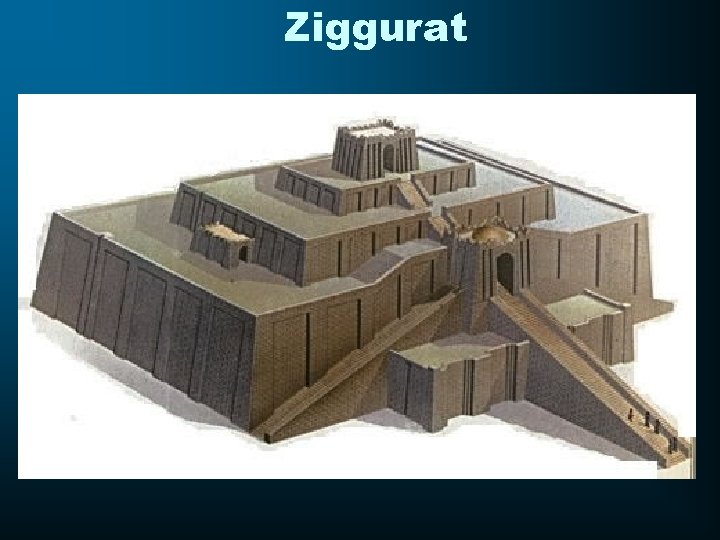
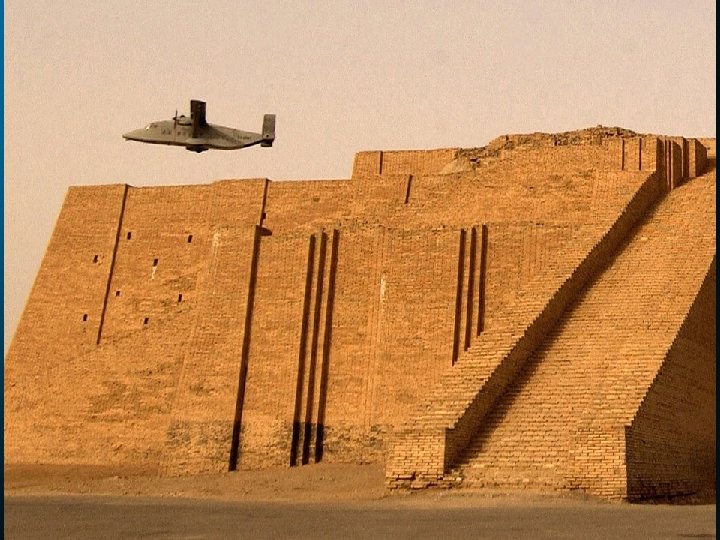
Ziggurat
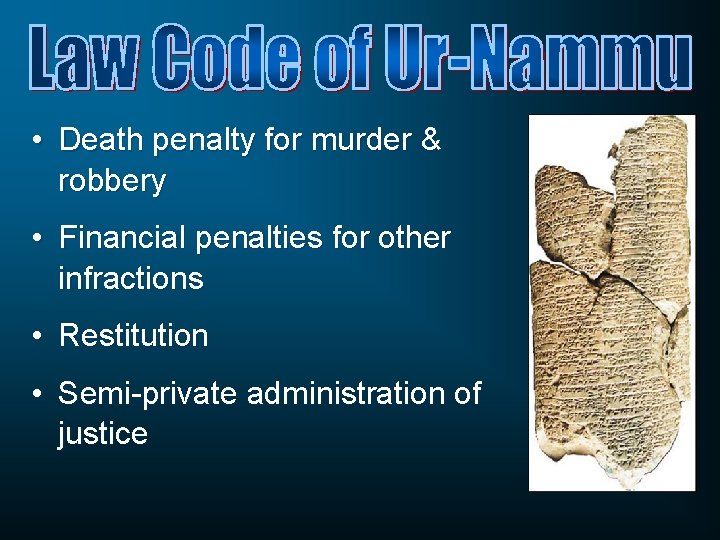
• Death penalty for murder & robbery • Financial penalties for other infractions • Restitution • Semi-private administration of justice
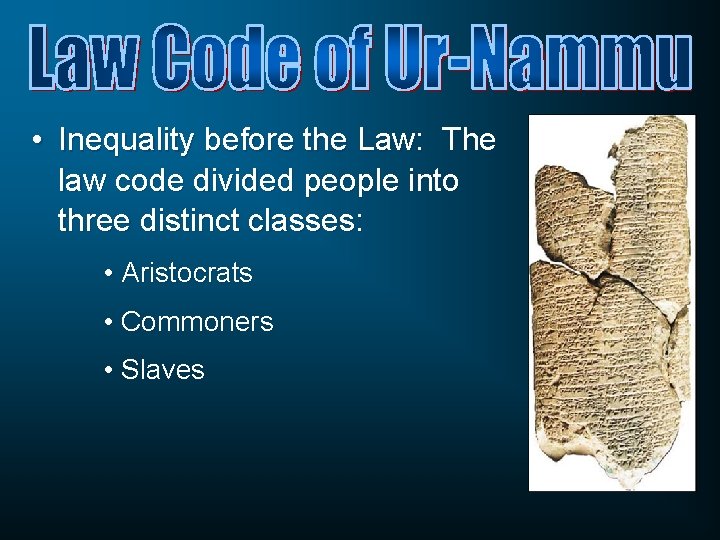
• Inequality before the Law: The law code divided people into three distinct classes: • Aristocrats • Commoners • Slaves
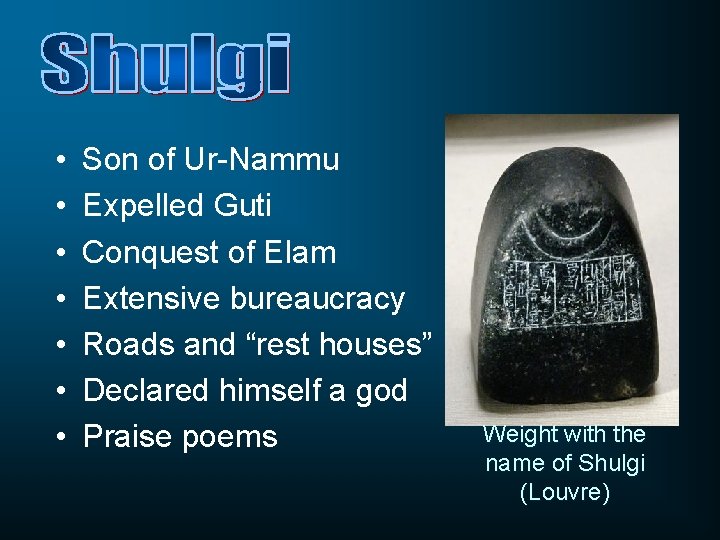
• • Son of Ur-Nammu Expelled Guti Conquest of Elam Extensive bureaucracy Roads and “rest houses” Declared himself a god Praise poems Weight with the name of Shulgi (Louvre)
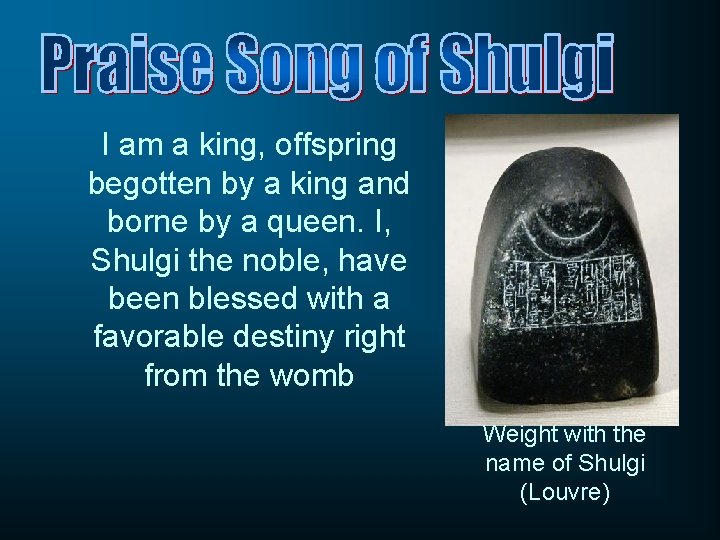
I am a king, offspring begotten by a king and borne by a queen. I, Shulgi the noble, have been blessed with a favorable destiny right from the womb Weight with the name of Shulgi (Louvre)
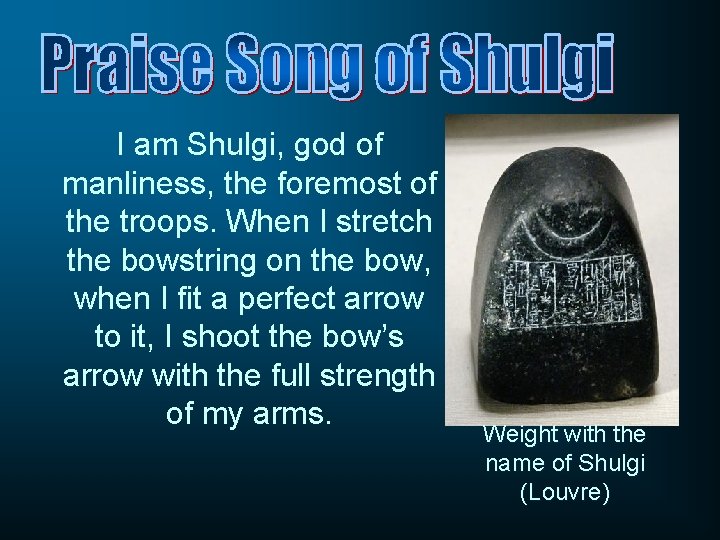
I am Shulgi, god of manliness, the foremost of the troops. When I stretch the bowstring on the bow, when I fit a perfect arrow to it, I shoot the bow’s arrow with the full strength of my arms. Weight with the name of Shulgi (Louvre)
I bestow joy and gladness, and I pass my days in pomp and splendor. But people should consider for themselves -- it is a matter to keep in one’s sights -- that at the inescapable end of life, no one will be spared the bitter gall of the land of oppression. But I am one who is powerful enough to trust in his own power.
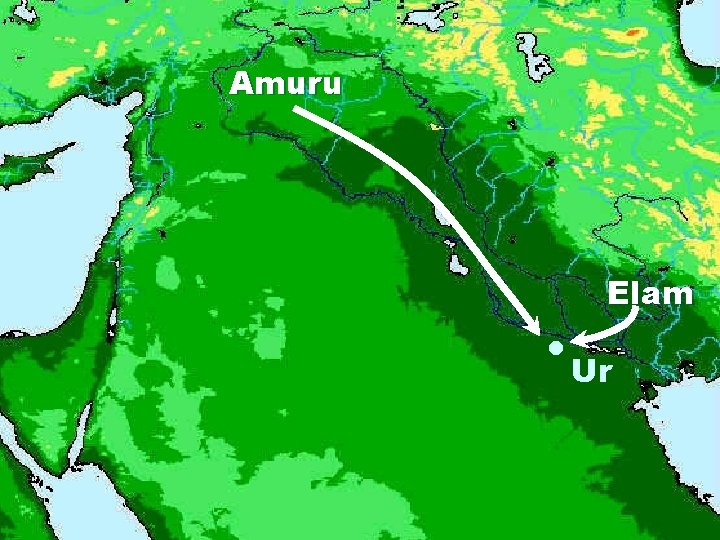
Amuru Elam Ur
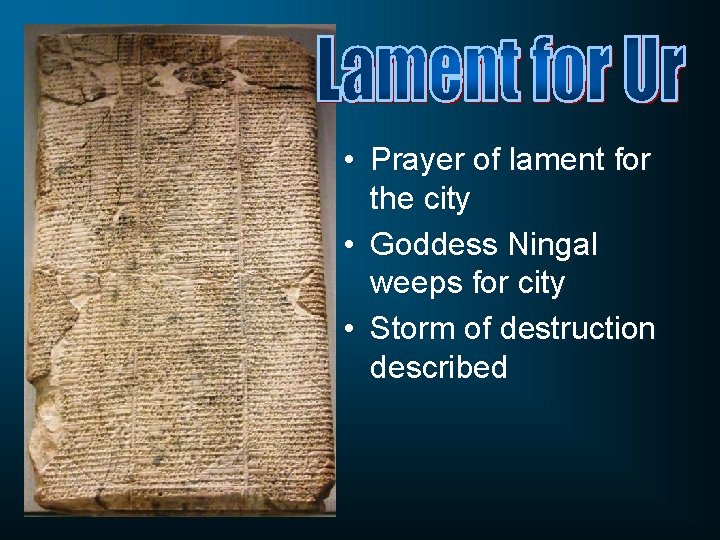
• Prayer of lament for the city • Goddess Ningal weeps for city • Storm of destruction described
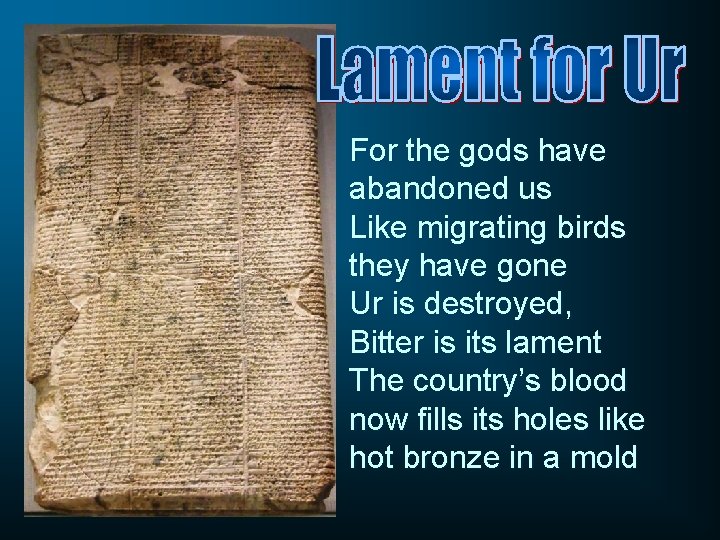
For the gods have abandoned us Like migrating birds they have gone Ur is destroyed, Bitter is its lament The country’s blood now fills its holes like hot bronze in a mold
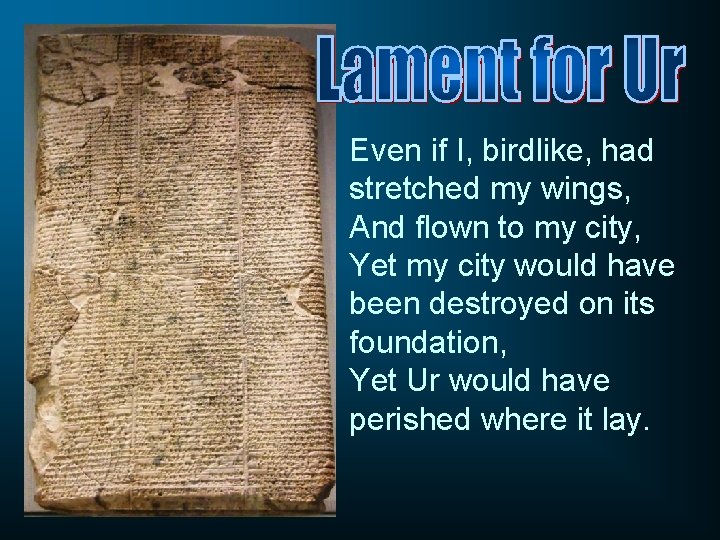
Even if I, birdlike, had stretched my wings, And flown to my city, Yet my city would have been destroyed on its foundation, Yet Ur would have perished where it lay.
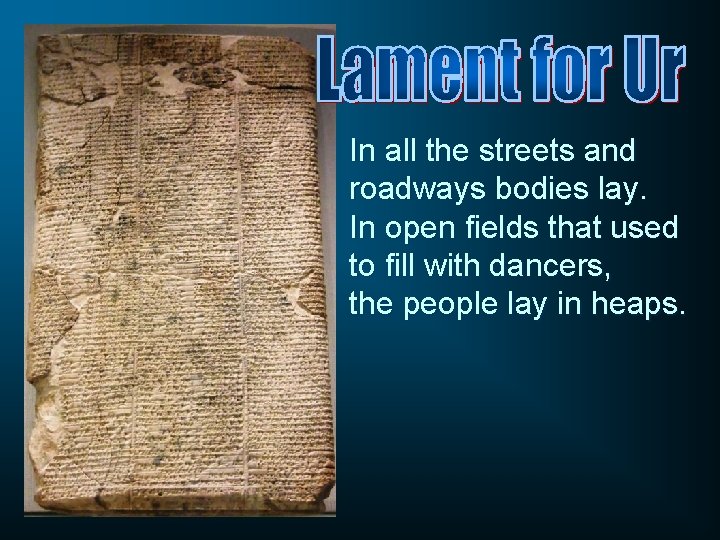
In all the streets and roadways bodies lay. In open fields that used to fill with dancers, the people lay in heaps.
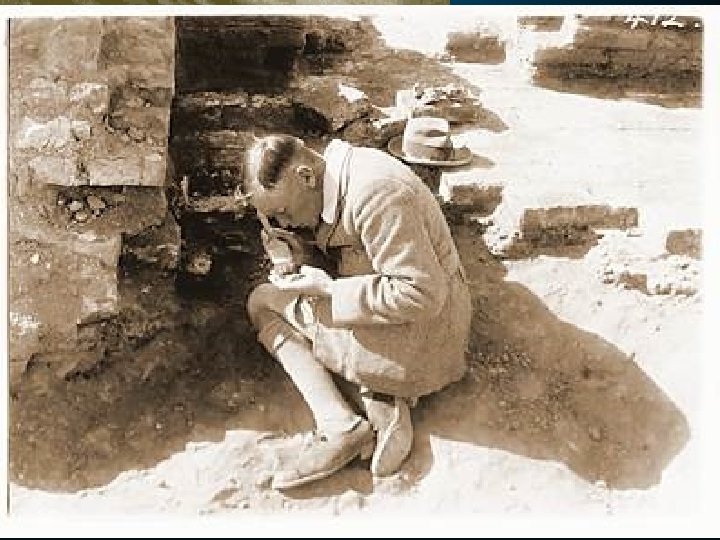
Sir Leonard Woolley • 1880 - 1960 • Began at Ur in 1922 • Ziggurat of Ur • Flood layers
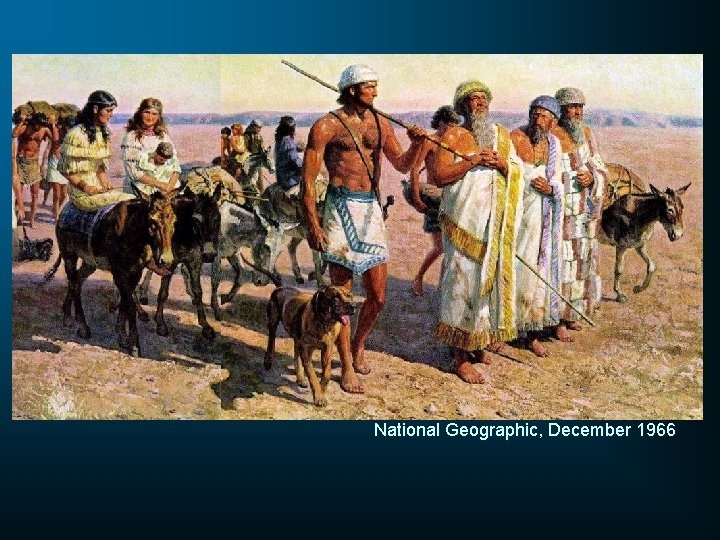
National Geographic, December 1966
Maps provided by David P. Barrett www. Bible. Mapper. com Used by Permission
- Slides: 79