
The Sugar Cane Pest By Kevin Raney Overview
The Sugar Cane Pest By Kevin Raney
Overview The United States is among the world's largest sugar producers. Unlike most other producing countries, the United States has both large and well-developed sugarcane and sugar beet industries. Since the mid-1990 s, sugarcane has accounted for about 45 percent of the total sugar produced domestically, and sugar beets for about 55 percent of production. U. S. sugar production expanded from an early 1980 s' average of 6. 0 million short tons, raw value (STRV) to an average 8. 1 million STRV in the 2000 s. The production increases are due to a substantial investment in new processing equipment, the adoption of new technologies, the use of improved crop varieties, and acreage expansion (because of higher prices for sugar relative to alternative crops).
Problem Over the years several insects mostly borers infest Texas sugar cane. Several bio control agents, resulting from prior research investments supress these pest insecticides are not applied due to low economic benefits Sugar Cane provides a 64 million dollar problem for the state Less than 1 % of the total sugarcane acerage is treated with any insecticides Borers are the key insect pest they infest about 20% of the sugar canes in Texas
Sugar Cane Borer Is a serious pest problem in sugar canes larvae bore into the sugar cane stalks. In mature plants the tops tend to weaken or die, sometimes breaking off. In young plants the inner whorl of leaves is killed resulting in a condition known as dead heat. sucrose yield can be decreased by 10 -25 %
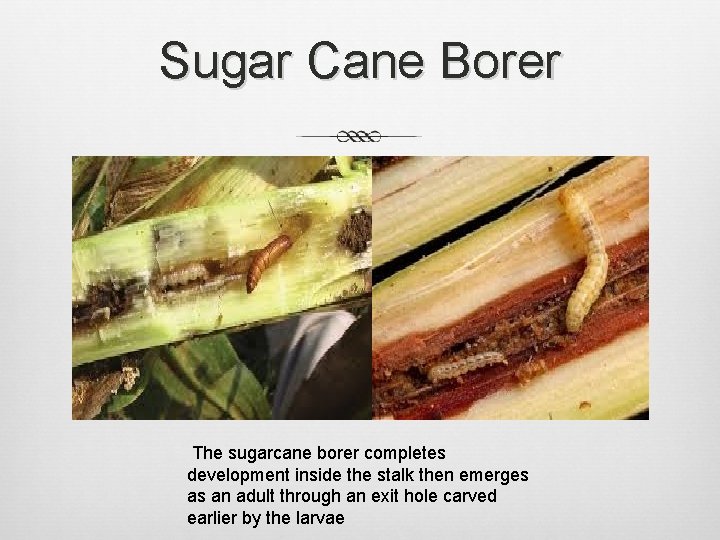
Sugar Cane Borer The sugarcane borer completes development inside the stalk then emerges as an adult through an exit hole carved earlier by the larvae
Problem Solving The sugarcane borer is responsible for 90% of the crop losses due to insect damage. Losses in sugarcane yield average 12 -15% annually, but can range above 50% if the pest is not kept below economic thresholds.
Coragen www. youtube. com/watch? v=i 4 Igxq-o 47 insect control compound is the first insecticide from a new class of chemistry, the anthranilic diamides, controlling almost all economically important pest When used early in the pest life cycle, Coragen prevents the build-up of pest populations, maximizing the yield potential of a crop.
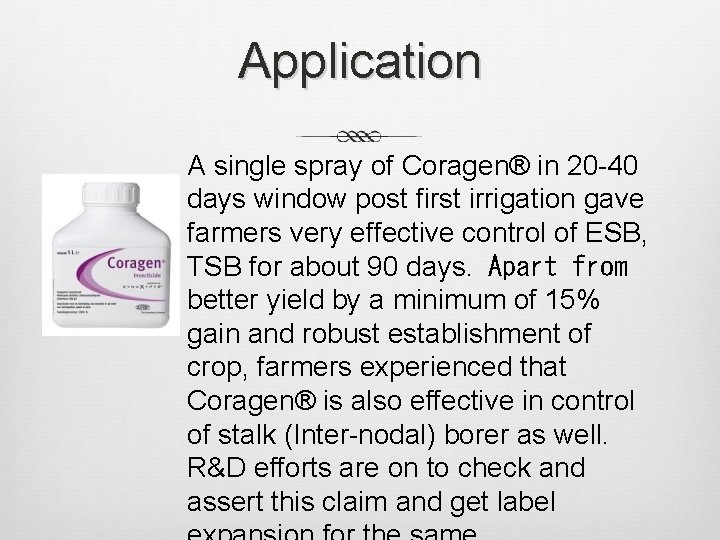
Application A single spray of Coragen® in 20 -40 days window post first irrigation gave farmers very effective control of ESB, TSB for about 90 days. Apart from better yield by a minimum of 15% gain and robust establishment of crop, farmers experienced that Coragen® is also effective in control of stalk (Inter-nodal) borer as well. R&D efforts are on to check and assert this claim and get label
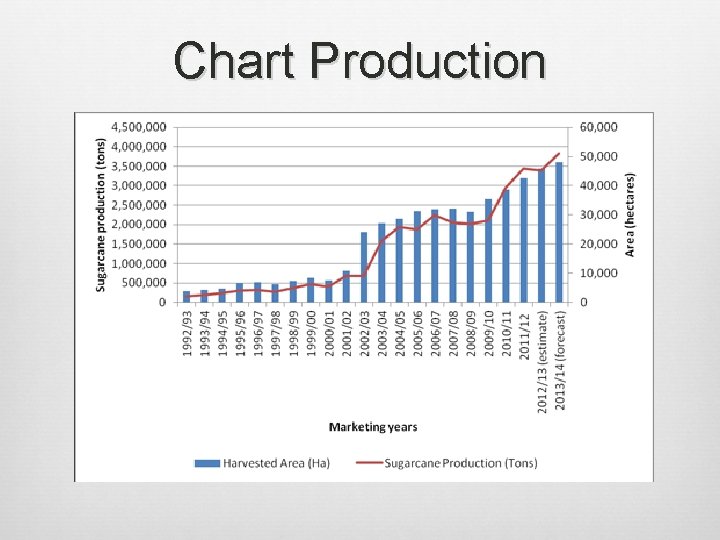
Chart Production
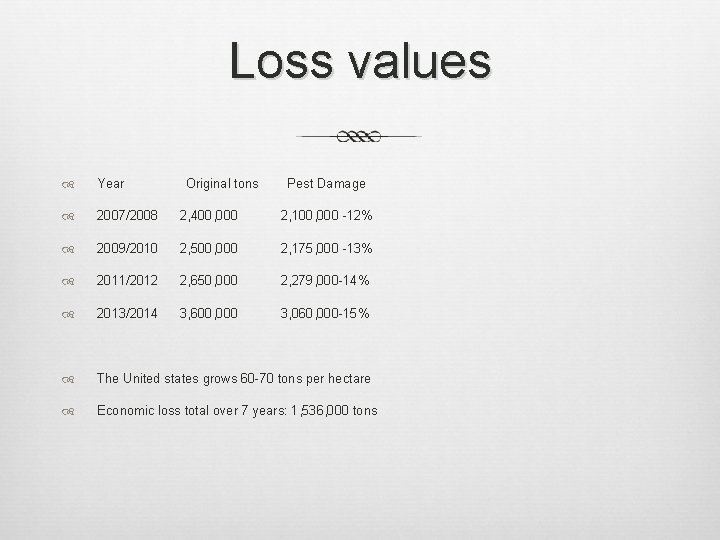
Loss values Year 2007/2008 2, 400, 000 2, 100, 000 -12% 2009/2010 2, 500, 000 2, 175, 000 -13% 2011/2012 2, 650, 000 2, 279, 000 -14% 2013/2014 3, 600, 000 3, 060, 000 -15% The United states grows 60 -70 tons per hectare Economic loss total over 7 years: 1, 536, 000 tons Original tons Pest Damage
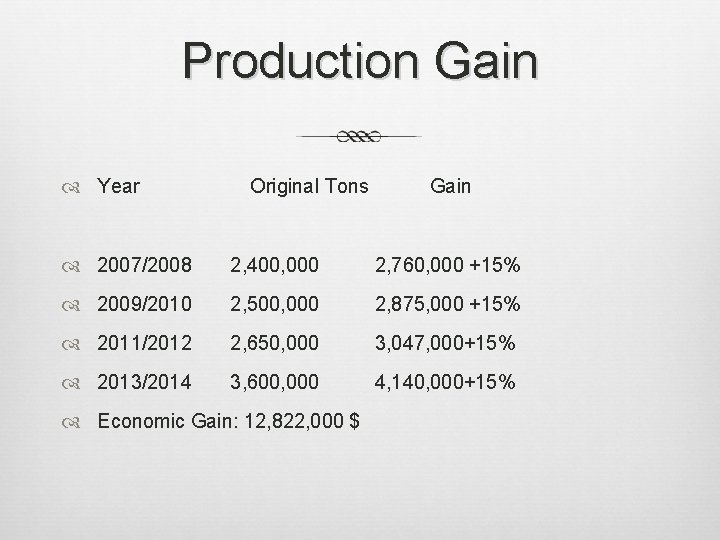
Production Gain Year Original Tons Gain 2007/2008 2, 400, 000 2, 760, 000 +15% 2009/2010 2, 500, 000 2, 875, 000 +15% 2011/2012 2, 650, 000 3, 047, 000+15% 2013/2014 3, 600, 000 4, 140, 000+15% Economic Gain: 12, 822, 000 $
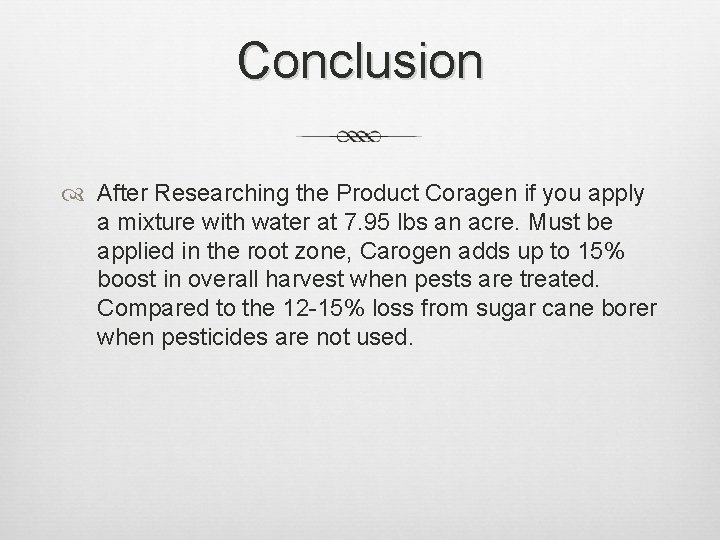
Conclusion After Researching the Product Coragen if you apply a mixture with water at 7. 95 lbs an acre. Must be applied in the root zone, Carogen adds up to 15% boost in overall harvest when pests are treated. Compared to the 12 -15% loss from sugar cane borer when pesticides are not used.
Resources http: //www. caes. uga. edu/commodities/fruits/veg/alert s/documents/2008 Coragen. Label. pdf http: //www. dupont. co. in/products-and-services/cropprotection/crop-protection-sugarcanecultivation/case-studies/sugarcane-top-borercontrol. html http: //www 2. dupont. com/Production_Agriculture/en_ US/assets/downloads/pdfs/K-14833. pdf
- Slides: 13