
The Suffixes graph and gram Lesson 23 Etymology
- Slides: 12
The Suffixes -graph and gram Lesson #23
Etymology The Greek suffix –graph and its related form – gram have to do with writing. The suffix is taken from the ancient Greek verb graphein, which means “to write. ” Graph is sometimes used as a root. Graph, diagram, and autobiography are a few of the many words containing this word part.
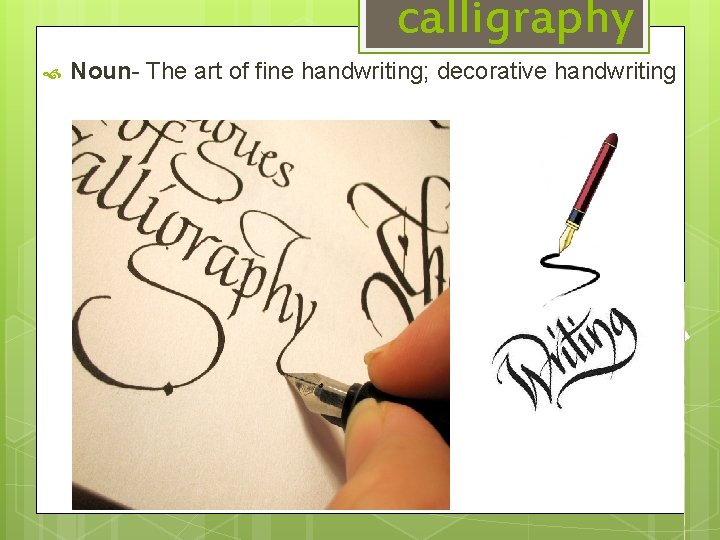
calligraphy Noun- The art of fine handwriting; decorative handwriting
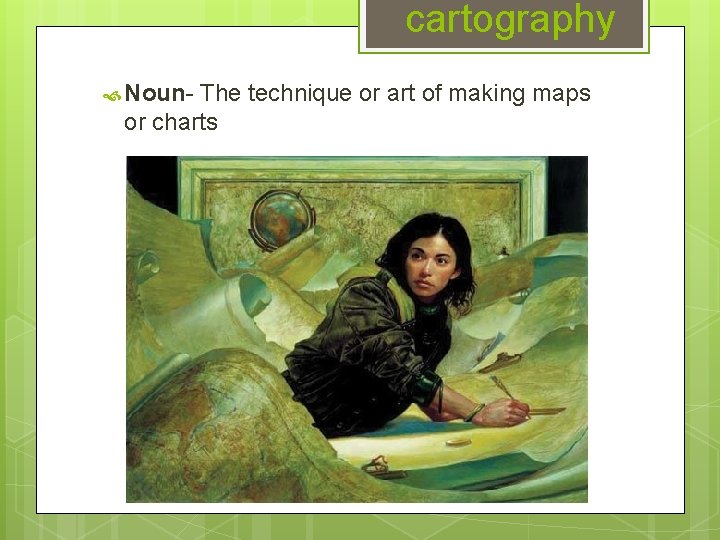
cartography Noun- The technique or art of making maps or charts
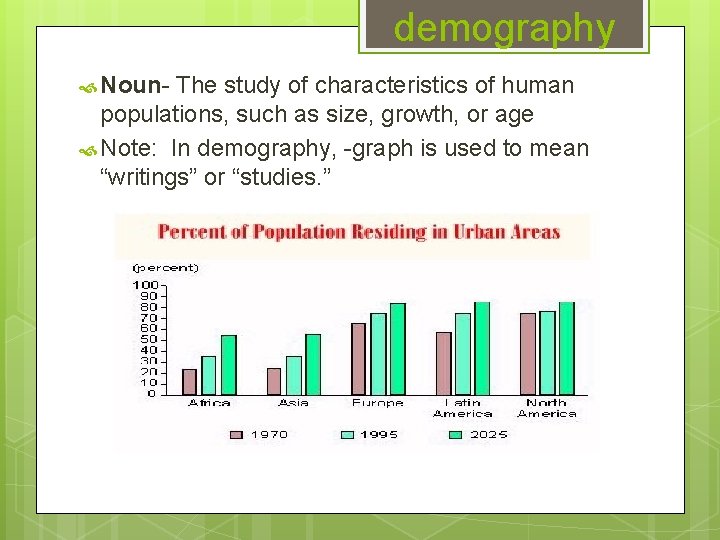
demography Noun- The study of characteristics of human populations, such as size, growth, or age Note: In demography, -graph is used to mean “writings” or “studies. ”
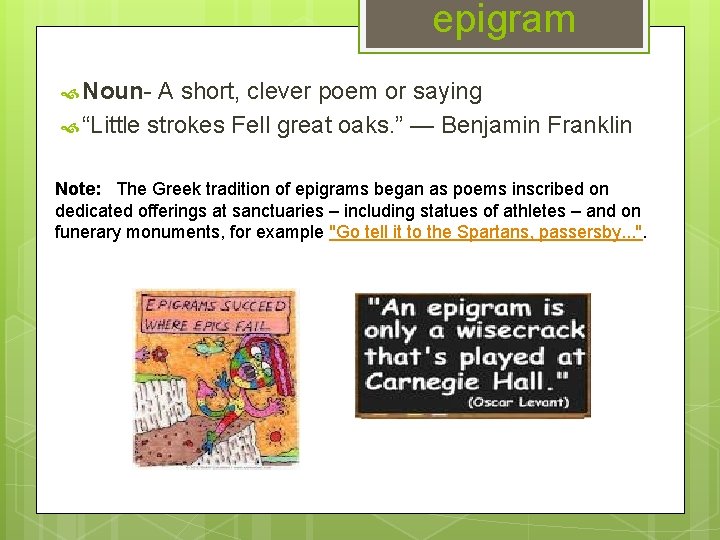
epigram Noun- A short, clever poem or saying “Little strokes Fell great oaks. ” — Benjamin Franklin Note: The Greek tradition of epigrams began as poems inscribed on dedicated offerings at sanctuaries – including statues of athletes – and on funerary monuments, for example "Go tell it to the Spartans, passersby. . . ".
graphic Noun- A visual representation, such as a graph or picture Adjective- Described in a vivid and effective manner
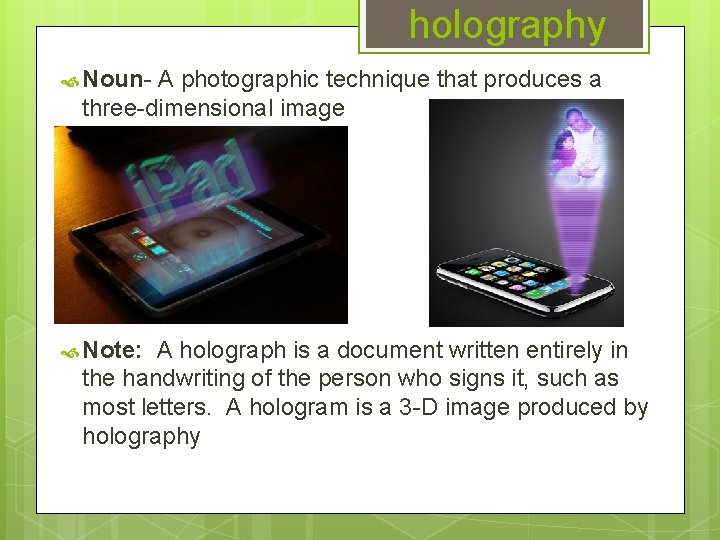
holography Noun- A photographic technique that produces a three-dimensional image Note: A holograph is a document written entirely in the handwriting of the person who signs it, such as most letters. A hologram is a 3 -D image produced by holography
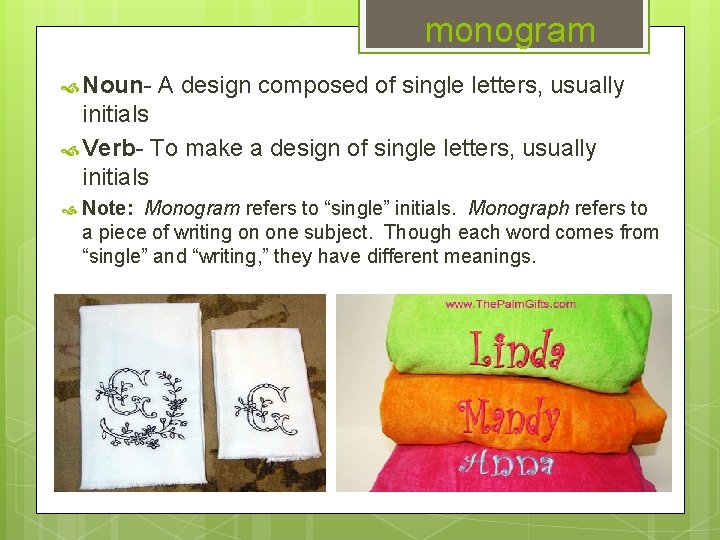
monogram Noun- A design composed of single letters, usually initials Verb- To make a design of single letters, usually initials Note: Monogram refers to “single” initials. Monograph refers to a piece of writing on one subject. Though each word comes from “single” and “writing, ” they have different meanings.
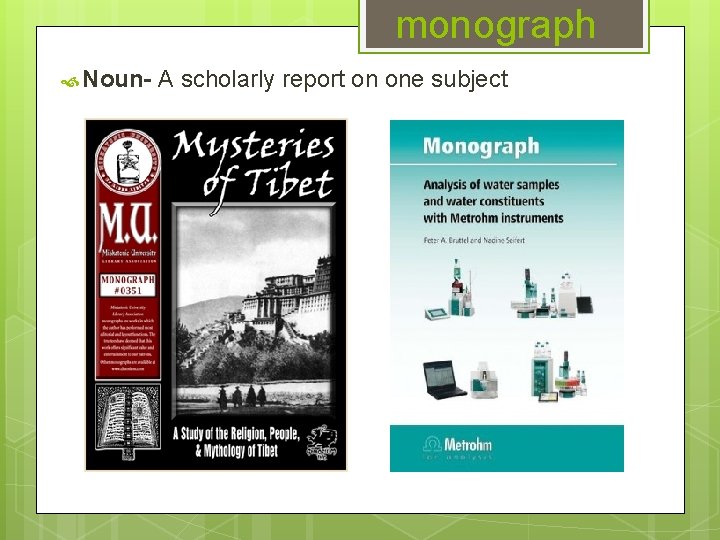
monograph Noun- A scholarly report on one subject
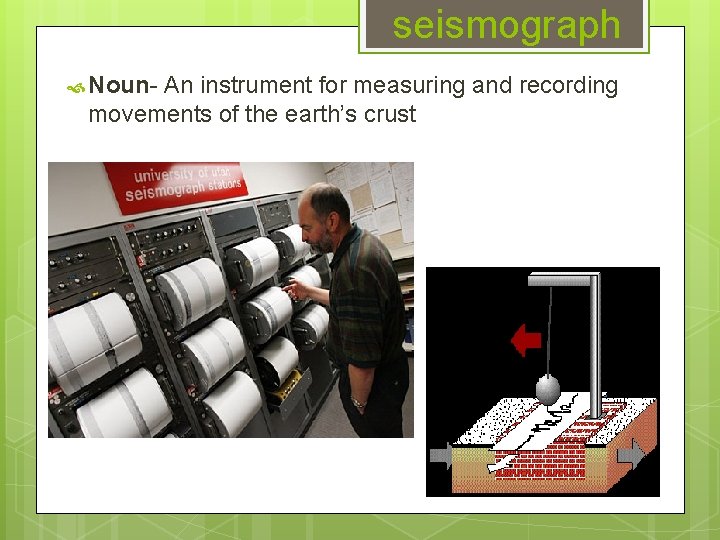
seismograph Noun- An instrument for measuring and recording movements of the earth’s crust
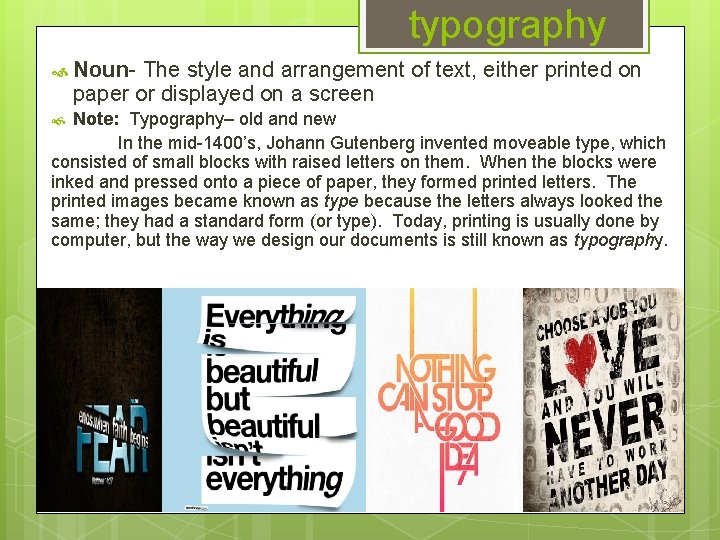
typography Noun- The style and arrangement of text, either printed on paper or displayed on a screen Note: Typography– old and new In the mid-1400’s, Johann Gutenberg invented moveable type, which consisted of small blocks with raised letters on them. When the blocks were inked and pressed onto a piece of paper, they formed printed letters. The printed images became known as type because the letters always looked the same; they had a standard form (or type). Today, printing is usually done by computer, but the way we design our documents is still known as typography.