
The Subjunctive to Express Feelings and Emotions Nominal
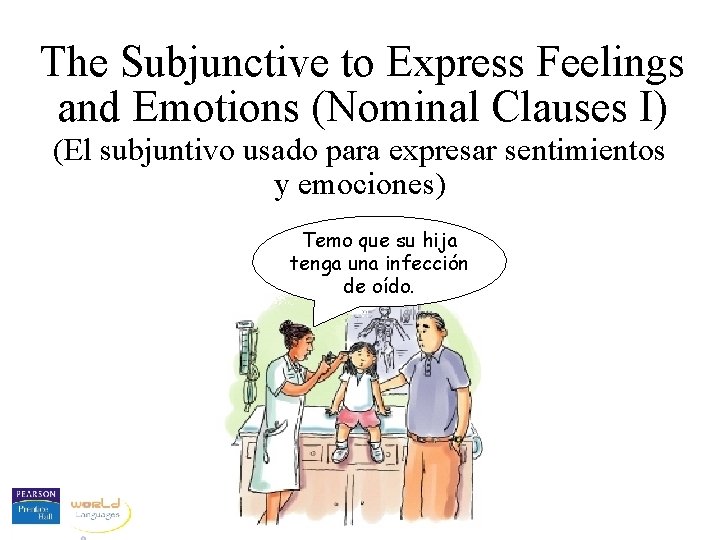
The Subjunctive to Express Feelings and Emotions (Nominal Clauses I) (El subjuntivo usado para expresar sentimientos y emociones) Temo que su hija tenga una infección de oído.
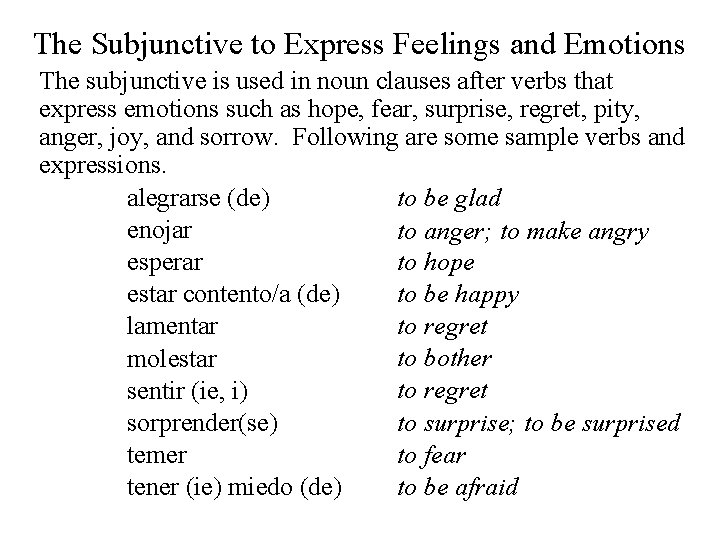
The Subjunctive to Express Feelings and Emotions The subjunctive is used in noun clauses after verbs that express emotions such as hope, fear, surprise, regret, pity, anger, joy, and sorrow. Following are some sample verbs and expressions. alegrarse (de) to be glad enojar to anger; to make angry to hope esperar to be happy estar contento/a (de) to regret lamentar to bother molestar to regret sentir (ie, i) sorprender(se) to surprise; to be surprised temer to fear tener (ie) miedo (de) to be afraid

The Subjunctive to Express Feelings and Emotions The subjunctive is used in noun clauses after verbs that express emotions such as hope, fear, surprise, regret, pity, anger, joy, and sorrow. Talisa lamenta que Carlos esté enfermo. Talisa regrets (is sorry) that Carlos is sick. Espero que hagas más ejercicio esta semana. I hope that you exercise more this week. Juana teme que su madre padezca de diabetes. Juana fears that her mother will suffer from diabetes.
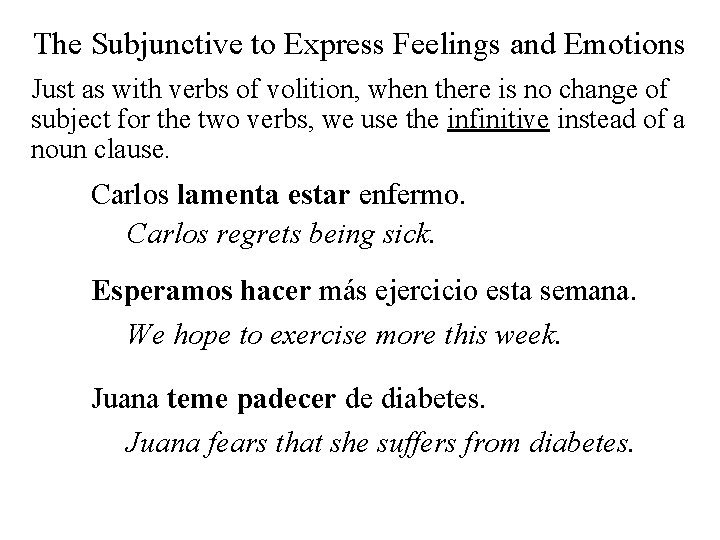
The Subjunctive to Express Feelings and Emotions Just as with verbs of volition, when there is no change of subject for the two verbs, we use the infinitive instead of a noun clause. Carlos lamenta estar enfermo. Carlos regrets being sick. Esperamos hacer más ejercicio esta semana. We hope to exercise more this week. Juana teme padecer de diabetes. Juana fears that she suffers from diabetes.

FIN
- Slides: 5