
The Styles of the Enlightenment 1750 1820 Rococo
- Slides: 23
The Styles of the Enlightenment 1750 – 1820 Rococo Bourgeois Neo-Classical
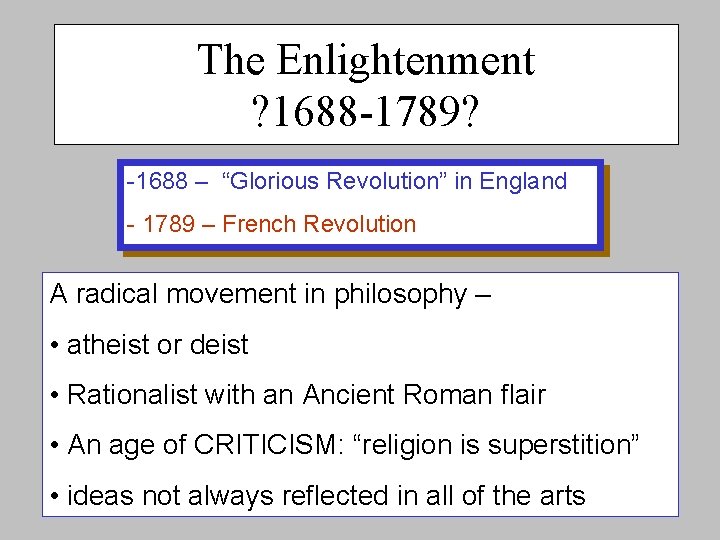
The Enlightenment ? 1688 -1789? -1688 – “Glorious Revolution” in England - 1789 – French Revolution A radical movement in philosophy – • atheist or deist • Rationalist with an Ancient Roman flair • An age of CRITICISM: “religion is superstition” • ideas not always reflected in all of the arts
Sapere aude! “DARE TO KNOW!” – Kant (don’t just “believe”) “Every sensible man, every honorable man, must hold the Christian sect in horror. ” – Voltaire quotes from pp. 296, 295
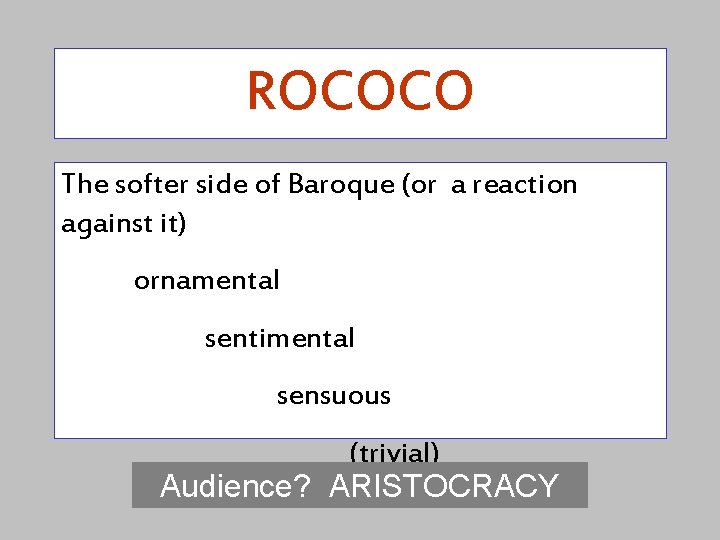
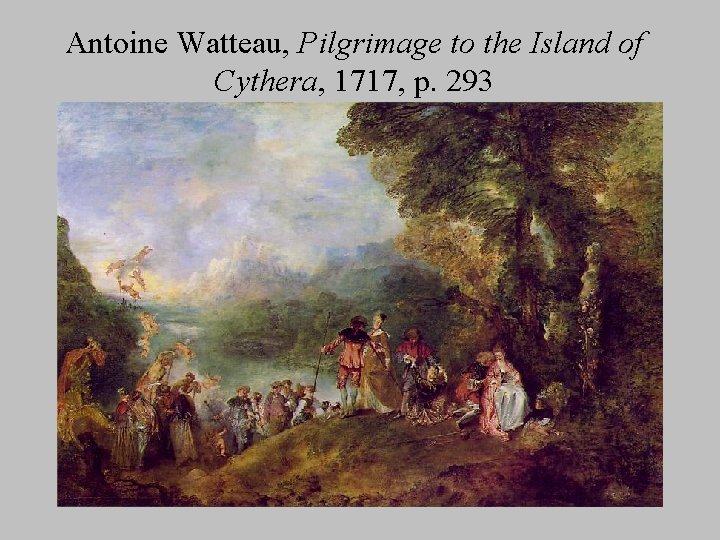
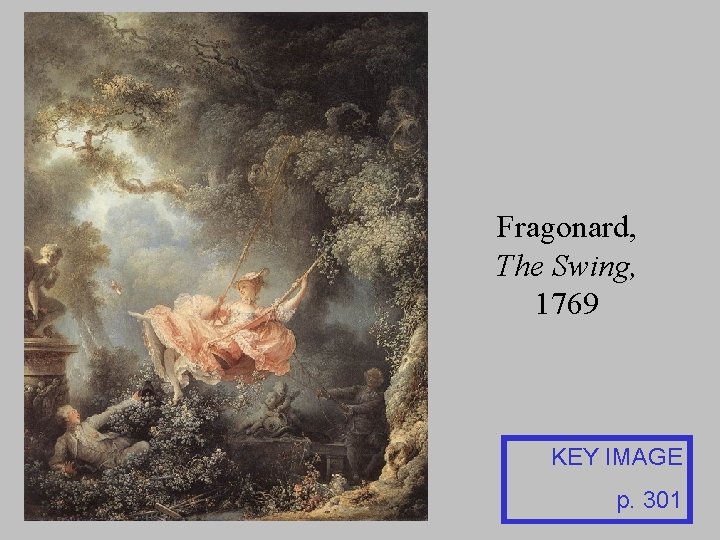
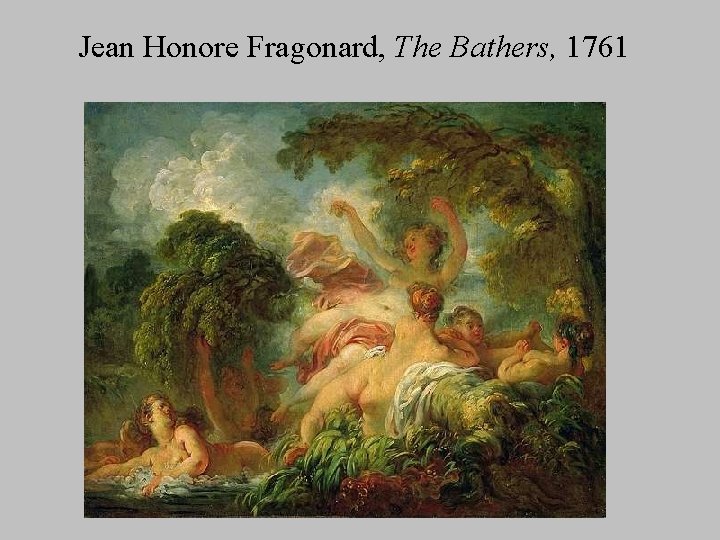
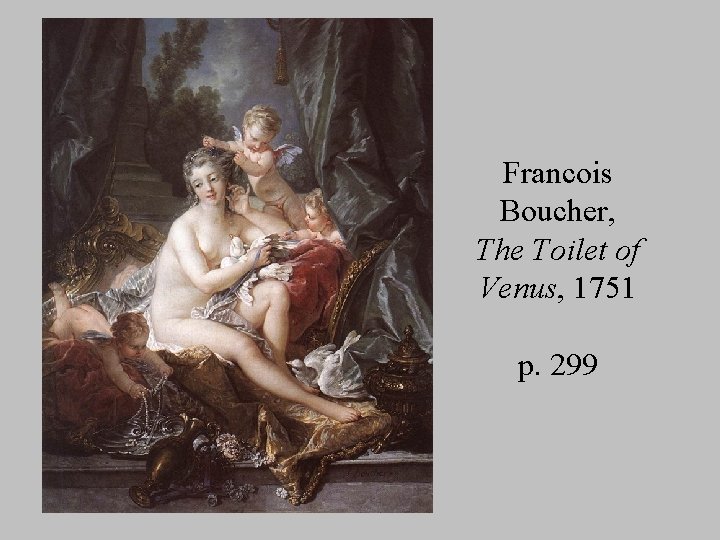
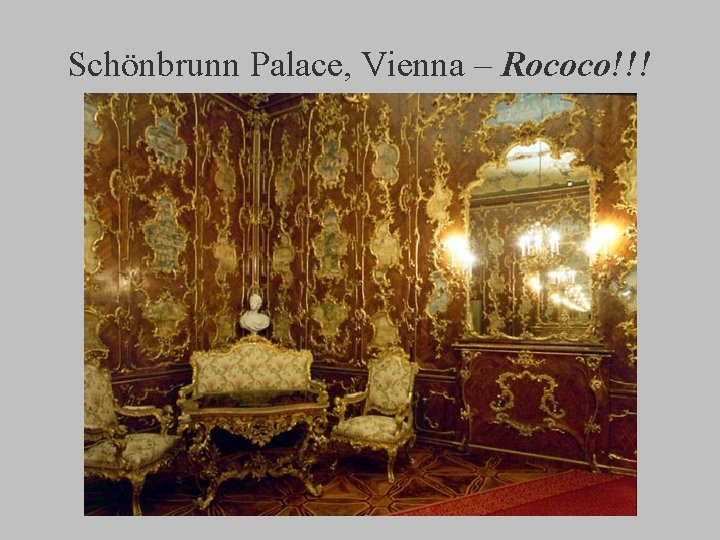
ROCOCO The softer side of Baroque (or a reaction against it) ornamental sentimental sensuous (trivial) Audience? ARISTOCRACY
Antoine Watteau, Pilgrimage to the Island of Cythera, 1717, p. 293
Fragonard, The Swing, 1769 KEY IMAGE p. 301
Jean Honore Fragonard, The Bathers, 1761
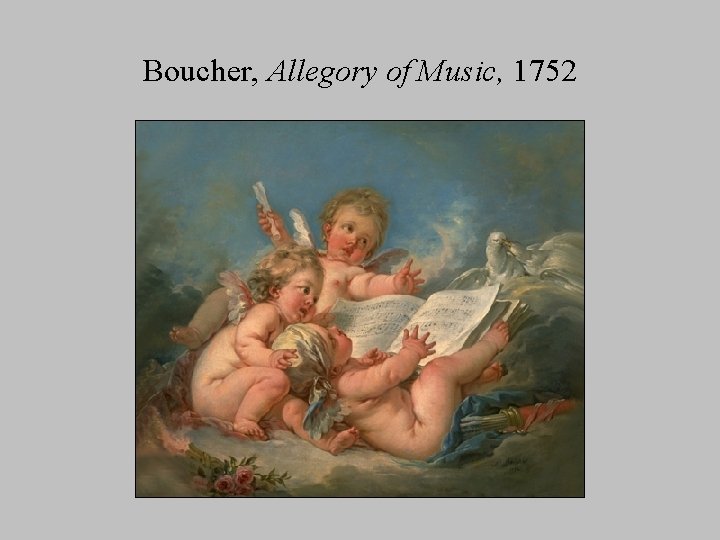
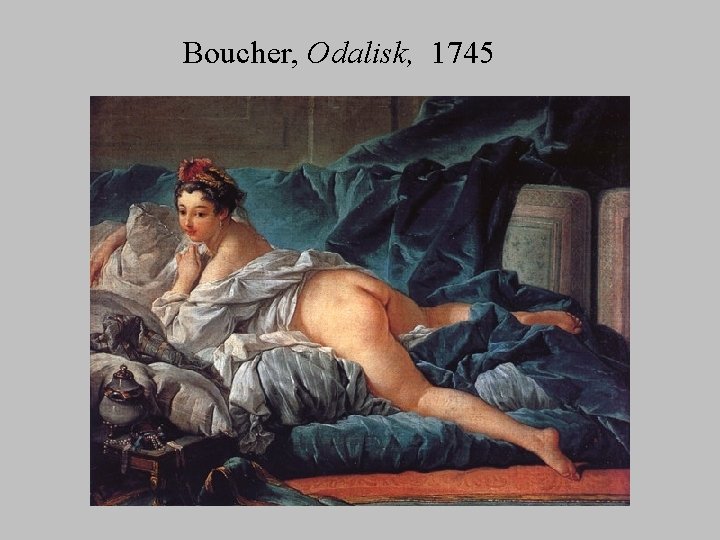
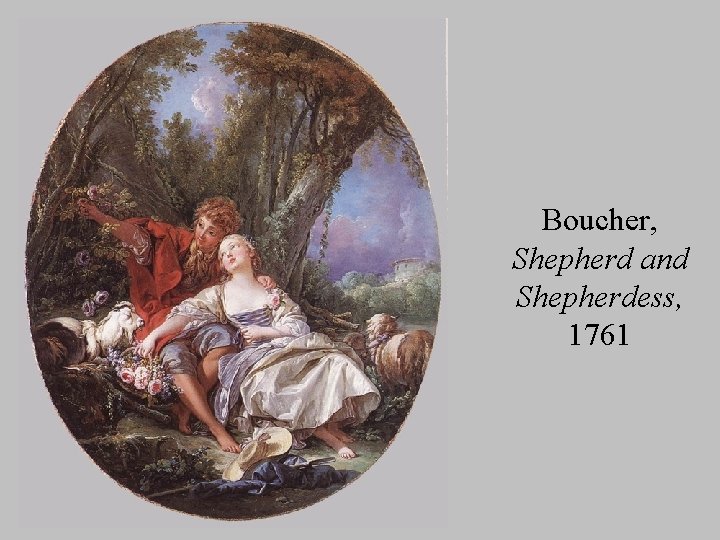
Boucher “His canvases often seem to consist of little beyond mounds of pink flesh. . . ”
Francois Boucher, The Toilet of Venus, 1751 p. 299
Boucher, Allegory of Music, 1752
Boucher, Odalisk, 1745
Boucher, Shepherd and Shepherdess, 1761
Schönbrunn Palace, Vienna – Rococo!!!
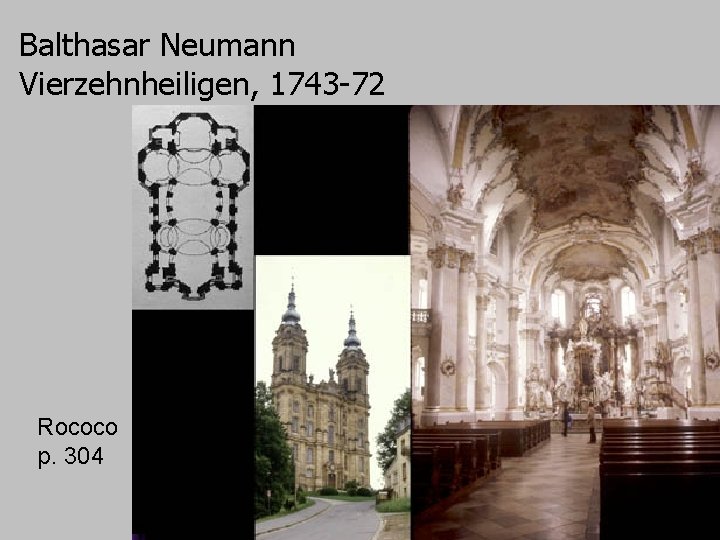
Balthasar Neumann Vierzehnheiligen, 1743 -72 Rococo p. 304
The Bourgeois Style: Genre Painting Art for the earnest middle classes (and the aristocracy, too)
Genre painting – A type of painting showing scenes from everyday life and surroundings. The term also refers to the various types of subject matter: history, portraiture, landscape, still life, and flower painting. (Thus “genre painting” is a genre of painting!) See glossary.
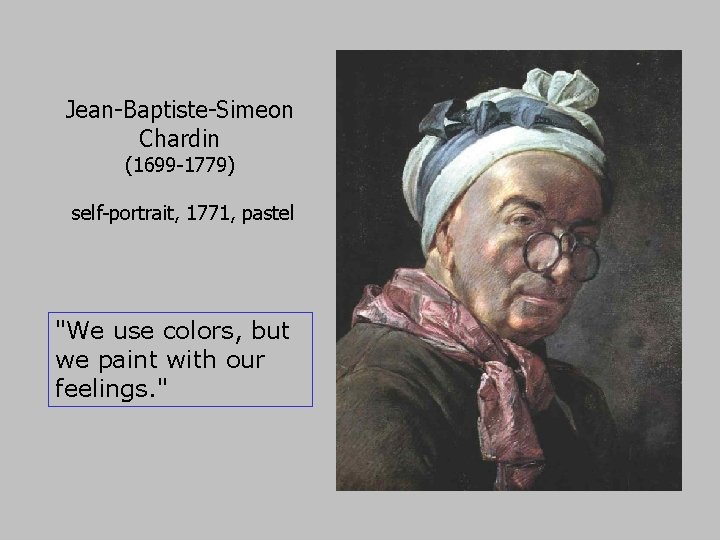
Jean-Baptiste-Simeon Chardin (1699 -1779) self-portrait, 1771, pastel "We use colors, but we paint with our feelings. "
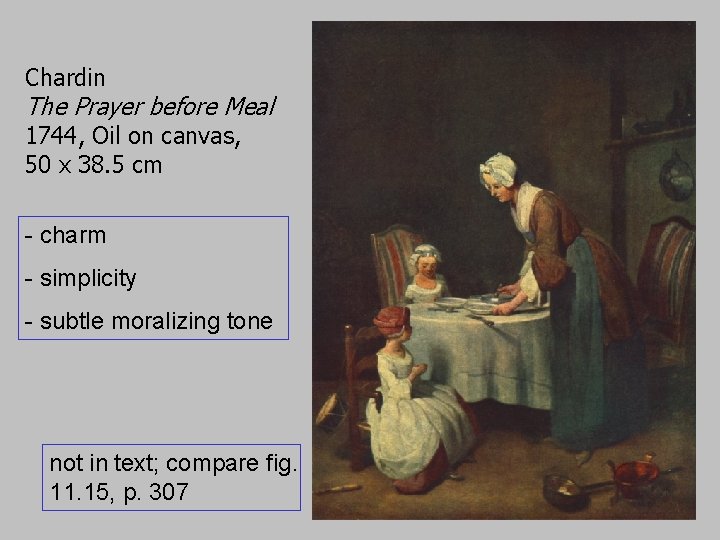
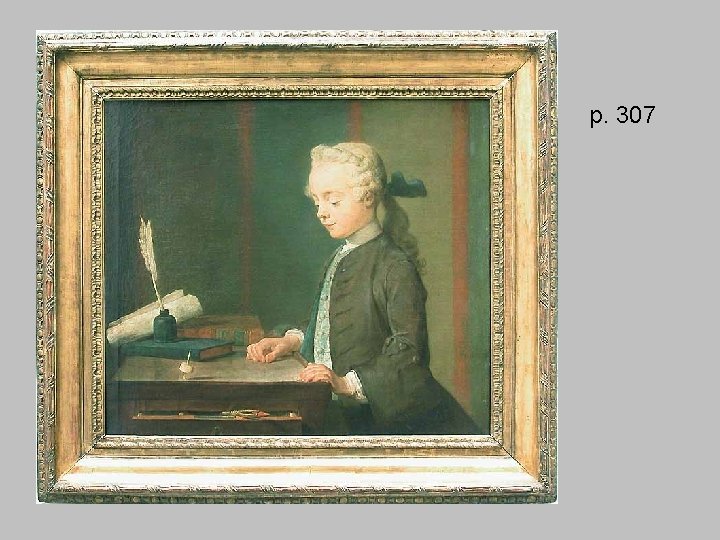
Chardin The Prayer before Meal 1744, Oil on canvas, 50 x 38. 5 cm - charm - simplicity - subtle moralizing tone not in text; compare fig. 11. 15, p. 307
p. 307
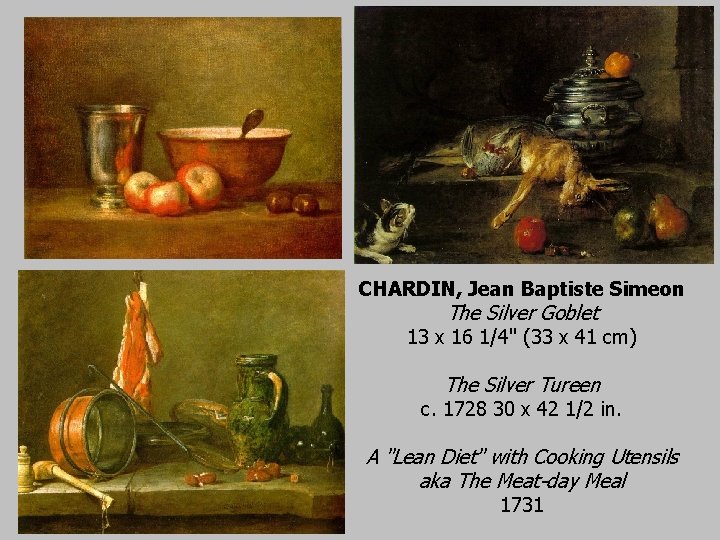
CHARDIN, Jean Baptiste Simeon The Silver Goblet 13 x 16 1/4" (33 x 41 cm) The Silver Tureen c. 1728 30 x 42 1/2 in. A "Lean Diet" with Cooking Utensils aka The Meat-day Meal 1731
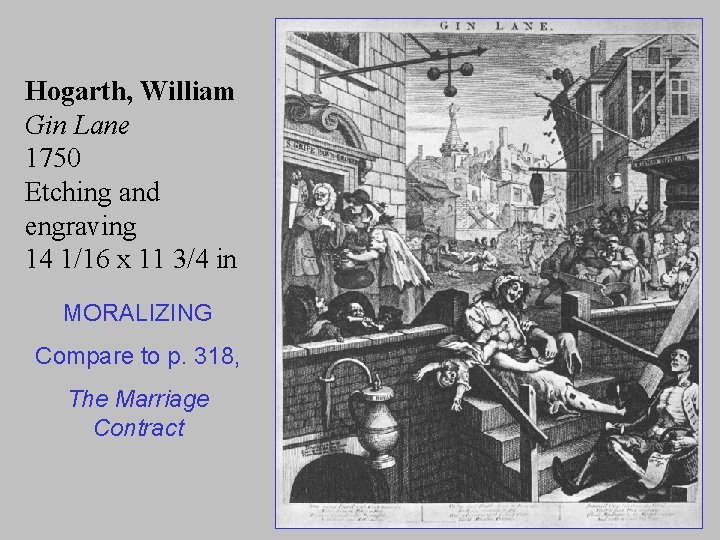
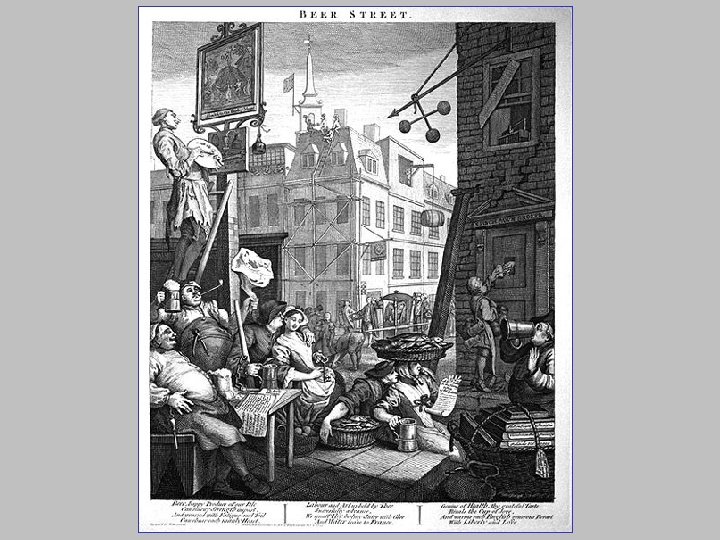
Hogarth, William Gin Lane 1750 Etching and engraving 14 1/16 x 11 3/4 in MORALIZING Compare to p. 318, The Marriage Contract
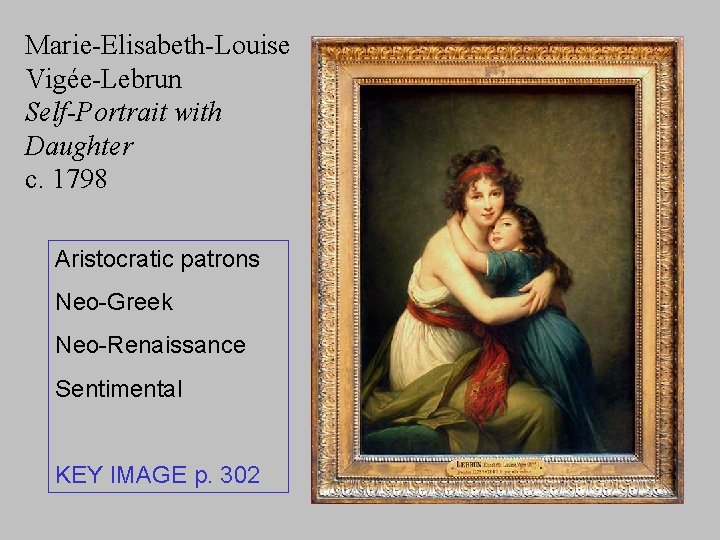
Marie-Elisabeth-Louise Vigée-Lebrun Self-Portrait with Daughter c. 1798 Aristocratic patrons Neo-Greek Neo-Renaissance Sentimental KEY IMAGE p. 302