
The Study of VisuallyInduced Postural Responses Using Virtual

- Slides: 28
The Study of Visually-Induced Postural Responses Using Virtual Environments Sparto PJ, Furman JM, Jacobson JL, Whitney SL, Hodges LF, Redfern MS Department of Otolaryngology University of Pittsburgh, PA, USA Sponsors: Eye and Ear Foundation, NIH: DC 02490, DC 05205, K 25 AG 001049
Collaborators Rolf Jacob, MD Kathryn Brown, MS, PT Jeffrey Jasko, BS Leigh Mahoney, MS Chad Wingrave, MS
Visually-Induced Postural Sway Research • Vestibular disorders (Redfern and Furman, 1994) • Anxiety disorders (Jacob et al. , 1995) • Healthy elders (Borger et al. , 1999) • Adaptation (Loughlin et al. , 1996, Loughlin and Redfern, 2001)
Limitations • Single rear-projected screen • Restricted in field of view (60 deg) • Not able to study peripheral motion cues • Modified Equitest platform • Pitch motion only • Frequency and amplitude range limited
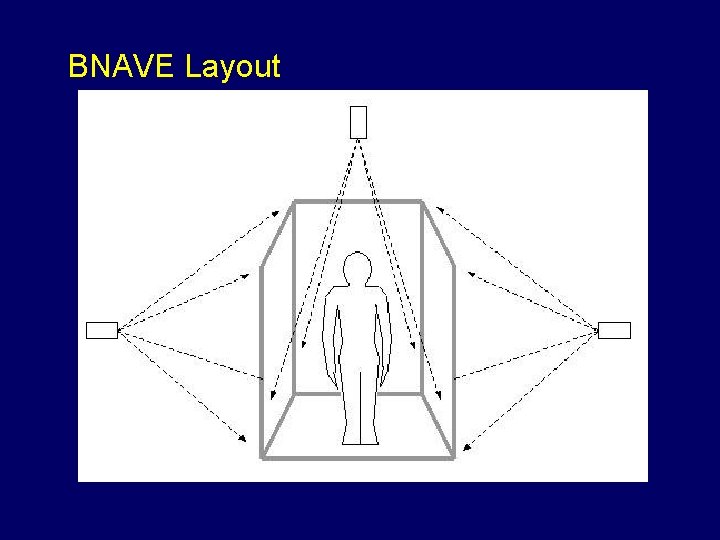
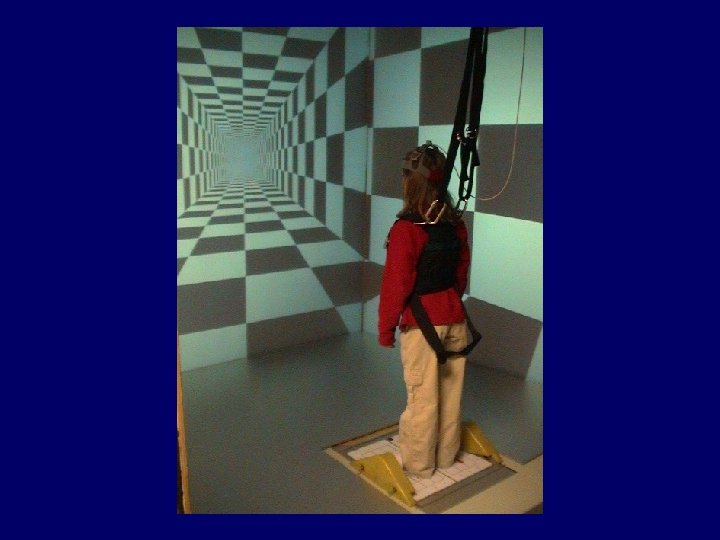
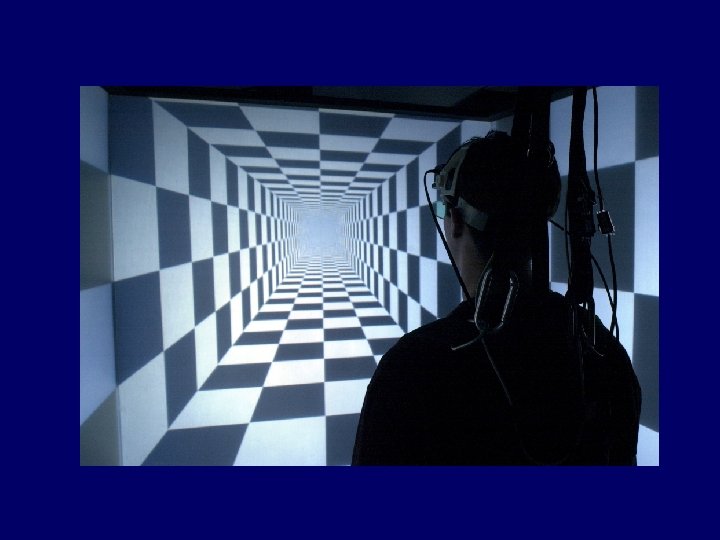
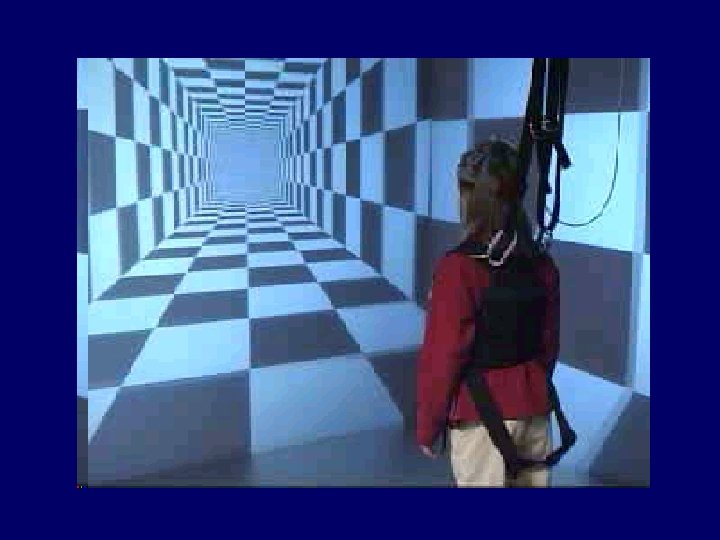
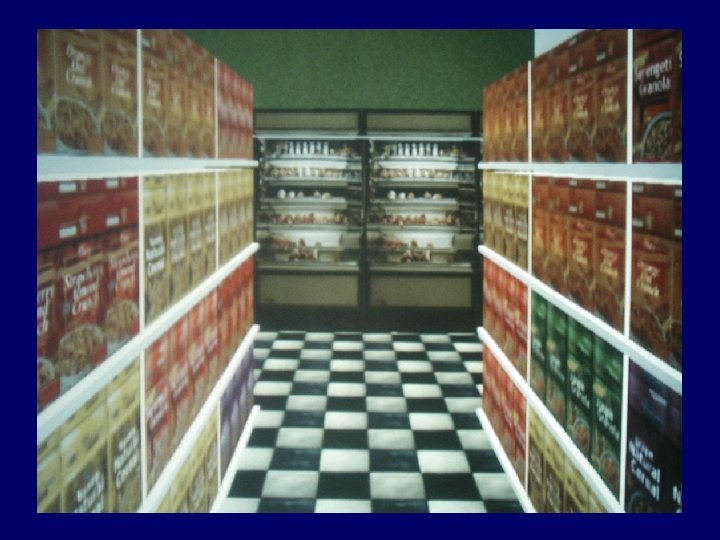
Balance NAVE Automatic Virtual Environment (BNAVE) • Spatially-Immersive VR Facility used to generate moving visual environments • Can control many factors: • Field of view (180 o H x 110 o V) • Spatial and temporal characteristics of movement • Spatial frequency • Monoscopic & stereoscopic
BNAVE Layout
Sensory Integration • Modified Neurotest posture platform • Pitch and A-P translation • Treadmill • Galvanic Vestibular Stimulation
Subjects • Healthy Adults (CON) • 5 Males, 6 Females • Age 32 - 66 years, mean 49 + 11 yrs • No abnormalities on clinical vestibular tests • Adults with Unilateral Vestibular Loss (UVL) • 5 Males, 6 Females • Age 32 - 66 years, mean 49 + 11 yrs • 10 - 72 months post vestibular n. section
Stimulus • Frequency of Movement • 0. 1 Hz • 0. 25 Hz • RMS velocity was 1. 2 m/s for both freq.
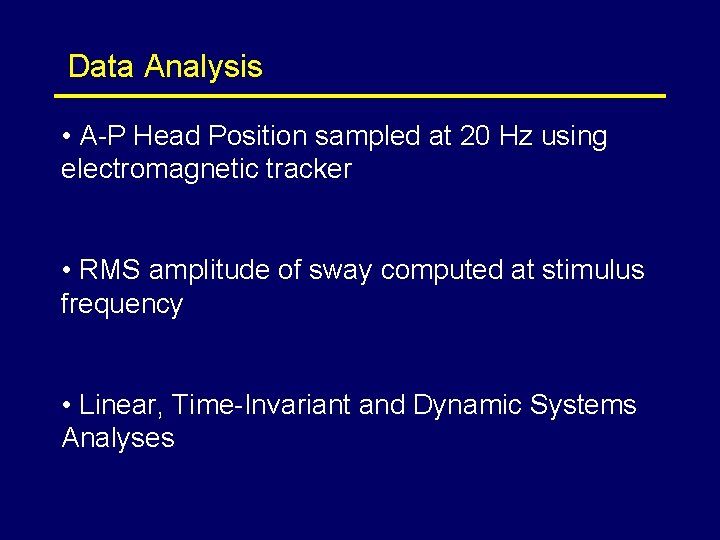
Data Analysis • A-P Head Position sampled at 20 Hz using electromagnetic tracker • RMS amplitude of sway computed at stimulus frequency • Linear, Time-Invariant and Dynamic Systems Analyses
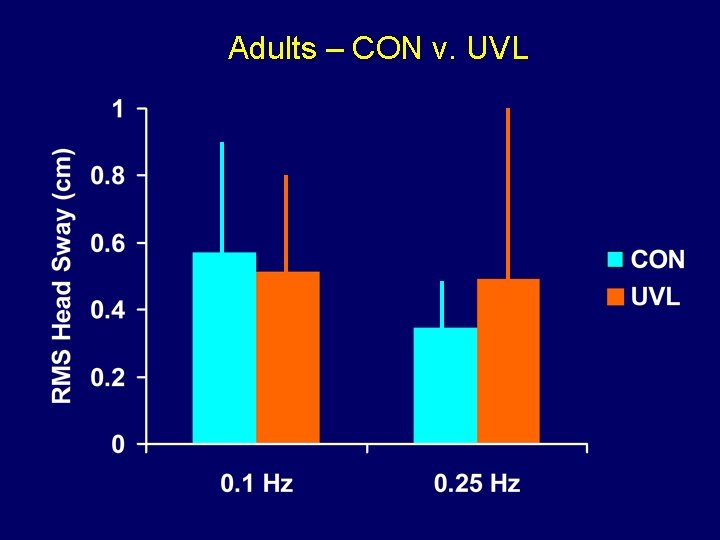
Adults – CON v. UVL
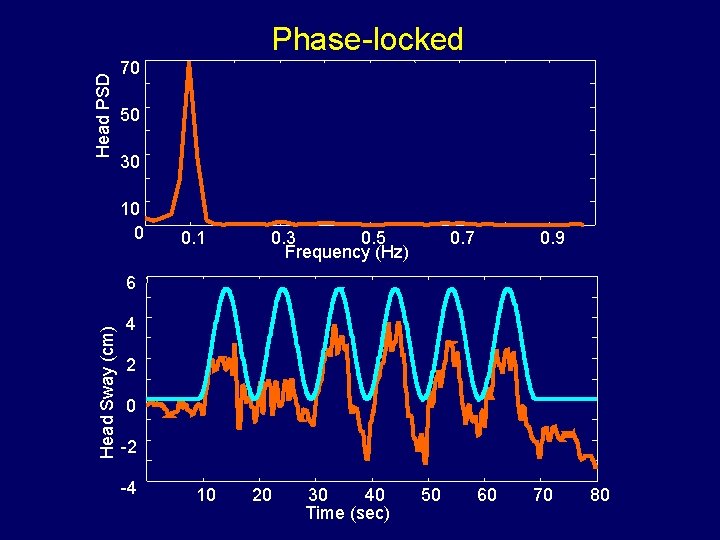
Head PSD Phase-locked 70 50 30 10 0 0. 1 0. 3 0. 5 Frequency (Hz) 0. 7 0. 9 Head Sway (cm) 6 4 2 0 -2 -4 10 20 30 40 Time (sec) 50 60 70 80
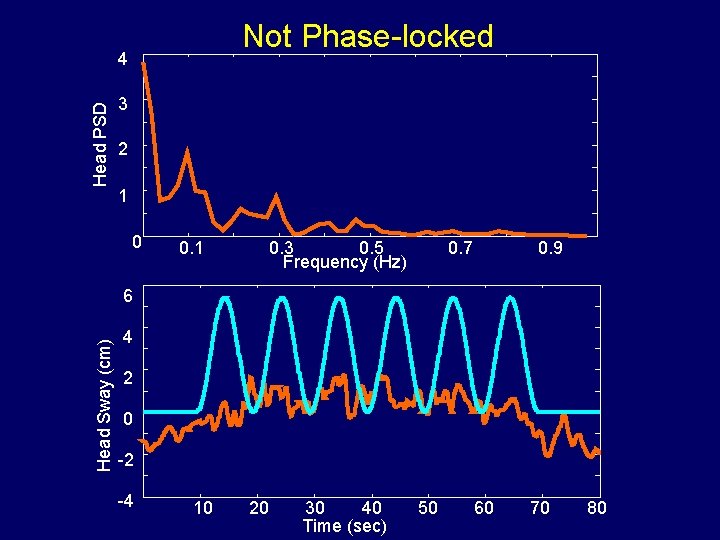
Not Phase-locked Head PSD 4 3 2 1 0 0. 1 0. 3 0. 5 Frequency (Hz) 0. 7 0. 9 Head Sway (cm) 6 4 2 0 -2 -4 10 20 30 40 Time (sec) 50 60 70 80
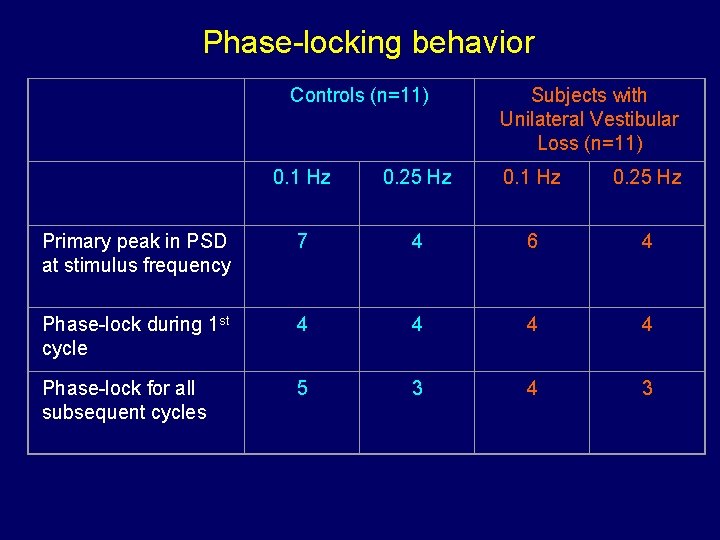
Phase-locking behavior Controls (n=11) Subjects with Unilateral Vestibular Loss (n=11) 0. 1 Hz 0. 25 Hz Primary peak in PSD at stimulus frequency 7 4 6 4 Phase-lock during 1 st cycle 4 4 Phase-lock for all subsequent cycles 5 3 4 3
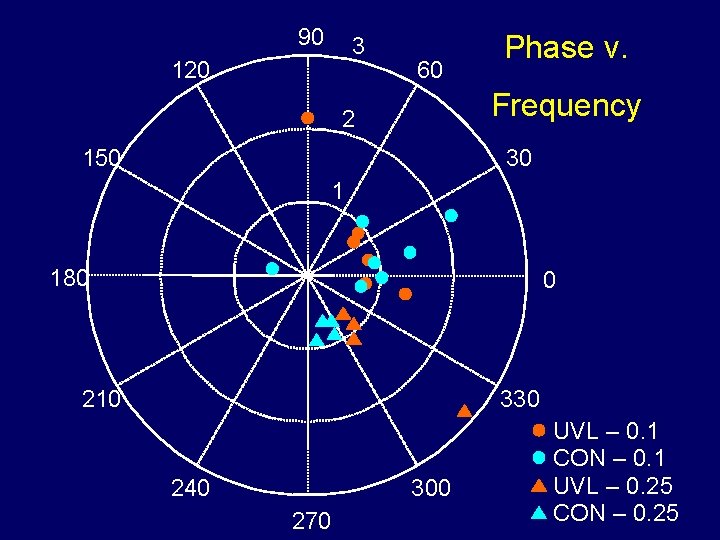
90 3 120 60 Phase v. Frequency 2 150 30 1 180 0 210 330 240 300 270 UVL – 0. 1 CON – 0. 1 UVL – 0. 25 CON – 0. 25
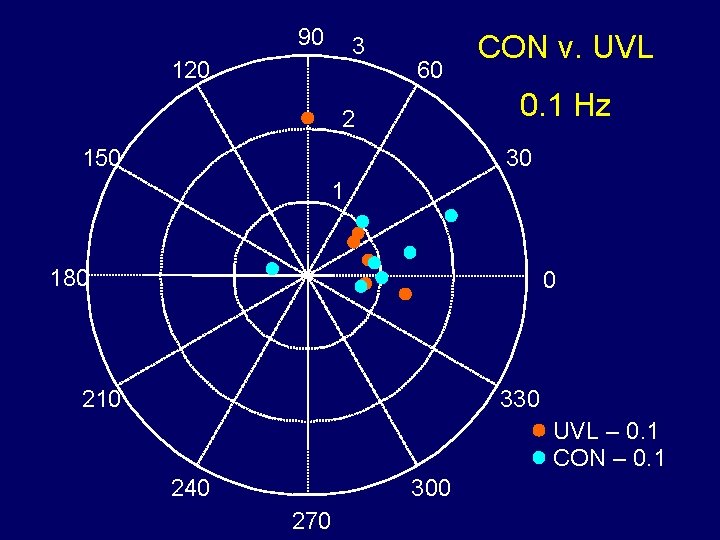
90 3 120 60 CON v. UVL 0. 1 Hz 2 150 30 1 180 0 210 330 UVL – 0. 1 CON – 0. 1 240 300 270
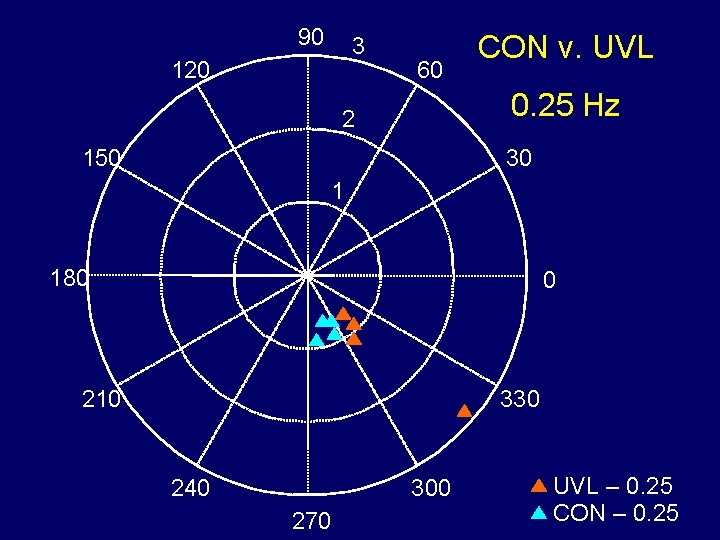
90 3 120 60 CON v. UVL 0. 25 Hz 2 150 30 1 180 0 210 330 240 300 270 UVL – 0. 25 CON – 0. 25
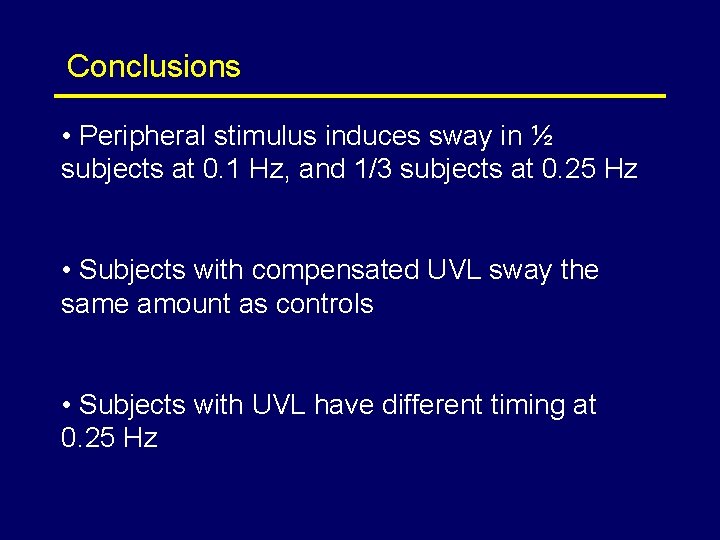
Conclusions • Peripheral stimulus induces sway in ½ subjects at 0. 1 Hz, and 1/3 subjects at 0. 25 Hz • Subjects with compensated UVL sway the same amount as controls • Subjects with UVL have different timing at 0. 25 Hz
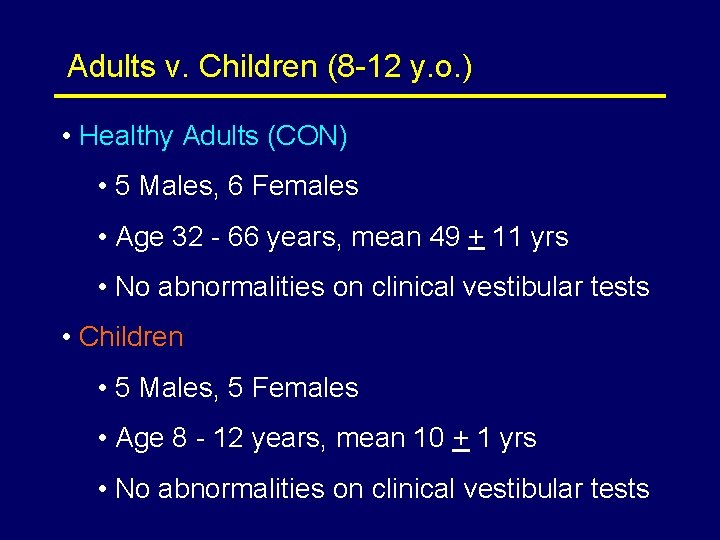
Adults v. Children (8 -12 y. o. ) • Healthy Adults (CON) • 5 Males, 6 Females • Age 32 - 66 years, mean 49 + 11 yrs • No abnormalities on clinical vestibular tests • Children • 5 Males, 5 Females • Age 8 - 12 years, mean 10 + 1 yrs • No abnormalities on clinical vestibular tests
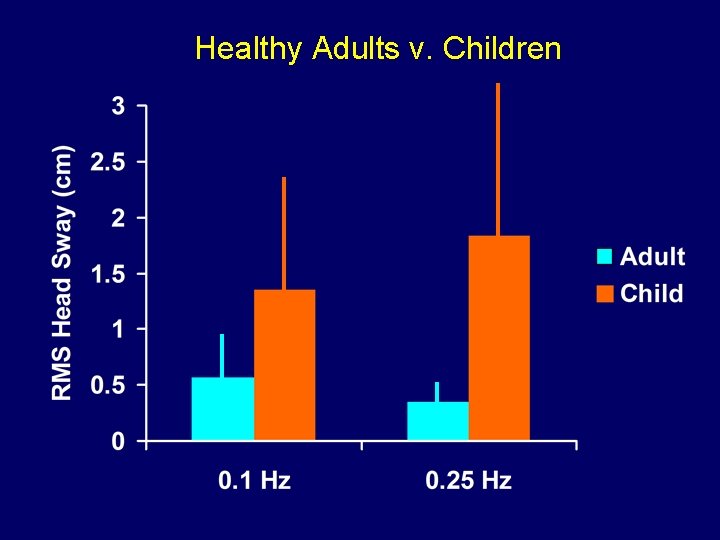
Healthy Adults v. Children
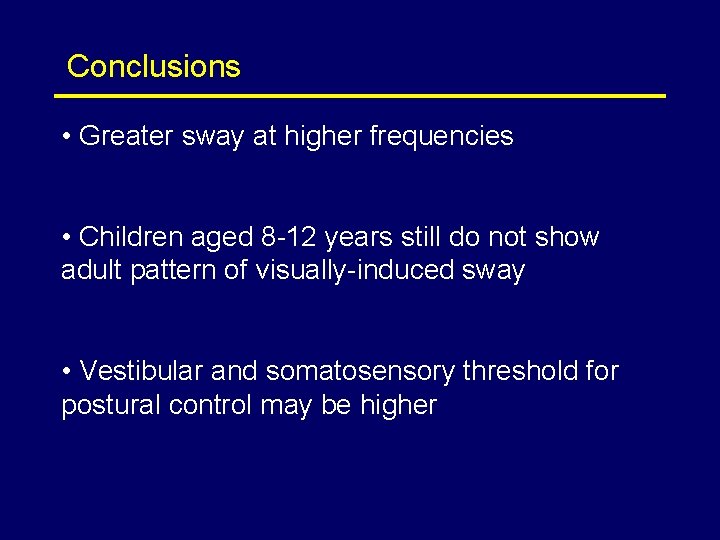
Conclusions • Greater sway at higher frequencies • Children aged 8 -12 years still do not show adult pattern of visually-induced sway • Vestibular and somatosensory threshold for postural control may be higher
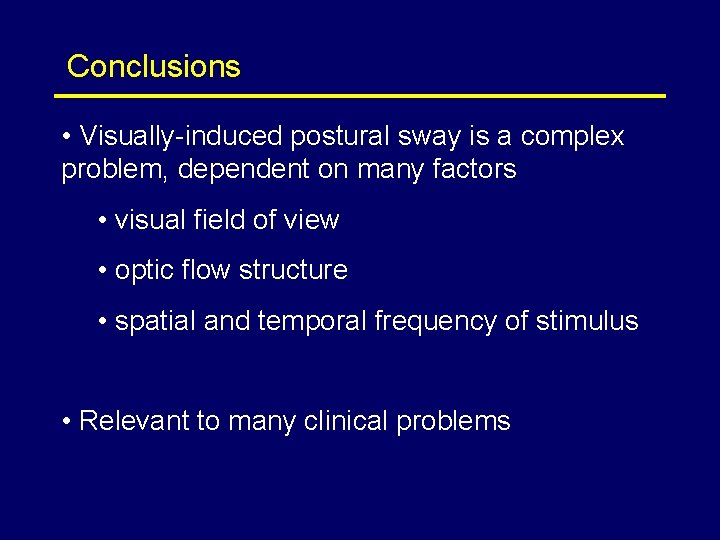
Conclusions • Visually-induced postural sway is a complex problem, dependent on many factors • visual field of view • optic flow structure • spatial and temporal frequency of stimulus • Relevant to many clinical problems
Current Areas of Research • Visual Influences in Height Phobia • Visual Influences in Migraine • Vestibular Rehabilitation using VR