
The Structures of Governments in the Middle East
- Slides: 13
The Structures of Governments in the Middle East SS 7 GC 7: The student will explain the structures of the national governments of the Middle East: Saudi Arabia, Israel, and Iran
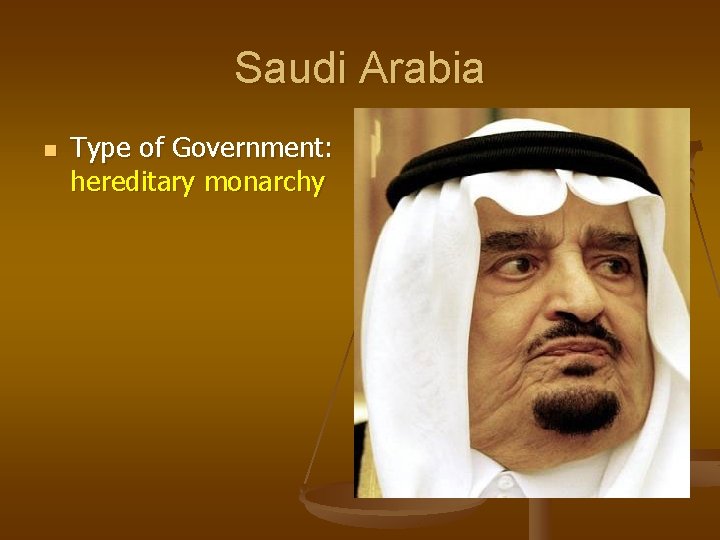
Saudi Arabia n Type of Government: hereditary monarchy
Definition of Government: Saudi Arabia n Saudi Arabia is a hereditary monarchy. A monarchy is a government led by a king who comes from a family that has ruled the country for several generations.
Characteristics: Saudi Arabia n n The king has been a member of the al. Saud family since 1920. The king and his advisors, many of whom are family members or influential business leaders in the country make the laws. n n n There is no written constitution The king rules for life Much of Saudi law is based on religionthis is known as Shariah law.
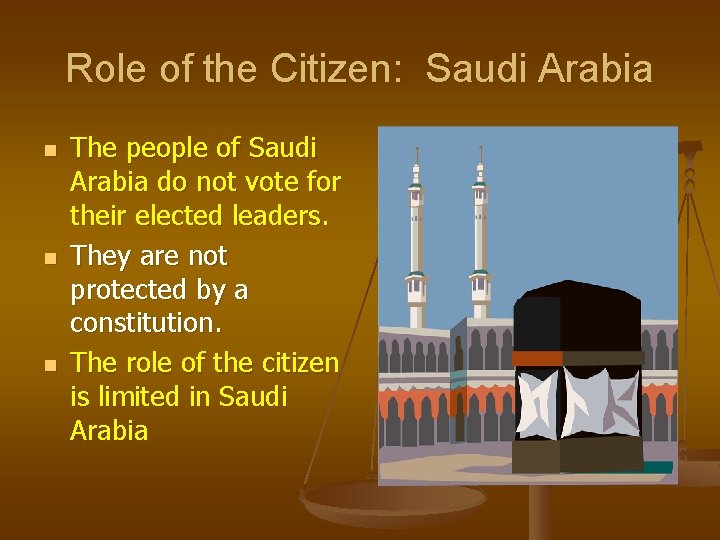
Role of the Citizen: Saudi Arabia n n n The people of Saudi Arabia do not vote for their elected leaders. They are not protected by a constitution. The role of the citizen is limited in Saudi Arabia
Israel n Type of Government: parliamentary democracy
Definition of Government: Israel n n n A parliamentary democracy is a government in which the people elect representatives from a group of different political parties. The leader of the parliament is the Prime Minister. The Prime Minister is chosen from the majority party in power.
Characteristics of Government: Israel n n n Israel’s Parliament is called the Knesset. Elections are held in Israel every four years. In a situation where the party in power begins to lose support from the majority of the members in the Knesset, then elections can be held sooner.
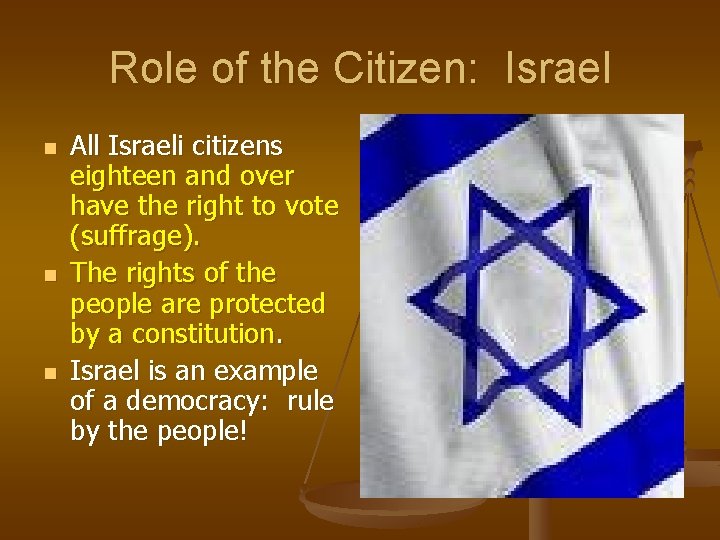
Role of the Citizen: Israel n n n All Israeli citizens eighteen and over have the right to vote (suffrage). The rights of the people are protected by a constitution. Israel is an example of a democracy: rule by the people!
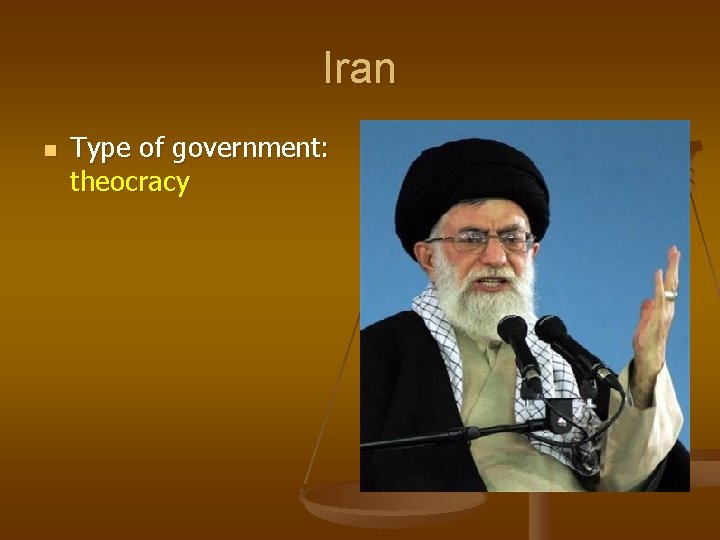
Iran n Type of government: theocracy
Definition of Government: Iran n A theocracy is a government in which God is seen as the true leader of the government and the country’s religious leaders serve as the political leaders.
Characteristics of Government: Iran n n Iran is interesting…. Even though the country has a popularly elected president, Iran’s religious leaders, known as an Ayatollah, can overpower the president. The title Ayatollah is given to a Shia religious leader that has been recognized for their great scholarship and understanding of religious law.
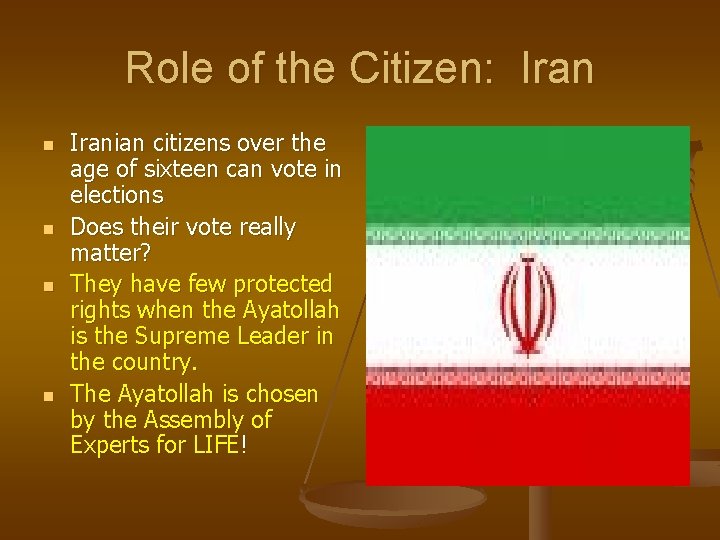
Role of the Citizen: Iran n n Iranian citizens over the age of sixteen can vote in elections Does their vote really matter? They have few protected rights when the Ayatollah is the Supreme Leader in the country. The Ayatollah is chosen by the Assembly of Experts for LIFE!