
The structure of personality Id Ego Superego Starter
- Slides: 12
The structure of personality Id, Ego, Superego
Starter 10 mins • Separate the main assumptions into Freudian and Non Freudian. • See if you can come up with an explanation of what the assumption means.
• Different forces operate in the mind, and at times cause inner conflict. • All behaviour is learned. • Behaviour is determined by unconscious mental processes. • Childhood development, takes place through psychosexual stages. • We all have personal agency (the awareness of life choices) • The human brain is like a computer. • The personality has 3 components – the ID, EGO and SUPEREGO. • All behaviour is the product of internal processes. • Psychoanalysis as a therapy can uncover unconscious thoughts. • All humans are intrinsically good.
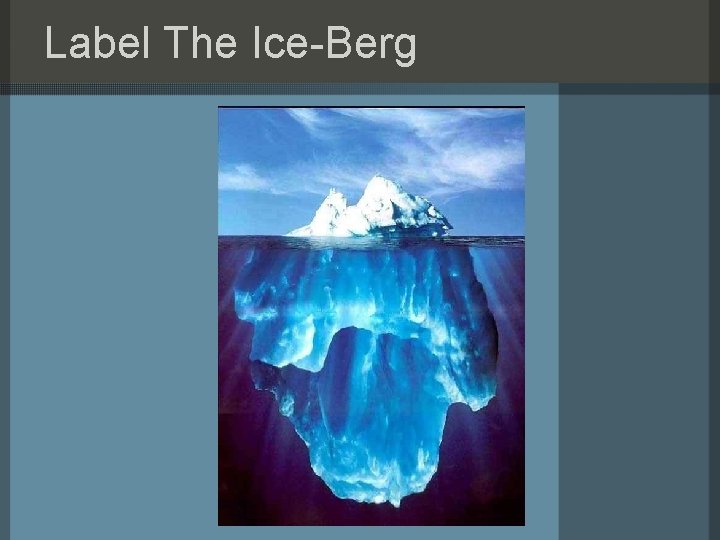
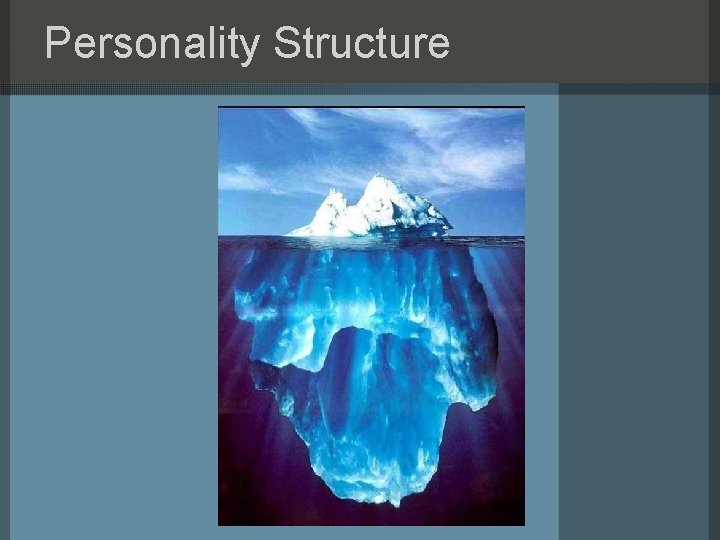
Label The Ice-Berg
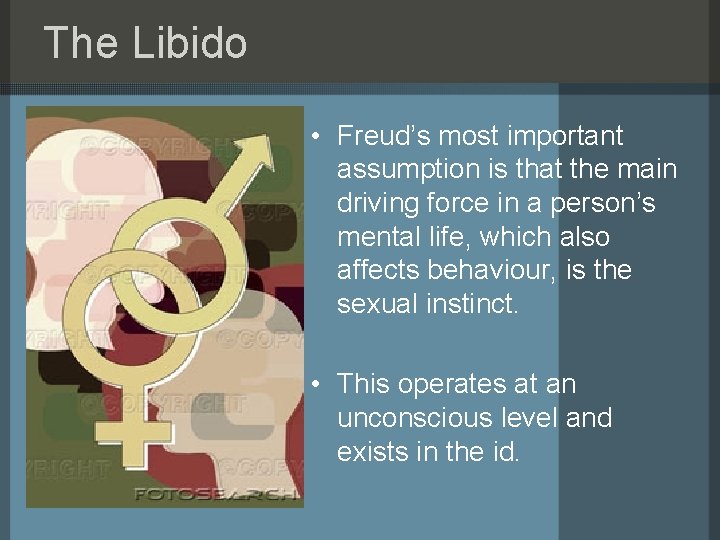
The Libido • Freud’s most important assumption is that the main driving force in a person’s mental life, which also affects behaviour, is the sexual instinct. • This operates at an unconscious level and exists in the id.
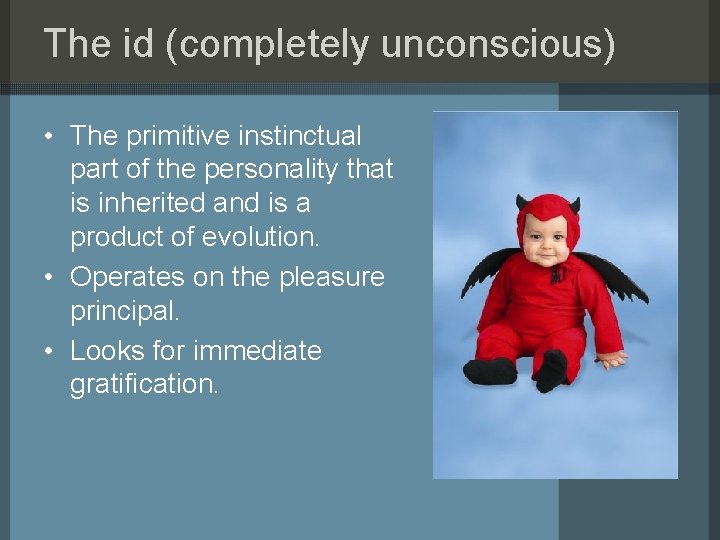
The id (completely unconscious) • The primitive instinctual part of the personality that is inherited and is a product of evolution. • Operates on the pleasure principal. • Looks for immediate gratification.
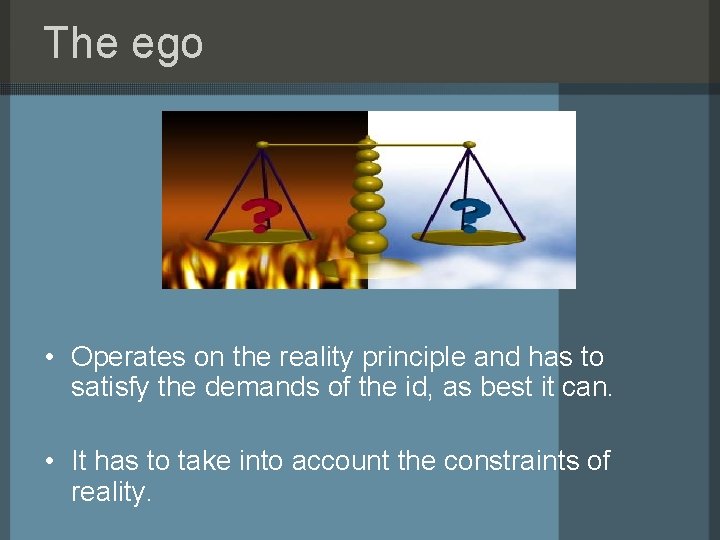
The ego • Operates on the reality principle and has to satisfy the demands of the id, as best it can. • It has to take into account the constraints of reality.
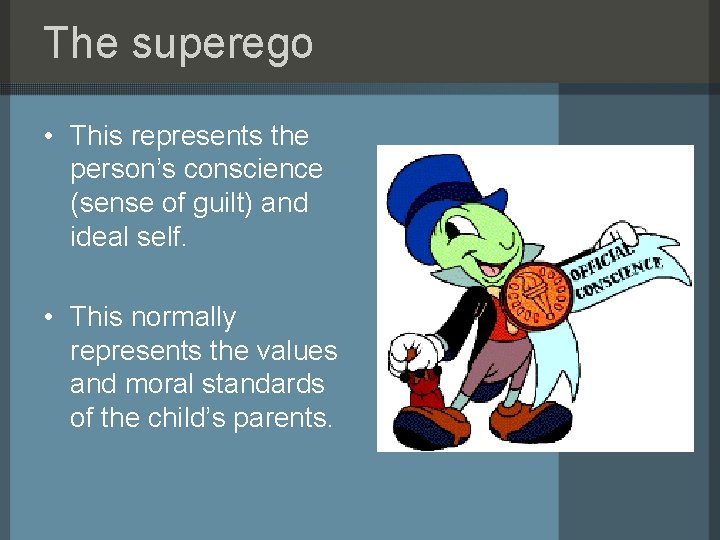
The superego • This represents the person’s conscience (sense of guilt) and ideal self. • This normally represents the values and moral standards of the child’s parents.
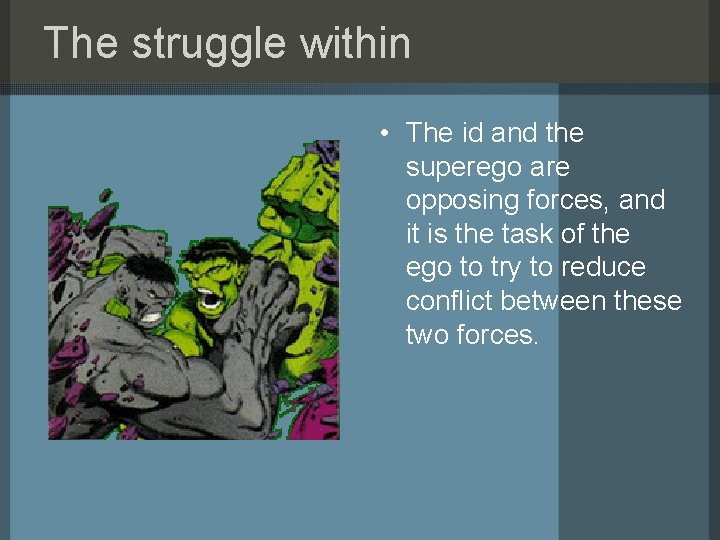
The struggle within • The id and the superego are opposing forces, and it is the task of the ego to try to reduce conflict between these two forces.
Personality Structure
Dream analysis • Dreams arise from the unconscious and usually originate from early childhood conflicts. • Freud saw dream interpretation as the window to the unconscious. • Freud used free association to explore the unconscious
Free Association http: //similarminds. com/word/