
The Structure of Living Things Unit 8 Organism

- Slides: 49
The Structure of Living Things Unit 8
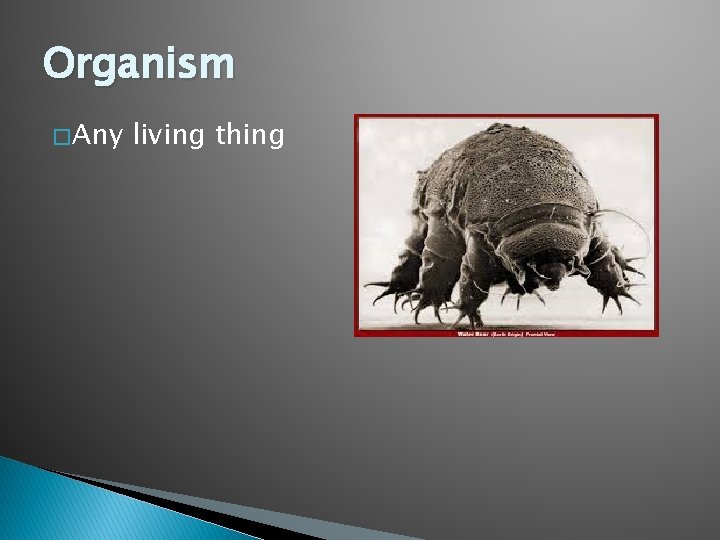
Organism � Any living thing
Organ �A body part that is made up of smaller parts that work together to do a certain job.
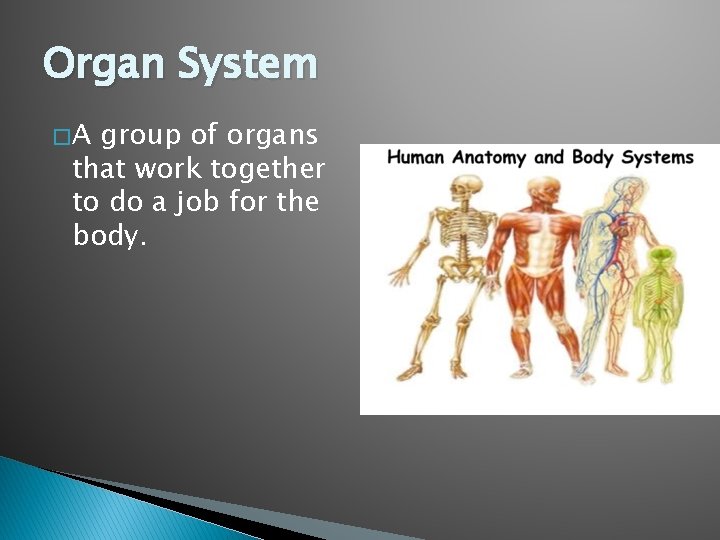
Organ System �A group of organs that work together to do a job for the body.
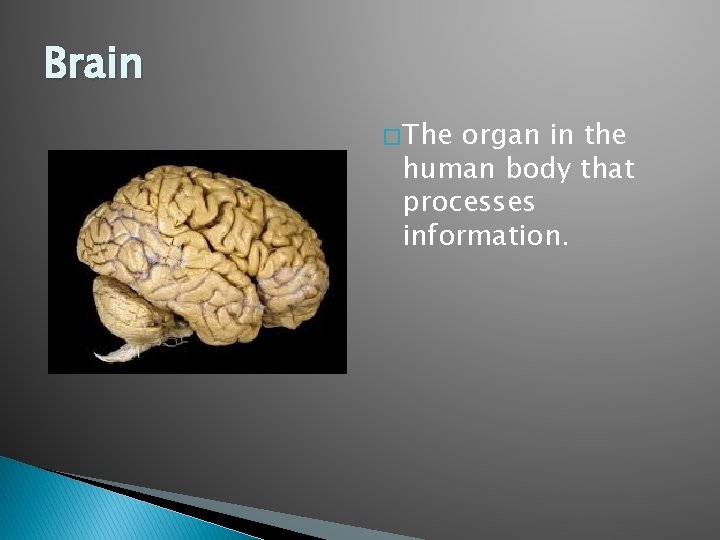
Brain � The organ in the human body that processes information.
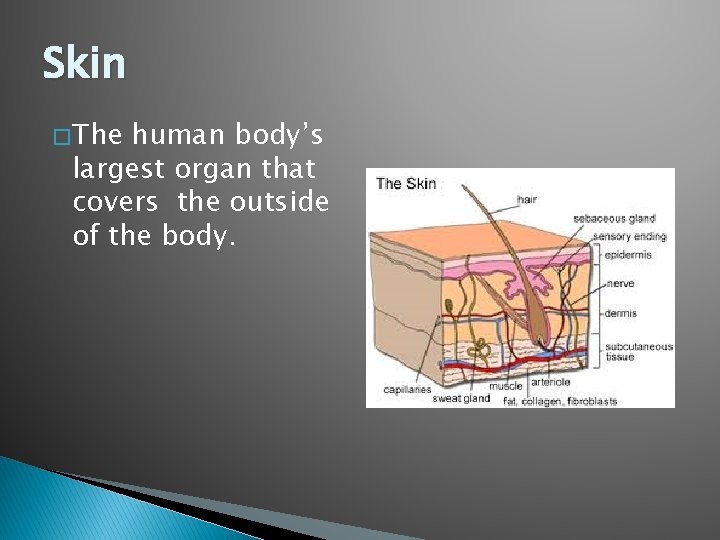
Skin � The human body’s largest organ that covers the outside of the body.
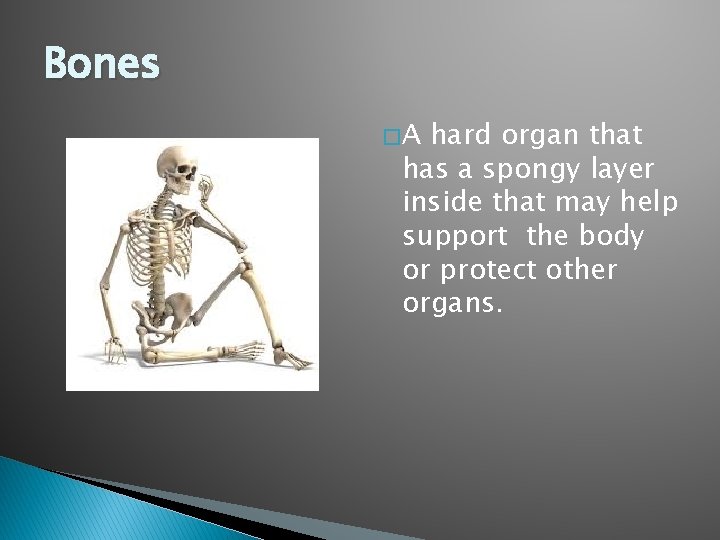
Bones �A hard organ that has a spongy layer inside that may help support the body or protect other organs.
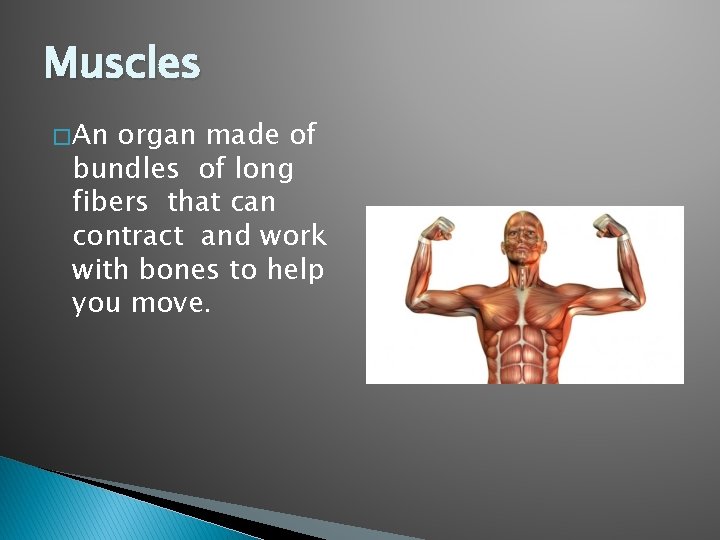
Muscles � An organ made of bundles of long fibers that can contract and work with bones to help you move.
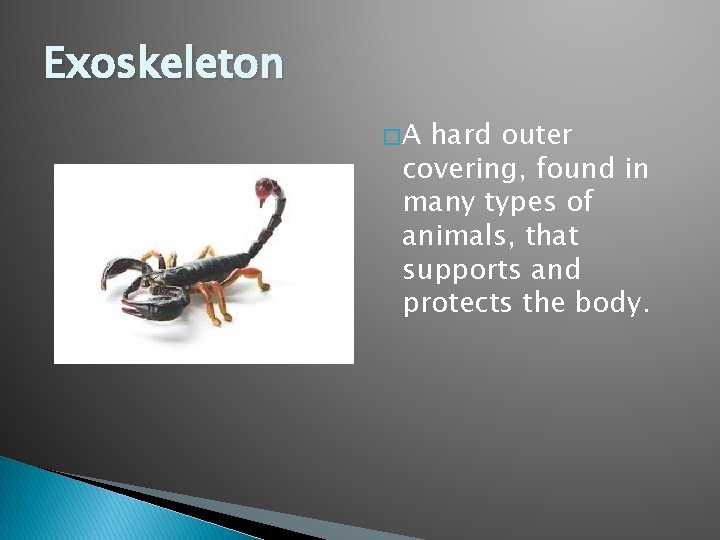
Exoskeleton �A hard outer covering, found in many types of animals, that supports and protects the body.
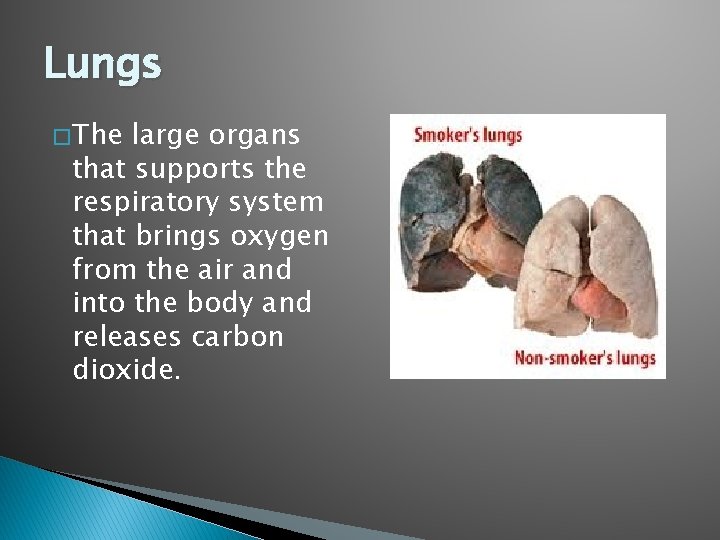
Lungs � The large organs that supports the respiratory system that brings oxygen from the air and into the body and releases carbon dioxide.
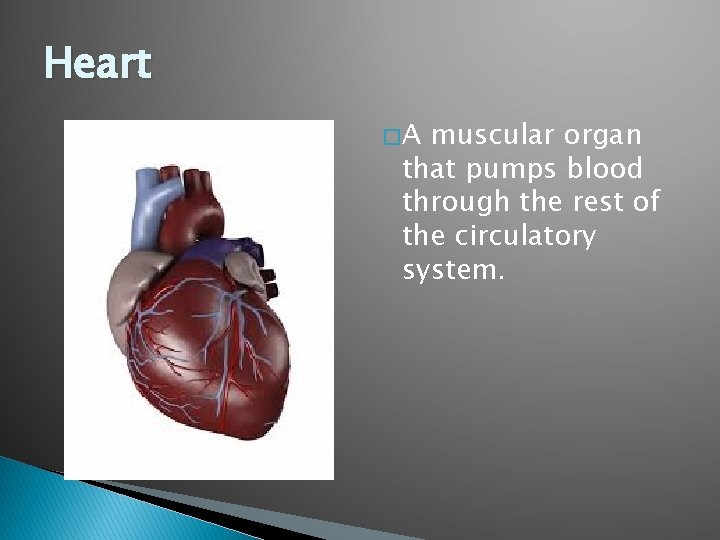
Heart �A muscular organ that pumps blood through the rest of the circulatory system.
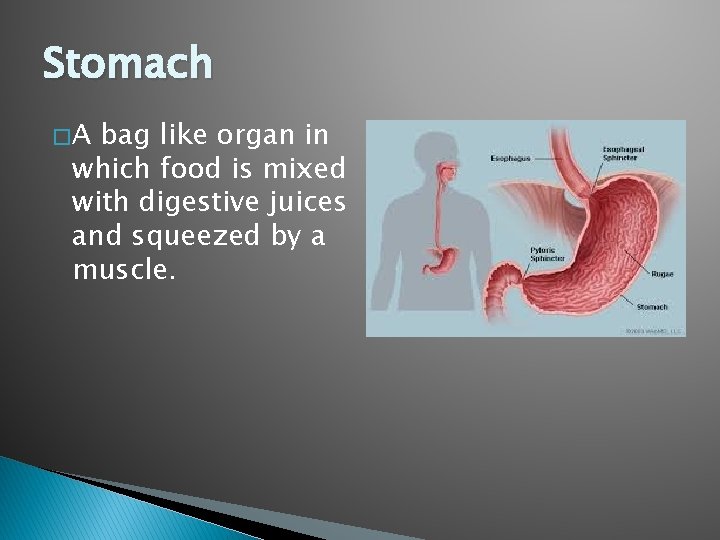
Stomach �A bag like organ in which food is mixed with digestive juices and squeezed by a muscle.
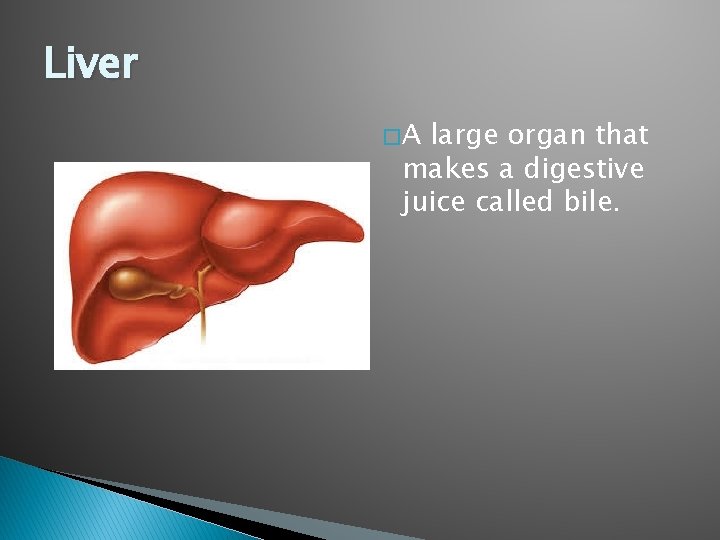
Liver �A large organ that makes a digestive juice called bile.
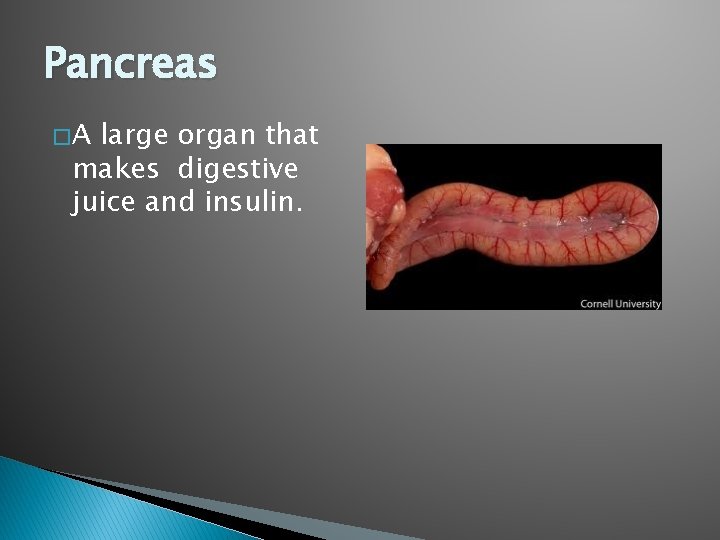
Pancreas �A large organ that makes digestive juice and insulin.
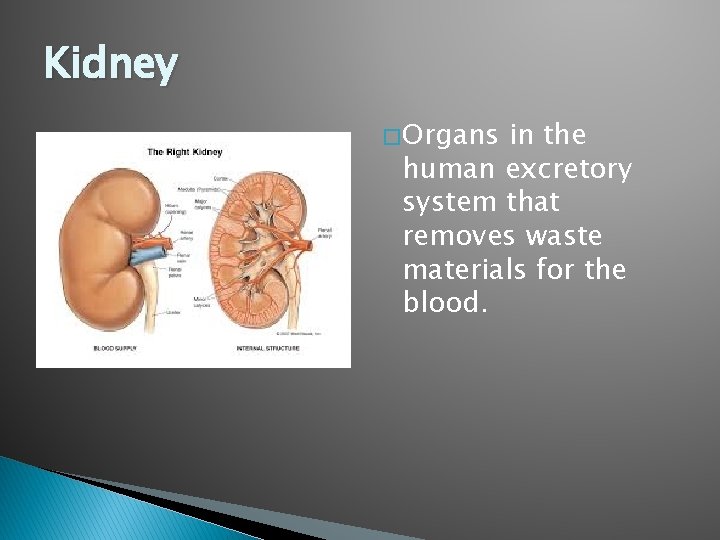
Kidney � Organs in the human excretory system that removes waste materials for the blood.
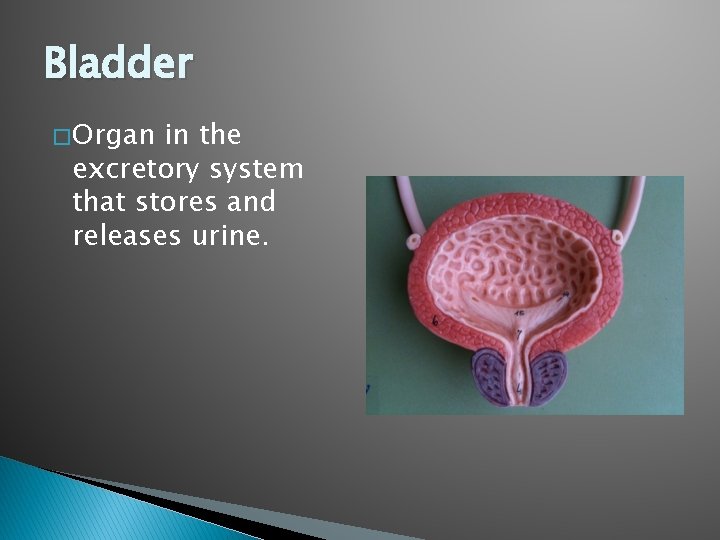
Bladder � Organ in the excretory system that stores and releases urine.
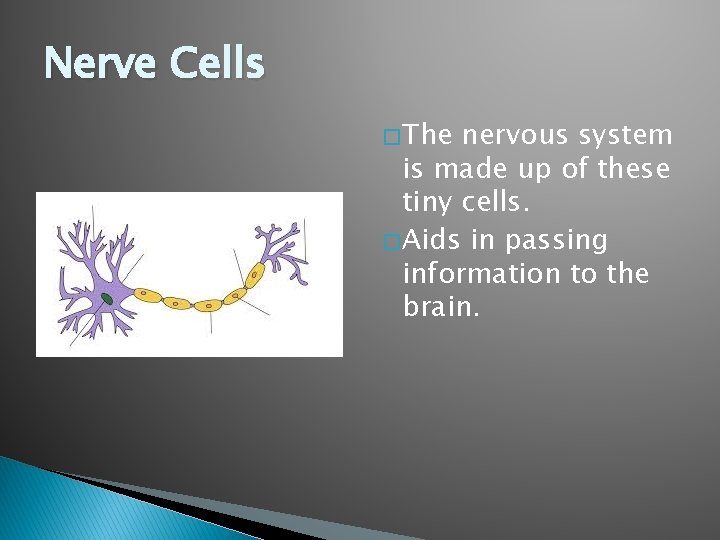
Nerve Cells � The nervous system is made up of these tiny cells. � Aids in passing information to the brain.
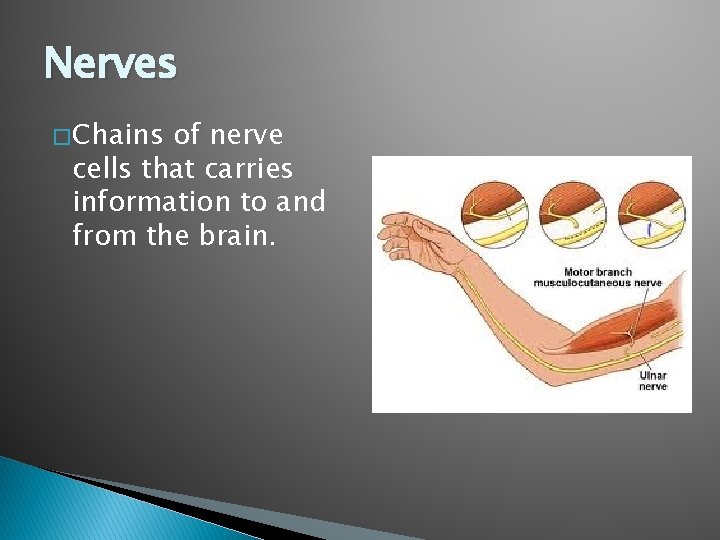
Nerves � Chains of nerve cells that carries information to and from the brain.
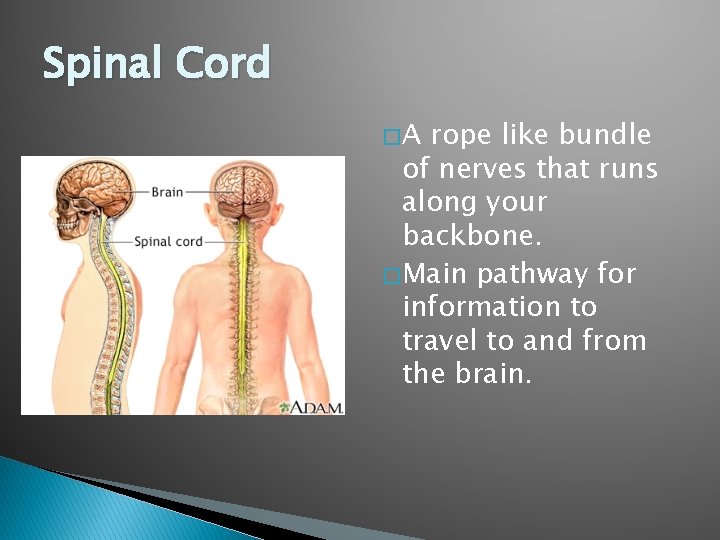
Spinal Cord �A rope like bundle of nerves that runs along your backbone. � Main pathway for information to travel to and from the brain.
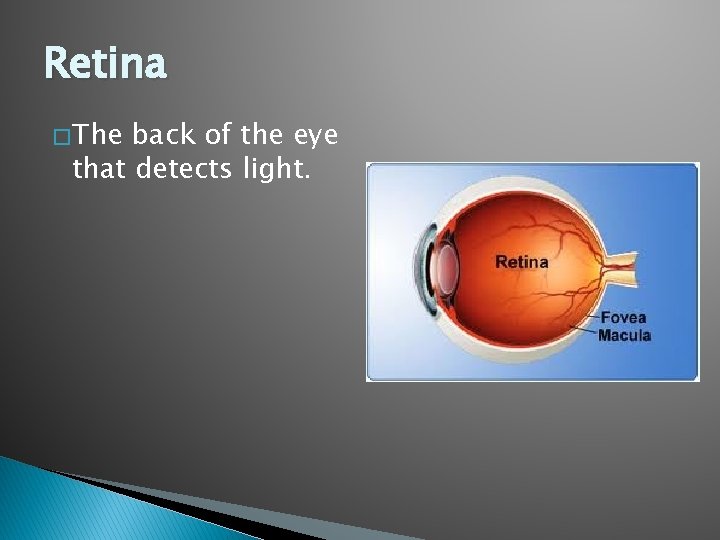
Retina � The back of the eye that detects light.
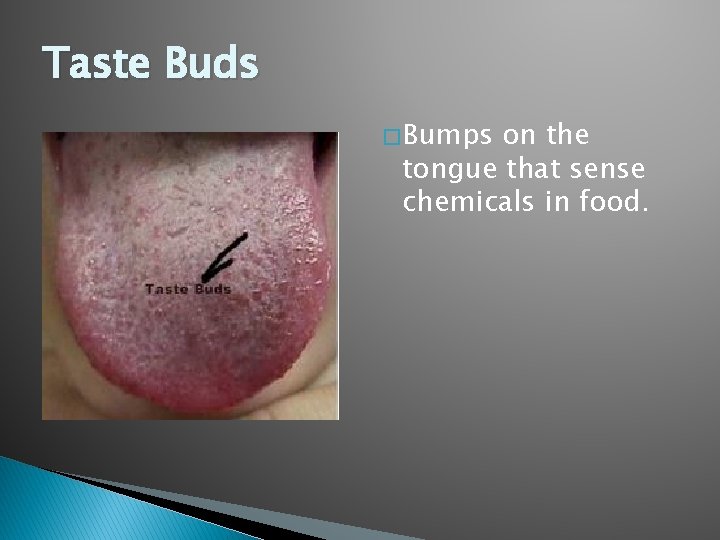
Taste Buds � Bumps on the tongue that sense chemicals in food.
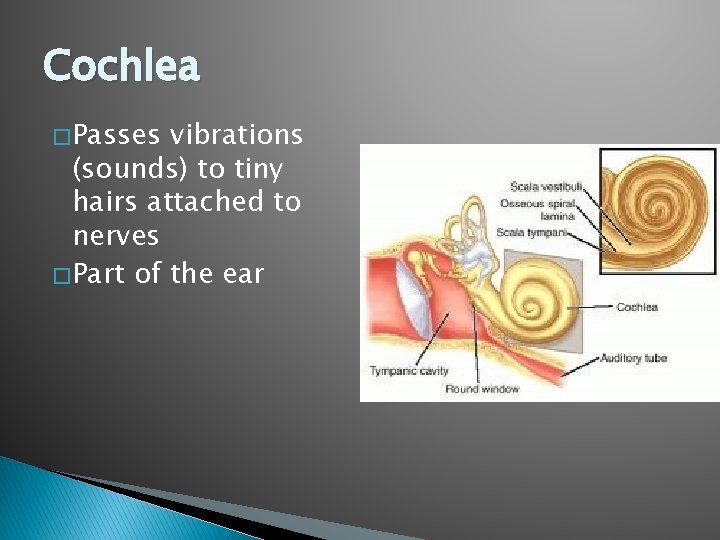
Cochlea � Passes vibrations (sounds) to tiny hairs attached to nerves � Part of the ear
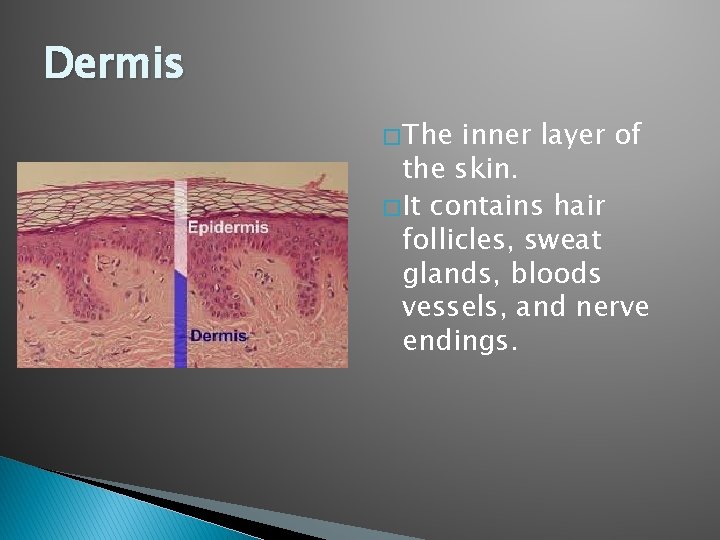
Dermis � The inner layer of the skin. � It contains hair follicles, sweat glands, bloods vessels, and nerve endings.
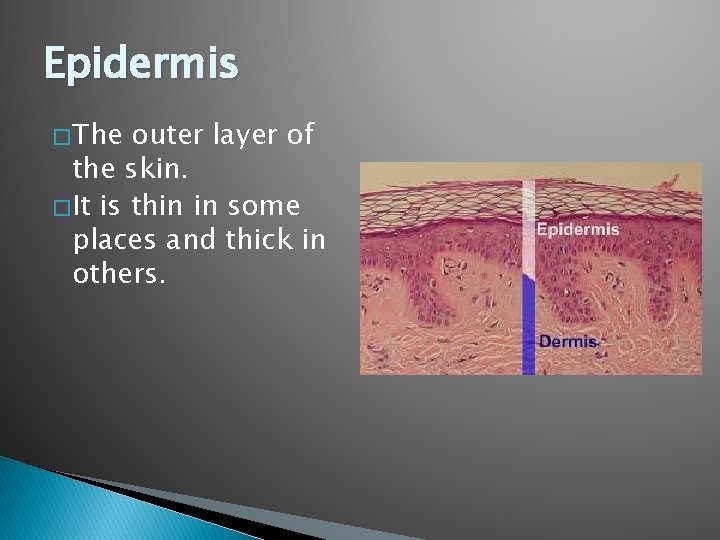
Epidermis � The outer layer of the skin. � It is thin in some places and thick in others.
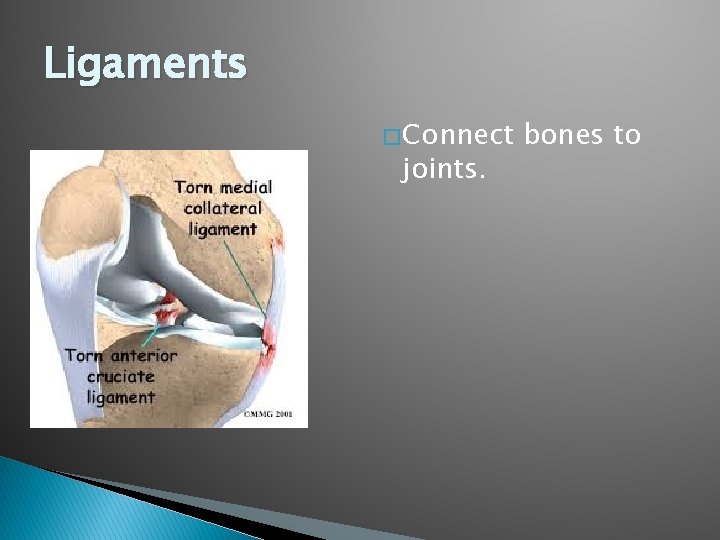
Ligaments � Connect joints. bones to
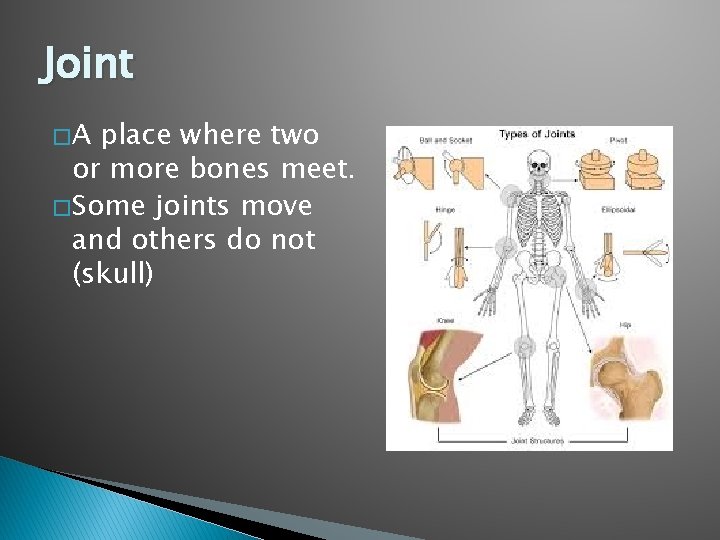
Joint �A place where two or more bones meet. � Some joints move and others do not (skull)
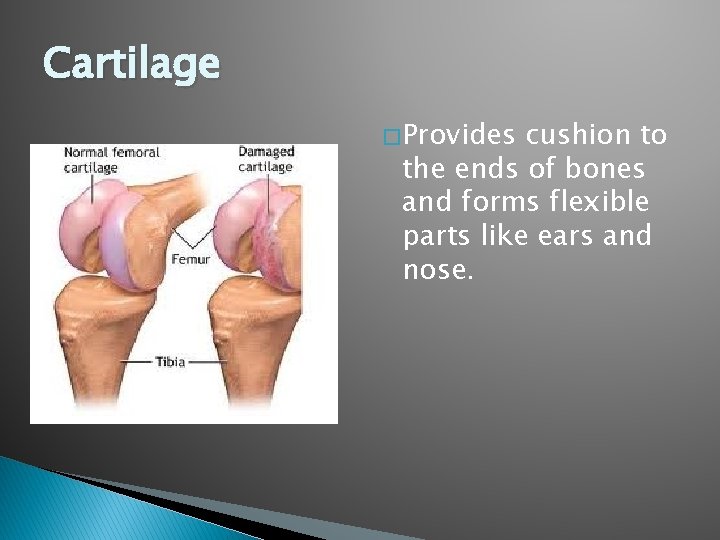
Cartilage � Provides cushion to the ends of bones and forms flexible parts like ears and nose.
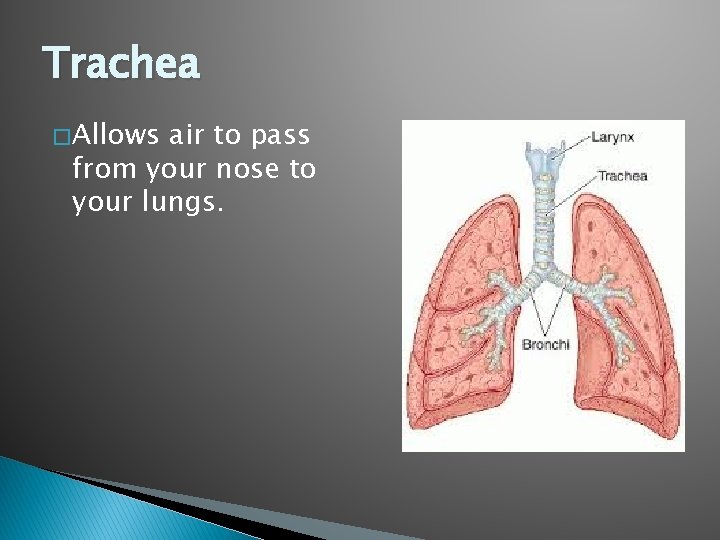
Trachea � Allows air to pass from your nose to your lungs.
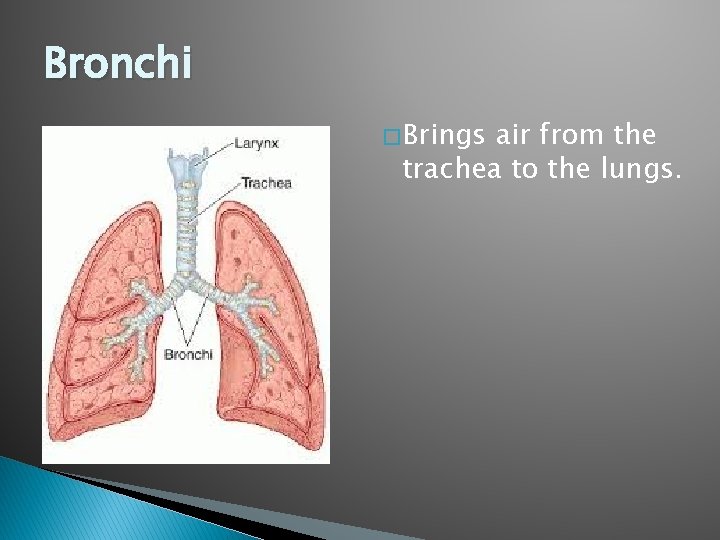
Bronchi � Brings air from the trachea to the lungs.
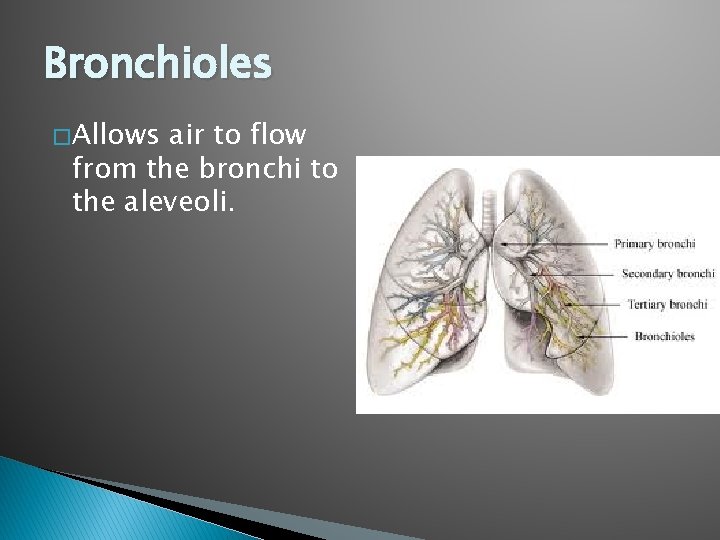
Bronchioles � Allows air to flow from the bronchi to the aleveoli.
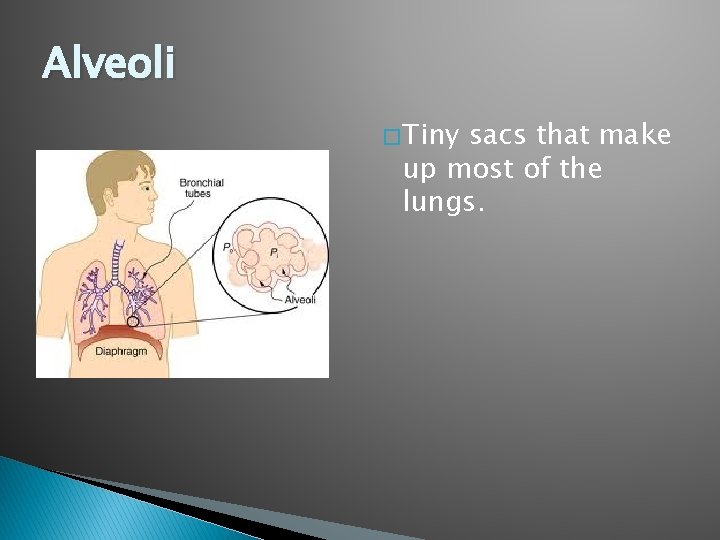
Alveoli � Tiny sacs that make up most of the lungs.
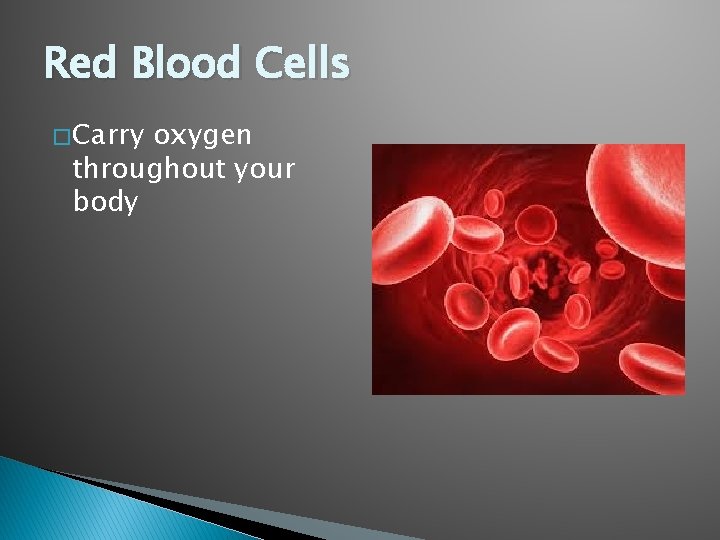
Red Blood Cells � Carry oxygen throughout your body
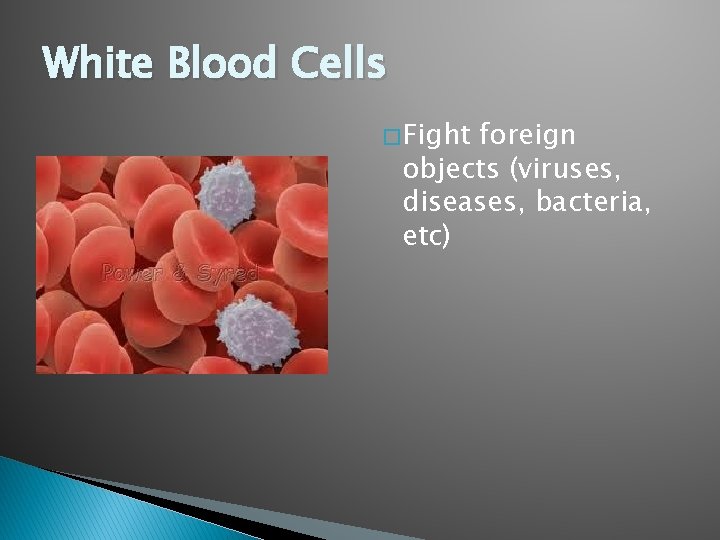
White Blood Cells � Fight foreign objects (viruses, diseases, bacteria, etc)
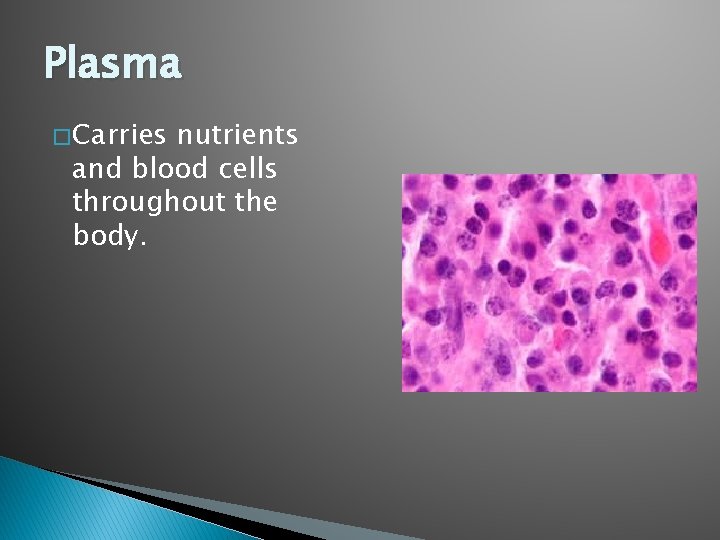
Plasma � Carries nutrients and blood cells throughout the body.
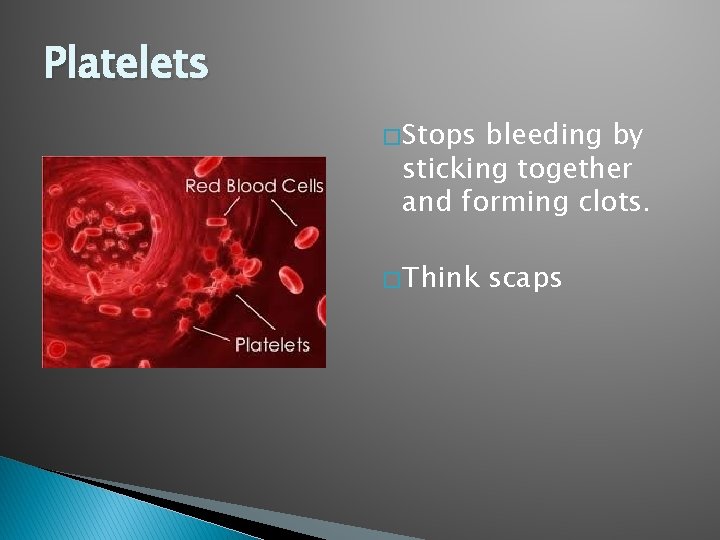
Platelets � Stops bleeding by sticking together and forming clots. � Think scaps
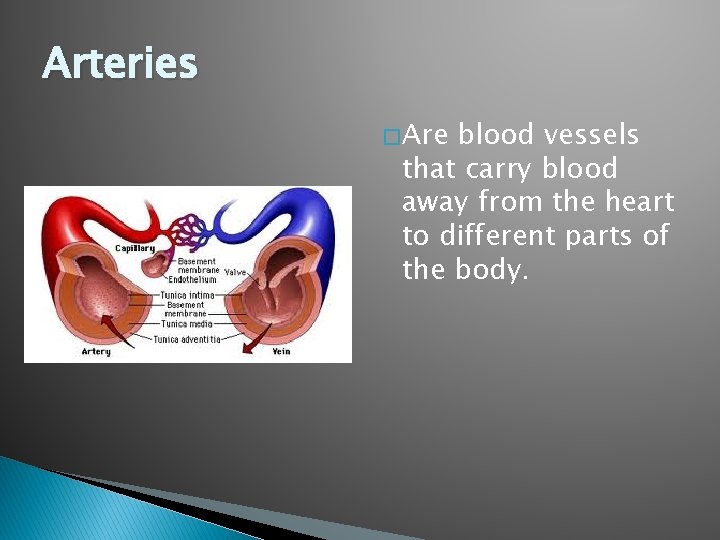
Arteries � Are blood vessels that carry blood away from the heart to different parts of the body.
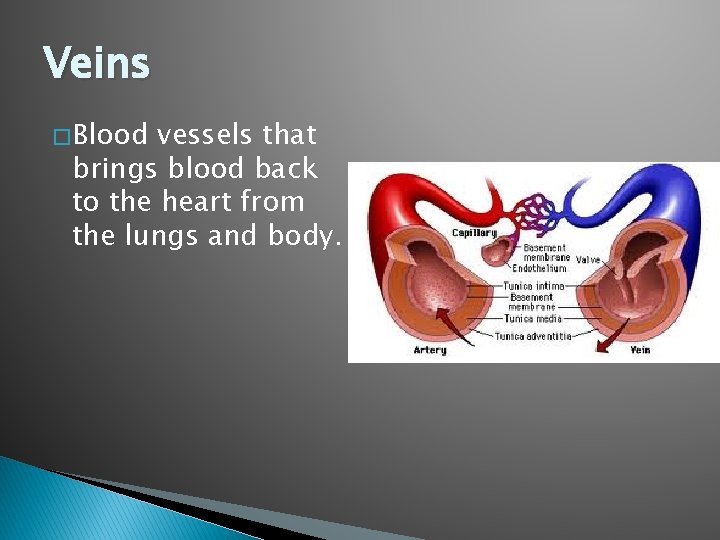
Veins � Blood vessels that brings blood back to the heart from the lungs and body.
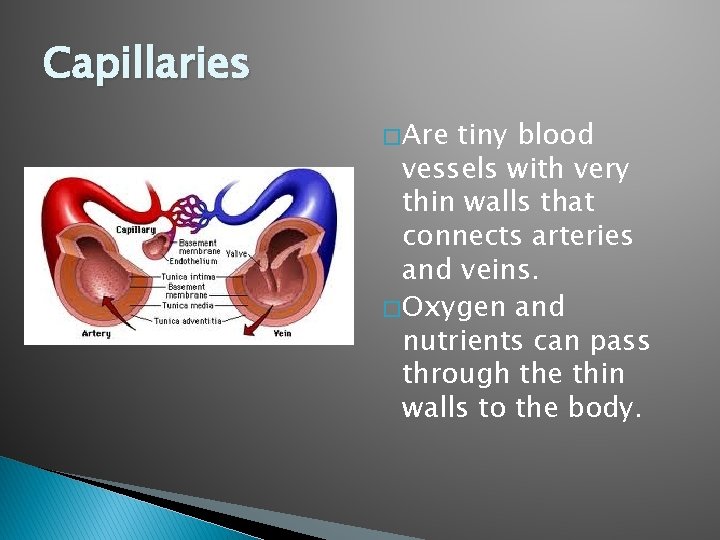
Capillaries � Are tiny blood vessels with very thin walls that connects arteries and veins. � Oxygen and nutrients can pass through the thin walls to the body.
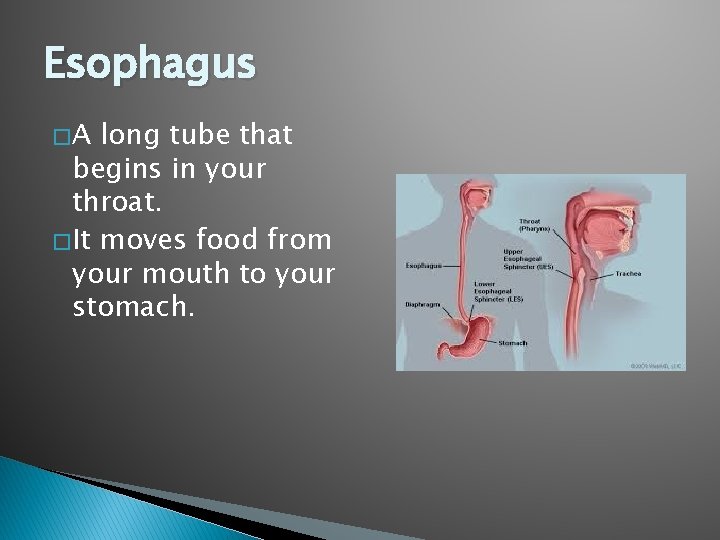
Esophagus �A long tube that begins in your throat. � It moves food from your mouth to your stomach.
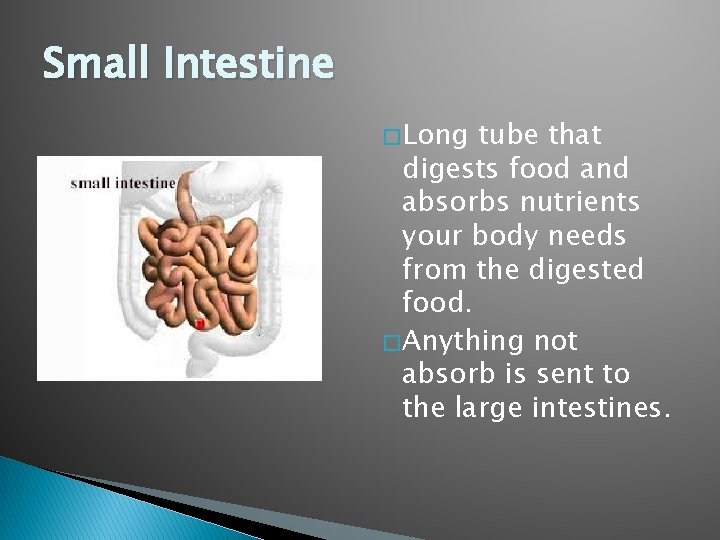
Small Intestine � Long tube that digests food and absorbs nutrients your body needs from the digested food. � Anything not absorb is sent to the large intestines.
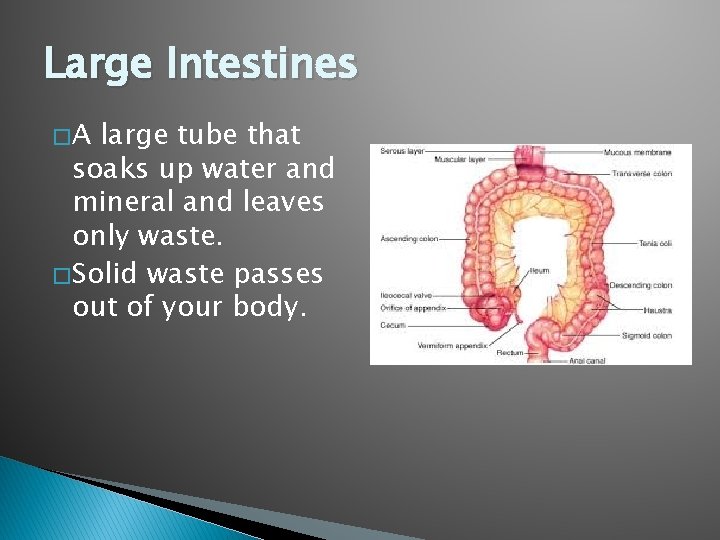
Large Intestines �A large tube that soaks up water and mineral and leaves only waste. � Solid waste passes out of your body.
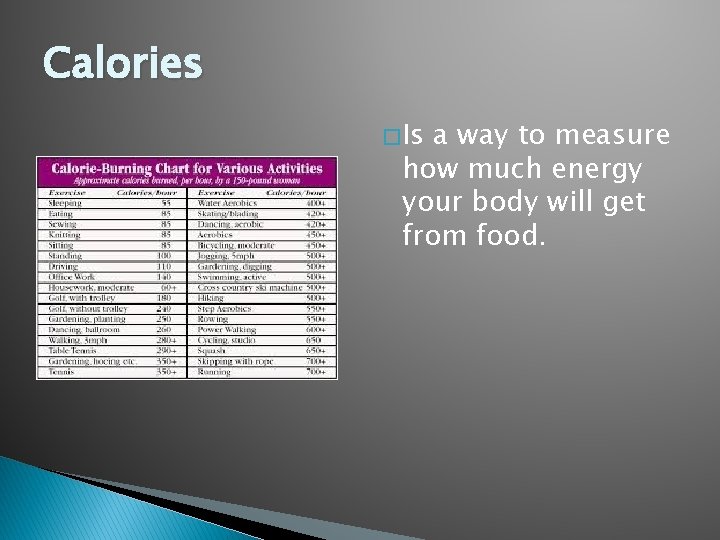
Calories � Is a way to measure how much energy your body will get from food.
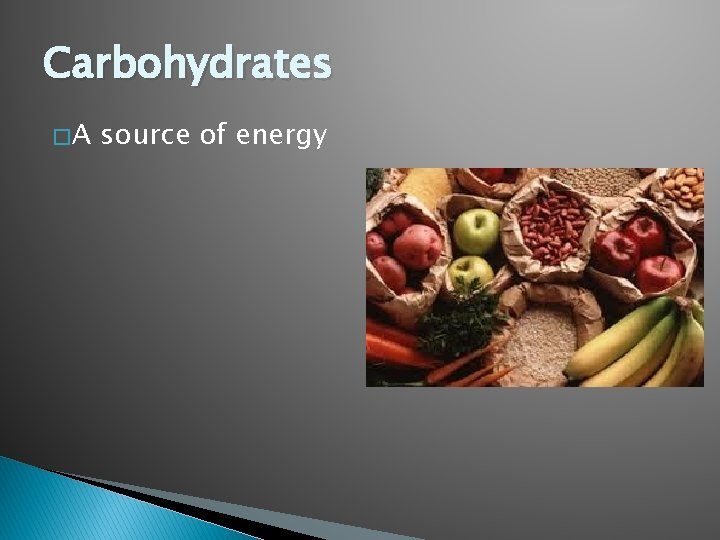
Carbohydrates �A source of energy
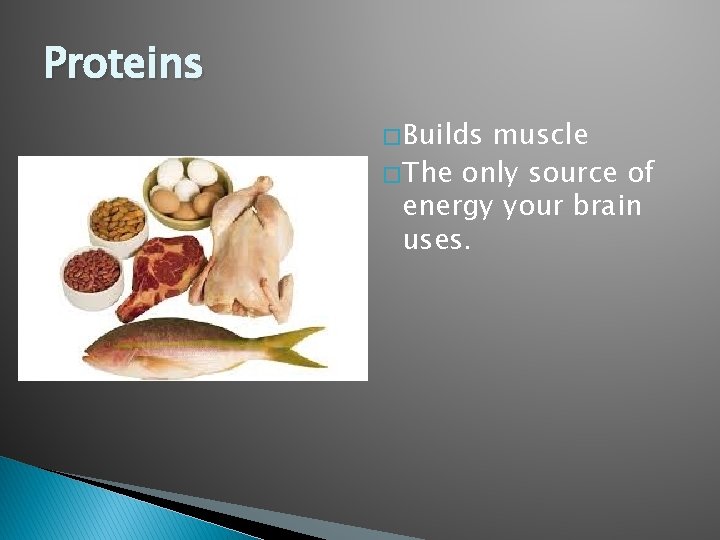
Proteins � Builds muscle � The only source of energy your brain uses.
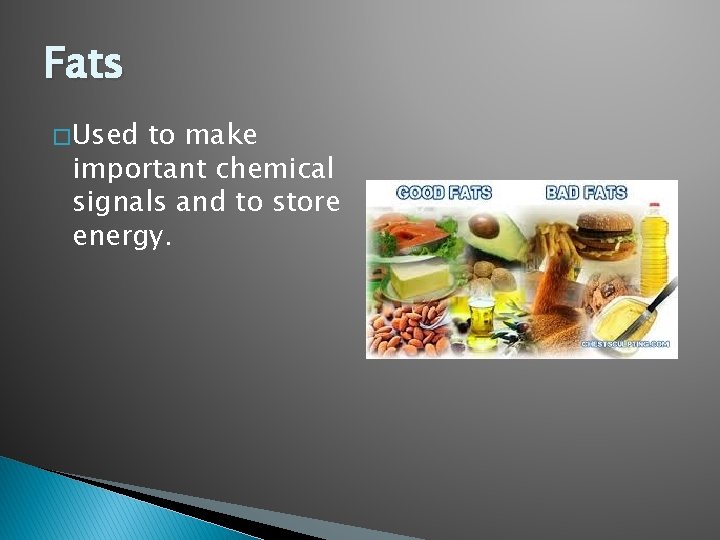
Fats � Used to make important chemical signals and to store energy.
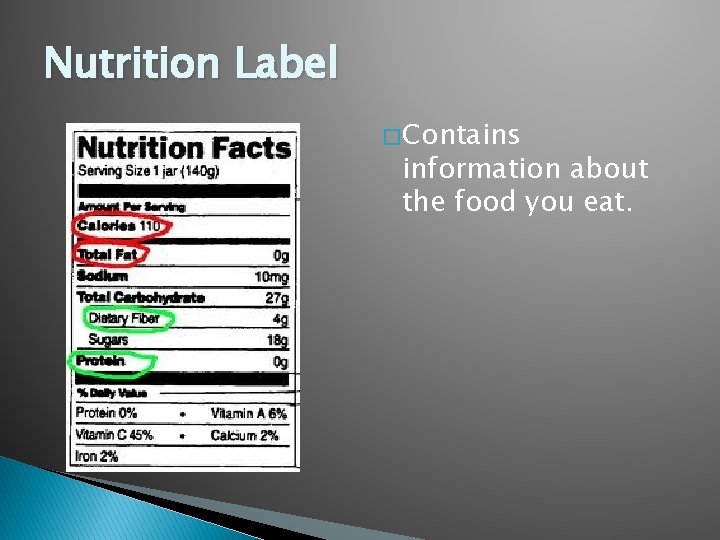
Nutrition Label � Contains information about the food you eat.
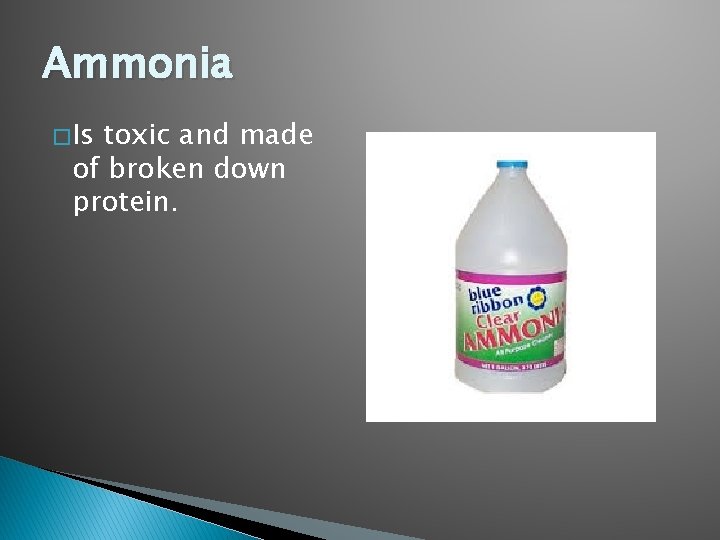
Ammonia � Is toxic and made of broken down protein.
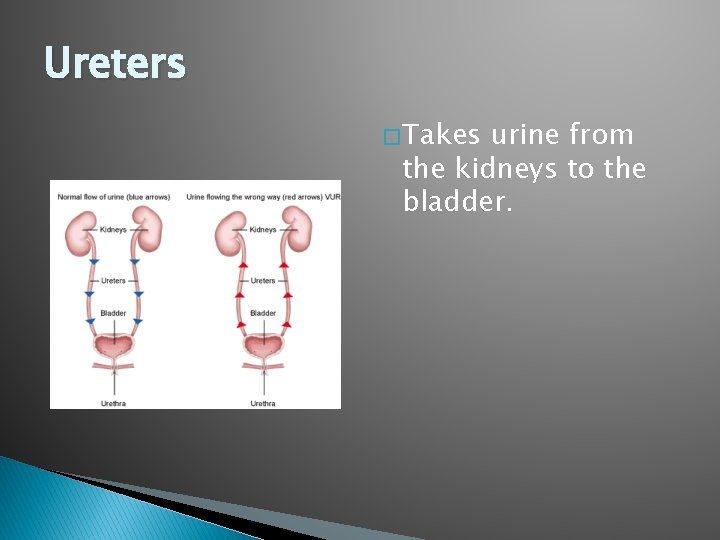
Ureters � Takes urine from the kidneys to the bladder.
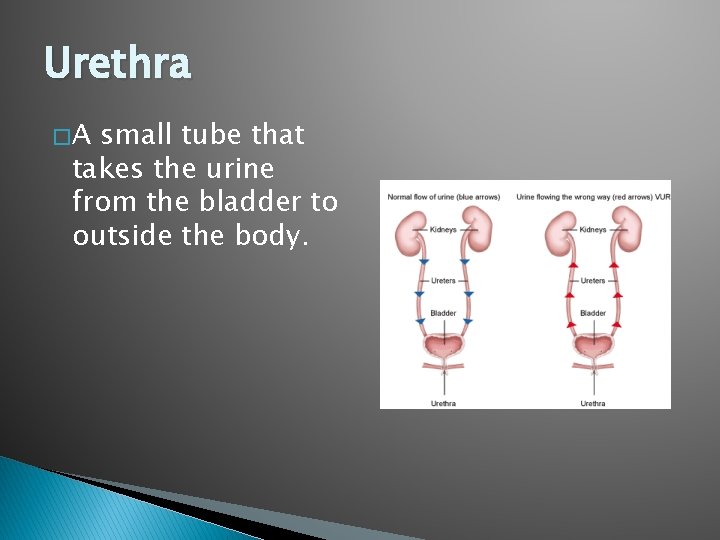
Urethra �A small tube that takes the urine from the bladder to outside the body.