
The structure of giant resonances in calcium and

- Slides: 26
The structure of giant resonances in calcium and titanium isotopes. N. G. Goncharova, Iu. A. Skorodumina Skobelzyn Institute of Nuclear Physics, Moscow State University
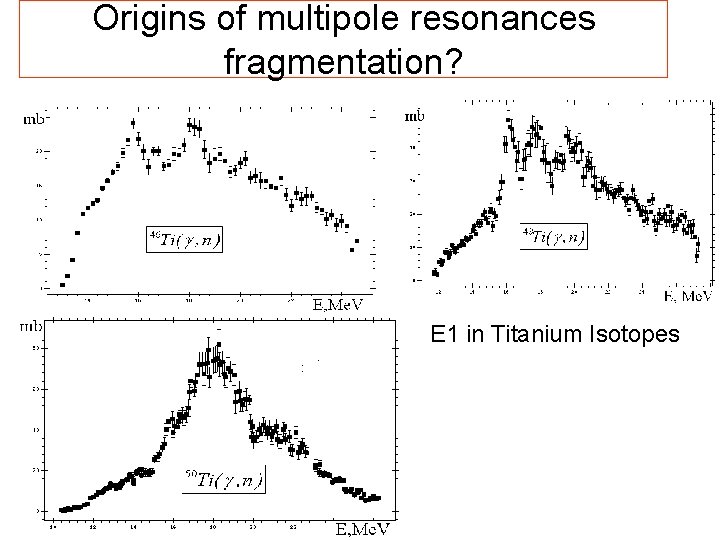
Origins of multipole resonances fragmentation? E 1 in Titanium Isotopes
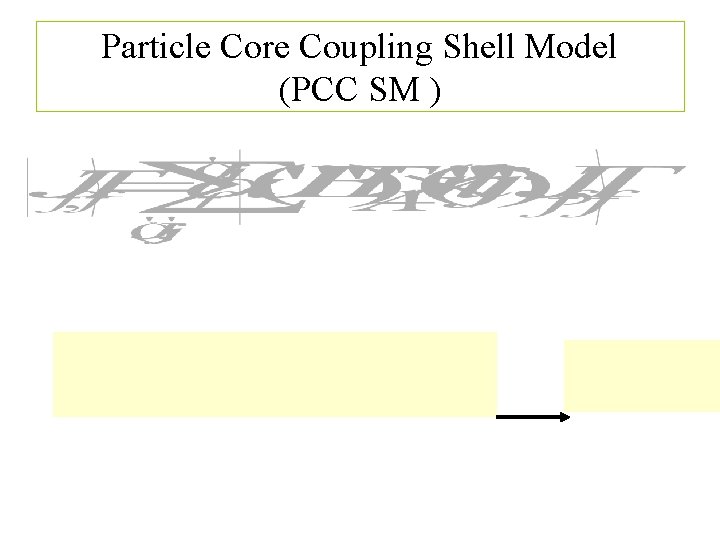
Particle Core Coupling Shell Model (PCC SM )
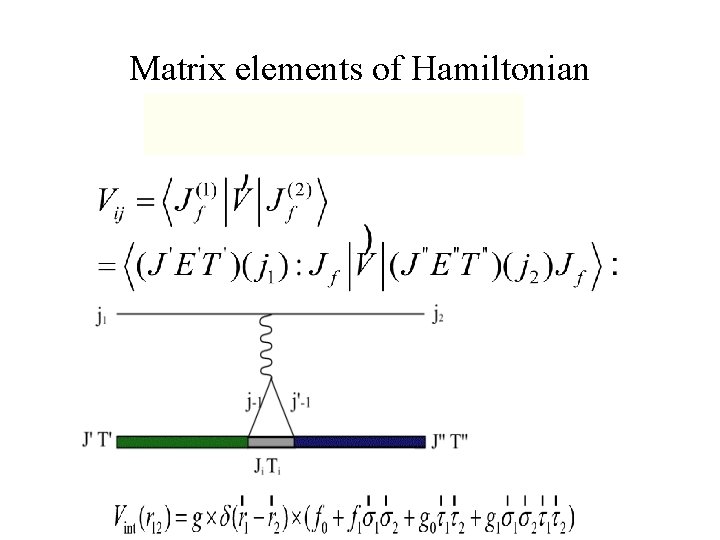
Matrix elements of Hamiltonian
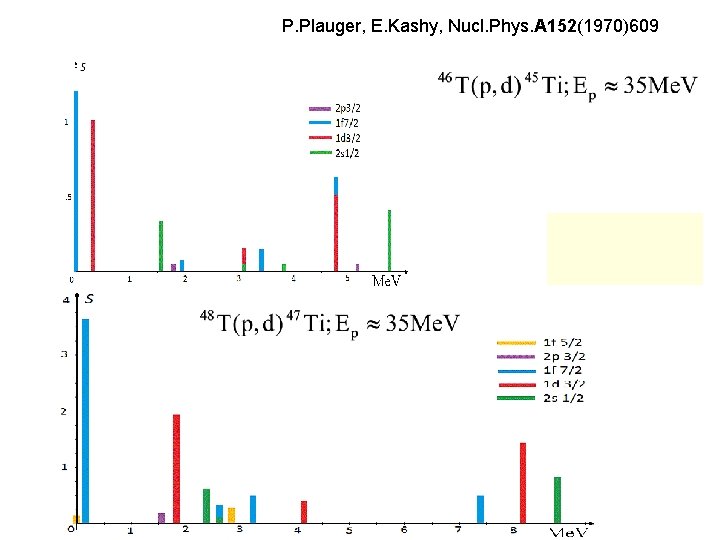
P. Plauger, E. Kashy, Nucl. Phys. A 152(1970)609
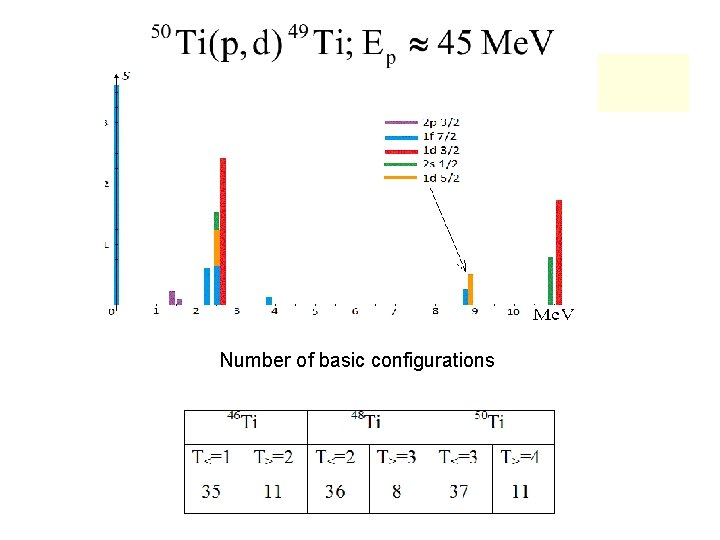
Number of basic configurations
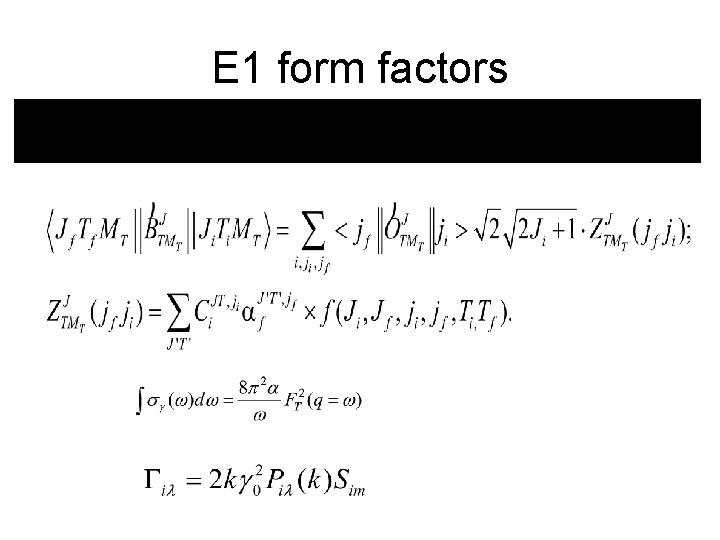
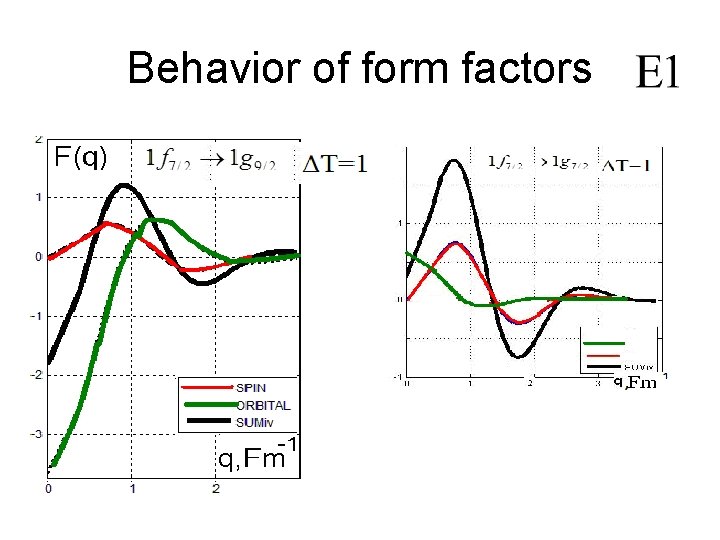
E 1 form factors
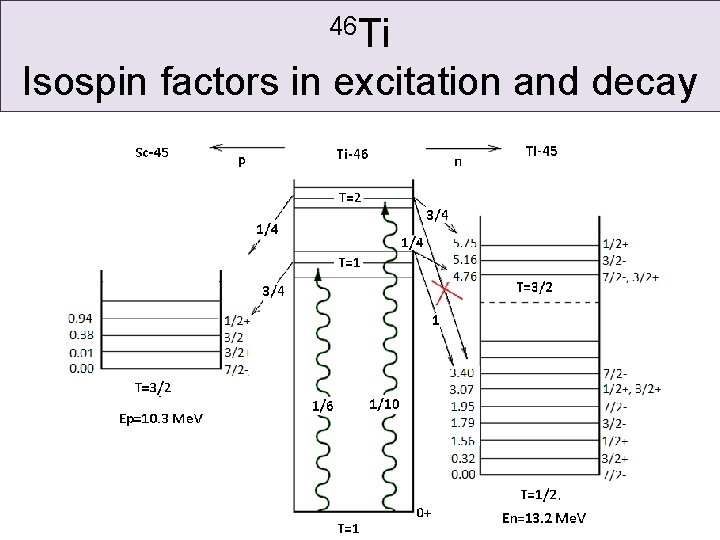
46 Ti Isospin factors in excitation and decay
48 Ti Isospin factors in excitation and decay
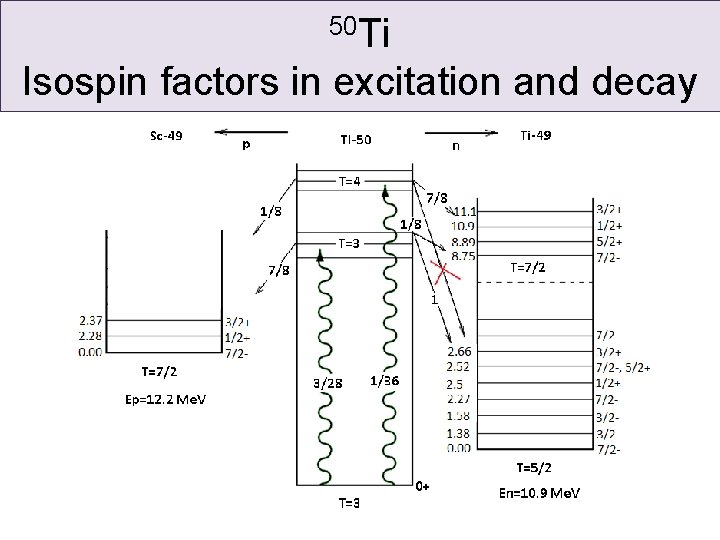
50 Ti Isospin factors in excitation and decay
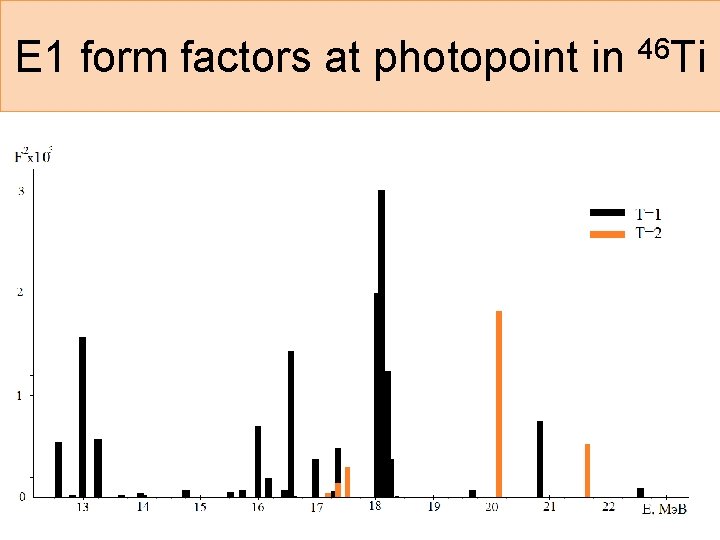
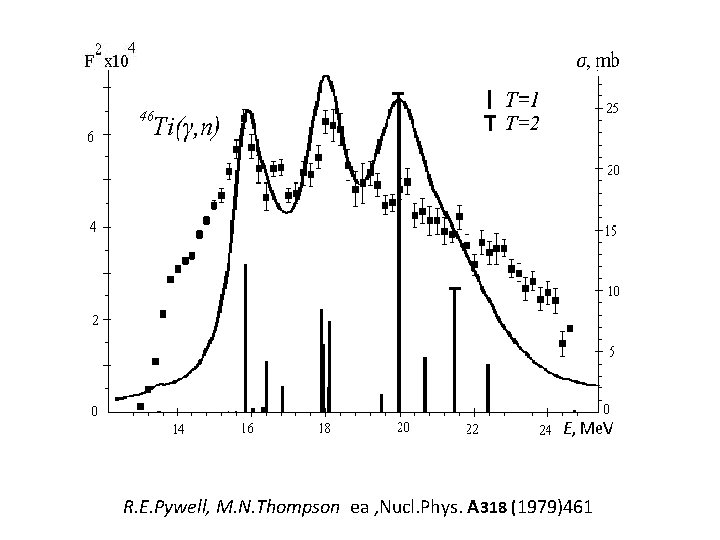
E 1 form factors at photopoint in 46 Ti
R. E. Pywell, M. N. Thompson ea , Nucl. Phys. A 318 (1979)461
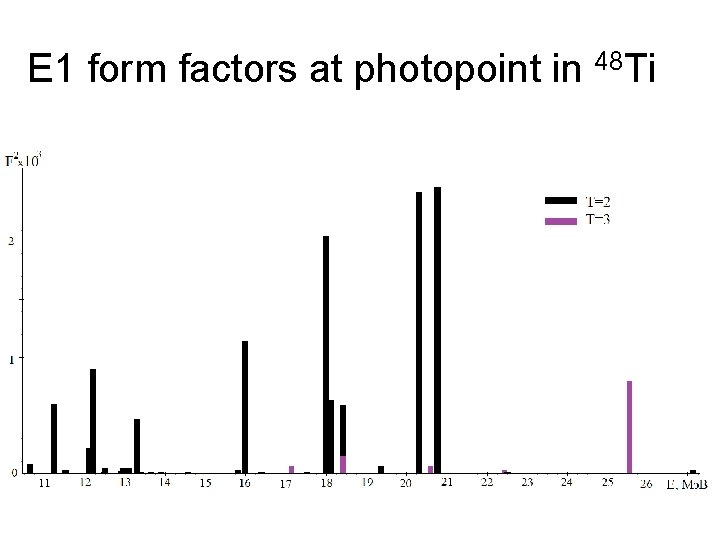
E 1 form factors at photopoint in 48 Ti
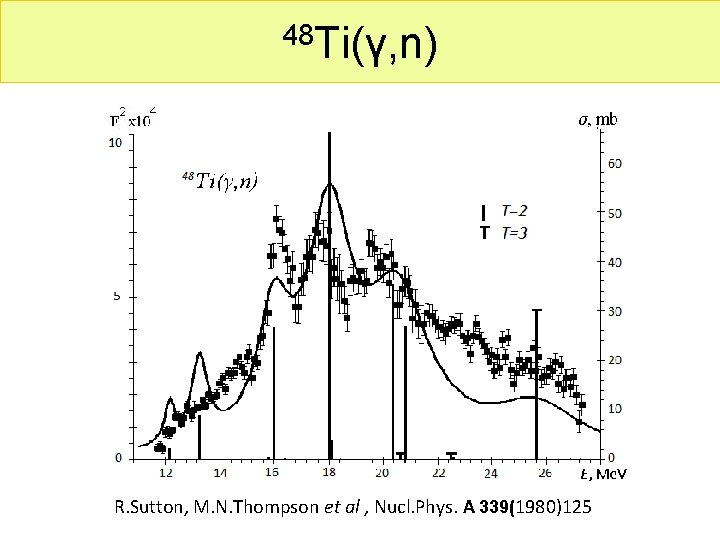
48 Ti(γ, n) R. Sutton, M. N. Thompson et al , Nucl. Phys. A 339(1980)125
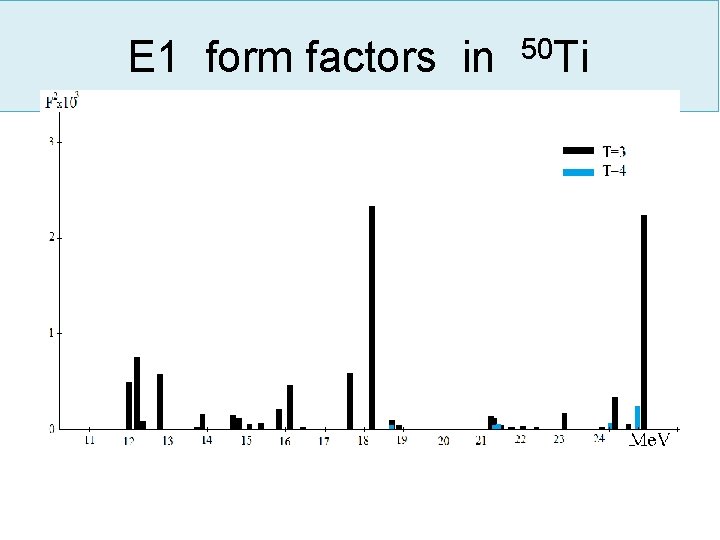
E 1 form factors in 50 Ti
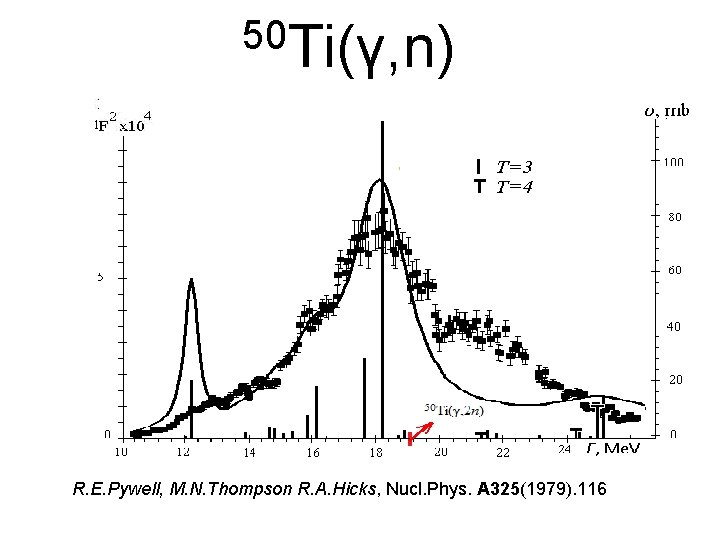
50 Ti(γ, n) R. E. Pywell, M. N. Thompson R. A. Hicks, Nucl. Phys. A 325(1979). 116
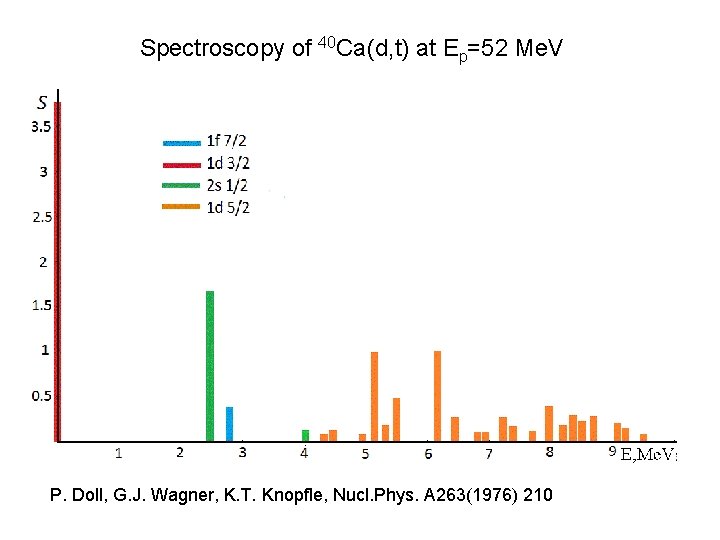
Spectroscopy of 40 Ca(d, t) at Ep=52 Me. V P. Doll, G. J. Wagner, K. T. Knopfle, Nucl. Phys. A 263(1976) 210
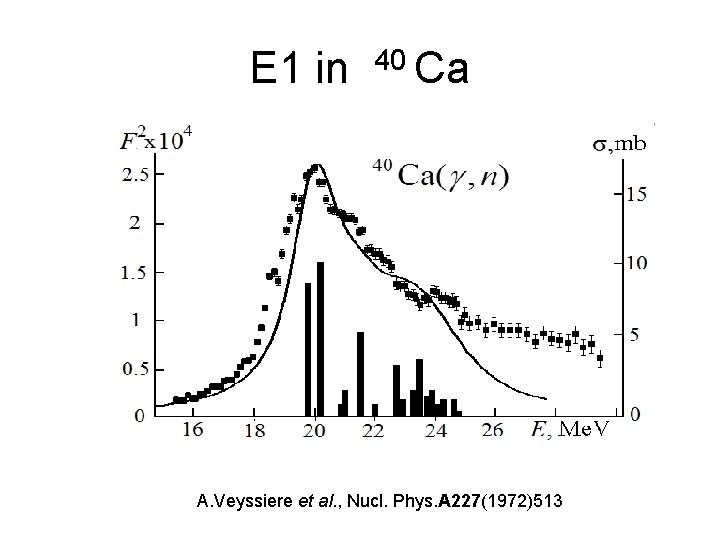
E 1 in 40 Ca A. Veyssiere et al. , Nucl. Phys. A 227(1972)513
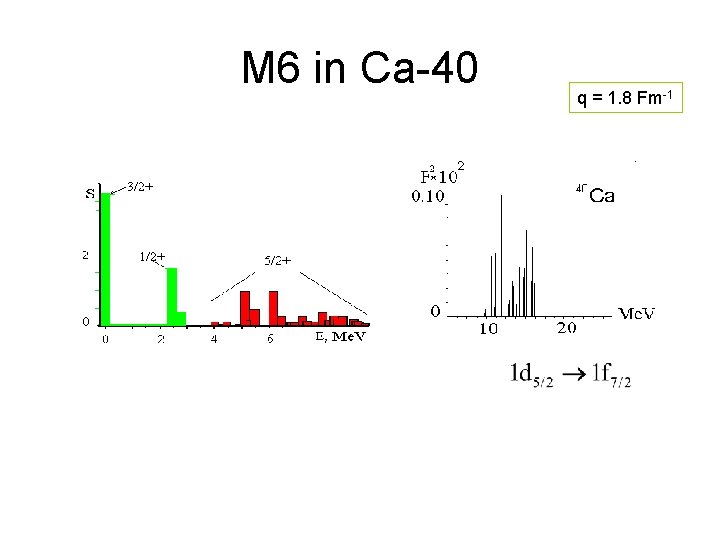
M 6 in Ca-40 q = 1. 8 Fm-1
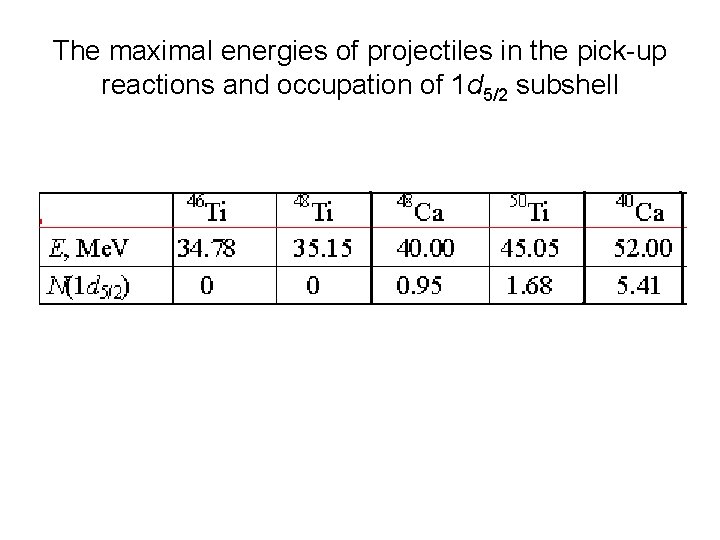
The maximal energies of projectiles in the pick-up reactions and occupation of 1 d 5/2 subshell
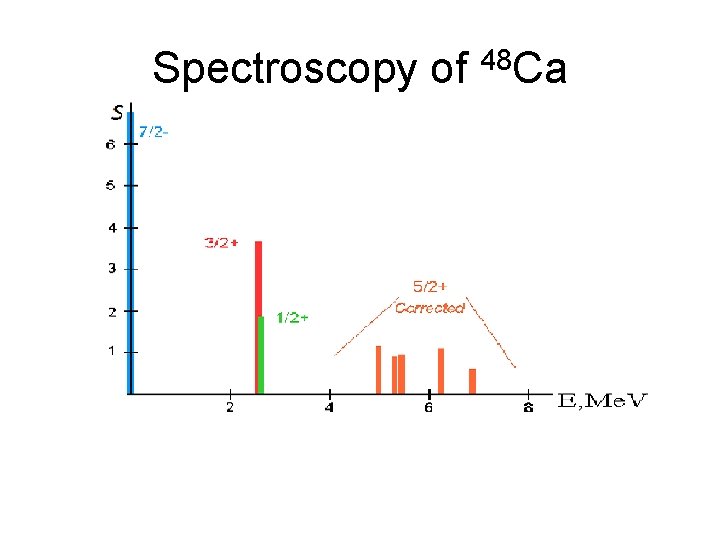
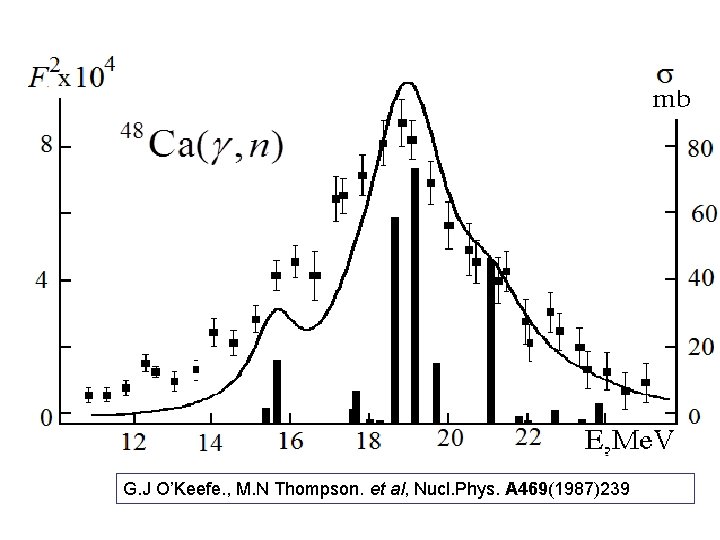
Spectroscopy of 48 Ca
G. J O’Keefe. , M. N Thompson. et al, Nucl. Phys. A 469(1987)239
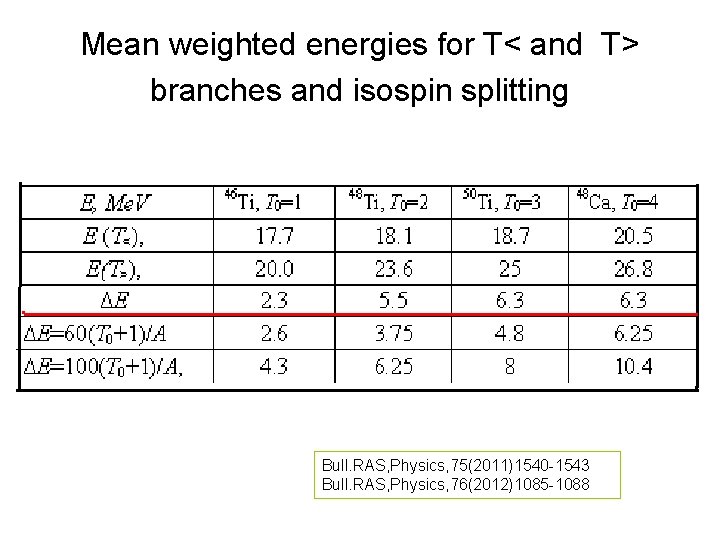
Mean weighted energies for T< and T> branches and isospin splitting Bull. RAS, Physics, 75(2011)1540 -1543 Bull. RAS, Physics, 76(2012)1085 -1088
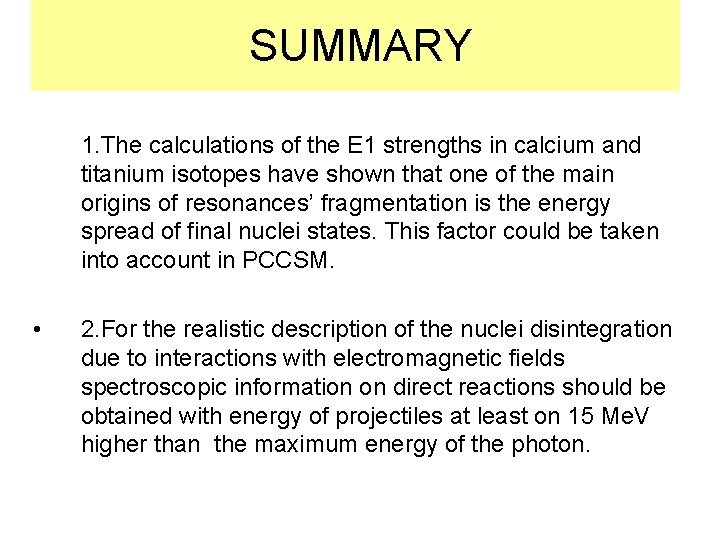
SUMMARY 1. The calculations of the E 1 strengths in calcium and titanium isotopes have shown that one of the main origins of resonances’ fragmentation is the energy spread of final nuclei states. This factor could be taken into account in PCCSM. • 2. For the realistic description of the nuclei disintegration due to interactions with electromagnetic fields spectroscopic information on direct reactions should be obtained with energy of projectiles at least on 15 Me. V higher than the maximum energy of the photon.
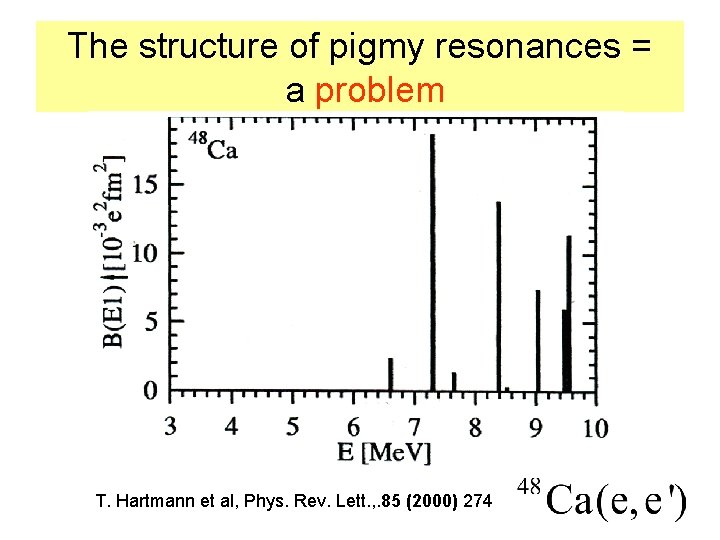
The structure of pigmy resonances = a problem T. Hartmann et al, Phys. Rev. Lett. , . 85 (2000) 274
Behavior of form factors