
The Structure of Earth CRUST The thinnest outermost


- Slides: 5
The Structure of Earth
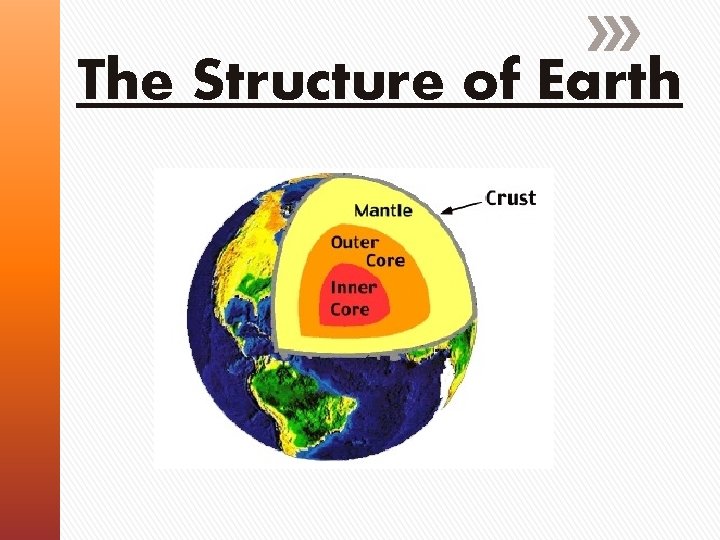
CRUST • The thinnest, outermost layer of the Earth • Only about 2 -35 mi thick • Made mostly of rock and soil that is brittle (easily broken) • Least dense layer in Earth’s geosphere • Rocks are under oceans and on land • Consists of land ocean. • The temperature of the crust typically varies; however the further down you dig through the crust, the temperature increases
MANTLE • The dense, thick layer of rock just below the crust • Earth’s thick middle layer made mostly of solid rock; makes it denser than the crust • This layer is undergoes constant heat and pressure. Temperatures range between 680°f and 4532°f • The heat and pressure causes rocks to move and bend within this layer • About 1800 miles of a thick, dense layer of rock
OUTER CORE • The only liquid layer of the Earth, molten lava • Made of iron and nickel, in liquid form, no water • Made up of molten lava • It is about 1400 miles thick • Temperatures typically around 3500 -4300° f • Scientists know this layer is made of liquid molten lava by studying what happens when earthquakes occur
INNER CORE • Solid layer, center of the Earth • Made up of iron and nickel • It is about 780 miles in depth • Temperatures can be as high as 10, 000° f • A dense ball of solid iron crystals.