
The Structure of Congress The Two Houses of
- Slides: 23
The Structure of Congress
• The Two Houses of Congress (Bicameral): • -Senate: The upper house of Congress, consisting of two representatives from each state • -House of Representatives: The lower house of Congress, consisting of a different number of representatives from each state, depending on population
Terms and Sessions • The government calendar is set by law • Each Congress lasts for a term, which is two years • Each Congress is divided into two sessions (or meetings) • Typically, a session of congress lasts from January until November or December
• Congress may also meet during special sessions or in times of crisis • Joint sessions occur when the House and the Senate meet together – This happens when they (the House and Senate) do business together or to hear the president speak
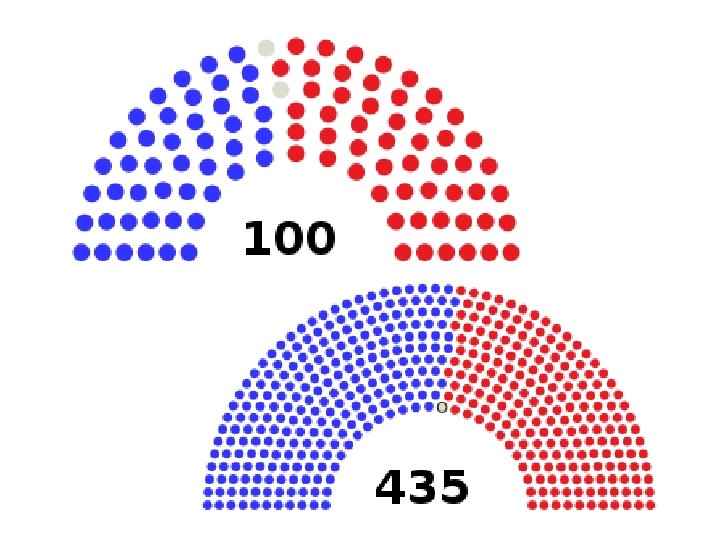
• The House of Representatives is the larger of the two houses • • It has 435 voting members who are divided among the states based on population • • The members of the House of Representative serve two-year terms
• On what information is the number of representatives per state based? – The number of representatives per state is based on population information form the census • How often is a census taken? – Every ten years
• Each state is divided into one or more congressional districts, one representative is elected by voters from each district • Legislatures are required to draw their districts so they each include the same number of constituents (people to represent)
• What is gerrymandering? it is the practice of drawing district lines to favor one political party over • What is a gerrymander: an oddly shaped district designed to increase the voting strength of a particular group • The House of Representatives has six nonvoting members
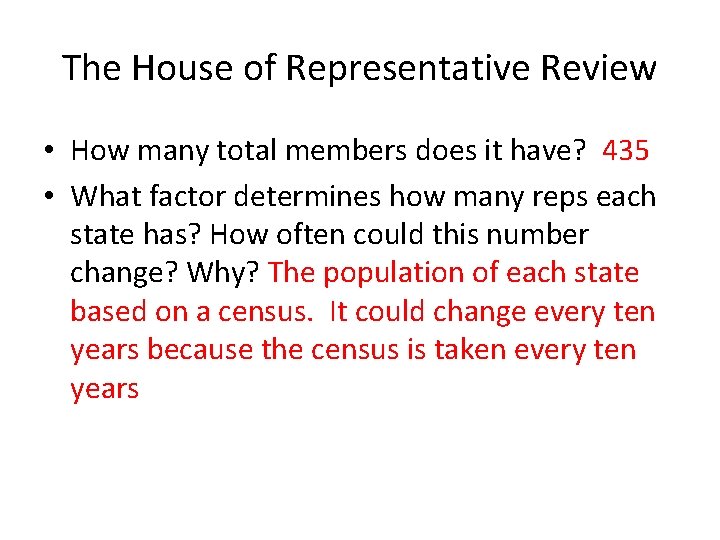
The House of Representative Review • How many total members does it have? 435 • What factor determines how many reps each state has? How often could this number change? Why? The population of each state based on a census. It could change every ten years because the census is taken every ten years
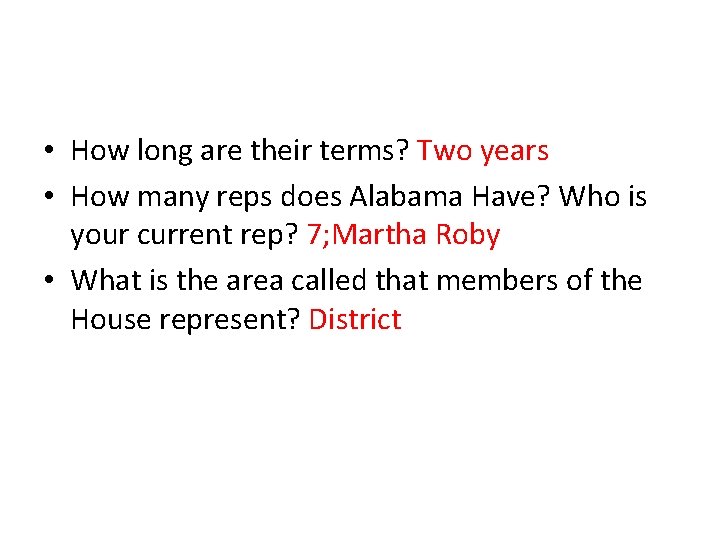
• How long are their terms? Two years • How many reps does Alabama Have? Who is your current rep? 7; Martha Roby • What is the area called that members of the House represent? District
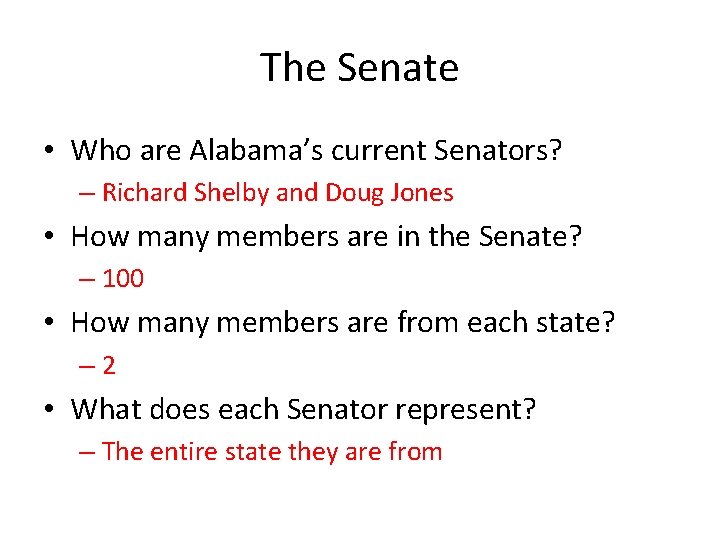
The Senate • Who are Alabama’s current Senators? – Richard Shelby and Doug Jones • How many members are in the Senate? – 100 • How many members are from each state? – 2 • What does each Senator represent? – The entire state they are from
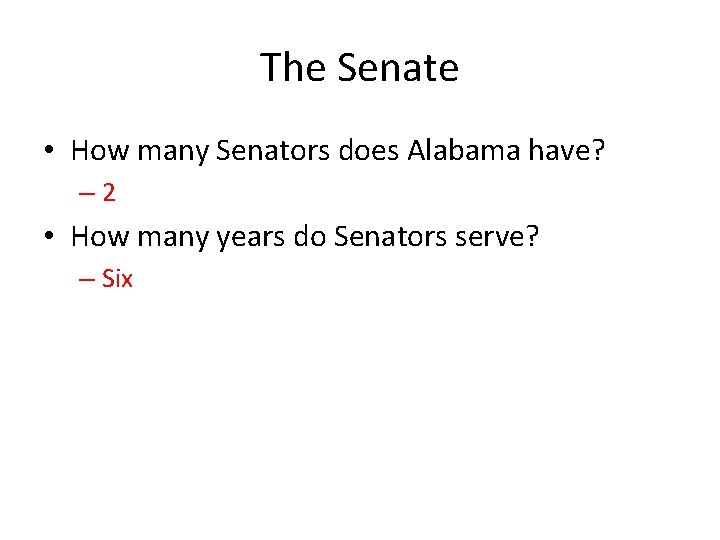
The Senate • How many Senators does Alabama have? – 2 • How many years do Senators serve? – Six
• Elections for the Senate are rotating. Only 1/3 of senators are running for reelection at one time • A senator may die or resign before the end of his or her term. Filling their position depends on state laws
Congressional Leadership • The political party to which more than half the members belong to is known as the majority party (in the House: majority party=Democrats; in the Senate: majority party=republic • The political party to which less than half the members belong to is known as the minority party (in the house: minority party=the republicans in the Senate: minority party=democrats)
• Each political party chooses its leader-there is a majority leader and a minority leader in each house of congress • The leader from each political party speaks for their party on issues that come up in that house • Each leader tries to push along votes in favor of bills supported by their party
House of Representatives • Majority party picks the Speaker of the House • Speaker is aided by majority whips • Minority party is led by minority leader who is aided by minority whip
Senate • Vice President leads, but only votes in the event of a tie • President pro tempore fills in when vice president is absent, (is usually the senator with most seniority) • Majority leader leads the majority party • Minority leader leads the minority party
Leadership in the House • Who is the presiding officer in the House? – Speaker of the House • What is the Speakers role? – He presides over the House and leads its majority party. He guides legislation and leads floor debates, if the president and Vice President die he is next in line • Who chooses the Speaker? – Members of the majority party
Leadership in the Senate • Who is the presiding officer in the Senate? – The Vice President • How does the Vice President and Speaker of the House differ? – The speaker can vote on any matter, the vice president can only vote in the case of a tie • What happens if the Vice President cannot be there? – A temporary officer known as the president pro tempore fill sin
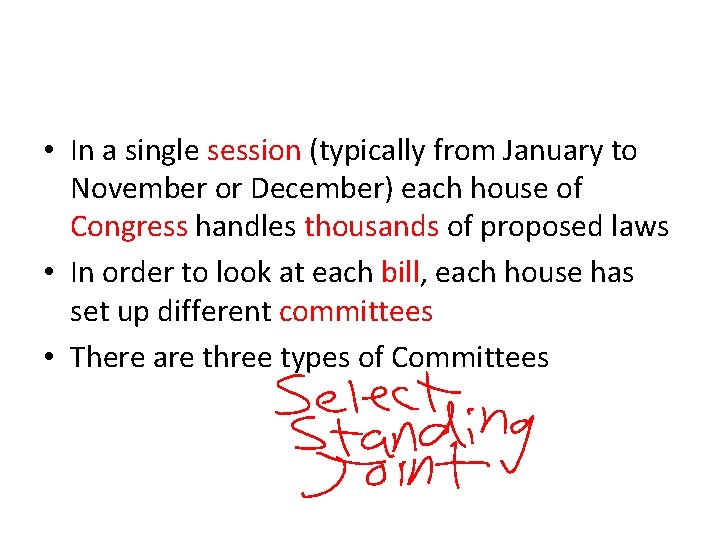
• In a single session (typically from January to November or December) each house of Congress handles thousands of proposed laws • In order to look at each bill, each house has set up different committees • There are three types of Committees
Committees of Congress • Standing Committees: Permanent- focus on specific areas of government work • Joint Committees: committees that include members of both houses-meet to consider specific issues • Select Committees: temporary committees that deal with special issues. They meet for limited time until task is completed
• Speaker of the House: Nancy Pelosi (democrat) • Majority Leader of the House: Steny Hoyer (Democrat) • Majority Leader of the Senate: Mitch Mc. Connell (republican) • Minority Leader of the House: Kevin Mc. Carthy (republican) • Minority Leader of the Senate: Chuck Schumer (democrat) • Speaker of the Senate: Mike Pence