
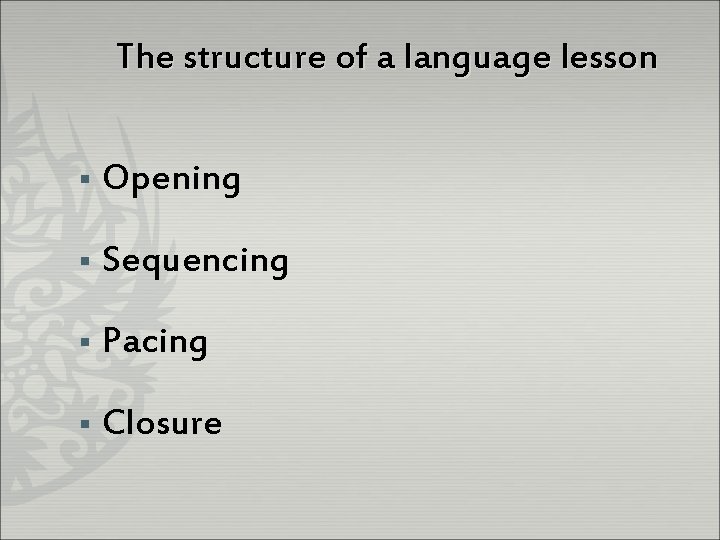
The structure of a language lesson Opening Sequencing
- Slides: 6
The structure of a language lesson § Opening § Sequencing § Pacing § Closure
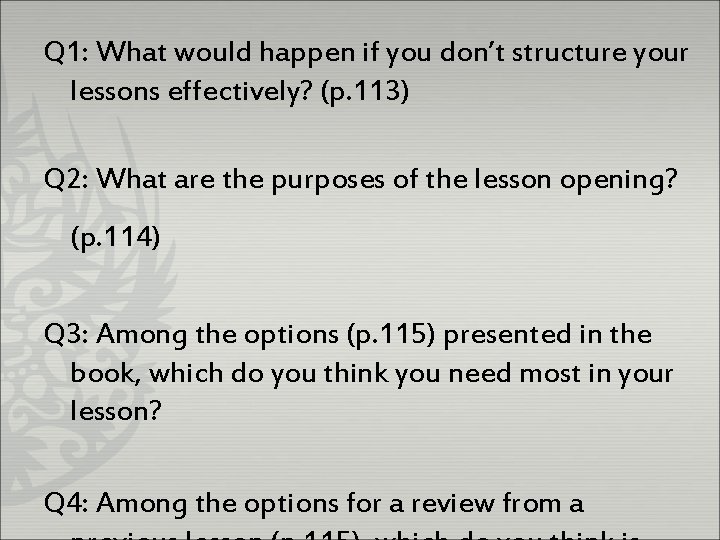
Q 1: What would happen if you don’t structure your lessons effectively? (p. 113) Q 2: What are the purposes of the lesson opening? (p. 114) Q 3: Among the options (p. 115) presented in the book, which do you think you need most in your lesson? Q 4: Among the options for a review from a
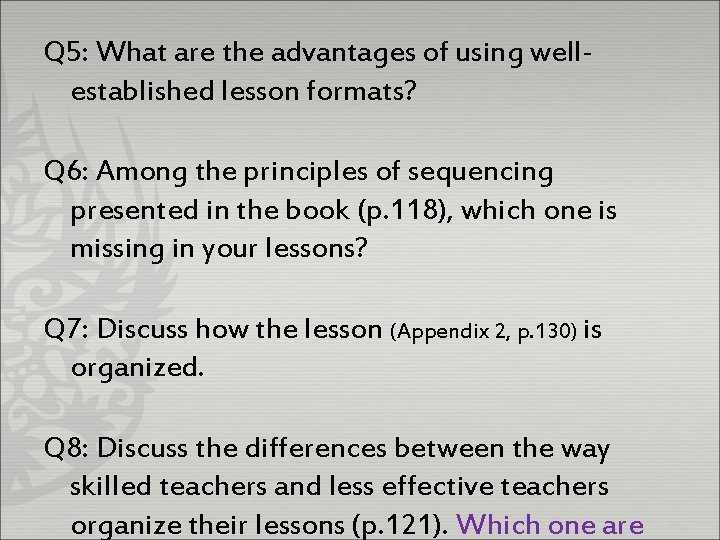
Q 5: What are the advantages of using wellestablished lesson formats? Q 6: Among the principles of sequencing presented in the book (p. 118), which one is missing in your lessons? Q 7: Discuss how the lesson (Appendix 2, p. 130) is organized. Q 8: Discuss the differences between the way skilled teachers and less effective teachers organize their lessons (p. 121). Which one are
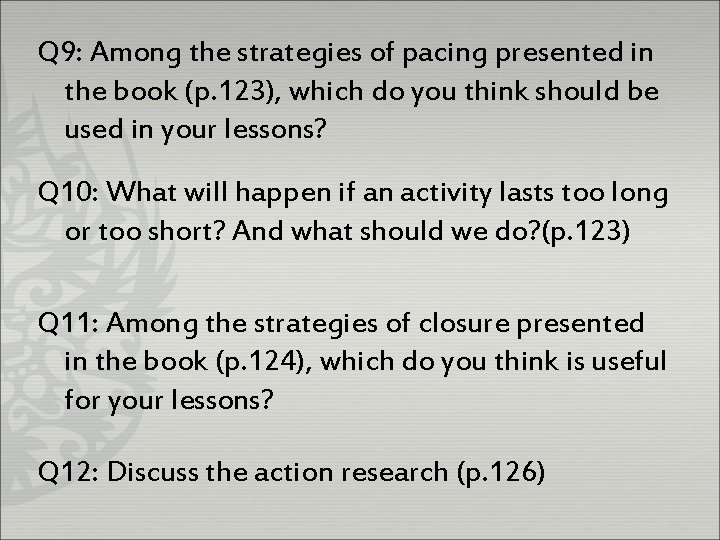
Q 9: Among the strategies of pacing presented in the book (p. 123), which do you think should be used in your lessons? Q 10: What will happen if an activity lasts too long or too short? And what should we do? (p. 123) Q 11: Among the strategies of closure presented in the book (p. 124), which do you think is useful for your lessons? Q 12: Discuss the action research (p. 126)
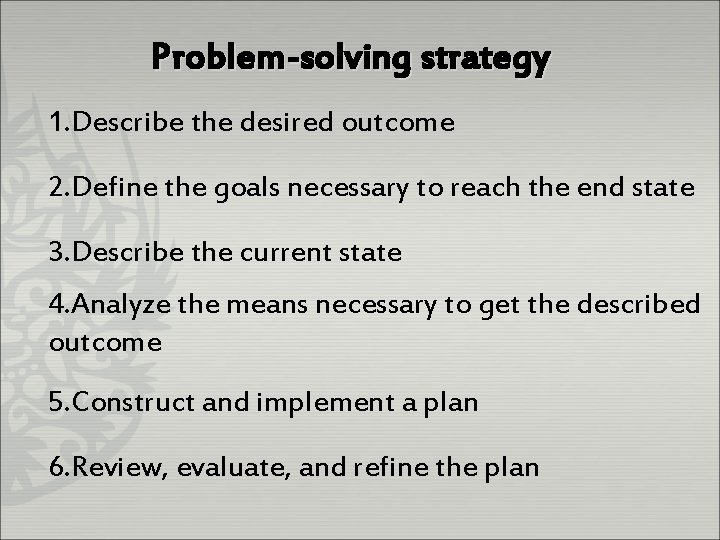
Problem-solving strategy 1. Describe the desired outcome 2. Define the goals necessary to reach the end state 3. Describe the current state 4. Analyze the means necessary to get the described outcome 5. Construct and implement a plan 6. Review, evaluate, and refine the plan
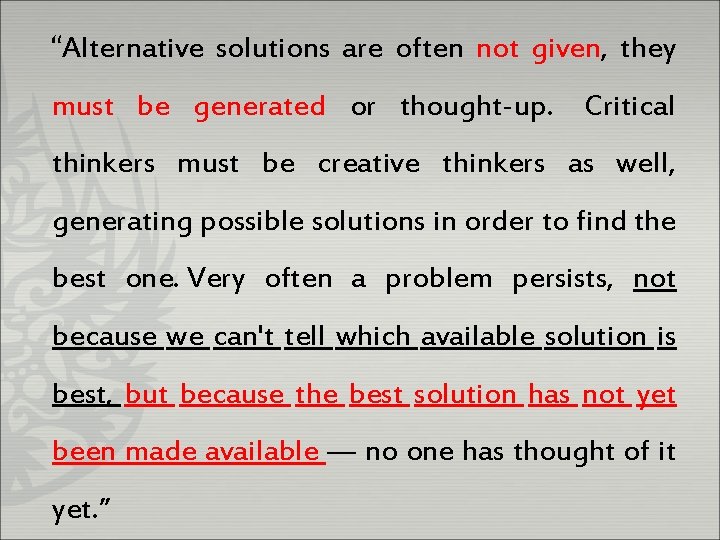
“Alternative solutions are often not given, they must be generated or thought-up. Critical thinkers must be creative thinkers as well, generating possible solutions in order to find the best one. Very often a problem persists, not because we can't tell which available solution is best, but because the best solution has not yet been made available — no one has thought of it yet. ”