
The Structure and Organization of Political Parties What
- Slides: 26
The Structure and Organization of Political Parties
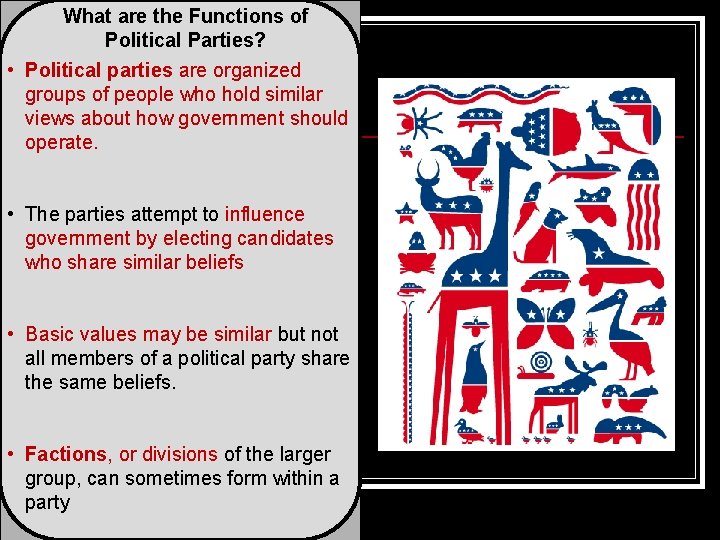
What are the Functions of Political Parties? • Political parties are organized groups of people who hold similar views about how government should operate. • The parties attempt to influence government by electing candidates who share similar beliefs • Basic values may be similar but not all members of a political party share the same beliefs. • Factions, or divisions of the larger group, can sometimes form within a party
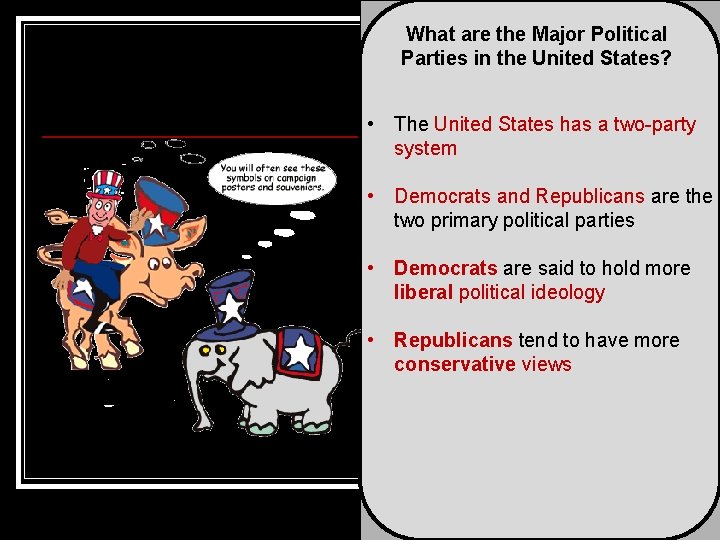
What are the Major Political Parties in the United States? • The United States has a two-party system • Democrats and Republicans are the two primary political parties • Democrats are said to hold more liberal political ideology • Republicans tend to have more conservative views
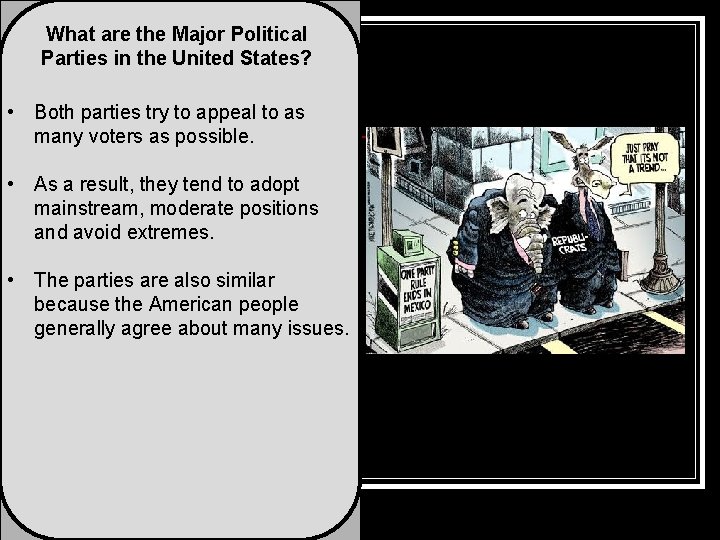
What are the Major Political Parties in the United States? • Both parties try to appeal to as many voters as possible. • As a result, they tend to adopt mainstream, moderate positions and avoid extremes. • The parties are also similar because the American people generally agree about many issues.
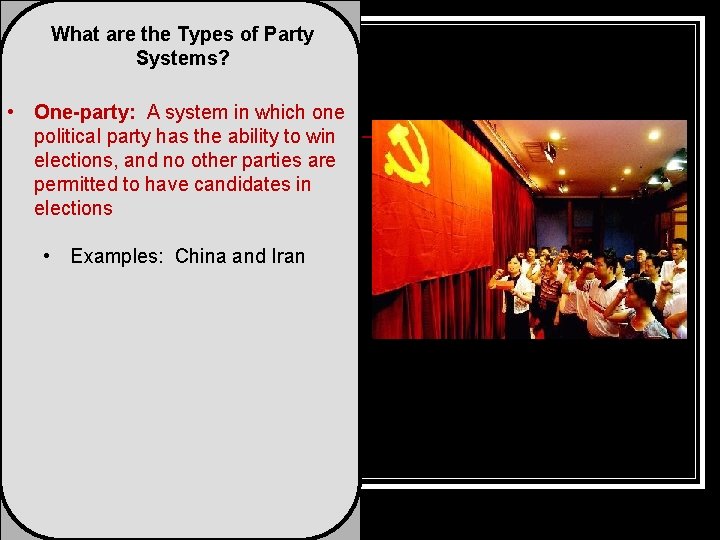
What are the Types of Party Systems? • One-party: A system in which one political party has the ability to win elections, and no other parties are permitted to have candidates in elections • Examples: China and Iran
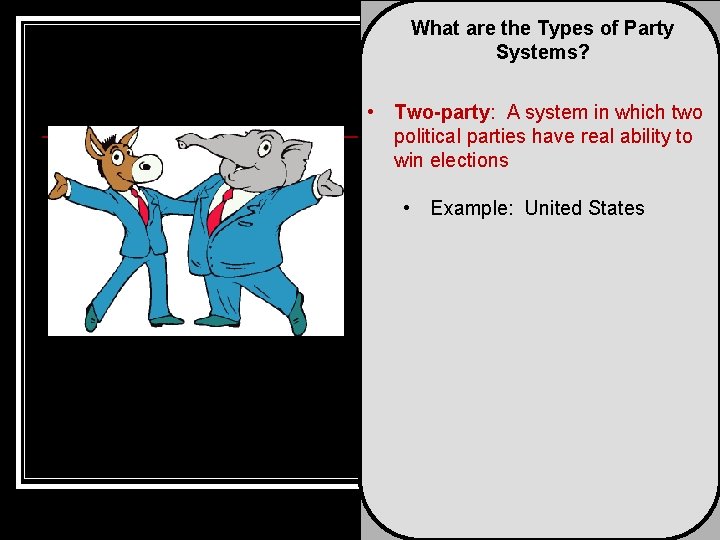
What are the Types of Party Systems? • Two-party: A system in which two political parties have real ability to win elections • Example: United States
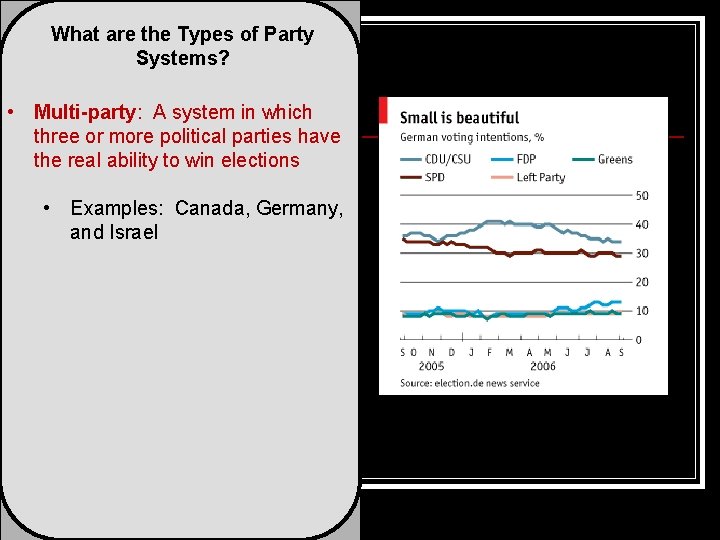
What are the Types of Party Systems? • Multi-party: A system in which three or more political parties have the real ability to win elections • Examples: Canada, Germany, and Israel
Fears of our system……. n Lack of choices n Dangers of factions…. Factions or divisions n Washington’s warnings…. Jefferson and Hamilton
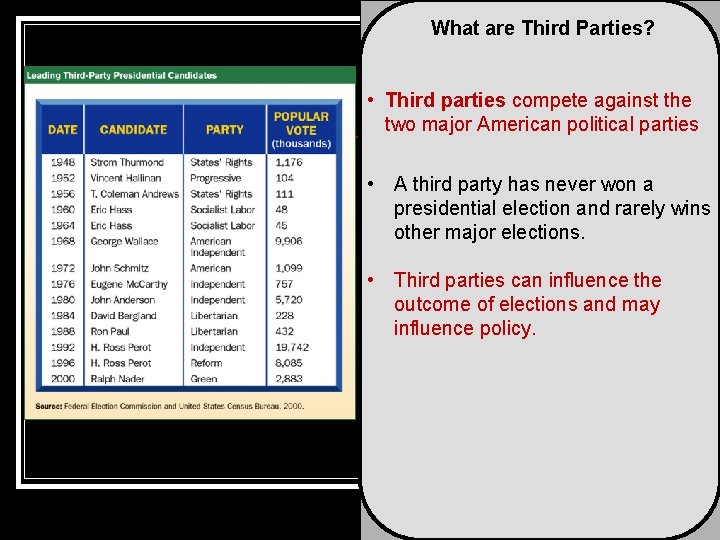
What are Third Parties? • Third parties compete against the two major American political parties • A third party has never won a presidential election and rarely wins other major elections. • Third parties can influence the outcome of elections and may influence policy.
Advantages / Disadvantages Advantages: ? ? ? n Disadvantages: ? ? n Name a few that aren’t on the page. n
Multi-Party System Plurality – With three + candidates - a party can win the election with a majorirty. n Coalitions – control most multi-party systems n Why unstable? n
One Party System Little Freedoms n Competition usually not allowed. n Create a Venn Diagram outlining the three types of “Party Systems”. n Create a compare and contrast chart between Republicans and Democrats. n
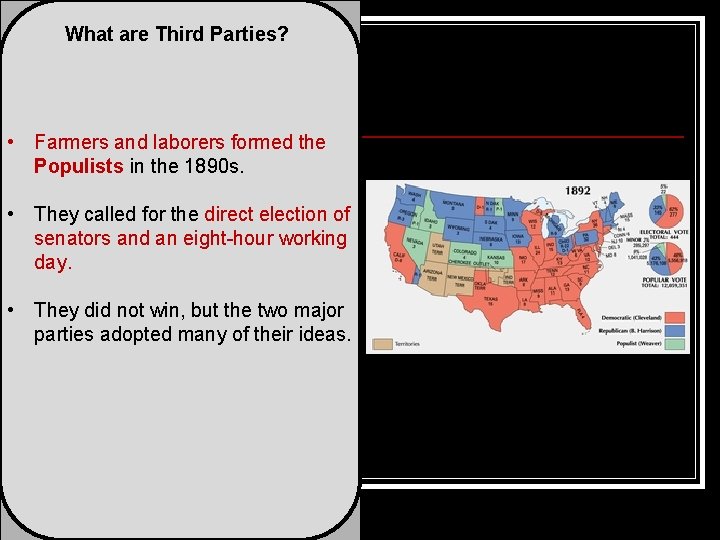
What are Third Parties? • Farmers and laborers formed the Populists in the 1890 s. • They called for the direct election of senators and an eight-hour working day. • They did not win, but the two major parties adopted many of their ideas.
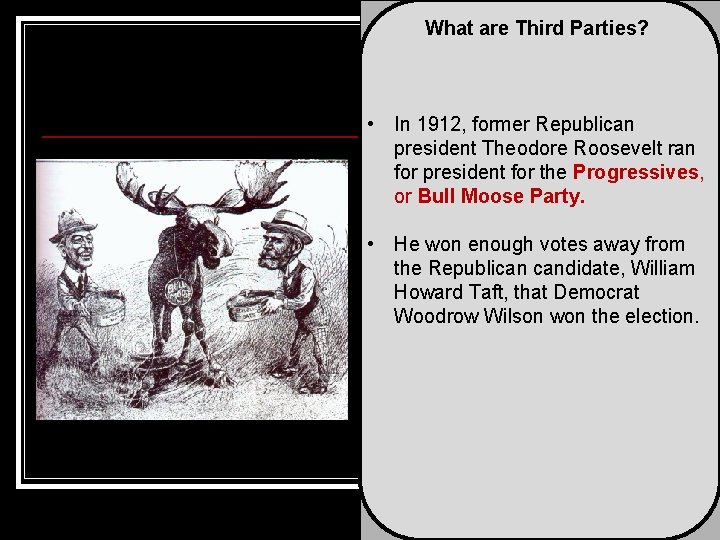
What are Third Parties? • In 1912, former Republican president Theodore Roosevelt ran for president for the Progressives, or Bull Moose Party. • He won enough votes away from the Republican candidate, William Howard Taft, that Democrat Woodrow Wilson won the election.
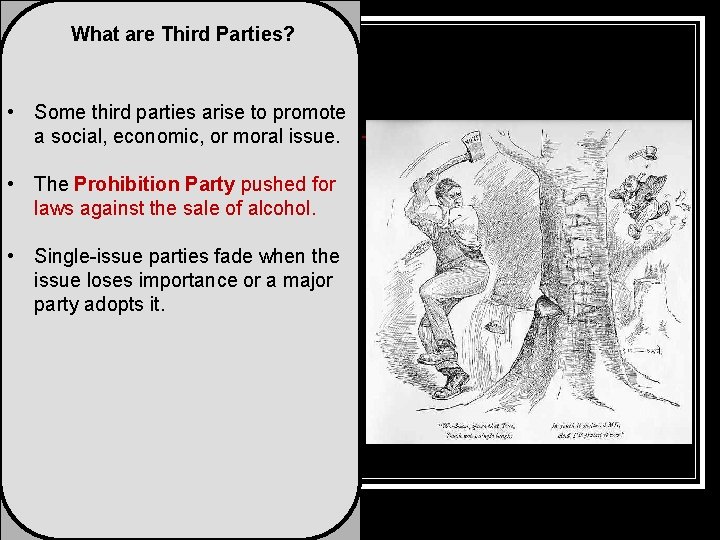
What are Third Parties? • Some third parties arise to promote a social, economic, or moral issue. • The Prohibition Party pushed for laws against the sale of alcohol. • Single-issue parties fade when the issue loses importance or a major party adopts it.
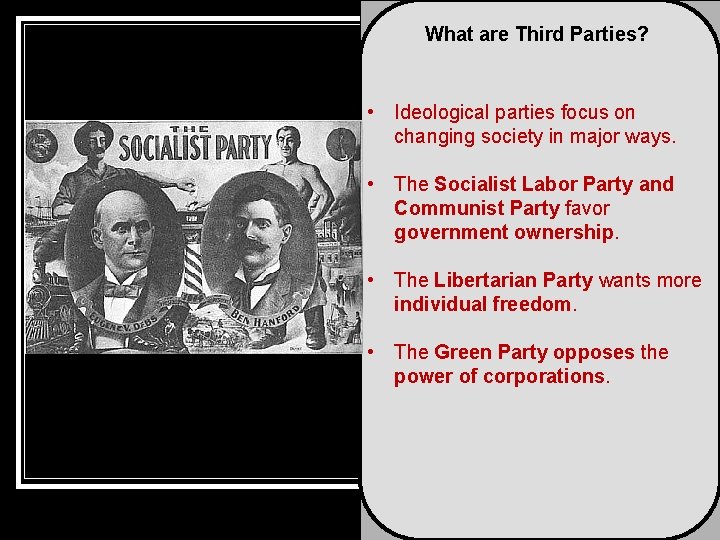
What are Third Parties? • Ideological parties focus on changing society in major ways. • The Socialist Labor Party and Communist Party favor government ownership. • The Libertarian Party wants more individual freedom. • The Green Party opposes the power of corporations.
Stop Here…….
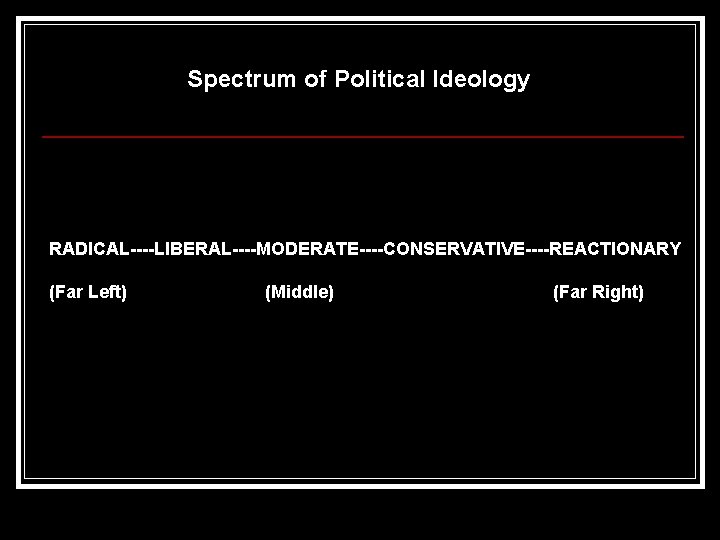
Spectrum of Political Ideology RADICAL----LIBERAL----MODERATE----CONSERVATIVE----REACTIONARY (Far Left) (Middle) (Far Right)
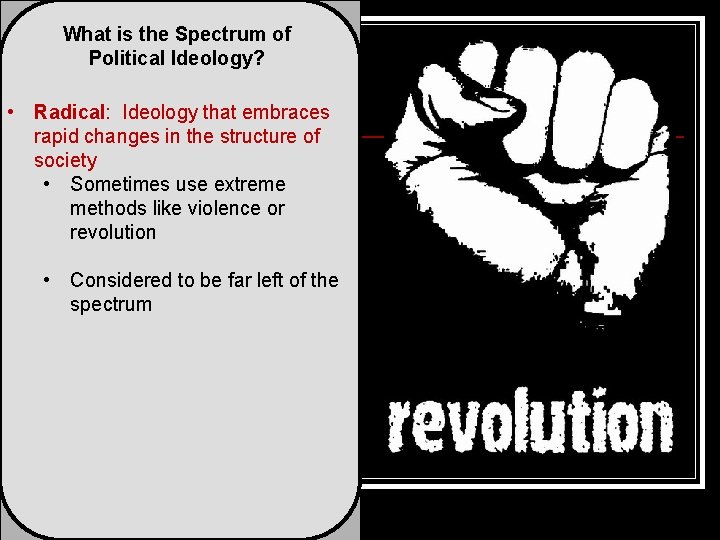
What is the Spectrum of Political Ideology? • Radical: Ideology that embraces rapid changes in the structure of society • Sometimes use extreme methods like violence or revolution • Considered to be far left of the spectrum
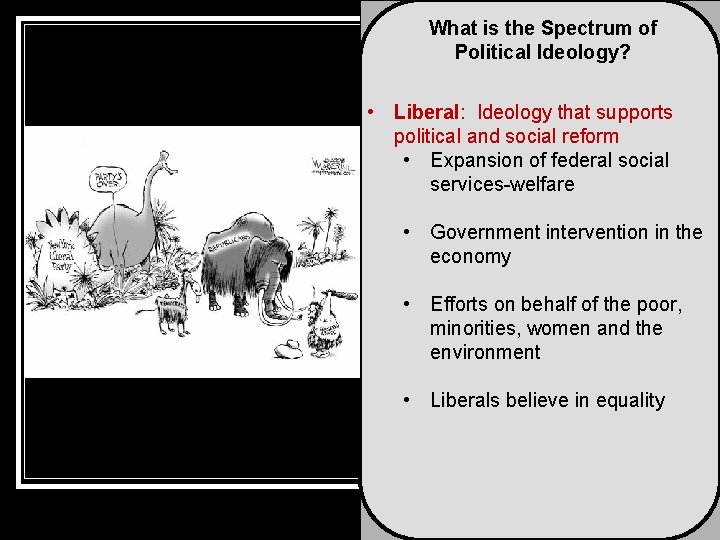
What is the Spectrum of Political Ideology? • Liberal: Ideology that supports political and social reform • Expansion of federal social services-welfare • Government intervention in the economy • Efforts on behalf of the poor, minorities, women and the environment • Liberals believe in equality
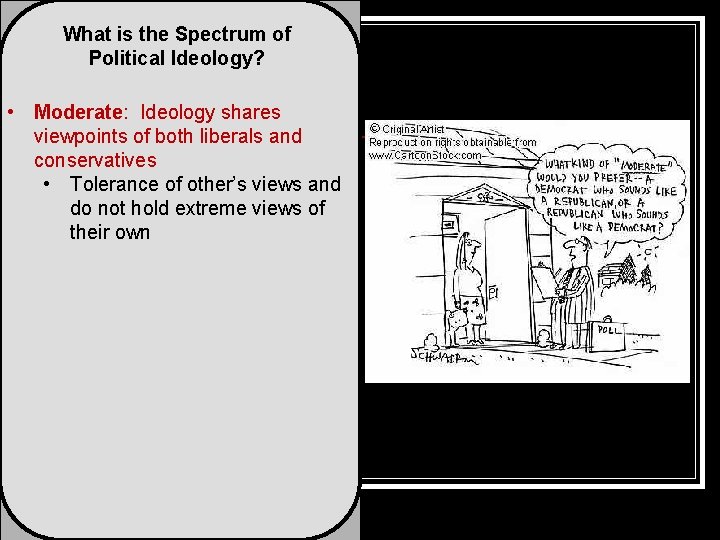
What is the Spectrum of Political Ideology? • Moderate: Ideology shares viewpoints of both liberals and conservatives • Tolerance of other’s views and do not hold extreme views of their own
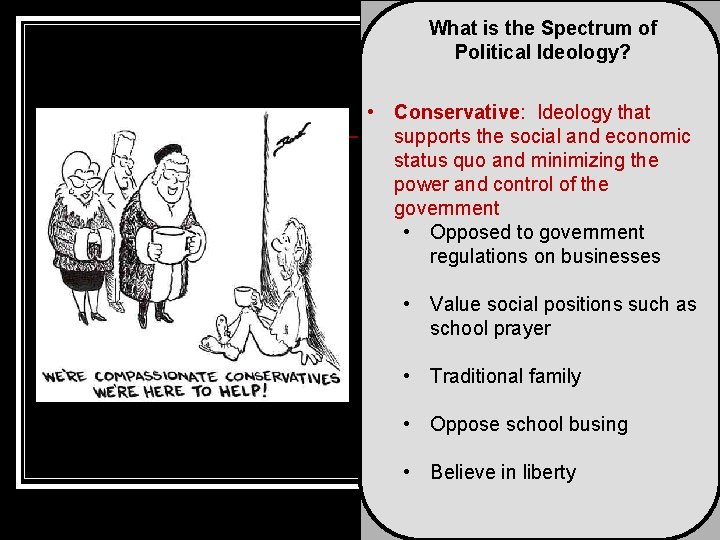
What is the Spectrum of Political Ideology? • Conservative: Ideology that supports the social and economic status quo and minimizing the power and control of the government • Opposed to government regulations on businesses • Value social positions such as school prayer • Traditional family • Oppose school busing • Believe in liberty
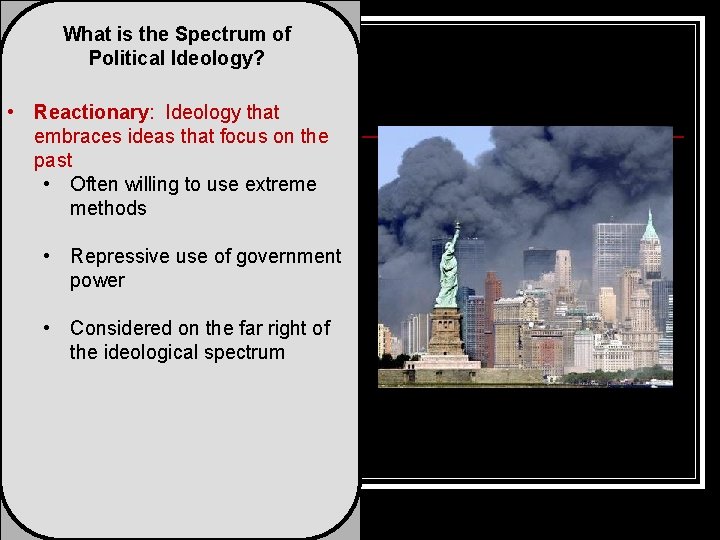
What is the Spectrum of Political Ideology? • Reactionary: Ideology that embraces ideas that focus on the past • Often willing to use extreme methods • Repressive use of government power • Considered on the far right of the ideological spectrum
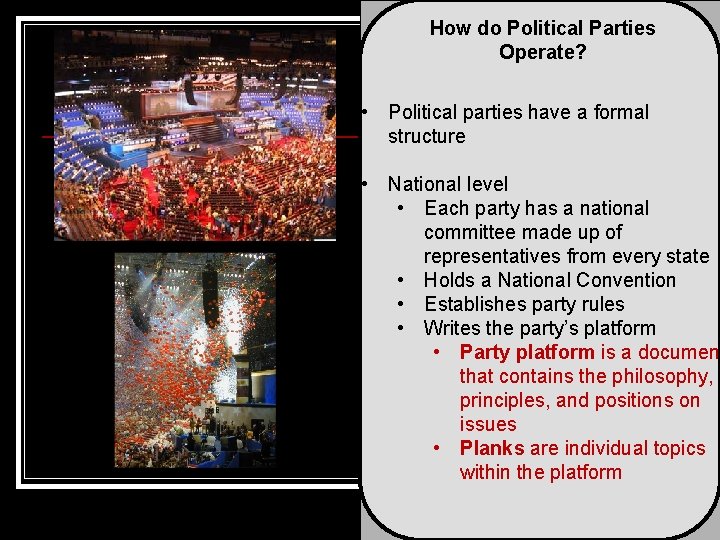
How do Political Parties Operate? • Political parties have a formal structure • National level • Each party has a national committee made up of representatives from every state • Holds a National Convention • Establishes party rules • Writes the party’s platform • Party platform is a documen that contains the philosophy, principles, and positions on issues • Planks are individual topics within the platform
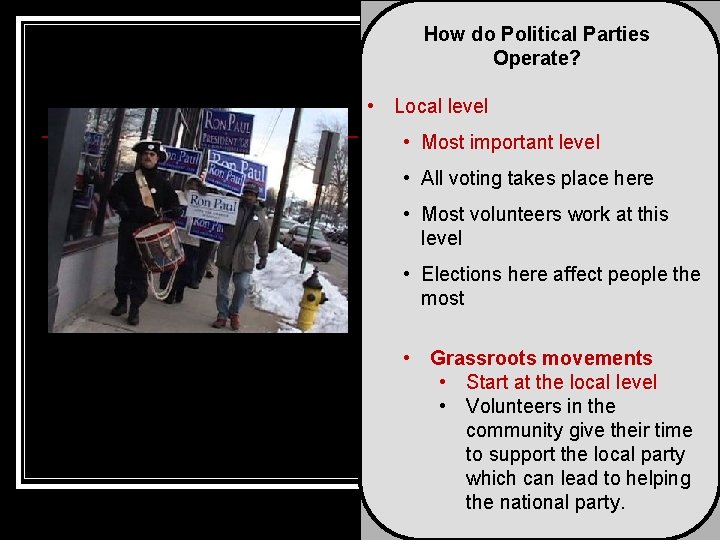
How do Political Parties Operate? • Local level • Most important level • All voting takes place here • Most volunteers work at this level • Elections here affect people the most • Grassroots movements • Start at the local level • Volunteers in the community give their time to support the local party which can lead to helping the national party.
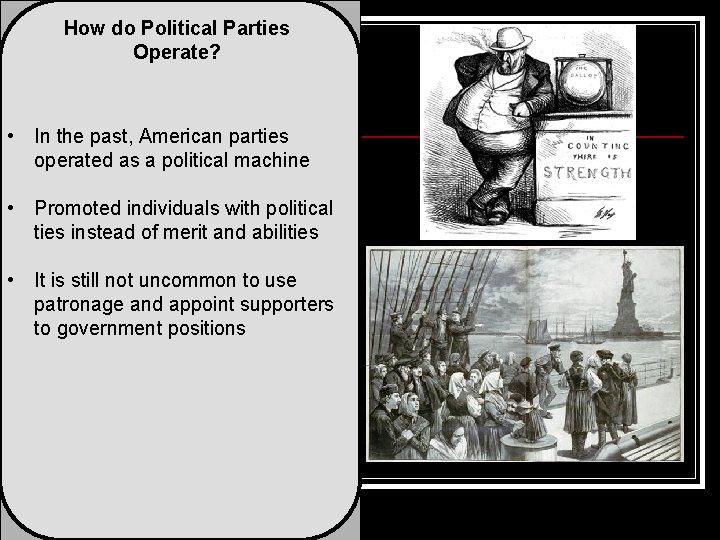
How do Political Parties Operate? • In the past, American parties operated as a political machine • Promoted individuals with political ties instead of merit and abilities • It is still not uncommon to use patronage and appoint supporters to government positions