
THE STRUCTURE AND FUNCTION OF MACROMOLECULES Polymer principles


- Slides: 15
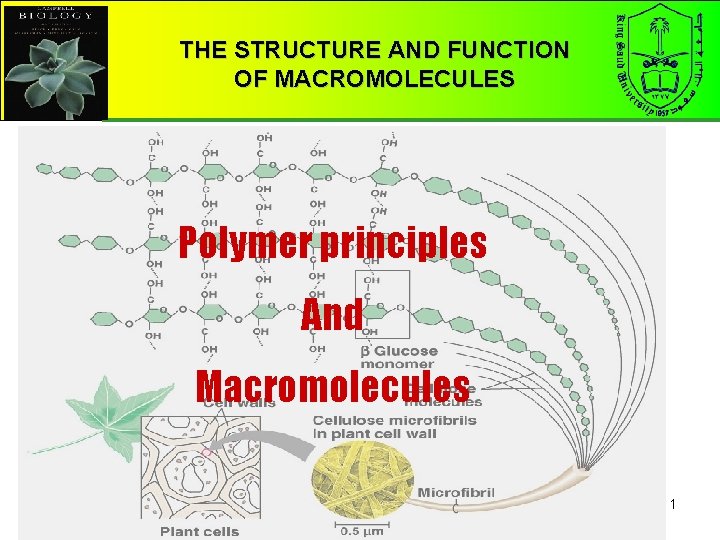
THE STRUCTURE AND FUNCTION OF MACROMOLECULES Polymer principles And Macromolecules 1
Polymers principles • Cells join ﺗﺮﺑﻂ smaller organic molecules (Monomers) Monomers together to form larger molecules (macromolecules) (Polymers), which may be composed of thousands of atoms. • Macromolecules are organic molecules that weigh more than 100, 000 daltons (ATOMIC MASS UNIT). • The four major classes of macromolecules are: 1)-Carbohydrates, 2)-Lipids, 3)-Proteins, 4)-Nucleic acids (will be studied later) 2
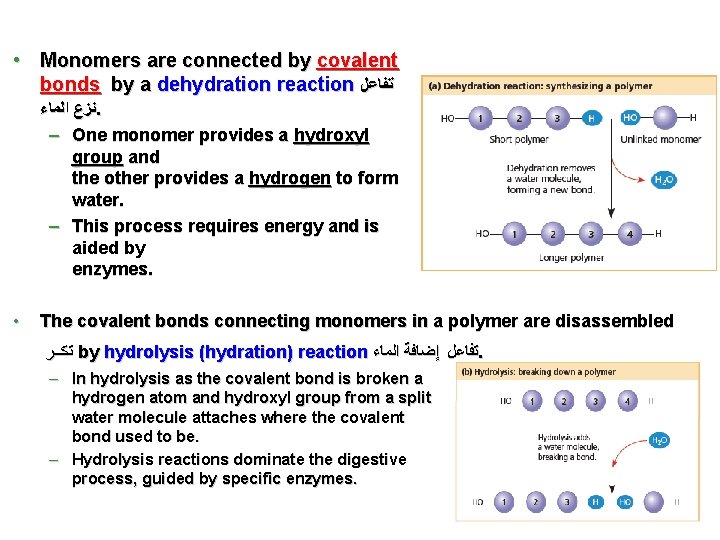
• Monomers are connected by covalent bonds by a dehydration reaction ﺗﻔﺎﻋﻞ ﻧﺰﻉ ﺍﻟﻤﺎﺀ. – One monomer provides a hydroxyl group and the other provides a hydrogen to form water. – This process requires energy and is aided by enzymes. • The covalent bonds connecting monomers in a polymer are disassembled ﺗﻛــﺮ by hydrolysis (hydration) reaction ﺗﻔﺎﻋﻞ ﺇﺿﺎﻓﺔ ﺍﻟﻤﺎﺀ. – In hydrolysis as the covalent bond is broken a hydrogen atom and hydroxyl group from a split water molecule attaches where the covalent bond used to be. – Hydrolysis reactions dominate the digestive process, guided by specific enzymes. 3
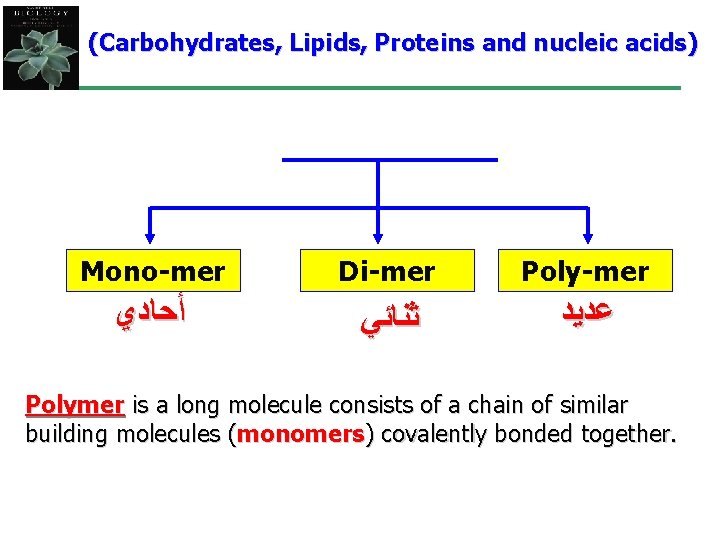
(Carbohydrates, Lipids, Proteins and nucleic acids) Mono-mer Di-mer Poly-mer ﺃﺤﺎﺩﻱ ﺛﻨﺎﺋﻲ ﻋﺪﻳﺪ Polymer is a long molecule consists of a chain of similar building molecules (monomers) covalently bonded together.
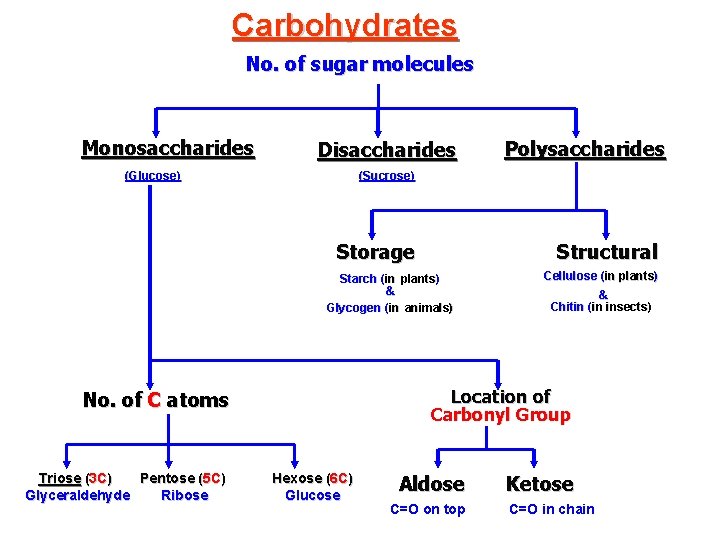
A. Carbohydrates Sugars, Carbo = carbon, hydrate = water; Used as an immediate energy source Carbon to hydrogen to oxygen ratio = 1: 2: 1 1. Monosaccharides: are the simplest carbohydrates (simple sugars). contain a single sugar molecule 2. Disaccharides: contain two monosaccharides joined via dehydration synthesis 3. Polysaccharides: are polymers of many monosaccharides.
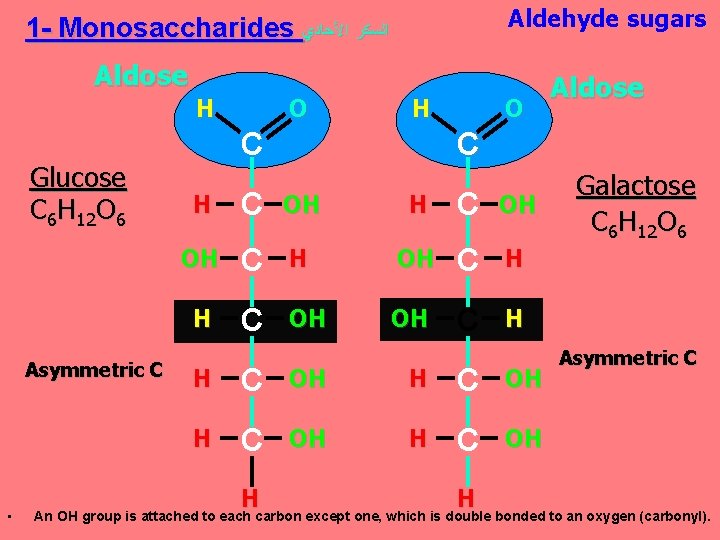
Aldehyde sugars 1 - Monosaccharides ﺍﻟﺴﻜﺮ ﺍﻷﺤﺎﺩﻱ Aldose H Glucose C 6 H 12 O 6 Asymmetric C • O H C O C H C OH OH C H H C OH H Aldose H Galactose C 6 H 12 O 6 Asymmetric C An OH group is attached to each carbon except one, which is double bonded to an oxygen (carbonyl).
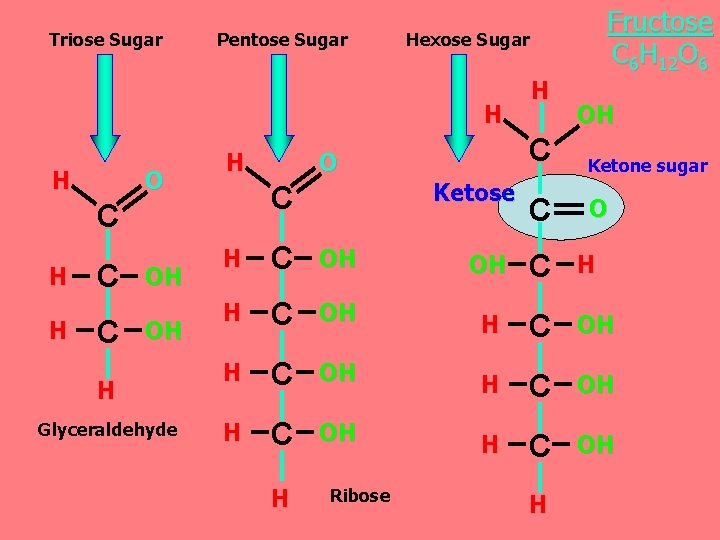
Triose Sugar Pentose Sugar Hexose Sugar H H O H C H H C C OH OH H Glyceraldehyde O Ketose C Fructose C 6 H 12 O 6 H OH C Ketone sugar C O H C OH OH C H H C OH H C OH H Ribose H
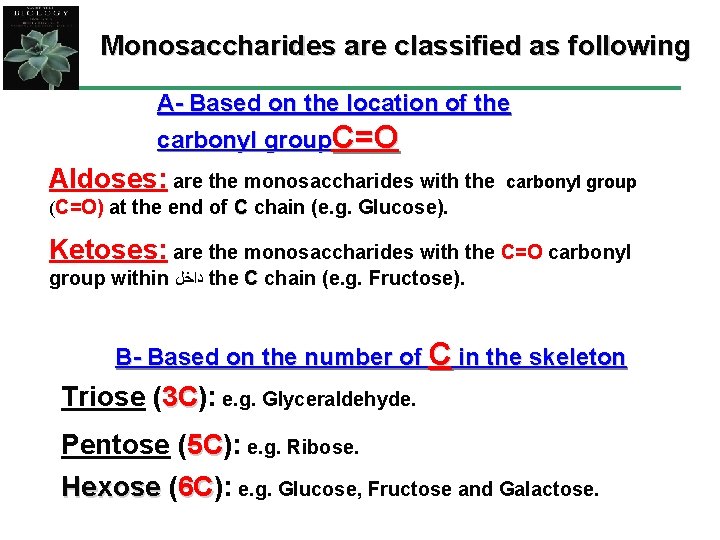
Monosaccharides are classified as following A- Based on the location of the carbonyl group. C=O Aldoses: are the monosaccharides with the carbonyl group (C=O) at the end of C chain (e. g. Glucose). Ketoses: are the monosaccharides with the C=O carbonyl group within ﺩﺍﺧﻞ the C chain (e. g. Fructose). B- Based on the number of C in the skeleton Triose (3 C): 3 C e. g. Glyceraldehyde. Pentose (5 C): 5 C e. g. Ribose. Hexose (6 C): 6 C e. g. Glucose, Fructose and Galactose.
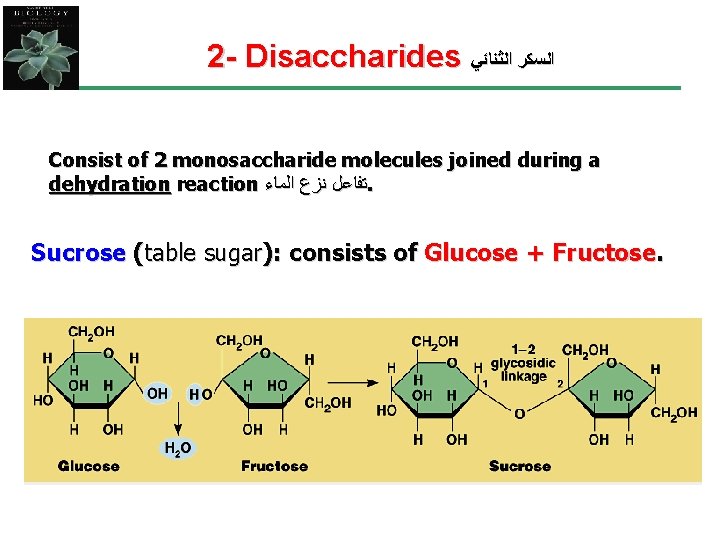
2 - Disaccharides ﺍﻟﺴﻜﺮ ﺍﻟﺜﻨﺎﺋﻲ Consist of 2 monosaccharide molecules joined during a dehydration reaction ﺗﻔﺎﻋﻞ ﻧﺰﻉ ﺍﻟﻤﺎﺀ. Sucrose (table sugar): consists of Glucose + Fructose.
3 - Polysaccharides ﺍﻟﺴﻜﺮ ﺍﻟﻌﺪﻳﺪ Consists of few hundreds to few thousands of monosaccharides. They are two types: 1 - Storage ﺗﺨﺰﻳﻨﻴﺔ. Provide sugar for cell by hydrolysis ﺇﺿﺎﻓﺔ ﻣﺎﺀ. 2 - Structural ﺗﺮﻛﻴﺒﻴﺔ. Serve as building materials for the organism. 10
A)- Storage ﺗﺨﺰﻳﻨﻴﺔ Polysaccharides I- Starch (in plants) ﺍﻟﻨﺸﺎ A storage polysaccharide of plants (within plastids). ( It consists of thousands of glucose molecules. Thus, it gives glucose when hydrolysed ﺑﺈﺿﺎﻓﺔ ﺍﻟﻤﺎﺀ by special enzymes in humans. Potatoes and grains are the major source of starch. 11
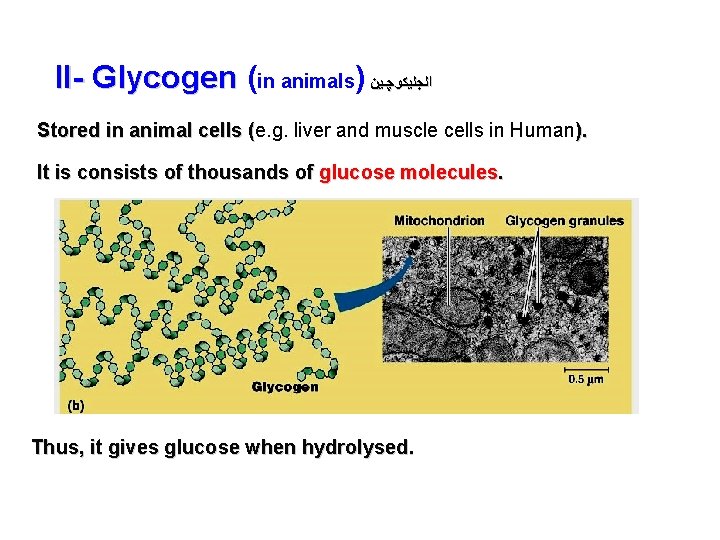
II- Glycogen (in animals) ﺍﻟﺠﻠﻴﻜﻮﭽـﻴﻦ Stored in animal cells (e. g. liver and muscle cells in Human). ( It is consists of thousands of glucose molecules. Thus, it gives glucose when hydrolysed.
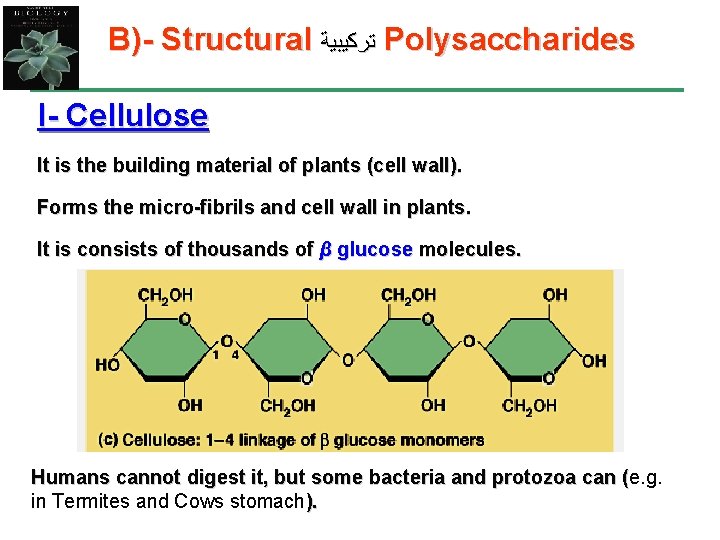
B)- Structural ﺗﺮﻛﻴﺒﻴﺔ Polysaccharides I- Cellulose It is the building material of plants (cell wall). Forms the micro-fibrils and cell wall in plants. It is consists of thousands of β glucose molecules. Humans cannot digest it, but some bacteria and protozoa can (e. g. ( in Termites and Cows stomach).
II- Chitin ﺍﻟﻜﻴﺘﻴﻦ It is the building material of the cuticle ﺍﻟـﻳﺪ in insects. It is consists of thousands of glucose molecules with a N atom in one end. It is used to manufacture the surgical threads.
Carbohydrates No. of sugar molecules Monosaccharides Disaccharides (Glucose) (Sucrose) Storage Structural Starch (in plants) & Glycogen (in animals) Cellulose (in plants) & Chitin (in insects) Location of Carbonyl Group No. of C atoms Triose (3 C) Pentose (5 C) Glyceraldehyde Ribose Polysaccharides Hexose (6 C) Glucose Aldose C=O on top Ketose C=O in chain