
The Stressors of Transition from Graduate Nurse to
- Slides: 1
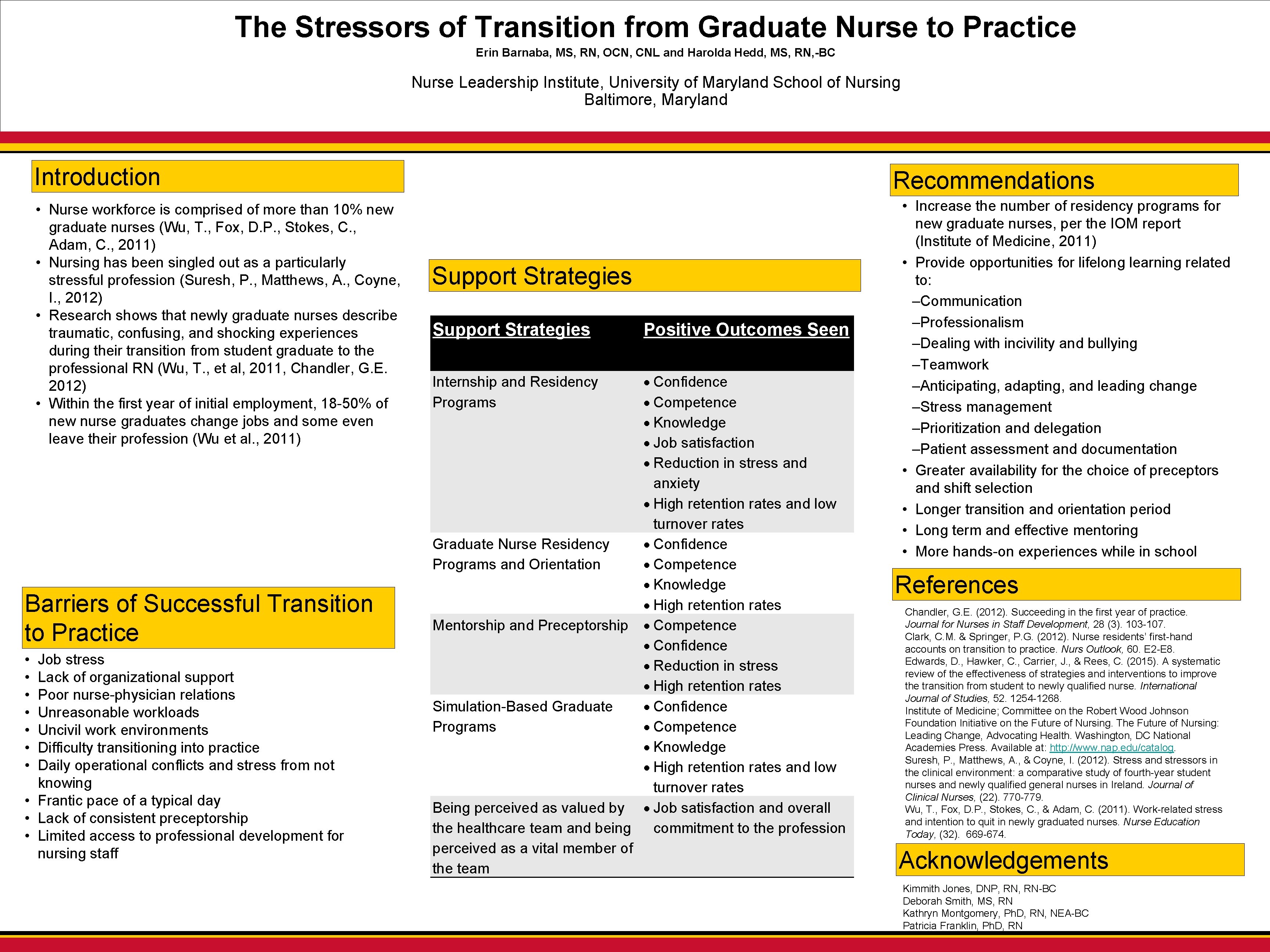
The Stressors of Transition from Graduate Nurse to Practice Erin Barnaba, MS, RN, OCN, CNL and Harolda Hedd, MS, RN, -BC Nurse Leadership Institute, University of Maryland School of Nursing Baltimore, Maryland Introduction • Nurse workforce is comprised of more than 10% new graduate nurses (Wu, T. , Fox, D. P. , Stokes, C. , Adam, C. , 2011) • Nursing has been singled out as a particularly stressful profession (Suresh, P. , Matthews, A. , Coyne, I. , 2012) • Research shows that newly graduate nurses describe traumatic, confusing, and shocking experiences during their transition from student graduate to the professional RN (Wu, T. , et al, 2011, Chandler, G. E. 2012) • Within the first year of initial employment, 18 -50% of new nurse graduates change jobs and some even leave their profession (Wu et al. , 2011) Barriers of Successful Transition to Practice • • Job stress Lack of organizational support Poor nurse-physician relations Unreasonable workloads Uncivil work environments Difficulty transitioning into practice Daily operational conflicts and stress from not knowing • Frantic pace of a typical day • Lack of consistent preceptorship • Limited access to professional development for nursing staff Recommendations Support Strategies Positive Outcomes Seen Confidence Competence Knowledge Job satisfaction Reduction in stress and anxiety High retention rates and low turnover rates Graduate Nurse Residency Confidence Programs and Orientation Competence Knowledge High retention rates Mentorship and Preceptorship Competence Confidence Reduction in stress High retention rates Simulation-Based Graduate Confidence Programs Competence Knowledge High retention rates and low turnover rates Being perceived as valued by Job satisfaction and overall the healthcare team and being commitment to the profession perceived as a vital member of the team Internship and Residency Programs • Increase the number of residency programs for new graduate nurses, per the IOM report (Institute of Medicine, 2011) • Provide opportunities for lifelong learning related to: –Communication –Professionalism –Dealing with incivility and bullying –Teamwork –Anticipating, adapting, and leading change –Stress management –Prioritization and delegation –Patient assessment and documentation • Greater availability for the choice of preceptors and shift selection • Longer transition and orientation period • Long term and effective mentoring • More hands-on experiences while in school References Chandler, G. E. (2012). Succeeding in the first year of practice. Journal for Nurses in Staff Development, 28 (3). 103 -107. Clark, C. M. & Springer, P. G. (2012). Nurse residents’ first-hand accounts on transition to practice. Nurs Outlook, 60. E 2 -E 8. Edwards, D. , Hawker, C. , Carrier, J. , & Rees, C. (2015). A systematic review of the effectiveness of strategies and interventions to improve the transition from student to newly qualified nurse. International Journal of Studies, 52. 1254 -1268. Institute of Medicine; Committee on the Robert Wood Johnson Foundation Initiative on the Future of Nursing. The Future of Nursing: Leading Change, Advocating Health. Washington, DC National Academies Press. Available at: http: //www. nap. edu/catalog. Suresh, P. , Matthews, A. , & Coyne, I. (2012). Stress and stressors in the clinical environment: a comparative study of fourth-year student nurses and newly qualified general nurses in Ireland. Journal of Clinical Nurses, (22). 770 -779. Wu, T. , Fox, D. P. , Stokes, C. , & Adam, C. (2011). Work-related stress and intention to quit in newly graduated nurses. Nurse Education Today, (32). 669 -674. Acknowledgements Kimmith Jones, DNP, RN-BC Deborah Smith, MS, RN Kathryn Montgomery, Ph. D, RN, NEA-BC Patricia Franklin, Ph. D, RN