
The Strathspey in Scottish Music Early History and
![Dance Songs ‘[The titles in this collection are] the original Gaelic designations by which](https://slidetodoc.com/presentation_image_h2/3abd2507e8b2c48439cb9fc3eef35dcc/image-13.jpg "Dance Songs ‘[The titles in this collection are] the original Gaelic designations by which")
- Slides: 32
The Strathspey in Scottish Music: Early History and Development Scots Fiddle Festival 23 November 2013 Dr Will Lamb University of Edinburgh
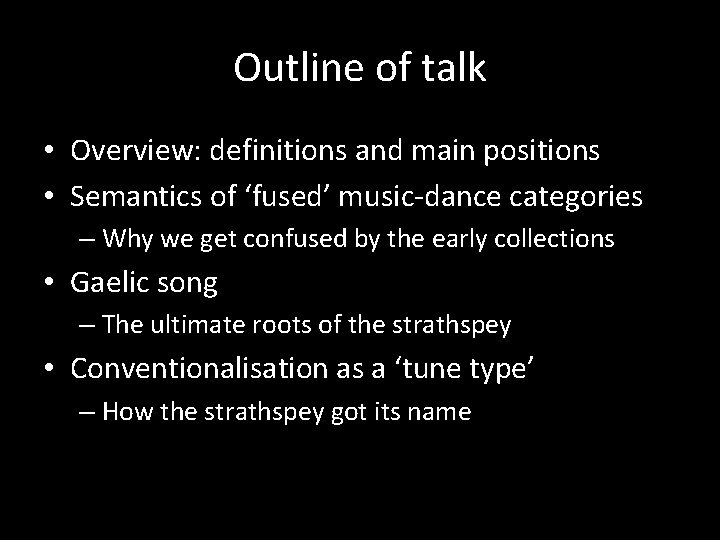
Outline of talk • Overview: definitions and main positions • Semantics of ‘fused’ music-dance categories – Why we get confused by the early collections • Gaelic song – The ultimate roots of the strathspey • Conventionalisation as a ‘tune type’ – How the strathspey got its name
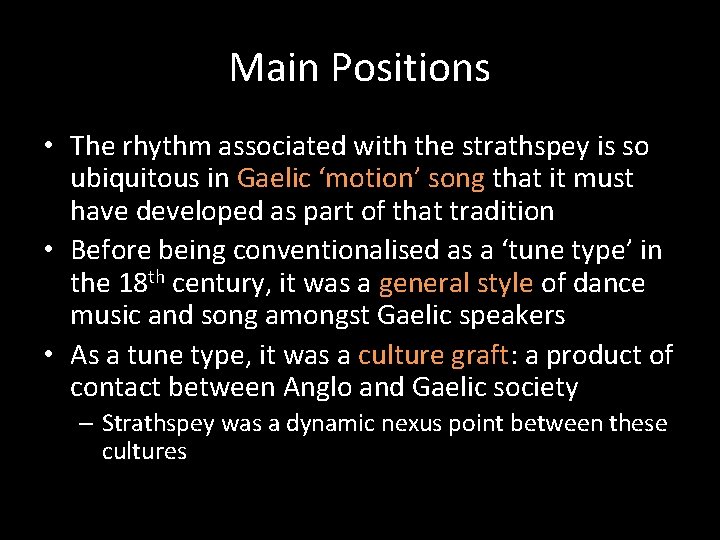
Main Positions • The rhythm associated with the strathspey is so ubiquitous in Gaelic ‘motion’ song that it must have developed as part of that tradition • Before being conventionalised as a ‘tune type’ in the 18 th century, it was a general style of dance music and song amongst Gaelic speakers • As a tune type, it was a culture graft: a product of contact between Anglo and Gaelic society – Strathspey was a dynamic nexus point between these cultures
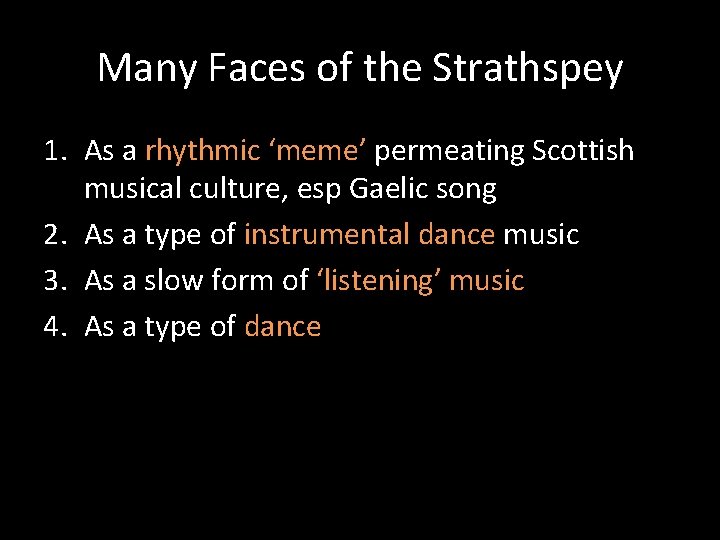
Many Faces of the Strathspey 1. As a rhythmic ‘meme’ permeating Scottish musical culture, esp Gaelic song 2. As a type of instrumental dance music 3. As a slow form of ‘listening’ music 4. As a type of dance
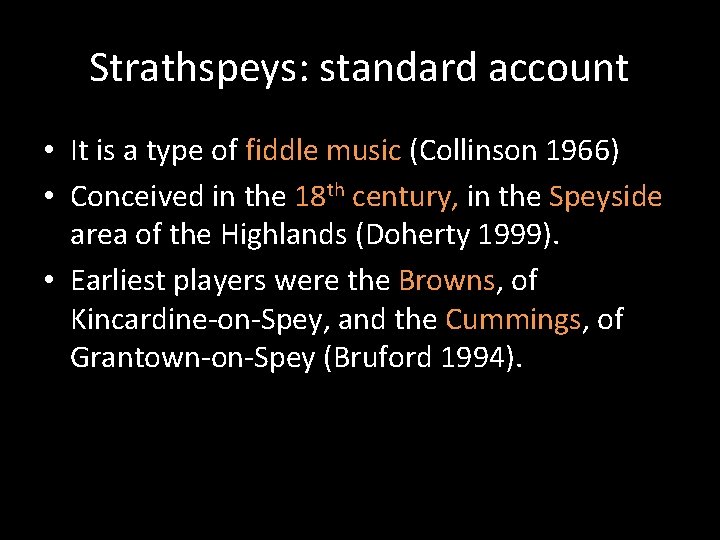
Strathspeys: standard account • It is a type of fiddle music (Collinson 1966) • Conceived in the 18 th century, in the Speyside area of the Highlands (Doherty 1999). • Earliest players were the Browns, of Kincardine-on-Spey, and the Cummings, of Grantown-on-Spey (Bruford 1994).
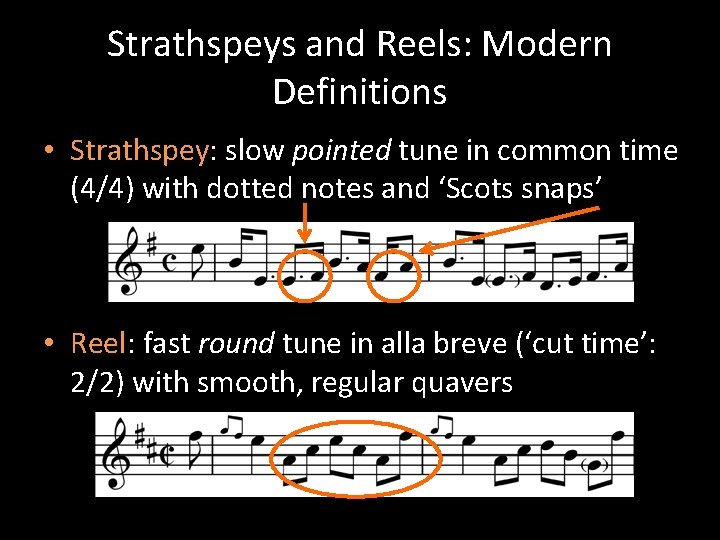
Strathspeys and Reels: Modern Definitions • Strathspey: slow pointed tune in common time (4/4) with dotted notes and ‘Scots snaps’ • Reel: fast round tune in alla breve (‘cut time’: 2/2) with smooth, regular quavers
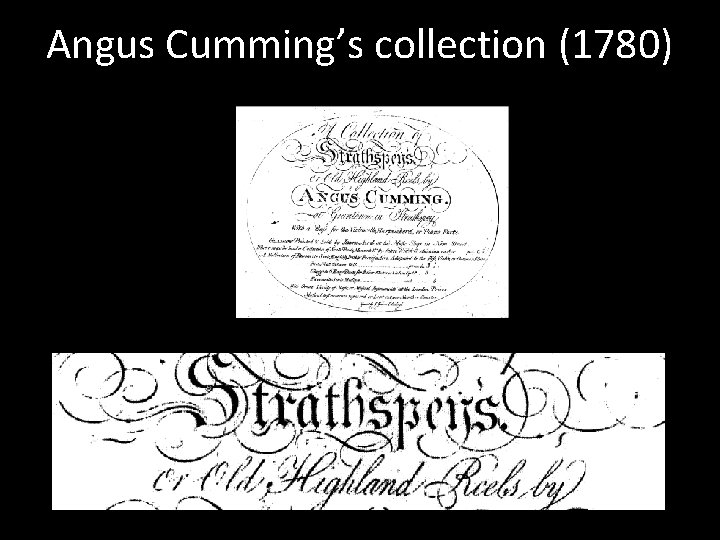
Angus Cumming’s collection (1780)
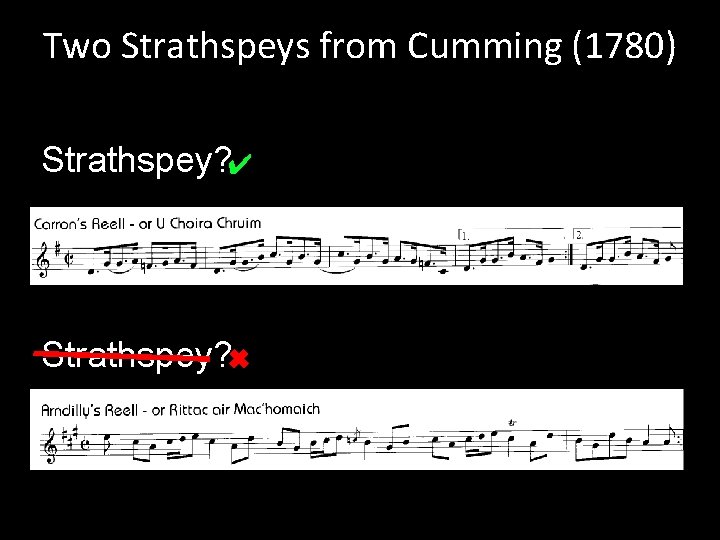
Two Strathspeys from Cumming (1780) Strathspey? ✔ Strathspey? ? ✖ Reel
Diverse tune or dynamic dance? Francis Peacock: dance master (1723 -1807) Marked no distinction in the steps for the strathspey versus the reel. Additionally: said that the strathspey was found across the Highland region.
The strathspey, in Cumming’s time, was not a tune type. It was a semantic fusion. It was a dance-music complex incorporating a tempo change and pointed rhythm.
Semantic fusion: Gaelic song ‘I never heard my friends in Glendale hum or sing an old tune without words. To them the words and the air were inseparable. ’ --Margaret Fay Shaw 1955: 76 ‘The tune without the words is as a voice without a mouth. ’ --Martin Freeman 1920 -21: xxv
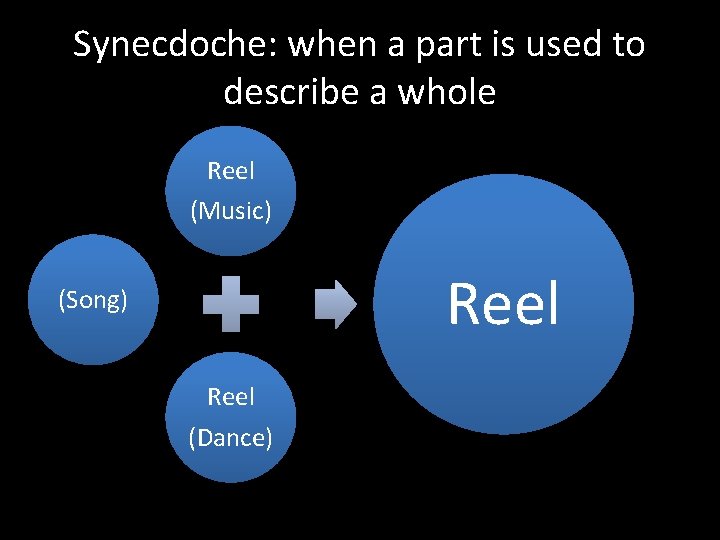
Synecdoche: when a part is used to describe a whole Reel (Music) Reel (Song) Reel (Dance)
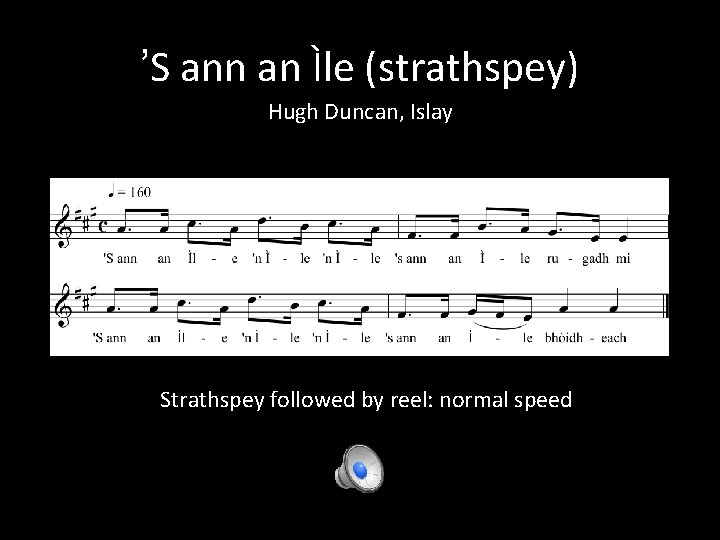
Dance Songs ‘[The titles in this collection are] the original Gaelic designations by which the [tunes] have been known in the Highlands. . . These designations consist generally of something peculiar or striking in the verse or verses to which they were composed’ --Wm Gunn (1848): Preface to the Caledonian Repository of pipe music
’S ann an Ìle (strathspey) Hugh Duncan, Islay Strathspey followed by reel: normal speed
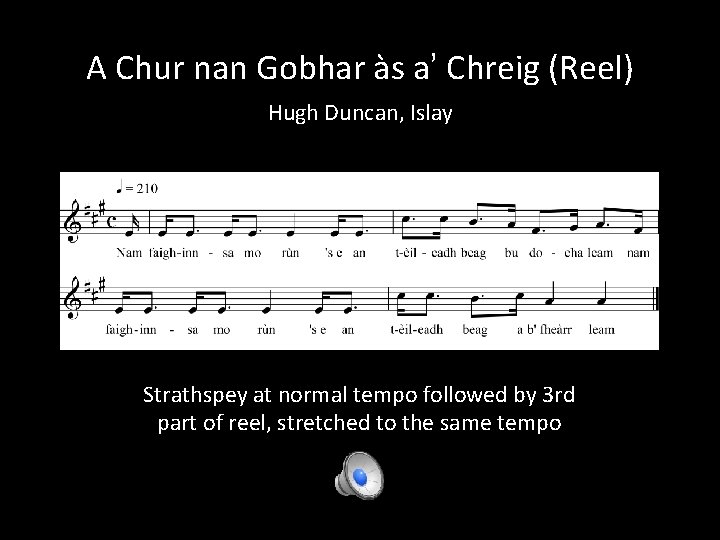
A Chur nan Gobhar às a’ Chreig (Reel) Hugh Duncan, Islay Strathspey at normal tempo followed by 3 rd part of reel, stretched to the same tempo
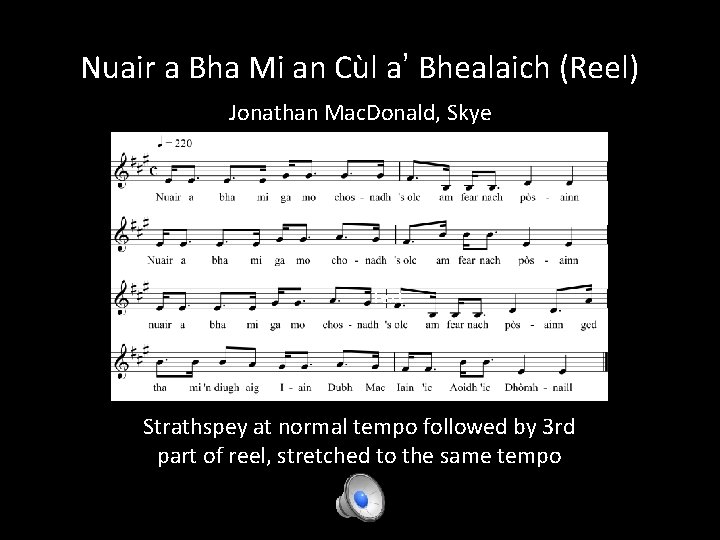
Nuair a Bha Mi an Cùl a’ Bhealaich (Reel) Jonathan Mac. Donald, Skye Text Strathspey at normal tempo followed by 3 rd part of reel, stretched to the same tempo
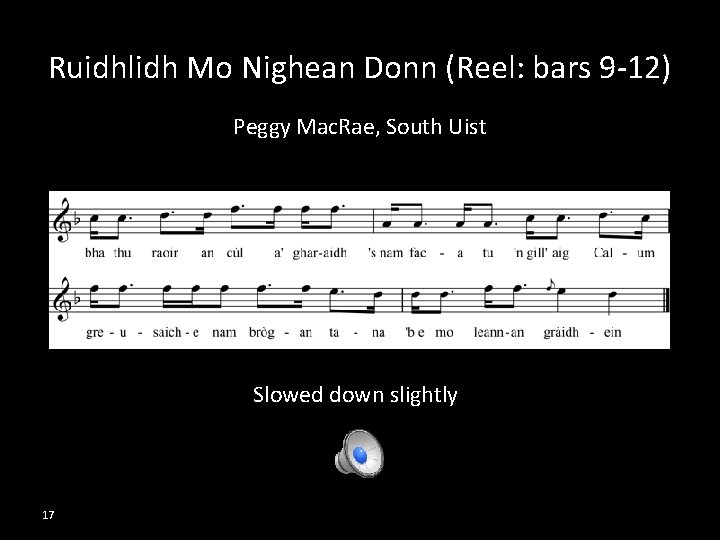
Ruidhlidh Mo Nighean Donn (Reel: bars 9 -12) Peggy Mac. Rae, South Uist Slowed down slightly 17
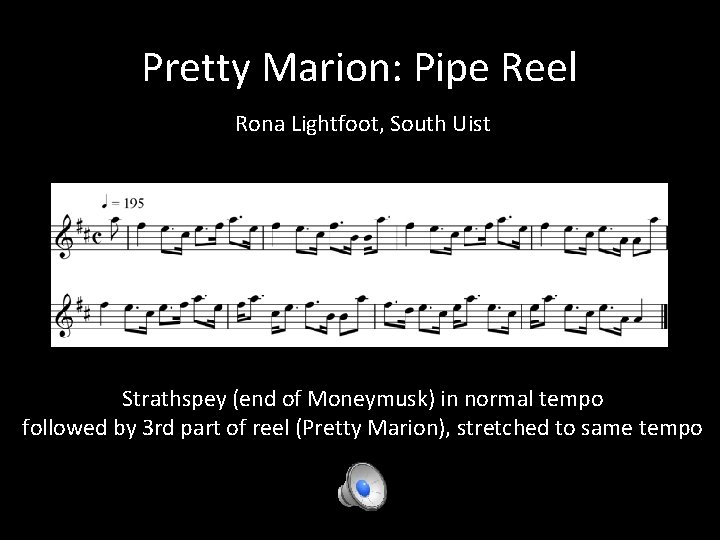
Pretty Marion: Pipe Reel Rona Lightfoot, South Uist Strathspey (end of Moneymusk) in normal tempo followed by 3 rd part of reel (Pretty Marion), stretched to same tempo
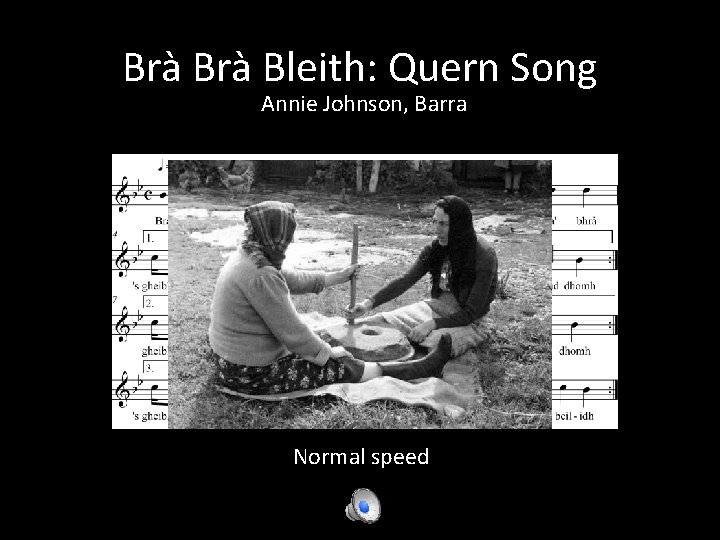
Brà Bleith: Quern Song Annie Johnson, Barra Normal speed
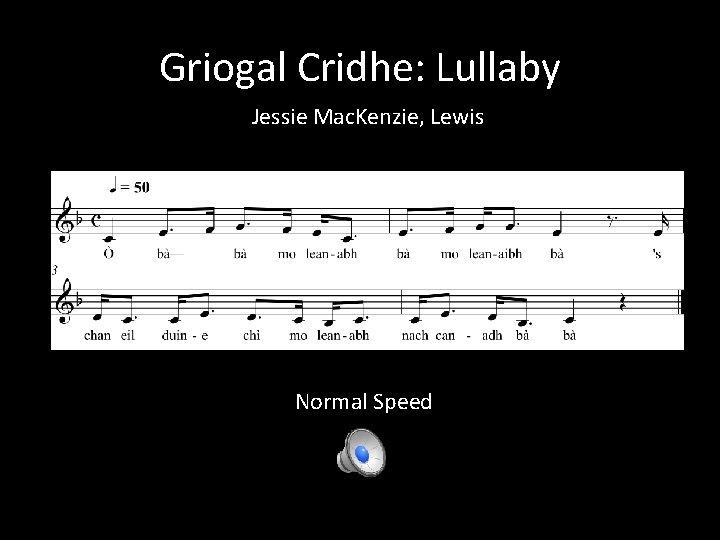
Griogal Cridhe: Lullaby Jessie Mac. Kenzie, Lewis Normal Speed
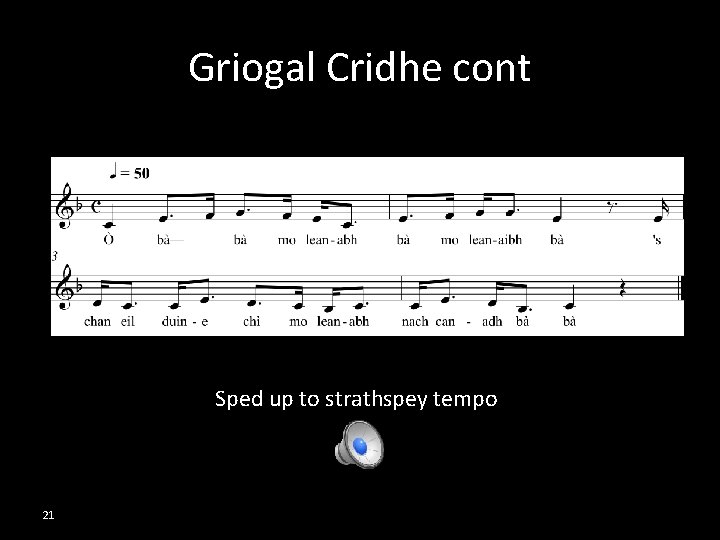
Griogal Cridhe cont Sped up to strathspey tempo 21
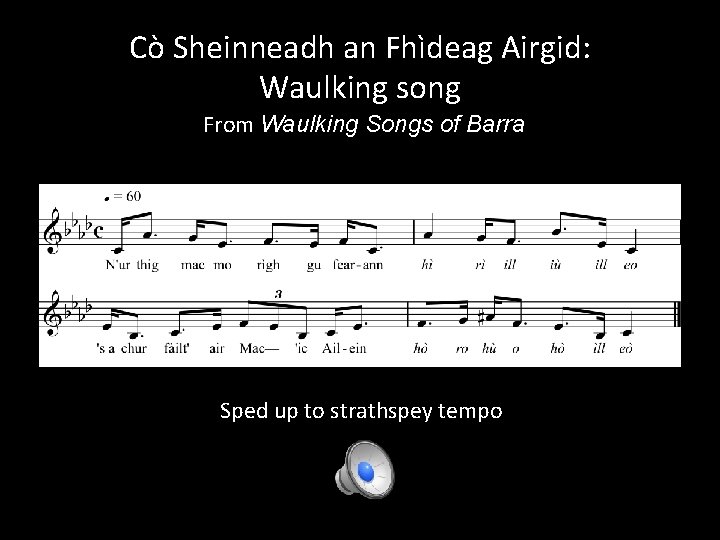
Cò Sheinneadh an Fhìdeag Airgid: Waulking song From Waulking Songs of Barra Sped up to strathspey tempo
In both the playing and singing of reels and slower work songs one finds an underlying strathspey feel, when performed by Gaelic speakers Is the ‘strathspey’ a wide, underlying rhythmic matrix for Gaelic song associated with movement?
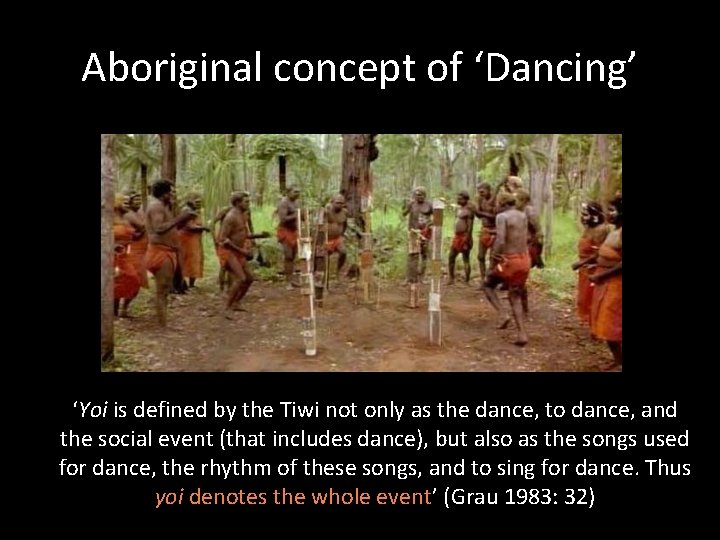
Aboriginal concept of ‘Dancing’ ‘Yoi is defined by the Tiwi not only as the dance, to dance, and the social event (that includes dance), but also as the songs used for dance, the rhythm of these songs, and to sing for dance. Thus yoi denotes the whole event’ (Grau 1983: 32)
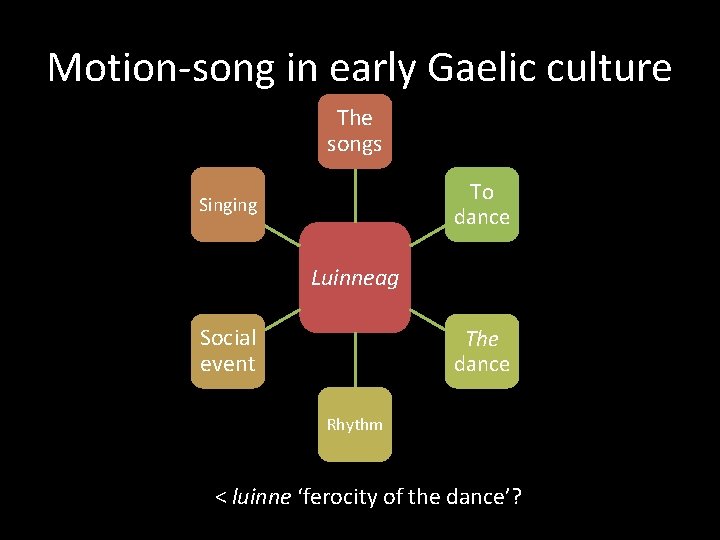
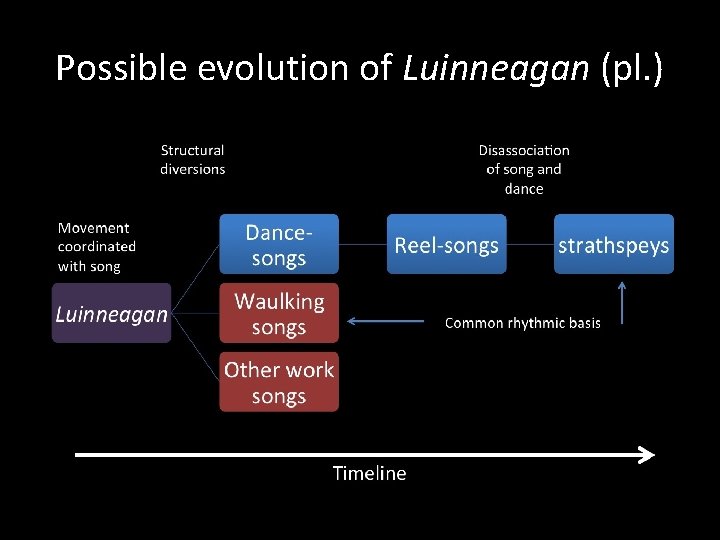
Motion-song in early Gaelic culture The songs To dance Singing Luinneag Social event The dance Rhythm < luinne ‘ferocity of the dance’?
Possible evolution of Luinneagan (pl. ) Struc tural Movediver ment sions coord inate d with song Disas sociat ion of song and danc e Timeline
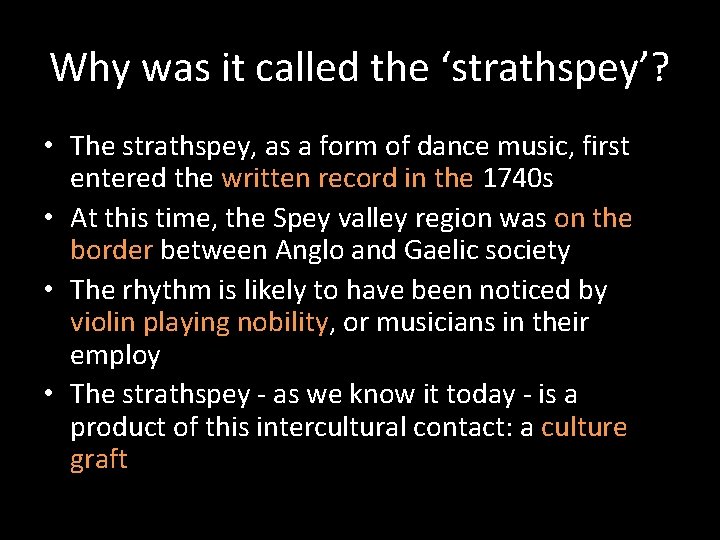
Why was it called the ‘strathspey’? • The strathspey, as a form of dance music, first entered the written record in the 1740 s • At this time, the Spey valley region was on the border between Anglo and Gaelic society • The rhythm is likely to have been noticed by violin playing nobility, or musicians in their employ • The strathspey - as we know it today - is a product of this intercultural contact: a culture graft
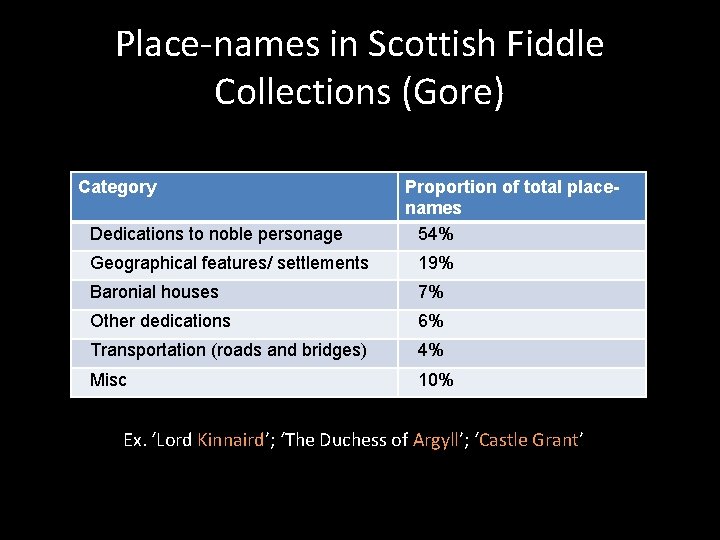
Place-names in Scottish Fiddle Collections (Gore) Category Dedications to noble personage Proportion of total placenames 54% Geographical features/ settlements 19% Baronial houses 7% Other dedications 6% Transportation (roads and bridges) 4% Misc 10% Ex. ‘Lord Kinnaird’; ‘The Duchess of Argyll’; ‘Castle Grant’
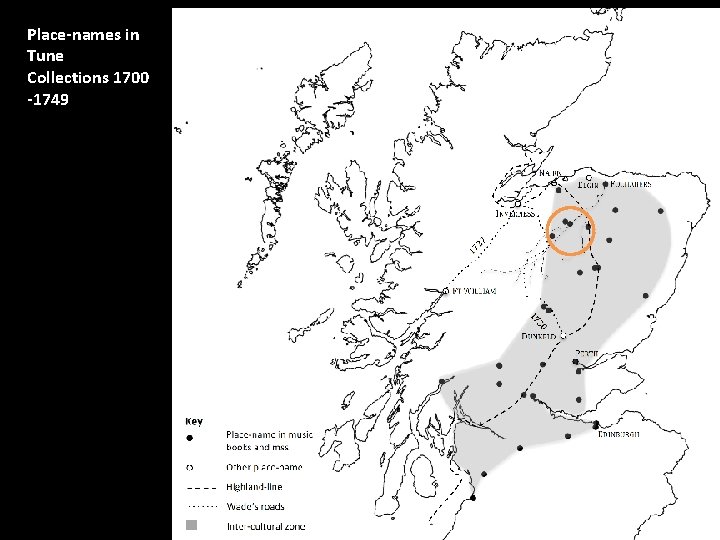
Place-names in Tune Collections 1700 -1749
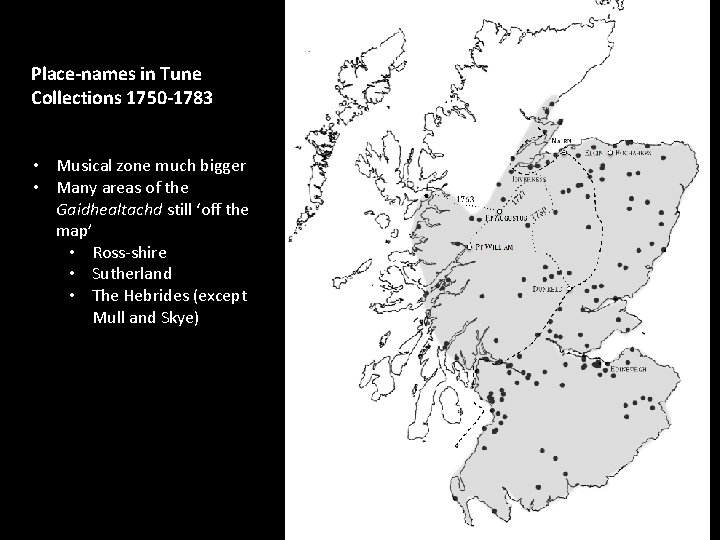
Place-names in Tune Collections 1750 -1783 • Musical zone much bigger • Many areas of the Gaidhealtachd still ‘off the map’ • Ross-shire • Sutherland • The Hebrides (except Mull and Skye)
Importance of Place-names • Provide us with evidence of intercultural contact • Show that the Spey valley area was accessible to Anglo musical society • Shows the absence of such contact in large swathes of the Highlands • The moniker - the ‘strathspey’ swallowed up earlier airs featuring the meme
Summary The underlying rhythm of the strathspey is so ubiquitous in Gaelic songs connected to motion, that it must have developed as part of that tradition A vestige of a complex of language, movement and music that once existed in Gaelic society As a ‘tune type’, it is a culture graft: a product of contact between Anglo and Gaelic society