
THE STORYBOARD Planning is key to a smooth
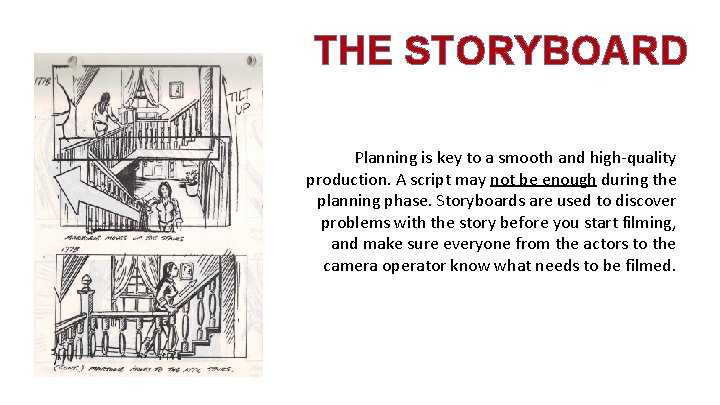
THE STORYBOARD Planning is key to a smooth and high-quality production. A script may not be enough during the planning phase. Storyboards are used to discover problems with the story before you start filming, and make sure everyone from the actors to the camera operator know what needs to be filmed.
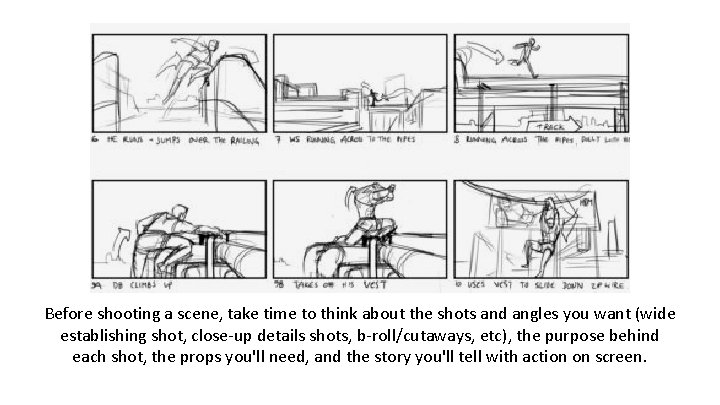
Before shooting a scene, take time to think about the shots and angles you want (wide establishing shot, close-up details shots, b-roll/cutaways, etc), the purpose behind each shot, the props you'll need, and the story you'll tell with action on screen.
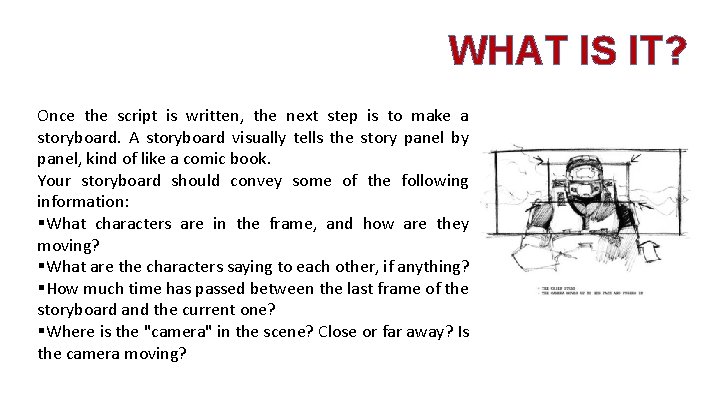
WHAT IS IT? Once the script is written, the next step is to make a storyboard. A storyboard visually tells the story panel by panel, kind of like a comic book. Your storyboard should convey some of the following information: §What characters are in the frame, and how are they moving? §What are the characters saying to each other, if anything? §How much time has passed between the last frame of the storyboard and the current one? §Where is the "camera" in the scene? Close or far away? Is the camera moving?
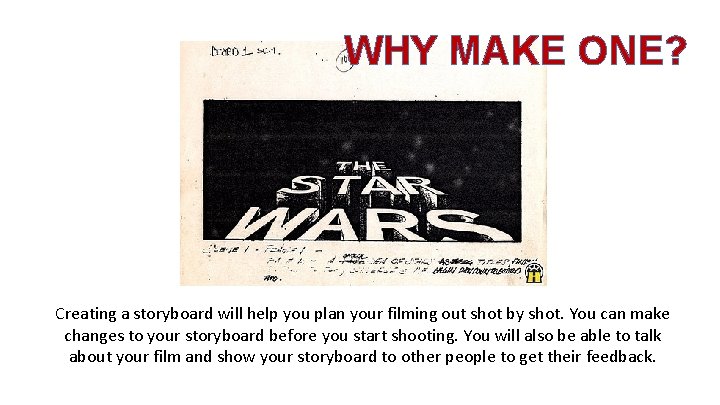
WHY MAKE ONE? Creating a storyboard will help you plan your filming out shot by shot. You can make changes to your storyboard before you start shooting. You will also be able to talk about your film and show your storyboard to other people to get their feedback.

Creating a storyboard also helps to maintain the visual continuity of your film. Without visual continuity a movie becomes a series of unnatural jarring moments that take the audience out of the illusion that your movie is a depiction of real life. Storyboards can be consulted to avoid discrepancies from shot to shot in a film, allowing the various scenes to be shot out of order, but still maintaining an uninterrupted succession or flow of the events of the film.
THE 3 ELEMENTS OF STORYBOARDING Regardless of the relative complexity of the shot, a “perfect” storyboard will always incorporate three key components: 1. Framing Height (e. g. , WIDE, FULL, AMERICAN, CLOSE) 2. Camera Angle (e. g. , eye-level, BIRD’S EYE VIEW, HIGH HAT, and DUTCH) 3. Movement (e. g. , static, PAN, TILT, CRANE, PUSH/PULL, ZOOM) If any one of these elements is absent or ambiguous, the storyboard fails to do its job of clearly communicating to the crew camera placement (e. g. , distance from the subject) and equipment needs (e. g. , dolly, Steadicam, crane, lens type, lighting).
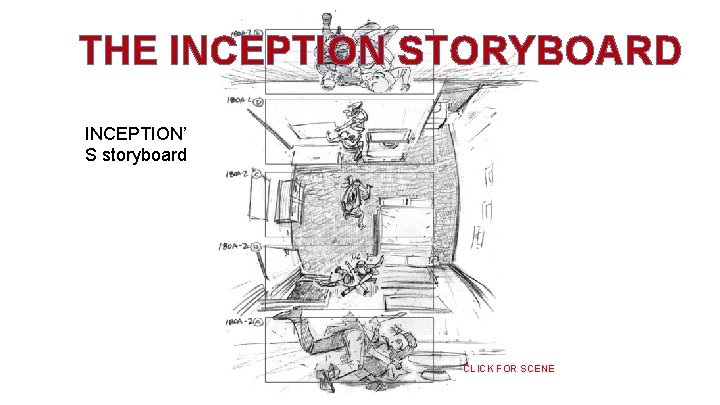
THE INCEPTION STORYBOARD INCEPTION’ S storyboard CLICK FOR SCENE
ANIMATICS CLICK
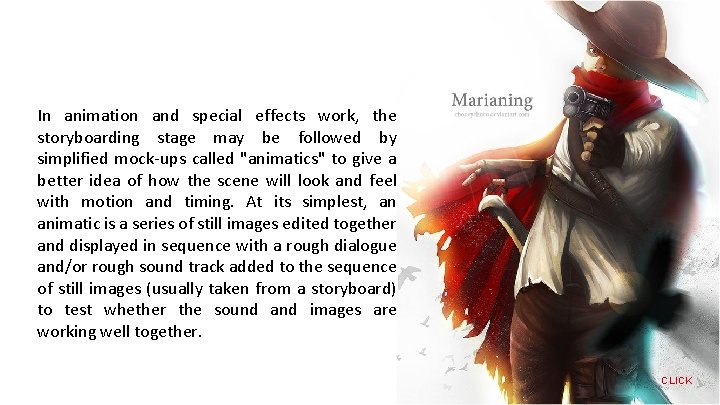
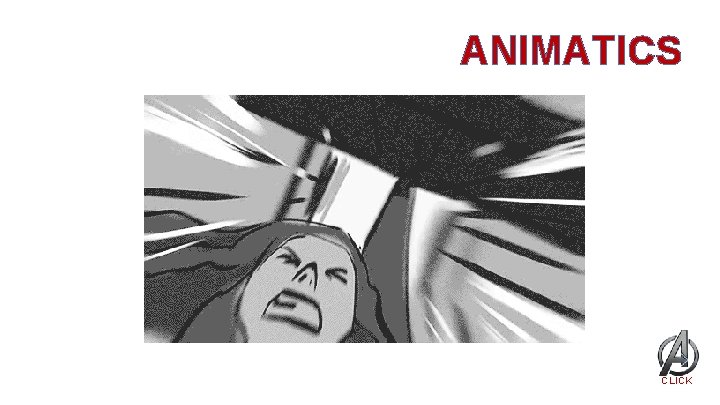
In animation and special effects work, the storyboarding stage may be followed by simplified mock-ups called "animatics" to give a better idea of how the scene will look and feel with motion and timing. At its simplest, an animatic is a series of still images edited together and displayed in sequence with a rough dialogue and/or rough sound track added to the sequence of still images (usually taken from a storyboard) to test whether the sound and images are working well together. CLICK
PHOTOMATIC CLICK A photomatic (derived from 'animatic' or photoanimation) is a series of still photographs edited together and presented on screen in a sequence. Usually, soundtrack and sound effects are added to the piece to create a presentation to show a film could be shot and cut together. The photomatic is usually a research tool, similar to an animatic, in that it represents the work to a test audience so that the commissioners of the work can gauge its effectiveness.
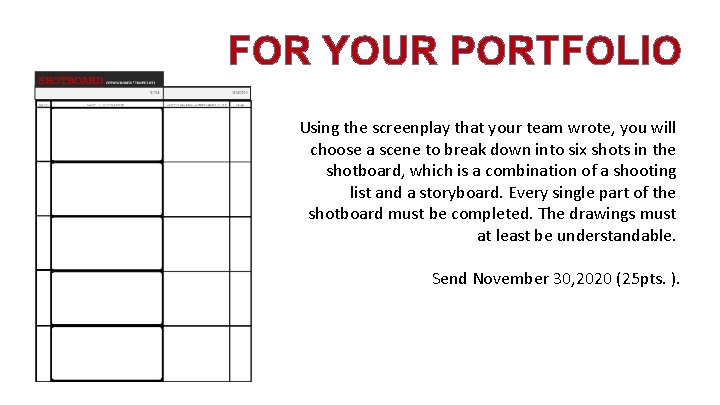
FOR YOUR PORTFOLIO Using the screenplay that your team wrote, you will choose a scene to break down into six shots in the shotboard, which is a combination of a shooting list and a storyboard. Every single part of the shotboard must be completed. The drawings must at least be understandable. Send November 30, 2020 (25 pts. ).

- Slides: 13