
The Stories We Tell Narrative Medicine in Practice

- Slides: 27
The Stories We Tell: Narrative Medicine in Practice Johanna Shapiro, Ph. D. Professor, Department of Family Medicine; Director, Program in Medical Humanities & Arts, University of California Irvine, School of Medicine
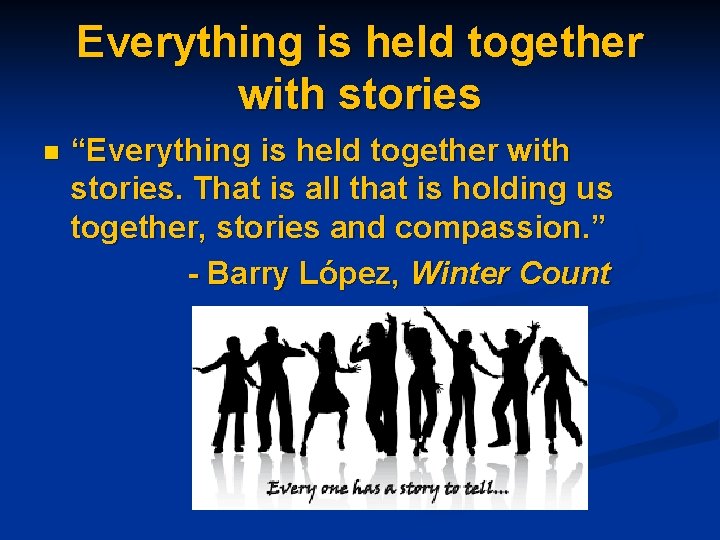
Everything is held together with stories n “Everything is held together with stories. That is all that is holding us together, stories and compassion. ” - Barry López, Winter Count
Cleveland Clinic Empathy Video
Definition n n Narrative medicine seeks to return stories to a place of centrality in clinical practice Narrative medicine is the ability to critically understand be moved by the patient’s story Rita Charon, M. D. , Ph. D. n One of principle tenets of narrative medicine:
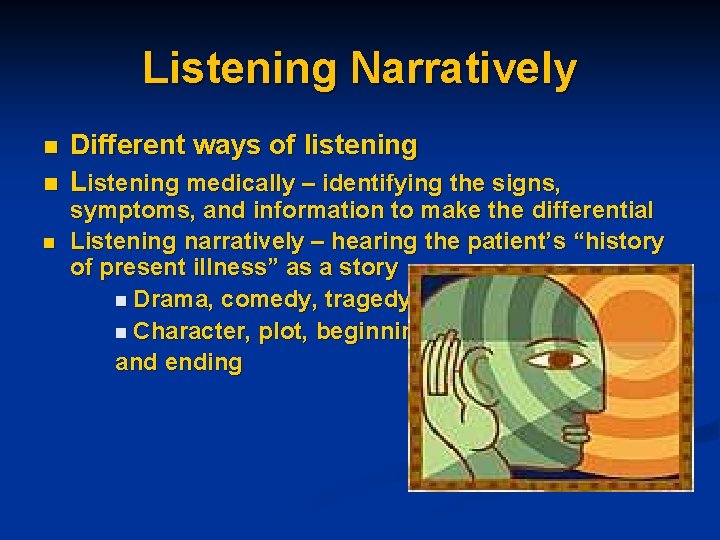
Listening Narratively n n n Different ways of listening Listening medically – identifying the signs, symptoms, and information to make the differential Listening narratively – hearing the patient’s “history of present illness” as a story n Drama, comedy, tragedy n Character, plot, beginning and ending
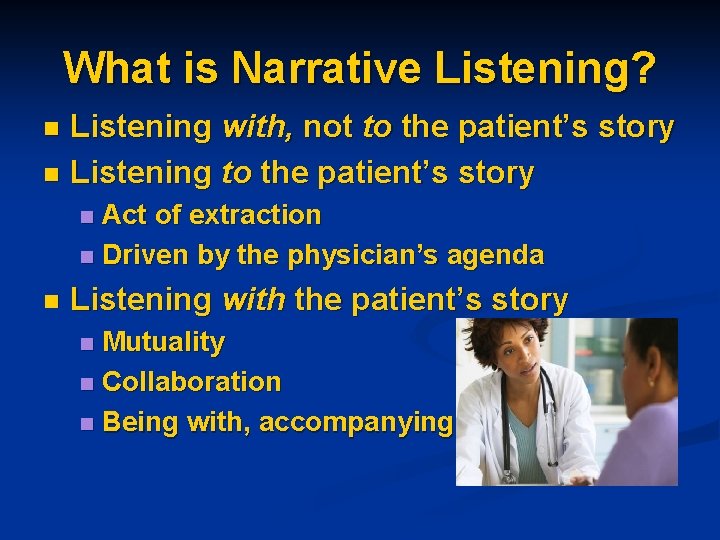
What is Narrative Listening? Listening with, not to the patient’s story n Listening to the patient’s story n Act of extraction n Driven by the physician’s agenda n n Listening with the patient’s story Mutuality n Collaboration n Being with, accompanying n
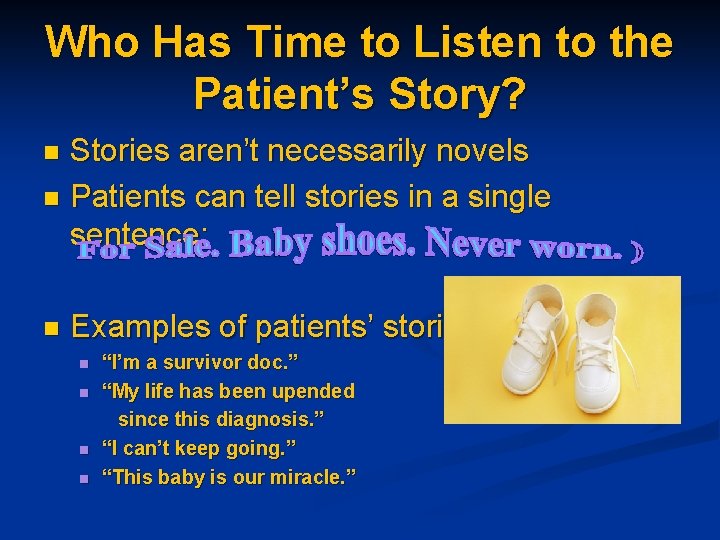
Who Has Time to Listen to the Patient’s Story? Stories aren’t necessarily novels n Patients can tell stories in a single sentence: n n Examples of patients’ stories: n n “I’m a survivor doc. ” “My life has been upended since this diagnosis. ” “I can’t keep going. ” “This baby is our miracle. ”
Why Listen Narratively? n When you listen narratively, you are able to: Understand more deeply why the patient is telling the story n Develop emotional connection with the patient n Appreciate the whole person of the patient n Create the possibility of helping the patient construct a better story n
Why Do Patients Tell Their Stories? To get better, to heal n To make sense of what’s happening to them n
Why Do Patients Tell Their Stories? With storytelling, patient becomes joined to others through shared bonds of suffering, vulnerability n Storytelling a way of recovering the voice that illness, diagnosis, treatment take away n
Different Types of Stories n Social scientists and literary scholars have identified different narrative classificatory schema n Not all patients tell the same story about the same disease n n At different times, the same patients tell different stories Most stories are not one type or another n a mixture of different elements
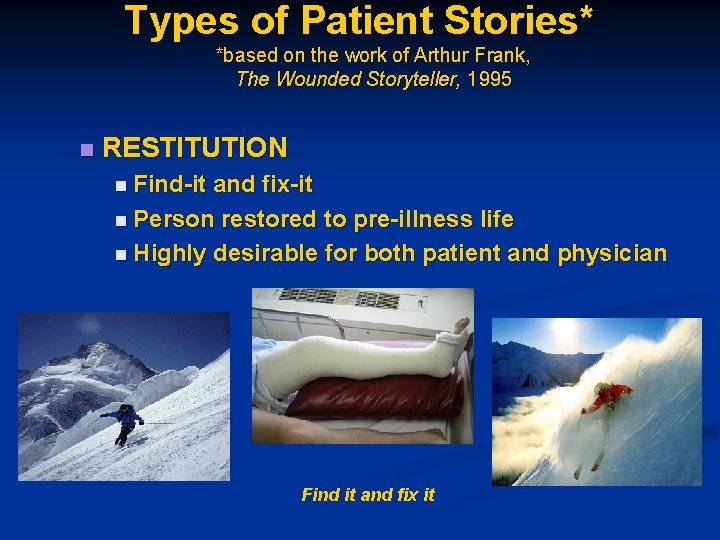
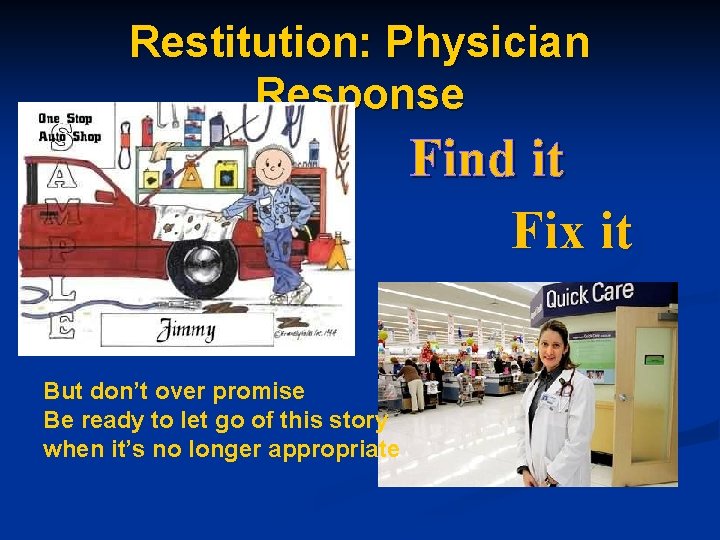
Types of Patient Stories* *based on the work of Arthur Frank, The Wounded Storyteller, 1995 n RESTITUTION n Find-it and fix-it n Person restored to pre-illness life n Highly desirable for both patient and physician Find it and fix it
Restitution: Physician Response Find it Fix it But don’t over promise Be ready to let go of this story when it’s no longer appropriate
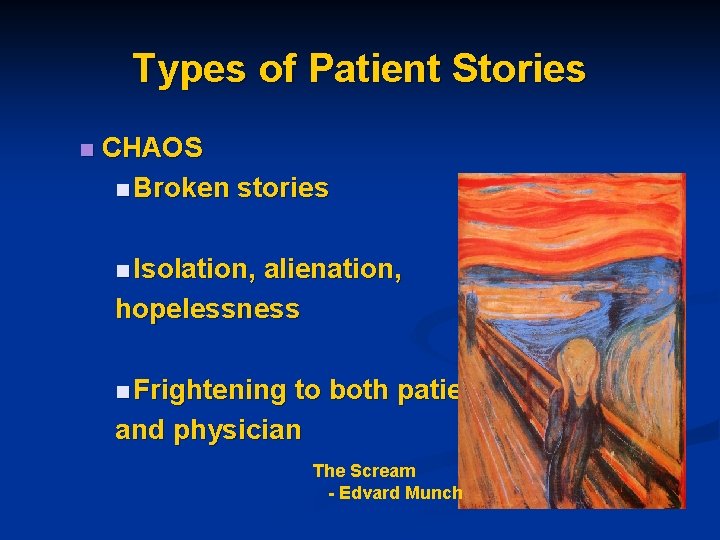
Types of Patient Stories n CHAOS n Broken stories n Isolation, alienation, hopelessness n Frightening to both patient and physician The Scream - Edvard Munch
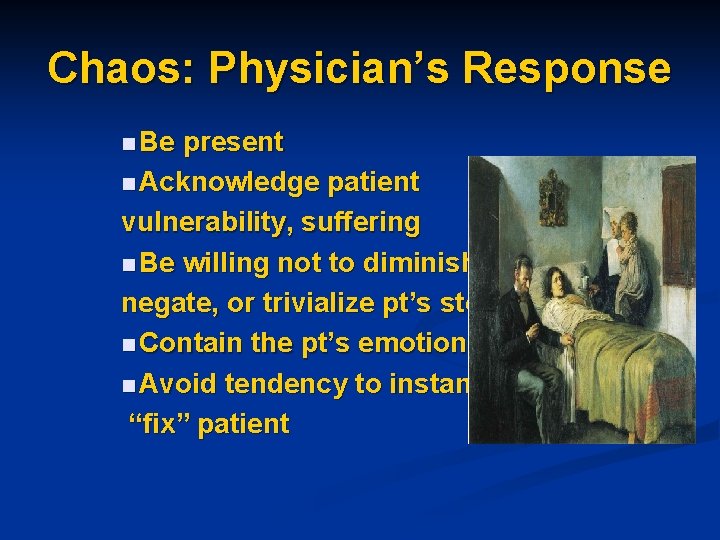
Chaos: Physician’s Response n Be present n Acknowledge patient vulnerability, suffering n Be willing not to diminish, negate, or trivialize pt’s story n Contain the pt’s emotions n Avoid tendency to instantly “fix” patient
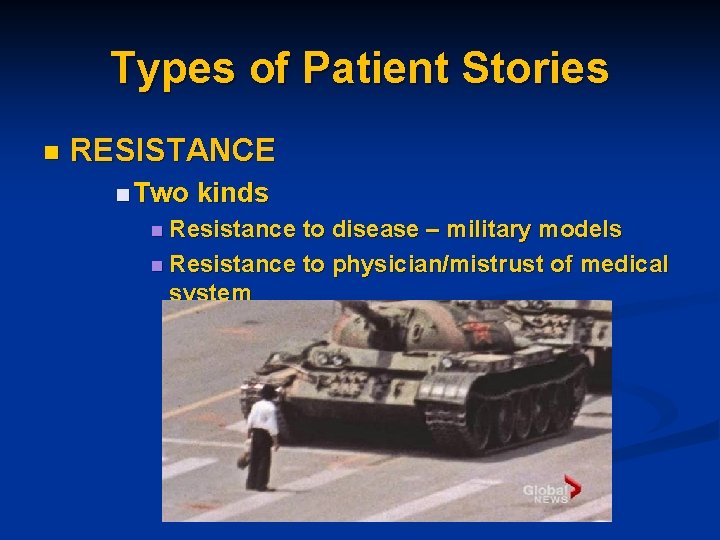
Types of Patient Stories n RESISTANCE n Two kinds n Resistance to disease – military models n Resistance to physician/mistrust of medical system
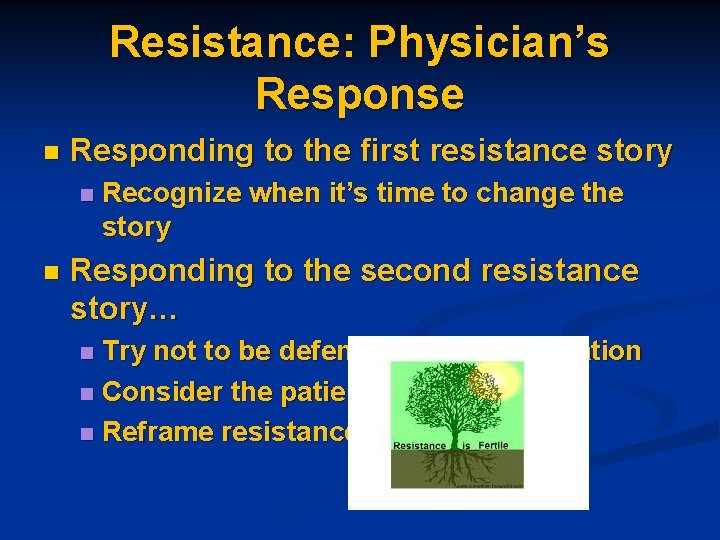
Resistance: Physician’s Response n Responding to the first resistance story n n Recognize when it’s time to change the story Responding to the second resistance story… Try not to be defensive; avoid escalation n Consider the patient’s perspective n Reframe resistance n
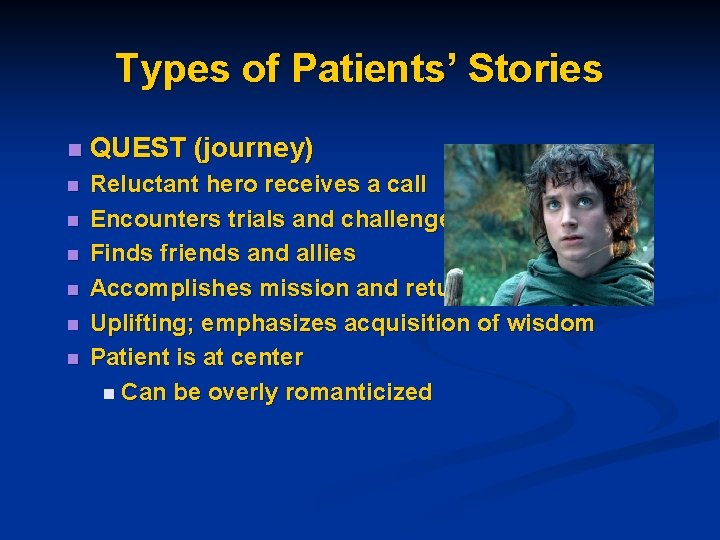
Types of Patients’ Stories n QUEST (journey) n Reluctant hero receives a call Encounters trials and challenges Finds friends and allies Accomplishes mission and returns to help others Uplifting; emphasizes acquisition of wisdom Patient is at center n Can be overly romanticized n n n
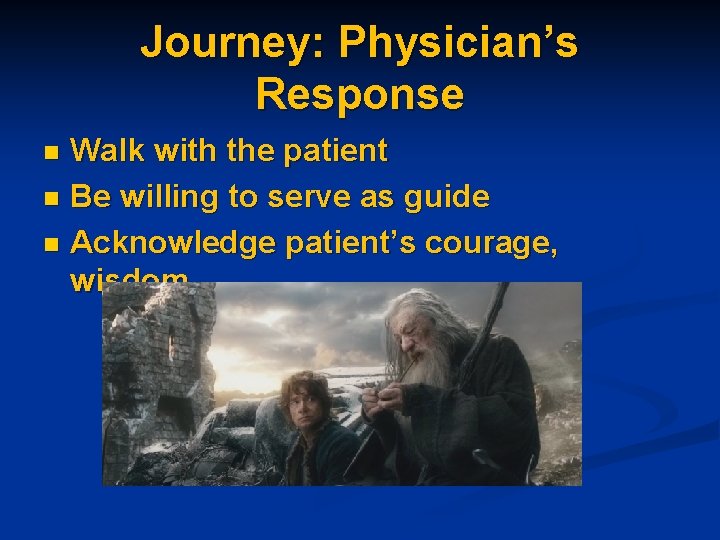
Journey: Physician’s Response Walk with the patient n Be willing to serve as guide n Acknowledge patient’s courage, wisdom n
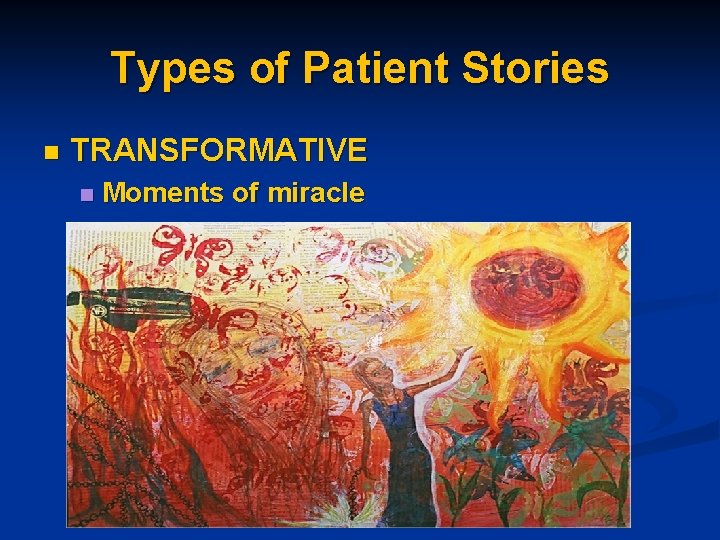
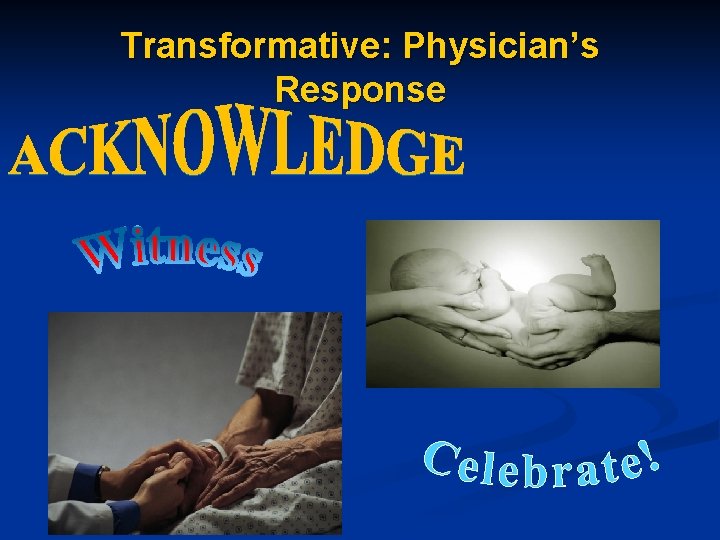
Types of Patient Stories n TRANSFORMATIVE n Moments of miracle
Transformative: Physician’s Response
Twisted Smile from Mortal Lessons, Richard Selzer I stand by the bed where a young woman lies, her face postoperative, her mouth twisted in palsy, clownish. A tiny twig of the facial nerve, the one to the muscles of her mouth has been severed. She will be thus from now on. The surgeon had followed with religious fervor the curve of her flesh; I promise you that. Nevertheless, to remove the tumor in her cheek, I had to cut the little nerve. Her young husband is in the room. He stands on the opposite side of the bed and together they seem to dwell in the evening lamplight, isolated from me, private. Who are they, I ask myself, he and this wry mouth I have made, who gaze at and touch each other so generously, greedily?
Twisted Smile The young woman speaks. “Will my mouth always be like this? ” she asks. “Yes, ” I say, “it will. It is because the nerve was cut. ” She nods and is silent. But the young man smiles. “I like it, ” he says, “It’s kind of cute. ” All at once I know who he is. I understand lower my gaze. One is not bold in an encounter with a god. Unmindful, he bends to kiss her crooked mouth and I am so close I can see how he twists his own lips to accommodate hers, to show her that their kiss still works. I remember that the gods appeared in ancient Greece as mortals, and I hold my breath, and let the wonder in.
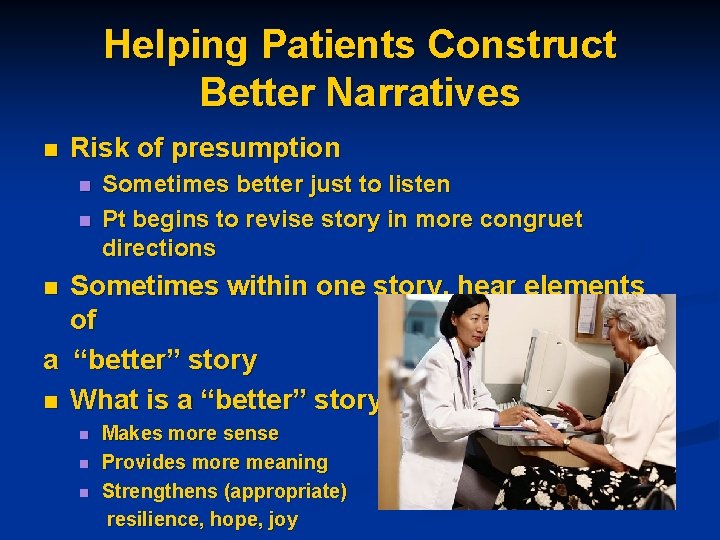
Helping Patients Construct Better Narratives n Risk of presumption n n Sometimes better just to listen Pt begins to revise story in more congruet directions Sometimes within one story, hear elements of a “better” story n What is a “better” story? n n Makes more sense Provides more meaning Strengthens (appropriate) resilience, hope, joy
Ways of Helping Patients Create New Stories n Collaborate to reimagine/reconstruct pt story Start with where patient is n Support healing elements n Recognize your own story n n Is it promoting best interests of the patient?
Conclusion n n Listen with rather than simply to the story; Listen for the narrative elements of the story Interpret whether that story makes sense for the patient and the patient’s situation; Be willing to witness the patient’s truth; Humbly collaborate with the patient to seek a better-matched truth